46~90 item / All 478 items

Displayed results
Filter by category
Added to bookmarks
Bookmarks listBookmark has been removed
Bookmarks listYou can't add any more bookmarks
By registering as a member, you can increase the number of bookmarks you can save and organize them with labels.
Free membership registration
Contact this company
Inquiry Form46~90 item / All 478 items
Filter by category

Among the functions of coatings, surface protection and decorative properties play an important role in various industries such as automotive, marine, military, and construction. To achieve required characteristics such as corrosion resistance, UV protection, and wear resistance, the formulation and structure of coatings need to be carefully analyzed, improved, and optimized.
Added to bookmarks
Bookmarks listBookmark has been removed
Bookmarks listYou can't add any more bookmarks
By registering as a member, you can increase the number of bookmarks you can save and organize them with labels.
Free membership registration
The term "micro-sphere" (micro-spherical particle) is widely used in various fields such as materials science and pharmacology, referring to spherical particles made from various natural and synthetic materials with diameters in the micrometer range (1μm to 1000μm (1mm)). Micro-spheres are produced in solid and hollow forms and are developed using diverse materials such as plastics and glass. Hollow micro-spheres are often used as additives to reduce the density of materials. Solid micro-spheres have numerous applications depending on their constituent materials and sizes. Micro-spheres are a type of fine particle.
Added to bookmarks
Bookmarks listBookmark has been removed
Bookmarks listYou can't add any more bookmarks
By registering as a member, you can increase the number of bookmarks you can save and organize them with labels.
Free membership registration
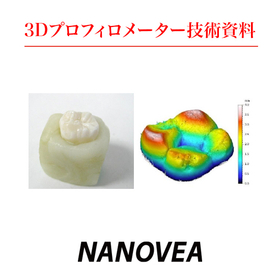
Tooth wear refers to the loss of dental material that occurs throughout life due to causes other than cavities or acute trauma, and it is a normal process in all adults. The outermost layer of the tooth is enamel, which is the hardest substance in the human body and does not regenerate naturally. Enamel can be worn away due to contact between teeth, between teeth and foreign objects, between teeth and crowns, or exposure to acidic environments. Accurately measuring the rate of wear, volume reduction, and shape changes of teeth and crowns is essential for effectively slowing down tooth wear. All these calculations can be performed using surface subtraction analysis. Surface subtraction analysis can examine shape changes in relatively small areas across the entire sample, making it extremely important for various applications. This method allows for the effective quantification of surface wear or corrosion, as well as the similarity between two components or molds. Precisely measuring the surface area and volume loss in the area of interest is crucial for the proper design of wear-resistant and corrosion-resistant coatings, films, and substrates.
Added to bookmarks
Bookmarks listBookmark has been removed
Bookmarks listYou can't add any more bookmarks
By registering as a member, you can increase the number of bookmarks you can save and organize them with labels.
Free membership registration
The demand for precision machining to create shaped components with complex geometries has dramatically increased across various industries. For example, in aerospace, medical, automotive, technology parts, as well as machinery and instruments, the constant demand for innovation and precision is driving the evolution of new technologies. As a result, the establishment of advanced quality inspection techniques to rigorously examine processed products and ensure they meet design specifications has become essential.
Added to bookmarks
Bookmarks listBookmark has been removed
Bookmarks listYou can't add any more bookmarks
By registering as a member, you can increase the number of bookmarks you can save and organize them with labels.
Free membership registration
Due to new advancements in technology, the size of components and their surface characteristics are continuously evolving towards greater delicacy across virtually all industries. This is particularly evident in the components of biomedical and microelectronics, as well as in understanding their surface interactions. For industries that require precision in delicate surface structures, it is extremely important to understand changes in material surfaces and to provide the intended surface interactions. The delicacy of component surfaces and their sizes has made traditional tribological (friction-related) research challenging, creating a need for new and appropriate wear/friction results, not only for research but also for quality control purposes. Therefore, there is an increasing necessity to accurately measure surface interactions due to wear/friction under smaller loads and in smaller applications.
Added to bookmarks
Bookmarks listBookmark has been removed
Bookmarks listYou can't add any more bookmarks
By registering as a member, you can increase the number of bookmarks you can save and organize them with labels.
Free membership registration
The compressive permanent deformation of materials, as defined in ASTM D395i, is the permanent change in shape that remains when the previously applied compressive load is removed. Rubber is subjected to significant compressive stress in a wide range of applications, such as mounting to machinery, vibration dampers, valves, faucets, and bearings, in media such as air or liquids. The ability to retain elastic properties after prolonged compressive stress is crucial for the quality and functionality of the service. For example, a compression faucet relies on a rubber washer to seal the valve seat. The elasticity of the rubber sealing washer ensures the proper functioning of the faucet. Leaks occur when the rubber washer, seal, or gasket in the valve assembly wears out and loses elasticity. Therefore, it is important to evaluate the compressive permanent deformation of rubber after prolonged compressive stress.
Added to bookmarks
Bookmarks listBookmark has been removed
Bookmarks listYou can't add any more bookmarks
By registering as a member, you can increase the number of bookmarks you can save and organize them with labels.
Free membership registration
Understanding surface characteristics is a very active area of research. The importance of a product's surface lies in its physical and chemical contact points with the environment. Therefore, for scientists, observing detailed information about surfaces and achieving high-precision imaging is a demand for very high-quality data. Common imaging data for surfaces includes shape, smoothness, horizontal dimensions, and vertical dimensions. The applications of the data obtained from surface imaging will likely involve assessing surface load-bearing capacity, gaps in manufactured microstructures, height of steps, and surface defects. However, not all surface measurement techniques can obtain the same data.
Added to bookmarks
Bookmarks listBookmark has been removed
Bookmarks listYou can't add any more bookmarks
By registering as a member, you can increase the number of bookmarks you can save and organize them with labels.
Free membership registration
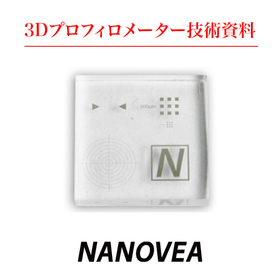
If both the "thickness" and "surface roughness" of a transparent thin film material coated on a transparent substrate can be measured with a single device, it would be very convenient for both development and quality control. It is clear that this is difficult because conventional stylus-based contact surface profilometers find it challenging to accurately measure soft films. On the other hand, other optical technologies also struggle to measure transparent thin films on transparent substrates. While there are other devices that can measure the thickness of this thin film, they do not have the capability to measure roughness.
Added to bookmarks
Bookmarks listBookmark has been removed
Bookmarks listYou can't add any more bookmarks
By registering as a member, you can increase the number of bookmarks you can save and organize them with labels.
Free membership registration
Brake pads are a special material composed of multiple parts that must meet many safety requirements. An ideal brake pad needs to satisfy the requirements of having a high coefficient of friction (COF), low wear rate, minimal noise, and maintaining reliability under various environmental conditions. By conducting tribology tests, we can confirm that the quality of the brake pads meets these requirements and verify important specifications.
Added to bookmarks
Bookmarks listBookmark has been removed
Bookmarks listYou can't add any more bookmarks
By registering as a member, you can increase the number of bookmarks you can save and organize them with labels.
Free membership registration
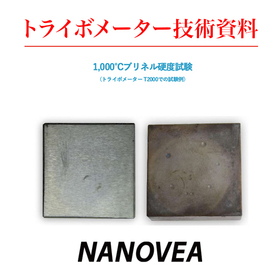
Material properties such as reactivity and strength can change significantly at high temperatures. Therefore, material selection is crucial not only for industrial products like jet engines and high-temperature manufacturing chambers but also for high-temperature applications such as cooking utensils. Understanding material behavior under various temperature conditions is essential for material selection. This study presents an example of measuring the Brinell hardness of steel samples using a NanoBIA T2000 tribometer over a temperature range of 25°C to 925°C.
Added to bookmarks
Bookmarks listBookmark has been removed
Bookmarks listYou can't add any more bookmarks
By registering as a member, you can increase the number of bookmarks you can save and organize them with labels.
Free membership registration
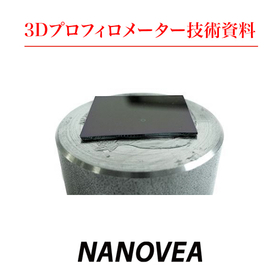
Acrylic urethane paint is a type of fast-drying protective paint that is widely used in various industrial applications, such as floor paint and automotive paint. When used as floor paint, it can be applied in high-traffic areas such as sidewalks, curbs, and parking lots, where there is a lot of pedestrian activity or frequent passage of rubber-wheeled vehicles.
Added to bookmarks
Bookmarks listBookmark has been removed
Bookmarks listYou can't add any more bookmarks
By registering as a member, you can increase the number of bookmarks you can save and organize them with labels.
Free membership registration
Wear is the process by which material from a surface is removed by another material as a result of mechanical action. Wear is influenced by various factors, such as temperature, speed, load, and whether the load is in reciprocating motion. Among these, temperature has a significant impact on the extent of wear damage. Wear of material surfaces at high temperatures has a complex nature, involving various wear mechanisms such as adhesive wear, so-called abrasive wear, surface fatigue, and oxidative wear.
Added to bookmarks
Bookmarks listBookmark has been removed
Bookmarks listYou can't add any more bookmarks
By registering as a member, you can increase the number of bookmarks you can save and organize them with labels.
Free membership registration
In the energy industry, there is always a demand for improved product quality and cost reduction. In particular, the quality of plastic molded products significantly affects energy efficiency and product lifespan. If the understanding of material properties is insufficient, it can lead to molding defects and performance degradation, ultimately resulting in decreased energy efficiency and the need for early product replacement. This document presents professional viscosity measurement (regarding the prediction of viscosity and flowability) that stabilizes molding, contributing to the improvement of quality and efficiency of plastic molded products in the energy industry. 【Application Scenarios】 - Wind turbine blades - Solar panel frames - Electrical cables 【Benefits of Implementation】 - Reduction of molding defects - Extension of product lifespan - Cost reduction
Added to bookmarks
Bookmarks listBookmark has been removed
Bookmarks listYou can't add any more bookmarks
By registering as a member, you can increase the number of bookmarks you can save and organize them with labels.
Free membership registration
In the infrastructure industry, appropriate material selection and optimization of the molding process are required to improve the durability of structures. Particularly for components used in harsh environments, it is crucial to prevent material degradation and maintain performance over an extended period. Improper material selection or molding defects can lead to early deterioration of structures or accidents. This document includes professional viscosity measurements (predictions of viscosity and fluidity) that stabilize molding and contribute to the longevity of infrastructure structures. 【Usage Scenarios】 * Design and manufacturing of infrastructure structures * Physical property evaluation in material selection * Optimization of the molding process 【Benefits of Implementation】 * Reduction of molding defects * Effective use of materials * Improvement of structural durability
Added to bookmarks
Bookmarks listBookmark has been removed
Bookmarks listYou can't add any more bookmarks
By registering as a member, you can increase the number of bookmarks you can save and organize them with labels.
Free membership registration
In the agricultural sector, there is a growing demand for plastic products that can withstand outdoor use. Particularly for agricultural materials exposed to sunlight, rain, and wind, weather resistance is a crucial factor that affects the product's lifespan and performance. The degradation of plastic materials can lead to product breakage and functional decline, which may ultimately result in increased costs. This document explains the selection of materials and optimization of molding conditions to enhance weather resistance through the measurement of the viscosity of plastic materials. 【Application Scenarios】 - Agricultural films - Agricultural pipes - Greenhouses 【Benefits of Implementation】 - Appropriate material selection - Reduction of molding defects - Improvement of product durability
Added to bookmarks
Bookmarks listBookmark has been removed
Bookmarks listYou can't add any more bookmarks
By registering as a member, you can increase the number of bookmarks you can save and organize them with labels.
Free membership registration
In the sports equipment industry, the durability of products is highly valued. To create products that can withstand impacts and friction, it is essential to select the right materials and accurately understand their physical properties. By understanding the viscosity and fluidity of materials, potential issues during molding can be predicted, leading to improvements in product quality. This document explains professional viscosity measurement that stabilizes molding and contributes to enhancing the durability of sports equipment. 【Application Scenarios】 * Development of sports equipment that is resistant to impacts * Product design that minimizes deterioration due to friction * Extending the lifespan of products 【Effects of Implementation】 * Reduction of molding defects * Stabilization of product quality * Cost reduction
Added to bookmarks
Bookmarks listBookmark has been removed
Bookmarks listYou can't add any more bookmarks
By registering as a member, you can increase the number of bookmarks you can save and organize them with labels.
Free membership registration
In the toy industry, quality control of materials is crucial to ensure product safety. Especially for toys that small children may put in their mouths, the safety of materials is the top priority. Molding defects and material anomalies can have a direct impact on product safety. This document includes professional viscosity measurements (regarding viscosity and flow prediction) that stabilize molding and assist in material selection and quality control to enhance toy safety. 【Usage Scenarios】 - Material selection for toys - Countermeasures for molding defects - Improvement of quality control 【Effects of Implementation】 - Stabilization of moldability - Enhancement of product safety - Streamlining of quality control
Added to bookmarks
Bookmarks listBookmark has been removed
Bookmarks listYou can't add any more bookmarks
By registering as a member, you can increase the number of bookmarks you can save and organize them with labels.
Free membership registration
In the daily necessities industry, there is a demand to reduce manufacturing costs while maintaining product quality. Molding defects can lead to material waste and process delays, resulting in increased costs. This document explains the understanding of material properties to stabilize moldability. Through viscosity measurement and flowability prediction, it aims to prevent molding defects in advance and contribute to cost reduction. 【Usage Scenarios】 - Manufacturing of plastic molded products - Utilization in quality control departments - Companies aiming for cost reduction 【Effects of Implementation】 - Reduction of molding defects - Decrease in material waste - Improvement in productivity
Added to bookmarks
Bookmarks listBookmark has been removed
Bookmarks listYou can't add any more bookmarks
By registering as a member, you can increase the number of bookmarks you can save and organize them with labels.
Free membership registration
In the home appliance industry, the appearance quality of products greatly influences customer satisfaction. Molding defects not only damage the appearance but can also affect the functionality of the product. Particularly in injection molding, optimizing the material properties and molding conditions is crucial. This document presents professional viscosity measurements (regarding viscosity and flowability predictions) that contribute to improving the appearance quality of home appliances. 【Usage Scenarios】 * Measures against molding defects in the housings and parts of home appliances * Evaluation of moldability in material selection * Optimization of molding conditions 【Effects of Implementation】 * Improved yield due to reduced molding defects * Increased customer satisfaction due to enhanced appearance quality * Optimization of material costs
Added to bookmarks
Bookmarks listBookmark has been removed
Bookmarks listYou can't add any more bookmarks
By registering as a member, you can increase the number of bookmarks you can save and organize them with labels.
Free membership registration
In the food packaging industry, the barrier properties of packaging materials are crucial for maintaining product quality. In particular, it is essential to prevent the permeation of oxygen and moisture to suppress food deterioration. The selection of appropriate materials and the setting of molding conditions significantly influence barrier performance. This document explains professional viscosity measurement for stable molding and contributes to the improvement of food packaging quality. 【Usage Scenarios】 * Manufacturing of food packaging materials * Barrier property evaluation * Quality control 【Benefits of Implementation】 * Reduction of molding defects * Stabilization of product quality * Cost reduction
Added to bookmarks
Bookmarks listBookmark has been removed
Bookmarks listYou can't add any more bookmarks
By registering as a member, you can increase the number of bookmarks you can save and organize them with labels.
Free membership registration
In the medical device industry, precision molding prioritizes product quality and safety as the most critical issues. Molding defects can lead to product malfunction and pose risks to patients. Particularly in medical device components with complex shapes or fine structures, even slight differences in material properties can significantly impact molding results, making it essential to accurately understand the viscosity and flow characteristics of the materials. This document presents professional viscosity measurement methods that stabilize molding (regarding viscosity and flow predictions), contributing to the improvement of medical device quality. 【Application Scenarios】 - Manufacturing of precision molded parts - Optimization of material selection - Reduction of molding defects - Strengthening of quality control 【Effects of Implementation】 - Stabilization of moldability - Reduction of defect rates - Improvement of product quality - Cost reduction
Added to bookmarks
Bookmarks listBookmark has been removed
Bookmarks listYou can't add any more bookmarks
By registering as a member, you can increase the number of bookmarks you can save and organize them with labels.
Free membership registration
In the automotive industry, predicting the strength of parts is extremely important for balancing safety and performance. Particularly as lightweighting progresses, appropriate material selection and optimization of molding conditions are required. Inappropriate material selection or molding conditions can lead to insufficient strength of parts, potentially resulting in accidents. This document includes professional viscosity measurements that stabilize molding (regarding viscosity and flowability predictions). It provides information on "Melt Indexer (MFR)" which indicates viscosity and "Capillary Rheometer" which shows viscosity curves. It is presented in an easy-to-understand lecture format, so please take a moment to read it. 【Application Scenarios】 - Strength prediction of automotive parts - Optimization of material selection - Optimization of molding conditions 【Benefits of Implementation】 - Reduction of molding defects - Improvement of product quality - Cost reduction
Added to bookmarks
Bookmarks listBookmark has been removed
Bookmarks listYou can't add any more bookmarks
By registering as a member, you can increase the number of bookmarks you can save and organize them with labels.
Free membership registration
In the railway industry, the durability of vehicle components is crucial for ensuring safety. Particularly in the event of accidents such as collisions or derailments, the failure of components directly impacts passenger safety. Impact testing is essential for predicting the behavior of these components in such accidents and for evaluating safety. Our impact testing guide covers everything from the basics to applications of impact testing, contributing to safety measures for railway vehicles. 【Usage Scenarios】 * Design and development of railway vehicle components * Quality control of components * Investigation of causes in the event of an accident 【Benefits of Implementation】 * Improved durability of components * Enhanced safety * Reduced risk of accidents
Added to bookmarks
Bookmarks listBookmark has been removed
Bookmarks listYou can't add any more bookmarks
By registering as a member, you can increase the number of bookmarks you can save and organize them with labels.
Free membership registration
In the energy industry, the long-term stability and safety of products are essential. Particularly for products used in harsh environments, durability against shock and vibration is crucial. Product failure can lead to serious accidents or economic losses. Our shock testing guide explains the necessity, types, and specific testing methods of shock tests, supporting the improvement of reliability for energy-related products. 【Application Scenarios】 - Power generation equipment - Transmission lines - Energy storage systems - Energy storage devices 【Benefits of Implementation】 - Evaluation of product durability - Reduction of failure risks - Improvement of product reliability - Assurance of safety
Added to bookmarks
Bookmarks listBookmark has been removed
Bookmarks listYou can't add any more bookmarks
By registering as a member, you can increase the number of bookmarks you can save and organize them with labels.
Free membership registration
In the home appliance industry, durability against impacts is crucial to ensure product quality and safety. Designs that withstand drops and shocks are essential for extending product lifespan and enhancing customer satisfaction. Impact testing guidelines provide information for evaluating product durability and selecting optimal testing methods. 【Usage Scenarios】 * Drop testing * Vibration testing during transportation * Product durability evaluation 【Benefits of Implementation】 * Improved product reliability * Early detection of quality issues * Gaining trust from customers
Added to bookmarks
Bookmarks listBookmark has been removed
Bookmarks listYou can't add any more bookmarks
By registering as a member, you can increase the number of bookmarks you can save and organize them with labels.
Free membership registration
In the toy industry, product safety is the top priority. Especially for toys used by children, durability assessment is essential to prevent breakage from falls or impacts and to avoid unexpected accidents. Impact testing helps evaluate toy safety by understanding the product's strength and breakage patterns, contributing to safe product design. Our impact testing guide covers the necessity of impact testing, types of tests, and specific case studies, serving as a resource to enhance toy safety. 【Application Scenarios】 - Drop testing of toys - Impact testing of toys - Durability assessment of toys 【Benefits of Implementation】 - Improved product safety - Reduced risk of accidents - Enhanced product reliability
Added to bookmarks
Bookmarks listBookmark has been removed
Bookmarks listYou can't add any more bookmarks
By registering as a member, you can increase the number of bookmarks you can save and organize them with labels.
Free membership registration
In the defense industry, the durability and reliability of products are the most critical issues. Particularly for products exposed to drops and impacts, evaluating their shock resistance is essential. If appropriate testing is not conducted, it may lead to product malfunctions or safety issues. Our shock test explanation website, the Shock Test Guide, clearly explains the necessity of shock testing, the types of tests, and detailed failure behaviors. [Usage Scenarios] * Bulletproof vests * Helmets * Transport containers [Effects of Implementation] * Improved product reliability * Enhanced understanding of testing methods * Appropriate test selection
Added to bookmarks
Bookmarks listBookmark has been removed
Bookmarks listYou can't add any more bookmarks
By registering as a member, you can increase the number of bookmarks you can save and organize them with labels.
Free membership registration
In the infrastructure industry, the safety of structures against natural disasters such as earthquakes is crucial. To evaluate seismic resistance, it is essential to understand the strength of materials and structures against impacts. The selection and implementation of appropriate impact tests are important for ensuring the durability of structures and protecting people's safety. This guide covers the fundamentals to applications of impact testing and provides information useful for evaluating the seismic resistance of infrastructure structures. 【Usage Scenarios】 * Evaluation of seismic resistance for structures such as bridges, tunnels, and dams * Material selection in seismic design of buildings * Renovation and reinforcement planning for infrastructure facilities 【Effects of Implementation】 * Improvement of structural safety * Increased efficiency in seismic design * Reduction of risks
Added to bookmarks
Bookmarks listBookmark has been removed
Bookmarks listYou can't add any more bookmarks
By registering as a member, you can increase the number of bookmarks you can save and organize them with labels.
Free membership registration
In the packaging industry, it is important to protect products from shocks during transportation. To prevent product damage and maintain quality for customers, selecting appropriate packaging materials and evaluating their performance is essential. The shock testing guide helps assess the durability of products and find the optimal packaging methods. By understanding the necessity, types, and specific testing methods of shock tests, measures can be taken to protect products during transportation. 【Usage Scenarios】 * Product transportation testing * Evaluation of packaging material performance * Measures for protecting products during transportation 【Effects of Implementation】 * Reduced risk of product damage * Increased customer satisfaction * Potential cost savings
Added to bookmarks
Bookmarks listBookmark has been removed
Bookmarks listYou can't add any more bookmarks
By registering as a member, you can increase the number of bookmarks you can save and organize them with labels.
Free membership registration
In the sports equipment industry, durability against impact is required to ensure product safety. Particularly for protective gear such as helmets and protectors, shock absorption performance is a crucial factor that influences the product's value. Insufficient shock absorption performance can lead to injuries for users. Our impact testing guide covers everything from the basics to applications of impact testing, contributing to the improvement of product protection performance. 【Usage Scenarios】 - Development of protective gear such as helmets and protectors - Quality control of sports equipment - Evaluation of product durability 【Benefits of Implementation】 - Improvement of product safety - Enhancement of product reliability - Increase in customer satisfaction
Added to bookmarks
Bookmarks listBookmark has been removed
Bookmarks listYou can't add any more bookmarks
By registering as a member, you can increase the number of bookmarks you can save and organize them with labels.
Free membership registration
In the medical device industry, precise testing is essential to ensure the safety and reliability of products. Particularly for medical devices exposed to shock and vibration, evaluating their durability becomes crucial. Shock testing is utilized in various stages, from product design to manufacturing and quality control, and is indispensable for assessing product performance and ensuring safety. Our shock testing guide explains the necessity, types, and specific testing methods of shock testing, contributing to the improvement of medical device quality. 【Application Scenarios】 - Strength evaluation during the design phase of medical devices - Quality control in the manufacturing process - Durability testing of products - Evaluation of material properties 【Benefits of Implementation】 - Improved product reliability - Early detection of quality issues - Assurance of product safety - Reduction of testing time
Added to bookmarks
Bookmarks listBookmark has been removed
Bookmarks listYou can't add any more bookmarks
By registering as a member, you can increase the number of bookmarks you can save and organize them with labels.
Free membership registration
In the electronics industry, durability assessment is essential to ensure product reliability. Whether a product can withstand drops and impacts is a crucial factor that influences customer satisfaction. Impact testing is required in various stages, from product design to manufacturing and quality control. Our impact testing guide covers everything from the basics to advanced applications of impact testing, supporting your product development. 【Usage Scenarios】 * Strength evaluation during the design phase of electronic devices * Durability testing in product quality control * Comparison of impact characteristics in material selection 【Benefits of Implementation】 * Improved product reliability * Reduction of defective products * Enhanced customer satisfaction
Added to bookmarks
Bookmarks listBookmark has been removed
Bookmarks listYou can't add any more bookmarks
By registering as a member, you can increase the number of bookmarks you can save and organize them with labels.
Free membership registration
In the aerospace industry, durability under harsh conditions is required to ensure the safety and reliability of products. In particular, aircraft components and spacecraft structural materials must withstand impacts and vibrations, making performance evaluation extremely important. Appropriate impact testing is essential for early detection of potential defects in products and for reducing the risk of accidents. Our impact testing guide covers everything from the basics to applications of impact testing, supporting product development and quality management in the aerospace field. 【Usage Scenarios】 * Durability evaluation of aircraft components * Impact testing of spacecraft structural materials * Reliability testing of products 【Benefits of Implementation】 * Improvement of product quality * Reduction of accident risks * Shortening of testing time
Added to bookmarks
Bookmarks listBookmark has been removed
Bookmarks listYou can't add any more bookmarks
By registering as a member, you can increase the number of bookmarks you can save and organize them with labels.
Free membership registration
In the automotive industry, safety is the top priority. To enhance occupant protection performance in the event of a collision, it is essential to accurately assess the durability of parts and materials against impacts. Impact testing becomes a crucial means for this purpose. The selection of appropriate testing methods and the accurate analysis of test results form the foundation for safe automotive design. Our impact testing guide covers everything from the basics to applications of impact testing, contributing to the improvement of automotive safety. 【Usage Scenarios】 * Quality control in automotive parts manufacturing * Research and development departments of automotive manufacturers * Collision safety performance evaluation testing 【Benefits of Implementation】 * Improved product reliability * Compliance with safety standards * Early detection of issues during the design phase
Added to bookmarks
Bookmarks listBookmark has been removed
Bookmarks listYou can't add any more bookmarks
By registering as a member, you can increase the number of bookmarks you can save and organize them with labels.
Free membership registration
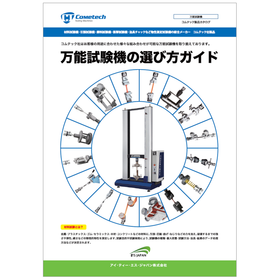
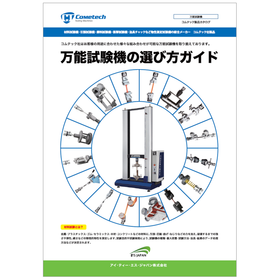
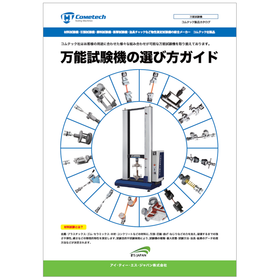
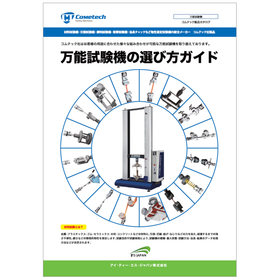
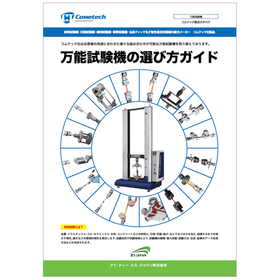
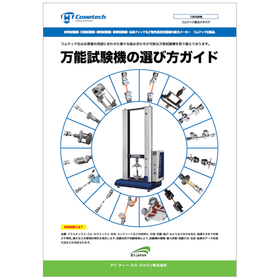
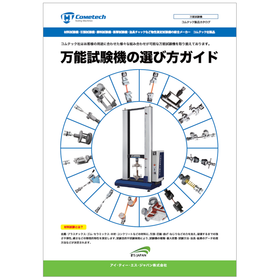
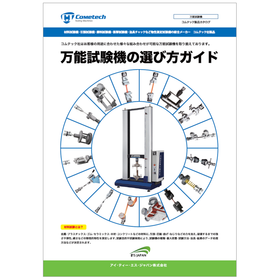
In the sports equipment industry, performance evaluation against impact is essential to ensure product safety and durability. Particularly for products used in sports that involve impact, appropriate impact testing significantly affects product quality. Inadequate impact testing can lead to product damage and user injuries. Our guide on how to choose a universal testing machine provides necessary information for selecting products, including load, testing methods, software, and options, specifically for Comtech's universal testing machines. 【Usage Scenarios】 - Impact testing of sports equipment - Durability evaluation in product development - Performance checks in quality management 【Benefits of Implementation】 - Improved product safety - Increased efficiency in quality management - Gaining customer trust
Added to bookmarks
Bookmarks listBookmark has been removed
Bookmarks listYou can't add any more bookmarks
By registering as a member, you can increase the number of bookmarks you can save and organize them with labels.
Free membership registration
In the building materials industry, weather resistance testing is extremely important for evaluating the durability of products. In particular, assessing performance under harsh conditions such as ultraviolet light, temperature changes, and humidity is essential for ensuring the long-term quality of products. Failing to conduct appropriate weather resistance tests can lead to the deterioration of building materials and a decline in performance, ultimately shortening the lifespan of the products. Our guide on selecting universal testing machines supports the selection of the most suitable testing equipment for weather resistance testing of building materials. 【Usage Scenarios】 - Product development at building material manufacturers - Performance evaluation in quality control departments - Material testing in research institutions 【Benefits of Implementation】 - Increased efficiency of weather resistance testing - Improved product quality - Gaining customer trust
Added to bookmarks
Bookmarks listBookmark has been removed
Bookmarks listYou can't add any more bookmarks
By registering as a member, you can increase the number of bookmarks you can save and organize them with labels.
Free membership registration
In the food industry, ensuring product quality and safety is the top priority. To prevent foreign matter contamination and ingredient degradation, proper quality management is essential to provide consumers with safe food. Universal testing machines can be utilized for various quality evaluations, such as testing the strength, durability, and component analysis of food. Our guide on how to choose a universal testing machine supports solving challenges in food quality management. 【Usage Scenarios】 - Food strength testing - Packaging material durability testing - Analysis of food components 【Benefits of Implementation】 - Improvement in product quality - Reduction of defective products - Gaining trust from customers
Added to bookmarks
Bookmarks listBookmark has been removed
Bookmarks listYou can't add any more bookmarks
By registering as a member, you can increase the number of bookmarks you can save and organize them with labels.
Free membership registration
In the metal industry, fatigue testing is essential for evaluating the durability of products. Particularly for components and structures that experience repeated loads, it is important to predict failure due to fatigue and ensure safety. Failing to conduct appropriate tests can lead to early product failure or accidents. Our guide on selecting universal testing machines supports the selection of the most suitable testing machines for fatigue testing of metal materials. 【Usage Scenarios】 - Fatigue testing of metal materials - Evaluation of product durability - Quality control 【Benefits of Implementation】 - Improved testing accuracy through proper selection of testing machines - Enhanced product safety - Increased efficiency in quality control
Added to bookmarks
Bookmarks listBookmark has been removed
Bookmarks listYou can't add any more bookmarks
By registering as a member, you can increase the number of bookmarks you can save and organize them with labels.
Free membership registration
In the plastic molding industry, evaluating moldability, which affects product quality, is crucial. Molding defects can reduce product yield and potentially lead to increased costs. Universal testing machines measure the strength and deformation behavior of plastic materials, aiding in the assessment of moldability. Our guide on selecting a universal testing machine supports you in choosing the optimal testing equipment tailored to your needs. 【Application Scenarios】 - Evaluation of moldability of plastic materials - Optimization of molding conditions - Quality control of products 【Benefits of Implementation】 - Reduction of molding defects - Improvement of product quality - Cost reduction
Added to bookmarks
Bookmarks listBookmark has been removed
Bookmarks listYou can't add any more bookmarks
By registering as a member, you can increase the number of bookmarks you can save and organize them with labels.
Free membership registration
In the rubber industry, accurate measurement of material elasticity is essential to ensure product quality. Understanding the behavior of rubber under temperature changes and stress, in particular, affects the durability and performance of products. Failing to conduct appropriate tests can lead to early deterioration or performance deficiencies in products. Our guide on how to choose a universal testing machine explains how to select a universal testing machine from Comtech. 【Usage Scenarios】 * Measurement of elasticity in rubber products * Tensile, compression, and bending tests of materials * Performance evaluation in product development 【Benefits of Implementation】 * Improvement in product quality * Reduction in development time * Gaining trust from customers
Added to bookmarks
Bookmarks listBookmark has been removed
Bookmarks listYou can't add any more bookmarks
By registering as a member, you can increase the number of bookmarks you can save and organize them with labels.
Free membership registration
In the textile industry, accurate measurements through tensile testing are essential to ensure product quality. Particularly for textile products that require strength and durability, the selection of appropriate testing methods and equipment is crucial. Using inappropriate testing machines can lead to inaccurate data, which may affect the quality assessment of the products. Our guide on choosing universal testing machines supports the selection of the most suitable equipment for tensile testing of textile products. 【Usage Scenarios】 - Measurement of tensile strength of textile products - Measurement of fabric elongation rate - Measurement of yarn strength 【Benefits of Implementation】 - Acquisition of accurate testing data - Improvement of product quality - Gaining customer trust
Added to bookmarks
Bookmarks listBookmark has been removed
Bookmarks listYou can't add any more bookmarks
By registering as a member, you can increase the number of bookmarks you can save and organize them with labels.
Free membership registration
In the packaging industry, evaluating the impact resistance of packaging materials is essential to ensure product protection and safety during transportation. Particularly for packaging products that are exposed to drops or shocks, selecting packaging materials with appropriate impact resistance is crucial to prevent product damage and enhance customer satisfaction. Inadequate packaging materials can lead to product breakage and complaints. Our guide on how to choose a universal testing machine supports the selection of the best testing machine for impact resistance testing. 【Usage Scenarios】 - Evaluation of packaging material impact resistance - Drop testing of products - Vibration testing during transportation 【Benefits of Implementation】 - Reduced risk of product damage - Cost savings through optimization of packaging materials - Increased reliability from customers
Added to bookmarks
Bookmarks listBookmark has been removed
Bookmarks listYou can't add any more bookmarks
By registering as a member, you can increase the number of bookmarks you can save and organize them with labels.
Free membership registration
In the electronics industry, product reliability is one of the most important issues. To ensure the long-term performance of products, durability testing under various environmental conditions is essential. Universal testing machines accommodate a variety of tests such as tension, compression, and bending, contributing to the quality evaluation of products. Our guide on how to choose a universal testing machine will assist you in selecting the most suitable testing machine for your needs. 【Usage Scenarios】 - Durability testing of electronic components - Quality evaluation of products - Material property evaluation 【Benefits of Implementation】 - Improved product reliability - Enhanced efficiency in quality control - Strengthened market competitiveness
Added to bookmarks
Bookmarks listBookmark has been removed
Bookmarks listYou can't add any more bookmarks
By registering as a member, you can increase the number of bookmarks you can save and organize them with labels.
Free membership registration
In the medical device industry, testing for material strength and durability is essential to ensure product safety. Universal testing machines provide accurate data in these tests, contributing to product quality assurance. Selecting the appropriate testing equipment enhances product reliability and ensures compliance with regulations. 【Application Scenarios】 - Material testing for medical devices - Product durability testing - Quality control 【Benefits of Implementation】 - Improved product safety - Increased efficiency in quality management - Compliance with regulations
Added to bookmarks
Bookmarks listBookmark has been removed
Bookmarks listYou can't add any more bookmarks
By registering as a member, you can increase the number of bookmarks you can save and organize them with labels.
Free membership registration
In the aerospace industry, strength testing of materials is essential to ensure product safety and reliability. Particularly for aircraft components and structural materials, high strength and durability are required, and performance under harsh environmental conditions must be guaranteed. Appropriate strength testing supports the foundation of quality management from the design phase through manufacturing and operation. Our guide on selecting universal testing machines assists in choosing the optimal testing equipment to meet the strength testing needs in the aerospace sector. 【Application Scenarios】 - Strength testing of aircraft components - Material testing of space structures - Evaluation of composite materials - Testing under high and low temperature environments - Fatigue testing 【Benefits of Implementation】 - Improved product safety - Enhanced efficiency in quality management - Optimization of material selection - Cost reduction - Increased reliability
Added to bookmarks
Bookmarks listBookmark has been removed
Bookmarks listYou can't add any more bookmarks
By registering as a member, you can increase the number of bookmarks you can save and organize them with labels.
Free membership registration