46~84 item / All 84 items
Displayed results
Filter by category

Added to bookmarks
Bookmarks listBookmark has been removed
Bookmarks listYou can't add any more bookmarks
By registering as a member, you can increase the number of bookmarks you can save and organize them with labels.
Free membership registration
Contact this company
Inquiry Form46~84 item / All 84 items
Filter by category

In the plating process for semiconductors and electronic components, even minor contamination and slight variations in chemical management can significantly impact quality. PFA coating not only offers chemical resistance but also possesses a smooth surface characteristic that makes it difficult for dirt to adhere, thereby suppressing the occurrence of foreign substances from jigs and racks. Additionally, its water-repellent properties reduce the carryover of chemicals, contributing to the stabilization of cleaning conditions in the next process. These characteristics enable improved reproducibility and quality stabilization throughout the entire process. Optimizing the surface of jigs is a crucial factor in fields that demand high precision and reliability. We also accommodate specification design and evaluation tests according to application conditions and required performance, so please feel free to contact us for technical consultations and prototype verifications.
Added to bookmarks
Bookmarks listBookmark has been removed
Bookmarks listYou can't add any more bookmarks
By registering as a member, you can increase the number of bookmarks you can save and organize them with labels.
Free membership registration
In the plating process, metal leaching and the generation of fine foreign substances due to the corrosion of jigs and racks can lead to quality defects and reduced reproducibility. PFA coating prevents direct contact with chemicals by covering the substrate with a dense film, thereby suppressing corrosion and leaching. This makes it easier to maintain the cleanliness of the plating solution and contributes to the stabilization of product quality. Additionally, the smooth surface makes it difficult for dirt to adhere, which also reduces the risk of contamination. The management of jig conditions becomes increasingly important in processes with high quality requirements. It is an effective improvement measure aimed at stabilizing processes and enhancing quality. We also accommodate the consideration of optimal specifications and prototype evaluations according to applications and conditions, so please feel free to contact us for technical consultations and prototype verifications.
Added to bookmarks
Bookmarks listBookmark has been removed
Bookmarks listYou can't add any more bookmarks
By registering as a member, you can increase the number of bookmarks you can save and organize them with labels.
Free membership registration
In the plating process, the carryover of chemical solutions adhering to jigs and racks can lead to increased load in the cleaning process and contamination with other liquids. PFA coating, with its excellent water repellency and non-stick properties, minimizes the retention of liquids on surfaces and promotes natural drainage. This reduces the amount of chemical carryover, contributing to improved cleaning efficiency and reduced water usage. Additionally, it helps to lower the burden of wastewater treatment, which can also lead to improvements in environmental impact and operational costs. Particularly in continuous lines and automated equipment, improving liquid drainage directly contributes to stable operation of the entire process. We can also accommodate the consideration of optimal specifications and evaluation tests based on site conditions, so please feel free to contact us for technical consultations and prototype validations.
Added to bookmarks
Bookmarks listBookmark has been removed
Bookmarks listYou can't add any more bookmarks
By registering as a member, you can increase the number of bookmarks you can save and organize them with labels.
Free membership registration
In the plating process, jigs and racks are constantly exposed to chemical solutions, leading to issues such as performance degradation due to corrosion and deterioration. Surface roughness and deformation can cause a decrease in product retention and uneven plating, resulting in quality defects and reduced yield. By applying PFA coating, it is possible to protect the surface of jigs from chemical solutions and maintain a stable condition over a long period. This coating can accommodate a wide range of acidic and alkaline chemical solutions, allowing for flexible responses to various product types and process changes. Additionally, by suppressing metal leaching and foreign substance generation due to corrosion, it contributes to maintaining the cleanliness of the plating solution. This surface treatment can achieve both process stabilization and quality improvement simultaneously. We also support the consideration of optimal specifications and prototype evaluations based on application conditions, so please feel free to contact us for technical consultations and prototype verifications.
Added to bookmarks
Bookmarks listBookmark has been removed
Bookmarks listYou can't add any more bookmarks
By registering as a member, you can increase the number of bookmarks you can save and organize them with labels.
Free membership registration
In the semiconductor manufacturing field, strict requirements are demanded not only for chemical resistance but also for low particle generation, non-contamination, and high purity. PFA coatings not only excel in chemical and heat resistance but also form dense and defect-free films, which help suppress the permeation of chemicals and gases, contributing to the reduction of particle generation and ion leaching risks. Due to these characteristics, they are widely used for surface treatment of semiconductor manufacturing equipment and related components. They are particularly noted for their ability to maintain stable performance even in environments that require high reliability. We can also provide proposals for optimal specifications and evaluation tests tailored to applications and usage conditions, so please feel free to contact us for technical consultations and prototype verifications.
Added to bookmarks
Bookmarks listBookmark has been removed
Bookmarks listYou can't add any more bookmarks
By registering as a member, you can increase the number of bookmarks you can save and organize them with labels.
Free membership registration
When considering fluoropolymer coatings, the differences between PTFE and PFA are important selection points. Both are resins that excel in non-stick properties, water repellency, oil repellency, slip properties, chemical resistance, and heat resistance, but PTFE tends to be difficult to flow when melted, making it prone to pinholes and voids in the coating. On the other hand, PFA has a low melt viscosity and excellent flowability, allowing it to fill gaps between particles and form a dense and smooth coating. This difference gives PFA an advantage in applications where corrosion resistance and insulation reliability are required. Additionally, it is easier to achieve thicker coatings, making it suitable for ensuring long-term durability in anti-corrosion applications. Selecting the optimal material according to the application and desired performance is crucial. We can also assist with inquiries regarding material selection and comparative evaluations, so please feel free to contact us for technical consultations and prototype testing.
Added to bookmarks
Bookmarks listBookmark has been removed
Bookmarks listYou can't add any more bookmarks
By registering as a member, you can increase the number of bookmarks you can save and organize them with labels.
Free membership registration
In electrical insulation applications, pinholes and voids in the coating can cause partial discharge and insulation breakdown. PFA coating excels in fluidity during melting, allowing it to fill gaps between particles and form a dense coating, thereby suppressing the occurrence of such defects. As a result, it becomes easier to ensure stable insulation characteristics, contributing to improved reliability of electrical properties. Furthermore, it also has excellent heat resistance, making it suitable for insulation applications in high-temperature environments. It is effective as a surface treatment aimed at enhancing insulation performance in electrical components and device parts. We are also available for consultations regarding the selection of optimal specifications and evaluation tests based on applications and conditions, so please feel free to contact us for technical inquiries and prototype verification.
Added to bookmarks
Bookmarks listBookmark has been removed
Bookmarks listYou can't add any more bookmarks
By registering as a member, you can increase the number of bookmarks you can save and organize them with labels.
Free membership registration
In chemical equipment and devices that handle chemical solutions, degradation due to corrosion and the shortening of equipment lifespan are significant challenges. PFA coating has excellent resistance to strong acids and strong alkalis, such as concentrated sulfuric acid, hydrofluoric acid, and caustic soda, making it possible to protect the metal substrate for an extended period. Additionally, its high fluidity results in fewer coating defects, making it easier to suppress the penetration of chemicals and gases. It can also accommodate thicker coatings, ensuring more stable corrosion resistance. This coating is suitable for applications aimed at long-term use in chemical environments and improving equipment reliability. We can also accommodate the consideration of optimal specifications and evaluation tests based on specific chemical conditions and usage temperatures, so please feel free to contact us for technical consultations and prototype verifications.
Added to bookmarks
Bookmarks listBookmark has been removed
Bookmarks listYou can't add any more bookmarks
By registering as a member, you can increase the number of bookmarks you can save and organize them with labels.
Free membership registration
PFA is a fluoropolymer that has been improved based on PTFE, characterized by maintaining basic properties such as non-stickiness, heat resistance, and chemical resistance, while also exhibiting excellent flowability during melting. This difference in flowability allows for a more uniform spread of the coating during application, resulting in a dense and smooth surface. Due to this feature, while PTFE is prone to pinholes and voids, PFA can achieve a coating with fewer defects, making it suitable for applications that require higher reliability. It is particularly valued for its long-term protective performance in chemical and high-temperature environments. We also support the evaluation of the applicability of PFA coatings, comparisons with other materials, and prototype assessments. For optimal specifications tailored to your applications and conditions, please feel free to contact us for technical consultations and prototype verifications.
Added to bookmarks
Bookmarks listBookmark has been removed
Bookmarks listYou can't add any more bookmarks
By registering as a member, you can increase the number of bookmarks you can save and organize them with labels.
Free membership registration
In coatings that require high-temperature sintering, such as typical fluoropolymer coatings, concerns about deformation and changes in material properties due to thermal effects have limited the applicable parts. FU-1240 can form a film at low temperatures, significantly reducing these constraints and enabling application to a wide range of workpieces, including resin parts, thin-walled metals, and small precision components. This allows for the addition of functions to parts that were previously abandoned for surface treatment, leading to increased design flexibility and process improvements. It also possesses basic properties such as non-stickiness and slip characteristics in a well-balanced manner, making it a highly practical coating. If you are considering new application developments or reviewing existing processes, please feel free to consult us. For technical inquiries and prototype verification, do not hesitate to contact our company.
Added to bookmarks
Bookmarks listBookmark has been removed
Bookmarks listYou can't add any more bookmarks
By registering as a member, you can increase the number of bookmarks you can save and organize them with labels.
Free membership registration
In the manufacturing process, the adhesion of adhesives, resins, inks, and other substances can lead to quality defects and decreased work efficiency. This is particularly problematic with resin parts and guide components, where adhesion can cause snagging and transport issues. FU-1240, despite being low-temperature sintered, exhibits the non-stick and release properties of fluorine-based coatings, helping to suppress such adhesion problems. By stabilizing the surface condition, it also contributes to reducing cleaning frequency and improving productivity. This technology can be applied to parts that could not be addressed with conventional high-temperature processing, thus broadening the scope for process improvement. We can also consider optimal specifications and prototype responses tailored to your applications and conditions, so please feel free to contact us for technical consultations and prototype evaluations.
Added to bookmarks
Bookmarks listBookmark has been removed
Bookmarks listYou can't add any more bookmarks
By registering as a member, you can increase the number of bookmarks you can save and organize them with labels.
Free membership registration
In precision parts and small mechanical components, even slight thermal deformation or dimensional discrepancies can significantly impact product performance. Therefore, surface treatments that involve high-temperature firing may be difficult to apply. Our FU-1240 can form a film at low temperatures, allowing us to impart non-stick and slip properties while minimizing deformation and warping due to heat. It is also easy to apply to thin metal sheets and finely processed parts, which helps reduce constraints during the design phase. By providing functions such as reduced contact resistance and adhesion prevention, it contributes to the stabilization of component performance. It is an effective option for surface treatment in applications with high precision requirements. We are also able to support the examination of application conditions and prototype evaluations, so please feel free to contact us for technical consultations and prototype verifications.
Added to bookmarks
Bookmarks listBookmark has been removed
Bookmarks listYou can't add any more bookmarks
By registering as a member, you can increase the number of bookmarks you can save and organize them with labels.
Free membership registration
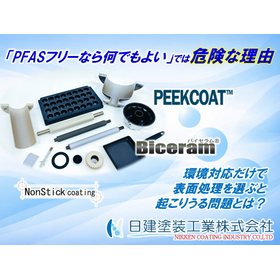
Resin parts are lightweight and have excellent processability, but they are prone to accumulating dirt and adhesive substances on their surfaces, which can lead to process troubles. However, high-temperature sintering coatings carry risks of thermal deformation and reduced material properties, and there are often cases where their application is limited. FU-1240 is a coating that minimizes thermal impact on the resin through low-temperature sintering while providing non-stick and release properties. It suppresses the adhesion of adhesives and resins, improving cleanability and maintainability, thereby contributing to production stability. It can accommodate a wide range of materials from general-purpose resins to engineering plastics and super engineering plastics, allowing for specification design tailored to specific applications. We also support application considerations and evaluation tests, so please contact us for technical consultations and prototype verifications.
Added to bookmarks
Bookmarks listBookmark has been removed
Bookmarks listYou can't add any more bookmarks
By registering as a member, you can increase the number of bookmarks you can save and organize them with labels.
Free membership registration
Fluororesin coatings excel in non-stick and release properties; however, they pose challenges for resin parts, thin-walled metals, and precision components due to the requirement for high-temperature sintering. Our FU-1240 is a coating designed to form a film at low temperatures, allowing for the addition of surface functions while minimizing thermal stress on the substrate. This enables the prevention of adhesion and improvement of slip properties while maintaining dimensional accuracy and material characteristics after molding. A significant feature is its applicability to resin parts and fine components that were previously unsuitable. It also contributes to increased flexibility in process design, with expectations for use in a wide range of applications. We are also equipped to handle discussions on applicability and prototype evaluations, so please feel free to contact us for technical consultations and prototype verifications.
Added to bookmarks
Bookmarks listBookmark has been removed
Bookmarks listYou can't add any more bookmarks
By registering as a member, you can increase the number of bookmarks you can save and organize them with labels.
Free membership registration
Rubber parts are prone to surface degradation due to wear and contact during use, which can lead to decreased performance and increased replacement frequency. Our FU-2015 is designed with wear resistance in mind, maintaining functionality over a long period while minimizing surface damage. By combining non-stick and slippery properties, it reduces frictional load, contributing to extended component lifespan and reduced maintenance frequency. Additionally, the flexible coating conforms to the deformation of the rubber, ensuring stable performance even in varying usage environments. This coating is suitable for sites aiming to improve durability and achieve long-term stable operation. We also accommodate considerations for optimal specifications and prototype evaluations based on applications and conditions, so please feel free to contact us for technical consultations and prototype testing.
Added to bookmarks
Bookmarks listBookmark has been removed
Bookmarks listYou can't add any more bookmarks
By registering as a member, you can increase the number of bookmarks you can save and organize them with labels.
Free membership registration
Coating on rubber materials poses challenges due to significant stress on the coating film caused by deformation and stretching, making it prone to cracking and peeling with conventional surface treatments. FU-2015 takes into account the unique usage environment of rubber and adopts a design that balances flexibility and adhesion. It easily adapts to repeated deformations such as compression, stretching, and bending, maintaining stable surface functionality. A major advantage is that it can impart performance without compromising the inherent properties of rubber, while utilizing the non-stick and slippery characteristics of fluorine compounds. This provides a new option for applications that have faced challenges with traditional coatings. We also accommodate discussions on applicability and prototype evaluations based on materials and usage conditions, so please feel free to contact us for technical consultations and prototype verifications.
Added to bookmarks
Bookmarks listBookmark has been removed
Bookmarks listYou can't add any more bookmarks
By registering as a member, you can increase the number of bookmarks you can save and organize them with labels.
Free membership registration
Rubber parts can have high friction during contact, which may lead to transport failures and snagging. This is particularly true for roll and guide components, where a lack of slip can hinder stable operation. Our FU-2015 improves the friction characteristics of rubber surfaces through a fluorine-based coating, providing slip properties. It reduces contact resistance with the workpiece, enabling smooth transport and operation. Additionally, its non-stick nature helps suppress the adhesion of dirt and foreign substances, contributing to long-term stable operation. The flexible coating follows the deformation of the rubber, allowing for application while minimizing functional degradation. We can also provide evaluations and optimal design proposals tailored to specific usage conditions. If you are considering improving slip properties or addressing transport issues, please contact us for technical consultation and prototype verification.
Added to bookmarks
Bookmarks listBookmark has been removed
Bookmarks listYou can't add any more bookmarks
By registering as a member, you can increase the number of bookmarks you can save and organize them with labels.
Free membership registration
Rubber gaskets and O-rings can become stuck at contact points due to prolonged use, leading to breakage during removal and increased burden during replacement work. This is particularly problematic in sealing applications where compression is maintained, making adhesion and sticking more likely, which in turn reduces maintainability. Our FU-2015 is a fluorine-based coating that imparts slip and non-stick properties to surfaces without compromising the flexibility of the rubber material, helping to suppress the occurrence of sticking. The coating design follows the deformation of the rubber, maintaining stable performance even in repeated compression and stretching environments. This contributes to improved workability during part replacement and reduces the likelihood of issues. We can also accommodate the consideration of optimal specifications and prototype evaluations based on application and usage conditions. If you are experiencing problems with sticking, please feel free to contact us for technical consultation and prototype verification.
Added to bookmarks
Bookmarks listBookmark has been removed
Bookmarks listYou can't add any more bookmarks
By registering as a member, you can increase the number of bookmarks you can save and organize them with labels.
Free membership registration
In fluoropolymer coatings, the primer layer contributes to improved adhesion, but depending on the application, it can also become a risk factor for impurity leaching and foreign matter contamination. Particularly in fields that require clean environments or high purity, there is a need to reconsider this structure itself. Our HYPERCOAT adopts a structure that does not use a primer and addresses these challenges by directly forming a fluoropolymer coating through vacuum technology. It features practical adhesion while reducing concerns associated with conventional multilayer structures. This coating technology offers a new option for applications that require a balance between cleanliness and functionality. We also provide optimal specification proposals and prototype evaluations tailored to application conditions and desired performance, so please contact us for technical consultations and prototype verifications.
Added to bookmarks
Bookmarks listBookmark has been removed
Bookmarks listYou can't add any more bookmarks
By registering as a member, you can increase the number of bookmarks you can save and organize them with labels.
Free membership registration
In general fluoropolymer coatings, it is common to have a primer layer to ensure adhesion to the metal substrate. However, this structure can become an unnecessary layer depending on the application, posing challenges in terms of cleanliness and material-related risks. Our HYPERCOAT utilizes a unique vacuum technology to directly form a fluoropolymer coating without the use of a primer, representing a new approach to coating. Unlike a simple primer-less specification, it ensures practical performance through a design that considers the balance between adhesion and functionality. While maintaining the characteristics of fluoropolymers such as non-stick properties and chemical resistance, it can provide optimal surface characteristics tailored to specific applications. We welcome inquiries regarding differences from conventional specifications, applicability assessments, evaluation tests, and more. Please feel free to contact us for technical consultations and prototype verifications.
Added to bookmarks
Bookmarks listBookmark has been removed
Bookmarks listYou can't add any more bookmarks
By registering as a member, you can increase the number of bookmarks you can save and organize them with labels.
Free membership registration
In semiconductor manufacturing equipment, the elution of trace impurities and foreign matter from component surfaces significantly affects product quality, making the cleanliness of coatings crucial. Traditionally, fluoropolymer coatings commonly use a primer layer to ensure adhesion; however, this multilayer structure can pose risks depending on the application. Our HYPERCOAT utilizes a unique vacuum technology to form a fluoropolymer coating directly on the metal substrate without the use of a primer, achieving high cleanliness. This reduces the risk of impurity elution from the primer and is suitable for clean environments. It also ensures practical levels of adhesion, making it promising for applications in advanced industries, including the semiconductor field. We can also consider and evaluate specifications based on the usage environment and required performance, so please feel free to contact us for technical consultations and prototype verifications.
Added to bookmarks
Bookmarks listBookmark has been removed
Bookmarks listYou can't add any more bookmarks
By registering as a member, you can increase the number of bookmarks you can save and organize them with labels.
Free membership registration
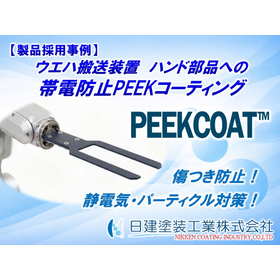
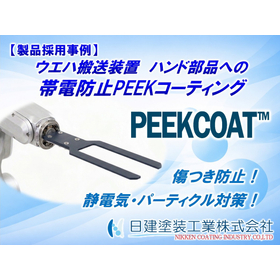
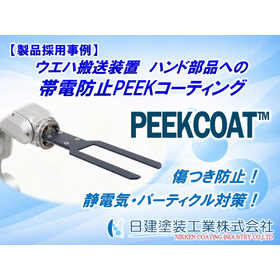
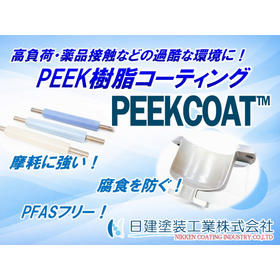
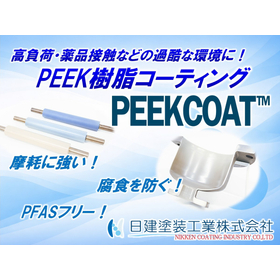
The metal printing transport fixtures come into contact with metal plates repeatedly, making them prone to surface wear and degradation, which can lead to the occurrence of scratches. PEEKCOAT maintains a stable surface condition over a long period due to its high hardness and excellent wear resistance. Because it is less likely to experience performance degradation from wear, it helps reduce quality variation and contributes to long-term stable operation. Additionally, it leads to a reduction in maintenance frequency and a decrease in the risk of equipment downtime. In actual field applications, both defect reduction and durability have been confirmed, contributing to the overall reliability of the process. When considering surface treatments that emphasize durability, we can propose optimal coating designs tailored to the usage environment and component specifications. For technical consultations and prototype verification, please feel free to contact us.
Added to bookmarks
Bookmarks listBookmark has been removed
Bookmarks listYou can't add any more bookmarks
By registering as a member, you can increase the number of bookmarks you can save and organize them with labels.
Free membership registration
In manufacturing, the occurrence of defects directly leads to increased costs, and this impact is particularly significant for high-value-added products such as metal printing. Defects caused by scratches during the transport process often create new challenges even when countermeasures are implemented. PEEKCOAT forms a highly wear-resistant protective layer on the surface of transport jigs, suppressing the occurrence of scratches by achieving stable contact conditions. In actual implementation cases, the defect rate was reduced to about 1/6, resulting in cost savings of several tens of millions of yen annually. It also contributes to reducing maintenance frequency and line downtime. This technology is suitable for those considering cost-effective process improvements. We can also provide specific effect estimates and prototype evaluations, so please feel free to contact us for technical consultations and prototype verifications.
Added to bookmarks
Bookmarks listBookmark has been removed
Bookmarks listYou can't add any more bookmarks
By registering as a member, you can increase the number of bookmarks you can save and organize them with labels.
Free membership registration
In metal printing processes, fine scratches caused by contact during transportation can lead to quality defects. Particularly, contact with transport fixtures during the drying process is unavoidable, making surface damage prevention crucial. PEEKCOAT reduces friction and snagging during contact due to its high hardness and smooth coating layer, helping to suppress the occurrence of scratches. It eliminates the need for regular maintenance like traditional varnish applications and can also avoid the risk of printing defects associated with fluororesin tubes. Its excellent wear resistance ensures sustained performance even in environments with repeated contact. This surface treatment achieves both quality stabilization and process improvement simultaneously. We support everything from the consideration of optimal specifications based on application and equipment conditions to prototype evaluation. If you are struggling with preventing scratches in the transport process, please contact us for technical consultation and prototype verification.
Added to bookmarks
Bookmarks listBookmark has been removed
Bookmarks listYou can't add any more bookmarks
By registering as a member, you can increase the number of bookmarks you can save and organize them with labels.
Free membership registration
In metal printing processes, there are cases where the transport jig used during transfer to the drying oven comes into contact with the printed metal plates, resulting in scratches on the surface and leading to defective products. This is particularly impactful for high-design products, where even minor scratches can significantly affect quality and contribute to reduced yield. Traditionally, measures such as applying varnish or attaching fluororesin tubes have been implemented, but challenges such as increased maintenance labor and the emergence of new printing defects have arisen. PEEKCOAT forms a high-hardness and smooth resin layer on the surface of the transport jig, reducing damage during contact and providing excellent wear resistance, allowing for long-term stable operation. Its implementation has reduced the defect rate to about 1/6 of the previous level, achieving cost savings in the tens of millions of yen annually. If you are considering measures for scratch prevention and yield improvement in the transport process, we can propose optimal specifications tailored to the target parts and usage conditions. We also offer technical consultations and prototype testing, so please feel free to contact us.
Added to bookmarks
Bookmarks listBookmark has been removed
Bookmarks listYou can't add any more bookmarks
By registering as a member, you can increase the number of bookmarks you can save and organize them with labels.
Free membership registration
Adhesion of sticky substances to blades leads to increased cleaning tasks and frequency of replacements, which in turn contributes to the burden on the site and increased costs. By applying NonStick STC, adhesion of adhesives is suppressed, resulting in reduced cleaning frequency and extended blade life. As a result, this leads to a reduction in maintenance labor and an increase in equipment operating rates. This coating is suitable for sites that want to achieve both process improvement and cost reduction simultaneously. For technical inquiries and prototype testing regarding NonStick STC, please feel free to contact us.
Added to bookmarks
Bookmarks listBookmark has been removed
Bookmarks listYou can't add any more bookmarks
By registering as a member, you can increase the number of bookmarks you can save and organize them with labels.
Free membership registration
Adhesion to cutting tools occurs due to a combination of factors such as the fine roughness of the surface, surface energy, and frictional heat. Particularly, even slight differences in surface conditions can significantly affect the amount of adhesion and processing stability. NonStick STC reduces surface energy and suppresses the phenomena that lead to adhesion. It prevents the transfer and accumulation of adhesives, maintaining a stable cutting condition. If you have issues such as "adhesion occurs immediately," please contact us for technical consultation and prototype verification.
Added to bookmarks
Bookmarks listBookmark has been removed
Bookmarks listYou can't add any more bookmarks
By registering as a member, you can increase the number of bookmarks you can save and organize them with labels.
Free membership registration
In continuous cutting processes, issues such as clogging and defects caused by adhesive buildup on cutting tools are significant challenges. NonStick STC combines high non-stick properties with wear resistance, maintaining performance even after prolonged use. In continuous cutting tests using tape dispensers, it has a proven track record of consistently cutting strong adhesive tape over 200,000 times. This helps reduce the frequency of cleaning and replacement, contributing to shorter line downtime and increased productivity. For technical inquiries or prototype testing regarding NonStick STC, please feel free to contact us.
Added to bookmarks
Bookmarks listBookmark has been removed
Bookmarks listYou can't add any more bookmarks
By registering as a member, you can increase the number of bookmarks you can save and organize them with labels.
Free membership registration
In the processing of adhesive tapes and sheets, changes in the blade edge shape due to coating can lead to a decrease in cutting performance. NonStick STC provides non-stick properties while maintaining the sharpness of the blade edge through a thin film design of less than 1μm. It suppresses the increase in cutting resistance and maintains high-precision processing quality. It is also easy to apply to existing cutting tools, allowing for improvements with minimal changes to the process. We can propose optimal specifications according to the usage conditions. For technical consultations and prototype testing of the non-stick coating NonStick STC for cutting tools, please contact us.
Added to bookmarks
Bookmarks listBookmark has been removed
Bookmarks listYou can't add any more bookmarks
By registering as a member, you can increase the number of bookmarks you can save and organize them with labels.
Free membership registration
In the cutting process of adhesive sheets and tapes, it is unavoidable for adhesive to adhere to the blades, leading to a decrease in cutting performance and poor cutting edges. The accumulation of this adhesion increases the frequency of cleaning and blade replacement, which can also result in decreased productivity. NonStick STC is a thin film non-stick coating that reduces the surface energy of the blade surface, suppressing the adhesion of adhesives. It can be applied while maintaining the blade edge shape, allowing for process improvements without compromising machining accuracy. If you are experiencing adhesive adhesion issues with your blades, please feel free to contact us. We offer technical consultations and prototype testing.
Added to bookmarks
Bookmarks listBookmark has been removed
Bookmarks listYou can't add any more bookmarks
By registering as a member, you can increase the number of bookmarks you can save and organize them with labels.
Free membership registration
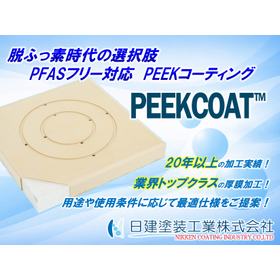
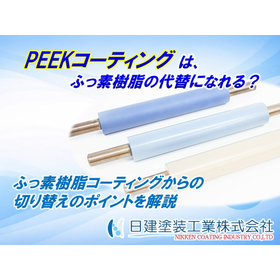
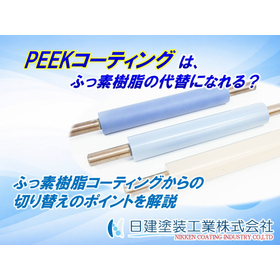
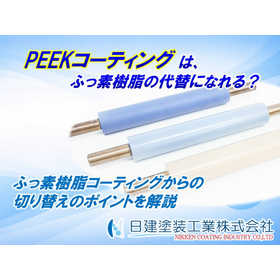
Conventional PEEK coatings are prone to cracking and delamination due to internal stress and differences in thermal expansion when thickened, which has limited their design to thin films. Our company has achieved a maximum thickness of 3000µm while suppressing these issues through the optimization of the lamination process and material design. With stable film formation, we can now address high-durability applications that were previously difficult to apply. This technology eliminates performance constraints due to insufficient film thickness and expands new application areas. If you have challenges such as "lack of durability" or "considering thickening," please contact us for technical consultation and prototype verification.
Added to bookmarks
Bookmarks listBookmark has been removed
Bookmarks listYou can't add any more bookmarks
By registering as a member, you can increase the number of bookmarks you can save and organize them with labels.
Free membership registration
Conventional coatings are thin, which can make post-coating processing and dimensional adjustments difficult. Thick-film PEEK coatings can achieve millimeter-level thickness, allowing for finishing and clearance adjustments through machining after coating. This enables designs that address functional aspects such as ensuring the precision of sliding parts and optimizing contact areas. By combining coating and machining, the design flexibility of components is enhanced, allowing for flexible responses tailored to specific applications. We also accommodate the consideration of individual specifications and prototype evaluations. For technical consultations and prototype verifications, please feel free to contact us.
Added to bookmarks
Bookmarks listBookmark has been removed
Bookmarks listYou can't add any more bookmarks
By registering as a member, you can increase the number of bookmarks you can save and organize them with labels.
Free membership registration
Wear and deterioration of equipment parts can lead to increased maintenance costs and downtime. Thick-film PEEK coating allows for a sufficient film thickness to provide a buffer against wear, maintaining stable performance over a long period. It is particularly effective in parts with high contact frequency, such as sliding and conveying components, leading to extended component replacement cycles and reduced maintenance burdens. It is also applicable to high-durability applications that are difficult to address with conventional thin-film coatings. We also accommodate individual specifications and prototype evaluations. Please feel free to contact us for technical consultations and prototype verifications.
Added to bookmarks
Bookmarks listBookmark has been removed
Bookmarks listYou can't add any more bookmarks
By registering as a member, you can increase the number of bookmarks you can save and organize them with labels.
Free membership registration
In components used in chemical environments, the reduction of lifespan due to corrosion and degradation is a challenge. PEEK is a resin with excellent chemical resistance, but conventional coatings have thin film thicknesses, which poses challenges for long-term protective performance. Our PEEKCOAT forms a stable protective layer even in chemical environments due to a thick film of up to 3000µm. It is easier to maintain performance in corrosive atmospheres and under chemical contact conditions, contributing to the longevity of equipment. It is also possible to achieve a balance with wear resistance, making it a suitable surface treatment for harsh environments. We also accommodate the consideration of individual specifications and prototype evaluations. For technical consultations and prototype verifications, please feel free to contact us.
Added to bookmarks
Bookmarks listBookmark has been removed
Bookmarks listYou can't add any more bookmarks
By registering as a member, you can increase the number of bookmarks you can save and organize them with labels.
Free membership registration
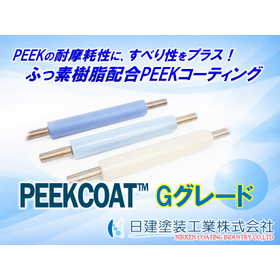
PEEK coating has excellent mechanical strength and chemical resistance, but traditionally it has been difficult to ensure film thickness, with thick films generally being around 300 to 500 μm. As a result, there were limitations in durability in extremely harsh sliding environments, such as sliding parts subjected to high loads. Our company has adopted a layered process that repeats painting and firing multiple times, allowing for thick films of up to 3000 µm. This process achieves stable film formation while minimizing the risk of cracks and peeling due to internal stress and thermal expansion differences. The increased thickness makes it easier to secure wear allowances, contributing to the longevity of sliding and transport components. It can also be applied to applications that were difficult to address with conventional thin-film PEEK coatings.
Added to bookmarks
Bookmarks listBookmark has been removed
Bookmarks listYou can't add any more bookmarks
By registering as a member, you can increase the number of bookmarks you can save and organize them with labels.
Free membership registration
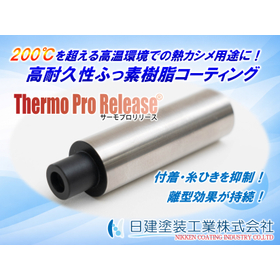
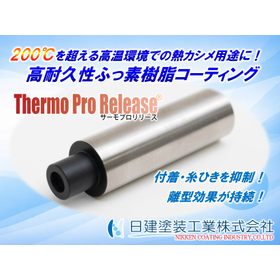
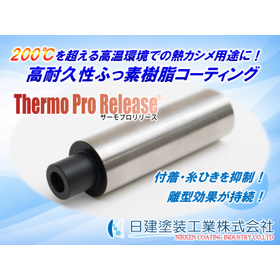
Thermo Pro Release is a high-durability, high-release fluororesin coating originally developed by Nikken Coating Industry. It demonstrates excellent release properties and durability even in high-temperature environments above 200°C, preventing resin adhesion and thread pulling during thermal welding and thermal riveting processes. With our unique evaluation technology, we can propose the optimal coating specifications tailored to the customer's usage environment (temperature range, type of resin, etc.). It also excels in abrasion resistance and adhesion, lasting longer than conventional fluororesin coatings. This reduces the effort required for mold cleaning and maintenance, contributing to improved production efficiency and reduced maintenance costs!
Added to bookmarks
Bookmarks listBookmark has been removed
Bookmarks listYou can't add any more bookmarks
By registering as a member, you can increase the number of bookmarks you can save and organize them with labels.
Free membership registration
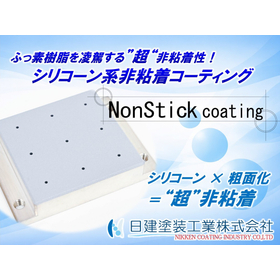
"NonStick STC" is an ultra-thin release coating applicable to cutting tools and precision molds! ■ Features of NonStick STC - Smooth No roughening such as blasting is required as a pre-treatment before coating, and post-polishing of the cutting edge after coating is also unnecessary. This helps maintain the sharpness of the cutting tools. - Transparent & Thin Being colorless and transparent with a film thickness of less than 1µm, it preserves the texture of the material. Additionally, it prevents dimensional changes in molds due to coating, which is crucial for precision molds that require accuracy. - Clean It is difficult for adhesive foreign substances, such as tape adhesives, to adhere, and if they do, they can be easily removed. This prevents a decrease in the sharpness of cutting tools and contamination of molds due to foreign substance adhesion.
Added to bookmarks
Bookmarks listBookmark has been removed
Bookmarks listYou can't add any more bookmarks
By registering as a member, you can increase the number of bookmarks you can save and organize them with labels.
Free membership registration
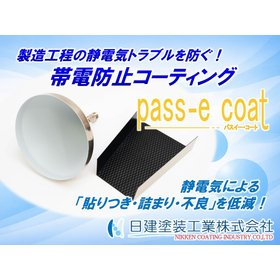
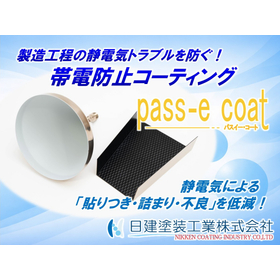
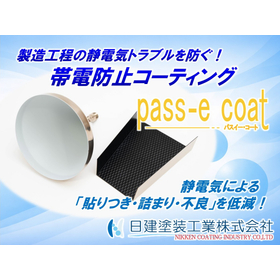
In the process of sliding films and similar materials (feeding mechanism), the guide part of the feeding mechanism is coated with fluororesin to enhance slip properties and prevent adhesion. However, during transport, the workpiece (such as film) may stick to the guide, temporarily halting the line. This is caused by static electricity generated from friction between the resins, which causes the workpiece to adhere to parts like the guide and stop sliding. When this happens, the production line stops, necessitating recovery work. If this occurs frequently, it can lead to increased time and costs. Standard fluororesin tends to accumulate static electricity, but our static-dissipative fluororesin coating (Pass-e Coat) can release generated static electricity, thereby preventing workpiece adhesion due to static electricity. If you are experiencing issues with line stoppages caused by workpiece adhesion due to static electricity, please feel free to consult us.
Added to bookmarks
Bookmarks listBookmark has been removed
Bookmarks listYou can't add any more bookmarks
By registering as a member, you can increase the number of bookmarks you can save and organize them with labels.
Free membership registration
Heat sealing (heat plate sealing) is a joining method where the parts of plastic components that need to be bonded are brought into contact with a high-temperature metal plate (heat plate) to temporarily melt the plastic surface, and then pressed together at the melted areas to integrate them. Some plastic pallets made of PP resin (polypropylene resin) are manufactured by integrating the upper and lower parts through heat sealing. The heat plates used in the heat sealing process of these plastic pallets are coated with fluororesin to utilize its property of being "non-stick," which helps prevent melted PP resin from adhering to the surface of the heat plate. However, over time, the fluororesin coating on the heat plate can become scratched or peel off, causing the resin to gradually start sticking. When resin adheres to the surface of the heat plate, the following problems can occur: - The resin is stretched from the adhered areas, compromising the appearance of the product. - Burnt resin that has stuck can mix into the joint area, leading to a decrease in the strength of the joint. - The need to replace the heat plate temporarily halts the production line, resulting in decreased productivity.
Added to bookmarks
Bookmarks listBookmark has been removed
Bookmarks listYou can't add any more bookmarks
By registering as a member, you can increase the number of bookmarks you can save and organize them with labels.
Free membership registration