91~109 item / All 109 items
Displayed results
Filter by category

Added to bookmarks
Bookmarks listBookmark has been removed
Bookmarks listYou can't add any more bookmarks
By registering as a member, you can increase the number of bookmarks you can save and organize them with labels.
Free membership registration
Contact this company
Inquiry Form91~109 item / All 109 items
Filter by category

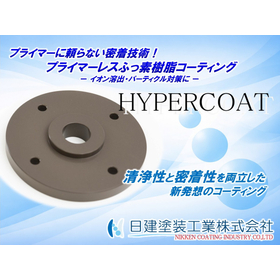
In semiconductor manufacturing equipment, the elution of trace impurities and foreign matter from component surfaces significantly affects product quality, making the cleanliness of coatings crucial. Traditionally, fluoropolymer coatings commonly use a primer layer to ensure adhesion; however, this multilayer structure can pose risks depending on the application. Our HYPERCOAT utilizes a unique vacuum technology to form a fluoropolymer coating directly on the metal substrate without the use of a primer, achieving high cleanliness. This reduces the risk of impurity elution from the primer and is suitable for clean environments. It also ensures practical levels of adhesion, making it promising for applications in advanced industries, including the semiconductor field. We can also consider and evaluate specifications based on the usage environment and required performance, so please feel free to contact us for technical consultations and prototype verifications.
Added to bookmarks
Bookmarks listBookmark has been removed
Bookmarks listYou can't add any more bookmarks
By registering as a member, you can increase the number of bookmarks you can save and organize them with labels.
Free membership registration
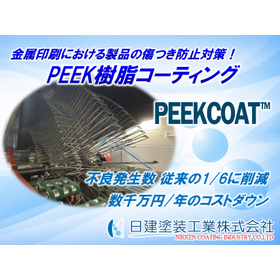
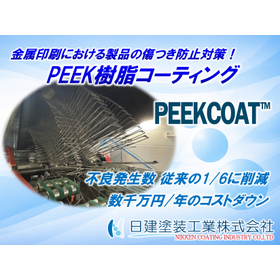
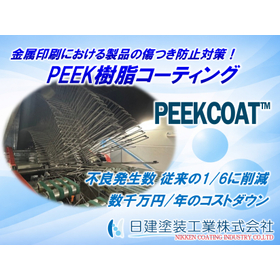
The metal printing transport fixtures come into contact with metal plates repeatedly, making them prone to surface wear and degradation, which can lead to the occurrence of scratches. PEEKCOAT maintains a stable surface condition over a long period due to its high hardness and excellent wear resistance. Because it is less likely to experience performance degradation from wear, it helps reduce quality variation and contributes to long-term stable operation. Additionally, it leads to a reduction in maintenance frequency and a decrease in the risk of equipment downtime. In actual field applications, both defect reduction and durability have been confirmed, contributing to the overall reliability of the process. When considering surface treatments that emphasize durability, we can propose optimal coating designs tailored to the usage environment and component specifications. For technical consultations and prototype verification, please feel free to contact us.
Added to bookmarks
Bookmarks listBookmark has been removed
Bookmarks listYou can't add any more bookmarks
By registering as a member, you can increase the number of bookmarks you can save and organize them with labels.
Free membership registration
In manufacturing, the occurrence of defects directly leads to increased costs, and this impact is particularly significant for high-value-added products such as metal printing. Defects caused by scratches during the transport process often create new challenges even when countermeasures are implemented. PEEKCOAT forms a highly wear-resistant protective layer on the surface of transport jigs, suppressing the occurrence of scratches by achieving stable contact conditions. In actual implementation cases, the defect rate was reduced to about 1/6, resulting in cost savings of several tens of millions of yen annually. It also contributes to reducing maintenance frequency and line downtime. This technology is suitable for those considering cost-effective process improvements. We can also provide specific effect estimates and prototype evaluations, so please feel free to contact us for technical consultations and prototype verifications.
Added to bookmarks
Bookmarks listBookmark has been removed
Bookmarks listYou can't add any more bookmarks
By registering as a member, you can increase the number of bookmarks you can save and organize them with labels.
Free membership registration
In metal printing processes, fine scratches caused by contact during transportation can lead to quality defects. Particularly, contact with transport fixtures during the drying process is unavoidable, making surface damage prevention crucial. PEEKCOAT reduces friction and snagging during contact due to its high hardness and smooth coating layer, helping to suppress the occurrence of scratches. It eliminates the need for regular maintenance like traditional varnish applications and can also avoid the risk of printing defects associated with fluororesin tubes. Its excellent wear resistance ensures sustained performance even in environments with repeated contact. This surface treatment achieves both quality stabilization and process improvement simultaneously. We support everything from the consideration of optimal specifications based on application and equipment conditions to prototype evaluation. If you are struggling with preventing scratches in the transport process, please contact us for technical consultation and prototype verification.
Added to bookmarks
Bookmarks listBookmark has been removed
Bookmarks listYou can't add any more bookmarks
By registering as a member, you can increase the number of bookmarks you can save and organize them with labels.
Free membership registration
In metal printing processes, there are cases where the transport jig used during transfer to the drying oven comes into contact with the printed metal plates, resulting in scratches on the surface and leading to defective products. This is particularly impactful for high-design products, where even minor scratches can significantly affect quality and contribute to reduced yield. Traditionally, measures such as applying varnish or attaching fluororesin tubes have been implemented, but challenges such as increased maintenance labor and the emergence of new printing defects have arisen. PEEKCOAT forms a high-hardness and smooth resin layer on the surface of the transport jig, reducing damage during contact and providing excellent wear resistance, allowing for long-term stable operation. Its implementation has reduced the defect rate to about 1/6 of the previous level, achieving cost savings in the tens of millions of yen annually. If you are considering measures for scratch prevention and yield improvement in the transport process, we can propose optimal specifications tailored to the target parts and usage conditions. We also offer technical consultations and prototype testing, so please feel free to contact us.
Added to bookmarks
Bookmarks listBookmark has been removed
Bookmarks listYou can't add any more bookmarks
By registering as a member, you can increase the number of bookmarks you can save and organize them with labels.
Free membership registration
Adhesion of sticky substances to blades leads to increased cleaning tasks and frequency of replacements, which in turn contributes to the burden on the site and increased costs. By applying NonStick STC, adhesion of adhesives is suppressed, resulting in reduced cleaning frequency and extended blade life. As a result, this leads to a reduction in maintenance labor and an increase in equipment operating rates. This coating is suitable for sites that want to achieve both process improvement and cost reduction simultaneously. For technical inquiries and prototype testing regarding NonStick STC, please feel free to contact us.
Added to bookmarks
Bookmarks listBookmark has been removed
Bookmarks listYou can't add any more bookmarks
By registering as a member, you can increase the number of bookmarks you can save and organize them with labels.
Free membership registration
Adhesion to cutting tools occurs due to a combination of factors such as the fine roughness of the surface, surface energy, and frictional heat. Particularly, even slight differences in surface conditions can significantly affect the amount of adhesion and processing stability. NonStick STC reduces surface energy and suppresses the phenomena that lead to adhesion. It prevents the transfer and accumulation of adhesives, maintaining a stable cutting condition. If you have issues such as "adhesion occurs immediately," please contact us for technical consultation and prototype verification.
Added to bookmarks
Bookmarks listBookmark has been removed
Bookmarks listYou can't add any more bookmarks
By registering as a member, you can increase the number of bookmarks you can save and organize them with labels.
Free membership registration
In continuous cutting processes, issues such as clogging and defects caused by adhesive buildup on cutting tools are significant challenges. NonStick STC combines high non-stick properties with wear resistance, maintaining performance even after prolonged use. In continuous cutting tests using tape dispensers, it has a proven track record of consistently cutting strong adhesive tape over 200,000 times. This helps reduce the frequency of cleaning and replacement, contributing to shorter line downtime and increased productivity. For technical inquiries or prototype testing regarding NonStick STC, please feel free to contact us.
Added to bookmarks
Bookmarks listBookmark has been removed
Bookmarks listYou can't add any more bookmarks
By registering as a member, you can increase the number of bookmarks you can save and organize them with labels.
Free membership registration
In the processing of adhesive tapes and sheets, changes in the blade edge shape due to coating can lead to a decrease in cutting performance. NonStick STC provides non-stick properties while maintaining the sharpness of the blade edge through a thin film design of less than 1μm. It suppresses the increase in cutting resistance and maintains high-precision processing quality. It is also easy to apply to existing cutting tools, allowing for improvements with minimal changes to the process. We can propose optimal specifications according to the usage conditions. For technical consultations and prototype testing of the non-stick coating NonStick STC for cutting tools, please contact us.
Added to bookmarks
Bookmarks listBookmark has been removed
Bookmarks listYou can't add any more bookmarks
By registering as a member, you can increase the number of bookmarks you can save and organize them with labels.
Free membership registration
In the cutting process of adhesive sheets and tapes, it is unavoidable for adhesive to adhere to the blades, leading to a decrease in cutting performance and poor cutting edges. The accumulation of this adhesion increases the frequency of cleaning and blade replacement, which can also result in decreased productivity. NonStick STC is a thin film non-stick coating that reduces the surface energy of the blade surface, suppressing the adhesion of adhesives. It can be applied while maintaining the blade edge shape, allowing for process improvements without compromising machining accuracy. If you are experiencing adhesive adhesion issues with your blades, please feel free to contact us. We offer technical consultations and prototype testing.
Added to bookmarks
Bookmarks listBookmark has been removed
Bookmarks listYou can't add any more bookmarks
By registering as a member, you can increase the number of bookmarks you can save and organize them with labels.
Free membership registration
Conventional PEEK coatings are prone to cracking and delamination due to internal stress and differences in thermal expansion when thickened, which has limited their design to thin films. Our company has achieved a maximum thickness of 3000µm while suppressing these issues through the optimization of the lamination process and material design. With stable film formation, we can now address high-durability applications that were previously difficult to apply. This technology eliminates performance constraints due to insufficient film thickness and expands new application areas. If you have challenges such as "lack of durability" or "considering thickening," please contact us for technical consultation and prototype verification.
Added to bookmarks
Bookmarks listBookmark has been removed
Bookmarks listYou can't add any more bookmarks
By registering as a member, you can increase the number of bookmarks you can save and organize them with labels.
Free membership registration
Conventional coatings are thin, which can make post-coating processing and dimensional adjustments difficult. Thick-film PEEK coatings can achieve millimeter-level thickness, allowing for finishing and clearance adjustments through machining after coating. This enables designs that address functional aspects such as ensuring the precision of sliding parts and optimizing contact areas. By combining coating and machining, the design flexibility of components is enhanced, allowing for flexible responses tailored to specific applications. We also accommodate the consideration of individual specifications and prototype evaluations. For technical consultations and prototype verifications, please feel free to contact us.
Added to bookmarks
Bookmarks listBookmark has been removed
Bookmarks listYou can't add any more bookmarks
By registering as a member, you can increase the number of bookmarks you can save and organize them with labels.
Free membership registration
Wear and deterioration of equipment parts can lead to increased maintenance costs and downtime. Thick-film PEEK coating allows for a sufficient film thickness to provide a buffer against wear, maintaining stable performance over a long period. It is particularly effective in parts with high contact frequency, such as sliding and conveying components, leading to extended component replacement cycles and reduced maintenance burdens. It is also applicable to high-durability applications that are difficult to address with conventional thin-film coatings. We also accommodate individual specifications and prototype evaluations. Please feel free to contact us for technical consultations and prototype verifications.
Added to bookmarks
Bookmarks listBookmark has been removed
Bookmarks listYou can't add any more bookmarks
By registering as a member, you can increase the number of bookmarks you can save and organize them with labels.
Free membership registration
In components used in chemical environments, the reduction of lifespan due to corrosion and degradation is a challenge. PEEK is a resin with excellent chemical resistance, but conventional coatings have thin film thicknesses, which poses challenges for long-term protective performance. Our PEEKCOAT forms a stable protective layer even in chemical environments due to a thick film of up to 3000µm. It is easier to maintain performance in corrosive atmospheres and under chemical contact conditions, contributing to the longevity of equipment. It is also possible to achieve a balance with wear resistance, making it a suitable surface treatment for harsh environments. We also accommodate the consideration of individual specifications and prototype evaluations. For technical consultations and prototype verifications, please feel free to contact us.
Added to bookmarks
Bookmarks listBookmark has been removed
Bookmarks listYou can't add any more bookmarks
By registering as a member, you can increase the number of bookmarks you can save and organize them with labels.
Free membership registration
PEEK coating has excellent mechanical strength and chemical resistance, but traditionally it has been difficult to ensure film thickness, with thick films generally being around 300 to 500 μm. As a result, there were limitations in durability in extremely harsh sliding environments, such as sliding parts subjected to high loads. Our company has adopted a layered process that repeats painting and firing multiple times, allowing for thick films of up to 3000 µm. This process achieves stable film formation while minimizing the risk of cracks and peeling due to internal stress and thermal expansion differences. The increased thickness makes it easier to secure wear allowances, contributing to the longevity of sliding and transport components. It can also be applied to applications that were difficult to address with conventional thin-film PEEK coatings.
Added to bookmarks
Bookmarks listBookmark has been removed
Bookmarks listYou can't add any more bookmarks
By registering as a member, you can increase the number of bookmarks you can save and organize them with labels.
Free membership registration
Thermo Pro Release is a high-durability, high-release fluororesin coating originally developed by Nikken Coating Industry. It demonstrates excellent release properties and durability even in high-temperature environments above 200°C, preventing resin adhesion and thread pulling during thermal welding and thermal riveting processes. With our unique evaluation technology, we can propose the optimal coating specifications tailored to the customer's usage environment (temperature range, type of resin, etc.). It also excels in abrasion resistance and adhesion, lasting longer than conventional fluororesin coatings. This reduces the effort required for mold cleaning and maintenance, contributing to improved production efficiency and reduced maintenance costs!
Added to bookmarks
Bookmarks listBookmark has been removed
Bookmarks listYou can't add any more bookmarks
By registering as a member, you can increase the number of bookmarks you can save and organize them with labels.
Free membership registration
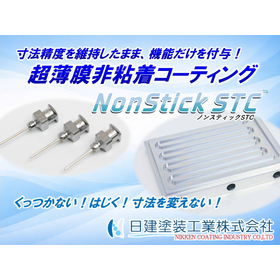
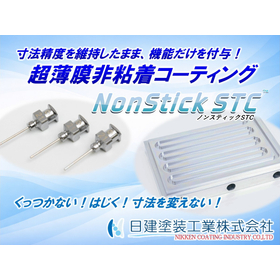
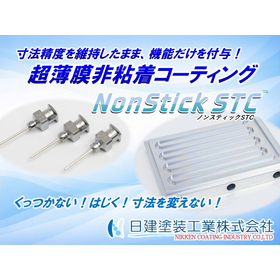
"NonStick STC" is an ultra-thin release coating applicable to cutting tools and precision molds! ■ Features of NonStick STC - Smooth No roughening such as blasting is required as a pre-treatment before coating, and post-polishing of the cutting edge after coating is also unnecessary. This helps maintain the sharpness of the cutting tools. - Transparent & Thin Being colorless and transparent with a film thickness of less than 1µm, it preserves the texture of the material. Additionally, it prevents dimensional changes in molds due to coating, which is crucial for precision molds that require accuracy. - Clean It is difficult for adhesive foreign substances, such as tape adhesives, to adhere, and if they do, they can be easily removed. This prevents a decrease in the sharpness of cutting tools and contamination of molds due to foreign substance adhesion.
Added to bookmarks
Bookmarks listBookmark has been removed
Bookmarks listYou can't add any more bookmarks
By registering as a member, you can increase the number of bookmarks you can save and organize them with labels.
Free membership registration
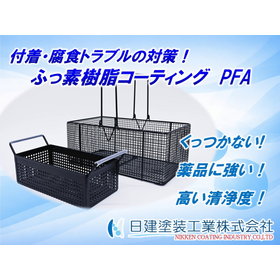
In the process of sliding films and similar materials (feeding mechanism), the guide part of the feeding mechanism is coated with fluororesin to enhance slip properties and prevent adhesion. However, during transport, the workpiece (such as film) may stick to the guide, temporarily halting the line. This is caused by static electricity generated from friction between the resins, which causes the workpiece to adhere to parts like the guide and stop sliding. When this happens, the production line stops, necessitating recovery work. If this occurs frequently, it can lead to increased time and costs. Standard fluororesin tends to accumulate static electricity, but our static-dissipative fluororesin coating (Pass-e Coat) can release generated static electricity, thereby preventing workpiece adhesion due to static electricity. If you are experiencing issues with line stoppages caused by workpiece adhesion due to static electricity, please feel free to consult us.
Added to bookmarks
Bookmarks listBookmark has been removed
Bookmarks listYou can't add any more bookmarks
By registering as a member, you can increase the number of bookmarks you can save and organize them with labels.
Free membership registration
Heat sealing (heat plate sealing) is a joining method where the parts of plastic components that need to be bonded are brought into contact with a high-temperature metal plate (heat plate) to temporarily melt the plastic surface, and then pressed together at the melted areas to integrate them. Some plastic pallets made of PP resin (polypropylene resin) are manufactured by integrating the upper and lower parts through heat sealing. The heat plates used in the heat sealing process of these plastic pallets are coated with fluororesin to utilize its property of being "non-stick," which helps prevent melted PP resin from adhering to the surface of the heat plate. However, over time, the fluororesin coating on the heat plate can become scratched or peel off, causing the resin to gradually start sticking. When resin adheres to the surface of the heat plate, the following problems can occur: - The resin is stretched from the adhered areas, compromising the appearance of the product. - Burnt resin that has stuck can mix into the joint area, leading to a decrease in the strength of the joint. - The need to replace the heat plate temporarily halts the production line, resulting in decreased productivity.
Added to bookmarks
Bookmarks listBookmark has been removed
Bookmarks listYou can't add any more bookmarks
By registering as a member, you can increase the number of bookmarks you can save and organize them with labels.
Free membership registration