1~45 item / All 109 items
Displayed results
Filter by category

Added to bookmarks
Bookmarks listBookmark has been removed
Bookmarks listYou can't add any more bookmarks
By registering as a member, you can increase the number of bookmarks you can save and organize them with labels.
Free membership registration
Contact this company
Inquiry Form1~45 item / All 109 items
Filter by category

The issues of "dough sticking" and "poor mold release" leading to product shape defects in the manufacturing process of Western-style confections and food products are significant challenges that reduce production efficiency and yield. This time, we introduce an example of a metal madeleine mold with a complex shell shape (scallop shape) that has been uniformly coated with a fluororesin (PTFE) to ensure consistent film thickness down to the details. ■ Top-notch non-stick properties (release properties) Thoroughly prevents dough from sticking and burning. The baked madeleines easily and cleanly release from the mold, significantly reducing the deformation of delicate products and directly contributing to improved yield in production environments. ■ Heat resistance (continuous use temperature 260°C) The coating is resistant to degradation even under the harsh thermal conditions during baking, maintaining excellent release performance over a long period. ■ Reduction of release oil and prolongation of mold lifespan By eliminating or minimizing the application process of release oils (butter or oil) that were previously essential, we can cut raw material costs and reduce the time spent on application. This strongly supports the streamlining and automation of manufacturing lines. Additionally, it protects the surface of the mold, preventing wear and corrosion of the base materials such as aluminum and steel, thus contributing to the longevity of the tooling.
Added to bookmarks
Bookmarks listBookmark has been removed
Bookmarks listYou can't add any more bookmarks
By registering as a member, you can increase the number of bookmarks you can save and organize them with labels.
Free membership registration
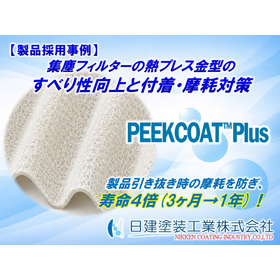
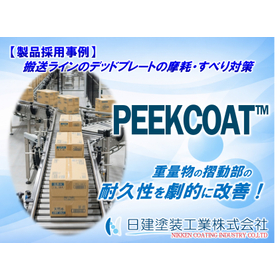
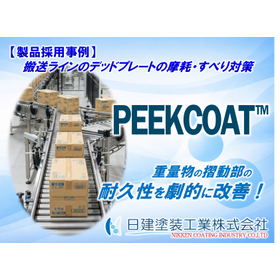
The guide components of automatic packaging machines experience significant wear due to constant high-speed friction with films and transported items, leading to major challenges such as "short-term component replacement" and "increased maintenance labor and costs associated with replacements." In the case of the customer we consulted with, they had been applying fluororesin coating to the guide components, but the issue arose that conventional fluororesin coatings have soft films that quickly reach the end of their lifespan in harsh environments. ■ Proposal for PEEK Coating "PEEKCOAT G10" Therefore, we proposed PEEKCOAT G10, which has excellent wear resistance and mechanical strength. - A high-durability sliding coating that uniformly combines fluororesin with a tough PEEK resin film. - Unlike pure fluororesin, the film does not easily wear away, maintaining a "smooth and slippery surface" for an extended period even in harsh high-speed sliding environments. ■ Implementation Effect: Compared to conventional specifications, durability is improved by 3 to 4 times. By significantly extending the component replacement cycle, we achieve both a reduction in spare parts costs and a decrease in equipment downtime associated with maintenance (improving operational efficiency), dramatically enhancing overall cost performance.
Added to bookmarks
Bookmarks listBookmark has been removed
Bookmarks listYou can't add any more bookmarks
By registering as a member, you can increase the number of bookmarks you can save and organize them with labels.
Free membership registration
Are you experiencing troubles such as "film sticking due to static electricity" and "frequent chocolate stops caused by wandering or entanglement" in the guide components of automatic packaging machines? ■ Multifunctional PEEK Coating "PEEKCOAT G10" Our PEEK coating "PEEKCOAT G10" is the optimal solution that addresses the challenges of wear, sliding, and static electricity all at once. It is based on PEEK resin, which boasts high mechanical strength, and has been uniquely formulated with fluororesin and conductive materials. ■ Reliable Wear Resistance Supported by PEEK Resin By adopting PEEK resin as the base matrix, we achieve wear resistance that leverages the robust mechanical strength of PEEK. ■ Smooth and Slippery Surface Thanks to the effects of the blended fluororesin, the surface of the PEEK film is endowed with low friction properties similar to those of a fluororesin coating. ■ Antistatic Function By incorporating conductive materials, we effectively discharge static electricity generated during sliding. We fundamentally suppress transport troubles caused by static electricity, alleviating the unexpected burden on on-site workers. This contributes to the creation of an "unstoppable line" in automatic packaging lines.
Added to bookmarks
Bookmarks listBookmark has been removed
Bookmarks listYou can't add any more bookmarks
By registering as a member, you can increase the number of bookmarks you can save and organize them with labels.
Free membership registration
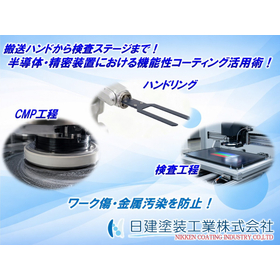
In a harsh manufacturing line that operates continuously for 24 hours, the frequent replacement of parts due to early wear is a significant factor that heavily burdens the factory's maintenance costs. Maintenance in environments where cleanliness and hygiene management are required particularly increases labor costs and working hours for maintenance personnel, becoming a substantial burden alongside the procurement costs of spare parts. ■ Fluororesin-Composite PEEK Coating Our fluororesin-composite PEEK coating, "PEEKCOAT G09," is a sliding-specialized coating that directly contributes to reducing maintenance costs. It uniformly disperses fluororesin (solid lubricant) with excellent sliding properties within the robust structure of PEEK resin at an optimal ratio. ■ Balancing Low Friction and Wear Resistance The uniformly dispersed fluororesin components in the coating act to maintain smooth "low friction characteristics" while exhibiting "high wear resistance" at a level incomparable to fluororesin coatings. This significantly extends the replacement cycle of parts. We respond to the requests of maintenance and management departments that want to "reduce the hassle of repeated part replacements" and "advance factory labor-saving and efficiency while keeping long-term running costs down."
Added to bookmarks
Bookmarks listBookmark has been removed
Bookmarks listYou can't add any more bookmarks
By registering as a member, you can increase the number of bookmarks you can save and organize them with labels.
Free membership registration
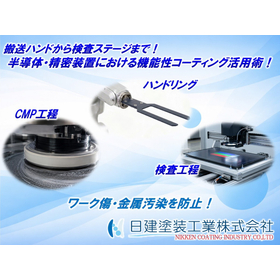
The "machined products made of PEEK resin" used in the transport process of semiconductors and electronic components are expensive in terms of both material and processing costs. However, when the tips wear out or break, there is a cost-related weakness in that they must be discarded entirely. ■Switching from molded products to "metal + PEEK coating" In response to such challenges, our company has improved procurement and cost issues by changing the structure to "high-rigidity metal (such as SUS) substrate + antistatic PEEK coating 'PEEKCOAT N04blk'." 【Repainting (recoating) even if the coating film deteriorates】 It is possible to regenerate the expensive metal hand body to like-new performance and reuse it multiple times without discarding it. This dramatically reduces long-term running costs. The antistatic PEEK coating also covers necessary functions for a clean environment, such as "static electricity suppression," "reduction of particle adhesion," and "scratch prevention of workpieces due to high smoothness." This achieves both sustainability (reduction of environmental impact) and total cost reduction simultaneously.
Added to bookmarks
Bookmarks listBookmark has been removed
Bookmarks listYou can't add any more bookmarks
By registering as a member, you can increase the number of bookmarks you can save and organize them with labels.
Free membership registration
Conventional ceramic coatings (such as thermal spraying and CVD/PVD) typically involve large-scale processes that require high-temperature plasma or vacuum equipment, which limits the shapes and substrates that can be coated. ■ Formation of Ceramic Coating Films by Sol-Gel Method Our "Biceram" utilizes the "Sol-Gel method," which is a liquid-phase process that involves applying a liquid (starting material) and then curing it. - A strong coating is formed at a lower temperature (200–250°C) than the usual ceramic sintering temperature, minimizing thermal impact on the substrate. - Due to the liquid process, it can coat complex three-dimensional shapes, fine irregularities, and the inner surfaces of pipes. - The coating itself has a hybrid structure that incorporates silicone release agents within a three-dimensional network of silica (SiO2). In addition to the "uniform applicability" unique to the Sol-Gel method, it simultaneously achieves scratch resistance that surpasses conventional fluororesins with a pencil hardness of 9H and excellent initial release properties.
Added to bookmarks
Bookmarks listBookmark has been removed
Bookmarks listYou can't add any more bookmarks
By registering as a member, you can increase the number of bookmarks you can save and organize them with labels.
Free membership registration
In semiconductor and electronic component mass production lines that operate continuously for 24 hours, frequent replacement and maintenance of transport hands are a significant bottleneck that causes the entire production line to stagnate. ■Challenges of Resin Hands - Conventional resin hands wear out quickly, requiring complete shutdown of manufacturing equipment with each replacement (resulting in downtime). - Since the working environment is a "clean room," strict entry procedures for workers and pre-cleaning (cleaning and degassing) of replacement parts are essential, leading to significant waste of labor time and costs. ■Switching from Resin to "Metal + PEEK Coating" In response, we proposed "high-rigidity metal (such as SUS) hands + antistatic PEEK coating (PEEKCOAT N04blk)." As a result: - By using metal for the core material, the mechanical strength of the parts themselves is dramatically improved, preventing deformation and cracking due to repeated transport loads. - The PEEK surface layer exhibits excellent wear resistance, significantly extending the lifespan compared to resin hands. - Maintenance labor and equipment downtime in the clean room are dramatically reduced, contributing to improved overall equipment efficiency in the factory.
Added to bookmarks
Bookmarks listBookmark has been removed
Bookmarks listYou can't add any more bookmarks
By registering as a member, you can increase the number of bookmarks you can save and organize them with labels.
Free membership registration
The commonly used fluororesin coating for equipment parts and transport jigs has excellent sliding properties; however, due to the softness of the coating film, it faces the cost and labor challenge of "wearing out quickly and requiring frequent reapplication (repainting)." The line stoppages and management of spare parts associated with repainting can become factors that pressure factory productivity. ■ High Durability and Sliding Coating PEEKCOAT G Grade By uniformly compounding fluororesin (solid lubricant) within the framework of the super engineering plastic "PEEK resin," which excels in wear resistance and heat resistance, this structure prevents the coating from easily wearing away even in harsh environments with high loads and continuous high-speed sliding, unlike pure fluororesin. While the toughness of PEEK significantly extends the lifespan of the coating, the properties of fluorine continue to provide smooth sliding performance. "This current fluororesin coating has a short lifespan, and it's a problem." "I want to enhance durability and extend the maintenance cycle of the equipment." This is the optimal solution for such challenges.
Added to bookmarks
Bookmarks listBookmark has been removed
Bookmarks listYou can't add any more bookmarks
By registering as a member, you can increase the number of bookmarks you can save and organize them with labels.
Free membership registration
In the manufacturing process of semiconductors and electronic components, which requires a highly clean environment, the electrostatic and particle countermeasures for transport hands (robot hands, end effectors) that transfer silicon wafers and glass substrates are crucial issues that affect yield. Conventional "machined PEEK resin products" not only generate wear particles due to continuous operation but also attract wear particles and surrounding debris due to the inherent electrostatic properties of the resin, leading to defects in circuit patterns. ■ PEEK Coating with Anti-Static Function "PEEKCOAT N04blk" - Maintains the excellent mechanical properties and chemical resistance of PEEK resin while imparting anti-static functionality to the coating. - Minimizes the generation of frictional static electricity, creating a surface environment that repels fine particles from the surroundings. - Forms a smooth and even coating on the surface of components, preventing scratches even when in contact with delicate workpieces and suppressing dust generation in clean rooms.
Added to bookmarks
Bookmarks listBookmark has been removed
Bookmarks listYou can't add any more bookmarks
By registering as a member, you can increase the number of bookmarks you can save and organize them with labels.
Free membership registration
Amid the tightening global regulations on per- and polyfluoroalkyl substances (PFAS), there is an urgent need to explore "fluoropolymer alternative technologies" in manufacturing. ■ Ceramic Coating "Biceram" This is a surface treatment technology that is completely free of organic fluorinated compounds [PFAS-free]. It complies with Japan's "Food Sanitation Act (Ministry of Health, Labour and Welfare Notification No. 370)" standards, making it safe and secure for use in parts and molds of manufacturing machinery that come into direct contact with food, as well as cooking utensils. ■ Composition of the Coating The technology is based on the "sol-gel method," which produces a dense ceramic solid from a liquid. By incorporating a silicone release agent that exhibits non-stick properties at the molecular level within a robust three-dimensional silica network, we achieved excellent initial release properties and scratch resistance that significantly surpasses that of fluoropolymers, reaching a pencil hardness of 9H. This is ideal for those who want to evaluate alternatives in anticipation of future regulatory tightening and are looking for a safe, scratch-resistant release coating.
Added to bookmarks
Bookmarks listBookmark has been removed
Bookmarks listYou can't add any more bookmarks
By registering as a member, you can increase the number of bookmarks you can save and organize them with labels.
Free membership registration
Biceram" is a hybrid high-performance ceramic coating that combines a strong ceramic framework primarily composed of silica (SiO2) with an excellent non-stick silicone release agent, achieved through the application of the sol-gel method (liquid phase process). Since it is a "liquid application and baking" process, it can coat complex three-dimensional shapes and fine uneven surfaces with a uniform film thickness. ■ Extremely high film hardness Conventional fluororesin coatings (with hardness ranging from F to about 2H) are soft and prone to scratching. In contrast, Biceram boasts a high film hardness with a pencil scratch hardness of [9H]. It is resistant to scratches even in harsh environments where metal scrapers, spatulas, and workpieces frequently come into contact, allowing it to maintain its initial coating performance for an extended period. We propose it as a new option to address on-site challenges such as "fluororesin is too soft and gets scraped off quickly" and "release failures caused by scratches.
Added to bookmarks
Bookmarks listBookmark has been removed
Bookmarks listYou can't add any more bookmarks
By registering as a member, you can increase the number of bookmarks you can save and organize them with labels.
Free membership registration
Amid the strengthening of PFAS regulations centered in Europe, the shift towards "fluorine-free" solutions is accelerating in the manufacturing industry. Our PEEK coating "PEEKCOAT" is a PFAS-free coating made from the PFAS-free super engineering plastic "PEEK resin." ■ PFAS-Free Compliance Contains no organic fluorine compounds, contributing to reduced future regulatory risks and environmental compliance. ■ High Durability and Long Lifespan Possesses high mechanical strength and wear resistance, potentially achieving a longer lifespan in sliding parts, high-load areas, and wear processes. ■ High-Temperature and Chemical Resistance Has a continuous use temperature of approximately 260°C and exhibits excellent resistance to organic solvents, acids, and alkalis. It is gaining attention as a "durability-focused" PFAS-free coating, distinct from the extreme non-stick properties of fluoropolymer coatings. ■ Exhibition Announcement We will be exhibiting at the "Mechanical Element Technology Exhibition Monozukuri World 2026 (Tokyo)" held at Tokyo Big Sight from July 1 (Wednesday) to July 3 (Friday), 2026. We will also introduce PEEK coatings, PFAS-free coatings, and various functional coatings. We sincerely look forward to your visit.
Added to bookmarks
Bookmarks listBookmark has been removed
Bookmarks listYou can't add any more bookmarks
By registering as a member, you can increase the number of bookmarks you can save and organize them with labels.
Free membership registration
In the manufacturing field, issues such as wear and corrosion of equipment parts, as well as adhesion, lead to decreased productivity and increased maintenance burdens. Our company addresses these challenges by providing contract processing using fluoropolymer coating and PEEK coating. Fluoropolymer coating is effective for preventing adhesion and dirt due to its excellent non-stick properties and chemical resistance. On the other hand, PEEK coating possesses high heat resistance and wear resistance, demonstrating stable performance even in high-load environments. We not only perform coating processing but also propose optimal specifications while organizing "what kind of issues are occurring" and "what performance is needed." As a functional surface treatment aimed at improving equipment and extending the lifespan of parts, we support the resolution of many on-site challenges.
Added to bookmarks
Bookmarks listBookmark has been removed
Bookmarks listYou can't add any more bookmarks
By registering as a member, you can increase the number of bookmarks you can save and organize them with labels.
Free membership registration
Equipment troubles such as stoppages and quality defects have a significant impact on production sites. In particular, issues like material adhesion, corrosion from chemicals, and component wear are common challenges in many manufacturing environments. Our company offers contract processing services using fluororesin coating and PEEK coating to address these challenges. Fluororesin coating is excellent in non-stick properties, low friction, and chemical resistance, and is widely used for conveying parts, tanks, molds, and more. Additionally, PEEK coating excels in heat resistance and wear resistance, making it suitable for mechanical parts used in high-load environments. We listen to the usage conditions, work shapes, and required performance to propose the optimal coating specifications. Rather than just a simple painting process, we support our customers' equipment improvements as a "functional surface treatment" aimed at solving on-site challenges.
Added to bookmarks
Bookmarks listBookmark has been removed
Bookmarks listYou can't add any more bookmarks
By registering as a member, you can increase the number of bookmarks you can save and organize them with labels.
Free membership registration
"The product adheres and cannot be released," "Corrosion from chemicals is rapid," "Sliding parts have a short lifespan and high replacement frequency." In response to these challenges in the production environment, our company offers contract processing services using fluoropolymer coatings and PEEK coatings. Fluoropolymer coatings such as PTFE, PFA, and FEP possess excellent non-stick properties, chemical resistance, and low friction, and are utilized in a wide range of fields including food, chemicals, packaging, and semiconductors. On the other hand, PEEK coatings are noted for their high heat resistance, high strength, and excellent wear resistance, making them suitable for metal replacement and high-load environments. We propose the optimal coating specifications based on the usage environment and target workpieces. Rather than just a simple coating process, we organize the reasons for defects and the necessary characteristics, and suggest surface treatments that lead to improved productivity and extended equipment lifespan.
Added to bookmarks
Bookmarks listBookmark has been removed
Bookmarks listYou can't add any more bookmarks
By registering as a member, you can increase the number of bookmarks you can save and organize them with labels.
Free membership registration
In fluoropolymer coatings and PEEK coatings using electrostatic powder coating, the "Faraday cage effect" can make it difficult for paint to adhere to recessed or deep areas. As a result, there may be insufficient film thickness or pinholes, which can lead to a decrease in corrosion resistance and durability. On the other hand, paint tends to concentrate on protruding areas, which can sometimes cause cracking or peeling due to localized thickening. We optimize the coating conditions and film thickness specifications according to product shape and required performance, reducing the risk of film thickness defects. If you are considering coating for complex-shaped parts, please feel free to consult us.
Added to bookmarks
Bookmarks listBookmark has been removed
Bookmarks listYou can't add any more bookmarks
By registering as a member, you can increase the number of bookmarks you can save and organize them with labels.
Free membership registration
In fluororesin coatings and PEEK coatings, sandblasting is performed to ensure adhesion. However, for products with cutting edges or sharp edges, impacts from blasting may cause chipping of the cutting edge, edge deformation, or partial distortion. Especially for precision cutting tools and thin-edge shapes, even slight changes in shape can affect performance, making prior consideration important. Our company proposes processing conditions that take into account the balance between product protection and coating adhesion by adjusting blasting media, projection pressure, and changing substrate treatment methods. Please feel free to consult us when considering coatings for industrial cutting tools and cutter components.
Added to bookmarks
Bookmarks listBookmark has been removed
Bookmarks listYou can't add any more bookmarks
By registering as a member, you can increase the number of bookmarks you can save and organize them with labels.
Free membership registration
When applying fluororesin or PEEK coatings to aluminum alloys, it is important to be cautious of thermal effects caused by high-temperature firing. Particularly with age-hardened aluminum materials, re-heating can change strength and hardness, potentially affecting dimensional accuracy and mechanical properties. This article explains the mechanisms of thermal effects on aluminum substrates and countermeasures.
Added to bookmarks
Bookmarks listBookmark has been removed
Bookmarks listYou can't add any more bookmarks
By registering as a member, you can increase the number of bookmarks you can save and organize them with labels.
Free membership registration
In fluororesin coatings and PEEK coatings, high-temperature heating is performed during the firing process, which may require "vent holes" for hollow structures. When heating in a sealed space, the internal air expands, increasing the internal pressure, which can lead to serious issues such as deformation or rupture. This article clearly explains the reasons why vent holes are necessary and the points to check during the design phase.
Added to bookmarks
Bookmarks listBookmark has been removed
Bookmarks listYou can't add any more bookmarks
By registering as a member, you can increase the number of bookmarks you can save and organize them with labels.
Free membership registration
Due to the strengthening of PFAS regulations centered in Europe, there is a growing interest in "non-fluorinated materials" within the manufacturing industry. Among these, PEEK resin, a type of super engineering plastic, is gaining attention. PEEK resin is a material that does not contain PFAS, yet it possesses high heat resistance, wear resistance, mechanical strength, and chemical resistance, making it a candidate for alternative materials to fluoropolymer. However, it cannot completely replace the excellent non-stick and low-friction properties of fluoropolymers, so appropriate selection based on usage conditions is important. This article will explain the relationship between PFAS regulations and PEEK resin, as well as its characteristics as an alternative material.
Added to bookmarks
Bookmarks listBookmark has been removed
Bookmarks listYou can't add any more bookmarks
By registering as a member, you can increase the number of bookmarks you can save and organize them with labels.
Free membership registration
In fluororesin coatings and PEEK coatings, the way the coating adheres varies depending on the shape of the substrate. In particular, at corners and edges, variations in film thickness are likely to occur, which can lead to issues such as coating cracking, peeling, and reduced corrosion resistance depending on the conditions. Special attention is required for corner pipes, bent sheet metal, and sharp edge components. Our company offers suggestions for R processing and optimizes coating specifications according to product shapes and painting methods, reducing variations in film thickness and the risk of coating defects. To ensure stable durability and chemical resistance, it is important to design shapes with coating in mind. If you have concerns about corner shapes, please feel free to consult us.
Added to bookmarks
Bookmarks listBookmark has been removed
Bookmarks listYou can't add any more bookmarks
By registering as a member, you can increase the number of bookmarks you can save and organize them with labels.
Free membership registration
In fluoropolymer coatings and PEEK coatings, substrate preparation is performed through high-temperature firing and sandblasting, which may cause deformation or damage in thin plates, thin-walled parts, and blade shapes. In particular, products with thin thickness or parts with edge sections are susceptible to the effects of thermal expansion and mechanical stress from blasting, which can lead to issues such as warping, distortion, dimensional changes, and chipping of cutting edges. When requesting fluoropolymer or PEEK coatings, we confirm the product shape, thickness, and material in advance, optimizing blasting and firing conditions. We propose processing specifications that take into account the risks of deformation and damage. If you are considering coatings for precision sheet metal parts or cutting tool components, please feel free to consult with us.
Added to bookmarks
Bookmarks listBookmark has been removed
Bookmarks listYou can't add any more bookmarks
By registering as a member, you can increase the number of bookmarks you can save and organize them with labels.
Free membership registration
In fluororesin coatings and PEEK coatings, a coating film is formed through high-temperature firing, which imposes a significant thermal load on the substrate. Therefore, depending on the material and heat treatment condition, issues such as strength reduction, hardness changes, warping, and dimensional changes may occur. In particular, aluminum alloys, quenched steel, hardened materials, and welded structures are susceptible to thermal effects, and even slight deformations in precision parts can impact performance. This article explains the effects of high-temperature firing on the substrate and points to check in advance.
Added to bookmarks
Bookmarks listBookmark has been removed
Bookmarks listYou can't add any more bookmarks
By registering as a member, you can increase the number of bookmarks you can save and organize them with labels.
Free membership registration
In fluororesin coatings and PEEK coatings, the firing process involves heating to around 400°C, which poses a risk of deformation and damage due to the expansion of internal air in hollow structures. Particularly in cases where sealed spaces are formed, such as in pipe structures, welded frames, hollow shafts, and box-shaped components, the internal pressure can rise during heating, potentially leading to bulging, distortion, coating defects, and rupture accidents. This article explains the necessity of "vent holes" that should be considered when coating hollow structures, as well as common design oversights that can easily occur. We will introduce important points not only regarding coating quality but also from the perspective of ensuring safety.
Added to bookmarks
Bookmarks listBookmark has been removed
Bookmarks listYou can't add any more bookmarks
By registering as a member, you can increase the number of bookmarks you can save and organize them with labels.
Free membership registration
PEEK resin (polyether ether ketone) is a high-performance resin that possesses particularly high heat resistance, mechanical strength, and chemical resistance among super engineering plastics. Its continuous use temperature is around 250 to 260°C, and it can maintain stable performance even in high-temperature environments, leading to its adoption in a wide range of fields such as semiconductors, automotive, medical, and food machinery. In recent years, with the movement towards PFAS regulations, it has also gained attention as an alternative to fluoropolymer materials, and interest is increasing in applications that require "high durability" and "high reliability."
Added to bookmarks
Bookmarks listBookmark has been removed
Bookmarks listYou can't add any more bookmarks
By registering as a member, you can increase the number of bookmarks you can save and organize them with labels.
Free membership registration
With the strengthening of PFAS regulations, there has been a sharp increase in inquiries about wanting to switch to "PFAS-free materials." However, on the other hand, there are not a few cases where selecting surface treatments based on the idea that "anything PFAS-free is fine" has resulted in new problems such as poor release properties, reduced durability, and increased costs. Fluoropolymer coatings are materials that have achieved a high level of performance in heat resistance, chemical resistance, non-stick properties, and low friction. Therefore, simple substitutions may not maintain equivalent performance. The important thing is not to make "PFAS-free conversion itself" the goal, but to advance environmental measures while maintaining the necessary performance on-site. Our company possesses multiple PFAS-free technologies, including PEEK, ceramics, and silicone-based materials, and provides optimal proposals according to the usage environment.
Added to bookmarks
Bookmarks listBookmark has been removed
Bookmarks listYou can't add any more bookmarks
By registering as a member, you can increase the number of bookmarks you can save and organize them with labels.
Free membership registration
PEEK coating is not only an alternative to fluoropolymer but also a next-generation surface treatment that combines wear resistance, heat resistance, and chemical resistance. By organizing the required characteristics of the process, such as emphasis on release properties, load-bearing and high-temperature environments, and compliance with environmental regulations, optimal coating selection is possible. We offer specification proposals and prototype verification tailored to your applications. Please feel free to consult us regarding the applicability in your own processes and considerations for PFAS measures.
Added to bookmarks
Bookmarks listBookmark has been removed
Bookmarks listYou can't add any more bookmarks
By registering as a member, you can increase the number of bookmarks you can save and organize them with labels.
Free membership registration
PEEK coating has high hardness and is resistant to wear even in sliding parts and high-load environments, allowing for a longer lifespan. The continuous use temperature is approximately 260°C, and it also has high chemical resistance, withstanding acids, alkalis, and organic solvents. In processes where wear resistance is a challenge for conventional fluoropolymer coatings, PEEK demonstrates stable performance. Being PFAS-free, it complies with environmental regulations and helps avoid future regulatory risks. It is an optimal choice for process improvements under high loads and harsh conditions.
Added to bookmarks
Bookmarks listBookmark has been removed
Bookmarks listYou can't add any more bookmarks
By registering as a member, you can increase the number of bookmarks you can save and organize them with labels.
Free membership registration
In manufacturing, coating technology is directly linked to quality improvement and maintenance efficiency. Traditionally, fluoropolymer coatings (PTFE, PFA, FEP) have been mainstream, but recent strengthening of PFAS regulations has led to a demand for environmentally friendly alternative technologies. Our PEEK coating offers high wear resistance and heat resistance, and is PFAS-free, complying with environmental regulations. Although its release properties do not match those of fluoropolymers, it excels in load-bearing and durability for sliding parts. Depending on the application, a focus on sliding properties can utilize fluoropolymers, while a focus on durability can use PEEK, and a hybrid design combining both is also possible. By selecting the coating that best fits the process conditions, production efficiency can be maximized.
Added to bookmarks
Bookmarks listBookmark has been removed
Bookmarks listYou can't add any more bookmarks
By registering as a member, you can increase the number of bookmarks you can save and organize them with labels.
Free membership registration
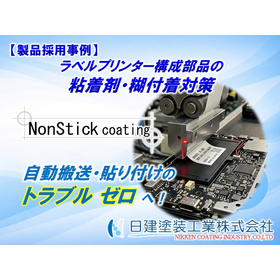
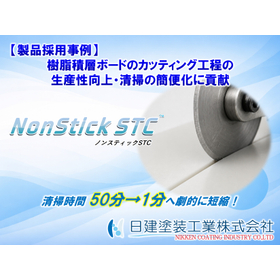
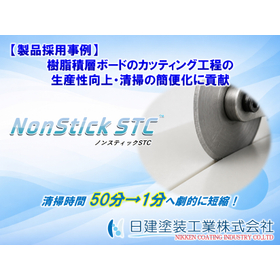
Many of the equipment stoppages in the label printing process are caused by adhesive sticking to the receiving section, leading to transport failures. Even slight adhesion can cause misalignment and blockages, resulting in line stoppages. NonStick Coating fundamentally eliminates the source of trouble by suppressing the adhesion of label adhesive itself. It enhances transport stability and contributes to the realization of a "non-stopping line." It is an effective means for improving equipment reliability in environments that prioritize stable operation.
Added to bookmarks
Bookmarks listBookmark has been removed
Bookmarks listYou can't add any more bookmarks
By registering as a member, you can increase the number of bookmarks you can save and organize them with labels.
Free membership registration
Fluoropolymer coatings, widely used as a solution for adhesion problems, may not always be effective against high-adhesion label adhesives. There are also many cases where the adhesive accumulates over time, leading to recurring issues. NonStick Coating utilizes the non-miscibility of silicone to create a surface that is less prone to adhesive attachment. By further optimizing the surface structure, it reduces the contact area and demonstrates non-stick performance that surpasses conventional coatings. It serves as an effective option for challenges that could not be improved with existing measures.
Added to bookmarks
Bookmarks listBookmark has been removed
Bookmarks listYou can't add any more bookmarks
By registering as a member, you can increase the number of bookmarks you can save and organize them with labels.
Free membership registration
The adhesive that adheres to the label receiving part accumulates over time, leading to increased cleaning work and equipment downtime. Routine cleaning tasks not only increase the workload but also result in decreased production efficiency. NonStick Coating forms a surface that makes it difficult for the adhesive to "stick" and "remain," thereby suppressing the accumulation of dirt. As a result, it significantly reduces cleaning frequency and contributes to improved equipment operating rates. This coating is ideal for sites that want to achieve stable production while reducing maintenance burdens.
Added to bookmarks
Bookmarks listBookmark has been removed
Bookmarks listYou can't add any more bookmarks
By registering as a member, you can increase the number of bookmarks you can save and organize them with labels.
Free membership registration
One of the most troublesome challenges in the label printing process is "adhesive residue." Particularly with labels that have strong adhesive properties, glue tends to accumulate on the receiving part, leading to transport issues and misalignment. Traditional fluoropolymer coatings may perform well initially, but they tend to lose effectiveness over time. Our NonStick Coating utilizes the excellent release properties of silicone to fundamentally suppress adhesive residue. Additionally, the release components are supplied from within the coating film, maintaining performance over an extended period. This achieves sustained non-stick properties against adhesives. It is an effective solution that supports stable operations in environments struggling with label adhesive residue.
Added to bookmarks
Bookmarks listBookmark has been removed
Bookmarks listYou can't add any more bookmarks
By registering as a member, you can increase the number of bookmarks you can save and organize them with labels.
Free membership registration
In the label printing process, issues such as adhesive attachment to the receiving part leading to transport failures and positional misalignment are significant factors contributing to reduced yield. This is especially true for labels with high adhesive strength, where conventional fluororesin coatings or plating treatments often do not provide sufficient effectiveness, and cases of recurrence after a certain period are not uncommon. An effective solution to these challenges is our "NonStick Coating." Based on silicone release technology, our unique non-stick coating significantly suppresses the adhesion of label adhesives. Furthermore, by reducing the contact area through the fine structure of the surface, it demonstrates excellent release properties even against strongly adhesive materials. This results in direct improvements in stabilizing label transport, reducing cleaning frequency, and lowering the risk of equipment downtime. It is increasingly being adopted in many workplaces as a countermeasure against adhesive troubles in the label printing process.
Added to bookmarks
Bookmarks listBookmark has been removed
Bookmarks listYou can't add any more bookmarks
By registering as a member, you can increase the number of bookmarks you can save and organize them with labels.
Free membership registration
In the transport process of films and sheets, adhesion to guide parts due to static electricity is a major cause of transport failures. Especially in processes where there is a lot of contact and friction between resins, charging is unavoidable, which can lead to slipping issues, misalignment, and line stoppages. Pass-e Coat is a fluororesin coating equipped with static electricity prevention features that suppresses the accumulation of static electricity while exhibiting excellent non-stickiness and slip properties. This prevents films from sticking and clinging, achieving stable transport. It can also be applied to existing guide components, allowing for improvement effects without the need for equipment modifications.
Added to bookmarks
Bookmarks listBookmark has been removed
Bookmarks listYou can't add any more bookmarks
By registering as a member, you can increase the number of bookmarks you can save and organize them with labels.
Free membership registration
In packaging machines and conveyor lines, line stoppages caused by film adhesion significantly reduce production efficiency. The adhesion of workpieces due to static electricity occurs frequently, and the accumulation of recovery work often leads to substantial cost increases. Pass-e Coat is a fluororesin coating with an anti-static function that addresses these issues. By dissipating static electricity, it prevents workpiece adhesion and stabilizes transportation. It serves as an effective countermeasure against static electricity-related troubles that conventional fluororesins could not adequately address. This solution simultaneously improves equipment operating rates and reduces total costs.
Added to bookmarks
Bookmarks listBookmark has been removed
Bookmarks listYou can't add any more bookmarks
By registering as a member, you can increase the number of bookmarks you can save and organize them with labels.
Free membership registration
In packaging machines and conveyor equipment, issues may arise where workpieces such as films adhere to guide components, leading to line stoppages. The primary cause of this is static electricity generated by friction between resins. Charged workpieces can stick to the guide parts, causing poor sliding, wandering, and unstable transport. An effective solution to these challenges is our anti-static fluororesin coating, "Pass-e Coat." While typical fluororesin coatings tend to easily accumulate static electricity, Pass-e Coat is designed to dissipate static, thereby reducing adhesion caused by charging. By combining non-stick and slip properties with anti-static functionality, it contributes to stable transport and a reduction in the risk of line stoppages.
Added to bookmarks
Bookmarks listBookmark has been removed
Bookmarks listYou can't add any more bookmarks
By registering as a member, you can increase the number of bookmarks you can save and organize them with labels.
Free membership registration
PTFE is a fluoropolymer with one of the top-class low friction coefficients among solid materials, making it very effective in reducing friction in sliding parts and conveying components. By reducing friction resistance, it helps to suppress wear and seizure of parts, contributing to the longevity of equipment and reducing maintenance frequency. Additionally, it has an anti-adhesion effect, allowing for stable conveying even in processes that handle powders and sticky materials. Our company designs optimal PTFE coating specifications according to usage conditions and counterpart materials, providing surface modifications that balance practicality and durability.
Added to bookmarks
Bookmarks listBookmark has been removed
Bookmarks listYou can't add any more bookmarks
By registering as a member, you can increase the number of bookmarks you can save and organize them with labels.
Free membership registration
PTFE (polytetrafluoroethylene) is a fluoropolymer with extremely low surface energy and excellent slip properties, widely utilized as a non-stick coating that takes advantage of its "non-adhesive" characteristics. It is effective in improving issues such as adhesion, sticking, and clogging in food processing machinery, resin molding processes, and conveying equipment. Notably, it maintains stable release properties even with highly adhesive materials or in high-temperature environments, contributing to increased productivity and reduced defect rates. Our company offers PTFE coatings that optimize film thickness and substrate treatment according to application and usage environment, achieving both durability and non-adhesiveness. We can also accommodate custom specifications tailored to on-site challenges.
Added to bookmarks
Bookmarks listBookmark has been removed
Bookmarks listYou can't add any more bookmarks
By registering as a member, you can increase the number of bookmarks you can save and organize them with labels.
Free membership registration
A certain food processing manufacturer was using fluororesin coating for their baked goods molds, but due to high sugar content in the dough and high-temperature baking conditions, they faced issues with release failures. Initially, there were no problems, but after about three months, the non-stick properties decreased, leading to dough sticking and chipping. Along with the decline in quality, the increased frequency of re-coating became a significant burden. We proposed a ceramic-based coating called "Biceram." With stable film performance and excellent non-stick properties even in high-temperature environments, we aimed to improve the sticking issues. After implementation, the release properties clearly improved, enabling stable production. Additionally, durability increased, extending the usage period to about six months, achieving approximately twice the lifespan compared to before. As a result, the frequency of re-coating decreased, and costs were reduced by about half. We can propose optimal specifications for sites facing similar challenges. We also accept technical consultations and prototype verifications, so please feel free to contact us.
Added to bookmarks
Bookmarks listBookmark has been removed
Bookmarks listYou can't add any more bookmarks
By registering as a member, you can increase the number of bookmarks you can save and organize them with labels.
Free membership registration
In food manufacturing, the lifespan of coatings significantly impacts total costs. Whenever non-stick performance declines, re-coating or part replacement becomes necessary, leading to not only costs but also losses due to production stoppages. Biceram offers high durability and non-stick properties, allowing for prolonged use compared to conventional coatings. This can lead to reduced re-coating frequency and extended replacement cycles, contributing to lower maintenance costs. Additionally, its excellent cleanability results in shorter cleaning times and reduced workload. As a result, it simultaneously achieves improved production efficiency and cost reduction. We can provide technical consultations and prototype support, including a review of current costs and potential areas for improvement. Please feel free to contact us.
Added to bookmarks
Bookmarks listBookmark has been removed
Bookmarks listYou can't add any more bookmarks
By registering as a member, you can increase the number of bookmarks you can save and organize them with labels.
Free membership registration
In food processing equipment, coating performance that can withstand high-temperature baking and repeated use is required. Common non-stick coatings tend to degrade in performance due to temperature and frequency of use, often necessitating regular reprocessing. Biceram features the high hardness and heat resistance characteristic of ceramic-based coatings, maintaining stable film performance even in high-temperature environments of around 250°C. This allows for the retention of non-stick properties over an extended period, suppressing performance degradation. Additionally, the hard coating is resistant to wear, demonstrating durability even in parts that are used repeatedly. As a result, this contributes to the longevity and stable operation of the equipment. We can propose optimal coating specifications tailored to the usage environment and product characteristics. If you are experiencing challenges with non-stick performance in high-temperature environments, please feel free to consult us.
Added to bookmarks
Bookmarks listBookmark has been removed
Bookmarks listYou can't add any more bookmarks
By registering as a member, you can increase the number of bookmarks you can save and organize them with labels.
Free membership registration
In the manufacturing process of baked goods, the adhesion of dough to molds and baking sheets is a critical issue directly linked to quality and productivity. When release failures occur, it leads to appearance defects such as chipping and deformation of the products, resulting in decreased yield and increased waste loss. Moreover, under harsh usage conditions such as high-temperature baking and repeated cleaning, the deterioration of coating performance exacerbates adhesion problems. Against this backdrop, there is a demand for surface treatments that achieve stable non-stick properties and durability. Biceram, with its high non-stick properties unique to ceramics, suppresses dough adhesion and burning. It maintains stable release properties even after baking, contributing to quality stabilization and improved production efficiency. We can also accommodate specification considerations and prototype responses tailored to on-site challenges. If you are facing issues with release failures or adhesion problems, please feel free to contact us.
Added to bookmarks
Bookmarks listBookmark has been removed
Bookmarks listYou can't add any more bookmarks
By registering as a member, you can increase the number of bookmarks you can save and organize them with labels.
Free membership registration
In recent years, due to the strengthening of PFAS (per- and polyfluoroalkyl substances) regulations, the food processing industry has been exploring alternatives to fluoropolymer coatings. Fluoropolymers, known for their excellent non-stick and heat-resistant properties, have been used for many years, but concerns about future regulatory risks and environmental considerations have increased interest in new surface treatment technologies. Against this backdrop, ceramic-based coatings that do not contain PFAS are gaining attention. This coating, based on inorganic materials, is expected to be a next-generation surface treatment that aims to balance environmental impact reduction with functionality. Our "Biceram" is a coating that is PFAS-free yet offers high non-stick properties and durability, making it suitable for food applications. It demonstrates stable performance even in firing environments, providing a practical alternative to traditional fluoropolymer coatings. If you are considering compliance with PFAS regulations or a review of coatings, we can propose optimal specifications tailored to your applications and conditions. We also welcome technical consultations and prototype verifications, so please feel free to contact us.
Added to bookmarks
Bookmarks listBookmark has been removed
Bookmarks listYou can't add any more bookmarks
By registering as a member, you can increase the number of bookmarks you can save and organize them with labels.
Free membership registration
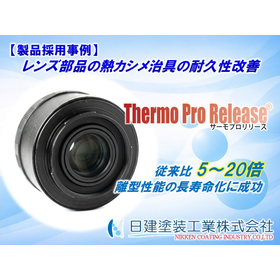
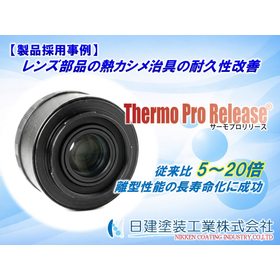
The selection of coatings in the hot riveting process directly impacts not only quality but also production efficiency. In one case, a customer faced issues with resin adhesion to the riveting jig and insufficient durability of the coating during the lens component fixing process. Previously, a non-stick coating was applied, but its performance deteriorated after about 2,000 shots, necessitating frequent jig replacements. This led to problems such as line stoppages and increased maintenance burdens. We proposed a high-durability type called "Thermo Pro Release." This coating maintains non-stick properties for an extended period due to its film that is difficult to peel off even in high-temperature environments. As a result, durability improved to approximately 20,000 shots, achieving about ten times the lifespan compared to the previous solution. Resin adhesion and thread pulling were also significantly improved, successfully balancing quality stability and increased production efficiency. Similar challenges occur in many workplaces. We are available for technical consultations and prototype testing, including possibilities for process improvements, so please feel free to contact us.
Added to bookmarks
Bookmarks listBookmark has been removed
Bookmarks listYou can't add any more bookmarks
By registering as a member, you can increase the number of bookmarks you can save and organize them with labels.
Free membership registration