
See Water Treatment's detailed category ranking
- Water treatment equipment and technology
- Pure water production equipment
- Waste liquid treatment equipment
- Filtration Equipment
- Aeration equipment
- Sludge treatment equipment and technology
- Wastewater treatment equipment, technology and maintenance
- Water Treatment Chemicals
- Water treatment filters and consumables
- Other water supply and drainage facilities
- Other water treatment related equipment
- Other water treatment


Reduce the load on wastewater treatment facilities with upstream measures such as centrifugal oil separation. Oil and food residues are collected simultaneously, and the food residues are automatically discharged as solids, making them easy to handle.


The entire factory is filled with nanobubble water! Just attach it to each piece of equipment and the water pipes! Effective for cleaning, promoting growth, disinfecting, and deodorizing with super penetrating water!
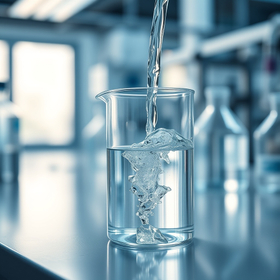

The "resilience" of water against acids, which cannot be understood by pH alone, is represented by a numerical value known as alkalinity.
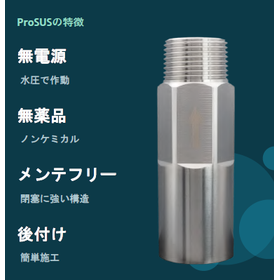

Improve water quality without relying on chemicals! Nano-bubble (UFB) water quality improvement solution for cooling towers.
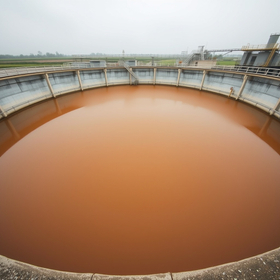
In the sedimentation tank, the sludge does not settle and overflows along with the supernatant... Its true nature might be filamentous bacteria that have proliferated excessively within the sludge?
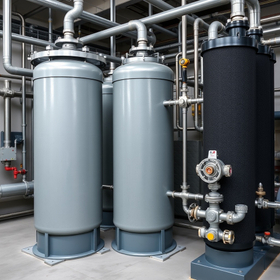
Pre-treatment involves removing impurities, chlorine, and scale components that can damage the membrane, right before the membrane itself. This explains the combination of roles and main equipment.
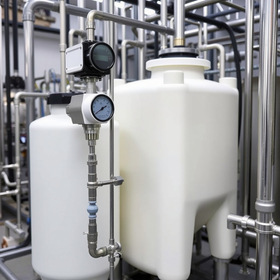
A dosing pump that delivers "a fixed amount" of medication. This explains how the discharge amount is determined, the characteristics of diaphragm type pumps, and how to prevent injection troubles.
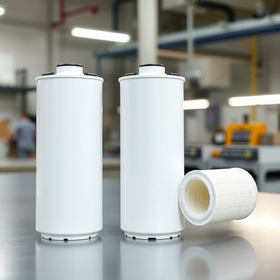
Even if the names are similar, the things that can be removed are vastly different. We will compare the differences among the four types of filtration membranes from three perspectives: size, pressure, and usage.
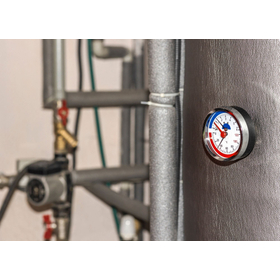
What types of boiler chemicals are there, such as cleaning agents, deoxygenation agents, and condensate treatment agents? What is an effective way to choose them for rust prevention and scale prevention?
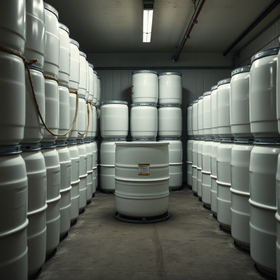
Where does the reduced effective chlorine go? We will organize the reaction equations for decomposition, the reasons why the rate of decomposition changes with concentration, measures against temperature and light, and indicators to notice degradation.
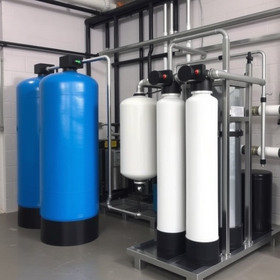
Both are devices that purify water, but they remove different substances. "Soft water = pure water" is not correct.
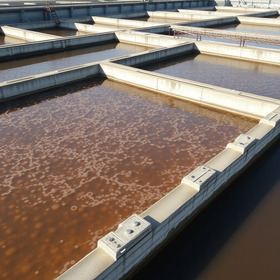
Biological treatment that decomposes organic matter in wastewater using the power of microorganisms. This explains the differences between aerobic treatment, which uses oxygen, and anaerobic treatment, which does not, as well as how they can be combined.
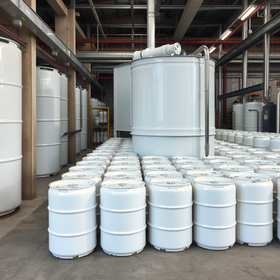
What is included in sodium hypochlorite handled on-site? An explanation of how effective chlorine is represented, the fields in which it is used, relevant laws, and the basics of handling it.


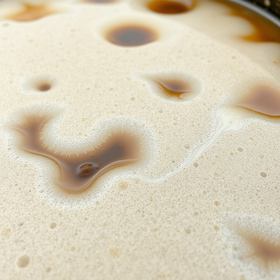
Why doesn't the sludge settle despite the low presence of filamentous fungi? This explains how to identify "viscous bulking," which is characterized by stickiness and lack of compaction, and discusses the drainage issues that can easily arise.
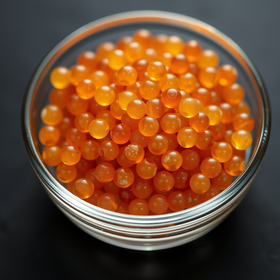
The heart of water softeners and pure water systems, ion exchange resin. This explains the mechanism by which small particles exchange ions and the reason they can be regenerated and reused repeatedly.
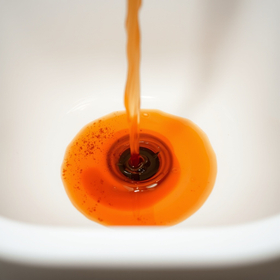
Immediately after being drawn up, it is transparent, but later it becomes cloudy or turns black. This explains the issues with iron and manganese in well water and the mechanisms for removing them.
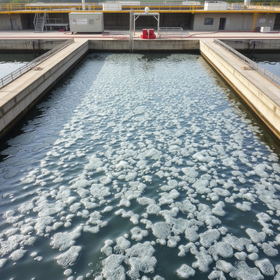
The starting point of various methods of the activated sludge process, the standard activated sludge method. We will compare what the modified methods have changed and the differences in retention time and load.
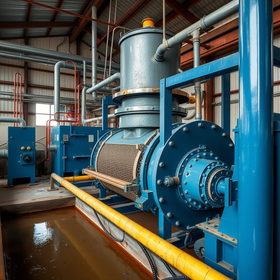
When the moisture content decreases by 1 point, how much does the amount of dewatered sludge change? This will explain the calculation method, the type of dewatering machine, and what happens to the dewatered sludge afterward.
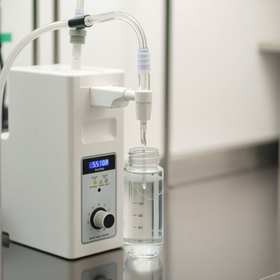
Deionized water, which has had ions dissolved in water removed. This explains the differences between pure water, ultrapure water, and soft water, as well as the mechanism for measuring cleanliness based on electrical conductivity.
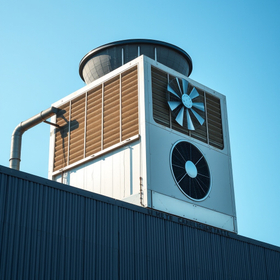
Watering device, filling material, eliminator, louver. An explanation of the roles of each component of the cooling tower and key inspection points when they are damaged.


A fat decomposition system that eliminates rather than removes fats with a 'pressurized flotation separation device' for food factories! *Demonstrations available.
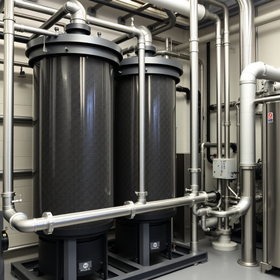
Starting from April 2026, standards for PFOS and PFOA in tap water will be applied. This explains the scope of the regulations, removal methods, and handling after removal.

BOD, which represents the amount of oxygen used by microorganisms to decompose organic matter, indicates water pollution. This explains the mechanism of measuring it over five days and how it is treated in wastewater standards.
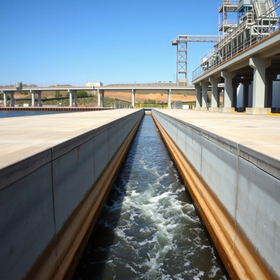
COD, which represents the pollution of water using oxidizing agents. This will explain the differences between Japan's official methods and the standard methods in Europe and the United States, the differences from BOD, and how it is treated in total quantity regulations.
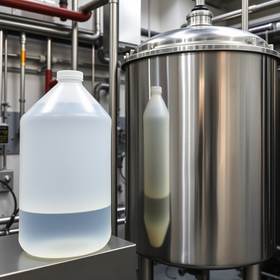
How much should you dilute a 12% solution to make 200 ppm? This explains the dilution calculation formula and examples used in business, precautions for making in advance, and guidelines for concentrations based on different uses.
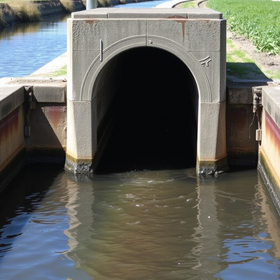
National uniform drainage standards and additional standards set by prefectures. This explains the differences between harmful substances and living environment items, as well as the conditions under which the standards apply.
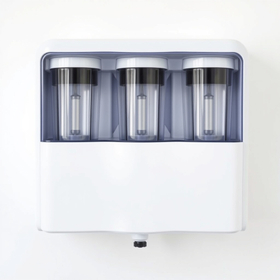
A cartridge pure water purifier that allows you to obtain pure water simply by connecting it to a water supply. This explains the mechanism inside the container and the reason why the amount of water obtained before replacement varies depending on the source water.
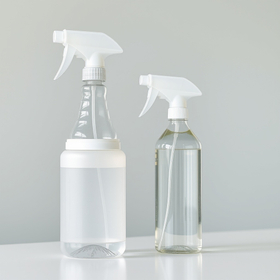
Even if the names are similar, the properties, concentrations, and ease of storage are different? Let's organize the differences and usage distinctions between the two chlorine-based liquids.

Why is it continuously chosen by "people who seek authenticity"?


Store 4 rolls of paper! Solving the problems of public restrooms.


Achieving high clarity! Adopting a structure with a long lifespan and easy maintenance that requires less upkeep!


Hot spring water and well water compatible! Residual chlorine meter 'RM'


A wide variety of silicone products for various applications!

Excellent emulsification stability and dilution stability! A well-balanced defoamer with good rapid and sustained effectiveness.


High-performance arsenic adsorption filter agent for water purification with exceptional adsorption capability.

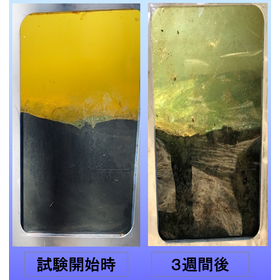

What is the THA river and lake purification system that activates self-purification functions, certified by NETIS?


We have a wide variety of reinforced grease straps, large grease straps, and more!

We are featuring the under-sink floor-mounted grease trap series "Gritora-kun" with casters!
Does the name change for the same water between "hard water" and "soft water"? Explaining the secrets of hardness and scale prevention!
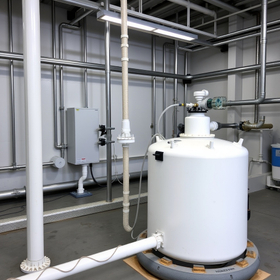
Does the concentration decrease just by leaving the same product out? The mechanism of sodium hypochlorite disinfection used in business and storage precautions.
All of them are "clean water," but the things represented by the names are slightly different. I will organize them based on the difference between names that indicate how they are made and names that indicate standards.
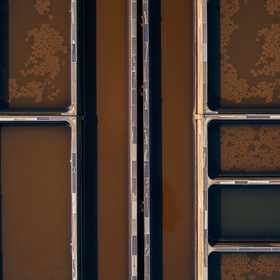
The activated sludge method cultivates a mass of microorganisms to decompose organic matter in wastewater. This explains the roles of the aeration tank and the sedimentation tank, the reasons for recycling sludge, and the key points for daily management.
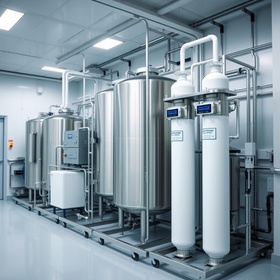
Ultrapure water is refined through preprocessing, primary pure water, subsystems, and multiple stages. This explains the role of each process and the reason for placing ion exchange after ultraviolet treatment.
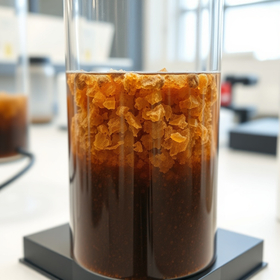
How many kg of sludge is contained in 1 cubic meter of the aeration tank? I will explain the meanings of MLSS and MLVSS, as well as concentration management using SV30 and SVI.
SS represents the amount of small particles floating in water. How do we measure it? This will explain the procedures and calculations established by the government, along with examples of drainage standards.
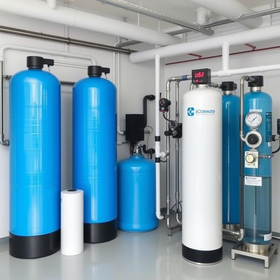
Whether to separate by heat, by membrane, or by exchanging ions. We will compare the three methods based on the materials used, the products obtained, and the differences in components that are challenging to handle.
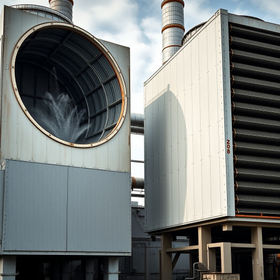
Whether to expose the cooling water to the outside air or to confine it within the pipes. If the evaporating water is different, the places where contamination and concentration occur will also change.
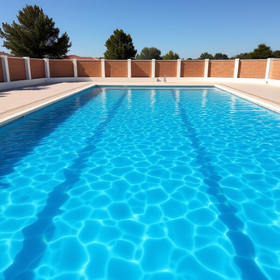
The standards and the frequency of inspections differ between school pools and public pools. I will explain the locations for water sampling, the preparation of bottles, and the inspection items.
Why is it that we continue to be chosen by "people who seek authenticity"?


All-in-one unit for the equipment necessary for the production of purified water and distilled water! Achieves 95% endotoxin reduction and conductivity below 2.1 μS/cm.


Supporting customers with a track record of 2,000 units nationwide. Demonstrating stable performance even with oil-containing sludge. Adapting to various situations from short-term to long-term.


A groundbreaking filtration device born from the American water treatment company, Stellar!


A flexible water supply unit that can be installed according to the construction site. The control panel can be reconfigured from three directions to suit the site, and it is compatible with FC, making inspections smarter!


We have achieved groundbreaking high performance that transcends concepts!

Compact, lightweight, and affordable! A screen that won't clog!


ALCOA principles compliant. A centrifuge that can safely handle audits in the pharmaceutical industry.


Natural fiber high-performance oil absorbent material with "overwhelming adsorption capacity" and "retention strength."


Decomposition of PFAS through electrochemical oxidation using the power of diamonds.


Equipped with 100 patented technologies, we research and develop precision porous membranes, nanofibers, and more! We provide Cobetter products and technical services.
Does a 1mm scale attachment reduce heat transfer efficiency by about 3%? What is the impact on annual costs?
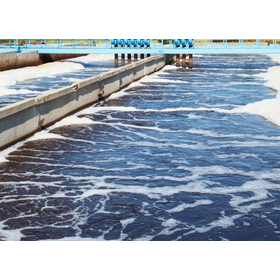
What are BOD and COD? An explanation of the four methods of wastewater treatment (physical, chemical, physicochemical, and biological treatment).
What are the polymer coagulants suitable for wastewater that are anionic, nonionic, cationic, and amphoteric?
Is higher purity more prone to corrosion? Reasons for managing boiler water at around pH 11.
Pure water has a theoretical pH of 7, but in reality, it can vary slightly? A simple explanation of the chemistry of water!
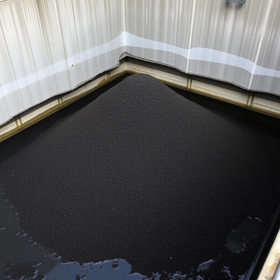
Sludge generated from wastewater treatment in business is considered industrial waste, regardless of the industry. This explains how to determine hazardous substances and how to verify subcontractors.
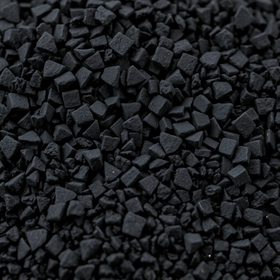
Some activated carbon has a surface area equivalent to several tennis courts, all in just 1g. This explains the mechanism by which it adsorbs odors and organic substances in water, as well as the concept of breakthrough.
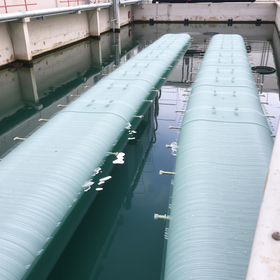
MBR, which separates sludge and water using a membrane instead of a settling tank. This explains the role of the membrane and the perspective on membrane fouling that cannot be avoided during operation, as well as the considerations for cleaning.
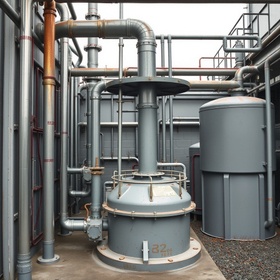
Well water, which is generally considered to have stable water temperature and good water quality. However, depending on the use, treatment is essential. This explains the considerations when using well water in factories.
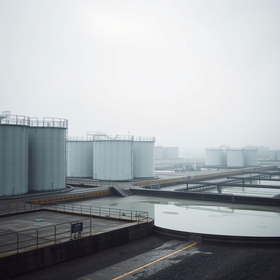
Is hydrochloric acid the only danger? This summarizes the mechanism of reactions that produce chlorine gas, examples of labor accidents caused by mix-ups, and the measures the government presents to prevent mixing.
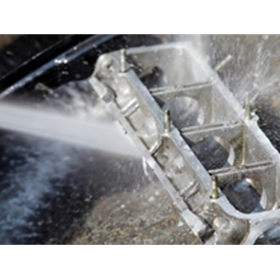

We will introduce a case where the usage of cleaning agents and defoamers, which were frequently replenished, was reduced, leading to cost savings!

Why is this hydrogen generator chosen by "genuine-minded athletes"?


Promote crop growth! Ultra-fine bubble irrigation that eliminates waste of water and fertilizer.


Achieving water quality improvement through powerful sterilization and organic matter decomposition using an oxidation treatment method!

A water treatment solution that balances "safety" and "productivity" in food factories!

The "Pure Cleanser" using AOP technology will change nutrient solution recycling!


Achieve cost reduction and environmental pollution prevention through solvent recycling! Capable of responding to complete explosion-proof requirements.


High-capacity processing, simple structure, continuous operation possible - belt press dewatering machine.

Stability performance, fully automatic driving, space-saving design roll-type dewatering machine.


No phosphates, no nitrogen, no polymers used at all! An environmentally friendly cooling tower water treatment conditioner!

Introducing a digital residual chlorine tester that can accurately measure with just one finger, expanding its applications with four different reagents!

PRTR and does not contain substances designated as environmental hormones, considering the environment! A defoamer with excellent emulsification stability and dilution stability.

Preservative-free type! Compared to conventional products, it has a lower viscosity, making it easy to dilute and excellent in workability.
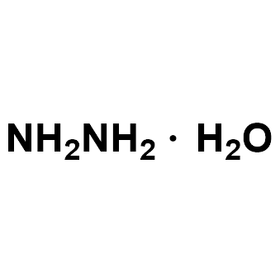

Boiler reducing agents, cooling tower water treatment agents, raw materials for organic synthesis.

The structure is simple, so if you use tap water, it is maintenance-free!


Activated carbon, 'Actigem', efficiently approaches COD and colored substances that cannot be completely removed by coagulation!