List of Analytical Instruments products
- classification:Analytical Instruments
1246~1260 item / All 5669 items
Presentation of explanatory materials on JIS and ISO standards. We propose suitable safety barriers from a rich product series! Free rental of demo kits.
- Other safety and hygiene products
You can download a free booklet that introduces the uses, structures, and examples of various types of frames.
- Other machine tools
- Solar power generator
- Other energy equipment
We will introduce an example of crystal analysis of intermetallic compounds at solder joints.
- Analytical Equipment and Devices
- Analysis Services
Example of analysis of compounds at the SAC solder and Ni pad interface.
We will introduce an example of the analysis of compounds formed at the interface between Sn-Ag-Cu solder and NiP pads. At the interface of NiP pads and Sn-Ag-Cu solder, compounds such as (Ni,Cu)3Sn4 and (Cu,Ni)6Sn5 grow, and surface analysis using EDX shows the distribution of Ni, Cu, and Sn within these compounds. The EBSD method is a technique that analyzes based on the crystallographic information of the sample. By combining it with elemental analysis using EDX, it is possible to estimate the composition, and in some cases, it may be possible to analyze using crystallographic data for Ni3Sn4 and Cu6Sn5 as substitutes.
Observe the changes before and after compression on the copper plate! You can compare the half-life of the crystal grain size before and after compression.
- Analytical Equipment and Devices
- Analysis Services
Example of analysis of compounds at the SAC solder and Ni pad interface.
We will introduce an example of the analysis of compounds formed at the interface between Sn-Ag-Cu solder and NiP pads. At the interface of NiP pads and Sn-Ag-Cu solder, compounds such as (Ni,Cu)3Sn4 and (Cu,Ni)6Sn5 grow, and surface analysis using EDX shows the distribution of Ni, Cu, and Sn within these compounds. The EBSD method is a technique that analyzes based on the crystallographic information of the sample. By combining it with elemental analysis using EDX, it is possible to estimate the composition, and in some cases, it may be possible to analyze using crystallographic data for Ni3Sn4 and Cu6Sn5 as substitutes.
We will introduce an example of the analysis of EBSD patterns (Kikuchi patterns) at gold wire bond joints.
- Analytical Equipment and Devices
- Analysis Services
Example of analysis of compounds at the SAC solder and Ni pad interface.
We will introduce an example of the analysis of compounds formed at the interface between Sn-Ag-Cu solder and NiP pads. At the interface of NiP pads and Sn-Ag-Cu solder, compounds such as (Ni,Cu)3Sn4 and (Cu,Ni)6Sn5 grow, and surface analysis using EDX shows the distribution of Ni, Cu, and Sn within these compounds. The EBSD method is a technique that analyzes based on the crystallographic information of the sample. By combining it with elemental analysis using EDX, it is possible to estimate the composition, and in some cases, it may be possible to analyze using crystallographic data for Ni3Sn4 and Cu6Sn5 as substitutes.
We undertake contract processing and manufacturing of cross-sections of various parts and materials.
- Analytical Equipment and Devices
- Analysis Services
Cryogenic ion milling cross-section processing example (rubber products)
We will introduce a case where cross-sections were created and observed by method regarding the adhesive parts of the tires of pull-back cars. When conducting SEM observations of the created cross-sections, fillers present inside the rubber were confirmed. It was found that the dispersion state of the fillers and the condition of the adhesive interface were not clear with fracture by liquid nitrogen or mechanical polishing. In contrast, the cross-sections created by cryo ion milling allow for clear observation of the dispersion state of the fillers contained within the rubber and the condition of the adhesive interface with the plastic substrate.
We conduct surface analysis, foreign substance analysis, and organic composition analysis.
- Analytical Equipment and Devices
- Analysis Services
Analysis of organic-inorganic composite materials using FT-IR and EDX.
We will introduce an example of analyzing organic-inorganic composite materials using FT-IR and SEM-EDX. FT-IR measurements were conducted on the glossy and non-glossy areas of a PET bottle label, and the IR spectra differed between the glossy and non-glossy areas. Since the non-glossy area resembles the spectrum of acrylic resin, it is considered that the main component is acrylic resin. Additionally, SEM-EDX measurements were performed on both the glossy and non-glossy areas, and EDX spectra and backscattered electron images were obtained, revealing that the non-glossy area contained sulfur (S) and barium (Ba), which were not detected in the glossy area.
Transitional thermal measurement possible power cycle testing, with a customized luminescence/OBIRCH analysis device, where a skilled team thoroughly evaluates and analyzes power devices!
- Analytical Equipment and Devices
- Analysis Services
Rubber heat aging test
Our company conducts "rubber thermal aging tests" that help evaluate the properties of materials in actual usage environments. Using a method compliant with JIS K6257 (Method for determining thermal aging characteristics of vulcanized rubber and thermoplastic rubber), rubber test pieces are suspended in a gear oven to create specimens with varying heat treatment times. Additionally, tensile tests are performed on heated natural rubber (NR) to investigate changes in mechanical properties, while hardness is measured simultaneously. Changes in the characteristics of the rubber are also examined, confirming that rubber elasticity is lost and the material becomes harder with heating.
Non-destructive depth analysis of thin films on the nm order is possible! We will also introduce analysis examples.
- Analytical Equipment and Devices
- Contract Analysis
Chemical Analysis Concierge Service
We would like to introduce our "Chemical Analysis - Trust Us Service." When conducting component analysis of foreign substances or stains on products, it can be challenging to determine whether organic analysis or inorganic analysis is more suitable, and which specific analysis within organic or inorganic is the most appropriate. We provide a comprehensive service for customers who are struggling with the selection of analysis methods. Since each analysis device can measure different targets, it is necessary to choose a method that fits the purpose based on the information available.
I will introduce an example of analysis using EBSD where orientation was observed in the Al wiring.
- Analytical Equipment and Devices
- Analysis Services
Example of analysis of compounds at the SAC solder and Ni pad interface.
We will introduce an example of the analysis of compounds formed at the interface between Sn-Ag-Cu solder and NiP pads. At the interface of NiP pads and Sn-Ag-Cu solder, compounds such as (Ni,Cu)3Sn4 and (Cu,Ni)6Sn5 grow, and surface analysis using EDX shows the distribution of Ni, Cu, and Sn within these compounds. The EBSD method is a technique that analyzes based on the crystallographic information of the sample. By combining it with elemental analysis using EDX, it is possible to estimate the composition, and in some cases, it may be possible to analyze using crystallographic data for Ni3Sn4 and Cu6Sn5 as substitutes.
I will introduce an example of analysis using EBSD for pipes (austenitic).
- Analytical Equipment and Devices
- Analysis Services
Example of analysis of compounds at the SAC solder and Ni pad interface.
We will introduce an example of the analysis of compounds formed at the interface between Sn-Ag-Cu solder and NiP pads. At the interface of NiP pads and Sn-Ag-Cu solder, compounds such as (Ni,Cu)3Sn4 and (Cu,Ni)6Sn5 grow, and surface analysis using EDX shows the distribution of Ni, Cu, and Sn within these compounds. The EBSD method is a technique that analyzes based on the crystallographic information of the sample. By combining it with elemental analysis using EDX, it is possible to estimate the composition, and in some cases, it may be possible to analyze using crystallographic data for Ni3Sn4 and Cu6Sn5 as substitutes.
The EBSD method allows for the estimation of crystal size distribution and residual stress.
- Analytical Equipment and Devices
- Analysis Services
Example of analysis of compounds at the SAC solder and Ni pad interface.
We will introduce an example of the analysis of compounds formed at the interface between Sn-Ag-Cu solder and NiP pads. At the interface of NiP pads and Sn-Ag-Cu solder, compounds such as (Ni,Cu)3Sn4 and (Cu,Ni)6Sn5 grow, and surface analysis using EDX shows the distribution of Ni, Cu, and Sn within these compounds. The EBSD method is a technique that analyzes based on the crystallographic information of the sample. By combining it with elemental analysis using EDX, it is possible to estimate the composition, and in some cases, it may be possible to analyze using crystallographic data for Ni3Sn4 and Cu6Sn5 as substitutes.
Observing crystal structures with EBSD! Data can be obtained for each metal.
- Analytical Equipment and Devices
- Analysis Services
Example of analysis of compounds at the SAC solder and Ni pad interface.
We will introduce an example of the analysis of compounds formed at the interface between Sn-Ag-Cu solder and NiP pads. At the interface of NiP pads and Sn-Ag-Cu solder, compounds such as (Ni,Cu)3Sn4 and (Cu,Ni)6Sn5 grow, and surface analysis using EDX shows the distribution of Ni, Cu, and Sn within these compounds. The EBSD method is a technique that analyzes based on the crystallographic information of the sample. By combining it with elemental analysis using EDX, it is possible to estimate the composition, and in some cases, it may be possible to analyze using crystallographic data for Ni3Sn4 and Cu6Sn5 as substitutes.
Changes in crystal orientation and crystal grain size can be analyzed! We introduce the EBSD (Electron Backscatter Diffraction) method.
- Analytical Equipment and Devices
- Analysis Services
Example of analysis of compounds at the SAC solder and Ni pad interface.
We will introduce an example of the analysis of compounds formed at the interface between Sn-Ag-Cu solder and NiP pads. At the interface of NiP pads and Sn-Ag-Cu solder, compounds such as (Ni,Cu)3Sn4 and (Cu,Ni)6Sn5 grow, and surface analysis using EDX shows the distribution of Ni, Cu, and Sn within these compounds. The EBSD method is a technique that analyzes based on the crystallographic information of the sample. By combining it with elemental analysis using EDX, it is possible to estimate the composition, and in some cases, it may be possible to analyze using crystallographic data for Ni3Sn4 and Cu6Sn5 as substitutes.
We will introduce a case that elucidates the differences in linear expansion coefficients of PET and PEN films with similar main skeletal structures and the mechanisms that produce these differences.
- Analytical Equipment and Devices
Chemical Analysis Concierge Service
We would like to introduce our "Chemical Analysis - Trust Us Service." When conducting component analysis of foreign substances or stains on products, it can be challenging to determine whether organic analysis or inorganic analysis is more suitable, and which specific analysis within organic or inorganic is the most appropriate. We provide a comprehensive service for customers who are struggling with the selection of analysis methods. Since each analysis device can measure different targets, it is necessary to choose a method that fits the purpose based on the information available.
Detection of certain organic substances is possible! Here is an example of measuring low molecular weight organic acids in an anion exchange mode.
- Analytical Equipment and Devices
- Other environmental analysis equipment
- Other contract services
Chemical Analysis Concierge Service
We would like to introduce our "Chemical Analysis - Trust Us Service." When conducting component analysis of foreign substances or stains on products, it can be challenging to determine whether organic analysis or inorganic analysis is more suitable, and which specific analysis within organic or inorganic is the most appropriate. We provide a comprehensive service for customers who are struggling with the selection of analysis methods. Since each analysis device can measure different targets, it is necessary to choose a method that fits the purpose based on the information available.
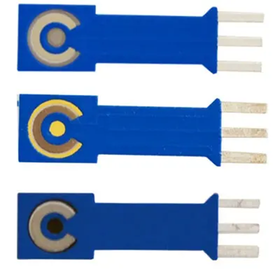
Two zirconia-type λ sensors are used to calculate the EGR rate. They are lightweight and compact, making them ideal for in-vehicle measurements.
- Analytical Equipment and Devices