We have compiled a list of manufacturers, distributors, product information, reference prices, and rankings for Furnace.
ipros is IPROS GMS IPROS One of the largest technical database sites in Japan that collects information on.

Furnace Product List and Ranking from 405 Manufacturers, Suppliers and Companies | IPROS GMS

Last Updated: Aggregation Period:Mar 18, 2026~Apr 14, 2026
This ranking is based on the number of page views on our site.

Furnace Manufacturer, Suppliers and Company Rankings

Last Updated: Aggregation Period:Mar 18, 2026~Apr 14, 2026
This ranking is based on the number of page views on our site.

  1. 中遠熱処理技研 Shizuoka//Ferrous/Non-ferrous metals
  2. 三幸 Tokyo//Electronic Components and Semiconductors
  3. 関口鐵工所 本社 Nagano//Industrial Machinery
  4. 4 SHOEI MFG.CO.,LTD. Japanese Headquarters Nara//Industrial Machinery
  5. 5 アドバンテック東洋 Tokyo//Testing, Analysis and Measurement

Furnace Product ranking

Last Updated: Aggregation Period:Mar 18, 2026~Apr 14, 2026
This ranking is based on the number of page views on our site.

  1. What is metal heat treatment that can be learned from the basics, even in materials for new employee training? 中遠熱処理技研
  2. 各種熱処理炉<開発から製造まで一貫サポート> 三幸
  3. Large batch aluminum brazing furnace 進和 ジョイテックセンター
  4. 4 Electric Muffle Furnace FUW Series アドバンテック東洋
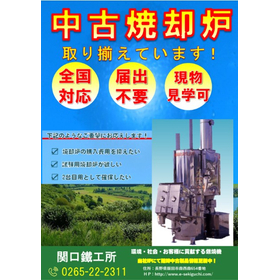
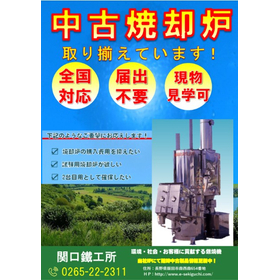
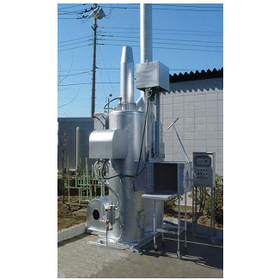
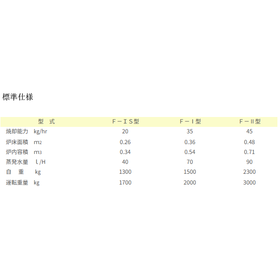
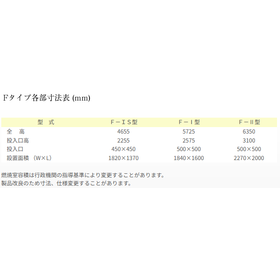
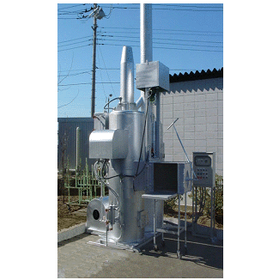
  5. 5 Information on Used Incinerators 関口鐵工所 本社

Furnace Product List

1411~1440 item / All 1526 items

Displayed results

Batch-type vacuum degreasing furnace

We will manufacture a custom-made furnace with high airtightness according to the specifications.

In batch type, it is possible to quickly cool the processed material during the cooling phase after vacuum heating by introducing atmosphere gas into the furnace and using a heat exchanger. 【Specifications】 ● Temperature: 100–600℃ ● Atmosphere: Vacuum / Nitrogen ● Application: Degreasing ● Processed Material: Iron-based powder molded products ● Processing Capacity: 910Kg/ch ● Electric Power: 195kW 【Examples of Products】 Common products made in a vacuum furnace ■ Steering gears ■ Chain components ■ Bicycle transmission gears ■ Tools ■ Bearings 【Other Main Vacuum Furnaces】 ■ Vacuum bright annealing furnace ■ Vacuum nitriding furnace ■ Vacuum carburizing furnace ■ Vacuum tempering furnace ■ Vacuum brazing furnace If you have any new challenges or inquiries regarding energy conservation, automation, environmental considerations, or safety, please feel free to contact us. *For more details, please refer to the PDF document or feel free to reach out to us.

  • Industrial Furnace
  • Furnace

Added to bookmarks

Bookmarks list

Bookmark has been removed

Bookmarks list

You can't add any more bookmarks

By registering as a member, you can increase the number of bookmarks you can save and organize them with labels.

Free membership registration

Bell-type nitriding furnace

It is possible to switch the atmosphere gas in the furnace depending on the properties of the material and the purpose of heat treatment.

Since the treatment is conducted at a lower temperature compared to conventional quenching, it is less likely to cause distortion in the steel material, allowing for the maintenance of dimensional accuracy. 【Specifications】 ● Temperature: 400–650℃ ● Atmosphere: Nitrogen / Ammonia gas / Nitrogen trifluoride ● Application: Nitriding ● Treated material: Stainless steel ● Treatment capacity: 1000Kg/ch ● Electrical capacity: 140kW 【Product Examples】Common products made in an atmosphere furnace ■ Engine parts ■ Display tube glass ■ Precision tubes for electrical testing equipment ■ Frying pans ■ CPU heat pipes 【Other Implementation Examples】 ■ Want to anneal aluminum without oxidation → 'Roller hearth softening furnace' ■ Want to carburize materials → 'Batch-type atmosphere gas carburizing furnace' If you have any new challenges or inquiries regarding energy conservation, automation, environmental considerations, or safety, please feel free to reach out. *For more details, please refer to the PDF materials or feel free to contact us.

  • Industrial Furnace
  • Furnace

Added to bookmarks

Bookmarks list

Bookmark has been removed

Bookmarks list

You can't add any more bookmarks

By registering as a member, you can increase the number of bookmarks you can save and organize them with labels.

Free membership registration

Pit-type drip infusion carbonization furnace

It is a multipurpose furnace that can be used as a hardening furnace or tempering furnace depending on the application.

In addition to generating carburizing gas from methanol in the furnace for heat treatment, it can also be used as a quenching furnace and tempering furnace by changing the atmosphere gas. 【Specifications】 ● Temperature: 450–950℃ ● Atmosphere: Nitrogen / Methanol decomposition gas ● Application: Carburizing ● Processed material: Iron ● Processing capacity: 3000 Kg/ch ● Electrical capacity: 240 kW 【Examples of Products】 Common products made in an atmosphere furnace ■ Engine parts ■ Drivetrain parts ■ Brake parts ■ Magnetic materials ■ Precision tubes for electrical inspection equipment ■ CPU heat pipes 【Other Installation Examples】 ■ Want to nitrify powder → 'Retort rotary nitriding furnace' ■ Want to anneal aluminum without oxidation → 'Roller hearth softening furnace' If you have any new challenges or inquiries regarding energy conservation, automation, environmental considerations, or safety, please feel free to contact us. *For more details, please refer to the PDF materials or feel free to reach out to us.

  • Industrial Furnace
  • Furnace

Added to bookmarks

Bookmarks list

Bookmark has been removed

Bookmarks list

You can't add any more bookmarks

By registering as a member, you can increase the number of bookmarks you can save and organize them with labels.

Free membership registration

[Research Material] Global Market for Dehumidifiers

World Market for Dehumidifiers: Household Dehumidifiers, Industrial Dehumidifiers, Residential, Commercial, Others

This research report (Global Dehumidifiers Market) investigates and analyzes the current state and outlook for the global dehumidifier market over the next five years. It includes information on the overview of the global dehumidifier market, trends of major companies (sales, selling prices, market share), market size by segment, market size by major regions, and distribution channel analysis. The market segments by type include residential dehumidifiers and industrial dehumidifiers, while the segments by application focus on residential, commercial, and others. The regional segments calculate the market size of dehumidifiers by dividing it into North America, the United States, Europe, Asia-Pacific, Japan, China, India, South Korea, Southeast Asia, South America, the Middle East, and Africa. It also includes the market share of major companies in the dehumidifier sector, product and business overviews, and sales performance.

  • Other services
  • Furnace

Added to bookmarks

Bookmarks list

Bookmark has been removed

Bookmarks list

You can't add any more bookmarks

By registering as a member, you can increase the number of bookmarks you can save and organize them with labels.

Free membership registration

[Research Material] Global Market for Rapid High-Temperature Heat Treatment Furnaces

World Market for Rapid High-Temperature Treatment Furnaces: Lamp Type, Laser Type, Industrial Production, Research and Development

This research report (Global Rapid Thermal Processing Furnace Market) investigates and analyzes the current status and outlook for the global market of rapid thermal processing furnaces over the next five years. It includes information on the overview of the global rapid thermal processing furnace market, trends of major companies (sales, selling prices, market share), market size by segment, market size by major regions, and distribution channel analysis. The segments by type in the rapid thermal processing furnace market focus on lamp-type and laser-type, while the segments by application target industrial production and research and development. The regional segments are categorized into North America, the United States, Europe, Asia-Pacific, Japan, China, India, South Korea, Southeast Asia, South America, the Middle East, and Africa, to calculate the market size of rapid thermal processing furnaces. It also includes the market share of major companies in the rapid thermal processing furnace market, product and business overviews, and sales performance.

  • Other services
  • Furnace

Added to bookmarks

Bookmarks list

Bookmark has been removed

Bookmarks list

You can't add any more bookmarks

By registering as a member, you can increase the number of bookmarks you can save and organize them with labels.

Free membership registration

Small chlorine furnace <Removal of metal impurities from ceramics powder by dry chlorination>

Selectively volatilize Fe/Ni/Cr mixed in ceramic powder through chloride volatilization!

The "small chlorine furnace" is a product that maintains phase and particle size through negative pressure operation and oxygen partial pressure control, minimizing waste liquid without the need for cleaning. By using Cl2/HCl for selective chlorination, it removes metal impurities mixed in during the production of ceramic powder (SiO2/Al2O3/Si3N4) in a dry process. Additionally, by volatilizing chlorine, it reduces impurities in a short time while maintaining the composition, crystal phase, and particle size distribution of the mother phase. This allows for the elimination of the washing process, thereby reducing re-drying and waste liquid treatment costs. 【Features】 ■ Selective chlorination × temperature staging: Prioritizes the volatilization of metal chlorides while maintaining the base material phase. ■ Dry process: Minimizes the burden of waste liquid and re-drying without the need for washing. ■ Physical property retention design: Maintains crystal phase, particle size, and specific surface area through control of oxygen partial pressure and residence time. *For more detailed information, please download the materials or feel free to contact us.

  • Industrial Furnace
  • Furnace

Added to bookmarks

Bookmarks list

Bookmark has been removed

Bookmarks list

You can't add any more bookmarks

By registering as a member, you can increase the number of bookmarks you can save and organize them with labels.

Free membership registration

Small Chlorine Furnace "Series Part 3": The Concept of "Safety" in Chlorine Furnaces

The essence of "managing risks" lies in design philosophy and operational design! Incorporating a sense of security in operations into the design.

In the previous session, we introduced the principle of removing metal impurities by converting them into chlorides in a chlorine furnace (chloride volatilization). Today, we will address a common concern: "Isn't it dangerous to flow corrosive and toxic gases like Cl2 and HCl at high temperatures?" Tubular furnaces are readily available, versatile, and suitable for the new synthesis of small sample sizes. However, there are undeniable "common issues" such as "a small effective heating area, which tends to limit scalability" and "the risk of micro-cracks in the tubes due to long-term use or thermal shock, increasing the risk of leaks during positive pressure operation." The equation "high temperature × corrosive gas = danger" is intuitively correct. That is why the essence lies in "managing risks" through design philosophy and operational design. The small chlorine furnace from Thermonik ENG is built with this concept in mind. Design philosophy for safety: 1) Based on negative pressure (reduced pressure) operation With a vacuum system in place, the internal pressure of the furnace is always maintained below atmospheric pressure. This suppresses any potential blowout in the event of seal degradation, thereby reducing the risk of Cl2/HCl leakage. *For more details, please download the PDF or feel free to contact us.

  • Industrial Furnace
  • Furnace

Added to bookmarks

Bookmarks list

Bookmark has been removed

Bookmarks list

You can't add any more bookmarks

By registering as a member, you can increase the number of bookmarks you can save and organize them with labels.

Free membership registration

Why low oxygen and ultra-high temperature can be achieved: Small-scale carbon furnace

Suppressing micro leaks through years of seal design, processing precision, and assembly procedures! Maintaining low O2 even during long operation.

We will introduce why our small carbon furnace can achieve low oxygen and ultra-high temperatures. The carbon furnace material reacts with residual oxygen, featuring a design and manufacturing know-how that ensures it does not "leak." It removes air from inside the powder using a vacuum pump and replacement method. With a high emissivity graphite heater, a uniform heating hot zone, and high insulation, it efficiently heats while avoiding local overheating, making it possible to stably reach temperatures up to 3000°C. 【Features of the Small Carbon Furnace】 ■ Capable of reaching temperatures up to 3000°C: Quickly achieves ultra-high temperatures through the radiant heat of the graphite heater. ■ Easy to sinter in low oxygen: The carbon inside the furnace reacts with residual O2. ■ Air inside the powder is also replaced: Reduces O2 between particles through repeated vacuum and inert gas cycles. ■ Suppresses temperature variation: Reduces differences in the center, edges, and thickness direction with a "uniform heating zone" that warms evenly. *For more detailed information, please download the materials or feel free to contact us.

  • Industrial Furnace
  • Furnace

Added to bookmarks

Bookmarks list

Bookmark has been removed

Bookmarks list

You can't add any more bookmarks

By registering as a member, you can increase the number of bookmarks you can save and organize them with labels.

Free membership registration

Metal furnace <Thoroughly eliminate oxygen, carbon, and moisture>

Towards true high-purity oxide and nitride materials. Free control from vacuum to reducing atmosphere, achieving degassing, decarbonization, and high-purification processes all in one machine.

The "metal furnace" we handle achieves stable reproduction of degassing behavior through high-precision temperature control (up to 1800°C) and automatic exhaust control. It addresses challenges such as the inability to efficiently remove adsorbed water, CO2, and residual organic substances generated from within the sample during high-temperature processing, as well as the lack of lab-scale equipment that can reliably implement high-purity processes. Despite its compact size, it features a structure that allows for scaling up to larger furnaces. 【Features】 - Eliminates contamination from carbon sources due to its metal heater and metal chamber structure. - Supports high vacuum operation (10^-3 to 10^-5 Pa) and switching to a reducing atmosphere (H₂/Ar/N₂). - Achieves stable reproduction of degassing behavior through high-precision temperature control (up to 1800°C) and automatic exhaust control. - Optimized heat profile for high purification of oxides and nitrides, and reduction of residual C and O. - Compact yet designed for scalability to larger furnaces (manufactured by Thermonik ENG). *For more details, please feel free to contact us.

  • Industrial Furnace
  • Furnace

Added to bookmarks

Bookmarks list

Bookmark has been removed

Bookmarks list

You can't add any more bookmarks

By registering as a member, you can increase the number of bookmarks you can save and organize them with labels.

Free membership registration

Metal furnace <Ceramics-metal airtight bonding in a "high purity atmosphere">

Strongly sealed in a clean atmosphere while controlling the thermal expansion difference between ceramics and metals.

Our company handles the "Metal Furnace" for all-metal hot zones. In joining (sealing, brazing, diffusion bonding), trace amounts of O2/H2O/hydrocarbons are directly related to wettability, interfacial reactions, and airtightness. The metal furnace operates at a vacuum level of 10^-5 Pa and features a (Mo/W) hot zone, eliminating carbon and organic contamination sources. It can be applied to high-purity annealing/sealing of thin films, electrodes, and optical components. 【Features】 ■ Compatible with high vacuum (10^-5 Pa level) to reducing atmosphere operation ■ Maintains a clean atmosphere with a metal furnace structure (Mo/W) ■ Temperature uniformity within ±1°C and long-term stable control ■ Easy combination with metal jigs and load pressurization mechanisms ■ Supports miniaturization of samples and localized heating tests *For more detailed information, please download the materials or feel free to contact us.

  • Industrial Furnace
  • Furnace

Added to bookmarks

Bookmarks list

Bookmark has been removed

Bookmarks list

You can't add any more bookmarks

By registering as a member, you can increase the number of bookmarks you can save and organize them with labels.

Free membership registration

Metal furnace <Carbon-free "metal atmosphere">

Observe the original reactions of the materials as they are! In a chamber that does not use any graphite components, suppressing side reactions and contamination from carbon sources.

The "metal furnace" we handle aims to evaluate the surface reactions and phase changes of the materials themselves; however, challenges such as outgassing from graphite components and organic materials can disrupt the system. Processes that are sensitive to chemical atmospheres, such as halogen, nitriding, and reduction, have higher reproducibility when carbon-free. Therefore, a metal furnace, where the inner walls, heaters, and fixtures are all made of metal, is effective. We also have test units available. In addition to small-scale machines, we have experience in manufacturing furnaces for mass production scales. 【Features】 ■ Carbon-free - All-metal (Mo/W) hot zone/metal chamber, with no use of graphite or organic materials, suppressing side reactions derived from carbon. ■ Clean atmosphere switching - Smooth transition from vacuum to Ar/N2, with low blanking after replacement. ■ Reproducibility of reactions - Reproducing the same conditions in a small chamber with short cycles. *For more details, please feel free to contact us.

  • Industrial Furnace
  • Furnace

Added to bookmarks

Bookmarks list

Bookmark has been removed

Bookmarks list

You can't add any more bookmarks

By registering as a member, you can increase the number of bookmarks you can save and organize them with labels.

Free membership registration

Carbon furnace <reducing oxygen to the limit, heat treatment at around 3000°C>

Achieving extremely low oxygen partial pressure through getter treatment and vacuum replacement of furnace material carbon, suitable for processing in ultra-high temperature ranges.

The "carbon furnace" we handle solves challenges such as the time-consuming condition setting and the difficulty of reproducing short cycles. By evacuating the air inside the sample in advance, we shorten the replacement time. Additionally, we can arrange square trays in parallel with flexible tray configurations, allowing for the evaluation of thickness variation effects. We also have test machines available. Please feel free to contact us if you need assistance. 【Reasons Why Our Carbon Furnace is Effective (Partially)】 ■ Sintering at Extremely Low Oxygen Partial Pressure - Gradual replacement from vacuum to Ar/N2 - Reduction of residual O2/oxidizing species through the gettering effect of carbon materials ■ Ultra-High Temperature Process - Long-term stable operation at normal use temperatures up to 2800°C, with a maximum of 3000°C - Precise control of grain growth and rearrangement through gradual heating and holding in the 1200-2600°C range *For more details, please feel free to contact us.

  • Industrial Furnace
  • Furnace

Added to bookmarks

Bookmarks list

Bookmark has been removed

Bookmarks list

You can't add any more bookmarks

By registering as a member, you can increase the number of bookmarks you can save and organize them with labels.

Free membership registration

Carbon furnace <Reproduced well with ultra-low oxygen × 3000°C class × vacuum replacement>

From preprocessing to final firing in one machine. Suitable for research and small-scale production temperature recipes.

Our "Carbon Furnace" enables precise high-temperature phase transition, crystallization, and sintering through "ultra-low oxygen × 3000℃ class × vacuum replacement." It can be used in processes such as promoting phase transition and recrystallization, controlling grain growth (phase stabilization at high temperatures), densification sintering of ceramics and difficult-to-sinter materials, and energy control of surfaces and interfaces (surface stabilization under low oxygen conditions). It is suitable for developing temperature recipes from research to small-scale production. 【Reasons Why Our Carbon Furnace is Effective (Partial)】 ■ Creates ultra-low oxygen partial pressure - Vacuum pumping → Ar/N2 replacement (dilute H2 as needed*) to gradually lower the oxygen potential * H2 is operated within the safety design range of the equipment (e.g., below 4%) - The carbon material in the furnace absorbs residual O2 through getter action, suppressing side reactions ■ High-temperature stability at 3000℃ - Regular use up to 2800℃ / maximum up to 3000℃, with gradual temperature rise and hold for precise control of phase transition, crystallization, and sintering *For more detailed information, please download the materials or feel free to contact us.

  • Industrial Furnace
  • Furnace

Added to bookmarks

Bookmarks list

Bookmark has been removed

Bookmarks list

You can't add any more bookmarks

By registering as a member, you can increase the number of bookmarks you can save and organize them with labels.

Free membership registration

Small Chlorine Furnace <Safely Treating Chlorine and Hydrogen Chloride>

Achieved safe operation of chlorine and hydrogen chloride, which was difficult with conventional furnaces. High corrosion-resistant design for corrosive gas compatibility enables reproducible dry operation.

We handle a "small chlorine furnace" for research and development purposes. This device was developed to address issues such as the "high risk of gas leakage and poor safety" associated with tubular furnaces, as well as their unsuitability for sample scale-up and continuous testing. The furnace features a sealed structure that allows for the safe and highly controllable supply of chlorine and hydrogen chloride, enabling reproducible dry processing using corrosive gases at a research level while ensuring sufficient sample quantities. 【Features】 ■ High corrosion-resistant materials: Achieved through Thermonic's unique technology for high corrosion resistance. ■ Easy connection to scrubbers: Simple integration with liquid absorption and two-stage neutralization towers. ■ Compatible with corrosive gas monitoring: Can operate in conjunction with leakage detection sensors. ■ Scale adaptability: Capable of processing samples ranging from a few grams to several hundred grams. ■ Operates under constant negative pressure: By operating at a pressure lower than atmospheric pressure, the risk of process gas leakage is reduced. *For more detailed information, please download the materials or feel free to contact us.

  • Industrial Furnace
  • Furnace

Added to bookmarks

Bookmarks list

Bookmark has been removed

Bookmarks list

You can't add any more bookmarks

By registering as a member, you can increase the number of bookmarks you can save and organize them with labels.

Free membership registration

Multi-atmosphere furnace <Precision design with dual axes of atmosphere and temperature>

Vacuum replacement → Program switch to air/N2/Ar/(small amount of H2 as needed). Reproduce and evaluate phase transition, phase stability, and surface chemistry well.

Our company offers a "Multi-Atmosphere Furnace" that is precisely designed for material evaluation and phase transition testing in oxidation/reduction atmospheres, utilizing a dual-axis of "atmosphere x temperature." It features a built-in vacuum system that allows for vacuum replacement before and after processing, followed by replacement with the specified gas, thereby reducing the risk of residual gas during furnace opening. Additionally, the high degree of freedom in tray design allows for parallel DOE (Design of Experiments) under the same conditions and multiple samples, enabling the extraction of optimal conditions for scale-up in a short cycle. [Reasons why our carbon furnace is effective for graphitization] - Compatible with generated gases such as NH3 and CO: Designed with materials, piping temperature control, and instrumentation tailored to gas characteristics. - Built-in vacuum system: Allows for vacuum replacement before and after processing, followed by replacement with the specified gas, reducing the risk of residual gas during furnace opening. - Rectangular casing x stacked design: High flexibility in tray design allows for parallel DOE under the same conditions and multiple samples, enabling the extraction of optimal conditions for scale-up in a short cycle. *For more detailed information, please download the materials or feel free to contact us.

  • Industrial Furnace
  • Furnace

Added to bookmarks

Bookmarks list

Bookmark has been removed

Bookmarks list

You can't add any more bookmarks

By registering as a member, you can increase the number of bookmarks you can save and organize them with labels.

Free membership registration

Tube furnace for ceramics sintering

Break away from data comparison before and after firing! "See and record" the reactions.

In the ceramics industry, the firing process requires precise control of temperature, pressure, and atmospheric gases, which significantly affect product quality. If only data before and after firing is obtained, and detailed behavior during the process cannot be understood, it may become difficult to stabilize quality and reduce defect rates. Our tubular furnace implements flow rate (MFC), pressure gauges, thermocouples, sampling lines, etc., with appropriate ranges and specifications, allowing for the acquisition of temperature, flow rate, and pressure during firing at the same timestamp. This enables a detailed understanding of the firing process and the identification of optimal conditions. [Usage Scenarios] - Ceramics firing process - Examination of firing conditions in research and development - Monitoring of firing processes in quality control [Benefits of Implementation] - Quality improvement through visualization of the firing process - Reduction of defect rates - Cost reduction through optimization of firing conditions

  • Industrial Furnace
  • Furnace

Added to bookmarks

Bookmarks list

Bookmark has been removed

Bookmarks list

You can't add any more bookmarks

By registering as a member, you can increase the number of bookmarks you can save and organize them with labels.

Free membership registration

Multi-atmosphere furnace for densification of ceramics

Promotes the densification of ceramics through gas-type-independent humid atmosphere sintering.

In the ceramics industry, densification is essential for improving the strength and durability of products. Particularly during the firing process in high-temperature environments, atmosphere control significantly affects quality. Instability in humidity control, slow switching of atmospheric gases, and the risks of condensation and contamination are major challenges in the densification process. These challenges can lead to variations in product quality and reduced yield. Our multi-atmosphere furnace is equipped with direct humidity control from Wetter, vacuum replacement, and gas switching functions, addressing these challenges in the ceramics densification process. 【Application Scenarios】 - Ceramics sintering - High-density processing - Surface modification 【Benefits of Implementation】 - Achieving a uniform firing environment - Manufacturing high-quality ceramics products - Improving process reproducibility

  • Industrial Furnace
  • Furnace

Added to bookmarks

Bookmarks list

Bookmark has been removed

Bookmarks list

You can't add any more bookmarks

By registering as a member, you can increase the number of bookmarks you can save and organize them with labels.

Free membership registration

Multi-Atmosphere Furnace for Environmental Purification

Firing accompanied by the generation of toxic gas, safety × reproducibility.

In the environmental purification industry, there is a demand for the suppression of toxic gas emissions during the firing process and the assurance of treatment reliability. Particularly in the incineration of waste containing harmful substances and in exhaust gas treatment processes, establishing a safe firing environment is crucial. Improper firing can lead to environmental pollution and health hazards for workers. Our multi-atmosphere furnace achieves a safe firing process by designing a seamless flow from vacuum replacement to exhaust gas detoxification. 【Usage Scenarios】 - Incineration of waste containing harmful substances - Firing processes in exhaust gas treatment - Research and development of environmental purification technologies 【Benefits of Implementation】 - Reduction of toxic gas emissions - Improvement of firing process safety - Enhancement of treatment reliability

  • Industrial Furnace
  • Furnace

Added to bookmarks

Bookmarks list

Bookmark has been removed

Bookmarks list

You can't add any more bookmarks

By registering as a member, you can increase the number of bookmarks you can save and organize them with labels.

Free membership registration

Metal furnace for semiconductor packaging

Achieving airtight sealing of ceramics and metals in a high-purity atmosphere.

In the semiconductor industry, the airtightness in the sealing process is crucial for product reliability and long-term performance maintenance. Particularly for semiconductor devices that are susceptible to temperature changes and external environmental influences, a strong bond between the sealing material and metal/ceramic materials is required. Inadequate sealing can lead to device failure or performance degradation. A metal furnace achieves strong sealing while controlling the thermal expansion differences between ceramics and metals by providing a high vacuum and clean atmosphere. This contributes to the improvement of semiconductor device reliability. 【Application Scenarios】 - High-purity annealing of thin films, electrodes, and optical components - Sealing of ceramics and metals 【Benefits of Implementation】 - Stabilization of wettability, interfacial strength, and airtightness in a low O2/H2O/HC environment - Prevention of contamination and carbonization in a carbon-free environment - Reduction of prototype to mass production cycles through rapid switching between vacuum and reducing atmospheres

  • Industrial Furnace
  • Furnace

Added to bookmarks

Bookmarks list

Bookmark has been removed

Bookmarks list

You can't add any more bookmarks

By registering as a member, you can increase the number of bookmarks you can save and organize them with labels.

Free membership registration

Stabilization by metal furnace for analytical instruments

Improving the reliability of analytical instruments in a high-purity atmosphere.

In the analysis machinery industry, the stability of samples is crucial to ensure the reliability of measurement results. This is particularly important in analyses conducted in high-temperature environments or when measuring trace components, as sample degradation or contamination can significantly impact measurement accuracy. A metal furnace provides a clean atmosphere at a vacuum level of 10^-5 Pa, preventing sample oxidation and carbon contamination. This enables the acquisition of stable measurement results. 【Application Scenarios】 - Annealing of thin films, electrodes, and optical materials - Sample pretreatment in high-precision analysis - Sealing of components that require airtightness 【Effects of Implementation】 - Improved reproducibility of measurement results - Enhanced analytical accuracy - Assurance of long-term stability

  • Industrial Furnace
  • Furnace

Added to bookmarks

Bookmarks list

Bookmark has been removed

Bookmarks list

You can't add any more bookmarks

By registering as a member, you can increase the number of bookmarks you can save and organize them with labels.

Free membership registration

Metal furnace for research institutions

Achieving airtight bonding of ceramics and metals in a high-purity atmosphere.

In experiments at research institutions, the production of high-quality samples is essential. Particularly in the bonding of ceramics and metals, trace amounts of oxygen, moisture, and hydrocarbons can adversely affect the quality and airtightness of the bond. A metal furnace addresses these challenges by providing a high vacuum and clean atmosphere. 【Application Scenarios】 - High-purity annealing of thin films, electrodes, and optical materials - Bonding experiments of ceramics and metals - Heat treatment experiments of various materials 【Benefits of Implementation】 - Improved strength and airtightness of joints - Enhanced reproducibility of experiments - Improved research outcomes through the production of high-quality samples

  • Industrial Furnace
  • Furnace

Added to bookmarks

Bookmarks list

Bookmark has been removed

Bookmarks list

You can't add any more bookmarks

By registering as a member, you can increase the number of bookmarks you can save and organize them with labels.

Free membership registration

Metal furnace for optics

Sealing ceramics and metals in a high-purity atmosphere.

In the optical industry, the precision and cleanliness of material bonding are crucial for the manufacturing of high-performance optical components. Particularly for optical parts that are susceptible to temperature changes and external environmental influences, the airtightness and durability of the joints between ceramics and metals significantly affect product performance. Improper bonding can lead to deterioration of optical properties and a reduction in product lifespan. Our metal furnace achieves strong sealing while controlling the thermal expansion differences between ceramics and metals under high vacuum and reducing atmosphere. 【Usage Scenarios】 - Sealing of high-precision optical elements - Annealing of thin-film optical components - Brazing of optical parts 【Benefits of Implementation】 - Improved cleanliness of joints due to high vacuum environment - Ensured stable airtightness - Long-term stabilization of optical properties

  • Industrial Furnace
  • Furnace

Added to bookmarks

Bookmarks list

Bookmark has been removed

Bookmarks list

You can't add any more bookmarks

By registering as a member, you can increase the number of bookmarks you can save and organize them with labels.

Free membership registration

Firing of heat-resistant parts using a carbon furnace for aerospace applications.

Improving the quality and performance of heat-resistant components in extremely low oxygen environments.

In the aerospace industry, high levels of safety and reliability are required, making the quality of heat-resistant components crucial. To withstand high-temperature environments, precise temperature management during the firing process and environmental control to maximize material properties are essential. Carbon furnaces optimize the sintering, phase transitions, and energy control of surfaces and interfaces of heat-resistant components through ultra-low oxygen environments and high-temperature control at around 3000°C, enabling the production of high-quality products. 【Application Scenarios】 - Sintering of turbine blades for aerospace engines - Firing of rocket nozzle materials - Firing of heat-resistant coatings 【Effects of Implementation】 - Improved strength and durability of heat-resistant components - Enhanced performance through microstructure control of materials - Increased reproducibility of the manufacturing process

  • Industrial Furnace
  • Furnace

Added to bookmarks

Bookmarks list

Bookmark has been removed

Bookmarks list

You can't add any more bookmarks

By registering as a member, you can increase the number of bookmarks you can save and organize them with labels.

Free membership registration

High densification using a carbon furnace for ceramics.

Achieving high density of ceramics in an extremely low oxygen environment with high-temperature heating.

In the ceramics industry, increasing density is a crucial challenge to enhance product strength and durability. Particularly for ceramics used in high-temperature environments, a dense microstructure is required. Inadequate sintering can lead to a decline in product performance and potential damage. Our carbon furnace promotes the sintering of ceramics and enables densification through "ultra-low oxygen × 3000°C class × vacuum replacement." 【Application Scenarios】 - Sintering of ceramics - Promotion of phase transition and recrystallization - Control of grain growth 【Effects of Implementation】 - Improved product strength through densification - Production of high-quality products through precise temperature control - Support from research and development to small-scale production

  • Industrial Furnace
  • Furnace

Added to bookmarks

Bookmarks list

Bookmark has been removed

Bookmarks list

You can't add any more bookmarks

By registering as a member, you can increase the number of bookmarks you can save and organize them with labels.

Free membership registration

Three Major Features of the Tornado: <Hot Air Circulation Mechanism>

Pursuing cost reduction! After heating in the furnace, there is no need to reheat the outside air due to the circulation structure.

The "hot air circulation mechanism" controls heat and airflow by circulating hot air, maintaining a consistent overall temperature distribution, and evenly directing airflow onto the workpiece (product). After the temperature rises inside the furnace, there is no need to reheat outside air due to the circulation structure. Power consumption is 2/3 (compared to our company), and there is no need for a dryer or double pass. Please feel free to contact us when you need assistance. 【Features】 ■ Maintains a consistent overall temperature distribution ■ Can direct airflow evenly ■ No need to reheat outside air ■ Power consumption is 2/3 (compared to our company) ■ No dryer or double pass required *For more details, please refer to the PDF document or feel free to contact us.

  • Shrink Wrapping Machine
  • Furnace

Added to bookmarks

Bookmarks list

Bookmark has been removed

Bookmarks list

You can't add any more bookmarks

By registering as a member, you can increase the number of bookmarks you can save and organize them with labels.

Free membership registration

Important processes and technical points from spring re-tempering to painting.

[Reprint Private Spring Preparatory School Lecture 63] An explanation of changes in mechanical properties due to re-burning and the effects of time!

Tempering is a heat treatment for materials that have completed quenching, aimed at providing the most suitable toughness for the spring, making it the most important process for springs. Therefore, the furnace used for this process must be able to accurately match the desired temperature, ideally within plus or minus 5 degrees. Of course, it is preferable for the temperature distribution within the furnace to be uniform. The changes in mechanical properties due to tempering vary with temperature and holding time, but the influence of time is relatively minor. *For detailed content, please refer to the PDF. For more information, feel free to contact us.*

Added to bookmarks

Bookmarks list

Bookmark has been removed

Bookmarks list

You can't add any more bookmarks

By registering as a member, you can increase the number of bookmarks you can save and organize them with labels.

Free membership registration

Contract Analysis Services: Thermal Analysis

We will determine the temperature distribution of the structure, the incoming (outgoing) heat quantity, temperature gradient, heat flux, etc.

[Contracted Analysis Services] Thermal analysis involves determining the temperature distribution, incoming (or outgoing) heat, temperature gradients, heat flux, and so on of structures. It is also possible to conduct analyses to determine the deformation and stress of structures by refining the obtained temperature distribution. For more details, please contact us or refer to the catalog.

  • Other operation management software
  • Integrated operation management
  • Furnace

Added to bookmarks

Bookmarks list

Bookmark has been removed

Bookmarks list

You can't add any more bookmarks

By registering as a member, you can increase the number of bookmarks you can save and organize them with labels.

Free membership registration

Chubu Nippon Furnace Co., Ltd. Equipment Introduction

A well-equipped environment unique to an industrial furnace manufacturer! As a specialized manufacturer, there are things we can do.

We would like to introduce the equipment owned by Chūnippōn Rōkōgyō Co., Ltd. We have a "horizontal vacuum heat treatment furnace" suitable for small lot products and mold components, a "three-chamber continuous vacuum heat treatment furnace" for mass production parts, an "oil-cooled vacuum heat treatment furnace" for oil-cooled steel, a "vacuum replacement vacuum heat treatment furnace" dedicated to tempering, a "thermal CVD device" with a TiC three-layer structure, a sub-zero device for preventing aging changes, and a "vacuum degreasing cleaning device" for degreasing cleaning, among others. Please feel free to contact us when you need our services. 【Equipment Owned (Partial)】 ■ Horizontal Vacuum Heat Treatment Furnace - NVF-30P - NVF-50P - NVF-50PC - NVF-200PC - NVF-500P *For more details, please refer to the related links or feel free to contact us.

  • Industrial Furnace
  • Furnace

Added to bookmarks

Bookmarks list

Bookmark has been removed

Bookmarks list

You can't add any more bookmarks

By registering as a member, you can increase the number of bookmarks you can save and organize them with labels.

Free membership registration

Vacuum Carburizing Furnace 'Z-TKM' for Aerospace Applications

Achieving zero CO2 emissions and weight reduction! Contributing to the heat treatment of aerospace components.

In the aerospace industry, reducing the weight of components is essential for improving fuel efficiency and reducing environmental impact. At the same time, high strength and durability are required. The vacuum carburizing furnace 'Z-TKM' provides heat treatment that meets these demands. It contributes to the performance enhancement of aerospace components through high-quality heat treatment while significantly reducing CO2 emissions. 【Application Scenarios】 * Heat treatment of aircraft components (engine parts, structural members, etc.) * Heat treatment of space rocket components * Manufacturing of high-strength components aimed at weight reduction 【Benefits of Implementation】 * Environmental contribution through significant reduction of CO2 emissions * Manufacturing of components that achieve both weight reduction and high strength * Cost reduction and increased productivity

  • Other surface treatment equipment
  • Furnace

Added to bookmarks

Bookmarks list

Bookmark has been removed

Bookmarks list

You can't add any more bookmarks

By registering as a member, you can increase the number of bookmarks you can save and organize them with labels.

Free membership registration