46~82 item / All 82 items
Displayed results
Filter by category

Added to bookmarks
Bookmarks listBookmark has been removed
Bookmarks listYou can't add any more bookmarks
By registering as a member, you can increase the number of bookmarks you can save and organize them with labels.
Free membership registration
Contact this company
Inquiry FormBefore making an inquiry
Download Profile46~82 item / All 82 items
Filter by category

Much of the size sorting work for large leaves is done visually by home workers. While manual size sorting has high sorting capability, mistakes occur due to the workers' inability to maintain concentration for long periods, resulting in products being shipped with non-standard sizes, leading to complaints. Therefore, our company has developed and delivered a "large leaf sorting robot" that can be operated by any worker and can dispense a specified number of leaves sorted by size in the same orientation.
Added to bookmarks
Bookmarks listBookmark has been removed
Bookmarks listYou can't add any more bookmarks
By registering as a member, you can increase the number of bookmarks you can save and organize them with labels.
Free membership registration
This document explains a wide range of information, including the role of robot system integrators (SIers), how to proceed with the consideration of robot systems, and operations after implementation. It also introduces the types of industrial robots in an easy-to-understand manner with images. Examples of benefits to aim for in order to achieve an implementation that matches your company's challenges, as well as examples of creating requirement specifications, are included, along with case studies from food factories where we provided implementation support. 【Contents (excerpt)】 ■ Challenges arising from the decrease in the working population ■ What is a robot SIer? ■ Knowledge necessary for implementing robot systems ■ Types of industrial robots (vertical multi-joint robots, SCARA robots, Cartesian robots, dual-arm robots, collaborative robots, etc.) ■ Implementation examples (automation of the packaging process for shumai, etc.) *For detailed content, you can view it immediately from the download link below. Please feel free to contact us regarding inquiries about robot system implementation for the food industry.
Added to bookmarks
Bookmarks listBookmark has been removed
Bookmarks listYou can't add any more bookmarks
By registering as a member, you can increase the number of bookmarks you can save and organize them with labels.
Free membership registration
This is an example of automating the packaging process using robots in a manufacturing site where four workers were previously involved in loading sausages into a deep-draw packaging machine. Until now, one worker would carry the sausages, which had their twist ends cut off, to the deep-draw packaging machine, while two workers aligned the sausages and another two workers quickly placed them into the pockets of the vacuum packaging machine. (Total number of workers: 5) Due to the repetitive nature of these tasks over long periods, there were concerns about unstable production efficiency and the risk of worker injuries. Additionally, in today's labor shortage, securing human resources for any process has become challenging, resulting in considerable heavy labor. The "Automatic Sausage Alignment Supply Line" has automated the packaging process that was previously done manually. By simply randomly loading the cut sausages, the robot aligns them to the specified number. In the next unit, another robot reliably places the sausages into the pockets of the packaging machine. After implementing this line, the packaging process can now be managed by only 1 to 2 workers feeding the machine. Our company specializes in robotics for the food industry and possesses a wealth of experience and know-how. Please feel free to consult us about anything related to robots.
Added to bookmarks
Bookmarks listBookmark has been removed
Bookmarks listYou can't add any more bookmarks
By registering as a member, you can increase the number of bookmarks you can save and organize them with labels.
Free membership registration
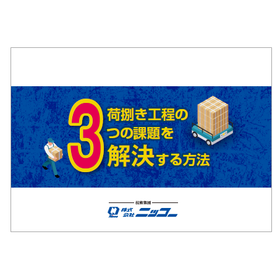
This document introduces methods to solve three challenges in the cargo handling process. It covers the current situation of chronic labor shortages in food manufacturing, as well as three notable challenges: heavy lifting tasks, operational issues, and unpacking tasks, along with a "cardboard unpacking and extraction device" for improving heavy lifting operations. In food factories, many parts of the raw material handling process are done manually, leading to physical strain from handling heavy items and concerns about injuries due to the working environment. There is a growing call for automation from the perspective of labor reduction and improvement. [Contents (partial)] ■ Chronic labor shortage ■ Negative spiral ■ On-site challenges ■ Process from raw material arrival to input ■ Three notable challenges ■ Weight restrictions under labor standards law *For more details, please download the PDF or feel free to contact us.
Added to bookmarks
Bookmarks listBookmark has been removed
Bookmarks listYou can't add any more bookmarks
By registering as a member, you can increase the number of bookmarks you can save and organize them with labels.
Free membership registration
This document introduces methods to solve five problems related to dewatering operations. It presents the current dewatering methods and their issues, along with the high-performance dewatering device "Suitor." It also explains features such as the antibacterial agent-infused special urethane sponge and the clearance adjuster function. The workpiece input can be automated using robots, and particularly with collaborative robots, there is no need for a separate camera system, contributing to the efficiency and labor-saving of the input process. [Contents] ■ Current dewatering methods and issues ■ New type of dewatering device ■ Features of Suitor ■ Benefits and advantages of implementation ■ Suggestions from Nikko *For more details, please download the PDF or feel free to contact us.
Added to bookmarks
Bookmarks listBookmark has been removed
Bookmarks listYou can't add any more bookmarks
By registering as a member, you can increase the number of bookmarks you can save and organize them with labels.
Free membership registration
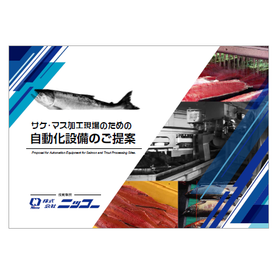
This document introduces the challenges and solutions in salmon processing facilities. It includes equipment such as the "Lifter" for raw material supply operations, the "Auto Header NOH-100" for safely and continuously performing head-cutting operations, and the "Gutter Machine NMG-501" which automatically opens salmon and cleanly separates and collects the internal organs and eggs. The introduction of machinery reduces the handling of fish, which helps to keep the temperature rise in check and prevents the deterioration of fish freshness, leading to improved quality. [Contents] ■ Accelerating labor shortage issues - Labor shortage issues in the seafood processing industry - Proposals for improving labor shortages ■ Challenges and solutions in salmon processing facilities - General salmon processing procedures - Proposal for salmon processing automation lines *For more details, please download the PDF or feel free to contact us.
Added to bookmarks
Bookmarks listBookmark has been removed
Bookmarks listYou can't add any more bookmarks
By registering as a member, you can increase the number of bookmarks you can save and organize them with labels.
Free membership registration
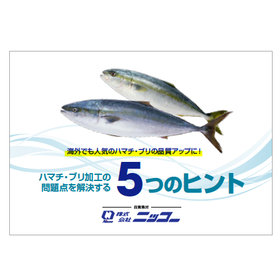
In this document, we propose challenges and solutions in the processing of Hamachi and Buri. We introduce equipment such as the "Raw Material Lifter," which raises the tank and supplies raw materials to the table with just the flip of a switch, and the "Auto Header," which continuously processes head cuts and tail cuts with a single machine. By implementing the equipment we propose, not only will you solve current operational issues, but you will also gain significant benefits such as labor savings and quality improvement. [Contents (partial)] - Trends in seafood exports - Critical issues on-site that require solutions - Processing of Hamachi and Buri - Raw material supply - Head removal (head cut) and tail cut - Evisceration *For more details, please download the PDF or feel free to contact us.
Added to bookmarks
Bookmarks listBookmark has been removed
Bookmarks listYou can't add any more bookmarks
By registering as a member, you can increase the number of bookmarks you can save and organize them with labels.
Free membership registration
[Labeling Changes with Operator Skill Level] The task of applying label stickers greatly varies in productivity depending on the skill level of the operator. If the labels are not applied correctly at the specified position or angle, they are considered "defective," which requires careful work and can lead to a decrease in yield. Additionally, continuously performing this task increases the risk of injuries such as back pain and tendonitis, making it a challenge for companies to balance production efficiency with improving the work environment. [Accurate and Fast for All Operators!] "Robopita Fix" allows operators to simply select the product type on the machine's touch panel and press the operation switch. While transporting the products, the vision system detects their position. Labels are supplied from the label supply unit to the robot, which attaches them to the products during transport. The processing capacity is 60 packs per minute, achieving high-speed and stable operation. [Production Without Stopping the Line] Equipped with two label supply units, even if one runs out of labels, the other continues to supply automatically, allowing for replenishment without stopping the line. The replenishment indicator is easy to see, and the units can be attached and detached easily without tools.
Added to bookmarks
Bookmarks listBookmark has been removed
Bookmarks listYou can't add any more bookmarks
By registering as a member, you can increase the number of bookmarks you can save and organize them with labels.
Free membership registration
Until now, head cutting of hamachi and buri has mostly been done manually or with batch-type cutters. There has been a concern about the danger of exposed blades, leading to worries about cutting one's hands. With Nikko's auto header, the process is simplified: the operator only needs to place the raw material on the supply tray aligned with the laser, and the fish is cut at the same position regardless of size. Using a V-shaped cutter, it automatically and accurately performs head cuts with good yield. Additionally, with the optional automatic tail cutting feature, it becomes an excellent machine capable of both head and tail cuts! 【Features】 ● Continuous processing of head and tail cuts (tail cutting function is optional) ● Injury prevention and peace of mind ● Reduction of labor in the process ● Dedicated machines for specific fish species (hamachi-specific machine, buri-specific machine)
Added to bookmarks
Bookmarks listBookmark has been removed
Bookmarks listYou can't add any more bookmarks
By registering as a member, you can increase the number of bookmarks you can save and organize them with labels.
Free membership registration
[Unpacking of Heavy Raw Material Cardboard Cases] In food factories, the handling process of raw materials involves physical strain due to the handling of heavy items and the working environment, raising concerns about injuries. There is a growing demand for automation from the perspective of labor-saving and improvement. Additionally, cutting the cardboard during unpacking tends to generate paper dust, which can lead to foreign matter contamination. [Automatic Unpacking, Extraction of Raw Materials, and Compact Empty Case Discharge] This device automatically unpacks cardboard cases containing food raw materials without damaging the contents inside, extracts the contents, and discharges the empty cases. [Features] ■ Completes both the unpacking of cardboard cases and the extraction of workpieces in one device ■ The device is compact (L2,086 W1,900 H2,116), allowing for flexible consideration of installation locations ■ Reduces paper dust generation by cutting the tape instead of the box itself ★ We will exhibit at "FOOMA JAPAN" held at Tokyo Big Sight from June 10 to 13, showcasing this device along with high-performance dewatering machines and multi-type knife sharpening robots. Our booth number is "East 7J-23." We sincerely look forward to your visit.
Added to bookmarks
Bookmarks listBookmark has been removed
Bookmarks listYou can't add any more bookmarks
By registering as a member, you can increase the number of bookmarks you can save and organize them with labels.
Free membership registration
If the dewatering operation is insufficient, we perform wiping again to prevent odors, mold, and damage to cardboard boxes caused by residual water. "Suitor" uses a special urethane sponge with antibacterial properties, allowing for compact and efficient dewatering. The thickness of the target object can be adjusted, eliminating concerns about crushing solid items. ◎ We are currently offering a technical document titled "Five Solutions to Dewatering Issues (NEW)"! 【Features】 ■ Utilizes a special urethane sponge with antibacterial agents, providing excellent dewatering effects without noise. ■ Safe to use even with items that are prone to crushing. ■ Parts can be easily attached and detached without tools, making cleaning and maintenance a breeze. ■ Powered by a 100W motor, significantly energy-saving. ■ Compatible with hard-to-dewater standing pouches (optional setting). ■ Can be linked with other devices. If linked after the unloader, it enables one-way casing without changing the line. * There are also cases where the work is loaded by a robot. For more details, please visit "2024 FOOMA JAPAN"! * For product details and technical documents, please check the PDF download.
Added to bookmarks
Bookmarks listBookmark has been removed
Bookmarks listYou can't add any more bookmarks
By registering as a member, you can increase the number of bookmarks you can save and organize them with labels.
Free membership registration
Are you having trouble with robot implementation? Our company has been delivering robotic systems for the food industry as a robot SIer since early on in the industry. In addition to the foundational technologies in food processing that we have cultivated over many years, we propose effective systems tailored to the installation space of our users based on our know-how, achievements, and experience. This document introduces the types of robots used in food processing, along with their characteristics, applications, benefits, and challenges, complete with implementation examples. Please consult Nikko, a robot system integrator specialized in the food industry. [Contents (partial)] ■ Types and characteristics of robots ■ Cartesian robots ■ Scara robots ■ Vertical multi-joint robots *The catalog can be viewed via "PDF Download." Our company specializes in robot SI for the food industry. If you wish to view videos of our robot systems, please contact us through the inquiry form.
Added to bookmarks
Bookmarks listBookmark has been removed
Bookmarks listYou can't add any more bookmarks
By registering as a member, you can increase the number of bookmarks you can save and organize them with labels.
Free membership registration
The loader is a device that automatically arranges and loads pouch and cup products onto trays. The unloader is a device that automatically removes products from trays after they have been sterilized through retort sterilization. We would like to introduce Nikko's "Loader/Unloader." [Features Pursuing Usability in Food Factories] ■ Adopts a robotic system High-speed and careful operation ■ Compact The device is very compact compared to other manufacturers (front width 3,733mm) ■ Trays are less likely to be scratched or warped The use of a zip chain enables stable tray transport ■ Sturdy frame structure Stable operation without shaking even when the robot is in motion ■ Control technology designed for on-site usability Equipped with user-friendly features such as robot control with offset function ■ Control technology considering usability in the food industry - Capable of registering 99 product types - Cycle stop function available - Option to select method for product changeover *For more details, please refer to the PDF document or feel free to contact us.
Added to bookmarks
Bookmarks listBookmark has been removed
Bookmarks listYou can't add any more bookmarks
By registering as a member, you can increase the number of bookmarks you can save and organize them with labels.
Free membership registration
"We want to advance automation, but we don't know where to start..." For those in this situation, we are offering a document that introduces key points for successfully implementing robotic systems. In addition to basic knowledge such as an overview of robotic systems and the role of robotic system integrators (SIers), the content includes how to proceed with considerations, examples of benefits to aim for that match your company's challenges, and examples of creating requirement specifications, making it easy to visualize specific actions. [Contents (excerpt)] ■ Challenges in the era of population decline ■ What is a robotic SIer? ■ Knowledge necessary for implementing robotic systems ■ Operation of robotic systems ■ Case studies of robotic system implementation (Packing shumai, transporting and packaging thick fried tofu, etc.) *You can view it by downloading the "PDF." Please feel free to contact us. Our company specializes in robotic SI for the food industry. For more details, please refer to the basic information section.
Added to bookmarks
Bookmarks listBookmark has been removed
Bookmarks listYou can't add any more bookmarks
By registering as a member, you can increase the number of bookmarks you can save and organize them with labels.
Free membership registration
Our company develops unique robotic systems that combine our proprietary 2D and 3D visual sensors with robots, as well as specialized equipment that can handle more products with fewer robots to address installation space challenges. We propose these solutions to our customers. In actual operations, no matter how excellent, fast, and precise the robots or hands are, they alone do not lead to the original goals of labor reduction, productivity improvement, and efficiency enhancement. We believe that to fully utilize the capabilities of these excellent robots, it is essential to build a "system" that allows the robots to work faster and more efficiently. 【Features】 ■ Years of accumulated achievements and know-how ■ Total number of units delivered (up to 2023) ・Number of robotic systems: 98 ・Number of robots: 171 ■ Extensive experience handling "raw products" ■ Comprehensive proposals for the entire production line of robots and peripheral equipment *For more details, please download the PDF or feel free to contact us.
Added to bookmarks
Bookmarks listBookmark has been removed
Bookmarks listYou can't add any more bookmarks
By registering as a member, you can increase the number of bookmarks you can save and organize them with labels.
Free membership registration
Conventional dewatering operations involve methods such as using blowers or air and hot air to evaporate moisture. However, none of these methods achieve complete dewatering, leading workers to perform additional wiping tasks to prevent complaints related to residual water causing odors, mold, and damage to cardboard boxes. Although the noise during operation has decreased compared to older devices, it is still quite loud. Workers engaged in tasks in areas exceeding 85 dB are required to wear earplugs or earmuffs, which poses a problem as they may not hear emergency signals or announcements, such as alarms. In terms of equipment specifications, pursuing dewatering effectiveness results in longer devices. This can lead to issues with factory installation space and makes cleaning and maintenance difficult due to the inability to disassemble the equipment, raising hygiene concerns. The new dewatering machine developed by our company utilizes a special antibacterial urethane sponge, enabling compact and efficient dewatering operations. The clearance adjuster function allows for thickness adjustments of the target objects, eliminating concerns about crushing solid items. An optional air blow unit achieves more accurate and complete dewatering. For more details, please contact us or download the catalog.
Added to bookmarks
Bookmarks listBookmark has been removed
Bookmarks listYou can't add any more bookmarks
By registering as a member, you can increase the number of bookmarks you can save and organize them with labels.
Free membership registration
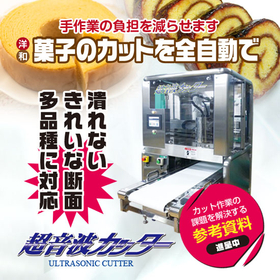
In the frozen food industry, it is essential to cut products efficiently while maintaining their appearance and quality. Particularly, the beauty of the product after thawing and improving yield are important. Traditional cutting methods can lead to products being crushed or having rough cross-sections, which may compromise product value. Our food cutter, the "Ultrasonic Cutter," utilizes ultrasonic vibrations to cut without applying unnecessary pressure on the food, preserving a beautiful cross-section. It can also finish soft foods like roll cakes, castella, and cheese without losing their shape, contributing to the efficiency of cutting operations in frozen food. 【Usage Scenarios】 - Cutting frozen cakes, frozen bread, frozen side dishes, etc. - Food processing factories, central kitchens - Companies that prioritize product appearance and quality 【Benefits of Implementation】 - Improved product yield - Labor savings through automation of cutting operations - Enhanced product value due to beautiful cross-sections
Added to bookmarks
Bookmarks listBookmark has been removed
Bookmarks listYou can't add any more bookmarks
By registering as a member, you can increase the number of bookmarks you can save and organize them with labels.
Free membership registration
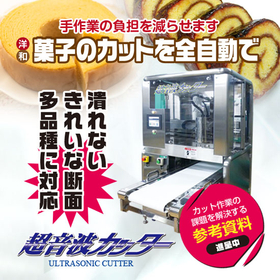
In the confectionery manufacturing industry, the appearance and quality of products are important, and precision in the cutting process is required. Particularly for soft foods that are difficult to cut, such as Baumkuchen and roll cakes, any deformation during cutting or roughness of the cross-section can diminish the product's value. Manual cutting not only takes time and effort but also tends to result in variations in quality. Our food cutter, the "Ultrasonic Cutter," utilizes ultrasonic vibrations to cut without applying unnecessary pressure to the food, allowing for beautiful cross-sections. It is capable of finishing soft foods like roll cakes, castella, and cheese without losing their shape. It can efficiently process a variety of products and is suitable for small-batch production of diverse items. [Usage Scenarios] - Sites processing large quantities of soft and difficult-to-cut foods such as Baumkuchen, roll cakes, castella, yokan, and cheese. - Manufacturing sites for products that are difficult to cut manually. [Benefits of Implementation] - Improvement in product appearance and quality. - Increased productivity through automation of cutting tasks. - Adaptation to small-batch production of various items. - Achievement of a hygienic cutting environment.
Added to bookmarks
Bookmarks listBookmark has been removed
Bookmarks listYou can't add any more bookmarks
By registering as a member, you can increase the number of bookmarks you can save and organize them with labels.
Free membership registration
Soft foods are prone to crushing during cutting, making automation difficult, so there are many situations where manual cutting is unavoidable. The food cutter we offer, the "Ultrasonic Cutter," utilizes ultrasonic vibrations to cut without applying unnecessary pressure on the food, allowing for beautiful cross-sections. It can finish soft foods like roll cakes, castella, and cheese without altering their shape. It efficiently processes a variety of products with a single unit, making it suitable for small-batch production of diverse items. 【Features】 ■ Automates the cutting of soft foods that were previously done manually ■ Can cut soft ingredients like Baumkuchen without crushing the product ■ Produces clean cutting surfaces and is resistant to deformation; compatible with a variety of products using one unit ■ Equipped with an automatic blade cleaning function for hygiene and long-lasting blades ■ Designed to minimize oil adhesion *For more details, please contact us or download the catalog for more information.
Added to bookmarks
Bookmarks listBookmark has been removed
Bookmarks listYou can't add any more bookmarks
By registering as a member, you can increase the number of bookmarks you can save and organize them with labels.
Free membership registration
Cutting long yams is mostly done by hand, and considerable skill is required to achieve the specified weight. Many skilled workers are elderly, leading to a labor shortage issue. Additionally, when unskilled workers perform the cutting, it results in significant variability and poor yield, hindering quality improvement. Operators simply set the desired cutting weight on a touch panel and place the yam on the conveyor. The weight of the workpiece is automatically measured and accurately assessed using three-dimensional measurement technology. Our original software instantly calculates the cutting position based on the set weight and communicates it to the cutter. It allows for continuous cutting without breaking the yam. ● Automatic cutting just by placing the workpiece on the conveyor ● Equipped with three-dimensional measurement ● Easy operation with a touch panel ● Tool-free attachment and detachment ● Standard weight cutting for root vegetables like yams, radishes, and carrots
Added to bookmarks
Bookmarks listBookmark has been removed
Bookmarks listYou can't add any more bookmarks
By registering as a member, you can increase the number of bookmarks you can save and organize them with labels.
Free membership registration
The vacuum packaging of beef and pork cuts is automated using three-dimensional measurement technology and robotic control technology. The processing capacity is 17 bags per minute. In this case, six people are required for manual work, but with this equipment, it can be done by two people, allowing for a reduction of four personnel.
Added to bookmarks
Bookmarks listBookmark has been removed
Bookmarks listYou can't add any more bookmarks
By registering as a member, you can increase the number of bookmarks you can save and organize them with labels.
Free membership registration
Knives used for disassembly work in meat processing need to be sharpened every day after work, but the number of knife sharpeners has decreased, and many companies are struggling to maintain the usual sharpening standards. The "Togi Robo" can solve the problems associated with knife sharpening. This device allows you to set up to 40 knives on a turntable and simply turn on the switch, and the robot will automatically perform rough and finishing sharpening. 【Product Features】 ■ Easy operation ■ Fast sharpening ■ Uniform finish ■ Long-lasting sharpness ■ Compatible with various types of knives *For more details, please contact us or check the PDF download.
Added to bookmarks
Bookmarks listBookmark has been removed
Bookmarks listYou can't add any more bookmarks
By registering as a member, you can increase the number of bookmarks you can save and organize them with labels.
Free membership registration
Equipped with a 3D intelligence system A new measurement technology for achieving high-precision cutting is 3D stereo measurement technology. 3D stereo measurement captures the target object from four directions using CCD cameras, measuring the size and weight of the product, and instantly calculating the set cut position. Additionally, the captured images are processed to calculate the parallax between the two cameras, creating a three-dimensional image of the target object. Even for irregularly shaped bacon, portion cutting can be performed quickly and accurately with short processing times and stable high precision. Tool-free disassembly and assembly This device is designed to be disassembled without tools for easy daily cleaning and maintenance.
Added to bookmarks
Bookmarks listBookmark has been removed
Bookmarks listYou can't add any more bookmarks
By registering as a member, you can increase the number of bookmarks you can save and organize them with labels.
Free membership registration
The beef and pork processing cutting device is a specialized machine that processes beef and pork block meat into primal cuts in a one-way manner. It can be processed into 7-8 cm cubes or minced material. Additionally, it features a compact design that allows for space-saving installation, reducing work time and improving work efficiency. *A dedicated machine for strip cutting is also available. For more details, please contact us or download the catalog. 【Features】 ○ Processes beef and pork block meat in a one-way manner ○ Can be processed into 7-8 cm cubes or minced material ○ Compact design for space-saving installation ○ Reduces work time ○ Improves work efficiency
Added to bookmarks
Bookmarks listBookmark has been removed
Bookmarks listYou can't add any more bookmarks
By registering as a member, you can increase the number of bookmarks you can save and organize them with labels.
Free membership registration
Steam generated by boiling water is further heated to a state above 100°C, and this gas is referred to as "superheated steam." This device uses only high-temperature superheated steam as a heat source, directly injecting it into the ingredients for direct baking, achieving both "steaming" and "baking" simultaneously. With a uniquely different ideal baking method, it significantly contributes to improving product quality. [Features] - Ability to freely create grill marks - Short heating process - due to excellent thermal conductivity, it finishes in a short time. - Improvement in product quality - the surface is crispy while the inside remains juicy, with vibrant colors. The effect of preventing flavor loss enhances the product's taste, prevents fat oxidation, and leads to improved product quality. - Easy and flexible settings - various settings can be made for each heater, allowing for unique baking methods and detailed control. - Outstanding energy-saving effect - the steam usage rate is very good, significantly reducing running costs. - Can bake frozen products directly. - No need for auxiliary equipment such as boilers or reheating devices.
Added to bookmarks
Bookmarks listBookmark has been removed
Bookmarks listYou can't add any more bookmarks
By registering as a member, you can increase the number of bookmarks you can save and organize them with labels.
Free membership registration
The "Micro Pressure System," developed by pursuing the thermal conductivity of steam, achieves maximum thermal efficiency with minimal heat sources. It offers significant energy-saving measures, reduces wastewater treatment without the need for hot water, and is hygienic, making it a proposal that Nikko confidently presents. 【Features】 ○ Free selection of heating time and heating temperature settings ○ Significant energy savings achieved ○ Improvement and standardization of quality ○ Reduction of wastewater treatment without the need for hot water ○ Hygienic ○ Cost reduction through increased productivity and labor-saving measures
Added to bookmarks
Bookmarks listBookmark has been removed
Bookmarks listYou can't add any more bookmarks
By registering as a member, you can increase the number of bookmarks you can save and organize them with labels.
Free membership registration
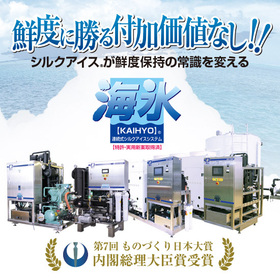
In aquaculture, the "killing" and "cooling" immediately after catch are the most important processes that influence the shipping price. Especially for high-value aquaculture fish, traditional crushed ice cannot avoid cooling unevenness and damage to the fish body, leading to freshness deterioration. The continuous silk ice system "Sea Ice" enhances the quality of branded fish to the utmost by cooling to the core at an overwhelming speed without damaging the cells of the aquaculture fish. 【Usage Scenarios in Aquaculture】 - Rapid cooling immediately after catch and killing: Instantly lowers the fish's body temperature and delays rigor mortis. - Transportation to processing plants: Maintains high freshness without damaging the fish body. - Processing and filleting: Thoroughly manages low temperatures to suppress drip loss. 【Four Features Specialized for Aquaculture】 - "Silk Ice" that does not damage the fish body: Fine ice particles gently envelop the fish body. Unlike traditional angular ice (crushed ice), it does not cause scratches on the surface or eyes of the fish, making it ideal for aquaculture fish that require visual appeal. - Overwhelming cooling speed: Liquid ice closely adheres to the entire surface of the fish. - Maintains freshness during long-distance transport and export to the destination. - Suppresses bacterial growth: Rapid cooling and low-temperature maintenance effectively inhibit bacterial proliferation.
Added to bookmarks
Bookmarks listBookmark has been removed
Bookmarks listYou can't add any more bookmarks
By registering as a member, you can increase the number of bookmarks you can save and organize them with labels.
Free membership registration
In experimental research, it is important to maintain the quality of samples. Particularly in experiments using seafood, deterioration of freshness can significantly impact the results. Silk Ice quickly cools fish without damaging them and maintains low temperatures for an extended period, preserving the freshness of the samples. 【Usage Scenarios】 - Maintaining the freshness of samples in experiments using seafood - Long-term storage of biological samples - Cooling of samples in cell culture experiments 【Benefits of Introduction】 - Improved reliability of experimental results - Reduction of sample waste - Increased efficiency of experiments
Added to bookmarks
Bookmarks listBookmark has been removed
Bookmarks listYou can't add any more bookmarks
By registering as a member, you can increase the number of bookmarks you can save and organize them with labels.
Free membership registration
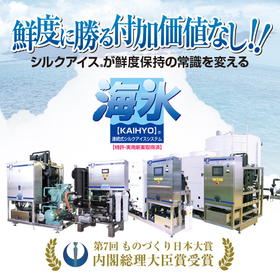
In the logistics industry, especially in low-temperature transportation, temperature management during transport is crucial. Maintaining freshness is essential for enhancing customer satisfaction and reducing food waste. Traditional cooling methods have made temperature management difficult, posing risks of quality deterioration. The continuous silk ice system "Sea Ice" simultaneously achieves "prevention of agitation" and "low-temperature storage," which are indispensable for preserving the freshness of seafood. It allows for the transportation of freshly caught products in high-quality condition. 【Usage Scenarios】 - Low-temperature transportation of fresh fish, frozen foods, and fresh produce - Long-distance transportation and transport where temperature management is challenging - Maintaining product value through freshness preservation 【Effects of Implementation】 - Increased product value through freshness preservation - Reduction of food waste - Improvement in customer satisfaction - Stabilization of transportation quality
Added to bookmarks
Bookmarks listBookmark has been removed
Bookmarks listYou can't add any more bookmarks
By registering as a member, you can increase the number of bookmarks you can save and organize them with labels.
Free membership registration
In the food service industry, managing the freshness of ingredients is a crucial factor that influences taste and quality. Particularly for seafood, freshness deteriorates quickly, necessitating proper management from procurement to serving. If freshness cannot be maintained, the value of the ingredients decreases, which can lead to a decline in customer satisfaction. The continuous silk ice system "Umi Ice" simultaneously achieves essential "prevention of movement" and "low-temperature storage" for maintaining the freshness of seafood, preserving the just-caught quality. 【Usage Scenarios】 - Procurement and storage of seafood - Freshness management in stores - Freshness maintenance during transportation 【Benefits of Implementation】 - Quality improvement through freshness maintenance of ingredients - Reduction of food waste - Increased customer satisfaction
Added to bookmarks
Bookmarks listBookmark has been removed
Bookmarks listYou can't add any more bookmarks
By registering as a member, you can increase the number of bookmarks you can save and organize them with labels.
Free membership registration
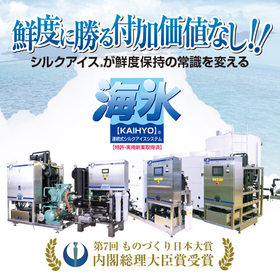
In the fisheries industry, it is important to maintain the freshness of the catch and ship it to the market in a high-quality state. When freshness declines, the value of the product decreases, and the possibility of waste loss increases. Particularly in long-distance transportation and storage, proper temperature management is essential. The continuous silk ice system "Sea Ice" preserves freshness from the moment of catch, enabling high-quality landings. 【Usage Scenarios】 - Cooling seafood after catch - Maintaining freshness at the time of landing - Storage of seafood 【Effects of Implementation】 - Preserving the freshness of freshly caught products - Preventing damage to the fish - Freshness preservation through a reduction in bacterial count - Maintaining high quality through ATP retention
Added to bookmarks
Bookmarks listBookmark has been removed
Bookmarks listYou can't add any more bookmarks
By registering as a member, you can increase the number of bookmarks you can save and organize them with labels.
Free membership registration
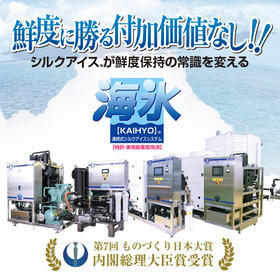
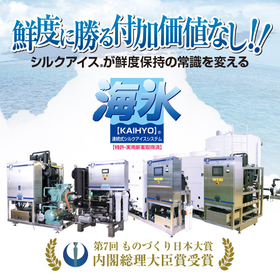
The silk ice proposed by Nikko is a slushy ice with the same salinity as seawater, cooled to sub-zero temperatures using sea ice. It is an excellent ice that can simultaneously achieve "prevention of agitation" and "low-temperature storage," which are essential for maintaining the freshness of fish. The continuous silk ice system "sea ice" can generate silk ice within minutes of startup, allowing for immediate freshness preservation right after catch, enabling fish to be landed at peak freshness. This product received the Prime Minister's Award at the 7th Monozukuri Nippon Grand Award. 【Features】 ○ Ice production starts immediately with a switch-on ○ Compact design suitable for installation on vessels ○ Energy-efficient ○ Allows for landing while maintaining the freshness of freshly caught fish ○ Reduces the labor and effort required for ice loading ○ Cost reduction in fuel and other expenses (vessel-mounted type) ○ Discharges 1 to 1.5 tons in about 10 minutes (land-based type) ○ Supplies from the tank via hose (land-based type) ○ Continuous ice production at raw water temperatures up to 28°C 【Silk Ice Features】 ● Extremely fine particle sea water slushy ice ● Very fast cooling speed ● Maintains sub-zero temperatures for a long time ● Does not damage fish bodies ● Reduces bacterial count ● ATP is preserved ● Can be applied to large catches of fish
Added to bookmarks
Bookmarks listBookmark has been removed
Bookmarks listYou can't add any more bookmarks
By registering as a member, you can increase the number of bookmarks you can save and organize them with labels.
Free membership registration
The Shearer series is a processing machine that has been requested by the scallop processing industry for several years, and it is a device completed by Nikko Co., Ltd. with technology that overturns conventional wisdom. The "Auto Shearer" is an automatic scallop shucking machine that, by simply loading raw scallops, automatically removes the edges and guts, collecting only the adductor muscle. The scallops processed by this machine have been highly evaluated for achieving quality equivalent to hand-shucked scallops while significantly reducing labor. Additionally, the "Auto Shearer Raw Scallop Automatic Supply System," which automatically feeds raw scallops into the Auto Shearer using a robot, won the Small and Medium Enterprise Agency Award at the 8th Robot Awards. For more details, please contact us or download the catalog.
Added to bookmarks
Bookmarks listBookmark has been removed
Bookmarks listYou can't add any more bookmarks
By registering as a member, you can increase the number of bookmarks you can save and organize them with labels.
Free membership registration
The "Band Fisher NSB-300" can produce three types of fillets: fillets with the belly bone removed, fillets with the belly bone attached, and center cuts, all with just one machine. The cutting edges are sharp, resulting in minimal flesh splitting and high yield. 【Features】 ○ Capable of producing three types of products without reconfiguring the line*1 → Fillets with the belly bone removed, fillets with the belly bone attached, and center cuts ○ Cuts with a band knife ○ Very sharp cutting edges with minimal flesh splitting and good yield ○ Can process both fresh and thawed fish ○ Processing capacity: 25-30 fish per minute ○ Easy to clean and maintain, ensuring hygiene ○ Salmon-specific two and three fillet machine, Patent No. 3742725 *1: Center cut is an optional setting * There is also a dedicated machine for center cuts ● For more details, please contact us or download the catalog.
Added to bookmarks
Bookmarks listBookmark has been removed
Bookmarks listYou can't add any more bookmarks
By registering as a member, you can increase the number of bookmarks you can save and organize them with labels.
Free membership registration
Currently, most salted fillets are produced using a soaking process. This method involves soaking the fillets in brine for an extended period (from overnight to three days) and then allowing them to rest for maturation, primarily used for red salmon and silver salmon. However, a previous study by a public testing agency on "soaking conditions for salted salmon and the extract components of the products" revealed that the longer the soaking time, the more umami is lost from the fish flesh. The injector is a groundbreaking device that directly injects brine or seasoning liquid into the fish flesh. It shortens the seasoning time, minimizes loss of seasoning liquid, and improves yield. Additionally, it allows for concentration control and offers the benefit of making the product more delicious! When tasting the product, there are even surprised voices asking, "Why is this so delicious?" Besides producing salted fillets, it is also possible to inject seasoning liquid to develop "your company's original products." 【Features】 ■ Enhanced product flavor ■ Production of products with uniform salt concentration ■ Significant reduction in working time ■ Improved product yield ■ Freedom to change salt concentration, etc. *For more details, please contact us or download the catalog.
Added to bookmarks
Bookmarks listBookmark has been removed
Bookmarks listYou can't add any more bookmarks
By registering as a member, you can increase the number of bookmarks you can save and organize them with labels.
Free membership registration
The production of salmon fillets often relies on skilled artisans, as the size, thickness, and meatiness can vary from one fish to another, making it a task that requires the artisan's expertise to cut them to the same weight. However, we propose a fixed-length filleting device that can produce salmon fillets in large quantities with high precision, even without a filleting artisan. The operation is simple, and it allows for large-scale processing. In addition to salmon, it can also handle other fish such as sablefish and Spanish mackerel (optional). 【Features】 - Fixed-length filleting device compatible with multiple fish species - Produces beautiful fillets with uniform surfaces and lengths through three-dimensional cutting - Processing capacity: 3100 cuts/hour (15 cuts per fillet) - Fish can be randomly fed (no pre-processing needed to match sizes before feeding) - Wide range of cutter rotation and tilt angles - Compact size that saves space - In addition to salmon, other fish species such as sablefish and Spanish mackerel can be accommodated with separate software (optional) For more details, please contact us or download the catalog.
Added to bookmarks
Bookmarks listBookmark has been removed
Bookmarks listYou can't add any more bookmarks
By registering as a member, you can increase the number of bookmarks you can save and organize them with labels.
Free membership registration
Even if you are not a skilled worker, you can simply open the salmon roe and place it on the conveyor of this machine, and it will automatically separate the eggs from the skin. Compared to traditional hand kneading, it can process a large quantity in a short time, achieving significant labor savings. Additionally, it has excellent sanitary features, and parts such as nets and rollers can be disassembled without tools. Cleaning is also easy, allowing for work in a clean state. For more details, please contact us or download the catalog.
Added to bookmarks
Bookmarks listBookmark has been removed
Bookmarks listYou can't add any more bookmarks
By registering as a member, you can increase the number of bookmarks you can save and organize them with labels.
Free membership registration