1936~1980 item / All 2949 items
Displayed results
Filter by category

Added to bookmarks
Bookmarks listBookmark has been removed
Bookmarks listYou can't add any more bookmarks
By registering as a member, you can increase the number of bookmarks you can save and organize them with labels.
Free membership registration
Contact this company
Inquiry FormBefore making an inquiry
Download Profile1936~1980 item / All 2949 items
Filter by category

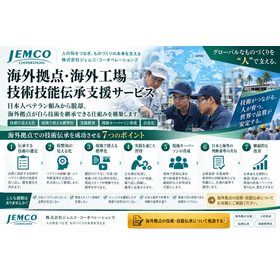
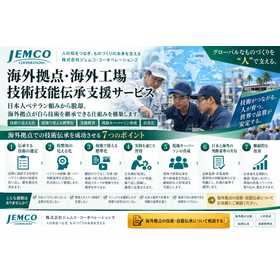
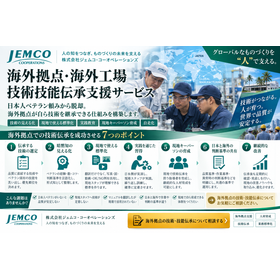
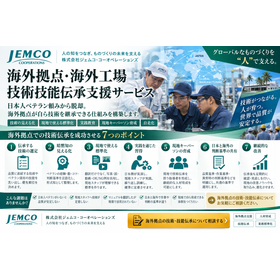
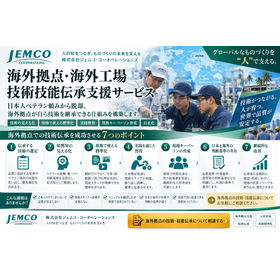
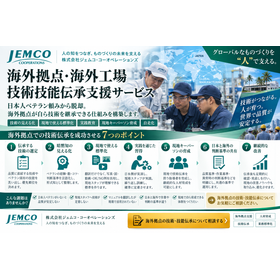
In the robot manufacturing industry, the assembly process requires the transmission of advanced technical skills to ensure product quality stability and maintain production efficiency. Particularly in manufacturing processes that rely on the experience and intuition of skilled technicians, variations in quality can occur during the absence of these technicians or during generational transitions, increasing the risk of decreased production efficiency. Additionally, relying solely on manualized information makes it difficult to convey the subtle nuances and judgment criteria of the field, posing challenges for the establishment of technology. Our service addresses these issues and supports the establishment of a system that allows overseas bases to inherit technology independently. 【Usage Scenarios】 - Stabilization of quality in the absence of veteran Japanese staff - Establishment of technology among local staff - Unification of judgment criteria at overseas bases - Transmission of essential technologies crucial for improving assembly accuracy 【Effects of Implementation】 - Autonomous development of technology and skills at overseas bases - Stabilization of quality and improvement of production efficiency - Reduced dependence on Japanese technicians - Promotion of continuous improvement activities by local personnel
Added to bookmarks
Bookmarks listBookmark has been removed
Bookmarks listYou can't add any more bookmarks
By registering as a member, you can increase the number of bookmarks you can save and organize them with labels.
Free membership registration
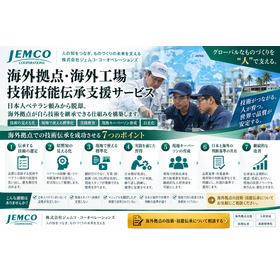
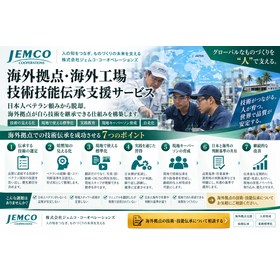
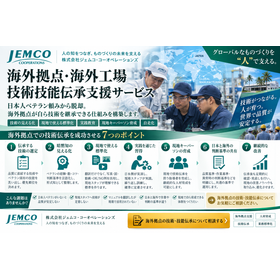
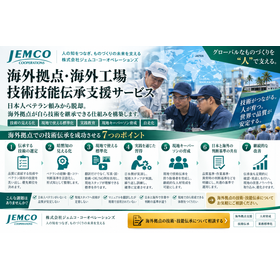
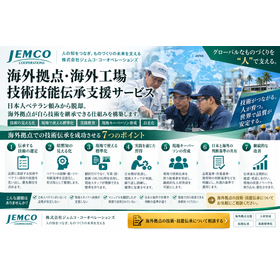
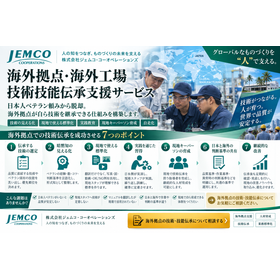
In the packaging materials manufacturing industry, maintaining and passing on advanced technical skills is essential for stabilizing product quality and improving production efficiency. Particularly in manufacturing processes that rely on the experience and intuition of skilled technicians, the absence of these technicians or generational transitions can lead to variations in quality and an increased risk of decreased production efficiency. Additionally, relying solely on manualized information makes it difficult to convey the subtle nuances and judgment criteria of the field, posing challenges for the establishment of technology. Our service addresses these issues and supports the establishment of a system that allows overseas bases to inherit technology independently. 【Usage Scenarios】 - Stabilizing quality in the absence of veteran Japanese staff - Establishing technology among local staff - Unifying judgment criteria at overseas bases - Passing on critical technologies essential for improving production efficiency 【Benefits of Implementation】 - Autonomous development of technology and skills at overseas bases - Stabilization of quality and improvement of production efficiency - Reduced dependence on Japanese technicians - Promotion of continuous improvement activities by local personnel
Added to bookmarks
Bookmarks listBookmark has been removed
Bookmarks listYou can't add any more bookmarks
By registering as a member, you can increase the number of bookmarks you can save and organize them with labels.
Free membership registration
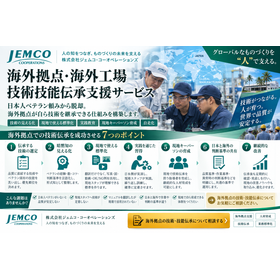
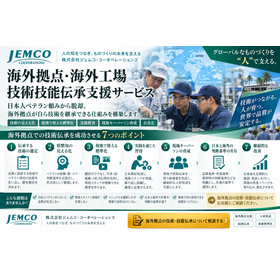
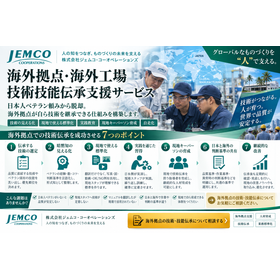
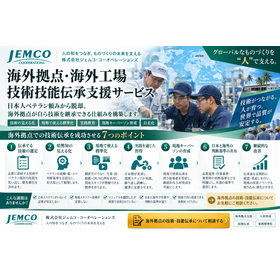
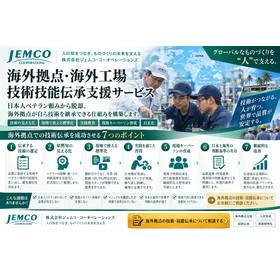
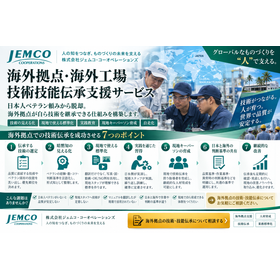
In the printing and binding industry, maintaining and passing on advanced technical skills is essential for stabilizing product quality and improving yield. Particularly in manufacturing processes that rely on the experience and intuition of skilled technicians, variations in quality can occur during the absence of these technicians or during generational transitions, increasing the risk of reduced yield. Additionally, relying solely on manualized information makes it difficult to convey the subtle nuances and judgment criteria of the field, posing challenges for the establishment of technology. Our service addresses these issues and supports the establishment of a system that allows overseas bases to inherit technology independently. 【Usage Scenarios】 - Stabilizing quality in the absence of Japanese veterans - Establishing technology among local staff - Unifying judgment criteria at overseas bases - Passing on essential technologies crucial for improving yield 【Effects of Implementation】 - Autonomous operation of technology and skills at overseas bases - Stabilization of quality and improvement of yield - Reduced dependence on Japanese technicians - Promotion of continuous improvement activities by local personnel
Added to bookmarks
Bookmarks listBookmark has been removed
Bookmarks listYou can't add any more bookmarks
By registering as a member, you can increase the number of bookmarks you can save and organize them with labels.
Free membership registration
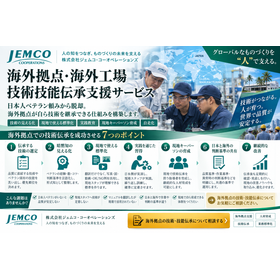
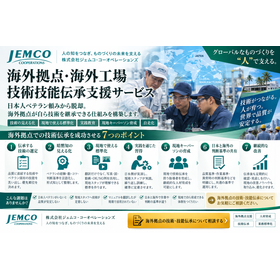
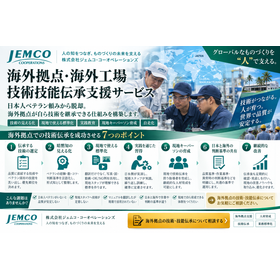
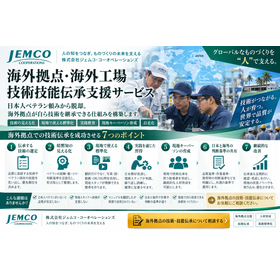
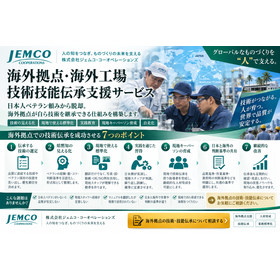
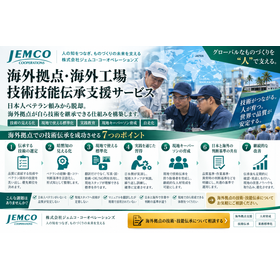
In the textile industry, maintaining and passing on advanced technical skills is essential for stabilizing product quality and improving production efficiency. Particularly in manufacturing processes that rely on the experience and intuition of skilled technicians, variations in quality can occur during the absence of these technicians or during generational transitions, increasing the risk of decreased production efficiency. Additionally, relying solely on manualized information makes it difficult to convey the subtle nuances and judgment criteria of the field, posing challenges to the establishment of technology. Our service addresses these issues and supports the establishment of a system that allows overseas bases to inherit technology independently. 【Usage Scenarios】 - Stabilizing quality in the absence of veteran Japanese staff - Establishing technology among local staff - Standardizing judgment criteria at overseas bases - Passing on essential technologies crucial for improving production efficiency 【Effects of Implementation】 - Autonomous operation of technology and skills at overseas bases - Stabilization of quality and improvement of production efficiency - Reduced dependence on Japanese technicians - Promotion of continuous improvement activities by local personnel
Added to bookmarks
Bookmarks listBookmark has been removed
Bookmarks listYou can't add any more bookmarks
By registering as a member, you can increase the number of bookmarks you can save and organize them with labels.
Free membership registration
In the pharmaceutical industry, maintaining and passing on advanced technical skills is essential for product quality stability and compliance with GMP (Good Manufacturing Practice). Particularly in manufacturing processes that rely on the experience and intuition of skilled technicians, variations in quality can occur during the absence of these technicians or during generational transitions, increasing the risk of non-compliance with GMP. Additionally, relying solely on manualized information makes it difficult to convey the subtle nuances and judgment criteria of the field, posing challenges to the establishment of technology. Our service addresses these issues and supports the establishment of a system that allows overseas locations to inherit technology independently. 【Usage Scenarios】 - Stabilizing quality in the absence of Japanese veterans - Establishing technology among local staff - Standardizing judgment criteria at overseas locations - Transmitting essential technologies critical for GMP compliance 【Benefits of Implementation】 - Enabling self-sufficiency in technology and skills at overseas locations - Stabilizing quality and ensuring GMP compliance - Reducing dependence on Japanese technicians - Promoting continuous improvement activities by local personnel
Added to bookmarks
Bookmarks listBookmark has been removed
Bookmarks listYou can't add any more bookmarks
By registering as a member, you can increase the number of bookmarks you can save and organize them with labels.
Free membership registration
In the operation of chemical plants, maintaining and passing on advanced technical skills is essential for ensuring product quality stability and safe operations. Particularly in manufacturing processes that rely on the experience and intuition of skilled technicians, variations in quality can occur during the absence of these technicians or during generational transitions, increasing the risk of unsafe operations. Additionally, relying solely on manualized information can make it difficult to convey the subtle nuances and judgment criteria of the field, posing challenges to the establishment of technology. Our service addresses these issues and supports the establishment of a system that allows overseas bases to inherit technology independently. 【Usage Scenarios】 - Stabilization of operations in the absence of Japanese veterans - Establishment of technology among local staff - Unification of judgment criteria at overseas bases - Transmission of essential technologies crucial for safe operations 【Benefits of Implementation】 - Autonomous development of technology and skills at overseas bases - Stabilization of operational quality - Reduced dependence on Japanese technicians - Promotion of continuous improvement activities by local personnel
Added to bookmarks
Bookmarks listBookmark has been removed
Bookmarks listYou can't add any more bookmarks
By registering as a member, you can increase the number of bookmarks you can save and organize them with labels.
Free membership registration
In the precision machinery manufacturing industry, maintaining and passing on advanced technical skills is essential for stabilizing product quality and improving yield rates. Particularly in manufacturing processes that rely on the experience and intuition of skilled technicians, variations in quality can occur during the absence of these technicians or during generational transitions, increasing the risk of reduced yield. Additionally, relying solely on manualized information makes it difficult to convey the subtle nuances and judgment criteria present in the field, posing challenges to the establishment of technology. Our service addresses these issues and supports the establishment of a system that allows overseas bases to inherit technology independently. 【Usage Scenarios】 - Stabilizing quality in the absence of veteran Japanese staff - Establishing technology among local staff - Standardizing judgment criteria at overseas bases - Passing on essential technologies crucial for improving yield 【Benefits of Implementation】 - Autonomous development of technology and skills at overseas bases - Stabilization of quality and improvement of yield - Reduced dependence on Japanese technicians - Promotion of continuous improvement activities by local personnel
Added to bookmarks
Bookmarks listBookmark has been removed
Bookmarks listYou can't add any more bookmarks
By registering as a member, you can increase the number of bookmarks you can save and organize them with labels.
Free membership registration
In the aerospace industry, maintaining and passing on advanced technical skills is essential for ensuring product safety and quality stability. Particularly in manufacturing processes that rely on the experience and intuition of skilled technicians, variations in quality can occur during the absence of these technicians or during generational transitions, potentially increasing safety risks. Additionally, relying solely on manualized information makes it difficult to convey the subtle nuances and judgment criteria present on-site, posing challenges for the establishment of technology. Our service addresses these issues and supports the establishment of a system that allows overseas bases to inherit technology independently. 【Usage Scenarios】 - Stabilizing quality in the absence of Japanese veterans - Establishing technology among local staff - Unifying judgment criteria at overseas bases - Passing on critical technologies essential for ensuring safety 【Effects of Implementation】 - Autonomous operation of technology and skills at overseas bases - Stabilization of quality and improvement of safety - Reduced dependence on Japanese technicians - Promotion of continuous improvement activities by local personnel
Added to bookmarks
Bookmarks listBookmark has been removed
Bookmarks listYou can't add any more bookmarks
By registering as a member, you can increase the number of bookmarks you can save and organize them with labels.
Free membership registration
In the medical device manufacturing industry, maintaining product quality stability and high precision requires the preservation and transmission of advanced technical skills. Particularly in manufacturing processes that rely on the experience and intuition of skilled technicians, variations in quality can occur during the absence of these technicians or during generational transitions, increasing the risk of decreased precision. Additionally, relying solely on manualized information makes it difficult to convey the subtle nuances and judgment criteria present on-site, posing challenges to the establishment of technology. Our service addresses these issues and supports the establishment of a system that allows overseas bases to inherit technology independently. 【Usage Scenarios】 - Stabilizing quality in the absence of veteran Japanese technicians - Establishing technology among local staff - Unifying judgment criteria at overseas bases - Transmitting essential technologies crucial for maintaining precision 【Effects of Implementation】 - Enabling self-sufficiency in technology and skills at overseas bases - Stabilizing quality and improving precision - Reducing dependence on Japanese technicians - Promoting continuous improvement activities by local personnel
Added to bookmarks
Bookmarks listBookmark has been removed
Bookmarks listYou can't add any more bookmarks
By registering as a member, you can increase the number of bookmarks you can save and organize them with labels.
Free membership registration
In the home appliance manufacturing industry, maintaining and passing on advanced technical skills is essential for stabilizing product quality and improving productivity. Particularly in manufacturing processes that rely on the experience and intuition of skilled technicians, variations in quality can occur during the absence of these technicians or during generational transitions, increasing the risk of decreased productivity. Additionally, relying solely on manualized information makes it difficult to convey the subtle nuances and judgment criteria of the field, posing challenges for the establishment of technology. Our service addresses these issues and supports the establishment of a system where overseas bases can inherit technology independently. 【Usage Scenarios】 - Stabilizing quality in the absence of veteran Japanese staff - Establishing technology among local staff - Standardizing judgment criteria at overseas bases - Transmitting essential technologies crucial for improving productivity 【Effects of Implementation】 - Autonomous operation of technology and skills at overseas bases - Stabilization of quality and improvement of productivity - Reduced dependence on Japanese technicians - Promotion of continuous improvement activities by local personnel
Added to bookmarks
Bookmarks listBookmark has been removed
Bookmarks listYou can't add any more bookmarks
By registering as a member, you can increase the number of bookmarks you can save and organize them with labels.
Free membership registration
In the automotive parts manufacturing industry, maintaining and passing on advanced technical skills is essential for stabilizing product quality and improving yield rates. Particularly in manufacturing processes that rely on the experience and intuition of skilled technicians, variations in quality can occur during times of technician absence or generational change, increasing the risk of yield decline. Additionally, relying solely on manualized information makes it difficult to convey the subtle nuances and judgment criteria present on the shop floor, posing challenges for the establishment of technology. Our service addresses these issues and supports the establishment of a system that allows overseas bases to inherit technology independently. 【Usage Scenarios】 - Stabilizing quality in the absence of veteran Japanese technicians - Establishing technology among local staff - Standardizing judgment criteria at overseas bases - Passing on essential technologies crucial for improving yield 【Benefits of Implementation】 - Autonomous operation of technology and skills at overseas bases - Stabilization of quality and improvement of yield - Reduced dependence on Japanese technicians - Promotion of continuous improvement activities by local personnel
Added to bookmarks
Bookmarks listBookmark has been removed
Bookmarks listYou can't add any more bookmarks
By registering as a member, you can increase the number of bookmarks you can save and organize them with labels.
Free membership registration
In the renewable energy industry, maintenance inspections require advanced technology and accurate judgment to ensure stable operation and safety of equipment. Particularly at overseas locations, the transfer of technology to local staff often becomes a challenge, leading to an increased reliance on experienced Japanese personnel. This can result in difficulties in responding during the absence of these personnel and inconsistencies in judgment criteria. Our service addresses these challenges by establishing a system that enables overseas locations to inherit technology independently. 【Usage Scenarios】 - Standardization of technology and skills at overseas maintenance inspection sites - Improvement of abnormal detection and initial response capabilities by local staff - Reduction of the burden on experienced Japanese personnel and elimination of dependency - Uniformity of maintenance quality on a global scale 【Effects of Implementation】 - Promotion of the establishment and self-sufficiency of maintenance technology at overseas locations - Increased efficiency and stabilization of maintenance work quality - Skill enhancement and development of judgment capabilities among local staff - Facilitation of technology transfer in global expansion
Added to bookmarks
Bookmarks listBookmark has been removed
Bookmarks listYou can't add any more bookmarks
By registering as a member, you can increase the number of bookmarks you can save and organize them with labels.
Free membership registration
In the robot manufacturing industry, advanced technology and know-how are directly linked to product quality and production efficiency. In particular, complex programming and precise assembly techniques tend to rely heavily on the experience of skilled technicians. However, dependence on veteran technicians can become a bottleneck for technology transfer, potentially leading to variations in quality and decreased productivity at overseas locations. Relying solely on standardized information makes it difficult to respond flexibly to on-site conditions, and differences in judgment criteria between Japan and overseas often pose challenges. Our service supports the establishment of a system that enables overseas locations to autonomously inherit technology and stabilize quality. 【Usage Scenarios】 - Transmission of robot assembly and maintenance technology at overseas factories - Improvement of programming skills by local staff - Standardization of technology between Japan and overseas locations - Development of troubleshooting abilities 【Benefits of Implementation】 - Standardization of technical levels at overseas locations - Reduction of dependence on veteran technicians - Enhancement of local staff's autonomous problem-solving capabilities - Improvement of productivity and stabilization of quality on a global scale
Added to bookmarks
Bookmarks listBookmark has been removed
Bookmarks listYou can't add any more bookmarks
By registering as a member, you can increase the number of bookmarks you can save and organize them with labels.
Free membership registration
In the home appliance manufacturing industry, there is a demand for stabilizing the quality and improving the efficiency of assembly lines at overseas locations. In particular, there are cases where the know-how of skilled technicians does not transfer to local staff, leading to product variability and decreased productivity. There is also the challenge that simply translating manuals makes practical implementation on-site difficult. Our service aims to address these issues by visualizing and standardizing the tacit knowledge held by experienced Japanese professionals, supporting the transmission of technology and skills in a way that local staff can understand and practice, thereby promoting autonomy at overseas locations and improving assembly efficiency. 【Usage Scenarios】 - Variability in quality on assembly lines at overseas factories - Delays in the establishment of technology and skills among local staff - High dependence on experienced Japanese professionals - Efficiency and standardization of assembly work 【Benefits of Implementation】 - Stabilization of assembly quality at overseas locations - Autonomous execution of work by local staff - Reduction of dependence on experienced Japanese professionals - Improvement in assembly work efficiency and productivity
Added to bookmarks
Bookmarks listBookmark has been removed
Bookmarks listYou can't add any more bookmarks
By registering as a member, you can increase the number of bookmarks you can save and organize them with labels.
Free membership registration
In overseas bases of the textile industry, the experience and intuition of veteran Japanese professionals may be essential to maintain stable quality in dyeing techniques. However, challenges such as the absence of veterans, difficulties in instilling skills in local staff, and the lack of progress in utilizing manuals can lead to variations in quality and decreased production efficiency. Additionally, differences in judgment criteria between Japan and overseas may hinder prompt responses during trouble occurrences. Our service aims to address these challenges by establishing a system that allows overseas bases to inherit technology independently and supports the self-sufficiency of local personnel. 【Usage Scenarios】 - Stabilization of dyeing technique quality in overseas factories - Promotion of skill retention among local staff - Technology inheritance utilizing manuals - Unification of judgment criteria between Japan and overseas bases 【Effects of Implementation】 - Stabilization of dyeing technique quality - Improvement of skill levels among local staff - Efficiency in the technology inheritance cycle - Promotion of autonomous improvement activities in overseas bases
Added to bookmarks
Bookmarks listBookmark has been removed
Bookmarks listYou can't add any more bookmarks
By registering as a member, you can increase the number of bookmarks you can save and organize them with labels.
Free membership registration
In the aerospace field, precision work requires high quality standards and safety. In particular, the advanced skills and judgment criteria possessed by experienced veteran technicians are directly linked to the reliability of the products. However, accurately passing on these skills to overseas locations and younger personnel has become a challenge for many companies. The transmission of tacit knowledge, which is difficult to formalize, and the differences in judgment criteria between Japan and overseas can lead to variations in quality and decreased production efficiency. Our service addresses these challenges and supports the establishment of a system that allows overseas locations to autonomously inherit technology. 【Usage Scenarios】 - Precision parts manufacturing in overseas factories - Standardization of quality management criteria at overseas locations - Transmission of advanced skills to local staff - Addressing the shortage of veteran technicians 【Benefits of Implementation】 - Stabilization of quality at overseas locations - Establishment and autonomy of technology by local personnel - Reduction of errors through shared judgment criteria - Establishment of a continuous technology inheritance system
Added to bookmarks
Bookmarks listBookmark has been removed
Bookmarks listYou can't add any more bookmarks
By registering as a member, you can increase the number of bookmarks you can save and organize them with labels.
Free membership registration
In overseas bases and factories of the paper manufacturing industry, a reliable transmission of technical skills to maintain and improve quality is essential for stable operations. In particular, production systems that rely on the experience and intuition of skilled Japanese operators tend to face challenges such as a shortage of personnel and the personalization of technology, which can hinder stable operations at overseas locations. Relying solely on manualized information may not adequately respond to subtle changes in on-site conditions, potentially leading to variations in quality and a decline in production efficiency. Our service supports the establishment of a system that enables overseas bases to autonomously inherit technology and achieve stable operations. 【Usage Scenarios】 - Maintaining quality in the absence of veteran Japanese staff - Establishing technology among local staff - Increasing the utilization rate of manuals - Unifying judgment criteria between Japan and overseas bases - Strengthening local response capabilities during abnormalities and troubles 【Benefits of Implementation】 - Stabilization of quality at overseas bases - Improvement of technical levels among local staff - Maintenance and enhancement of production efficiency - Reduced dependence on Japanese operators - Establishment of a continuous cycle of technical improvement
Added to bookmarks
Bookmarks listBookmark has been removed
Bookmarks listYou can't add any more bookmarks
By registering as a member, you can increase the number of bookmarks you can save and organize them with labels.
Free membership registration
In the food processing industry, strict adherence to hygiene management standards is required to maintain product quality and safety. Particularly at overseas locations, challenges such as a lack of Japanese veteran know-how, difficulties in instilling technical skills in local staff, the underutilization of manuals, and differing criteria between Japan and overseas can lead to variations in hygiene management levels and instability in quality. Our service addresses these challenges and establishes a system that allows overseas locations to inherit hygiene management techniques independently. 【Usage Scenarios】 - Maintenance and improvement of hygiene management standards at overseas factories - Instilling hygiene management techniques in local staff - Promoting the use of manuals and enhancing understanding - Unifying judgment criteria between Japan and overseas locations 【Effects of Implementation】 - Stabilization of hygiene management levels at overseas locations - Autonomous practice of hygiene management by local staff - Reduction of quality issues and improvement of product safety - Increased productivity through continuous improvement activities
Added to bookmarks
Bookmarks listBookmark has been removed
Bookmarks listYou can't add any more bookmarks
By registering as a member, you can increase the number of bookmarks you can save and organize them with labels.
Free membership registration
In the food processing industry, strict adherence to hygiene management standards is required to maintain product quality and safety. Particularly at overseas locations, challenges such as a lack of Japanese veteran know-how, difficulties in instilling technical skills in local staff, limited utilization of manuals, and differing judgment criteria between Japan and overseas can lead to variations in hygiene management levels and instability in quality. Our service addresses these challenges and establishes a system that allows overseas locations to inherit hygiene management techniques independently. 【Application Scenarios】 - Maintenance and improvement of hygiene management standards at overseas factories - Instilling hygiene management techniques in local staff - Promoting the use of manuals and enhancing understanding - Unifying judgment criteria between Japan and overseas locations 【Effects of Implementation】 - Stabilization of hygiene management levels at overseas locations - Autonomous practice of hygiene management by local staff - Reduction of quality issues and improvement of product safety - Increased productivity through continuous improvement activities
Added to bookmarks
Bookmarks listBookmark has been removed
Bookmarks listYou can't add any more bookmarks
By registering as a member, you can increase the number of bookmarks you can save and organize them with labels.
Free membership registration
In the chemical plant industry, the transmission of technology and skills based on advanced expertise and strict safety standards is essential. Particularly in overseas locations, reliance on veteran Japanese engineers, the establishment of technical skills among local staff, the use of manuals, and the sharing of judgment criteria can pose challenges that may compromise the stability of safety management and quality maintenance. To address these challenges and maintain and improve the quality of safety education, it is necessary to formalize tacit knowledge and establish a system for autonomous technical inheritance by local staff. Our service aims to visualize and standardize the experiences and judgment criteria held by veteran Japanese engineers in response to these challenges in safety education for chemical plants, translating them into a form that local staff can understand and practice. This aims to enable overseas locations to inherit technology independently and maintain and improve safety levels. 【Usage Scenarios】 - Standardization of safety education in overseas factories - Transmission of hazard prediction training (KYT) and risk assessment methods to local staff - Accurate understanding and practice of emergency response procedures - Sharing of judgment criteria in plant operations - Safety education during the introduction of new equipment
Added to bookmarks
Bookmarks listBookmark has been removed
Bookmarks listYou can't add any more bookmarks
By registering as a member, you can increase the number of bookmarks you can save and organize them with labels.
Free membership registration
In the pharmaceutical manufacturing industry, compliance with GMP (Good Manufacturing Practice) is extremely important for ensuring product quality and safety. Particularly in overseas locations and factories, maintaining and inheriting strict manufacturing standards and quality control systems is essential for preserving the reliability of the global supply chain. Dependence on Japanese veterans, the difficulty of instilling skills in local staff, insufficient use of manuals, and differences in judgment criteria between Japan and overseas can pose potential risks to GMP compliance. Our service addresses these challenges and supports the establishment of a system that allows overseas locations to inherit technology and maintain GMP standards independently. 【Usage Scenarios】 - Standardization of technology and skills in the pharmaceutical manufacturing process at overseas factories - Instilling GMP-related knowledge and manufacturing techniques in local staff - Unification of quality control standards between Japan and overseas locations - Maintaining stable quality even in the absence of Japanese veterans - Cultivating appropriate judgment skills in local staff during abnormal occurrences
Added to bookmarks
Bookmarks listBookmark has been removed
Bookmarks listYou can't add any more bookmarks
By registering as a member, you can increase the number of bookmarks you can save and organize them with labels.
Free membership registration
In overseas bases and factories of heavy industry, maintaining and passing on advanced welding techniques can be a challenge. Particularly when there is a high dependence on skilled Japanese technicians, there are cases where these techniques do not become established among local staff, or where standardized information is difficult to utilize on-site. Additionally, differences in judgment criteria between Japan and overseas often lead to variations in quality. In response to these challenges, our service aims to visualize the tacit knowledge, such as experience, intuition, and tips possessed by veteran Japanese technicians, and standardize it into a form that local staff can understand and practice. Through "visualization" using photos, diagrams, videos, and examples of acceptable and unacceptable practices, as well as demonstrations by Japanese personnel and practical training for local staff, we support the development of judgment skills during abnormalities and troubles, as well as the training of local key personnel and leaders. This aims to move away from a state where Japanese individuals continuously teach, and instead establish a self-sustaining system where local personnel can make their own judgments and pass on techniques and skills to the next generation. 【Usage Scenarios】 - Standardization of welding techniques in overseas factories - Technical guidance for local operators - Unification of quality standards - Technology transfer due to the retirement of veteran technicians - Improvement of productivity at overseas bases
Added to bookmarks
Bookmarks listBookmark has been removed
Bookmarks listYou can't add any more bookmarks
By registering as a member, you can increase the number of bookmarks you can save and organize them with labels.
Free membership registration
In the automotive manufacturing industry, stabilizing and standardizing quality at overseas locations and factories is a critical issue. When there is a high dependency on veteran Japanese engineers, their skills and know-how may not be effectively transferred to local staff, potentially leading to variations in quality and decreased productivity. Additionally, there are cases where merely translating manuals does not facilitate the sharing of practical knowledge and decision-making criteria on-site. Our service supports the establishment of a system that enables overseas locations to inherit technology independently and standardize quality. 【Usage Scenarios】 - Stabilizing quality at overseas factories - Ensuring technology transfer to local staff - Unifying decision-making criteria between Japan and overseas locations - Maintaining quality in the absence of veteran engineers 【Benefits of Implementation】 - Stabilization of quality at overseas locations - Autonomous technology transfer by local staff - Unification of quality standards globally - Increased productivity and cost reduction
Added to bookmarks
Bookmarks listBookmark has been removed
Bookmarks listYou can't add any more bookmarks
By registering as a member, you can increase the number of bookmarks you can save and organize them with labels.
Free membership registration
In the semiconductor manufacturing industry, maintaining and passing on advanced technical skills is essential for stabilizing product quality and improving yield. Particularly in manufacturing processes that rely on the experience and intuition of skilled technicians, variations in quality can occur during the absence of these technicians or during generational transitions, increasing the risk of yield decline. Additionally, relying solely on manualized information makes it difficult to convey the subtle nuances and judgment criteria present on the shop floor, posing challenges for the establishment of technology. Our service addresses these issues and supports the establishment of a system that allows overseas locations to inherit technology independently. 【Usage Scenarios】 - Stabilizing quality in the absence of veteran Japanese staff - Establishing technology among local staff - Standardizing judgment criteria at overseas locations - Passing on essential technologies crucial for improving yield 【Benefits of Implementation】 - Autonomous operation of technology and skills at overseas locations - Stabilization of quality and improvement of yield - Reduced dependence on Japanese technicians - Promotion of continuous improvement activities by local personnel
Added to bookmarks
Bookmarks listBookmark has been removed
Bookmarks listYou can't add any more bookmarks
By registering as a member, you can increase the number of bookmarks you can save and organize them with labels.
Free membership registration
In the residential sales industry, there is a demand for the early empowerment of young talent through the acquisition of property knowledge and customer service skills. Relying on the experience and knowledge of trainers for on-the-job training (OJT) can lead to inconsistencies in the content being taught and may increase the burden on trainers. Establishing a training system that allows young employees to think for themselves, deepen their property knowledge, and grow is essential for improving the overall service quality of the organization. Our service supports the resolution of these human resource development challenges. 【Usage Scenarios】 - Moving away from OJT that relies solely on trainers - Eliminating inconsistencies in training content provided by trainers - Reducing the burden on trainers - Developing young talent who can think and act independently 【Benefits of Implementation】 - Increased achievement rates for training goals - Standardization and homogenization of training skills - Reduced training burden on trainers - Early empowerment of young talent and improved retention rates
Added to bookmarks
Bookmarks listBookmark has been removed
Bookmarks listYou can't add any more bookmarks
By registering as a member, you can increase the number of bookmarks you can save and organize them with labels.
Free membership registration
In the rental brokerage industry, there is a demand for the early empowerment of young talent through the acquisition of property knowledge and customer service skills. Relying on on-the-job training (OJT) dependent on the experience and knowledge of instructors can lead to inconsistencies in the content taught and increase the burden on the instructors. Establishing a training system that allows young employees to think for themselves, deepen their property knowledge, and grow is essential for improving the overall service quality of the organization. Our service supports the resolution of these human resource development challenges. 【Usage Scenarios】 - Moving away from instructor-dependent OJT - Eliminating inconsistencies in training content provided by instructors - Reducing the burden on instructors - Developing talent that can think and act independently 【Effects of Implementation】 - Improved achievement rates of training goals - Standardization and homogenization of teaching skills - Reduced training burden on instructors - Early empowerment of young talent and improved retention rates
Added to bookmarks
Bookmarks listBookmark has been removed
Bookmarks listYou can't add any more bookmarks
By registering as a member, you can increase the number of bookmarks you can save and organize them with labels.
Free membership registration
In the real estate management industry, there is a demand for young talent to quickly become effective through the acquisition of property knowledge and customer service skills. Particularly in handling complaints, prompt and accurate judgment along with careful explanations are essential. Relying on on-the-job training (OJT) based on the experience and knowledge of instructors can lead to inconsistencies in what is taught and increase the burden on the instructors. Establishing a training system that allows young employees to think for themselves, deepen their property knowledge, and grow is crucial for improving the overall service quality of the organization. Our service supports the resolution of these talent development challenges. 【Usage Scenarios】 - Moving away from instructor-dependent OJT - Eliminating inconsistencies in training content provided by instructors - Reducing the burden on instructors - Developing young talent who can think and act independently 【Effects of Implementation】 - Increased achievement rate of training goals - Standardization and homogenization of teaching skills - Reduced training load on instructors - Early effectiveness and improved retention rates of young talent
Added to bookmarks
Bookmarks listBookmark has been removed
Bookmarks listYou can't add any more bookmarks
By registering as a member, you can increase the number of bookmarks you can save and organize them with labels.
Free membership registration
In the developer industry, there is a demand for the early empowerment of young talent through the acquisition of property knowledge and customer service skills. Relying on on-the-job training (OJT) dependent on the experience and knowledge of instructors can lead to inconsistencies in the content taught and an increased burden on the instructors. Establishing a training system that allows young employees to think for themselves, deepen their property knowledge, and grow is essential for improving the overall service quality of the organization. Our service supports the resolution of these human resource development challenges. 【Usage Scenarios】 - Moving away from instructor-dependent OJT - Eliminating inconsistencies in training content provided by instructors - Reducing the burden on instructors - Developing young talent who can think and act independently 【Benefits of Implementation】 - Improved achievement rates of training goals - Standardization and homogenization of teaching skills - Reduced training burden on instructors - Early empowerment of young talent and improved retention rates
Added to bookmarks
Bookmarks listBookmark has been removed
Bookmarks listYou can't add any more bookmarks
By registering as a member, you can increase the number of bookmarks you can save and organize them with labels.
Free membership registration
In the remodeling industry, there is a demand for the early development of young talent with diverse construction knowledge and communication skills with customers. Relying on the experience and knowledge of instructors for on-the-job training (OJT) can lead to inconsistencies in the content taught and increase the burden on instructors. Establishing a training system that allows young employees to think for themselves, understand the construction process, and grow is essential for improving the overall service quality of the organization. Our service supports the resolution of these human resource development challenges. 【Usage Scenarios】 - Moving away from instructor-dependent OJT - Eliminating inconsistencies in training content provided by instructors - Reducing the burden on instructors - Developing young talent who can think and act independently 【Benefits of Implementation】 - Increased achievement rate of training goals - Standardization and homogenization of teaching skills - Reduced training burden on instructors - Early development of young talent and improved retention rates
Added to bookmarks
Bookmarks listBookmark has been removed
Bookmarks listYou can't add any more bookmarks
By registering as a member, you can increase the number of bookmarks you can save and organize them with labels.
Free membership registration
In the real estate investment industry, there is a demand for the early empowerment of young talent through the acquisition of property knowledge and customer service skills. Relying on on-the-job training (OJT) dependent on the experience and knowledge of instructors can lead to inconsistencies in the content being taught and increase the burden on instructors. Establishing a training system that allows young employees to think for themselves, deepen their property knowledge, and grow is essential for improving the overall service quality of the organization. Our service supports the resolution of these human resource development challenges. 【Usage Scenarios】 - Moving away from instructor-dependent OJT - Eliminating inconsistencies in training content provided by instructors - Reducing the burden on instructors - Developing talent that can think and act independently 【Benefits of Implementation】 - Improved achievement rates of training goals - Standardization and homogenization of teaching skills - Reduced training burden on instructors - Early empowerment and increased retention rates of young talent
Added to bookmarks
Bookmarks listBookmark has been removed
Bookmarks listYou can't add any more bookmarks
By registering as a member, you can increase the number of bookmarks you can save and organize them with labels.
Free membership registration
In hospitals, there is a demand for a systematic and effective training system for young talent that does not depend on the quality and experience of the instructors. Issues such as variations in the content taught by different instructors and the heavy burden on instructors can lead to a decline in the quality of training. Establishing a training system that allows young individuals to think for themselves and grow is essential for improving the overall capabilities of the organization. Our service supports the resolution of these training challenges. 【Usage Scenarios】 - Moving away from instructor-dependent on-the-job training (OJT) - Eliminating variations in training content provided by instructors - Reducing the burden on instructors - Developing young talent who can think and act independently 【Effects of Implementation】 - Increased achievement rates of training goals - Standardization and homogenization of teaching skills - Reduced training burden on instructors - Early development of young talent into valuable assets and improved retention rates
Added to bookmarks
Bookmarks listBookmark has been removed
Bookmarks listYou can't add any more bookmarks
By registering as a member, you can increase the number of bookmarks you can save and organize them with labels.
Free membership registration
In the architectural design industry, young professionals are required to understand design philosophy, possess specialized knowledge to translate client requests into reality, and have the technical skills to implement these ideas. Relying on on-the-job training (OJT) dependent on the experience and knowledge of instructors can lead to inconsistencies in the content taught and increase the burden on the instructors. Establishing a training system that allows young professionals to think for themselves, deepen their design philosophy, and grow is essential for improving the overall design quality of the organization. Our service supports the resolution of these human resource development challenges. 【Usage Scenarios】 - Moving away from instructor-dependent OJT - Eliminating inconsistencies in training content provided by instructors - Reducing the burden on instructors - Developing young professionals who can think and act independently 【Effects of Implementation】 - Increased achievement rate of training goals - Standardization and homogenization of teaching skills - Reduced training load on instructors - Early empowerment of young professionals and improved retention rates
Added to bookmarks
Bookmarks listBookmark has been removed
Bookmarks listYou can't add any more bookmarks
By registering as a member, you can increase the number of bookmarks you can save and organize them with labels.
Free membership registration
In the inheritance consulting industry, young talent is required to have specialized knowledge to handle complex inheritance cases and meet the diverse needs of clients, as well as strong communication skills. Relying on on-the-job training (OJT) dependent on the experience and knowledge of instructors can lead to inconsistencies in the content taught and increase the burden on instructors. Building a training system that allows young professionals to think for themselves, deepen their knowledge of inheritance, and grow is essential for improving the overall service quality of the organization. Our service supports the resolution of these human resource development challenges. 【Usage Scenarios】 - Moving away from instructor-dependent OJT - Eliminating inconsistencies in training content provided by instructors - Reducing the burden on instructors - Developing young talent who can think and act independently 【Benefits of Implementation】 - Increased achievement rate of training goals - Standardization and homogenization of teaching skills - Reduced training burden on instructors - Early development of young talent into valuable assets and improved retention rates
Added to bookmarks
Bookmarks listBookmark has been removed
Bookmarks listYou can't add any more bookmarks
By registering as a member, you can increase the number of bookmarks you can save and organize them with labels.
Free membership registration
In the senior housing industry, there is a demand for the early empowerment of young talent in appropriate communication with residents and life support skills. Relying on on-the-job training (OJT) based on the experience and knowledge of instructors can lead to inconsistencies in the content taught and an increased burden on the instructors. Establishing a training system that allows young staff to think for themselves, deepen communication with residents, and grow is essential for improving the overall service quality of the organization. Our service supports the resolution of these human resource development challenges. 【Usage Scenarios】 - Moving away from instructor-dependent OJT - Eliminating inconsistencies in training content provided by instructors - Reducing the burden on instructors - Developing young talent who can think and act independently 【Benefits of Implementation】 - Increased achievement rate of training goals - Standardization and homogenization of teaching skills - Reduced training burden on instructors - Early empowerment of young talent and improved retention rates
Added to bookmarks
Bookmarks listBookmark has been removed
Bookmarks listYou can't add any more bookmarks
By registering as a member, you can increase the number of bookmarks you can save and organize them with labels.
Free membership registration
In the commercial facility industry, there is a demand for the early empowerment of young talent in areas such as tenant negotiations and customer interactions. Relying on on-the-job training (OJT) that depends on the experience and knowledge of instructors can lead to inconsistencies in the content taught and increase the burden on instructors. Establishing a training system that allows young employees to think for themselves, deepen their property knowledge, and grow is essential for improving the overall service quality of the organization. Our service supports the resolution of these talent development challenges. 【Usage Scenarios】 - Moving away from instructor-dependent OJT - Eliminating inconsistencies in training content provided by instructors - Reducing the burden on instructors - Developing young talent who can think and act independently 【Benefits of Implementation】 - Increased achievement rate of training goals - Standardization and homogenization of teaching skills - Reduced training burden on instructors - Early empowerment of young talent and improved retention rates
Added to bookmarks
Bookmarks listBookmark has been removed
Bookmarks listYou can't add any more bookmarks
By registering as a member, you can increase the number of bookmarks you can save and organize them with labels.
Free membership registration
In the hotel and accommodation industry, there is a demand for the early empowerment of young talent to provide high-quality customer service and support. Relying on on-the-job training (OJT) dependent on the experience and knowledge of leaders can lead to inconsistencies in the acquisition of customer service manners and service knowledge, as well as an increased burden on the leaders. Building a training system that allows young employees to think for themselves, understand customer needs, and grow is essential for improving the overall service quality of the organization. Our service supports the resolution of these human resource development challenges. 【Usage Scenarios】 - Moving away from OJT that relies solely on leaders - Eliminating inconsistencies in training content provided by leaders - Reducing the burden on leaders - Developing young talent who can think and act independently 【Benefits of Implementation】 - Increased achievement rate of training goals - Standardization and homogenization of teaching skills - Reduced training burden on leaders - Early empowerment of young talent and improved retention rates
Added to bookmarks
Bookmarks listBookmark has been removed
Bookmarks listYou can't add any more bookmarks
By registering as a member, you can increase the number of bookmarks you can save and organize them with labels.
Free membership registration
In the due diligence of real estate funds, it is important to confirm the capabilities and training systems of personnel responsible for on-site operations in order to accurately assess the value of the target property. Relying on on-the-job training (OJT) dependent on the experience and knowledge of leaders can lead to variations in training content, resulting in a lack of uniformity in personnel skill levels, which may become a risk factor in future business operations. Establishing a training system that allows young employees to think for themselves, deepen their property knowledge, and grow is essential for the sustainable enhancement of the investment target's value. Our service supports the resolution of these personnel training challenges. 【Usage Scenarios】 - Moving away from OJT that relies on leaders - Eliminating variations in training content provided by leaders - Reducing the burden on leaders - Developing personnel who can think and act independently 【Effects of Implementation】 - Increased achievement rate of training goals - Standardization and homogenization of coaching skills - Reduced training burden on leaders - Early empowerment of young employees and improved retention rates
Added to bookmarks
Bookmarks listBookmark has been removed
Bookmarks listYou can't add any more bookmarks
By registering as a member, you can increase the number of bookmarks you can save and organize them with labels.
Free membership registration
In pharmacies, there is a demand for a systematic and effective training system for young pharmacists that does not rely on the quality and experience of the instructors. Issues such as variations in training content depending on the instructor and the heavy burden placed on instructors can lead to a decline in the quality of training. Establishing a training system that allows young pharmacists to think for themselves and grow is essential for improving the overall capability of the pharmacy. Our service supports the resolution of these human resource development challenges. 【Usage Scenarios】 - Moving away from OJT that relies solely on instructors - Eliminating variations in training content provided by instructors - Reducing the burden on instructors - Developing young pharmacists who can think and act independently 【Effects of Implementation】 - Increased achievement rate of training goals - Standardization and homogenization of instructional skills - Reduced training burden on instructors - Early empowerment of young pharmacists and improved retention rates
Added to bookmarks
Bookmarks listBookmark has been removed
Bookmarks listYou can't add any more bookmarks
By registering as a member, you can increase the number of bookmarks you can save and organize them with labels.
Free membership registration
In dental clinics, the development of young staff is crucial for providing careful service and high-quality care to patients. However, on-the-job training (OJT) that relies on the experience and skills of the instructor can lead to inconsistencies in the quality of care and increase the burden on the instructor. Establishing a training system that enables young staff to think for themselves and tailor their responses to each individual patient is essential for improving the overall service level of the clinic. Our service supports the resolution of these human resource development challenges. 【Usage Scenarios】 - Moving away from instructor-dependent OJT - Eliminating inconsistencies in training content provided by instructors - Reducing the burden on instructors - Developing young staff who can think and act independently 【Effects of Implementation】 - Improved achievement rates of training goals - Standardization and homogenization of instructional skills - Reduced training burden on instructors - Early empowerment of young staff and improved retention rates
Added to bookmarks
Bookmarks listBookmark has been removed
Bookmarks listYou can't add any more bookmarks
By registering as a member, you can increase the number of bookmarks you can save and organize them with labels.
Free membership registration
In rehabilitation facilities, the development of young staff is emphasized to improve treatment accuracy and provide high-quality care to patients. Relying on the experience and skills of instructors for on-the-job training (OJT) can lead to variations in the training content and increase the burden on instructors. Establishing a training system that allows young staff to think for themselves, learn proactively, and grow is essential for standardizing treatment accuracy and improving the overall quality of care within the organization. Our service supports the resolution of these human resource development challenges. 【Usage Scenarios】 - Moving away from instructor-dependent OJT - Eliminating variations in training content provided by instructors - Reducing the burden on instructors - Developing young staff who can think and act independently 【Effects of Implementation】 - Increased achievement rate of training goals - Standardization and homogenization of instructional skills - Reduced training burden on instructors - Early empowerment of young staff and improved retention rates
Added to bookmarks
Bookmarks listBookmark has been removed
Bookmarks listYou can't add any more bookmarks
By registering as a member, you can increase the number of bookmarks you can save and organize them with labels.
Free membership registration
In the elderly care service industry, there is a demand for a systematic and effective development of young talent that does not depend on the quality or experience of the instructors. Issues such as variations in the content taught by different instructors and the heavy burden placed on them can lead to a decline in the quality of training. Establishing a development system that allows young individuals to think for themselves and grow is essential for improving the overall capabilities of the organization. Our service supports the resolution of these talent development challenges. 【Usage Scenarios】 - Moving away from instructor-dependent on-the-job training (OJT) - Eliminating variations in training content provided by instructors - Reducing the burden on instructors - Developing talent that can think and act independently 【Effects of Implementation】 - Increased achievement rates of training goals - Standardization and homogenization of teaching skills - Reduced training burden on instructors - Early empowerment of young talent and improved retention rates
Added to bookmarks
Bookmarks listBookmark has been removed
Bookmarks listYou can't add any more bookmarks
By registering as a member, you can increase the number of bookmarks you can save and organize them with labels.
Free membership registration
In daycare centers, there is a demand for a systematic and effective development of young talent that does not depend on the quality and experience of the instructors. Issues such as variations in the content taught by different instructors and the heavy burden placed on them can lead to a decline in the quality of development. Establishing a system that allows young individuals to think for themselves and grow is essential for improving the overall capabilities of the organization. Our service supports the resolution of these talent development challenges. 【Utilization Scenarios】 - Moving away from instructor-dependent on-the-job training (OJT) - Eliminating variations in development content provided by instructors - Reducing the burden on instructors - Developing talent that can think and act independently 【Effects of Implementation】 - Increased achievement rate of development goals - Standardization and homogenization of instructional skills - Reduced development burden on instructors - Early empowerment and improved retention rates of young talent
Added to bookmarks
Bookmarks listBookmark has been removed
Bookmarks listYou can't add any more bookmarks
By registering as a member, you can increase the number of bookmarks you can save and organize them with labels.
Free membership registration
In the home nursing industry, there is a demand for a systematic and effective training system for young talent that does not rely on the experience and skills of individual instructors. Variability in training content due to different instructors and the increased burden on instructors can lead to a decline in the quality of training. Establishing a training system that allows young professionals to think for themselves and grow is essential for improving the quality of home nursing services. Our service supports the resolution of these training challenges. 【Usage Scenarios】 - Moving away from instructor-dependent OJT - Eliminating variability in training content provided by instructors - Reducing the burden on instructors - Developing talent that can think and act independently 【Effects of Implementation】 - Increased achievement rate of training goals - Standardization and homogenization of teaching skills - Reduced training burden on instructors - Early empowerment of young professionals and improved retention rates
Added to bookmarks
Bookmarks listBookmark has been removed
Bookmarks listYou can't add any more bookmarks
By registering as a member, you can increase the number of bookmarks you can save and organize them with labels.
Free membership registration
In rehabilitation facilities, the development of young staff is emphasized to improve treatment accuracy and provide high-quality care to patients. Relying on on-the-job training (OJT) dependent on the experience and skills of instructors can lead to variations in the content of instruction and increase the burden on instructors. Establishing a system that allows young staff to think for themselves, learn proactively, and grow is essential for standardizing treatment accuracy and improving the overall quality of care within the organization. Our service supports the resolution of these human resource development challenges. 【Usage Scenarios】 - Moving away from instructor-dependent OJT - Eliminating variations in training content provided by instructors - Reducing the burden on instructors - Developing young staff who can think and act independently 【Effects of Implementation】 - Increased achievement rate of development goals - Standardization and homogenization of instructional skills - Reduced training burden on instructors - Early empowerment of young staff and improved retention rates
Added to bookmarks
Bookmarks listBookmark has been removed
Bookmarks listYou can't add any more bookmarks
By registering as a member, you can increase the number of bookmarks you can save and organize them with labels.
Free membership registration
In child welfare facilities, there is a need for a systematic and effective development of young talent that does not depend on the quality and experience of the instructors. Issues such as variations in teaching content depending on the instructor and the heavy burden on instructors can lead to a decline in the quality of development. Building a system that allows young individuals to think for themselves and grow is essential for improving the overall capability of the organization. Our service supports the resolution of these talent development challenges. 【Usage Scenarios】 - Moving away from OJT that relies on instructors - Eliminating variations in development content provided by instructors - Reducing the burden on instructors - Developing talent that can think and act independently 【Effects of Implementation】 - Increased achievement rates of development goals - Standardization and homogenization of teaching skills - Reduced developmental burden on instructors - Early empowerment and improved retention rates of young talent
Added to bookmarks
Bookmarks listBookmark has been removed
Bookmarks listYou can't add any more bookmarks
By registering as a member, you can increase the number of bookmarks you can save and organize them with labels.
Free membership registration