631~675 item / All 805 items
Displayed results
Filter by category

Added to bookmarks
Bookmarks listBookmark has been removed
Bookmarks listYou can't add any more bookmarks
By registering as a member, you can increase the number of bookmarks you can save and organize them with labels.
Free membership registration
Contact this company
Inquiry FormBefore making an inquiry
Download Profile631~675 item / All 805 items
Filter by category
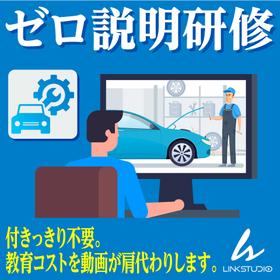
Are you facing the concern of 'not being able to allocate time for training due to a shortage of manpower'? In the manufacturing industry, it has become difficult to secure time for training due to chronic labor shortages. - Insufficient time for on-the-job training (OJT) leads to slower skill acquisition for newcomers. (The average implementation time for OJT in the manufacturing industry is reported to be less than 2 hours a day, and many companies are unable to provide adequate guidance.) - A shortage of trainers results in inconsistent quality of instruction. - There is no room to spend time on training, increasing the burden on the workplace. To address these challenges, many companies are implementing 'video training' to improve the efficiency of education and maintain quality. *For more details, please feel free to contact us.
Added to bookmarks
Bookmarks listBookmark has been removed
Bookmarks listYou can't add any more bookmarks
By registering as a member, you can increase the number of bookmarks you can save and organize them with labels.
Free membership registration
In the manufacturing industry, forklifts are essential transportation tools. However, improper operation and human error can lead to significant causes of workplace accidents. In fact, forklift-related accidents can result in fatalities, making it a critical issue that cannot be overlooked for ensuring safety on site. *For more details, please feel free to contact us.*
Added to bookmarks
Bookmarks listBookmark has been removed
Bookmarks listYou can't add any more bookmarks
By registering as a member, you can increase the number of bookmarks you can save and organize them with labels.
Free membership registration
In the manufacturing industry, the craftsmanship possessed by skilled technicians is a crucial element that supports a company's competitiveness. However, the issue of insufficient technology transfer due to aging and labor shortages is becoming increasingly serious. Main factors making it difficult to pass on craftsmanship: ■ Many techniques are hard to verbalize → "Intuition" and "sensory skills" developed over many years of experience are difficult to convey in writing or verbally. ■ The burden on instructors is significant → Relying on on-the-job training for technology transfer increases the burden on educators. ■ Lack of successors → The retention rate of young employees is low, making long-term development challenging. ■ Standardization of techniques is not progressing → Different skilled workers have different methods, making unified education impossible. To address this issue, the use of videos for technology transfer is gaining attention as an effective means. *For more details, please feel free to contact us.

Added to bookmarks
Bookmarks listBookmark has been removed
Bookmarks listYou can't add any more bookmarks
By registering as a member, you can increase the number of bookmarks you can save and organize them with labels.
Free membership registration
On-the-Job Training (OJT) is an effective educational method that allows learning through practice, but many companies face challenges with it. In fact, a survey revealed that about 65% of companies implementing OJT responded that "variability in guidance and inefficient training are reducing productivity," indicating that it affects the quality of work and the speed of skill acquisition. ■ The burden on instructors is significant ■ The quality of guidance varies, leading to different learning speeds ■ An inefficient situation where the same explanation is repeated multiple times If such challenges are left unaddressed, the burdens on both instructors and learners will increase, making effective education unattainable. *For more details, please feel free to contact us.
Added to bookmarks
Bookmarks listBookmark has been removed
Bookmarks listYou can't add any more bookmarks
By registering as a member, you can increase the number of bookmarks you can save and organize them with labels.
Free membership registration
Do you have concerns about the effectiveness of education varying by the instructor? In the manufacturing industry, the quality of training is often influenced by the experience and skills of the trainers. ■ Each veteran employee has a different teaching style, leading to inconsistencies in the training content. (According to a survey, 60% of manufacturing companies responded that 'variations in training by instructors are a factor in decreased productivity.') ■ There are differences in the speed at which new employees become proficient, making it difficult to predict the time until they can work independently. ■ When the person in charge changes, the quality of training changes, making consistent training difficult. To address these challenges, many companies are utilizing 'video training' to achieve standardization in education. *For more details, please feel free to contact us.
Added to bookmarks
Bookmarks listBookmark has been removed
Bookmarks listYou can't add any more bookmarks
By registering as a member, you can increase the number of bookmarks you can save and organize them with labels.
Free membership registration
"I thought I said it, but you didn't hear me." "I've explained it many times, but you still can't remember." These concerns are common in many companies. Especially in the manufacturing industry: - Information can be lost with just verbal explanations. - Reading the manual doesn't lead to understanding. - The listener can't remember everything in one go, requiring multiple explanations. These issues often stem not from a lack of quality in education, but from challenges in the "way of conveying information." In fact, a survey found that about 60% of companies feel that "the training content for employees is not being adequately communicated," and it has been pointed out that there is a high variability in the understanding of training among new employees, particularly in the manufacturing sector. *For more details, please feel free to contact us.
Added to bookmarks
Bookmarks listBookmark has been removed
Bookmarks listYou can't add any more bookmarks
By registering as a member, you can increase the number of bookmarks you can save and organize them with labels.
Free membership registration
In the manufacturing industry, the costs associated with training are by no means small. This is especially true for companies that need to conduct safety and technical training regularly. - The costs for hiring instructors and transportation add up. - The time taken by the training personnel reduces productivity. - Operations are temporarily halted during training, leading to decreased efficiency. In fact, a survey found that about 70% of manufacturing companies responded that "reducing training costs is an urgent issue," and particularly for companies conducting large-scale in-person training, costs can reach several million yen annually. However, by re-evaluating training methods, significant cost reductions can be achieved. For example, one company reported that by implementing video training, they reduced their annual training costs by 40% and also alleviated the workload of their training personnel. *For more details, please feel free to contact us.
Added to bookmarks
Bookmarks listBookmark has been removed
Bookmarks listYou can't add any more bookmarks
By registering as a member, you can increase the number of bookmarks you can save and organize them with labels.
Free membership registration
Isn't there a concern like 'The burden of training is too great...' or 'The effects of education are hard to see...'? Many companies in the manufacturing industry feel challenges with traditional training methods. ■ Relying too much on OJT has increased the burden on instructors (About 70% of manufacturing companies responded that 'the increased educational burden from OJT is affecting operational efficiency') ■ There is variability in the retention of education with paper manuals and face-to-face training ■ Unable to measure the effectiveness of education, there are no indicators for improvement To solve these challenges, many companies are introducing digital education such as 'video training' to enhance the efficiency and maximize the effectiveness of training. *For more details, please feel free to contact us.

Added to bookmarks
Bookmarks listBookmark has been removed
Bookmarks listYou can't add any more bookmarks
By registering as a member, you can increase the number of bookmarks you can save and organize them with labels.
Free membership registration
In the manufacturing industry, falls and being caught in machinery accidents occur frequently and are significant factors in labor-related injuries. In particular, it has been pointed out that the risk of accidents significantly increases in environments where workspace is insufficient and safety measures are not thoroughly implemented. According to a survey by the Ministry of Health, Labor and Welfare, in 2022, falls accounted for about 25% of all labor accidents, while being caught in machinery accidents made up about 15%, with these percentages being particularly high in the manufacturing sector. The main causes of such accidents include the following points: 1. Workers have a low awareness of danger and unconsciously engage in risky behaviors. 2. Safety rules have become mere formalities and are not practiced in daily operations. 3. There is a lack of safety education for new and foreign workers. In fact, statistics from the Ministry of Health, Labor and Welfare indicate that falls account for about 25% of labor accidents, many of which are attributed to inadequate safety measures. To address these issues, more companies are introducing safety education using video training. *For more details, please feel free to contact us.*
Added to bookmarks
Bookmarks listBookmark has been removed
Bookmarks listYou can't add any more bookmarks
By registering as a member, you can increase the number of bookmarks you can save and organize them with labels.
Free membership registration
Even when told, "Learn by watching the veterans," it can be difficult for inexperienced newcomers to understand what is important and accurately replicate the work. In fact, a survey in the manufacturing industry revealed that newcomers take more than twice the time to become proficient compared to veterans, and personalized teaching methods tend to decrease the efficiency of skill transfer. ■ Veterans say, "Remember this feeling," but there is no concrete guidance. ■ Although they are supposed to be doing the same work, there is a difference in the results between newcomers and veterans. ■ Different people have different methods, and it is unclear which method is correct. In workplaces facing these challenges, not only does the standardization of skills not progress, but the training speed of newcomers also slows down, hindering productivity improvements. *For more details, please feel free to contact us.
Added to bookmarks
Bookmarks listBookmark has been removed
Bookmarks listYou can't add any more bookmarks
By registering as a member, you can increase the number of bookmarks you can save and organize them with labels.
Free membership registration
In the manufacturing industry, training for new employees and safety education are essential, but inviting external instructors each time incurs costs, becoming a significant burden over the year. - Each training incurs costs for external instructors, increasing expenses (according to surveys, the training costs for external instructors in manufacturing companies reach an average of 4 million yen annually, making cost reduction a major challenge). - Coordinating the schedules of instructors is difficult, limiting the timing of training. - One training session may not cover everything, necessitating additional training. To address these challenges, many companies have adopted "video training," achieving reductions in training costs and improving the efficiency of education. *For more details, please feel free to contact us.*
Added to bookmarks
Bookmarks listBookmark has been removed
Bookmarks listYou can't add any more bookmarks
By registering as a member, you can increase the number of bookmarks you can save and organize them with labels.
Free membership registration
In the manufacturing industry, it has become a significant challenge that new employees repeatedly make the same mistakes. It is not uncommon to hear voices from the field saying, "We warned them," or "We taught them multiple times." Causes of new employees repeating the same mistakes: - Insufficient retention of information - Lack of practical experience - Variability in teaching methods - Insufficient understanding of the importance of mistakes According to the Ministry of Health, Labour and Welfare's "Workplace Education Actual Condition Survey" (2023), over 65% of companies in the manufacturing industry responded that "reducing new employees' mistakes is an important issue," indicating a need to reassess educational methods. To address these challenges, strengthening learning through video training has been highlighted as an effective means. *For more details, please feel free to contact us.*
Added to bookmarks
Bookmarks listBookmark has been removed
Bookmarks listYou can't add any more bookmarks
By registering as a member, you can increase the number of bookmarks you can save and organize them with labels.
Free membership registration
In the manufacturing industry, safety management is the top priority, but cases of workers' dangerous behaviors leading to accidents and labor disasters continue to occur. According to a 2023 survey by the Ministry of Health, Labour and Welfare, about 60% of labor accidents are caused by human error, many of which are attributed to carelessness due to "familiarity" and the hollowing out of safety rules. Particularly, the following dangerous behaviors are frequently observed: 1. Working without wearing protective gear (e.g., operating machinery without gloves) 2. Shortcutting procedures (omitting steps) (e.g., disabling safety locks to proceed with work) 3. Reckless actions such as putting hands into moving parts (e.g., adjusting components while the machine is in operation) 4. Inappropriate behavior in hazardous areas (e.g., crossing forklift pathways) When such behaviors become habitual, the risk of serious accidents and production stoppages increases, directly affecting the company's credibility. Therefore, education to raise workers' awareness of danger is essential. *For more details, please feel free to contact us.*
Added to bookmarks
Bookmarks listBookmark has been removed
Bookmarks listYou can't add any more bookmarks
By registering as a member, you can increase the number of bookmarks you can save and organize them with labels.
Free membership registration
In the manufacturing industry, the implementation and management of training have become burdensome, hindering efficient education. - Because paper manuals are used, updating them is cumbersome, leading to outdated information (over 60% of manufacturing companies responded that "the burden of updating manuals is significant"). - Preparing and conducting training takes time, increasing the burden on the field. - Progress management of education is not possible, resulting in differences in proficiency. To address these issues, "training reform utilizing DX (digital transformation)" is gaining attention. *For more details, please feel free to contact us.*
Added to bookmarks
Bookmarks listBookmark has been removed
Bookmarks listYou can't add any more bookmarks
By registering as a member, you can increase the number of bookmarks you can save and organize them with labels.
Free membership registration
Are you facing the concern of 'not being able to allocate time for training due to a shortage of manpower'? In the manufacturing sector, it has become difficult to secure time for training due to chronic labor shortages. ■ Insufficient time for on-the-job training (OJT) leads to slower skill acquisition for newcomers (The average implementation time for OJT in manufacturing is reported to be less than 2 hours a day, and many companies are unable to provide adequate guidance according to survey results.) ■ A shortage of trainers results in inconsistent quality of instruction. ■ There is no room to spend time on training, increasing the burden on the workplace. To address these challenges, many companies are implementing 'video training' to achieve efficiency in education and maintain quality. *For more details, please feel free to contact us.
Added to bookmarks
Bookmarks listBookmark has been removed
Bookmarks listYou can't add any more bookmarks
By registering as a member, you can increase the number of bookmarks you can save and organize them with labels.
Free membership registration
In manufacturing sites, human errors such as "I should have been careful" and "I accidentally skipped a step" are never-ending. In fact, according to a survey by the Ministry of Health, Labour and Welfare, over 60% of labor accidents are attributed to human error. Many of these errors stem from a "gap in awareness," where even if individuals read the manual, they feel "it doesn't relate to me" or "I think I understand it." In other words, the gap between knowing and being able to act leads to mistakes. Most human errors are caused by the fact that individuals "knew but couldn't do it." This is why education that provides opportunities to become aware of one's actions is necessary. Video training engages the visual and emotional aspects, promotes awareness, and has the power to change behavior. Let's regularly incorporate it into daily operations to enhance the overall safety culture of the workplace. Why not consider incorporating animated video training as a measure against human error? *For more details, please feel free to contact us.
Added to bookmarks
Bookmarks listBookmark has been removed
Bookmarks listYou can't add any more bookmarks
By registering as a member, you can increase the number of bookmarks you can save and organize them with labels.
Free membership registration
In the manufacturing industry, it is unavoidable to temporarily halt on-site operations for training. However, as the impact increases: ■ Productivity decreases, affecting delivery times. ■ Stopping operations for training each time results in time and cost losses. ■ The burden on trainers increases, leading to inconsistent training quality. In fact, a survey indicates that about 65% of manufacturing companies responded that "production stoppages due to training have a significant impact on operations," and particularly in companies facing labor shortages, balancing training and production has become a major challenge. Therefore, there is a demand to streamline training and minimize the burden on the field. *For more details, please feel free to contact us.*
Added to bookmarks
Bookmarks listBookmark has been removed
Bookmarks listYou can't add any more bookmarks
By registering as a member, you can increase the number of bookmarks you can save and organize them with labels.
Free membership registration
In the manufacturing industry, accuracy in work is required. However, many companies face the challenge of not being able to reduce work mistakes, no matter how much they raise awareness. The following factors are considered to be the causes: 1. Workers do not fully understand the procedures (the training content is abstract and not practical). 2. There are many training sessions focused on classroom learning, and practical training on-site is lacking. 3. There are few opportunities for feedback, and reflection on mistakes is insufficient. To address these challenges, many companies are implementing educational programs that utilize video training. *For more details, please feel free to contact us.*
Added to bookmarks
Bookmarks listBookmark has been removed
Bookmarks listYou can't add any more bookmarks
By registering as a member, you can increase the number of bookmarks you can save and organize them with labels.
Free membership registration
In the wood processing industry, processing accuracy, which affects product quality, is crucial. In particular, dimensional errors and surface finishing significantly influence the value of the product. A decrease in processing accuracy can lead to material waste, increased rework, and customer complaints. Our video training provides visually clear instruction and contributes to improving processing accuracy by reducing mistakes. 【Usage Scenarios】 - Training for newcomers in wood processing factories - Learning how to operate processing machines - Ensuring quality control 【Effects of Implementation】 - Reduction of material waste due to fewer mistakes - Improved work efficiency - Enhanced product quality
Added to bookmarks
Bookmarks listBookmark has been removed
Bookmarks listYou can't add any more bookmarks
By registering as a member, you can increase the number of bookmarks you can save and organize them with labels.
Free membership registration
In the printing industry, issues such as quality defects and increased costs due to ink formulation errors and incorrect usage amounts are significant challenges. Particularly, the complexity of ink types and formulation ratios, along with the increase in novice operators, has made it easier for mistakes to occur. Errors in ink management not only affect the quality of printed materials but can also lead to waste of ink and machine malfunctions, potentially resulting in substantial losses. The video training we provide aims to reduce mistakes in ink management, thereby achieving quality improvement and cost reduction. 【Usage Scenarios】 - Ink formulation tasks - Ink replenishment and replacement tasks - Checking ink levels - Training for novice operators 【Benefits of Implementation】 - Reduction of quality defects due to ink formulation errors - Minimization of ink waste and optimization of costs - Early development of novice operators into effective team members - Improvement of work efficiency
Added to bookmarks
Bookmarks listBookmark has been removed
Bookmarks listYou can't add any more bookmarks
By registering as a member, you can increase the number of bookmarks you can save and organize them with labels.
Free membership registration
In semiconductor manufacturing clean rooms, even minor contamination can significantly affect product quality. A small mistake by an operator can lead to defective products and decreased productivity. In particular, errors in work procedures within the clean room and a lack of knowledge to prevent contamination are serious issues. Our video training is specifically designed for work in clean rooms, helping to prevent mistakes and contribute to improved yield. 【Usage Scenarios】 - Education on work procedures in clean rooms - Contamination prevention measures - Training for new and foreign workers 【Benefits of Implementation】 - Reduction of work errors - Improvement in quality - Enhancement of yield - Reduction of training costs
Added to bookmarks
Bookmarks listBookmark has been removed
Bookmarks listYou can't add any more bookmarks
By registering as a member, you can increase the number of bookmarks you can save and organize them with labels.
Free membership registration
In the chemical industry, mistakes due to errors in work procedures or lack of verification can lead to serious accidents or quality issues. Especially in environments handling hazardous materials, thorough safety checks are essential. Human errors are one of the major causes of workplace accidents, which can not only undermine a company's trust but also lead to legal liabilities. LinkStudio's video training visually conveys the importance of safety checks and provides effective education to prevent mistakes before they occur. 【Usage Scenarios】 - Training on work procedures in chemical plants - Safety education for handling hazardous materials - Raising safety awareness among new and foreign workers 【Benefits of Implementation】 - Improved safety awareness among workers - Reduced risk of accidents - Lower education costs
Added to bookmarks
Bookmarks listBookmark has been removed
Bookmarks listYou can't add any more bookmarks
By registering as a member, you can increase the number of bookmarks you can save and organize them with labels.
Free membership registration
In the aerospace industry, the safety and reliability of products are the top priorities. In precision machining and assembly work, even a slight mistake can lead to serious accidents or quality issues. Particularly in the manufacturing of aircraft components, high precision is required, and quality defects due to human error are not tolerated. Our video training provides visually clear education and deepens understanding of work procedures, helping to reduce the occurrence of careless mistakes. 【Usage Scenarios】 * Precision machining and assembly of components * Quality control and inspection * Training for new and foreign workers 【Benefits of Implementation】 * Improvement in quality through reduction of work errors * Shortening and streamlining of training time * Enhanced safety and reduced risk of accidents
Added to bookmarks
Bookmarks listBookmark has been removed
Bookmarks listYou can't add any more bookmarks
By registering as a member, you can increase the number of bookmarks you can save and organize them with labels.
Free membership registration
In the electronics industry, electrostatic discharge (ESD) measures are a crucial factor that affects product quality. Damage to components or malfunctions caused by static electricity can lead to product defects and customer complaints, potentially resulting in significant losses. Particularly, thorough ESD measures in the manufacturing process are essential for enhancing product reliability. Our video training clearly explains the importance of ESD measures and specific countermeasures to all employees, including new and foreign staff. By utilizing videos, we promote knowledge retention and reduce mistakes. 【Usage Scenarios】 - ESD measures in electronics manufacturing sites - New employee training, foreign employee training - Education in quality control departments 【Benefits of Implementation】 - Increased knowledge and awareness of ESD measures - Improved quality through reduced mistakes - Cost reduction due to decreased defective products - Enhanced customer satisfaction
Added to bookmarks
Bookmarks listBookmark has been removed
Bookmarks listYou can't add any more bookmarks
By registering as a member, you can increase the number of bookmarks you can save and organize them with labels.
Free membership registration
In the food industry, foreign object contamination is a serious issue that undermines corporate trust and causes significant damage. Contamination during the manufacturing process not only leads to health risks for consumers but also results in product recalls and damage to the company's image. Particularly, lack of attention in the manufacturing environment and errors in operational procedures are factors that increase the risk of contamination. Our video training has been developed to reduce the risk of foreign object contamination in food manufacturing environments and to strengthen quality control. 【Usage Scenarios】 - Training for new employees in food manufacturing plants - Education for foreign employees - Training on operational procedures for the manufacturing line - Strengthening quality control systems 【Effects of Implementation】 - Reduction of foreign object contamination risks - Improvement in quality control - Change in employee awareness - Decrease in complaints and returns - Enhancement of corporate reliability
Added to bookmarks
Bookmarks listBookmark has been removed
Bookmarks listYou can't add any more bookmarks
By registering as a member, you can increase the number of bookmarks you can save and organize them with labels.
Free membership registration
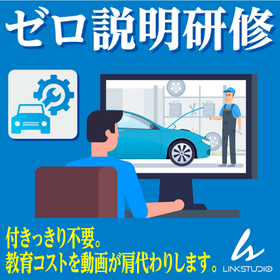
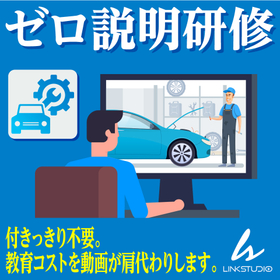
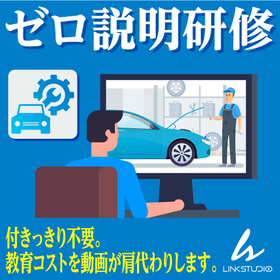
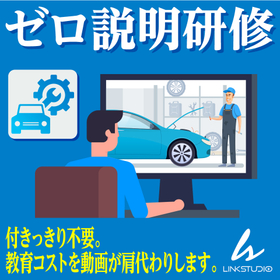
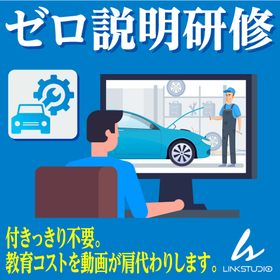
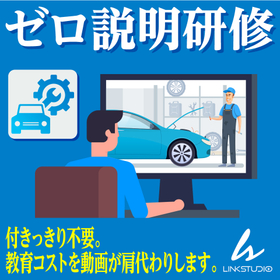
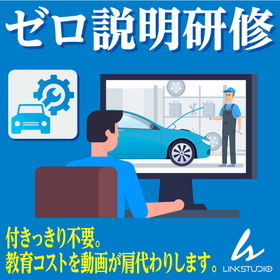
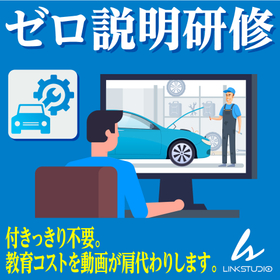
In the automotive industry, improving quality control and safety is essential. In particular, mistakes due to errors in work procedures can lead to quality defects and production losses, resulting in complaints from customers. With the increase in new and foreign workers, a lack of understanding of work procedures and incorrect perceptions have become challenges. LinkStudio's video training is visually clear and deepens understanding, contributing to the reduction of mistakes and improvement in quality. 【Usage Scenarios】 - Training on work procedures on automotive manufacturing lines - Instruction on procedure manuals for new and foreign workers - Measures against mistakes in quality control 【Effects of Implementation】 - Reduction of mistakes - Improvement in quality - Reduction of training costs
Added to bookmarks
Bookmarks listBookmark has been removed
Bookmarks listYou can't add any more bookmarks
By registering as a member, you can increase the number of bookmarks you can save and organize them with labels.
Free membership registration
In the manufacturing industry, minor oversights and lack of verification often lead to careless mistakes, which can cause quality defects and production losses. According to data from the Ministry of Health, Labour and Welfare, it is said that about 20% of quality defects in manufacturing are due to simple human errors, and furthermore, approximately 30% of all labor accidents are reported to be caused by human error. In particular, in the automotive and electronics manufacturing sectors, there are cases where careless mistakes result in monthly losses ranging from several million to tens of millions of yen. Careless mistakes frequently occur in the following situations: 1. Decreased attention due to the repetition of routine work 2. Lack of understanding of work procedures or incorrect perceptions 3. Weak checking systems that overlook errors 4. Mistakes due to the inexperience of new or foreign workers As these mistakes accumulate, they lead to increased production costs, delays in delivery, and complaints from customers, highlighting the need for effective training to prevent careless mistakes.
Added to bookmarks
Bookmarks listBookmark has been removed
Bookmarks listYou can't add any more bookmarks
By registering as a member, you can increase the number of bookmarks you can save and organize them with labels.
Free membership registration
"Be careful!" "Did you check?" Such reminders are commonly exchanged on-site. However, as they are repeated, these words tend to become something that is ignored, like background music. In particular, many new or foreign workers may not understand "why they need to be cautious," which poses the risk of these reminders being perceived as merely "formal calls for attention." As a result, this does not translate into action, leading to repeated near misses and accidents. With formal reminders, workers' behaviors do not change. What is important is to convey "why caution is necessary," linking it to action. To achieve this, training videos that simultaneously engage visual, emotional, and cognitive aspects are extremely effective. There are already increasing numbers of sites where accidents have decreased. Let’s move from "thinking we communicated" to "effective communication." With video training, let’s advance the safety culture on-site. *For more details, please feel free to contact us.*
Added to bookmarks
Bookmarks listBookmark has been removed
Bookmarks listYou can't add any more bookmarks
By registering as a member, you can increase the number of bookmarks you can save and organize them with labels.
Free membership registration
"Be careful" and "It's dangerous," even when said, do not resonate deeply unless one has actually experienced danger. This is especially true for young employees, inexperienced workers, and foreign laborers, who may find it hard to imagine the reality of hazards on site, leading to complacent behavior. Common issues in on-site training include: - Working without knowing the fear of accidents - Instruction becoming a matter of someone else's concern - Returning to previous behavior quickly even after being warned once We have entered an era where accidents can be "simulated" without actual experience. By utilizing VR and animation, we can instill a sense of safety not just as knowledge, but as a bodily awareness. Companies struggling with safety training for young employees might consider adopting a new method of experiential training. *For more details, please feel free to contact us.*
Added to bookmarks
Bookmarks listBookmark has been removed
Bookmarks listYou can't add any more bookmarks
By registering as a member, you can increase the number of bookmarks you can save and organize them with labels.
Free membership registration
In the manufacturing field, the complacency of thinking "this should be fine" or "it hasn't been a problem so far, so it should be okay" can lead to serious accidents. Especially veteran workers tend to rely on their experience and overlook the rules, and new employees may imitate this attitude, leading to a decline in safety awareness. This accumulation of "familiarity" is a significant risk lurking in the workplace. The complacency of thinking "this should be fine" directly translates into risks that threaten lives. To fundamentally change this mindset, "video education," which is closer to experience than words, is effective. By continuously incorporating safety education into daily operations and aiming to establish awareness, we can prevent accidents before they happen and protect the lives of employees and the trust of the company. *For more details, please feel free to contact us.*
Added to bookmarks
Bookmarks listBookmark has been removed
Bookmarks listYou can't add any more bookmarks
By registering as a member, you can increase the number of bookmarks you can save and organize them with labels.
Free membership registration
Isn't there a challenge like this: 'The quality of training is not standardized...' In the manufacturing industry, it is often the case that the methods of conducting training and the content of instruction are not uniform. ■ The training content varies by instructor, leading to differences in the proficiency of new employees (over 60% of companies in the manufacturing industry recognize the disparity in proficiency due to variations in teaching methods as a challenge). ■ Due to the personalization of training, the accumulation of know-how does not progress. ■ Remote locations are unable to provide training at the same level as the headquarters. To address these challenges, many companies are implementing 'video training' to promote the standardization of education. *For more details, please feel free to contact us.
Added to bookmarks
Bookmarks listBookmark has been removed
Bookmarks listYou can't add any more bookmarks
By registering as a member, you can increase the number of bookmarks you can save and organize them with labels.
Free membership registration
The confirmation of guidance that has become routine in manufacturing sites was originally a powerful means of ensuring safety, but in a company where the accuracy of time reaches 5914%, there is an increase in "formality of guidance confirmation." Formalization such as "it looks like we're doing it if we give guidance" or "we're just making noise" diminishes the original meaning of safety confirmation and ultimately leads to the causes of operational mistakes and human errors. Guidance confirmation is the fundamental and strongest safety measure to prevent mistakes on site. However, if this important act is carried out without understanding its meaning, it loses its effectiveness and becomes a cause of operational mistakes and accidents. To solve this problem, the use of visual education and videos that appeal to the senses is suitable. By incorporating video education into daily operations, workers themselves become aware of safety, and guidance confirmation does not end up being merely "formal." *For more details, please feel free to contact us.
Added to bookmarks
Bookmarks listBookmark has been removed
Bookmarks listYou can't add any more bookmarks
By registering as a member, you can increase the number of bookmarks you can save and organize them with labels.
Free membership registration
In the manufacturing industry, there are situations where it is difficult to secure sufficient training time due to the demands of daily operations. ■ The workplace is busy, making it hard to secure dedicated training time (over 70% of manufacturing companies responded that "securing training time is difficult") ■ The timing of education is inconsistent, leading to differences in the speed at which new employees become proficient ■ Paper manuals and classroom training are hard to apply to actual work To address these challenges, "video training that can be learned on a smartphone" is gaining attention. *For more details, please feel free to contact us.*
Added to bookmarks
Bookmarks listBookmark has been removed
Bookmarks listYou can't add any more bookmarks
By registering as a member, you can increase the number of bookmarks you can save and organize them with labels.
Free membership registration
In the manufacturing industry, the early departure of new graduates has become a serious problem. According to a survey by the Ministry of Health, Labour and Welfare, the turnover rate of new university graduates within three years of employment has reached approximately 31.5%. Such a situation has a significant impact on companies, leading to increased costs related to recruitment and training, decreased productivity on the ground, and potential future labor shortages. The early departure of new graduates represents a substantial loss for companies. By reviewing educational methods and strengthening career support, it is possible to improve the retention rate of new employees. Companies can achieve stable talent acquisition and organizational growth by continuously improving education and enhancing support systems. *For more details, please feel free to contact us.*
Added to bookmarks
Bookmarks listBookmark has been removed
Bookmarks listYou can't add any more bookmarks
By registering as a member, you can increase the number of bookmarks you can save and organize them with labels.
Free membership registration
"Every time training is conducted, the site stops," "The cost of hiring instructors is burdensome," "We keep repeating the same content, which is inefficient." These voices are heard from many manufacturing sites. Especially in safety education, repeated implementation is necessary, but the burden of time, personnel, and costs can often lead to decreased productivity and increased costs on the shop floor. Safety education is something that must be done, but depending on how it is done, it can be implemented more efficiently and effectively. Video training is the optimal solution. It achieves both cost reduction and quality of education, enhancing the safety culture of companies. Why not start video training as the first step to eliminate waste in education and improve safety levels? *For more details, please feel free to contact us.
Added to bookmarks
Bookmarks listBookmark has been removed
Bookmarks listYou can't add any more bookmarks
By registering as a member, you can increase the number of bookmarks you can save and organize them with labels.
Free membership registration
In the beauty industry, the quality of treatments significantly affects customer satisfaction. Particularly, mastering new techniques and complex procedures requires a precise understanding of the steps involved and repetitive practice. However, relying solely on paper manuals and verbal explanations can prolong the learning process and increase the burden on trainers. Our training videos visually and clearly explain the treatment procedures, supporting the rapid development of new staff into effective team members. Through repetitive learning via video, we promote the retention of skills and contribute to the improvement of treatment quality. 【Usage Scenarios】 - Training for new staff on treatment procedures - Learning new treatment techniques - Standardization of skill levels 【Benefits of Implementation】 - Uniformity in treatment skills - Reduction in training time - Improvement in customer satisfaction
Added to bookmarks
Bookmarks listBookmark has been removed
Bookmarks listYou can't add any more bookmarks
By registering as a member, you can increase the number of bookmarks you can save and organize them with labels.
Free membership registration
In the caregiving industry, acquiring high-quality assistance skills is essential. Particularly, to ensure the safety and dignity of users, correct knowledge and techniques are indispensable. However, relying solely on paper manuals presents challenges, as procedures can be difficult to understand, and it places a significant burden on educators. Our video manuals are visually clear and can be viewed repeatedly, effectively supporting the acquisition of assistance skills. 【Usage Scenarios】 - Training for new caregiving staff - Skill enhancement for veteran staff - Standardization of assistance techniques 【Effects of Implementation】 - Increased speed of skill acquisition - Uniformity in staff skill levels - Improved user satisfaction
Added to bookmarks
Bookmarks listBookmark has been removed
Bookmarks listYou can't add any more bookmarks
By registering as a member, you can increase the number of bookmarks you can save and organize them with labels.
Free membership registration
In the hotel industry, standardizing and improving the efficiency of room cleaning is crucial for enhancing customer satisfaction and operational efficiency. In particular, standardizing cleaning procedures is essential for quickly training new staff, reducing cleaning time, and minimizing customer complaints. However, relying solely on paper manuals can lead to time-consuming understanding of procedures and variability in cleaning quality. Our video manuals are visually clear and can be viewed repeatedly, effectively supporting the learning of cleaning methods. 【Usage Scenarios】 - Room cleaning procedures - Bathroom cleaning procedures - Bed making procedures 【Benefits of Implementation】 - Quick training of new staff - Reduction in cleaning time - Standardization of cleaning quality
Added to bookmarks
Bookmarks listBookmark has been removed
Bookmarks listYou can't add any more bookmarks
By registering as a member, you can increase the number of bookmarks you can save and organize them with labels.
Free membership registration
In educational institutions, it is essential to deepen the understanding of teaching materials and promote efficient learning. Especially when teaching complex content or procedures, it is important to create an environment where students can easily understand the material and engage in repeated learning. Relying solely on paper manuals can make it difficult to convey the content, leading to challenges in understanding and retention rates. Our video manuals are visually clear and can be viewed repeatedly, making them helpful for deepening understanding of the materials. 【Usage Scenarios】 - Promoting understanding of teaching materials in class - Reviewing during home study - Preparing before practical training 【Effects of Implementation】 - Improved understanding of learning content - Reduced learning time - Enhanced learning effectiveness
Added to bookmarks
Bookmarks listBookmark has been removed
Bookmarks listYou can't add any more bookmarks
By registering as a member, you can increase the number of bookmarks you can save and organize them with labels.
Free membership registration
In the transportation industry, a thorough understanding and adherence to accurate procedures are essential to ensure safe operations. Particularly, mastering work procedures is crucial to reduce the risk of accidents. Relying solely on paper manuals can make it difficult to understand the content and can increase the burden on trainers. Our video manuals are visually easy to understand and can be viewed repeatedly, contributing to the efficiency of safety training. 【Usage Scenarios】 - Pre-driving inspection procedures - Emergency response - Loading and unloading procedures 【Effects of Implementation】 - Improved safety awareness among workers - Reduced risk of accidents - Shortened training time
Added to bookmarks
Bookmarks listBookmark has been removed
Bookmarks listYou can't add any more bookmarks
By registering as a member, you can increase the number of bookmarks you can save and organize them with labels.
Free membership registration
In customer service at financial institutions, accurate and prompt information provision is required. In particular, explaining complex financial products and responding to diverse customer needs necessitates high-quality education. However, relying solely on paper manuals can lead to time-consuming understanding of the content and can increase the burden on educators. Our video manuals are visually clear and can be viewed repeatedly, enhancing educational effectiveness and contributing to improved customer satisfaction. 【Usage Scenarios】 - Explanation of financial products - Responding to customer inquiries - Compliance training - New employee training 【Effects of Implementation】 - Reduction in training time - Uniform quality of customer service - Increased compliance awareness - Improved customer satisfaction
Added to bookmarks
Bookmarks listBookmark has been removed
Bookmarks listYou can't add any more bookmarks
By registering as a member, you can increase the number of bookmarks you can save and organize them with labels.
Free membership registration
In the IT industry, system configuration often involves complex procedures and specialized terminology, which can make understanding manuals time-consuming. Particularly during the introduction of new systems or software, there can be significant differences in the proficiency of the personnel involved, leading to challenges in training that require considerable time and cost. It is not uncommon for manuals to go unused, resulting in staff being overwhelmed with inquiries. Our video manuals are visually clear and can be viewed repeatedly, helping to deepen understanding of system configurations and improve training efficiency. 【Usage Scenarios】 - Initial setup during system implementation - Software update procedures - Troubleshooting 【Benefits of Implementation】 - Rapid integration of new engineers - Reduced burden on training personnel - Standardization of system configurations
Added to bookmarks
Bookmarks listBookmark has been removed
Bookmarks listYou can't add any more bookmarks
By registering as a member, you can increase the number of bookmarks you can save and organize them with labels.
Free membership registration
In the medical industry, the accurate operation of medical devices affects patient safety and the quality of treatment. Particularly with the introduction of new equipment and the complexity of operating methods, educating healthcare professionals is an important issue. Incorrect operations can increase the risk of equipment failure and pose risks to patients. Our video manuals contribute to the efficiency of education and the improvement of safety by enabling a visual understanding of operating procedures. 【Usage Scenarios】 - Training for medical device manufacturers - Onboarding of new staff in hospitals - Learning maintenance procedures for equipment 【Effects of Implementation】 - Reduction of accidents due to operational errors - Shortening of training time - Skill enhancement for healthcare professionals
Added to bookmarks
Bookmarks listBookmark has been removed
Bookmarks listYou can't add any more bookmarks
By registering as a member, you can increase the number of bookmarks you can save and organize them with labels.
Free membership registration
In the food service industry, the transmission of skills to new staff is a challenge in cooking instruction. Relying solely on verbal explanations or paper manuals can lead to a lengthy understanding of cooking procedures and disparities in skill acquisition. Particularly, cooking techniques rely heavily on visual information, which can be difficult to convey through words alone. Our video manuals support the early development of new staff by clearly explaining cooking procedures through a combination of animation and live-action footage. 【Usage Scenarios】 - Standardization of cooking procedures - Training of new staff - Improvement of cooking techniques 【Effects of Implementation】 - Reduction in cooking time - Improvement in cooking quality - Decrease in training costs
Added to bookmarks
Bookmarks listBookmark has been removed
Bookmarks listYou can't add any more bookmarks
By registering as a member, you can increase the number of bookmarks you can save and organize them with labels.
Free membership registration
In the retail industry, efficient work and accurate displays are essential for product presentation. Particularly, the display of new products and seasonal layout changes significantly impact sales, making quick and precise work indispensable. However, paper manuals often present challenges, as the work procedures can be unclear and training takes a long time. Our video manuals are visually easy to understand and can be viewed repeatedly, contributing to a reduction in training time and an improvement in display accuracy. 【Usage Scenarios】 - Training for new employees on product displays - Confirming procedures during seasonal layout changes - Acquiring product knowledge 【Effects of Implementation】 - Reduction in training time - Improvement in display accuracy - Enhanced understanding among employees
Added to bookmarks
Bookmarks listBookmark has been removed
Bookmarks listYou can't add any more bookmarks
By registering as a member, you can increase the number of bookmarks you can save and organize them with labels.
Free membership registration