Investment Analysis Information on Short-Distance Ultrasonic Sensors 2026: Explaining the Growth Strategy to Reach a Scale of 2,830 Million USD
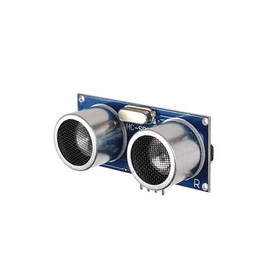
What is a short-range ultrasonic sensor? A short-range ultrasonic sensor is a non-contact sensor that detects distance, approach, presence, liquid level, obstacles, and more at close range by emitting ultrasonic pulses toward an object and analyzing the time until the reflected wave returns or the echo signal. It is widely used in applications such as automotive parking assistance, factory automation, robotics, logistics equipment, access control, and liquid level detection in small tanks. Global market size of short-range ultrasonic sensors According to the latest research report published by Global Reports titled "Global Market Size, Share, Company Rankings, Sales, and Demand Trend Forecast for Short-Range Ultrasonic Sensors (2026-2032)," the global market size for short-range ultrasonic sensors is estimated to be approximately 2.68 billion USD in 2025, around 2.83 billion USD in 2026, and expected to reach about 3.869 billion USD by 2032. The compound annual growth rate (CAGR) from 2026 to 2032 is projected to be 5.4%.
Inquire About This Product
basic information
Market demand supported by the automotive and industrial sectors In the short-range ultrasonic sensor market, the automotive parking assistance application is the largest demand area in terms of quantity. It is widely used for obstacle detection during low-speed driving and for assisting parking operations, with its incorporation into mass-produced vehicles supporting the market. On the other hand, industrial integrated sensors maintain relatively high product prices due to additional features such as robust housings, analog and digital outputs, IO-Link compatibility, and chemical resistance.
Price range
Delivery Time
Applications/Examples of results
Technological Innovation and Product Differentiation In the field of industrial automation, factors such as IO-Link compatibility, compact housing, adjustable detection range and acoustic beam features, environmental resistance, and interference suppression technology are important competitive elements. The ultrasonic method is less affected by the color and transparency of the target object, making it easier to use in environments with transparent bodies, reflectors, dust, and mist. Demand is expanding in applications such as obstacle detection for robots and automated guided vehicles (AGVs), position confirmation for logistics equipment, and liquid level and material detection. In terms of detection distance, products in the ranges of 0.5 to 2 meters and 2 to 5 meters form the main areas, supporting automotive, robotics, factory equipment, and small-level detection. In terms of technology, piezoelectric ceramic is a mature key technology, while electrostatic and MEMS types are gaining attention as development areas aimed at miniaturization and high integration. In particular, MEMS ultrasonic sensors have potential applications in consumer devices and embedded systems, but establishing mass production reliability and implementation technology will be future challenges.
Company information

Global Reports integrates industrial information from around the world and provides highly accurate market intelligence to support corporate decision-making. We deliver in-depth analyses based on numerical data and facts, including market size, share, industry structure, price trends, growth forecasts, rankings of major companies, and competitive trends, with clear information categorized by country, region, and application. Leveraging a rich database that has supported the business growth of over 65,000 companies and an international research network, we accompany our clients in their global expansion and continuous growth.