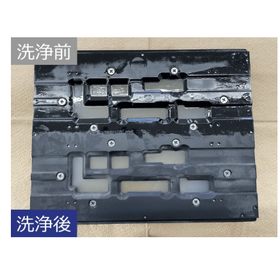
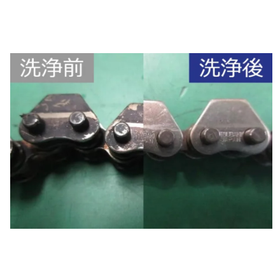
We have compiled a list of manufacturers, distributors, product information, reference prices, and rankings for Cleaning agents.
ipros is IPROS GMS IPROS One of the largest technical database sites in Japan that collects information on.

Cleaning agents Product List and Ranking from 435 Manufacturers, Suppliers and Companies | IPROS GMS

Last Updated: Aggregation Period:Apr 08, 2026~May 05, 2026
This ranking is based on the number of page views on our site.

Cleaning agents Manufacturer, Suppliers and Company Rankings

Last Updated: Aggregation Period:Apr 08, 2026~May 05, 2026
This ranking is based on the number of page views on our site.

  1. 中部 Aichi//Trading company/Wholesale
  2. 太陽化学 Aichi//Chemical
  3. イノセンス Aichi//Trading company/Wholesale
  4. 4 NCH Japan(日本エヌ・シー・エイチ株式会社) Tokyo//Other manufacturing
  5. 5 ゼストロンジャパン Kanagawa//Chemical

Cleaning agents Product ranking

Last Updated: Aggregation Period:Apr 08, 2026~May 05, 2026
This ranking is based on the number of page views on our site.

  1. Environmentally friendly cleaning agent "Ireiza Clean" as an alternative to thinner and acetone. 中部
  2. Water-based cleaning agent 'VB1000' as an alternative to fluorine-based cleaning agents. イノセンス
  3. Plant-based powerful cleaner "Super Eraser Clean" 中部
  4. 4 Alcohol cleaning agent "Delsol K" 太陽化学
  5. 5 An alternative to acetone! Cleaning agent 'IC-09' *Free samples available. テクマ

Cleaning agents Product List

931~960 item / All 1672 items

Displayed results

Water-based cleaning agent for metal masks VIGON TC 150

Water-based cleaning agent for conductive paste, also usable for removing silver sinter paste from metal masks and screen plates!

We would like to introduce our water-based cleaning agent for conductive paste, 'VIGON TC 150'. This product is specially designed to remove silicone-based and silicone-free conductive pastes, as well as silver and aluminum conductive pastes, from metal masks and screen plates. It can also be used for the removal of silver sintered paste. 【Features】 ■ Excellent cleaning performance for conductive pastes ■ Capable of removing silver sintered paste from metal masks and screen plates ■ A water-based cleaning agent that can replace traditional solvent-based cleaners ■ Improves health and safety for operators due to being water-based ■ Can be used in spray equipment without explosion-proof specifications as it has no flash point *For more details, please refer to the PDF document or feel free to contact us.

  • Cleaning agents
  • Cleaning agents

Added to bookmarks

Bookmarks list

Bookmark has been removed

Bookmarks list

You can't add any more bookmarks

By registering as a member, you can increase the number of bookmarks you can save and organize them with labels.

Free membership registration

Cleaning agent for co-solvent processes ZESTRON CO 150

Combined with HFE-based cleaning agents, it becomes a process that does not use water! Achieving quick drying without residues.

"ZESTRON CO 150" is a solvent-based cleaning agent specifically designed for ultrasonic immersion processes. It can be used for pre-cleaning in combination with HFE-based cleaning agents without dilution, or as a co-solvent. It is particularly suitable for cleaning flux residues from eutectic and lead-free no-clean solder on electronic components, power modules, and lead frame-based discrete components. 【Features】 ■ Excellent cleaning performance for eutectic and lead-free solder ■ Improved quality in wire bonding and molding ■ Provides a stable cleaning process due to its composition that is less prone to boiling ■ Allows for a wide range of concentration management in process control ■ Stabilizes the cooling process and contributes to minimizing HFE consumption ■ Since it does not use water, it is possible to keep ion contamination levels low *For more details, please refer to the PDF document or feel free to contact us.

  • Cleaning agents
  • Cleaning agents

Added to bookmarks

Bookmarks list

Bookmark has been removed

Bookmarks list

You can't add any more bookmarks

By registering as a member, you can increase the number of bookmarks you can save and organize them with labels.

Free membership registration

Dispenser Nozzle Cleaning Agent ZESTRON HC

With a removable dispenser nozzle for SMT bond removal, cleaning can be done easily!

"ZESTRON HC" is an improved alcohol-based cleaning agent developed for the removal of SMT adhesive from tools such as dispenser nozzles. It can also be used for the removal of solder particles and dust from mounter nozzles. To facilitate easy use for manual cleaning, it is provided in an aerosol can. 【Features】 ■ Effectively removes SMT adhesive from dispenser nozzles and tools ■ Quick-drying and leaves no residue ■ Halogen-free organic solvent ■ Capable of removing solder particles and dust from mounter nozzles *For more details, please refer to the PDF document or feel free to contact us.

  • HC2.PNG
  • HC3.PNG
  • Cleaning agents
  • Cleaning agents

Added to bookmarks

Bookmarks list

Bookmark has been removed

Bookmarks list

You can't add any more bookmarks

By registering as a member, you can increase the number of bookmarks you can save and organize them with labels.

Free membership registration

Cleaning agent for metal masks ZESTRON SD 100

Low odor, usable at room temperature! Cream solder cleaning agent for metal masks and screens.

"ZESTRON SD 100" is a solvent-based cleaning agent specially designed for removing cream solder from metal masks, using an explosion-proof spray-type cleaning machine. Depending on the type of flux, it can also be used on misprinted circuit boards. Furthermore, it can be used for back wiping in printing machines and for manual wiping cleaning. Additionally, this product has been approved for use by major manufacturers worldwide in metal mask printers. 【Features】 ■ High contamination retention, leading to long life and reduced maintenance time ■ Excellent drying properties, contributing to shorter cleaning times ■ Low odor, suitable for use at room temperature ■ Suitable for manual wiping cleaning of metal masks and back wiping in printing machines *For more details, please refer to the PDF document or feel free to contact us.

  • Cleaning agents
  • Cleaning agents

Added to bookmarks

Bookmarks list

Bookmark has been removed

Bookmarks list

You can't add any more bookmarks

By registering as a member, you can increase the number of bookmarks you can save and organize them with labels.

Free membership registration

Cleaning agent for metal masks ZESTRON SD 301

Due to its high contamination retention capability, it has a long lifespan and reduces cleaning costs!

"ZESTRON SD 301" is a solvent-based cleaning agent for removing cream solder, SMT adhesives, and thick film pastes using explosion-proof spray cleaning machines from metal masks and screens. It has quick-drying properties, allowing for a reduction in the cleaning process time. It is also effective for cleaning printed circuit boards with printing errors. Due to its high flash point, it can be used for hand wipe cleaning and backside wiping on printing machines. 【Features】 ■ Capable of removing flux residues ■ Long lifespan and reduced cleaning costs due to high contamination retention capability ■ Very fast drying time, enabling a reduction in the cleaning process ■ Usable at room temperature *For more details, please refer to the PDF document or feel free to contact us.

  • Cleaning agents
  • Cleaning agents

Added to bookmarks

Bookmarks list

Bookmark has been removed

Bookmarks list

You can't add any more bookmarks

By registering as a member, you can increase the number of bookmarks you can save and organize them with labels.

Free membership registration

Water-based cleaning agent for metal masks - HYDRON SC 300

Since the water-based cleaning agent has no flash point, explosion-proof specifications are not required for the cleaning equipment!

The "HYDRON SC 300" is a water-based cleaning agent developed for cleaning metal masks. It reliably removes cream solder and SMT adhesives at room temperature without leaving any residue on the surface of the metal mask. Additionally, it can be used in both the cleaning and rinsing processes, dries without leaving any cleaning agent residue, and can also be used for wiping the back of printing machines. 【Features】 ■ Exhibits excellent effectiveness in cleaning cream solder and adhesives, leaving no residue ■ Usable in both cleaning and rinsing processes ■ Dries without leaving residue on the metal mask ■ Does not foam even when using a spray cleaning machine ■ Contains less than 20% VOC, implementing environmental measures ■ Excellent material compatibility with metal masks *For more details, please refer to the PDF document or feel free to contact us.

  • Cleaning agents
  • Cleaning agents

Added to bookmarks

Bookmarks list

Bookmark has been removed

Bookmarks list

You can't add any more bookmarks

By registering as a member, you can increase the number of bookmarks you can save and organize them with labels.

Free membership registration

Pitfalls of Flux Cleaning with Solvent-Based Cleaners

Are you overlooking ion residues? An explanation of the pitfalls of flux cleaning.

Organic solvents, which are used in various fields, are currently an indispensable part of the chemical industry, and it is difficult to completely stop their use. In recent years, due to technological advancements and corporate efforts in various industries, the amount of organic solvents used and their atmospheric emissions have been significantly reduced. However, in the flux cleaning of electronic devices in Japan, cleaning agents primarily based on organic solvents are widely used. However, flux cleaning has essentially transformed into "complex residue cleaning," and while solvent-based cleaning agents are very effective against organic components such as rosin, they are almost unable to dissolve ionic substances or insoluble metal salts, making removal by "dissolution" methods difficult. *For more detailed information, please refer to the related links. For further details, please check the PDF materials or feel free to contact us.*

  • Technical and Reference Books
  • Cleaning agents

Added to bookmarks

Bookmarks list

Bookmark has been removed

Bookmarks list

You can't add any more bookmarks

By registering as a member, you can increase the number of bookmarks you can save and organize them with labels.

Free membership registration

Examples of technical challenges related to 5G

Behind the scenes of 5G development by the responsible company! Introducing cleaning know-how.

"5G," which has gained even more attention due to the new coronavirus. In Japan, commercial services started in the spring of 2020, and it is said to have an impact not only on mobile phones but also in various fields such as automobiles, industrial equipment, and healthcare. Since it is a technology that has evolved further from 4G, it is easy to imagine that there were many challenges in its development. Curious about the background, I spoke with companies involved in the development of 5G. *For more details, you can view the related links. Please refer to the PDF materials or feel free to contact us for more information.*

  • Technical and Reference Books
  • Cleaning agents

Added to bookmarks

Bookmarks list

Bookmark has been removed

Bookmarks list

You can't add any more bookmarks

By registering as a member, you can increase the number of bookmarks you can save and organize them with labels.

Free membership registration

Examples of technical challenges related to 5G [Joint Research]

We will introduce an example of how to actually solve the technical challenges associated with 5G!

On this page, we will discuss how to solve the technical challenges associated with 5G, providing an example of a solution. In the previous discussion, we learned that there are cases in 5G-related work where failure can occur if cleaning is not performed. Now, regarding "how to clean," there are important points to consider in the case of 5G work. *For detailed information, please refer to the related links. For more information, please check the PDF materials or feel free to contact us.*

  • Technical and Reference Books
  • Cleaning agents

Added to bookmarks

Bookmarks list

Bookmark has been removed

Bookmarks list

You can't add any more bookmarks

By registering as a member, you can increase the number of bookmarks you can save and organize them with labels.

Free membership registration

Relationship between implementation components and ion residues [Joint research with Mr. Hiroki]

By selecting cleaning solder paste and flux, you can ensure more reliable cleanliness!

The theme of this discussion is ions, which are essential for electronic devices. However, unintended ions can remain on the device surface, between electrodes, or in low stand-off areas, resulting in "ion residue." Moreover, since these residues can be supplied from various contamination pathways that include not only raw material factors but also environmental factors, achieving a residual amount of zero is technically very challenging. In this instance, we have collaborated with solder manufacturers to assess the ion residue levels for each implemented component. *For more detailed information, please refer to the related links. *The PDF document is a technical resource that explains the issues and analysis methods related to ion residue.

  • 実装部品とイオン残渣の関係性1.JPG
  • 実装部品とイオン残渣の関係性1.5.JPG
  • 実装部品とイオン残渣の関係性2.JPG
  • 実装部品とイオン残渣の関係性3.JPG
  • 実装部品とイオン残渣の関係性4.JPG
  • Technical and Reference Books
  • Cleaning agents

Added to bookmarks

Bookmarks list

Bookmark has been removed

Bookmarks list

You can't add any more bookmarks

By registering as a member, you can increase the number of bookmarks you can save and organize them with labels.

Free membership registration

Effects of morphological changes in flux residues after soldering on cleanability.

[Joint Research] Joint research on the effects of morphological changes on washability! Detailed explanations and images are presented.

The no-clean solder paste, which continues to evolve, generates significant heat in fields such as 5G devices and high-power devices for electric vehicles (EVs). As environmental burdens increase, it is necessary to pay attention to long-term changes even in stabilized flux residues. Recent market trends have led to the miniaturization of high-performance electronic devices, resulting in reduced distances between components. This, along with the demand for high-speed calculations and increased capacity, has resulted in high currents and voltages. Consequently, even slight flux residues that were previously not problematic can pose various risks, making cleaning necessary in high-reliability devices, even for no-clean flux residues. Together with Mr. Hiroki, who is developing high-performance solder paste, we conducted joint research on the morphological changes of flux residues after soldering and their impact on cleanability. *For more details, please refer to the related links. *The PDF document is a technical material explaining the evolution and challenges of power devices.

  • はんだ接合後のフラックス残渣における形態変化と洗浄性への影響2.JPG
  • はんだ接合後のフラックス残渣における形態変化と洗浄性への影響3.JPG
  • はんだ接合後のフラックス残渣における形態変化と洗浄性への影響4.JPG
  • Technical and Reference Books
  • Cleaning agents

Added to bookmarks

Bookmarks list

Bookmark has been removed

Bookmarks list

You can't add any more bookmarks

By registering as a member, you can increase the number of bookmarks you can save and organize them with labels.

Free membership registration

Verification of the cleaning properties of Sn-Bi low melting point solder paste - Joint Research

Published solutions to challenges in the formation of metal salts (Bi salts)! We conducted joint verification of cleaning performance.

The Sn-Bi solder paste has various advantages, but in high-reliability fields, there are situations where cleaning is required, and one of the cleaning challenges is the formation of metal salts (Bi salts) after sintering. Bi salts can potentially cause migration issues, are difficult to dissolve in organic solvents, and make cleaning challenging. To address the issue of Bi salt formation, we conducted a joint verification of the cleaning properties of the low-melting-point Sn-Bi solder paste developed by Japan Superior Inc. *For more details, please refer to the related link. *The PDF document is a technical material that explains the evolution and challenges of power devices.

  • Sn-Bi系低融点はんだペースト洗浄性検証2.JPG
  • Sn-Bi系低融点はんだペースト洗浄性検証3.JPG
  • Sn-Bi系低融点はんだペースト洗浄性検証4.JPG
  • Sn-Bi系低融点はんだペースト洗浄性検証5.JPG
  • Technical and Reference Books
  • Cleaning agents

Added to bookmarks

Bookmarks list

Bookmark has been removed

Bookmarks list

You can't add any more bookmarks

By registering as a member, you can increase the number of bookmarks you can save and organize them with labels.

Free membership registration

Is there no cleaning agent that is non-flammable and takes safety and environmental considerations into account?

Introducing examples of project improvements regarding cleaning agents that consider safety and environmental aspects!

Organic solvents, used in various fields, are currently an indispensable part of the chemical industry, and it is difficult to completely stop their use. In the cleaning sector as well, while the amount of organic solvents used has been decreasing, they are still used extensively. However, recent legal reforms and global circumstances have accelerated the movement to reduce the use of organic solvents, making it essential to reassess their usage. *For detailed case information, please refer to the related links. For more information, please check the PDF materials or feel free to contact us.*

  • 引火性がなく、安全面・環境面に配慮した洗浄剤はないのだろうか2.JPG
  • 引火性がなく、安全面・環境面に配慮した洗浄剤はないのだろうか3.JPG
  • Cleaning agents
  • Cleaning agents

Added to bookmarks

Bookmarks list

Bookmark has been removed

Bookmarks list

You can't add any more bookmarks

By registering as a member, you can increase the number of bookmarks you can save and organize them with labels.

Free membership registration

No more failures! How to choose a flux cleaner [Materials available]

Attention those struggling with flux cleaning! The key to flux cleaning lies in "selecting the right cleaning agent"!

This document explains how to choose flux cleaning agents. It provides specific examples of key points to consider when selecting a flux cleaning agent and highlights the aspects to focus on. It also includes important considerations for water-based cleaning agents, such as controlling evaporation loss and variations in water content, as well as examples of non-cleaning type flux cleaning cases, so please take a moment to read it. [Contents (partial)] ■ Key points when choosing flux cleaning agents ■ Types of flux cleaning agents ■ Important considerations when examining water-based cleaning agents ■ Examples of non-cleaning type flux cleaning *For more details, please refer to the PDF document or feel free to contact us.

  • Cleaning agents
  • Cleaning agents

Added to bookmarks

Bookmarks list

Bookmark has been removed

Bookmarks list

You can't add any more bookmarks

By registering as a member, you can increase the number of bookmarks you can save and organize them with labels.

Free membership registration

Evaluation Methods for Flux Cleaning / Added Value [Seminar Materials]

An explanation of the latest cleanliness analysis methods and the added value of using flux cleaning agents!

This document provides a detailed explanation of evaluation methods and added value in flux cleaning. It introduces "cleanliness analysis in flux cleaning," as well as "substances to be analyzed," "the impact of residual organic matter," and "the pathways and effects of ion contamination." Additionally, it includes an introduction to Zestron and examples of analytical methods. We encourage you to read it. 【Contents (partial)】 ■ Introduction to Zestron ■ Cleanliness analysis in flux cleaning ■ Substances to be analyzed (flux residues) ■ Substances to be analyzed (residues during sintering) ■ Impact of residual organic matter *For more details, please download the PDF or feel free to contact us.

  • others
  • Cleaning agents

Added to bookmarks

Bookmarks list

Bookmark has been removed

Bookmarks list

You can't add any more bookmarks

By registering as a member, you can increase the number of bookmarks you can save and organize them with labels.

Free membership registration

Evaluation of cleanliness after cleaning: Analysis methods for flux residues and residues after sintering bonding.

In the cleaning of electronic devices, various factors are intertwined! An explanation of the importance of cleanliness evaluation.

In recent years, the miniaturization and high density of electronic devices have progressed, and along with this, the evolution of the bonding materials used has also coincided, making contamination more complex. In particular, in fields such as automotive, aerospace, space, and high-capacity communication, there is an increasing number of cases that require high reliability, and concurrently, there is a demand for reliable cleaning from the perspective of quality assurance. Inadequate cleaning can lead to issues such as poor wire bonding, poor adhesion of resin in molding, and the occurrence of migration, which is a well-known fact. However, in recent years, there have been many cases where defects occur in later processes despite passing inspections, and we have seen an increase in inquiries to our company regarding this issue. Why do such cases arise? This time, we will explain the importance of cleanliness evaluation after cleaning. *For more detailed information, please refer to the related links. For further inquiries, feel free to contact us.*

  • Cleaning agents
  • Cleaning agents

Added to bookmarks

Bookmarks list

Bookmark has been removed

Bookmarks list

You can't add any more bookmarks

By registering as a member, you can increase the number of bookmarks you can save and organize them with labels.

Free membership registration

Troubles with Flux Cleaning Due to High-Density Component Mounting [Case Study]

Along with a case study on cleaning defects due to high-density implementation, we will also provide guidance on methods for restructuring the cleaning process!

We would like to introduce a case study on the investigation of factors leading to cleaning failures due to flux cleaning troubles caused by the high density of component mounting. With the increase in the density of component mounting, a change in the solder paste used was made, but there have been reports of defects believed to be caused by cleaning issues. Based on the information gathered, we inferred the current situation. We conducted an analysis and evaluation of the hypotheses and proposed both temporary and permanent measures tailored to the customer's circumstances based on the results. [Case Overview] ■ Issues - Cleaning performance of flux in low stand-off areas ■ Conclusion - Stable operation is difficult under the current cleaning conditions ■ Permanent improvement measures and proposals - Review of cleaning agents and cleaning processes suitable for the work shape and flux *For more details, please download the PDF or feel free to contact us.

  • Cleaning agents
  • Cleaning agents

Added to bookmarks

Bookmarks list

Bookmark has been removed

Bookmarks list

You can't add any more bookmarks

By registering as a member, you can increase the number of bookmarks you can save and organize them with labels.

Free membership registration

What is water-soluble flux? An explanation of water-soluble flux residues and analysis methods.

The role and applications of water-soluble flux! We will explain residues, analytical methods, and cleaning methods.

Water-soluble flux is a flux based on water, using water-soluble polymers such as polyoxyethylene alkyl ether. Currently, rosin-based flux is the mainstream for soldering in electronics assembly in Japan, but due to the increasing environmental awareness such as the SDGs, there is a movement to explore the transition to water-soluble flux, which is expected to reduce VOCs. *For more details, you can view the related links. Please feel free to contact us for more information.

  • Other polymer materials
  • Cleaning agents

Added to bookmarks

Bookmarks list

Bookmark has been removed

Bookmarks list

You can't add any more bookmarks

By registering as a member, you can increase the number of bookmarks you can save and organize them with labels.

Free membership registration

Is a cleaning agent really unnecessary? Cleaning verification of water-soluble flux / Joint research with Hiroki.

Is a cleaning agent really unnecessary? Information on the cleaning verification results of water-soluble flux.

In current electronics assembly in Japan, rosin-based flux is predominantly used for soldering. However, due to the promotion of the SDGs and the increasing interest in reducing environmental impact, there is an active evaluation of water-soluble flux, which is expected to reduce VOC emissions and cleaning burdens. This time, we will present an investigation into the actual cleaning situation of water-soluble flux, which is recognized as easier to clean than rosin-based flux. *For detailed information, please refer to the related links. For more details, you can download the PDF or feel free to contact us.*

  • 水溶性フラックスの洗浄課題2.PNG
  • 水溶性フラックスの洗浄課題3.PNG
  • 水溶性フラックスの洗浄課題4.PNG
  • 水溶性フラックスの洗浄課題5.PNG
  • Cleaning agents
  • Cleaning agents

Added to bookmarks

Bookmarks list

Bookmark has been removed

Bookmarks list

You can't add any more bookmarks

By registering as a member, you can increase the number of bookmarks you can save and organize them with labels.

Free membership registration

Removal of sinter agent residue + tack agent, joint research with Mr. McDermid.

Explaining the cleaning effect of complex organic substances after using the currently popular sintering agent! Joint research with Mr. McDermid.

In recent years, the advancement of electronic devices has led to a demand for advanced bonding technologies that can withstand high heat, large currents, and high voltages. In particular, in power devices, there are increasing cases where conventional solder types do not provide sufficient performance. While high Pb solder and Au/Sn solder can be applied, the use of "sintered bonding" is expanding due to environmental regulations and cost considerations, as it can form a high-density bonding layer. This article examines effective cleaning methods utilizing spray cleaning and ultrasonic cleaning, and introduces the features and application examples of cleaning agents VIGON PE 305N and VIGON PE 216A for power electronics. *For detailed content of the article, please refer to the related links. For more information, you can download the PDF or feel free to contact us.

  • シンター剤残渣+タック剤2.png
  • シンター剤残渣+タック剤3.png
  • シンター剤残渣+タック剤4.png
  • シンター剤残渣+タック剤5.png
  • シンター剤残渣+タック剤6.png
  • Cleaning agents
  • Cleaning agents

Added to bookmarks

Bookmarks list

Bookmark has been removed

Bookmarks list

You can't add any more bookmarks

By registering as a member, you can increase the number of bookmarks you can save and organize them with labels.

Free membership registration

Basic Knowledge of Flux Cleaning ver.2 [Technical Document]

A must-read for those who want to start flux cleaning! "Why wash? How to choose? How to analyze?" can be understood in this one book!

This document explains the key points for considering "flux cleaning methods," as well as the examination of "cleaning and rinsing processes," "drying processes," and the evaluation (analysis) of residues. It is recommended for those who want to start flux cleaning and for those who wish to gain a comprehensive understanding from cleaning to analysis. 【Contents (partial)】 ■ What is flux cleaning? ■ The purpose of flux cleaning and the fields where cleaning is required ■ Types of flux cleaning agents/methods and selection methods ■ The importance and methods of residue evaluation (analysis), etc. *For more details, please refer to the PDF document or feel free to contact us.

  • Cleaning agents
  • Cleaning agents

Added to bookmarks

Bookmarks list

Bookmark has been removed

Bookmarks list

You can't add any more bookmarks

By registering as a member, you can increase the number of bookmarks you can save and organize them with labels.

Free membership registration

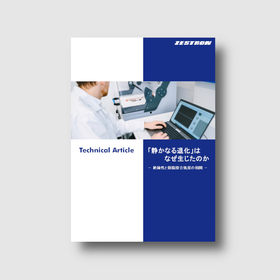
Why did 'silent degeneration' occur? - The correlation between insulation properties and resin bonding strength -

Introducing the mechanism of "silent degradation" that leads to the destruction of electronic devices without being noticed!

This document systematically organizes the mechanisms behind the deterioration of insulation properties and the instability of resin bonding strength, and explains advanced insights into surface design and cleaning technologies that are essential for high-reliability devices. It examines the technical background of why the fundamental aspects of "ensuring insulation" and "resin bonding strength," which should have already been technically resolved, have become issues once again. If you wish to learn about the concepts of surface design to prevent silent kill, please take a moment to read this. 【Contents (partial)】 ■ Introduction ■ A New Frontier in Insulation ■ Technical Challenges Due to High-Functionality Materials ■ Objectives and Effects of Resin Sealing *For more details, please download the PDF or feel free to contact us.

  • Other semiconductors
  • Other semiconductor manufacturing equipment
  • Semiconductors and ICs
  • Cleaning agents

Added to bookmarks

Bookmarks list

Bookmark has been removed

Bookmarks list

You can't add any more bookmarks

By registering as a member, you can increase the number of bookmarks you can save and organize them with labels.

Free membership registration

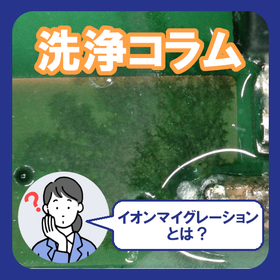
Causes and Countermeasures of Ion Migration: Preventing Invisible Defects on the Substrate

What is ion migration? An explanation of invisible defects that threaten the reliability of electronic devices.

Modern electronic devices are highly advanced, and even minor malfunctions can lead to significant incidents. Events that undermine insulation threaten the reliability of products, and one phenomenon that can contribute to this is ion migration, which has been considered a past issue. It has been said that this has been overcome due to the evolution of various insulating materials such as coatings and resists, as well as the advancement of no-clean technologies. However, as the miniaturization and high density of electronic substrates progress rapidly, ensuring insulation has become increasingly difficult, and the risk of ion migration is once again rising. This article will explain why ion migration has become a trend again, exploring its mechanisms, specific countermeasures, and evaluation methods to assess the potential for occurrence. *For more detailed information, please refer to the related links. For further inquiries, feel free to download the PDF or contact us.*

  • others
  • Cleaning agents

Added to bookmarks

Bookmarks list

Bookmark has been removed

Bookmarks list

You can't add any more bookmarks

By registering as a member, you can increase the number of bookmarks you can save and organize them with labels.

Free membership registration

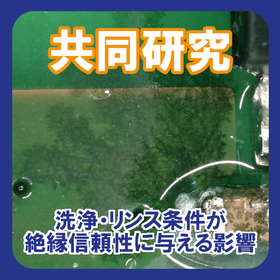
The impact of cleaning and rinsing conditions on insulation reliability.

Introduction to the comparative evaluation of water-soluble flux and rosin-based flux!

This joint research was conducted as part of ongoing verification based on the research results with Mr. Hiroki in 2025. In this study, we focused on whether similar trends are observed with rosin-based fluxes, evaluating the impact of differences in cleaning and rinsing conditions on insulation reliability and surface condition. Furthermore, we also examined the differences in post-cleaning characteristics based on the type of flux through comparisons with water-soluble fluxes. *For detailed content of the article, please refer to the related link. For more information, please download the PDF or feel free to contact us.*

  • Solder
  • Cleaning agents

Added to bookmarks

Bookmarks list

Bookmark has been removed

Bookmarks list

You can't add any more bookmarks

By registering as a member, you can increase the number of bookmarks you can save and organize them with labels.

Free membership registration

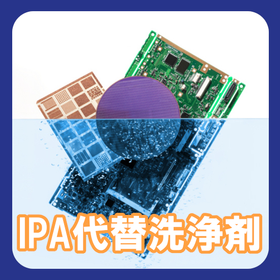
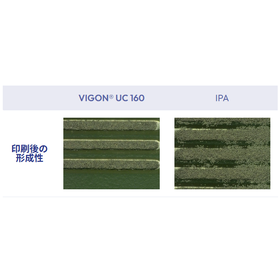
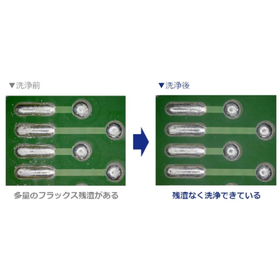
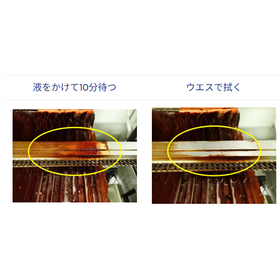
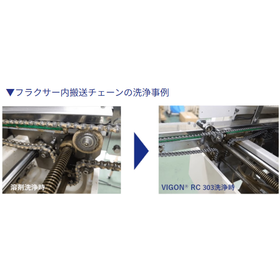
IPA (Isopropyl Alcohol) alternative cleaning agent

Optimize flux cleaning and equipment cleaning with high cleaning power and safety!

IPA (isopropyl alcohol) is an alcohol-based cleaning agent widely used for cleaning electronic components and equipment. However, in recent years, there has been a growing demand for alternatives due to limitations in cleaning power, safety concerns, regulatory compliance burdens, and stable procurement issues. As a substitute for IPA, Zestron offers products that achieve a balance of high cleaning power and safety. We support quality improvement and work environment enhancement across a wide range of applications, from flux cleaning to equipment maintenance. *For more detailed information, please refer to the related links. Feel free to contact us for more details.

  • 2.png
  • 3.png
  • 4.png
  • 5.png
  • 6.png
  • 7.png
  • Cleaning agents
  • Cleaning agents

Added to bookmarks

Bookmarks list

Bookmark has been removed

Bookmarks list

You can't add any more bookmarks

By registering as a member, you can increase the number of bookmarks you can save and organize them with labels.

Free membership registration

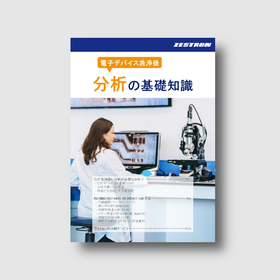
Basic Knowledge of Data Analysis

To objectively demonstrate whether something has been removed, verification through analysis is essential!

This document explains the basic knowledge of analysis. It details why "analysis" is important now, the residues that are the subject of analysis, and examples of issues caused by these residues. Additionally, it introduces analytical methods such as visual observation, micro-particle analysis, and organic residue analysis. We encourage you to read it. [Contents] ■ Why is analysis necessary after cleaning? ■ ISO standards [ISO 9455-18: 2024] and analytical methods ■ Zestron's analysis services *For more details, please download the PDF or feel free to contact us.

  • Other analysis and evaluation services
  • Cleaning agents

Added to bookmarks

Bookmarks list

Bookmark has been removed

Bookmarks list

You can't add any more bookmarks

By registering as a member, you can increase the number of bookmarks you can save and organize them with labels.

Free membership registration

Water-soluble degreasing cleaner "ND-165"

A cleaning agent that can be safely used on most painted surfaces, including metal and vinyl! It lifts dirt in a short time, reducing work time.

The water-soluble degreasing cleaner "ND-165" contains a powerful penetrating agent that effectively penetrates stubborn dirt. It is non-flammable and does not emit harmful vapors like petroleum-based organic solvents, making it safe for daily use. Additionally, rinsing with water after use leaves no odors or residues, and it has been recognized as a cleaner suitable for food equipment (NSF A1 grade). It is safe for most paints, rubber, and plastics, ensuring the protection of valuable equipment and products. 【Features】 - Strongly penetrates grease, oil, and stubborn dirt - Can be diluted with water up to about 20 times, making it very economical - Safety Environment: Phosphorus-free, not subject to PRTR Work: Does not contain organic solvents and does not emit harmful vapors Materials: Usable on almost all materials, including concrete, tiles, metals, and rubber *For more details, please contact us or download the catalog.

Added to bookmarks

Bookmarks list

Bookmark has been removed

Bookmarks list

You can't add any more bookmarks

By registering as a member, you can increase the number of bookmarks you can save and organize them with labels.

Free membership registration

Non-chlorine electronic device cleaner "Rexpure"

A cleaning agent that contains no fluorinated or chlorine-based solvents, ideal for the maintenance of electronic devices and precision parts.

The non-chlorine electronic equipment cleaning agent "Rexpure" has a dielectric strength of over 35,000 volts and cleans and removes oil stains, dirt, dust, and moisture. It is fully volatile, leaving no residue after cleaning. Additionally, since it is non-chlorine-based, it evaporates slowly after cleaning, eliminating concerns about condensation. It does not contain harmful organic solvents or chlorine-based solvents as defined by safety regulations, nor does it include substances harmful to the environment as per the PRTR law. 【Features】 ○ Safety: Does not damage delicate components used in electronic devices → Contains no chlorine-based solvents or fluorocarbons, and is not subject to PRTR ○ Excellent cleaning power: Cleans and removes oil stains, dirt, and dust that cause poor contact ○ Moisture-proof and insulating: Removes moisture that can cause leakage and malfunction ○ No residue: 100% effective after cleaning, leaving no residue For more details, please contact us or download the catalog.

Added to bookmarks

Bookmarks list

Bookmark has been removed

Bookmarks list

You can't add any more bookmarks

By registering as a member, you can increase the number of bookmarks you can save and organize them with labels.

Free membership registration

Non-chlorine stripping cleaner 'CTD-2000'

Banishing the conventional wisdom of chlorine-based solvents! Efficiently dissolving and stripping old coatings and stubborn carbon.

Just by applying it, it penetrates strongly between the paint and the substrate. It lifts the paint film in just a few minutes. With high adhesion, it does not drip on vertical surfaces, allowing for quick and efficient work without waste. It can also be used to remove tape residue, brushes hardened with paint, tar, printing ink, etc., and it does not contain chlorine-based solvents like dichloromethane or organic solvents regulated by safety laws, making it a product that considers safety.

  • CTD-2000_18L.png
  • Cleaning agents
  • Other consumables
  • Cleaning agents

Added to bookmarks

Bookmarks list

Bookmark has been removed

Bookmarks list

You can't add any more bookmarks

By registering as a member, you can increase the number of bookmarks you can save and organize them with labels.

Free membership registration

[Information] Introduction to the "NCH Disinfection and Hygiene Program"

For those struggling with hygiene measures. We are currently offering materials that explain the hygiene measures to be taken in manufacturing and logistics settings!

This document is titled "Three Steps of Hygiene Measures in Business" and clearly explains the key points of measures to maintain safety in the workplace environment. It also introduces related products that align with the three steps. "This material is for those who are unsure about how to implement measures in factories and warehouses... "I have too many cleaning agents and don't know which one to use..." It is a resource for those struggling with hygiene measures. *The document can be viewed by clicking the download button.

  • Other consumables
  • Other environmental equipment
  • Technical Seminar
  • Cleaning agents

Added to bookmarks

Bookmarks list

Bookmark has been removed

Bookmarks list

You can't add any more bookmarks

By registering as a member, you can increase the number of bookmarks you can save and organize them with labels.

Free membership registration