91~135 item / All 163 items
Displayed results
Filter by category

Added to bookmarks
Bookmarks listBookmark has been removed
Bookmarks listYou can't add any more bookmarks
By registering as a member, you can increase the number of bookmarks you can save and organize them with labels.
Free membership registration
Contact this company
Inquiry Form91~135 item / All 163 items
Filter by category

Pinholes that occur in aluminum products can sometimes be caused by moisture remaining on the surface or inside the material. Special attention is needed, particularly after machining or insufficient drying following cleaning. During baking, moisture evaporates and can push up the coating, resulting in tiny holes. Aluminum has a high thermal conductivity, causing the surface temperature to rise rapidly, which can prevent internal moisture from escaping. The risk of occurrence increases, especially with a film thickness of 40μm or more. Measures to address this include pre-drying at 60-80°C and managing the storage environment before painting. Additionally, care must be taken to prevent moisture re-adhesion in environments with humidity above 70%. We also provide detailed examples of improvements specific to aluminum materials in our published materials.
Added to bookmarks
Bookmarks listBookmark has been removed
Bookmarks listYou can't add any more bookmarks
By registering as a member, you can increase the number of bookmarks you can save and organize them with labels.
Free membership registration
In products that combine dissimilar metals, delamination can occur. The thermal expansion rates differ for each material. Distortion can occur during baking or in the usage environment, putting stress on the coating. It is important to consider structural design as well. We also provide detailed information on improvement cases in publicly available materials.
Added to bookmarks
Bookmarks listBookmark has been removed
Bookmarks listYou can't add any more bookmarks
By registering as a member, you can increase the number of bookmarks you can save and organize them with labels.
Free membership registration
The sealing treatment conditions for aluminum alloy materials affect adhesion. After sealing treatment, paint may become difficult to adhere. There are cases where additional polishing or specialized primer treatment is applied. A painting design that matches the treatment conditions is necessary. We also provide detailed examples of improvements in publicly available materials.
Added to bookmarks
Bookmarks listBookmark has been removed
Bookmarks listYou can't add any more bookmarks
By registering as a member, you can increase the number of bookmarks you can save and organize them with labels.
Free membership registration
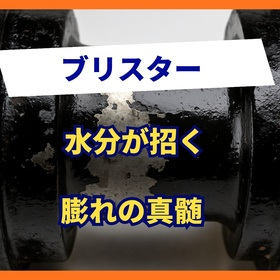
Hot-dip galvanized steel is a material that is difficult for paint to adhere to. It has a very smooth surface, making it challenging for the paint film to stick. There may be cases where sweep blasting or specialized surface treatment is necessary. Designing specialized processes is important. We also provide detailed examples of improvements in publicly available materials.
Added to bookmarks
Bookmarks listBookmark has been removed
Bookmarks listYou can't add any more bookmarks
By registering as a member, you can increase the number of bookmarks you can save and organize them with labels.
Free membership registration
Copper oxidizes quickly and is a material that is prone to paint peeling. Oxidation begins immediately after polishing. Prolonged exposure after degreasing reduces adhesion. Managing process time is important. Speed management specific to copper is crucial. We provide detailed examples of improvements in publicly available materials.
Added to bookmarks
Bookmarks listBookmark has been removed
Bookmarks listYou can't add any more bookmarks
By registering as a member, you can increase the number of bookmarks you can save and organize them with labels.
Free membership registration
In die-cast materials, internal gas can cause paint peeling. Internal gas expands during heating. A baking treatment at 200 to 250°C can be effective in some cases. Measures that consider the interior of the material are necessary. We also provide detailed examples of improvements in publicly available documents.
Added to bookmarks
Bookmarks listBookmark has been removed
Bookmarks listYou can't add any more bookmarks
By registering as a member, you can increase the number of bookmarks you can save and organize them with labels.
Free membership registration
Stainless steel has high corrosion resistance, but it is a material that is difficult for paint to adhere to. There are cases where the passive film on the surface repels the coating. Sandblasting or a special primer may be required. Pre-treatment specifically for stainless steel is important. We also provide detailed examples of improvements in publicly available materials.
Added to bookmarks
Bookmarks listBookmark has been removed
Bookmarks listYou can't add any more bookmarks
By registering as a member, you can increase the number of bookmarks you can save and organize them with labels.
Free membership registration
Brass is prone to oxidation in the air, and as it discolors, the adhesion of the coating decreases. Even if the surface discoloration is slight, the reaction is still progressing. Poor adhesion can occur due to insufficient degreasing or residual oxide film. Immediate painting after polishing is important. Specific management for brass is required. We also provide detailed examples of improvements in publicly available materials.
Added to bookmarks
Bookmarks listBookmark has been removed
Bookmarks listYou can't add any more bookmarks
By registering as a member, you can increase the number of bookmarks you can save and organize them with labels.
Free membership registration
Many of the causes of paint peeling on iron materials are due to red rust. When surface corrosion progresses, the paint film cannot adhere properly. Even fine rust can lead to corrosion beneath the paint film. If blast treatment or rust prevention primer is omitted, peeling can occur within a few months. Proper substrate treatment is particularly important for iron materials. We also provide detailed examples of improvements in publicly available documents.
Added to bookmarks
Bookmarks listBookmark has been removed
Bookmarks listYou can't add any more bookmarks
By registering as a member, you can increase the number of bookmarks you can save and organize them with labels.
Free membership registration
One of the causes of paint peeling on galvanized materials is white rust. When white rust occurs, it becomes difficult for the paint film to adhere. Even immediately after galvanizing, reaction products are present on the surface. If zinc phosphate treatment or light polishing is not performed, the paint film is likely to lift. A storage environment with high humidity is also dangerous. Specific measures for galvanized materials are necessary. We also provide detailed examples of improvements in publicly available documents.
Added to bookmarks
Bookmarks listBookmark has been removed
Bookmarks listYou can't add any more bookmarks
By registering as a member, you can increase the number of bookmarks you can save and organize them with labels.
Free membership registration
One of the causes of paint peeling in aluminum products is the oxide film that forms on the surface. Aluminum oxidizes simply by being exposed to air, which hinders the adhesion of the paint film. Even if the surface appears clean, a thin oxide film is formed. If acid cleaning or chemical treatment is not performed, the adhesion significantly decreases. This is especially important for materials that have been stored for a long time. In actual practice, the results can vary greatly depending on the condition of the material. We also provide detailed examples of improvements in aluminum peeling in publicly available materials.
Added to bookmarks
Bookmarks listBookmark has been removed
Bookmarks listYou can't add any more bookmarks
By registering as a member, you can increase the number of bookmarks you can save and organize them with labels.
Free membership registration
Chipping is caused by a 'lack of adhesion': The impact resistance is not determined solely by the strength of the coating. If the adhesion is low, the coating will rebound and peel off upon impact. Even a hard coating that appears sturdy is meaningless if its adhesion to the substrate is weak. Furthermore, there are more complex issues: insufficient pretreatment, differences in the expansion coefficients of materials, inadequate coating thickness... all of these affect chipping. A simple notion of a 'hard coating' cannot provide an essential solution.
Added to bookmarks
Bookmarks listBookmark has been removed
Bookmarks listYou can't add any more bookmarks
By registering as a member, you can increase the number of bookmarks you can save and organize them with labels.
Free membership registration
Searching for the culprit of poor curing: Temperature? Time? Or the mixture? In fact, these three work as a "trinity." Simply having a high drying temperature is not enough. There is a necessary heating time. Furthermore, if the mixture of the paint (the ratio of the main agent to the hardener) is not accurate, no matter how much you heat it, it will not fully cure. In many situations, the mixture is underestimated as "not a big deal," but this is the biggest pitfall.
Added to bookmarks
Bookmarks listBookmark has been removed
Bookmarks listYou can't add any more bookmarks
By registering as a member, you can increase the number of bookmarks you can save and organize them with labels.
Free membership registration
The recurrence of rust is the "price of forgetting the pre-treatment." There are cases where rust reappears a few months after painting. The cause lies hidden in the tiny, invisible dents on the surface. If the chemical treatment is incomplete, moisture remains in the micropores of the material. Even if coated with anti-corrosive paint, corrosion from within cannot be prevented. Many companies mistakenly believe that "it's okay because the paint film is thick." However, the anti-corrosive performance is determined by the "substrate."
Added to bookmarks
Bookmarks listBookmark has been removed
Bookmarks listYou can't add any more bookmarks
By registering as a member, you can increase the number of bookmarks you can save and organize them with labels.
Free membership registration
The true nature of gloss unevenness is "subtle changes in drying temperature." Even if they appear to be the same drying oven, the temperature distribution varies by location. Additionally, the outside temperature changes with the season and time of day, causing slight deviations in drying conditions. Furthermore, another complicating factor is that the curing speed differs even at the same temperature, depending on the thickness and color of the coating film. To achieve uniform gloss, it is essential to adjust not only temperature management but also drying time, film thickness, material properties, and other complex factors.
Added to bookmarks
Bookmarks listBookmark has been removed
Bookmarks listYou can't add any more bookmarks
By registering as a member, you can increase the number of bookmarks you can save and organize them with labels.
Free membership registration
The true culprit of foreign matter contamination is the "invisible enemy." The dust in the painting booth cannot be detected by the naked eye. Old paint particles accumulate in areas with poor air flow and in the corners of equipment. Even if you think the cleaning is thorough, contamination exists at the microscopic level. However, this is important: environmental management alone is insufficient. The filters in the paint supply line, the air quality of the spray gun, and the negative pressure management of the painting booth... only when all of these are integrated can foreign matter contamination be prevented.
Added to bookmarks
Bookmarks listBookmark has been removed
Bookmarks listYou can't add any more bookmarks
By registering as a member, you can increase the number of bookmarks you can save and organize them with labels.
Free membership registration
The true culprit of color unevenness is "variability in film thickness." Color development is directly linked to film thickness. Even with the same color, if the film thickness varies by 10%, it will appear as if the "color is different." Why does film thickness vary? It is due to almost unconscious changes in application conditions (distance, speed, pressure). In the case of non-mechanized hand painting, even if the same person is painting, it can differ depending on the day, time of day, and posture. Without standardization, achieving consistent quality is impossible.
Added to bookmarks
Bookmarks listBookmark has been removed
Bookmarks listYou can't add any more bookmarks
By registering as a member, you can increase the number of bookmarks you can save and organize them with labels.
Free membership registration
The reason why drips are unstoppable lies in the "betrayal of viscosity." Viscosity adjustment often relies on experience and intuition, which is dangerous. Factors such as paint temperature, type of thinner, humidity, and spray pressure all affect viscosity. Even if applied at the optimal viscosity, if the spray distance is incorrect, the film thickness will be uneven, leading to drips. Many companies settle for the simple solution of "increasing viscosity." However, the true cause is the "harmony of the entire system."
Added to bookmarks
Bookmarks listBookmark has been removed
Bookmarks listYou can't add any more bookmarks
By registering as a member, you can increase the number of bookmarks you can save and organize them with labels.
Free membership registration
Blistering defects: What is happening inside the coating? It is actually an "attack of moisture and gas." The moisture inside the material is not visible. In the case of die casting, moisture is absorbed into the fine pores of the mold. When heated, that moisture expands and lifts the coating. This is why pre-baking treatment is effective. However, many companies do not understand this true cause. Gradual drying according to the characteristics of the material is essential.
Added to bookmarks
Bookmarks listBookmark has been removed
Bookmarks listYou can't add any more bookmarks
By registering as a member, you can increase the number of bookmarks you can save and organize them with labels.
Free membership registration
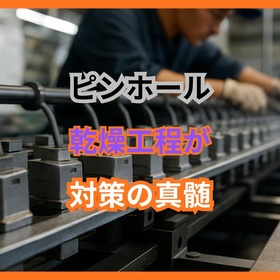
The true nature of pinholes is "a state where bubbles have lost their escape route." Why do bubbles occur during painting? The main causes are the rapid evaporation of solvents and gas generation. However, it is not that simple. If the film thickness is too thick, the internal gas does not have enough time to reach the surface, and bubbles become trapped within the coating. If the drying temperature is too high, it is also problematic. If it is too low, that is also an issue. Finding this "optimal value" is the key to eliminating pinholes.
Added to bookmarks
Bookmarks listBookmark has been removed
Bookmarks listYou can't add any more bookmarks
By registering as a member, you can increase the number of bookmarks you can save and organize them with labels.
Free membership registration
The true culprit behind paint peeling lies in "laziness in pre-treatment." 90% of defects that manifest as poor adhesion are actually determined at the pre-treatment stage. Inadequate degreasing can hinder paint adhesion due to even a slight amount of oil. However, here is the crucial point: oil is not the only culprit. Residual moisture, neglecting oxidation films, and errors in drying timing are all intertwined factors.
Added to bookmarks
Bookmarks listBookmark has been removed
Bookmarks listYou can't add any more bookmarks
By registering as a member, you can increase the number of bookmarks you can save and organize them with labels.
Free membership registration
Improvement methods for insufficient adhesion, coating strength, and substrate treatment that cause paint chipping. Insufficient adhesion reduces impact resistance. A hard coating alone is not enough; design is important. We have published case study materials on improvements. Please take a look.
Added to bookmarks
Bookmarks listBookmark has been removed
Bookmarks listYou can't add any more bookmarks
By registering as a member, you can increase the number of bookmarks you can save and organize them with labels.
Free membership registration
Countermeasures for causes of poor paint curing related to drying temperature, time, and paint formulation errors. Not only temperature, but also time and film thickness have an impact. Simple time extension will not lead to improvement. We have published case study materials on improvements. Please take a look.
Added to bookmarks
Bookmarks listBookmark has been removed
Bookmarks listYou can't add any more bookmarks
By registering as a member, you can increase the number of bookmarks you can save and organize them with labels.
Free membership registration
Improvement methods for insufficient pre-treatment, chemical treatment, and anti-corrosion measures that cause rust reoccurrence after painting. Fine dirt can be the starting point for corrosion. Pre-treatment is important because painting alone cannot prevent it. Our company has published case study materials on improvements. Please take a look.
Added to bookmarks
Bookmarks listBookmark has been removed
Bookmarks listYou can't add any more bookmarks
By registering as a member, you can increase the number of bookmarks you can save and organize them with labels.
Free membership registration
Improvement points for drying temperature, curing conditions, and film thickness management that cause uneven gloss in coatings. Differences in drying temperature affect gloss. Since visual assessments have low reproducibility, condition management is important. Our company has published case study materials. Please take a look.
Added to bookmarks
Bookmarks listBookmark has been removed
Bookmarks listYou can't add any more bookmarks
By registering as a member, you can increase the number of bookmarks you can save and organize them with labels.
Free membership registration
We explain the methods for improving dust, booth environment, and air management that can cause foreign matter contamination in painting. Fine dust can lead to quality defects. Cleaning alone is not sufficient; environmental management is crucial. Our company has published case study materials on improvements. Please take a look.
Added to bookmarks
Bookmarks listBookmark has been removed
Bookmarks listYou can't add any more bookmarks
By registering as a member, you can increase the number of bookmarks you can save and organize them with labels.
Free membership registration
This explains the measures against variations in film thickness, application conditions, and uneven drying that cause color unevenness in coatings. Color unevenness occurs due to slight differences in conditions. Since the color development changes depending on the film thickness and drying state, stabilizing the process is crucial. Our company has published case study materials on improvements. Please take a look.
Added to bookmarks
Bookmarks listBookmark has been removed
Bookmarks listYou can't add any more bookmarks
By registering as a member, you can increase the number of bookmarks you can save and organize them with labels.
Free membership registration
This explains how to improve the viscosity, application amount, and spray conditions that cause paint drips. Drips are caused by insufficient viscosity or excessive application amount. Viscosity can also change with paint temperature and dilution state. Adjustments based on experience lead to low reproducibility and can result in defects. Standardizing conditions is important. Our company has published case study materials on improvements. Please take a look.
Added to bookmarks
Bookmarks listBookmark has been removed
Bookmarks listYou can't add any more bookmarks
By registering as a member, you can increase the number of bookmarks you can save and organize them with labels.
Free membership registration
This document explains the relationship between bubbles, film thickness, and drying conditions, which are the causes of paint pinholes, as well as countermeasures. Pinholes occur due to solvent evaporation or gas generation. The entrapment of bubbles can be caused by thick application or rapid heating. Simply raising the drying temperature may not improve the situation, so optimizing film thickness and drying conditions is crucial. Our company has published case study materials on improvements. Please take a look.
Added to bookmarks
Bookmarks listBookmark has been removed
Bookmarks listYou can't add any more bookmarks
By registering as a member, you can increase the number of bookmarks you can save and organize them with labels.
Free membership registration
This explains the key points for improving poor adhesion, insufficient pre-treatment, degreasing, and drying conditions that can cause paint to peel. The reasons for peeling occurring some time after painting are not only due to insufficient pre-treatment but also due to trace amounts of moisture and oxidation films. Adhesion can vary significantly depending on humidity and the condition of the materials. It is important to understand the reasons why results differ even with the same process and to review the process accordingly. Poor painting cannot be improved with vague measures. Our company has published case study materials on improvements. Please take a look.
Added to bookmarks
Bookmarks listBookmark has been removed
Bookmarks listYou can't add any more bookmarks
By registering as a member, you can increase the number of bookmarks you can save and organize them with labels.
Free membership registration
Chipping is caused by insufficient adhesion and inadequate film strength. Thorough pretreatment and appropriate paint selection are essential for improvement. Design tailored to the application is necessary.
Added to bookmarks
Bookmarks listBookmark has been removed
Bookmarks listYou can't add any more bookmarks
By registering as a member, you can increase the number of bookmarks you can save and organize them with labels.
Free membership registration
Poor hardening is caused by insufficient drying or mixing errors. To improve this, it is necessary to review the drying conditions and thoroughly manage the paint.
Added to bookmarks
Bookmarks listBookmark has been removed
Bookmarks listYou can't add any more bookmarks
By registering as a member, you can increase the number of bookmarks you can save and organize them with labels.
Free membership registration
The recurrence of rust is caused by insufficient pre-treatment. It is important to thoroughly carry out degreasing and chemical treatment for improvement. Proper selection of paint also contributes to increased durability.
Added to bookmarks
Bookmarks listBookmark has been removed
Bookmarks listYou can't add any more bookmarks
By registering as a member, you can increase the number of bookmarks you can save and organize them with labels.
Free membership registration
Variations in gloss are caused by inconsistencies in drying conditions. It is important to thoroughly manage temperature and time for improvement. Additionally, standardizing application conditions is also effective for stabilizing quality.
Added to bookmarks
Bookmarks listBookmark has been removed
Bookmarks listYou can't add any more bookmarks
By registering as a member, you can increase the number of bookmarks you can save and organize them with labels.
Free membership registration
Foreign matter contamination is caused by dust in the environment and equipment dirt. Thorough cleaning and air management are essential for improvement. By improving the environment of the painting booth, defects can be significantly reduced.
Added to bookmarks
Bookmarks listBookmark has been removed
Bookmarks listYou can't add any more bookmarks
By registering as a member, you can increase the number of bookmarks you can save and organize them with labels.
Free membership registration
Color unevenness is caused by variations in the amount of application and differences in drying conditions. Standardizing work conditions and managing equipment are important for improvement. In particular, thorough management of film thickness and temperature will stabilize quality.
Added to bookmarks
Bookmarks listBookmark has been removed
Bookmarks listYou can't add any more bookmarks
By registering as a member, you can increase the number of bookmarks you can save and organize them with labels.
Free membership registration
The cause of the issue is insufficient viscosity of the paint or excessive application. To improve this, proper viscosity adjustment and management of the application amount are necessary. Standardizing the spray distance and speed is also important. By unifying the working conditions, the finish will become more stable.
Added to bookmarks
Bookmarks listBookmark has been removed
Bookmarks listYou can't add any more bookmarks
By registering as a member, you can increase the number of bookmarks you can save and organize them with labels.
Free membership registration
Blisters are caused by moisture and gas within the material. Improving the situation can be effectively achieved through processes such as pre-baking and reviewing the drying process. Pre-treatment is especially important for materials like zinc die casting. Understanding the material characteristics in process design will help prevent recurrence.
Added to bookmarks
Bookmarks listBookmark has been removed
Bookmarks listYou can't add any more bookmarks
By registering as a member, you can increase the number of bookmarks you can save and organize them with labels.
Free membership registration
Pinhole formation is caused by the rapid evaporation of solvents or gas generation. To improve this, it is important to avoid thick application and maintain the appropriate film thickness. Additionally, reviewing drying conditions and avoiding rapid heating can help reduce the occurrence of bubbles. Stabilizing the substrate condition is also an important point.
Added to bookmarks
Bookmarks listBookmark has been removed
Bookmarks listYou can't add any more bookmarks
By registering as a member, you can increase the number of bookmarks you can save and organize them with labels.
Free membership registration
Peeling of the paint occurs due to slight deficiencies in the pre-treatment process. In particular, the presence of oil and moisture significantly reduces adhesion. The key to improvement is to ensure proper degreasing, polishing, and chemical treatment. Additionally, drying conditions are important, and it is necessary to consider not only temperature but also time and material characteristics. It is essential to review the process as a "process for creating adhesion."
Added to bookmarks
Bookmarks listBookmark has been removed
Bookmarks listYou can't add any more bookmarks
By registering as a member, you can increase the number of bookmarks you can save and organize them with labels.
Free membership registration
Are you struggling with chipping of the coating due to impact? This is an important defect that directly relates to durability. The causes are insufficient adhesion and lack of coating strength. Proper substrate preparation and paint selection have a significant impact. As a countermeasure, it is crucial to design the coating according to its intended use. Coating defects cannot be improved with a vague approach. Accurately identifying the cause is the first step in preventing recurrence. We have published materials summarizing examples of chipping countermeasures. Please check them to avoid repeating the same troubles.
Added to bookmarks
Bookmarks listBookmark has been removed
Bookmarks listYou can't add any more bookmarks
By registering as a member, you can increase the number of bookmarks you can save and organize them with labels.
Free membership registration
Is there any stickiness left after painting? Poor curing can affect functionality. The causes are insufficient drying or mistakes in paint formulation. If the temperature or time is not appropriate, curing will not progress. As a countermeasure, it is important to review the drying process and thoroughly manage the paint. Poor painting cannot be improved with a vague approach. Accurately identifying the cause is the first step in preventing recurrence. Our company has published materials summarizing cases of poor curing improvement. Please check them once to avoid repeating the same troubles.
Added to bookmarks
Bookmarks listBookmark has been removed
Bookmarks listYou can't add any more bookmarks
By registering as a member, you can increase the number of bookmarks you can save and organize them with labels.
Free membership registration
Are you experiencing rust reoccurrence after painting? This is an important issue related to anti-corrosion performance. The causes are insufficient surface preparation and deficiencies in the anti-rust process. In particular, if degreasing or chemical treatment is inadequate, corrosion will progress beneath the paint film. As a countermeasure, thorough pre-treatment processes and careful selection of paint are essential. Poor painting cannot be improved with a vague approach. Accurately identifying the cause is the first step in preventing recurrence. We have published materials summarizing case studies on improving anti-corrosion measures. Please check them to avoid repeating the same troubles.
Added to bookmarks
Bookmarks listBookmark has been removed
Bookmarks listYou can't add any more bookmarks
By registering as a member, you can increase the number of bookmarks you can save and organize them with labels.
Free membership registration
Is there any variation in the finish's gloss? Gloss unevenness significantly affects the perceived quality. The causes are uneven drying conditions and variations in film thickness. Differences in baking temperature and time particularly have an impact. As a countermeasure, managing the drying process and standardizing application conditions are crucial. Paint defects cannot be improved with a vague approach. Accurately identifying the cause is the first step in preventing recurrence. Our company has published case studies on improving gloss unevenness. Please check them to avoid repeating the same troubles.
Added to bookmarks
Bookmarks listBookmark has been removed
Bookmarks listYou can't add any more bookmarks
By registering as a member, you can increase the number of bookmarks you can save and organize them with labels.
Free membership registration
Are there any blemishes on the painted surface? Even small foreign objects can have a significant impact on appearance quality. Many causes stem from dust in the air or contamination in the work environment. Insufficient management of the paint booth and air quality also play a role. As a countermeasure, it is important to maintain the cleanliness of the environment. Poor painting cannot be improved with a vague approach. Accurately identifying the cause is the first step in preventing recurrence. We have published materials summarizing examples of measures against foreign object contamination. Please check them to avoid repeating the same troubles.
Added to bookmarks
Bookmarks listBookmark has been removed
Bookmarks listYou can't add any more bookmarks
By registering as a member, you can increase the number of bookmarks you can save and organize them with labels.
Free membership registration