iPROS Manufacturing
  • Search for products by classification category

    • Electronic Components and Modules
      Electronic Components and Modules
      59409items
    • Machinery Parts
      Machinery Parts
      74765items
    • Manufacturing and processing machinery
      Manufacturing and processing machinery
      100256items
    • Scientific and Physics Equipment
      Scientific and Physics Equipment
      35297items
    • Materials
      Materials
      37155items
    • Measurement and Analysis
      Measurement and Analysis
      55103items
    • Image Processing
      Image Processing
      15200items
    • Control and Electrical Equipment
      Control and Electrical Equipment
      53394items
    • Tools, consumables, and supplies
      Tools, consumables, and supplies
      64462items
    • Design and production support
      Design and production support
      12442items
    • IT/Network
      IT/Network
      44041items
    • Office
      Office
      13846items
    • Business support services
      Business support services
      33367items
    • Seminars and Skill Development
      Seminars and Skill Development
      6364items
    • Pharmaceutical and food related
      Pharmaceutical and food related
      30945items
    • others
      74000items
  • Search for companies by industry

    • Manufacturing and processing contract
      7338
    • others
      5003
    • Industrial Machinery
      4418
    • Machine elements and parts
      3282
    • Other manufacturing
      2886
    • IT/Telecommunications
      2550
    • Trading company/Wholesale
      2471
    • Industrial Electrical Equipment
      2298
    • Building materials, supplies and fixtures
      1812
    • software
      1635
    • Electronic Components and Semiconductors
      1566
    • Resin/Plastic
      1495
    • Service Industry
      1447
    • Testing, Analysis and Measurement
      1129
    • Ferrous/Non-ferrous metals
      983
    • environment
      696
    • Chemical
      628
    • Automobiles and Transportation Equipment
      561
    • Printing Industry
      508
    • Information and Communications
      455
    • Consumer Electronics
      416
    • Energy
      329
    • Rubber products
      313
    • Food Machinery
      307
    • Optical Instruments
      277
    • robot
      271
    • fiber
      250
    • Paper and pulp
      230
    • Electricity, Gas and Water Industry
      168
    • Pharmaceuticals and Biotechnology
      167
    • Warehousing and transport related industries
      145
    • Glass and clay products
      139
    • Food and Beverage
      128
    • CAD/CAM
      124
    • retail
      109
    • Medical Devices
      103
    • Educational and Research Institutions
      103
    • Ceramics
      98
    • wood
      88
    • Transportation
      82
    • Medical and Welfare
      63
    • Petroleum and coal products
      62
    • Shipbuilding and heavy machinery
      51
    • Aviation & Aerospace
      48
    • Fisheries, Agriculture and Forestry
      41
    • equipment
      32
    • Public interest/special/independent administrative agency
      31
    • self-employed
      24
    • Research and development equipment and devices
      24
    • Government
      23
    • Materials
      23
    • Mining
      17
    • Finance, securities and insurance
      13
    • cosmetics
      11
    • Individual
      10
    • Restaurants and accommodations
      9
    • Police, Fire Department, Self-Defense Forces
      7
    • Raw materials for reagents and chemicals
      3
    • Laboratory Equipment and Consumables
      3
    • Contracted research
      3
  • Special Features
  • Ranking

    • Overall Products Ranking
    • Overall Company Ranking
Search for Products
  • Search for products by classification category

  • Electronic Components and Modules
  • Machinery Parts
  • Manufacturing and processing machinery
  • Scientific and Physics Equipment
  • Materials
  • Measurement and Analysis
  • Image Processing
  • Control and Electrical Equipment
  • Tools, consumables, and supplies
  • Design and production support
  • IT/Network
  • Office
  • Business support services
  • Seminars and Skill Development
  • Pharmaceutical and food related
  • others
Search for Companies
  • Search for companies by industry

  • Manufacturing and processing contract
  • others
  • Industrial Machinery
  • Machine elements and parts
  • Other manufacturing
  • IT/Telecommunications
  • Trading company/Wholesale
  • Industrial Electrical Equipment
  • Building materials, supplies and fixtures
  • software
  • Electronic Components and Semiconductors
  • Resin/Plastic
  • Service Industry
  • Testing, Analysis and Measurement
  • Ferrous/Non-ferrous metals
  • environment
  • Chemical
  • Automobiles and Transportation Equipment
  • Printing Industry
  • Information and Communications
  • Consumer Electronics
  • Energy
  • Rubber products
  • Food Machinery
  • Optical Instruments
  • robot
  • fiber
  • Paper and pulp
  • Electricity, Gas and Water Industry
  • Pharmaceuticals and Biotechnology
  • Warehousing and transport related industries
  • Glass and clay products
  • Food and Beverage
  • CAD/CAM
  • retail
  • Medical Devices
  • Educational and Research Institutions
  • Ceramics
  • wood
  • Transportation
  • Medical and Welfare
  • Petroleum and coal products
  • Shipbuilding and heavy machinery
  • Aviation & Aerospace
  • Fisheries, Agriculture and Forestry
  • equipment
  • Public interest/special/independent administrative agency
  • self-employed
  • Research and development equipment and devices
  • Government
  • Materials
  • Mining
  • Finance, securities and insurance
  • cosmetics
  • Individual
  • Restaurants and accommodations
  • Police, Fire Department, Self-Defense Forces
  • Raw materials for reagents and chemicals
  • Laboratory Equipment and Consumables
  • Contracted research
Special Features
Ranking
  • Overall Products Ranking
  • Overall Company Ranking
  • privacy policy
  • terms of service
  • About Us
  • Careers
  • Advertising
  1. Home
  2. Ferrous/Non-ferrous metals
  3. 永和工芸
  4. Product/Service List
Ferrous/Non-ferrous metals
  • Added to bookmarks

    Bookmarks list

    Bookmark has been removed

    Bookmarks list

    You can't add any more bookmarks

    By registering as a member, you can increase the number of bookmarks you can save and organize them with labels.

    Free membership registration

永和工芸

EstablishmentDecember 1958
capital1000Ten thousand
number of employees10
addressOsaka/Hirano-ku, Osaka-shi/Kizuren 5-5-60
phone06-6709-2349
  • Special site
  • Official site
last updated:Mar 16, 2026
永和工芸logo
  • Contact this company

    Inquiry Form
  • Company information
  • Products/Services(82)
  • catalog(4)
  • news(0)

永和工芸 Product Lineup

  • category

1~45 item / All 82 items

Displayed results

Filter by category

単品・小ロットライン 単品・小ロットライン
量産塗装する仕組み 量産塗装する仕組み
試験塗装する仕組み 試験塗装する仕組み
class="retina-image"

Warning of "thermal expansion difference" in dissimilar metal pinholes.

Dissimilar metals cause pinhole formation due to differences in expansion. The adoption of low-temperature curing paint is a countermeasure.

In products that combine different metals, pinholes may occur due to differences in thermal expansion. During curing, the amount of expansion varies by material, leading to stress within the coating. Particularly in combinations with a large difference in expansion coefficients, such as aluminum and iron, there can be cases of fine coating failure. Effective countermeasures include using low-temperature curing paints and designing highly flexible coatings. It is also important to consider these factors from the structural design stage. Detailed examples of improvements are also provided in publicly available materials.

  • others

Added to bookmarks

Bookmarks list

Bookmark has been removed

Bookmarks list

You can't add any more bookmarks

By registering as a member, you can increase the number of bookmarks you can save and organize them with labels.

Free membership registration

Crying over the pinholes in the aluminum anodizing "seal hole treatment."

The occurrence of pinholes in anodized aluminum is related to sealing conditions. Adjusting to the painting specifications is important.

In aluminum anodizing, the sealing treatment conditions can affect the occurrence of pinholes. Insufficient sealing may leave internal voids that can gasify during baking. Conversely, excessive sealing can reduce paint adhesion, potentially leading to localized coating defects. As a countermeasure, it is important to align the sealing conditions with the painting specifications. Additionally, using a dedicated primer may improve adhesion. Detailed examples of improvements are also provided in publicly available materials.

  • others

Added to bookmarks

Bookmarks list

Bookmark has been removed

Bookmarks list

You can't add any more bookmarks

By registering as a member, you can increase the number of bookmarks you can save and organize them with labels.

Free membership registration

The culprit was the "solvent congestion" of the pinholes in the molten zinc coating.

Dop plating has a low volatility of the paint solvent. Sweep blasting is effective.

In molten zinc-coated materials, gas generation due to surface reactions can sometimes cause pinholes. Particularly when the coating surface is too smooth, solvents in the paint can become trapped. Additionally, if white rust or surface contamination remains, reactions can progress during curing, leading to the formation of holes in the coating. Effective countermeasures include sweep blasting and the use of specialized primers. Thickness management is also important, as care must be taken to avoid solvent entrapment due to excessive coating thickness. Detailed examples of improvements are also provided in publicly available documents.

  • others

Added to bookmarks

Bookmarks list

Bookmark has been removed

Bookmarks list

You can't add any more bookmarks

By registering as a member, you can increase the number of bookmarks you can save and organize them with labels.

Free membership registration

The copper pinhole is crying due to "idle time."

Copper materials oxidize quickly, so they should not be left unattended. Immediate painting after polishing maintains adhesion.

Copper materials have a characteristic of rapid oxidation, making them prone to pinhole formation. If left uncoated for a long time after polishing, an oxide film forms, which reduces the adhesion of the coating. In particular, in high humidity environments, the oxidation reaction accelerates, and there are cases where gasification occurs during baking. Even if the appearance is clean, surface reactions are still progressing. As countermeasures, it is important to paint immediately after polishing and to shorten storage time. Additionally, managing air blowing after degreasing also affects adhesion. We provide detailed examples of improvements in copper materials in publicly available documents.

  • others

Added to bookmarks

Bookmarks list

Bookmark has been removed

Bookmarks list

You can't add any more bookmarks

By registering as a member, you can increase the number of bookmarks you can save and organize them with labels.

Free membership registration

All about "internal gas" pinholes in die casting.

The pinholes in die casting are caused by internal gas expansion. A dry burning treatment is effective.
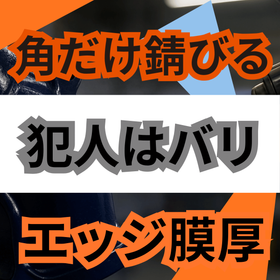
Pinholes that occur in die-cast materials are primarily caused by internal gases. When heated, the internal gases expand and break through the coating, creating holes. The occurrence rate is particularly high in materials with many voids or gas entrapment during casting. It is often characterized by the fact that treating only the surface does not lead to improvement. As a countermeasure, a baking treatment at 200 to 250°C for about 30 to 60 minutes is effective. Additionally, using low-temperature curing coatings may also help reduce occurrences. Detailed examples of improvements are also introduced in publicly available materials.
  • others

Added to bookmarks

Bookmarks list

Bookmark has been removed

Bookmarks list

You can't add any more bookmarks

By registering as a member, you can increase the number of bookmarks you can save and organize them with labels.

Free membership registration

Stainless steel pinholes collapse due to "thickness miscalculation."

The cause of pinholes in SUS coating is excessive film thickness. Solvent cannot escape, leading to the formation of holes.

Stainless steel is a material that is resistant to rust but difficult for paint to adhere to. The passive film on the surface can repel paint, leading to pinholes. Particularly, when there is insufficient polishing or poor degreasing, voids can easily form within the paint film. Additionally, if the film thickness is too great, solvents may not escape properly, resulting in holes. Effective countermeasures include the use of sandblasting or specialized primers. In some cases, a surface roughness of around Ra 1.0 to 2.0 μm is recommended. We also provide detailed examples of improvements in publicly available materials.

  • others

Added to bookmarks

Bookmarks list

Bookmark has been removed

Bookmarks list

You can't add any more bookmarks

By registering as a member, you can increase the number of bookmarks you can save and organize them with labels.

Free membership registration

The culprit is the brass pinhole "oxidation left unattended."

The brass pinholes are caused by oxidation reactions. The adhesion of the paint immediately after polishing is crucial.

Pinhole formation in brass can be caused by surface changes due to oxidation reactions. Over time after polishing, an oxide film forms and adhesion decreases. The reaction is particularly prone to progress due to insufficient degreasing or humidity during storage. During baking, fine gases may be generated, leading to the formation of holes within the coating. Measures to address this include immediate painting after polishing and managing oxidation suppression. Additionally, incorporating a weak acid wash may improve adhesion. Detailed examples of improvements are also provided in publicly available materials.

  • others

Added to bookmarks

Bookmarks list

Bookmark has been removed

Bookmarks list

You can't add any more bookmarks

By registering as a member, you can increase the number of bookmarks you can save and organize them with labels.

Free membership registration

Crying over the iron pinhole "red rust."

The pinholes in the steel material are caused by fine red rust. Rapid painting after blasting is important.

Pinhole defects in iron materials can sometimes be caused by fine red rust. If there is hidden corrosion on the surface, gases or moisture can be generated during the curing process, which can destroy the paint film. Special attention is needed for cases of insufficient shot blasting or re-rusting due to prolonged exposure after degreasing. Condensation caused by temperature differences can also have an impact, and the frequency of occurrence tends to increase in winter. As countermeasures, painting within four hours after blasting and using anti-rust primers are effective. Humidity management is also important, with cases recommending levels below 60%. We also provide detailed examples of improvements specific to iron materials in publicly available documents.

  • others

Added to bookmarks

Bookmarks list

Bookmark has been removed

Bookmarks list

You can't add any more bookmarks

By registering as a member, you can increase the number of bookmarks you can save and organize them with labels.

Free membership registration

The culprit was the pinhole "white rust" from the galvanized coating.

White rust from zinc plating is the cause of pinholes. Management of storage conditions and surface treatment is essential.

Pinholes that occur in galvanized materials can sometimes be caused by gas generation due to surface reactions. Particularly when white rust is present, reactions can progress during baking, leading to gas formation inside the paint film. The zinc surface is prone to reacting with moisture, so materials that have been stored for a long time require extra caution. Additionally, insufficient zinc phosphate treatment can lead to reduced adhesion and the expansion of pinholes. As a countermeasure, it is important to combine light polishing with chemical treatment. Especially in environments with humidity over 60%, the progression of white rust accelerates, making proper storage management necessary. Detailed examples of improvements are also provided in publicly available materials.

  • others

Added to bookmarks

Bookmarks list

Bookmark has been removed

Bookmarks list

You can't add any more bookmarks

By registering as a member, you can increase the number of bookmarks you can save and organize them with labels.

Free membership registration

All about aluminum pinholes "insufficient drying"

The pinholes in aluminum coating are caused by insufficient drying. It is important to treat the surface to allow internal moisture to escape.

Pinholes that occur in aluminum products can sometimes be caused by moisture remaining on the surface or inside the material. Special attention is needed, particularly after machining or insufficient drying following cleaning. During baking, moisture evaporates and can push up the coating, resulting in tiny holes. Aluminum has a high thermal conductivity, causing the surface temperature to rise rapidly, which can prevent internal moisture from escaping. The risk of occurrence increases, especially with a film thickness of 40μm or more. Measures to address this include pre-drying at 60-80°C and managing the storage environment before painting. Additionally, care must be taken to prevent moisture re-adhesion in environments with humidity above 70%. We also provide detailed examples of improvements specific to aluminum materials in our published materials.

  • others

Added to bookmarks

Bookmarks list

Bookmark has been removed

Bookmarks list

You can't add any more bookmarks

By registering as a member, you can increase the number of bookmarks you can save and organize them with labels.

Free membership registration

Dissimilar metals were causing delamination due to "differential expansion."

Explanation of the causes and countermeasures for paint peeling due to thermal expansion differences between dissimilar metals.

In products that combine dissimilar metals, delamination can occur. The thermal expansion rates differ for each material. Distortion can occur during baking or in the usage environment, putting stress on the coating. It is important to consider structural design as well. We also provide detailed information on improvement cases in publicly available materials.

  • others

Added to bookmarks

Bookmarks list

Bookmark has been removed

Bookmarks list

You can't add any more bookmarks

By registering as a member, you can increase the number of bookmarks you can save and organize them with labels.

Free membership registration

The anodizing process's "sealing treatment" influenced the peeling.

Explanation of poor paint adhesion due to sealing conditions after anodizing treatment.

The sealing treatment conditions for aluminum alloy materials affect adhesion. After sealing treatment, paint may become difficult to adhere. There are cases where additional polishing or specialized primer treatment is applied. A painting design that matches the treatment conditions is necessary. We also provide detailed examples of improvements in publicly available materials.

  • others

Added to bookmarks

Bookmarks list

Bookmark has been removed

Bookmarks list

You can't add any more bookmarks

By registering as a member, you can increase the number of bookmarks you can save and organize them with labels.

Free membership registration

Dop plating was causing delamination due to "surface reactions."

Explaining paint peeling due to surface reactions of molten zinc coating and countermeasures.

Hot-dip galvanized steel is a material that is difficult for paint to adhere to. It has a very smooth surface, making it challenging for the paint film to stick. There may be cases where sweep blasting or specialized surface treatment is necessary. Designing specialized processes is important. We also provide detailed examples of improvements in publicly available materials.

  • others

Added to bookmarks

Bookmarks list

Bookmark has been removed

Bookmarks list

You can't add any more bookmarks

By registering as a member, you can increase the number of bookmarks you can save and organize them with labels.

Free membership registration

Copper plating accelerated delamination due to the "oxidation rate."

Explanation of poor paint adhesion due to oxidation reactions of copper materials and countermeasures.

Copper oxidizes quickly and is a material that is prone to paint peeling. Oxidation begins immediately after polishing. Prolonged exposure after degreasing reduces adhesion. Managing process time is important. Speed management specific to copper is crucial. We provide detailed examples of improvements in publicly available materials.

  • others

Added to bookmarks

Bookmarks list

Bookmark has been removed

Bookmarks list

You can't add any more bookmarks

By registering as a member, you can increase the number of bookmarks you can save and organize them with labels.

Free membership registration

Die casting was experiencing delamination due to "internal gas."

Explanation of the causes of paint peeling and blistering defects due to internal gas in die casting.

In die-cast materials, internal gas can cause paint peeling. Internal gas expands during heating. A baking treatment at 200 to 250°C can be effective in some cases. Measures that consider the interior of the material are necessary. We also provide detailed examples of improvements in publicly available documents.

  • others

Added to bookmarks

Bookmarks list

Bookmark has been removed

Bookmarks list

You can't add any more bookmarks

By registering as a member, you can increase the number of bookmarks you can save and organize them with labels.

Free membership registration

The SUS coating was hindered by the "passivation film" from adhering properly.

Explanation of measures against poor adhesion and peeling due to the unique passive film of stainless steel.

Stainless steel has high corrosion resistance, but it is a material that is difficult for paint to adhere to. There are cases where the passive film on the surface repels the coating. Sandblasting or a special primer may be required. Pre-treatment specifically for stainless steel is important. We also provide detailed examples of improvements in publicly available materials.

  • others

Added to bookmarks

Bookmarks list

Bookmark has been removed

Bookmarks list

You can't add any more bookmarks

By registering as a member, you can increase the number of bookmarks you can save and organize them with labels.

Free membership registration

The brass coating was experiencing peeling due to a "discoloration reaction."

Explanation of measures to prevent paint peeling due to the unique oxidation and discoloration reactions of brass.

Brass is prone to oxidation in the air, and as it discolors, the adhesion of the coating decreases. Even if the surface discoloration is slight, the reaction is still progressing. Poor adhesion can occur due to insufficient degreasing or residual oxide film. Immediate painting after polishing is important. Specific management for brass is required. We also provide detailed examples of improvements in publicly available materials.

  • others

Added to bookmarks

Bookmarks list

Bookmark has been removed

Bookmarks list

You can't add any more bookmarks

By registering as a member, you can increase the number of bookmarks you can save and organize them with labels.

Free membership registration

The iron coating was causing "red rust" to peel off.

Explanation of the causes of paint peeling due to red rust and substrate corrosion of iron materials, and methods for improvement.

Many of the causes of paint peeling on iron materials are due to red rust. When surface corrosion progresses, the paint film cannot adhere properly. Even fine rust can lead to corrosion beneath the paint film. If blast treatment or rust prevention primer is omitted, peeling can occur within a few months. Proper substrate treatment is particularly important for iron materials. We also provide detailed examples of improvements in publicly available documents.

  • others

Added to bookmarks

Bookmarks list

Bookmark has been removed

Bookmarks list

You can't add any more bookmarks

By registering as a member, you can increase the number of bookmarks you can save and organize them with labels.

Free membership registration

The zinc plating was compromised by "white rust."

Explanation of the causes and countermeasures for paint peeling due to white rust and surface deterioration of galvanized steel.

One of the causes of paint peeling on galvanized materials is white rust. When white rust occurs, it becomes difficult for the paint film to adhere. Even immediately after galvanizing, reaction products are present on the surface. If zinc phosphate treatment or light polishing is not performed, the paint film is likely to lift. A storage environment with high humidity is also dangerous. Specific measures for galvanized materials are necessary. We also provide detailed examples of improvements in publicly available documents.

  • others

Added to bookmarks

Bookmarks list

Bookmark has been removed

Bookmarks list

You can't add any more bookmarks

By registering as a member, you can increase the number of bookmarks you can save and organize them with labels.

Free membership registration

The aluminum coating was caused by the "oxidation film" peeling off.

Explanation of countermeasures for poor adhesion and paint peeling due to the unique oxide film of aluminum.

One of the causes of paint peeling in aluminum products is the oxide film that forms on the surface. Aluminum oxidizes simply by being exposed to air, which hinders the adhesion of the paint film. Even if the surface appears clean, a thin oxide film is formed. If acid cleaning or chemical treatment is not performed, the adhesion significantly decreases. This is especially important for materials that have been stored for a long time. In actual practice, the results can vary greatly depending on the condition of the material. We also provide detailed examples of improvements in aluminum peeling in publicly available materials.

  • others

Added to bookmarks

Bookmarks list

Bookmark has been removed

Bookmarks list

You can't add any more bookmarks

By registering as a member, you can increase the number of bookmarks you can save and organize them with labels.

Free membership registration

Defect of adhesion called chipping

An expert at finding defects.

Chipping is caused by a 'lack of adhesion': The impact resistance is not determined solely by the strength of the coating. If the adhesion is low, the coating will rebound and peel off upon impact. Even a hard coating that appears sturdy is meaningless if its adhesion to the substrate is weak. Furthermore, there are more complex issues: insufficient pretreatment, differences in the expansion coefficients of materials, inadequate coating thickness... all of these affect chipping. A simple notion of a 'hard coating' cannot provide an essential solution.

  • others

Added to bookmarks

Bookmarks list

Bookmark has been removed

Bookmarks list

You can't add any more bookmarks

By registering as a member, you can increase the number of bookmarks you can save and organize them with labels.

Free membership registration

Investigating the culprit of poor hardening: temperature? time? Or is it the formulation?

Choose from three suspects.

Searching for the culprit of poor curing: Temperature? Time? Or the mixture? In fact, these three work as a "trinity." Simply having a high drying temperature is not enough. There is a necessary heating time. Furthermore, if the mixture of the paint (the ratio of the main agent to the hardener) is not accurate, no matter how much you heat it, it will not fully cure. In many situations, the mixture is underestimated as "not a big deal," but this is the biggest pitfall.

  • others

Added to bookmarks

Bookmarks list

Bookmark has been removed

Bookmarks list

You can't add any more bookmarks

By registering as a member, you can increase the number of bookmarks you can save and organize them with labels.

Free membership registration

Reoccurrence of rust: The "cost" of forgetting pre-treatment.

Realize before paying the price.

The recurrence of rust is the "price of forgetting the pre-treatment." There are cases where rust reappears a few months after painting. The cause lies hidden in the tiny, invisible dents on the surface. If the chemical treatment is incomplete, moisture remains in the micropores of the material. Even if coated with anti-corrosive paint, corrosion from within cannot be prevented. Many companies mistakenly believe that "it's okay because the paint film is thick." However, the anti-corrosive performance is determined by the "substrate."

  • others

Added to bookmarks

Bookmarks list

Bookmark has been removed

Bookmarks list

You can't add any more bookmarks

By registering as a member, you can increase the number of bookmarks you can save and organize them with labels.

Free membership registration

The true nature of uneven gloss: the drying temperature had "quietly changed."

Don't miss temperature changes.

The true nature of gloss unevenness is "subtle changes in drying temperature." Even if they appear to be the same drying oven, the temperature distribution varies by location. Additionally, the outside temperature changes with the season and time of day, causing slight deviations in drying conditions. Furthermore, another complicating factor is that the curing speed differs even at the same temperature, depending on the thickness and color of the coating film. To achieve uniform gloss, it is essential to adjust not only temperature management but also drying time, film thickness, material properties, and other complex factors.

  • others

Added to bookmarks

Bookmarks list

Bookmark has been removed

Bookmarks list

You can't add any more bookmarks

By registering as a member, you can increase the number of bookmarks you can save and organize them with labels.

Free membership registration

The true culprit of the foreign substance contamination was the "invisible enemy."

Countermeasures against invisible enemies

The true culprit of foreign matter contamination is the "invisible enemy." The dust in the painting booth cannot be detected by the naked eye. Old paint particles accumulate in areas with poor air flow and in the corners of equipment. Even if you think the cleaning is thorough, contamination exists at the microscopic level. However, this is important: environmental management alone is insufficient. The filters in the paint supply line, the air quality of the spray gun, and the negative pressure management of the painting booth... only when all of these are integrated can foreign matter contamination be prevented.

  • others

Added to bookmarks

Bookmarks list

Bookmark has been removed

Bookmarks list

You can't add any more bookmarks

By registering as a member, you can increase the number of bookmarks you can save and organize them with labels.

Free membership registration

The true culprit of color unevenness is "variation in film thickness."

The significance of membrane thickness variation.

The true culprit of color unevenness is "variability in film thickness." Color development is directly linked to film thickness. Even with the same color, if the film thickness varies by 10%, it will appear as if the "color is different." Why does film thickness vary? It is due to almost unconscious changes in application conditions (distance, speed, pressure). In the case of non-mechanized hand painting, even if the same person is painting, it can differ depending on the day, time of day, and posture. Without standardization, achieving consistent quality is impossible.

  • others

Added to bookmarks

Bookmarks list

Bookmark has been removed

Bookmarks list

You can't add any more bookmarks

By registering as a member, you can increase the number of bookmarks you can save and organize them with labels.

Free membership registration

The reason the sauce won't stop is "the betrayal of viscosity."

The true role of viscosity

The reason why drips are unstoppable lies in the "betrayal of viscosity." Viscosity adjustment often relies on experience and intuition, which is dangerous. Factors such as paint temperature, type of thinner, humidity, and spray pressure all affect viscosity. Even if applied at the optimal viscosity, if the spray distance is incorrect, the film thickness will be uneven, leading to drips. Many companies settle for the simple solution of "increasing viscosity." However, the true cause is the "harmony of the entire system."

  • others

Added to bookmarks

Bookmarks list

Bookmark has been removed

Bookmarks list

You can't add any more bookmarks

By registering as a member, you can increase the number of bookmarks you can save and organize them with labels.

Free membership registration

Blistering defect: The "secret" occurring within the paint film.

The importance of knowing internal secrets.

Blistering defects: What is happening inside the coating? It is actually an "attack of moisture and gas." The moisture inside the material is not visible. In the case of die casting, moisture is absorbed into the fine pores of the mold. When heated, that moisture expands and lifts the coating. This is why pre-baking treatment is effective. However, many companies do not understand this true cause. Gradual drying according to the characteristics of the material is essential.

  • others

Added to bookmarks

Bookmarks list

Bookmark has been removed

Bookmarks list

You can't add any more bookmarks

By registering as a member, you can increase the number of bookmarks you can save and organize them with labels.

Free membership registration

The true nature of the pinhole: The reason why the air bubble "lost its escape route."

The mystery of bubble escape is solved.

The true nature of pinholes is "a state where bubbles have lost their escape route." Why do bubbles occur during painting? The main causes are the rapid evaporation of solvents and gas generation. However, it is not that simple. If the film thickness is too thick, the internal gas does not have enough time to reach the surface, and bubbles become trapped within the coating. If the drying temperature is too high, it is also problematic. If it is too low, that is also an issue. Finding this "optimal value" is the key to eliminating pinholes.

  • others

Added to bookmarks

Bookmarks list

Bookmark has been removed

Bookmarks list

You can't add any more bookmarks

By registering as a member, you can increase the number of bookmarks you can save and organize them with labels.

Free membership registration

The cause of the paint peeling was "laziness in the pre-treatment."

Preprocessing is everything about adhesion.

The true culprit behind paint peeling lies in "laziness in pre-treatment." 90% of defects that manifest as poor adhesion are actually determined at the pre-treatment stage. Inadequate degreasing can hinder paint adhesion due to even a slight amount of oil. However, here is the crucial point: oil is not the only culprit. Residual moisture, neglecting oxidation films, and errors in drying timing are all intertwined factors.

  • others

Added to bookmarks

Bookmarks list

Bookmark has been removed

Bookmarks list

You can't add any more bookmarks

By registering as a member, you can increase the number of bookmarks you can save and organize them with labels.

Free membership registration

How to prevent chipping? Methods to enhance coating strength.

Determination towards adhesion strength is important.

Improvement methods for insufficient adhesion, coating strength, and substrate treatment that cause paint chipping. Insufficient adhesion reduces impact resistance. A hard coating alone is not enough; design is important. We have published case study materials on improvements. Please take a look.

  • others

Added to bookmarks

Bookmarks list

Bookmark has been removed

Bookmarks list

You can't add any more bookmarks

By registering as a member, you can increase the number of bookmarks you can save and organize them with labels.

Free membership registration

How to prevent poor curing? Methods to eliminate stickiness.

The effects of dry management are tremendous.

Countermeasures for causes of poor paint curing related to drying temperature, time, and paint formulation errors. Not only temperature, but also time and film thickness have an impact. Simple time extension will not lead to improvement. We have published case study materials on improvements. Please take a look.

  • others

Added to bookmarks

Bookmarks list

Bookmark has been removed

Bookmarks list

You can't add any more bookmarks

By registering as a member, you can increase the number of bookmarks you can save and organize them with labels.

Free membership registration

How to prevent the recurrence of rust? Methods to enhance anti-corrosion performance.

Pre-treatment is all about corrosion prevention measures.

Improvement methods for insufficient pre-treatment, chemical treatment, and anti-corrosion measures that cause rust reoccurrence after painting. Fine dirt can be the starting point for corrosion. Pre-treatment is important because painting alone cannot prevent it. Our company has published case study materials on improvements. Please take a look.

  • others

Added to bookmarks

Bookmarks list

Bookmark has been removed

Bookmarks list

You can't add any more bookmarks

By registering as a member, you can increase the number of bookmarks you can save and organize them with labels.

Free membership registration

How to prevent uneven gloss? Achieving a uniform finish.

Thoroughly manage drying conditions.

Improvement points for drying temperature, curing conditions, and film thickness management that cause uneven gloss in coatings. Differences in drying temperature affect gloss. Since visual assessments have low reproducibility, condition management is important. Our company has published case study materials. Please take a look.

  • others

Added to bookmarks

Bookmarks list

Bookmark has been removed

Bookmarks list

You can't add any more bookmarks

By registering as a member, you can increase the number of bookmarks you can save and organize them with labels.

Free membership registration

How to prevent foreign matter contamination? Methods to maintain painting quality.

The possibilities of environmental management are limitless.

We explain the methods for improving dust, booth environment, and air management that can cause foreign matter contamination in painting. Fine dust can lead to quality defects. Cleaning alone is not sufficient; environmental management is crucial. Our company has published case study materials on improvements. Please take a look.

  • others

Added to bookmarks

Bookmarks list

Bookmark has been removed

Bookmarks list

You can't add any more bookmarks

By registering as a member, you can increase the number of bookmarks you can save and organize them with labels.

Free membership registration

How to prevent color unevenness? Key points for stabilizing quality.

A process that never produces color unevenness again.

This explains the measures against variations in film thickness, application conditions, and uneven drying that cause color unevenness in coatings. Color unevenness occurs due to slight differences in conditions. Since the color development changes depending on the film thickness and drying state, stabilizing the process is crucial. Our company has published case study materials on improvements. Please take a look.

  • others

Added to bookmarks

Bookmarks list

Bookmark has been removed

Bookmarks list

You can't add any more bookmarks

By registering as a member, you can increase the number of bookmarks you can save and organize them with labels.

Free membership registration

How to prevent paint drips? Stabilize the finish.

Understanding the essence of viscosity management.

This explains how to improve the viscosity, application amount, and spray conditions that cause paint drips. Drips are caused by insufficient viscosity or excessive application amount. Viscosity can also change with paint temperature and dilution state. Adjustments based on experience lead to low reproducibility and can result in defects. Standardizing conditions is important. Our company has published case study materials on improvements. Please take a look.

  • others

Added to bookmarks

Bookmarks list

Bookmark has been removed

Bookmarks list

You can't add any more bookmarks

By registering as a member, you can increase the number of bookmarks you can save and organize them with labels.

Free membership registration

How to prevent pinhole defects? Improvement methods to reduce occurrence.

The effects of film thickness and drying management are tremendous.

This document explains the relationship between bubbles, film thickness, and drying conditions, which are the causes of paint pinholes, as well as countermeasures. Pinholes occur due to solvent evaporation or gas generation. The entrapment of bubbles can be caused by thick application or rapid heating. Simply raising the drying temperature may not improve the situation, so optimizing film thickness and drying conditions is crucial. Our company has published case study materials on improvements. Please take a look.

  • others

Added to bookmarks

Bookmarks list

Bookmark has been removed

Bookmarks list

You can't add any more bookmarks

By registering as a member, you can increase the number of bookmarks you can save and organize them with labels.

Free membership registration

How to prevent paint peeling? All about adhesion.

Preprocessing is everything about adhesion.

This explains the key points for improving poor adhesion, insufficient pre-treatment, degreasing, and drying conditions that can cause paint to peel. The reasons for peeling occurring some time after painting are not only due to insufficient pre-treatment but also due to trace amounts of moisture and oxidation films. Adhesion can vary significantly depending on humidity and the condition of the materials. It is important to understand the reasons why results differ even with the same process and to review the process accordingly. Poor painting cannot be improved with vague measures. Our company has published case study materials on improvements. Please take a look.

  • others

Added to bookmarks

Bookmarks list

Bookmark has been removed

Bookmarks list

You can't add any more bookmarks

By registering as a member, you can increase the number of bookmarks you can save and organize them with labels.

Free membership registration

How to prevent chipping? Methods to enhance coating strength.

The key will be the adhesion and coating design.

Chipping is caused by insufficient adhesion and inadequate film strength. Thorough pretreatment and appropriate paint selection are essential for improvement. Design tailored to the application is necessary.

  • others

Added to bookmarks

Bookmarks list

Bookmark has been removed

Bookmarks list

You can't add any more bookmarks

By registering as a member, you can increase the number of bookmarks you can save and organize them with labels.

Free membership registration

How to prevent poor hardening? Methods to eliminate stickiness.

Dry conditions and paint management are important.

Poor hardening is caused by insufficient drying or mixing errors. To improve this, it is necessary to review the drying conditions and thoroughly manage the paint.

  • others

Added to bookmarks

Bookmarks list

Bookmark has been removed

Bookmarks list

You can't add any more bookmarks

By registering as a member, you can increase the number of bookmarks you can save and organize them with labels.

Free membership registration

How to prevent the recurrence of rust? Methods to enhance anti-corrosion performance.

Thorough surface preparation determines durability.

The recurrence of rust is caused by insufficient pre-treatment. It is important to thoroughly carry out degreasing and chemical treatment for improvement. Proper selection of paint also contributes to increased durability.

  • others

Added to bookmarks

Bookmarks list

Bookmark has been removed

Bookmarks list

You can't add any more bookmarks

By registering as a member, you can increase the number of bookmarks you can save and organize them with labels.

Free membership registration

How to prevent uneven gloss? Methods to achieve a uniform finish.

Stabilizing drying conditions is the key point.

Variations in gloss are caused by inconsistencies in drying conditions. It is important to thoroughly manage temperature and time for improvement. Additionally, standardizing application conditions is also effective for stabilizing quality.

  • others

Added to bookmarks

Bookmarks list

Bookmark has been removed

Bookmarks list

You can't add any more bookmarks

By registering as a member, you can increase the number of bookmarks you can save and organize them with labels.

Free membership registration

How to prevent foreign matter contamination? Improvement methods to maintain painting quality.

Reviewing the work environment is effective.

Foreign matter contamination is caused by dust in the environment and equipment dirt. Thorough cleaning and air management are essential for improvement. By improving the environment of the painting booth, defects can be significantly reduced.

  • others

Added to bookmarks

Bookmarks list

Bookmark has been removed

Bookmarks list

You can't add any more bookmarks

By registering as a member, you can increase the number of bookmarks you can save and organize them with labels.

Free membership registration

How to prevent color unevenness? Improvement points to stabilize quality.

Coating conditions and environmental management are important.

Color unevenness is caused by variations in the amount of application and differences in drying conditions. Standardizing work conditions and managing equipment are important for improvement. In particular, thorough management of film thickness and temperature will stabilize quality.

  • others

Added to bookmarks

Bookmarks list

Bookmark has been removed

Bookmarks list

You can't add any more bookmarks

By registering as a member, you can increase the number of bookmarks you can save and organize them with labels.

Free membership registration
Prev 12 Next
  • ダマになりやすい原料も 1台で解砕 ふるい分け カスタマイズ可能な回転羽根形状で様々な原料に対応!解砕機構付き佐藤式振動ふるい機 つばさ 活用イメージ動画を公開中!
  • 排気熱風なく気温-4.1℃の冷風を 工事不要で暑さ対策 店舗・工場の安全対策に!気化式スポットクーラー Pure Drive
    • Contact this company

      Inquiry Form

    Products

    • Search for Products

    Company

    • Search for Companies

    Special Features

    • Special Features

    Ranking

    • Overall Products Ranking
    • Overall Company Ranking

    support

    • site map
    IPROS
    • privacy policy Regarding external transmission of information
    • terms of service
    • About Us
    • Careers
    • Advertising
    COPYRIGHT © 2001-2026 IPROS CORPORATION ALL RIGHTS RESERVED.
    Please note that the English text on this page is automatically translated and may contain inaccuracies.