iPROS Manufacturing
  • Search for products by classification category

    • Electronic Components and Modules
      Electronic Components and Modules
      61676items
    • Machinery Parts
      Machinery Parts
      75932items
    • Manufacturing and processing machinery
      Manufacturing and processing machinery
      102035items
    • Scientific and Physics Equipment
      Scientific and Physics Equipment
      36331items
    • Materials
      Materials
      37776items
    • Measurement and Analysis
      Measurement and Analysis
      55161items
    • Image Processing
      Image Processing
      15377items
    • Control and Electrical Equipment
      Control and Electrical Equipment
      54564items
    • Tools, consumables, and supplies
      Tools, consumables, and supplies
      65605items
    • Design and production support
      Design and production support
      12663items
    • IT/Network
      IT/Network
      45652items
    • Office
      Office
      14181items
    • Business support services
      Business support services
      25412items
    • Seminars and Skill Development
      Seminars and Skill Development
      6558items
    • Pharmaceutical and food related
      Pharmaceutical and food related
      34177items
    • others
      75348items
  • Search for companies by industry

    • Manufacturing and processing contract
      7338
    • others
      4986
    • Industrial Machinery
      4445
    • Machine elements and parts
      3330
    • Other manufacturing
      2883
    • Trading company/Wholesale
      2650
    • IT/Telecommunications
      2571
    • Industrial Electrical Equipment
      2319
    • Building materials, supplies and fixtures
      1816
    • software
      1666
    • Electronic Components and Semiconductors
      1587
    • Resin/Plastic
      1500
    • Service Industry
      1478
    • Testing, Analysis and Measurement
      1130
    • Ferrous/Non-ferrous metals
      986
    • environment
      699
    • Chemical
      640
    • Automobiles and Transportation Equipment
      581
    • Printing Industry
      513
    • Information and Communications
      465
    • Consumer Electronics
      412
    • Energy
      333
    • Rubber products
      317
    • Food Machinery
      308
    • Optical Instruments
      279
    • robot
      273
    • fiber
      254
    • Paper and pulp
      230
    • Pharmaceuticals and Biotechnology
      173
    • Electricity, Gas and Water Industry
      167
    • Warehousing and transport related industries
      149
    • Glass and clay products
      139
    • Food and Beverage
      130
    • CAD/CAM
      124
    • retail
      108
    • Medical Devices
      107
    • Educational and Research Institutions
      107
    • Ceramics
      98
    • wood
      87
    • Transportation
      84
    • Petroleum and coal products
      63
    • Medical and Welfare
      62
    • Shipbuilding and heavy machinery
      51
    • Aviation & Aerospace
      48
    • Fisheries, Agriculture and Forestry
      41
    • equipment
      40
    • Materials
      33
    • Public interest/special/independent administrative agency
      31
    • Research and development equipment and devices
      29
    • Government
      24
    • self-employed
      24
    • Mining
      17
    • cosmetics
      15
    • Finance, securities and insurance
      14
    • Restaurants and accommodations
      10
    • Individual
      10
    • Police, Fire Department, Self-Defense Forces
      7
    • Laboratory Equipment and Consumables
      5
    • Raw materials for reagents and chemicals
      4
    • Contracted research
      3
  • Special Features
  • Ranking

    • Overall Products Ranking
    • Overall Company Ranking
Search for Products
  • Search for products by classification category

  • Electronic Components and Modules
  • Machinery Parts
  • Manufacturing and processing machinery
  • Scientific and Physics Equipment
  • Materials
  • Measurement and Analysis
  • Image Processing
  • Control and Electrical Equipment
  • Tools, consumables, and supplies
  • Design and production support
  • IT/Network
  • Office
  • Business support services
  • Seminars and Skill Development
  • Pharmaceutical and food related
  • others
Search for Companies
  • Search for companies by industry

  • Manufacturing and processing contract
  • others
  • Industrial Machinery
  • Machine elements and parts
  • Other manufacturing
  • Trading company/Wholesale
  • IT/Telecommunications
  • Industrial Electrical Equipment
  • Building materials, supplies and fixtures
  • software
  • Electronic Components and Semiconductors
  • Resin/Plastic
  • Service Industry
  • Testing, Analysis and Measurement
  • Ferrous/Non-ferrous metals
  • environment
  • Chemical
  • Automobiles and Transportation Equipment
  • Printing Industry
  • Information and Communications
  • Consumer Electronics
  • Energy
  • Rubber products
  • Food Machinery
  • Optical Instruments
  • robot
  • fiber
  • Paper and pulp
  • Pharmaceuticals and Biotechnology
  • Electricity, Gas and Water Industry
  • Warehousing and transport related industries
  • Glass and clay products
  • Food and Beverage
  • CAD/CAM
  • retail
  • Medical Devices
  • Educational and Research Institutions
  • Ceramics
  • wood
  • Transportation
  • Petroleum and coal products
  • Medical and Welfare
  • Shipbuilding and heavy machinery
  • Aviation & Aerospace
  • Fisheries, Agriculture and Forestry
  • equipment
  • Materials
  • Public interest/special/independent administrative agency
  • Research and development equipment and devices
  • Government
  • self-employed
  • Mining
  • cosmetics
  • Finance, securities and insurance
  • Restaurants and accommodations
  • Individual
  • Police, Fire Department, Self-Defense Forces
  • Laboratory Equipment and Consumables
  • Raw materials for reagents and chemicals
  • Contracted research
Special Features
Ranking
  • Overall Products Ranking
  • Overall Company Ranking
  • privacy policy
  • terms of service
  • About Us
  • Careers
  • Advertising
  1. Home
  2. Ferrous/Non-ferrous metals
  3. 永和工芸
  4. Product/Service List
Ferrous/Non-ferrous metals
  • Added to bookmarks

    Bookmarks list

    Bookmark has been removed

    Bookmarks list

    You can't add any more bookmarks

    By registering as a member, you can increase the number of bookmarks you can save and organize them with labels.

    Free membership registration

永和工芸

EstablishmentDecember 1958
capital1000Ten thousand
number of employees10
addressOsaka/Hirano-ku, Osaka-shi/Kizuren 5-5-60
phone06-6709-2349
  • Special site
  • Official site
last updated:Mar 16, 2026
永和工芸logo
  • Contact this company

    Inquiry Form
  • Before making an inquiry

    Download Profile
  • Company information
  • Products/Services(290)
  • catalog(8)
  • news(0)

永和工芸 Product Lineup

  • category

136~180 item / All 290 items

Displayed results

Filter by category

単品・小ロットライン 単品・小ロットライン
量産塗装する仕組み 量産塗装する仕組み
試験塗装する仕組み 試験塗装する仕組み
class="retina-image"

Measures to address poor adhesion of aluminum die-cast coatings for home appliances.

Insufficient degreasing leads to poor adhesion. Explaining the importance of often-overlooked processes.

In the painting of home appliance housings, the adhesion of the paint film is extremely important to ensure product quality and durability. Particularly in the case of aluminum die-cast materials, poor adhesion due to the presence of release agents or machining oils can easily lead to paint film peeling, which can not only result in poor product appearance but also potentially lead to functional degradation. Even trace amounts of oil that cannot be visually confirmed can affect adhesion after painting and may manifest as defects over time. Additionally, insufficient degreasing can lead to the occurrence of blisters and pinholes, potentially causing defects during the curing process. When the degreasing process is shortened to improve productivity, it is not uncommon for the costs of re-coating or handling complaints to increase as a result. As the first step in addressing poor adhesion, standardization of the degreasing process and a review of management conditions are required. 【Application Scenarios】 - Painting of aluminum die-cast home appliance housings - Products where appearance quality is emphasized - Products requiring long-term durability 【Benefits of Implementation】 - Reduction of peeling defects due to improved paint film adhesion - Suppression of blister and pinhole occurrence - Reduction of re-coating and complaint handling costs - Stabilization of product quality and improvement of reliability

  • others

Added to bookmarks

Bookmarks list

Bookmark has been removed

Bookmarks list

You can't add any more bookmarks

By registering as a member, you can increase the number of bookmarks you can save and organize them with labels.

Free membership registration

Countermeasures for Poor Adhesion of Aluminum Die-Cast Coating for Automotive Parts

Insufficient degreasing leads to poor adhesion. Explaining the importance of often-overlooked processes.

In the automotive parts industry, particularly in the painting of critical components like engine blocks, high adhesion and durability are required. Poor painting can directly lead to a decline in product performance and early deterioration, potentially compromising reliability. Specifically, release agents and machining oils that adhere to aluminum die-cast products are difficult to detect visually but can cause poor paint adhesion, blisters, and pinholes. These defects may not be apparent in the initial stages but can later lead to peeling and performance degradation. If the degreasing process is shortened to improve productivity, it is also necessary to consider the risk of increased costs for repainting or handling complaints. As the first step in addressing poor adhesion, standardizing the degreasing process and reviewing management conditions are essential. 【Application Scenarios】 - Painting of automotive parts like engine blocks that require high adhesion - Painting of aluminum die-cast products that are prone to adhering release agents and machining oils - Aiming to reduce repainting and complaint handling costs due to poor painting 【Benefits of Implementation】 - Improved product quality through reduced paint adhesion issues - Suppression of blister and pinhole occurrences - Reduction of repainting and complaint handling costs - Stabilization of the entire painting process and enhancement of reliability

  • others

Added to bookmarks

Bookmarks list

Bookmark has been removed

Bookmarks list

You can't add any more bookmarks

By registering as a member, you can increase the number of bookmarks you can save and organize them with labels.

Free membership registration

Measures to address poor adhesion of painted aluminum die-cast parts for marine vessels.

Identify the poor adhesion caused by insufficient degreasing. Explanation of the important process.

In the hull of marine parts, durability and reliability under harsh environments are required. In particular, the painting of aluminum die-cast parts poses a significant challenge, as poor adhesion of the paint film can directly affect product lifespan and safety. Paint peeling can be caused by various factors such as salt damage, water pressure, and physical impacts, but one of the root causes is inadequate degreasing processes. Residual release agents and processing oils on the material surface hinder direct adhesion between the paint and the material, and even trace amounts of oil that are not visible can compromise long-term durability. While there may be no issues immediately after painting, peeling can occur over time, often leading to additional costs such as re-coating or handling complaints. The first step in addressing poor adhesion is to standardize the degreasing process and review management conditions. 【Application Scenarios】 - Painting of hull parts for ships - Use in harsh marine environments - Ensuring long-term durability of the paint film 【Benefits of Implementation】 - Reduction of paint peeling risks - Improvement of product reliability - Reduction of re-coating costs

  • others

Added to bookmarks

Bookmarks list

Bookmark has been removed

Bookmarks list

You can't add any more bookmarks

By registering as a member, you can increase the number of bookmarks you can save and organize them with labels.

Free membership registration

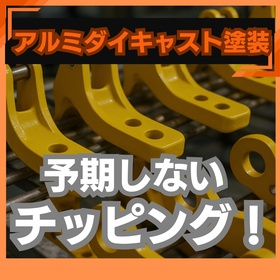
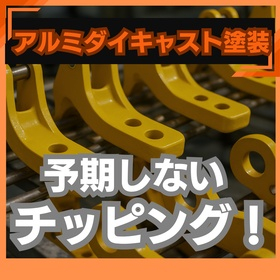
The aluminum die-cast coating had chipping, which was an unexpected defect.

The cause of chipping is poor adhesion and insufficient film thickness. A film thickness of over 40 microns can reduce the occurrence rate by 95 percent.

Chipping is a defect where the coating film chips off due to mechanical impact. It is particularly prone to occur in automotive parts, with cases leading to customer complaints due to impacts in the usage environment after delivery occurring 30-40 percent of the time. Relationship between film thickness and chipping resistance: At a thickness of 20 microns, the film easily peels off under impact (damaged at an impact value of 30J), while at 30 microns it withstands 60J, and at over 40 microns, it achieves impact resistance of over 150J. Designing the film thickness according to the application of the parts is essential. Quantifying adhesion: In cases of poor adhesion, even at a thickness of 40 microns, the impact value drops to 60J. By optimizing degreasing and chemical treatment to ensure adhesion strength, impact resistance can be improved by more than double at the same film thickness. Influence of substrate treatment: Maintaining a surface roughness Sa of 2-3 microns enhances mechanical interlocking with the coating film, improving chipping resistance by 30 percent. Optimizing shot blasting conditions is key. Our company combines film thickness management (40 plus or minus 5 microns), ensuring adhesion, and proper substrate treatment to achieve a chipping occurrence rate of less than 0.5 percent. This has also been adopted in automotive parts.

  • others

Added to bookmarks

Bookmarks list

Bookmark has been removed

Bookmarks list

You can't add any more bookmarks

By registering as a member, you can increase the number of bookmarks you can save and organize them with labels.

Free membership registration

The uneven gloss of aluminum die-cast painting was a defect that diminished its sense of luxury.

The cause of gloss unevenness is the difference in film thickness and drying speed. By managing the drying time within plus or minus 5 minutes, the improvement rate is 80 percent.

Gloss unevenness is a defect where the gloss of the coating surface varies by location, appearing mottled. Particularly in automotive interior parts, it diminishes the sense of luxury, and data shows that customer satisfaction can decrease by 30-40 percent. Variation in gloss due to film thickness: When the film thickness changes by plus or minus 30 microns, the angle of light reflection changes, resulting in a 10-15 percent variation in gloss. Strict control within plus or minus 20 microns can reduce gloss unevenness by 90 percent. Optimization of the drying environment: The optimal drying time is in an environment with a temperature of 25 degrees and humidity of 50 percent (30 minutes). If the temperature is too high and humidity too low, drying occurs too quickly, causing the solvent to evaporate unevenly, resulting in lower gloss in some areas. Conversely, if the temperature is low and humidity high, drying is delayed, leading to sedimentation. Fine-tuning the baking temperature: Raising the baking temperature from 170 degrees to 180 degrees changes the curing speed of the resin, resulting in more uniform gloss. However, if raised too much, drips can occur, so strict control within plus or minus 5 degrees is necessary. With our constant temperature and humidity chamber and temperature management system, we achieve a gloss unevenness occurrence rate of 0.1 percent, guaranteeing a luxurious paint finish.

  • others

Added to bookmarks

Bookmarks list

Bookmark has been removed

Bookmarks list

You can't add any more bookmarks

By registering as a member, you can increase the number of bookmarks you can save and organize them with labels.

Free membership registration

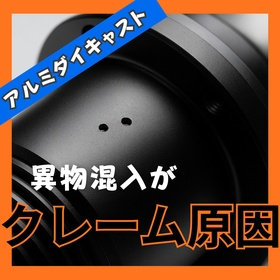
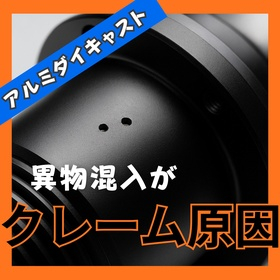
The cause of complaints regarding aluminum die-cast painting was contamination by foreign substances.

70 percent of foreign matter contamination is caused by the cleaning process. It is possible to reduce it by 99 percent through filter replacement and cleaning solution management.

Foreign matter contamination is a phenomenon where dust, oil, moisture, and other debris attached to the paint film result in defects. If discovered during the inspection process, it incurs costs of 300,000 to 500,000 yen for re-cleaning and repainting, and if overlooked and delivered, it leads to customer complaints (return rate: 20-30 percent). Insufficient management of cleaning solutions is the main cause: when the viscosity of the cleaning solution is high, fine debris settles and adheres to the product surface upon reuse. If the cleaning solution is not replaced for more than two weeks, the contamination rate jumps to 70-80 percent. Quantifying filter efficiency: after using a filter for 500 hours, the filtration efficiency decreases by 60 percent compared to the initial state. By replacing the filter every 250 hours, the contamination rate can be maintained below 0.5 percent. Contamination countermeasures from the water supply pipe: fine scale and rust in the water supply can be dispersed by air blow and adhere to the product in 25 percent of cases. Regular replacement of the water supply filter (once a month) can nearly eliminate contamination from this route. Our company replaces the cleaning solution every five days, manages filters for 250 hours, and conducts monthly replacements of the water supply filter. The contamination rate is below 0.2 percent.

  • others

Added to bookmarks

Bookmarks list

Bookmark has been removed

Bookmarks list

You can't add any more bookmarks

By registering as a member, you can increase the number of bookmarks you can save and organize them with labels.

Free membership registration

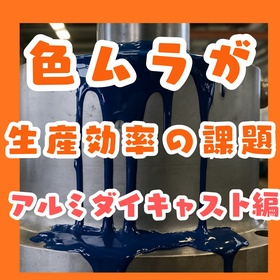
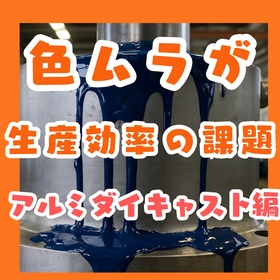
Aluminum die-cast painting had issues with color unevenness affecting production efficiency.

The cause of color unevenness is the variation in film thickness. Managing it within plus or minus 30 microns can reduce it by 90 percent.

Color unevenness is the difference in light refraction caused by variations in the thickness of the paint film in different areas. Even with the same color number, if there is a variation in film thickness, the color may appear different, leading to a rejection rate of about 35 percent in visual inspections. The numerical target for film thickness management: managing the thickness within plus or minus 20 microns reduces the occurrence of color unevenness to below 5 percent. If the current management is within plus or minus 50 microns, simply improving to plus or minus 30 microns will reduce color unevenness by 60 percent. Optimization of spray distance and pressure: By maintaining the spray distance at 20 cm and the pressure within plus or minus 10 percent of 3.0 kg/cm², the variation in film thickness can be suppressed to plus or minus 25 microns. The introduction of automatic spray equipment improves film thickness accuracy by eight times compared to manual work. The impact of drying speed: If drying is too fast, solvents evaporate unevenly, resulting in areas with thicker film. Ensuring an appropriate drying time (30 minutes at 25 degrees) achieves a 70 percent prevention rate for color unevenness. With our automatic spray system and film thickness management, we achieve zero occurrences of color unevenness, enabling both quality improvement and production efficiency.

  • others

Added to bookmarks

Bookmarks list

Bookmark has been removed

Bookmarks list

You can't add any more bookmarks

By registering as a member, you can increase the number of bookmarks you can save and organize them with labels.

Free membership registration

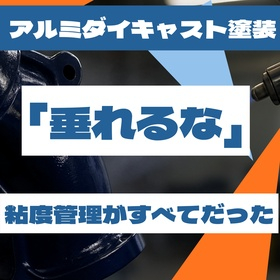
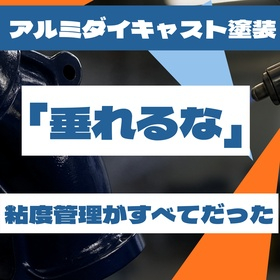
Aluminum die-cast painting was all about managing the viscosity of the drips.

The cause of the dripping is the mismatch between paint viscosity and curing temperature. It explains the phenomenon where a 20-degree difference results in a threefold increase in occurrence rate.

Dripping occurs due to poor film formation, leading not only to aesthetic defects but also to inadequate curing in thick film areas. It accounts for 8-12 percent of all painting defects on average in the industry. Relationship between viscosity and curing temperature: the lower the paint viscosity and the higher the curing temperature, the more likely dripping occurs. Even with the same viscosity of paint, simply raising the curing temperature from 160 degrees to 180 degrees can cause the dripping rate to jump from 20 percent to 60 percent. Responding to seasonal variations: paint viscosity can change by up to 40 percent between winter (5 degrees) and summer (25 degrees). Without proper viscosity management, defect patterns will vary by season, making it difficult to identify causes. Optimal viscosity by material: aluminum die casting has an optimal viscosity of 20 seconds (Ford cup), zinc die casting 18 seconds, and stainless steel 22 seconds. It is necessary to address the differences in surface tension by material. Our company implements daily management using a viscometer and an automatic adjustment system based on material and season, keeping the dripping rate below 2 percent.

  • others

Added to bookmarks

Bookmarks list

Bookmark has been removed

Bookmarks list

You can't add any more bookmarks

By registering as a member, you can increase the number of bookmarks you can save and organize them with labels.

Free membership registration

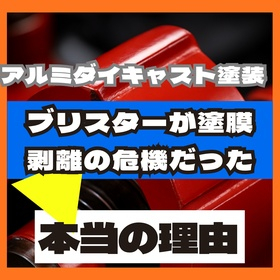
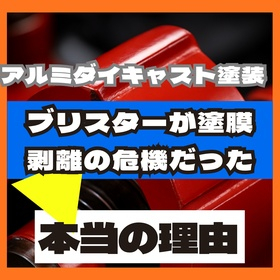
Aluminum die-cast coating faced the risk of blistering and paint peeling.

The cause of blisters is the volatilization and gasification of oils. The key to prevention is the simultaneous removal of moisture and oils from the material.

Blistering is a defect where the paint film swells during the cooling stage after curing, creating voids between the paint film and the substrate. Once it occurs, the paint film peels off due to temperature changes in the usage environment, resulting in a high complaint rate after delivery, second only to paint peeling (industry average: 15-20 percent). The risk of double gasification: At curing temperatures around 150 degrees, residual oil vaporizes, and moisture absorbed by the substrate turns into steam. When these two gases are generated simultaneously, pressure increases beneath the paint film, and data shows that the blistering rate can reach 85 percent. Optimal temperature for the degreasing solution: Keeping the degreasing solution above 50 degrees improves oil removal efficiency by 60 percent. Additionally, moisture after chemical treatment can be removed by 95 percent with heating at 80 degrees for 3 minutes. Addressing stainless steel materials: Stainless steel retains more moisture on its surface than aluminum (1.5 times more), making it unsuitable under conventional conditions. It is essential to establish pre-treatment conditions specific to each material. Our company has established optimal degreasing and drying conditions for each material, achieving zero blistering.

  • others

Added to bookmarks

Bookmarks list

Bookmark has been removed

Bookmarks list

You can't add any more bookmarks

By registering as a member, you can increase the number of bookmarks you can save and organize them with labels.

Free membership registration

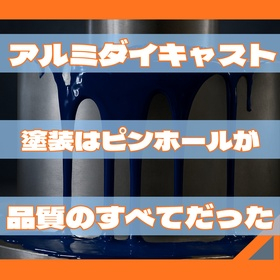
Aluminum die-cast painting was all about pinholes in quality.

The true cause of pinhole formation is not the paint, but insufficient gas release. This explains how it can occur even with heating at 60 degrees.

Pinhole defects are tiny holes that form in countless numbers on the surface of the paint film. In automotive parts, they are considered aesthetic defects and can lead to complaints, with cases where delivery delays and re-manufacturing costs increase by an average of 200,000 to 300,000 yen. The importance of the degassing process: Many sites tend to think that "the quality of the paint is low," but in reality, gases remaining in aluminum die-cast or pressed parts expand at a curing temperature of 180 degrees and form holes when released from the surface of the paint film. Humidity management is crucial: In environments with humidity above 60 percent, moisture absorbed by the material vaporizes, increasing the pinhole occurrence rate by 40 to 50 percent. By simply heating to 100 degrees for 5 to 10 minutes in the pre-curing process, the occurrence rate can be reduced by 70 percent. The effect of pre-degreasing: By setting the temperature of the degreasing solution to 55 degrees just before painting and ensuring a soaking time of 3 to 5 minutes, the amount of gas inside the material can be reduced by up to 80 percent. Addressing pinholes is not about changing the paint but optimizing pre-treatment and environmental management. Our company optimizes the degassing conditions for each material in small lots, achieving high-quality painting.

  • others

Added to bookmarks

Bookmarks list

Bookmark has been removed

Bookmarks list

You can't add any more bookmarks

By registering as a member, you can increase the number of bookmarks you can save and organize them with labels.

Free membership registration

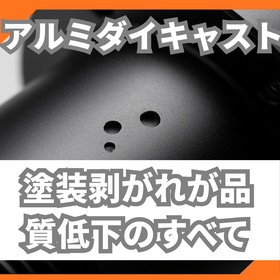
Aluminum die-cast coating peeling was the sole cause of quality degradation.

The cause of paint peeling is poor adhesion. By simultaneously optimizing degreasing and chemical treatment, the occurrence rate can be reduced by 99 percent.

Paint peeling is a defect where the paint film lifts from the material and gradually comes off during use. This not only reduces the appearance quality but also affects the entire manufacturing site, as the peeled paint film can adhere to other products. Importance of the degreasing process: Insufficient degreasing is the main cause of paint peeling. By maintaining the degreasing solution temperature above 50 degrees, the oil removal efficiency improves by 60 percent. Regularly replacing the degreasing solution (every 7 days) can keep the degreasing efficiency consistently above 95 percent. Optimization of chemical treatment: By managing the chemical treatment film thickness within plus or minus 1 micron and maintaining a thickness of 8-10 microns, adhesion is maximized. Keeping the crystal diameter between 5-15 microns enhances long-term adhesion. Impact of humidity management: If the humidity just before painting is above 70 percent, moisture adheres to the material surface, leading to poor adhesion. It is essential to ensure a drying time of one hour before painting and to manage humidity below 50 percent. Our company optimizes degreasing, chemical treatment, and drying, achieving a 10-year warranty against paint peeling. We also guarantee quality even for small lot short delivery requests.

  • others

Added to bookmarks

Bookmarks list

Bookmark has been removed

Bookmarks list

You can't add any more bookmarks

By registering as a member, you can increase the number of bookmarks you can save and organize them with labels.

Free membership registration

The aluminum die-cast coating had chipping, which was an unexpected defect.

The cause of chipping is poor adhesion and insufficient film thickness. A film thickness of over 40 microns can reduce the occurrence rate by 95 percent.

Chipping is a defect where the coating film chips off due to mechanical impact. It is particularly prone to occur in automotive parts, with cases of customer complaints arising from impacts in the usage environment after delivery accounting for 30-40 percent. Relationship between film thickness and chipping resistance: At a thickness of 20 microns, the film easily peels off under impact (damaged at an impact value of 30J), while at 30 microns, it withstands 60J, and at over 40 microns, it achieves impact resistance of over 150J. Designing the film thickness according to the application of the parts is essential. Quantifying adhesion: In cases of poor adhesion, even at a thickness of 40 microns, the impact value drops to 60J. By optimizing degreasing and chemical treatment to ensure adhesion, the impact resistance can be improved by more than double at the same film thickness. Influence of surface treatment: Maintaining a surface roughness Sa of 2-3 microns strengthens the mechanical interlocking with the coating film, improving chipping resistance by 30 percent. Optimizing shot blasting conditions is key. Our company combines film thickness management (40 plus or minus 5 microns), ensuring adhesion, and proper surface treatment to achieve a chipping occurrence rate of less than 0.5 percent. This has also been adopted in automotive parts.

  • others

Added to bookmarks

Bookmarks list

Bookmark has been removed

Bookmarks list

You can't add any more bookmarks

By registering as a member, you can increase the number of bookmarks you can save and organize them with labels.

Free membership registration

The poor curing of aluminum die-cast coatings was a serious durability issue.

Eighty percent of poor hardening is due to insufficient baking temperature. An explanation of the measured value that hardness decreases by 20 percent with a 10-degree difference.

Poor curing refers to a state where the coating film does not cure sufficiently, resulting in a dent when pressed with a finger. It can crack in a pattern resembling a spider web or peel off due to friction, significantly reducing durability. It accounts for 10-15 percent of all defects on average in the industry. Precision in curing temperature: Raising the curing temperature from 150 degrees to 160 degrees improves hardness (pencil hardness) from H to 2H. Furthermore, increasing it to 170 degrees to 180 degrees can achieve up to 3H. However, a management precision of plus or minus 10 degrees is essential. Measured data on curing time: At 180 degrees, a curing time of 20 minutes reaches a hardness of 2H, 30 minutes reaches 3H, and 60 minutes reaches 4H. The required curing time varies depending on the size and thickness of the parts. Differences in conditions based on resin type: Alkyd resin is sufficient at 160 degrees, but melamine resin requires 180 degrees. Polyester resin is recommended at 190 degrees. Understanding the chemical properties of the resin is essential for setting conditions. Our company has established a curing condition matrix based on part size, material, and resin type, ensuring a stable supply of hardness above 4H. We can also guarantee wear resistance.

  • others

Added to bookmarks

Bookmarks list

Bookmark has been removed

Bookmarks list

You can't add any more bookmarks

By registering as a member, you can increase the number of bookmarks you can save and organize them with labels.

Free membership registration

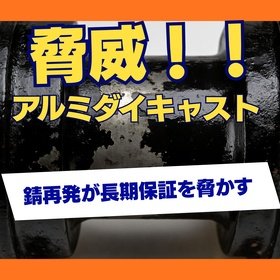
Aluminum die-cast coating was a threat that jeopardized long-term warranty due to rust reoccurrence.

The cause of rust reoccurrence is the thinness of the chemical treatment film. Ensuring a thickness of 8-12 microns allows for 5 years of corrosion resistance.

Reoccurrence of rust is a phenomenon where rust occurs beneath the paint film 3 to 6 months after painting, causing the paint film to swell. This is particularly common in pressed and cast products, and if it leads to a return claim within the quality assurance period, the cost for replacement or repair amounts to 150,000 to 250,000 yen per case. Importance of conversion coating thickness: When managing the conversion coating at 5 microns, 15-20 percent rust reoccurrence occurs within 2 years. If the thickness is increased to 8-10 microns, the rust reoccurrence rate during the same period is reduced to below 2 percent. Crystal structure of phosphate treatment: The larger the crystals in the conversion treatment, the higher the corrosion resistance. By managing the crystal diameter between 5-15 microns, it is possible to clear 1000 hours in the salt spray test (JIS Z 2371). Combination effect with pretreatment: Optimizing the three stages of degreasing, oxide film removal, and conversion treatment improves corrosion resistance by more than three times compared to just conversion treatment alone. Similar measures are necessary even for stainless materials. Our company manages the conversion coating thickness within plus or minus 1 micron and offers a 5-year rust-free guarantee. We have also achieved no rust generation even after 1500 hours in the salt spray test.

  • others

Added to bookmarks

Bookmarks list

Bookmark has been removed

Bookmarks list

You can't add any more bookmarks

By registering as a member, you can increase the number of bookmarks you can save and organize them with labels.

Free membership registration

The uneven gloss of aluminum die-cast painting was a defect that diminished its sense of luxury.

The cause of gloss unevenness is the difference in film thickness and drying speed. By managing the drying time within plus or minus 5 minutes, the improvement rate is 80 percent.

Gloss unevenness is a defect where the gloss of the coating surface varies by location, appearing as a mottled pattern. Particularly in automotive interior components, it diminishes the sense of luxury, with data indicating that customer satisfaction can decrease by 30-40 percent. Variation in gloss due to film thickness: When the film thickness changes by plus or minus 30 microns, the angle of light reflection changes, resulting in a 10-15 percent fluctuation in gloss. Strict control within plus or minus 20 microns can reduce gloss unevenness by 90 percent. Optimization of the drying environment: The optimal drying time is in an environment with a temperature of 25 degrees and humidity of 50 percent (30 minutes). Higher temperatures and lower humidity lead to excessively fast drying, causing uneven solvent evaporation and lower gloss in certain areas. Conversely, lower temperatures and higher humidity result in slower drying and sedimentation. Fine-tuning the baking temperature: Raising the baking temperature from 170 degrees to 180 degrees changes the curing speed of the resin, resulting in more uniform gloss. However, if raised too much, drips can occur, necessitating strict control within plus or minus 5 degrees. With our constant temperature and humidity chamber and temperature management system, we achieve a gloss unevenness occurrence rate of 0.1 percent, guaranteeing a luxurious paint finish.

  • others

Added to bookmarks

Bookmarks list

Bookmark has been removed

Bookmarks list

You can't add any more bookmarks

By registering as a member, you can increase the number of bookmarks you can save and organize them with labels.

Free membership registration

The cause of complaints regarding aluminum die-cast painting was contamination by foreign substances.

70 percent of foreign matter contamination is caused by the cleaning process. It is possible to reduce it by 99 percent through filter replacement and cleaning solution management.

Foreign matter contamination is a phenomenon where dust, oil, moisture, and other debris attached to the paint film result in defects. If discovered during the inspection process, it incurs costs of 300,000 to 500,000 yen for re-cleaning and repainting, and if overlooked and delivered, it leads to customer complaints (return rate: 20-30 percent). The main cause is insufficient management of the cleaning solution: when the viscosity of the cleaning solution is high, fine debris settles and adheres to the product surface upon reuse. If the cleaning solution is not changed for more than two weeks, the contamination rate can soar to 70-80 percent. Quantifying filter efficiency: after using a filter for 500 hours, the filtration efficiency decreases by 60 percent compared to the initial value. By replacing the filter every 250 hours, the contamination rate can be maintained below 0.5 percent. Contamination countermeasures from the water supply pipe: fine scale and rust in the water supply can be dispersed by air blow and adhere to the product in 25 percent of cases. Regular replacement of the water supply filter (once a month) can virtually eliminate contamination from this route. Our company replaces the cleaning solution every five days, manages filters for 250 hours, and conducts monthly replacements of the water supply filter. The contamination rate is below 0.2 percent.

  • others

Added to bookmarks

Bookmarks list

Bookmark has been removed

Bookmarks list

You can't add any more bookmarks

By registering as a member, you can increase the number of bookmarks you can save and organize them with labels.

Free membership registration

Aluminum die-cast painting had issues with color unevenness affecting production efficiency.

The cause of color unevenness is the variation in film thickness. By managing within plus or minus 30 microns, it is possible to reduce it by 90 percent.

Color variation is the difference in light refraction caused by varying film thickness in different areas. Even with the same color number, if there is variation in film thickness, the color may appear different, leading to a rejection rate of about 35 percent in visual inspections. The numerical target for film thickness management: managing the thickness within plus or minus 20 microns reduces the occurrence of color variation to below 5 percent. If the current management is within plus or minus 50 microns, simply improving to plus or minus 30 microns will reduce color variation by 60 percent. Optimization of spray distance and pressure: By maintaining the spray distance at 20 cm and the pressure within plus or minus 10 percent of 3.0 kg/cm², film thickness variation can be controlled to plus or minus 25 microns. The introduction of automatic spraying equipment improves film thickness accuracy by eight times compared to manual work. The impact of drying speed: If drying is too fast, solvents evaporate unevenly, resulting in thicker areas of the film. Ensuring an appropriate drying time (30 minutes at 25 degrees) achieves a 70 percent prevention rate for color variation. With our automatic spraying system and film thickness management, we achieve zero occurrences of color variation, enabling both quality improvement and production efficiency.

  • others

Added to bookmarks

Bookmarks list

Bookmark has been removed

Bookmarks list

You can't add any more bookmarks

By registering as a member, you can increase the number of bookmarks you can save and organize them with labels.

Free membership registration

Aluminum die casting coating was all about managing the viscosity of the drips.

The cause of the dripping is the mismatch between paint viscosity and curing temperature. It explains the phenomenon where a 20-degree difference results in a threefold increase in occurrence rate.

Dripping occurs due to poor coating film, which not only leads to appearance defects but also induces poor curing in thick film areas. On average, it accounts for 8-12 percent of all painting defects in the industry. Relationship between viscosity and curing temperature: The lower the paint viscosity and the higher the curing temperature, the more likely dripping occurs. Even with the same viscosity of paint, simply raising the curing temperature from 160 degrees to 180 degrees can increase the dripping occurrence rate from 20 percent to 60 percent. Response to seasonal variations: The viscosity of paint can change by up to 40 percent between winter (5 degrees) and summer (25 degrees). Without proper viscosity management, the defect patterns will vary with each season, making it difficult to identify the causes. Optimal viscosity by material: Aluminum die casting has an optimal viscosity of 20 seconds (Ford cup), zinc die casting 18 seconds, and stainless steel 22 seconds. It is necessary to address the differences in surface tension by material. Our company has implemented daily management using a viscometer and an automatic adjustment system based on material and season, keeping the dripping occurrence rate below 2 percent.

  • others

Added to bookmarks

Bookmarks list

Bookmark has been removed

Bookmarks list

You can't add any more bookmarks

By registering as a member, you can increase the number of bookmarks you can save and organize them with labels.

Free membership registration

Aluminum die-cast coating was at risk of blistering and paint delamination.

The cause of blisters is the volatilization and gasification of oils. The simultaneous removal of moisture and oils from the material is the key point for countermeasures.

Blistering is a defect where the paint film swells during the cooling stage after baking, creating cavities between the paint film and the substrate. Once it occurs, the paint film peels off due to temperature changes in the usage environment, resulting in a high complaint rate after delivery, second only to paint peeling (industry average: 15-20 percent). The risk of double gasification: At a baking temperature of around 150 degrees, residual oil vaporizes, and moisture absorbed by the substrate turns into steam. When these two gases are generated simultaneously, pressure increases under the paint film, and there is data showing that the blistering rate can reach 85 percent. Optimal temperature for degreasing solution: Keeping the degreasing solution above 50 degrees improves oil removal efficiency by 60 percent. Additionally, moisture after chemical treatment can be removed by 95 percent with heating and drying at 80 degrees for 3 minutes. Response to stainless steel materials: Stainless steel absorbs more moisture on its surface than aluminum (1.5 times more), making it incompatible with conventional conditions. It is essential to set pre-treatment conditions specific to each material. Our company has established optimal degreasing and drying conditions for each material, achieving zero blistering.

  • others

Added to bookmarks

Bookmarks list

Bookmark has been removed

Bookmarks list

You can't add any more bookmarks

By registering as a member, you can increase the number of bookmarks you can save and organize them with labels.

Free membership registration

Aluminum die-cast coating was all about pinholes in quality.

The true cause of pinhole formation is not the paint, but insufficient gas release. This explains how it can occur even with heating at 60 degrees.

Pinhole defects are caused by countless tiny holes forming on the surface of the paint film. In automotive parts, this results in appearance defects that can lead to complaints, with cases where delivery delays and re-manufacturing costs increase by an average of 200,000 to 300,000 yen. The importance of the degassing process: Many sites tend to think that "the quality of the paint is low," but in reality, gases remaining in aluminum die-cast or pressed products expand at a curing temperature of 180 degrees and form holes when released from the surface of the paint film. Humidity management is crucial: In environments with humidity over 60 percent, moisture absorbed by the material vaporizes, increasing the pinhole occurrence rate by 40 to 50 percent. By simply heating at 100 degrees for 5 to 10 minutes in the pre-curing process, the occurrence rate can be reduced by 70 percent. The effect of pre-degreasing: By setting the temperature of the degreasing solution to 55 degrees and ensuring a soaking time of 3 to 5 minutes just before painting, the amount of gas inside the material can be reduced by up to 80 percent. Addressing pinholes is not about changing the paint but optimizing pre-treatment and environmental management. Our company optimizes the degassing conditions for each material in small lots, achieving high-quality painting.

  • others

Added to bookmarks

Bookmarks list

Bookmark has been removed

Bookmarks list

You can't add any more bookmarks

By registering as a member, you can increase the number of bookmarks you can save and organize them with labels.

Free membership registration

The poor adhesion in aluminum die casting painting was caused by insufficient degreasing.

Insufficient degreasing can trigger malfunctions. An explanation of the importance of the often-overlooked degreasing process.

One of the most common causes of poor adhesion in aluminum die-cast painting is insufficient degreasing. If painting is done while release agents or processing oils remain on the surface of the material, the paint cannot adhere directly to the material, leading to paint film peeling. Particular attention should be paid to oil residues that cannot be confirmed visually. Even if the surface appears clean, just a small amount of oil residue can significantly reduce adhesion. While the painted surface may look fine immediately after painting, there are cases where peeling occurs weeks later. Moreover, insufficient degreasing not only leads to poor adhesion but can also cause blisters and pinholes. This is because oils can volatilize during the curing process at around 180°C, causing defects within the paint film. In practice, there may be attempts to shorten the degreasing process to improve productivity, but this often results in increased costs for re-coating or handling complaints. The first step in addressing poor adhesion is to standardize the degreasing process and review the management conditions. We have prepared materials summarizing examples of defects caused by insufficient degreasing and points for improvement. Please use them as reference materials for process improvement.

  • others

Added to bookmarks

Bookmarks list

Bookmark has been removed

Bookmarks list

You can't add any more bookmarks

By registering as a member, you can increase the number of bookmarks you can save and organize them with labels.

Free membership registration

Aluminum die casting coating's pre-treatment was everything for quality.

The quality of the pre-treatment greatly affects adhesion. What processes should be checked before the paint and equipment?

In aluminum die casting painting, it is not an exaggeration to say that the pre-treatment determines the quality. No matter how high-performance the paint used is, if the pre-treatment is insufficient, it can lead to poor adhesion and paint film peeling. One often overlooked factor is the specific contaminants of the material. Aluminum die casting tends to retain release agents and processing oils, and if painting is done without adequate degreasing, the paint film will not adhere properly. Additionally, the oxide film can also cause a decrease in adhesion. Furthermore, in baked coatings, heating to around 180°C can cause internal gases to expand, potentially leading to blisters and pinholes. Therefore, gas countermeasures during the pre-treatment stage are also important. On-site, there is often a tendency to focus solely on the painting process, but many issues arise before painting. By properly performing degreasing, surface adjustment, and chemical treatment, adhesion and durability can be improved. To stabilize quality, it is necessary to manage not only the painting conditions but the entire pre-treatment process. We have published materials summarizing cases where improvements were made by reviewing the pre-treatment process. If you have similar challenges, please refer to them.

  • others

Added to bookmarks

Bookmarks list

Bookmark has been removed

Bookmarks list

You can't add any more bookmarks

By registering as a member, you can increase the number of bookmarks you can save and organize them with labels.

Free membership registration

The aluminum die-cast coating was all about poor adhesion.

Poor adhesion cannot be solved by paint alone. Multiple processes such as pretreatment, degreasing, and gas release are involved.

One of the most common defects in aluminum die-cast painting is poor adhesion. When peeling or lifting of the paint film occurs, it is easy to suspect the paint or painting method; however, the actual cause often lies in the processes prior to painting. Particularly overlooked is the pretreatment. Aluminum die-cast parts tend to retain release agents and cutting oils, and if painting is done without sufficient degreasing, adhesion will decrease. Additionally, the oxide film on the surface can hinder paint adhesion. Furthermore, in processes with baking temperatures around 180°C, internal gases can expand, leading to blisters or pinholes. Environments with humidity over 60% and insufficient gas venting also increase the incidence of defects. In practice, there are cases where attempts are made to resolve issues by changing the paint, but this alone does not lead to fundamental improvements. It is important to review the entire process, including chemical treatment and gas venting. Poor adhesion is not an isolated defect; it is closely related to pinholes, blisters, and paint peeling. Understanding the entire process is the first step toward improving quality. We have prepared materials summarizing measures and improvement cases for poor adhesion in aluminum die-cast painting. If you are considering quality improvement, please make use of them.

  • others

Added to bookmarks

Bookmarks list

Bookmark has been removed

Bookmarks list

You can't add any more bookmarks

By registering as a member, you can increase the number of bookmarks you can save and organize them with labels.

Free membership registration

Insufficient surface treatment was the culprit for rust reoccurrence, a warning of decreased adhesion.

Optimization of the entire preprocessing ensures painting quality.

【Problem】 If surface treatment is insufficient, rust may reoccur with long-term use, and the paint film may peel off. 【Causes and Issues】 - Insufficient thickness of chemical treatment - Residual oil and contaminants on the surface - Decreased adhesion - Moisture intrusion from the environment - Inadequate process management 【Management Standards and Guidelines】 Surface treatment is fundamental to painting. It is essential to strictly manage the entire process of chemical treatment → cleaning → drying → painting. Clearly define the quality standards for each process and conduct regular inspections. 【Improvement Examples and Effects】 By properly implementing surface treatment and optimizing the entire pretreatment process, durability is significantly improved. The quality during long-term use stabilizes, leading to increased customer satisfaction.

  • others

Added to bookmarks

Bookmarks list

Bookmark has been removed

Bookmarks list

You can't add any more bookmarks

By registering as a member, you can increase the number of bookmarks you can save and organize them with labels.

Free membership registration

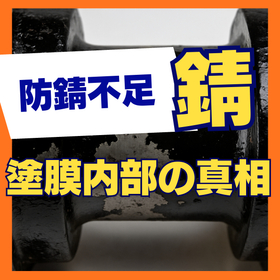
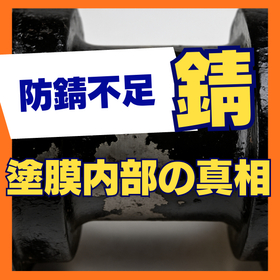
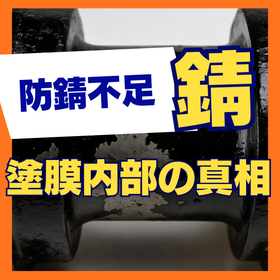
Insufficient rust prevention is the cause of all rust reoccurrence: the truth within the coating.

Methods to ensure long-term durability through rust prevention treatment.

【Problem】 If the rust prevention treatment (chemical treatment) is insufficient, rust may reoccur beneath the coating. 【Causes and Issues】 - Lack of or insufficient chemical treatment - Moisture intrusion within the coating - Gradual reoccurrence of rust with long-term use - Possibility of occurrence even with stainless steel and aluminum - Acceleration due to environmental factors 【Management Standards and Guidelines】 Rust prevention treatment is a mandatory requirement. It is important to ensure the thickness and uniformity of the chemical treatment layer. Regular inspections are necessary. 【Improvement Examples and Effects】 By properly implementing rust prevention treatment, long-term corrosion resistance is significantly improved. The durability of the coating is greatly extended.

  • others

Added to bookmarks

Bookmarks list

Bookmark has been removed

Bookmarks list

You can't add any more bookmarks

By registering as a member, you can increase the number of bookmarks you can save and organize them with labels.

Free membership registration

Insufficient drying was the culprit of the pinholes, the essence of the cleaning process.

Achieving high-quality painting through the optimization of the drying process.

**Problem** Insufficient drying after washing can leave moisture trapped within the paint film, leading to the occurrence of pinholes. **Causes and Issues** - Insufficient drying time - Low drying temperature - Residual moisture on the surface - Formation of bubbles within the paint film - Inadequate environmental management **Management Standards and Guidelines** It is important to ensure appropriate drying temperature and time. Complete drying is a prerequisite. Temperature management of the drying oven is crucial. **Improvement Examples and Effects** By optimizing the drying process, the occurrence rate of pinholes significantly decreases. The quality of the paint film stabilizes, and the defect rate can be greatly reduced.

  • others

Added to bookmarks

Bookmarks list

Bookmark has been removed

Bookmarks list

You can't add any more bookmarks

By registering as a member, you can increase the number of bookmarks you can save and organize them with labels.

Free membership registration

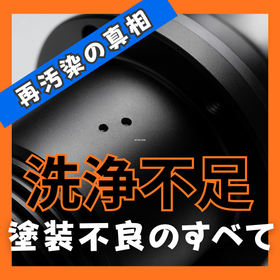
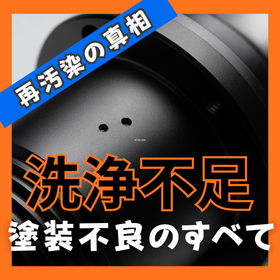
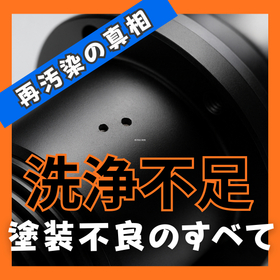
Insufficient cleaning is the cause of all painting defects and the truth behind recontamination.

Post-cleaning environmental management determines the quality of the coating.

**Problem** Insufficient cleaning causes residual oil and contaminants on the surface, leading to poor adhesion. **Causes and Issues** - Recontamination occurs due to leaving the surface after degreasing. - Dust and oil from the environment adhere to the surface. - Insufficient cleaning does not provide a fundamental solution. - If drying is inadequate, moisture remains. - Secondary contamination occurs over time. **Management Standards and Guidelines** It is recommended to paint immediately after cleaning. Minimizing idle time is crucial to prevent recontamination. Environmental management is also a prerequisite. **Improvement Examples and Effects** By strictly managing the cleaning process, defects caused by recontamination can be reduced. Adhesion significantly improves, and the quality of the paint film stabilizes.

  • others

Added to bookmarks

Bookmarks list

Bookmark has been removed

Bookmarks list

You can't add any more bookmarks

By registering as a member, you can increase the number of bookmarks you can save and organize them with labels.

Free membership registration

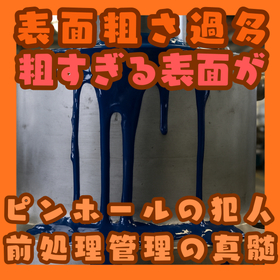
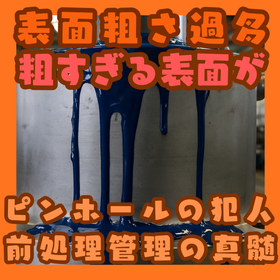
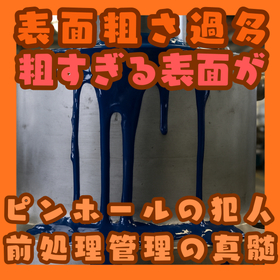
The overly rough surface was the culprit of the pinholes; the essence of pre-treatment management.

The importance of the balance of roughness in determining paint quality.

【Problem】 If the surface roughness is excessively high, it can lead to poor painting results. 【Causes and Issues】 - If the blast pressure is too high, deep irregularities are formed. - The paint does not spread evenly. - Air or solvents remain trapped within the paint film. - This leads to pinholes and uneven film thickness. - An outdated belief that "a mirror finish is good" influences this issue. 【Management Standards and Guidelines】 It is important to ensure a surface that is not too rough (approximately Ra 1.0 to 2.0 micrometers). Proper setting of blast pressure is essential. Regular surface inspections are necessary. 【Improvement Examples and Effects】 By managing the roughness to appropriate levels, the incidence of pinholes significantly decreases. Uneven film thickness is also improved, stabilizing quality.

  • others

Added to bookmarks

Bookmarks list

Bookmark has been removed

Bookmarks list

You can't add any more bookmarks

By registering as a member, you can increase the number of bookmarks you can save and organize them with labels.

Free membership registration

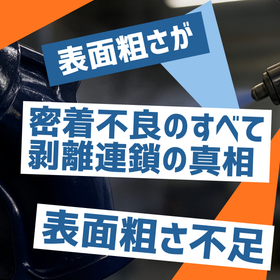
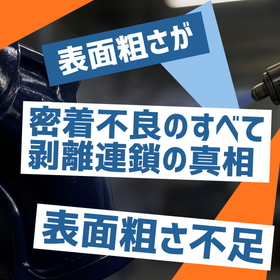
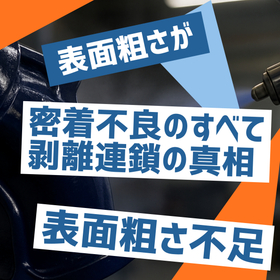
Surface roughness is the cause of all adhesion failures and the truth behind the delamination chain.

A thorough explanation of the truth about surface roughness that causes painting defects.

【Problem】 Insufficient surface roughness significantly reduces the adhesion of the coating film, leading to painting defects. 【Causes and Issues】 - Many judgments are made based on the assumption that "it looks nice, so there is no problem." - If the surface is too smooth, the paint does not penetrate sufficiently. - This is particularly impactful with stainless steel and aluminum materials. - It may manifest as peeling of the coating film a few months later. - It can be difficult to judge visually. 【Management Standards and Guidelines】 The recommended surface roughness is approximately Ra 1.0 to 2.0 micrometers. It can be challenging to assess roughness visually. It is important to manage numerical values. 【Improvement Examples and Effects】 By managing surface roughness numerically, adhesion is greatly improved. Actual improvement cases are detailed in publicly available materials. The enhancement of adhesion significantly improves the long-term durability of the coating film.

  • others

Added to bookmarks

Bookmarks list

Bookmark has been removed

Bookmarks list

You can't add any more bookmarks

By registering as a member, you can increase the number of bookmarks you can save and organize them with labels.

Free membership registration

Insufficient surface treatment was the culprit for rust reoccurrence, a warning of decreased adhesion.

Optimization of the entire preprocessing is essential.

[Problem] Insufficient surface treatment leads to rust reoccurrence and paint film peeling during long-term use. [Cause] Insufficient thickness of chemical treatment film / Residual oil and contaminants on the surface / Decreased adhesion / Moisture intrusion from the environment. [Management Standards] Surface treatment is fundamental to painting; strictly manage the entire process of chemical treatment → cleaning → drying → painting. [Improvement Example] By properly implementing surface treatment and optimizing the entire pretreatment process, durability has significantly improved.

  • others

Added to bookmarks

Bookmarks list

Bookmark has been removed

Bookmarks list

You can't add any more bookmarks

By registering as a member, you can increase the number of bookmarks you can save and organize them with labels.

Free membership registration

Insufficient rust prevention is the cause of all rust reoccurrence; the truth within the coating.

Ensure long-term durability with rust prevention treatment.

【Issue】Inadequate rust prevention treatment (chemical treatment) leads to rust reoccurring under the paint film. 【Cause】Lack of or insufficient chemical treatment / Moisture intrusion within the paint film / Gradual rust reoccurrence with long-term use / Possibility of occurrence especially in stainless steel and aluminum. 【Management Standards】Rust prevention treatment is essential; ensure the thickness and uniformity of the chemical treatment film. 【Improvement Example】By properly implementing rust prevention treatment, long-term corrosion resistance is significantly improved.

  • others

Added to bookmarks

Bookmarks list

Bookmark has been removed

Bookmarks list

You can't add any more bookmarks

By registering as a member, you can increase the number of bookmarks you can save and organize them with labels.

Free membership registration

Insufficient drying was the culprit behind the pinholes, the essence of the cleaning process.

Improvement of quality through optimization of the drying process.

[Problem] Inadequate drying after washing leaves moisture in the coating, leading to pinhole formation. [Cause] Insufficient drying time / Low drying temperature / Residual moisture on the surface / Bubble formation inside the coating. [Management Standards] Ensuring appropriate drying temperature and time; complete drying is essential. [Improvement Example] Optimizing the drying process significantly reduces the incidence of pinholes.

  • others

Added to bookmarks

Bookmarks list

Bookmark has been removed

Bookmarks list

You can't add any more bookmarks

By registering as a member, you can increase the number of bookmarks you can save and organize them with labels.

Free membership registration

Insufficient cleaning is the cause of all painting defects and the truth behind recontamination.

Post-cleaning environmental management is important.

【Problem】Residual oil and contaminants left on the surface due to insufficient cleaning cause poor adhesion. 【Cause】Recontamination occurs due to leaving the surface after degreasing / Dust and oil from the environment adhere / Insufficient cleaning does not provide a fundamental solution / If drying is inadequate, moisture remains. 【Management Standards】It is recommended to paint immediately after cleaning and to minimize the waiting time. 【Improvement Example】By strictly managing the cleaning process, defects caused by recontamination are reduced.

  • others

Added to bookmarks

Bookmarks list

Bookmark has been removed

Bookmarks list

You can't add any more bookmarks

By registering as a member, you can increase the number of bookmarks you can save and organize them with labels.

Free membership registration

The overly rough surface was the culprit of the pinholes; the essence of pre-treatment management.

The balance of roughness affects quality.

[Problem] Excessively large surface roughness leads to poor painting. [Cause] If the blast pressure is too high, deep unevenness is formed, the paint does not spread evenly, air or solvent remains inside the coating, leading to pinholes and uneven film thickness. [Management Standards] Ensure a surface that is not too rough (approximately Ra 1.0 to 2.0 micrometers). [Improvement Example] By managing roughness to appropriate levels, the incidence of pinholes significantly decreases.

  • others

Added to bookmarks

Bookmarks list

Bookmark has been removed

Bookmarks list

You can't add any more bookmarks

By registering as a member, you can increase the number of bookmarks you can save and organize them with labels.

Free membership registration

Surface roughness is the root cause of all adhesion failures and the truth behind delamination chains.

The truth about surface roughness that causes painting defects.

【Issue】Insufficient surface roughness significantly reduces coating adhesion. 【Cause】Many judgments are made based on the appearance being clean, assuming there is no problem / If the surface is too smooth, the paint does not penetrate sufficiently / This has a particularly large impact on stainless steel and aluminum materials / It may manifest as coating peeling a few months later. 【Management Standard】Surface roughness should be around Ra 1.0 to 2.0 micrometers. 【Improvement Example】Significantly improved adhesion by numerically managing surface roughness.

  • others

Added to bookmarks

Bookmarks list

Bookmark has been removed

Bookmarks list

You can't add any more bookmarks

By registering as a member, you can increase the number of bookmarks you can save and organize them with labels.

Free membership registration

Insufficient surface treatment was the culprit of rust reoccurrence, a warning of decreased adhesion.

Optimization of the entire preprocessing is essential.

[Problem] Insufficient surface treatment leads to rust reoccurrence and paint film peeling during long-term use. [Cause] Insufficient thickness of chemical treatment film / Residual oil and contaminants on the surface / Decreased adhesion / Moisture intrusion from the environment. [Management Standards] Surface treatment is fundamental to painting; strictly manage the entire process of chemical treatment → cleaning → drying → painting. [Improvement Example] By properly implementing surface treatment and optimizing the entire pretreatment process, durability has significantly improved.

  • others

Added to bookmarks

Bookmarks list

Bookmark has been removed

Bookmarks list

You can't add any more bookmarks

By registering as a member, you can increase the number of bookmarks you can save and organize them with labels.

Free membership registration

Insufficient rust prevention is the cause of all rust reoccurrence; the truth within the coating.

Ensure long-term durability with rust prevention treatment.

【Issue】Insufficient rust prevention treatment (conversion treatment) leads to rust reoccurring under the paint film. 【Cause】Lack of or insufficient conversion treatment / Moisture intrusion within the paint film / Gradual rust reoccurrence with long-term use / Possibility of occurrence especially in stainless steel and aluminum. 【Management Standards】Rust prevention treatment is essential; ensure the thickness and uniformity of the conversion treatment film. 【Improvement Example】By properly implementing rust prevention treatment, long-term corrosion resistance is significantly improved.

  • others

Added to bookmarks

Bookmarks list

Bookmark has been removed

Bookmarks list

You can't add any more bookmarks

By registering as a member, you can increase the number of bookmarks you can save and organize them with labels.

Free membership registration

Insufficient drying was the culprit behind the pinholes, the essence of the cleaning process.

Improvement of quality through optimization of the drying process.

【Problem】Insufficient drying after washing leads to moisture remaining in the coating, causing pinholes. 【Cause】Insufficient drying time / Low drying temperature / Residual moisture on the surface / Bubble formation inside the coating. 【Management Standards】It is essential to ensure appropriate drying temperature and time, and to achieve complete drying. 【Improvement Example】By optimizing the drying process, the occurrence rate of pinholes significantly decreased.

  • others

Added to bookmarks

Bookmarks list

Bookmark has been removed

Bookmarks list

You can't add any more bookmarks

By registering as a member, you can increase the number of bookmarks you can save and organize them with labels.

Free membership registration

Insufficient cleaning is the cause of all painting defects and the truth behind recontamination.

Post-cleaning environmental management is important.

【Problem】Residual oil and contaminants left on the surface due to insufficient cleaning cause poor adhesion. 【Cause】Recontamination occurs due to leaving the surface after degreasing / Dust and oil from the environment adhere / Insufficient cleaning does not provide a fundamental solution / If drying is inadequate, moisture remains. 【Management Standards】It is recommended to paint immediately after cleaning and minimize the waiting time. 【Improvement Example】By strictly managing the cleaning process, defects caused by recontamination have been reduced.

  • others

Added to bookmarks

Bookmarks list

Bookmark has been removed

Bookmarks list

You can't add any more bookmarks

By registering as a member, you can increase the number of bookmarks you can save and organize them with labels.

Free membership registration

The overly rough surface was the culprit of the pinholes; the essence of pre-treatment management.

The balance of roughness affects quality.

【Problem】Excessively high surface roughness leads to poor painting quality. 【Cause】If the blast pressure is too high, deep irregularities are formed, causing the paint to not spread evenly, and air or solvent remains inside the coating, leading to pinholes and uneven film thickness. 【Management Standard】Ensure a surface that is not too rough (approximately Ra 1.0 to 2.0 micrometers). 【Improvement Example】By managing roughness to appropriate levels, the incidence of pinholes significantly decreases.

  • others

Added to bookmarks

Bookmarks list

Bookmark has been removed

Bookmarks list

You can't add any more bookmarks

By registering as a member, you can increase the number of bookmarks you can save and organize them with labels.

Free membership registration

Surface roughness is the cause of all adhesion failures and the truth behind the delamination chain.

The truth about surface roughness that causes painting defects.

[Problem] Insufficient surface roughness significantly reduces coating adhesion. [Cause] Many judgments are made based on the appearance being clean, assuming there is no problem / If the surface is too smooth, the paint does not penetrate sufficiently / This has a particularly large impact on stainless steel and aluminum materials / It may manifest as coating peeling a few months later. [Management Standards] Surface roughness should be around Ra 1.0 to 2.0 micrometers. [Improvement Example] By managing surface roughness numerically, adhesion can be greatly improved.

  • others

Added to bookmarks

Bookmarks list

Bookmark has been removed

Bookmarks list

You can't add any more bookmarks

By registering as a member, you can increase the number of bookmarks you can save and organize them with labels.

Free membership registration

Insufficient surface treatment was the culprit behind the recurrence of rust, a warning of decreased adhesion.

Has rust reappeared after painting? The cause may not be the paint, but rather a decrease in adhesion due to insufficient surface treatment.

Surface treatment is a crucial process that affects the adhesion of the paint film and its corrosion resistance. However, in practice, there are many cases where it is judged that "there is no problem because cleaning is done before painting." In reality, insufficient degreasing or inadequate chemical treatment can lead to reduced adhesion of the paint film, allowing moisture and oxygen to infiltrate through tiny gaps, which can cause corrosion to progress within the paint film. This is particularly true for iron materials and zinc-coated materials, where insufficient surface treatment can easily lead to re-rusting. This is actually a point that is often overlooked. Poor adhesion may not be visible immediately after painting. Furthermore, in chemical treatment, there are cases where management is based on a liquid temperature of 35 to 50 degrees Celsius and a film weight of about 1 to 3 grams per square meter. Insufficient treatment can lead to peeling or pinholes. A common misconception on site is the belief that "rust prevention can be achieved solely through paint performance." By reviewing surface treatment conditions, there are many cases where re-rusting can be improved. Actual improvement cases are also detailed in publicly available materials.

  • others

Added to bookmarks

Bookmarks list

Bookmark has been removed

Bookmarks list

You can't add any more bookmarks

By registering as a member, you can increase the number of bookmarks you can save and organize them with labels.

Free membership registration

Insufficient rust prevention is the cause of all rust reoccurrence: the truth within the coating.

Has rust reappeared after a while since painting? The cause may not be the paint film, but rather corrosion of the substrate due to insufficient rust prevention treatment.

Rust that reappears after painting may not be due to the paint film itself, but rather insufficient anti-corrosion treatment. However, on-site, it is often mistakenly judged that "since it has been painted, it won't rust." In reality, if fine red rust or corrosion components remain on the surface of the material, corrosion can progress inside the paint film and manifest as reappearing rust months later. This is especially significant at welded joints and cut surfaces, where the effects of insufficient anti-corrosion treatment are more pronounced. This is actually a point that is often overlooked. Even if it looks clean on the outside, corrosion reactions are progressing inside the paint film. Furthermore, if anti-corrosion primer is not applied after blast treatment and left unattended, reappearing rust can rapidly progress in conditions of over 60 percent humidity. A common misconception on-site is the belief that "if the topcoat is thick enough, there will be no problem." By reviewing the anti-corrosion process, there are cases where reappearing rust can be significantly improved. Actual improvement cases are also detailed in publicly available materials.

  • others

Added to bookmarks

Bookmarks list

Bookmark has been removed

Bookmarks list

You can't add any more bookmarks

By registering as a member, you can increase the number of bookmarks you can save and organize them with labels.

Free membership registration

Insufficient drying was the culprit behind the pinholes, the essence of the cleaning process.

Are you overlooking the drying process after cleaning? In fact, residual moisture may be causing pinholes and blisters.

The drying process after cleaning is an important management item that affects painting quality. However, on-site, there are often cases where it is judged that "there is no problem because it looks dry." In reality, there may be fine moisture remaining on the surface of the material or inside gaps. If painting is done in this state, moisture can evaporate during curing, leading to pinholes, blisters, or delamination of the paint film. This is actually a point that is often overlooked. Complex-shaped parts tend to retain moisture inside. Furthermore, in drying ovens, temperatures are often managed at around 80 to 120 degrees, but there may be cases where the oven temperature does not match the product temperature. A common misconception on-site is the belief that "it's safe because it has passed through the drying oven." By reviewing the drying conditions, there are many cases where quality can be stabilized. Actual improvement cases are also detailed in publicly available materials.

  • others

Added to bookmarks

Bookmarks list

Bookmark has been removed

Bookmarks list

You can't add any more bookmarks

By registering as a member, you can increase the number of bookmarks you can save and organize them with labels.

Free membership registration

Insufficient cleaning is the cause of all painting defects and the truth behind recontamination.

The peeling paint and pinholes are not decreasing. The cause may not be due to degreasing, but rather residual chemicals from insufficient cleaning or recontamination.

The cleaning process is a crucial step that removes residual chemicals and fine dirt left after degreasing. However, in practice, there are many cases where it is judged that "there is no problem because we are rinsing with water." In reality, insufficient cleaning can lead to the residual chemical components remaining on the material's surface, which can vaporize during curing, resulting in pinholes or paint film lifting. This is particularly likely to occur with complex-shaped parts, where defects due to liquid pooling can easily arise. This is actually a point that is often overlooked. There are cases where the cleaning water itself is contaminated. Furthermore, in some cases, the final rinse water is managed based on a conductivity standard of 50 microsiemens per centimeter or less. Deterioration of water quality can lead to adhesion failures or whitening phenomena. A common misunderstanding in the field is the belief that "as long as degreasing is done, there is no problem." By reviewing the cleaning conditions, there are many cases where the defect rate can be improved. Actual improvement cases are also detailed in publicly available materials.

  • others

Added to bookmarks

Bookmarks list

Bookmark has been removed

Bookmarks list

You can't add any more bookmarks

By registering as a member, you can increase the number of bookmarks you can save and organize them with labels.

Free membership registration
Prev 1234567 Next
  • 竹中直人と対談しませんか? 出演企業募集中!
  • 技術・製品展示会 新技術創出交流会2026 入場無料 来場登録受付中 開催日時10月22日木・23日金 会場東京たま未来メッセ
    • Contact this company

      Inquiry Form
    • Before making an inquiry

      Download Profile

    Products

    • Search for Products

    Company

    • Search for Companies

    Special Features

    • Special Features

    Ranking

    • Overall Products Ranking
    • Overall Company Ranking

    support

    • site map
    IPROS
    • privacy policy Regarding external transmission of information
    • terms of service
    • About Us
    • Careers
    • Advertising
    IPROS Services
    • >IPROS GMS | Search site for the manufacturing industry
    • >IPROS | Search site for the B2B industry
    COPYRIGHT © 2001-2026 IPROS CORPORATION ALL RIGHTS RESERVED.
    Please note that the English text on this page is automatically translated and may contain inaccuracies.