iPROS Manufacturing
  • Search for products by classification category

    • Electronic Components and Modules
      Electronic Components and Modules
      60431items
    • Machinery Parts
      Machinery Parts
      75311items
    • Manufacturing and processing machinery
      Manufacturing and processing machinery
      101285items
    • Scientific and Physics Equipment
      Scientific and Physics Equipment
      35866items
    • Materials
      Materials
      37370items
    • Measurement and Analysis
      Measurement and Analysis
      55141items
    • Image Processing
      Image Processing
      15243items
    • Control and Electrical Equipment
      Control and Electrical Equipment
      53789items
    • Tools, consumables, and supplies
      Tools, consumables, and supplies
      64969items
    • Design and production support
      Design and production support
      12519items
    • IT/Network
      IT/Network
      44508items
    • Office
      Office
      14008items
    • Business support services
      Business support services
      24918items
    • Seminars and Skill Development
      Seminars and Skill Development
      6465items
    • Pharmaceutical and food related
      Pharmaceutical and food related
      32317items
    • others
      74255items
  • Search for companies by industry

    • Manufacturing and processing contract
      7333
    • others
      4994
    • Industrial Machinery
      4416
    • Machine elements and parts
      3297
    • Other manufacturing
      2882
    • IT/Telecommunications
      2552
    • Trading company/Wholesale
      2512
    • Industrial Electrical Equipment
      2305
    • Building materials, supplies and fixtures
      1816
    • software
      1642
    • Electronic Components and Semiconductors
      1563
    • Resin/Plastic
      1496
    • Service Industry
      1455
    • Testing, Analysis and Measurement
      1125
    • Ferrous/Non-ferrous metals
      984
    • environment
      698
    • Chemical
      631
    • Automobiles and Transportation Equipment
      566
    • Printing Industry
      510
    • Information and Communications
      459
    • Consumer Electronics
      412
    • Energy
      327
    • Rubber products
      314
    • Food Machinery
      307
    • Optical Instruments
      277
    • robot
      274
    • fiber
      250
    • Paper and pulp
      227
    • Pharmaceuticals and Biotechnology
      168
    • Electricity, Gas and Water Industry
      166
    • Warehousing and transport related industries
      147
    • Glass and clay products
      140
    • Food and Beverage
      129
    • CAD/CAM
      123
    • retail
      108
    • Medical Devices
      103
    • Educational and Research Institutions
      102
    • Ceramics
      98
    • wood
      88
    • Transportation
      82
    • Petroleum and coal products
      63
    • Medical and Welfare
      62
    • Shipbuilding and heavy machinery
      51
    • Aviation & Aerospace
      47
    • Fisheries, Agriculture and Forestry
      41
    • equipment
      33
    • Public interest/special/independent administrative agency
      31
    • Research and development equipment and devices
      28
    • Materials
      26
    • self-employed
      24
    • Government
      23
    • Mining
      17
    • Finance, securities and insurance
      13
    • cosmetics
      13
    • Individual
      10
    • Restaurants and accommodations
      9
    • Police, Fire Department, Self-Defense Forces
      7
    • Laboratory Equipment and Consumables
      4
    • Raw materials for reagents and chemicals
      3
    • Contracted research
      3
  • Special Features
  • Ranking

    • Overall Products Ranking
    • Overall Company Ranking
Search for Products
  • Search for products by classification category

  • Electronic Components and Modules
  • Machinery Parts
  • Manufacturing and processing machinery
  • Scientific and Physics Equipment
  • Materials
  • Measurement and Analysis
  • Image Processing
  • Control and Electrical Equipment
  • Tools, consumables, and supplies
  • Design and production support
  • IT/Network
  • Office
  • Business support services
  • Seminars and Skill Development
  • Pharmaceutical and food related
  • others
Search for Companies
  • Search for companies by industry

  • Manufacturing and processing contract
  • others
  • Industrial Machinery
  • Machine elements and parts
  • Other manufacturing
  • IT/Telecommunications
  • Trading company/Wholesale
  • Industrial Electrical Equipment
  • Building materials, supplies and fixtures
  • software
  • Electronic Components and Semiconductors
  • Resin/Plastic
  • Service Industry
  • Testing, Analysis and Measurement
  • Ferrous/Non-ferrous metals
  • environment
  • Chemical
  • Automobiles and Transportation Equipment
  • Printing Industry
  • Information and Communications
  • Consumer Electronics
  • Energy
  • Rubber products
  • Food Machinery
  • Optical Instruments
  • robot
  • fiber
  • Paper and pulp
  • Pharmaceuticals and Biotechnology
  • Electricity, Gas and Water Industry
  • Warehousing and transport related industries
  • Glass and clay products
  • Food and Beverage
  • CAD/CAM
  • retail
  • Medical Devices
  • Educational and Research Institutions
  • Ceramics
  • wood
  • Transportation
  • Petroleum and coal products
  • Medical and Welfare
  • Shipbuilding and heavy machinery
  • Aviation & Aerospace
  • Fisheries, Agriculture and Forestry
  • equipment
  • Public interest/special/independent administrative agency
  • Research and development equipment and devices
  • Materials
  • self-employed
  • Government
  • Mining
  • Finance, securities and insurance
  • cosmetics
  • Individual
  • Restaurants and accommodations
  • Police, Fire Department, Self-Defense Forces
  • Laboratory Equipment and Consumables
  • Raw materials for reagents and chemicals
  • Contracted research
Special Features
Ranking
  • Overall Products Ranking
  • Overall Company Ranking
  • privacy policy
  • terms of service
  • About Us
  • Careers
  • Advertising
  1. Home
  2. others
  3. 日之出水道機器 産業機械マーケティング
  4. Product/Service List
others
  • Added to bookmarks

    Bookmarks list

    Bookmark has been removed

    Bookmarks list

    You can't add any more bookmarks

    By registering as a member, you can increase the number of bookmarks you can save and organize them with labels.

    Free membership registration

日之出水道機器 産業機械マーケティング

EstablishmentSeptember 1, 2003 (Hinode Suido Machinery: Established in 1919)
capital2700Ten thousand
number of employees1335
addressFukuoka/Hakata-ku, Fukuoka-shi/5-8-18 Kanpaku, Hinode Building
phone092-476-0565
  • Special site
  • Official site
last updated:Jun 03, 2026
日之出水道機器logo
  • Contact this company

    Inquiry Form
  • Before making an inquiry

    Download Profile
  • Company information
  • Products/Services(55)
  • catalog(20)
  • news(4)

日之出水道機器 Product Lineup

  • category

1~26 item / All 26 items

Displayed results

Filter by category

Information about group companies Information about group companies
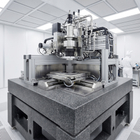
半導体製造装置向け 半導体製造装置向け
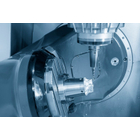
工作機械向け 工作機械向け
振動を抑えたい 振動を抑えたい
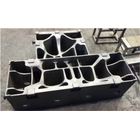
軽量化したい(剛性を高めたい) 軽量化したい(剛性を高めたい)
Stone substitute materials Stone substitute materials
ロストワックス鋳造 ロストワックス鋳造
Short-term prototype service for castings Short-term prototype service for castings
One-stop supply service for castings. One-stop supply service for castings.
Material selection and development services for cast products. Material selection and development services for cast products.
Casting design support service Casting design support service
Exhibition participation Exhibition participation
半導体製造装置向け

半導体製造装置向け

半導体製造装置向けソリューションをご紹介
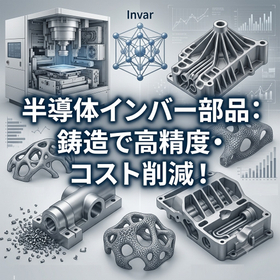
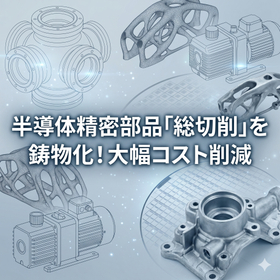
【For the Semiconductor Industry】 Casting vs. Machining, Optimal Manufacturing Methods for Inverter Parts

Achieving cost reduction and high precision. A comparison of construction method selection based on shape, lot size, etc., that design and purchasing should be aware of.

Are you unsure about the selection of methods for the exposure and inspection process equipment parts? The "total cutting" of expensive inverter materials leads to significant material loss, which drives up costs. These challenges can be addressed through casting, which allows for near-net shape (forming close to the final shape). ■ Criteria for Judging Casting Shape: Complex shapes that produce a lot of chips (hollow, uneven, ribs, internal piping, etc.) can achieve significant cost reductions through integrated molding. Lot Size: The following sizes and quantities are indicators of benefits: - Up to 200mm: More than 100 pieces per month - φ200 to 1,000mm: More than 10 pieces per month - φ1,000mm and above: More than 5 pieces per month For complex shapes or medium lots, there are cases where total costs have been reduced by "approximately 30%." Lightweighting through topology optimization and rapid prototyping considerations using 3D printed sand molds with "zero mold cost and as little as 5 days" are also possible. "If precision cannot be compromised but costs need to be lowered," please consider the casting solutions from the Hinode Group, which re-evaluate materials and shapes. For more details, please download the catalog from the link below.

Added to bookmarks

Bookmarks list

Bookmark has been removed

Bookmarks list

You can't add any more bookmarks

By registering as a member, you can increase the number of bookmarks you can save and organize them with labels.

Free membership registration

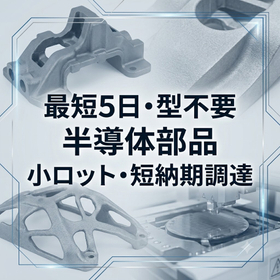
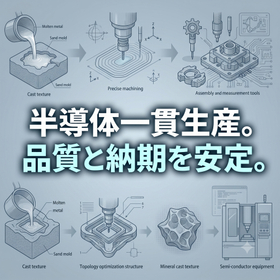
Procurement of small lot components for the semiconductor industry with short lead times.

From prototypes to equipment components. The Hinode Group offers optimal solutions for delivery times and costs, including casting with 3D printed sand molds in as little as 5 days and comprehensive machining.

Are you struggling to procure parts that you need "from one piece with a short delivery time" for prototype production or urgent maintenance? The fixed notion that total cutting has high material costs and casting takes time for mold production may be a factor in delivery delays. ■ Points for Selecting Manufacturing Processes During Prototyping Total Cutting: Suitable for ultra-small lots of a few pieces and simple shapes. Casting: Suitable for complex shapes or medium lots. We can provide materials in as little as 5 days. Since no mold is required (mold-less), initial costs are kept low, significantly shortening the prototyping lead time. ■ Hinode's Selection Support The Hinode Group has a production system with six domestic bases and a consistent system from material development to machining and assembly. We propose the optimal manufacturing method according to material, lot size, and required quality, supporting total cost reduction and procurement efficiency. To move forward with your considerations, could you please let us know the "material" and "desired delivery date" of the parts you are currently having trouble with? 【For more details, please download the catalog from the link below】

Added to bookmarks

Bookmarks list

Bookmark has been removed

Bookmarks list

You can't add any more bookmarks

By registering as a member, you can increase the number of bookmarks you can save and organize them with labels.

Free membership registration

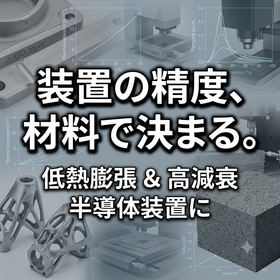
[For the Semiconductor Industry] Insufficient Equipment Accuracy Due to Materials

For those struggling with accuracy due to thermal deformation and vibrations. We are releasing guidelines for selecting materials to achieve high precision.

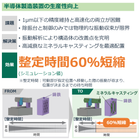
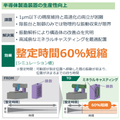
Are you struggling with "not achieving the desired precision in exposure and etching processes"? As equipment miniaturization progresses, the main cause of declining yield is thermal deformation and vibration of components. We propose Hinode's special materials to solve this precision issue from the "material" perspective. ■ Low Thermal Expansion Cast Iron 'Hinode GD Invar' - Low thermal expansion: Thermal deformation is about 1/5 that of steel. Material lineup with a linear expansion coefficient of 1.0 to 5.0 ppm/°C. - Near-net shape: Reduces processing range and material loss, lowering costs. - Easy to machine: Unique material properties reduce processing costs and accommodate precision machining. ○ There are examples of approximately 30% cost reduction compared to all processing from sheet materials. ■ High Damping Material 'Mineral Casting' 1. Damping properties: Has about 10 times the vibration damping capacity of cast iron, particularly absorbing high-frequency vibrations. 2. Thermal stability: Minimizes the influence of external environments due to low thermal conductivity. ○ By combining material properties and shape optimization, there are cases where the tuning time for equipment requiring sub-micron precision was reduced by about 60%. If you feel limited by your current precision, why not reconsider your materials? [For details, please download the catalog from the link below.]

Added to bookmarks

Bookmarks list

Bookmark has been removed

Bookmarks list

You can't add any more bookmarks

By registering as a member, you can increase the number of bookmarks you can save and organize them with labels.

Free membership registration

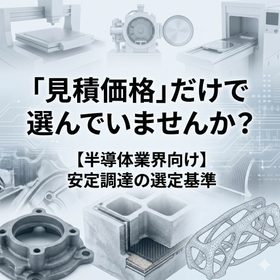
How to Choose a Casting Parts Manufacturer for the Semiconductor Industry | Comparison Criteria Beyond Quotes

Aren't you choosing solely based on price? Professionals organize selection criteria that ensure stable procurement, from quality systems to material proposals, processing, and assembly capabilities.

In the procurement of components for semiconductor manufacturing equipment, it is essential to meet high technical requirements and respond to short delivery times. Simply comparing "quoted prices" carries the risk of increased total costs due to subsequent quality issues or rework. ■ As essential comparison criteria, please check the following six items: Proposal Capability: Can the supplier provide optimization proposals for materials and structures from the perspective of a casting manufacturer? Integrated System: Can they offer a one-stop solution from casting to precision machining, cleaning, and assembly? Prototype Speed: Can they accommodate prototype processes (3D printing, foam molds) that shorten prototype speed? Quality Assurance: Can they provide performance guarantees that meet audit standards? Stable Supply: Do they have a domestic and international cooperative network that allows for low-cost and sustainable stable procurement? Suppliers are expected to offer a partnership that goes beyond just "making according to the drawings." The Hinode Group robustly supports your procurement foundation, from material development to global logistics.

Added to bookmarks

Bookmarks list

Bookmark has been removed

Bookmarks list

You can't add any more bookmarks

By registering as a member, you can increase the number of bookmarks you can save and organize them with labels.

Free membership registration

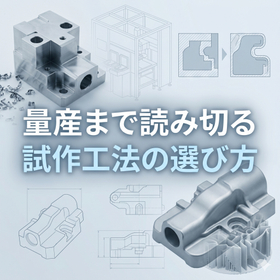
Choosing Prototyping Methods with an Eye on Mass Production for the Semiconductor Industry

Prototyping involves cutting, while mass production uses casting? Considering manufacturing methods from the early stages of development enables total cost reduction and a smooth launch.

In the development of semiconductor manufacturing equipment, the speed of prototyping is prioritized. However, if prototyping is carried out solely through machining, it faces challenges during mass production, such as "costs not decreasing" and "high material waste," leading to significant setbacks. The essential issue is whether "near-net shape (forming close to the final shape)" is considered at the initial stages of mass production. ■ Points for Casting - Short lead-time prototyping: By utilizing 3D printers for molds, rapid prototyping can be achieved in as little as 5 to 10 days without the need for mold creation. - Cost optimization: Casting reduces machining labor and material waste, thereby lowering total costs. - Integration: By leveraging the free-forming capabilities of castings, multiple parts can be integrated, reducing manufacturing costs and lead times. Choosing the optimal method from the beginning based on production quantities and functional requirements is the shortest route to development. The Hinode Group provides total support for your development, from material proposals to prototyping and integrated production.

Added to bookmarks

Bookmarks list

Bookmark has been removed

Bookmarks list

You can't add any more bookmarks

By registering as a member, you can increase the number of bookmarks you can save and organize them with labels.

Free membership registration

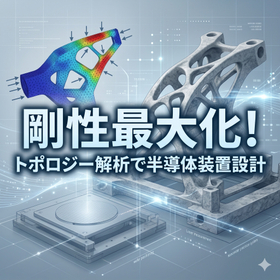
Design Points for Structural Rigidity in the Semiconductor Industry

How to ensure the "rigidity" that affects precision. We will share our approach to improving positioning accuracy, from cross-section design to material selection and support methods.

In semiconductor manufacturing equipment, where precision at the nanometer level is required, designers are troubled by the "insufficient rigidity" of the structure. If the rigidity of the structure is lacking, it can lead to vibrations of the entire device due to shifts in the center of gravity during operation, directly impacting the device's cycle time and yield. The root cause lies in the mismatch of cross-sectional design, material, and support methods. Simply increasing the thickness of components can lead to adverse effects due to the influence of increased weight and inertia. An effective solution is Hinode's analysis technology and topology optimization. ■ Hinode's Proposed Steps for Rigidity Optimization 1) Current Situation Analysis: Identify weak points through rigidity analysis of structural proposals. 2) Condition Setting: Establish load conditions, constraint conditions, spatial constraints, and target values for mass/displacement. 3) Topology Analysis: Calculate the structure with maximum rigidity according to the set conditions. 4) Casting Analysis: Remodelling considering mass production feasibility. 5) Verification Analysis: Simulate the performance of the optimized structure. 6) Prototype Verification: Performance evaluation through actual machine assessment. The Hinode Group will maximize your equipment performance by combining structural design and material properties. Please feel free to consult us from the development stage.

Added to bookmarks

Bookmarks list

Bookmark has been removed

Bookmarks list

You can't add any more bookmarks

By registering as a member, you can increase the number of bookmarks you can save and organize them with labels.

Free membership registration

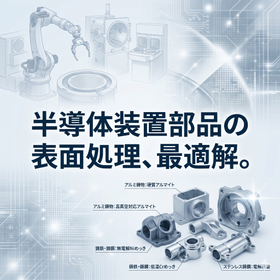
Selection Criteria for Surface Treatment of Equipment Parts for the Semiconductor Industry

A thorough explanation of how to choose the optimal surface treatment based on device-specific requirements.

In the field of semiconductor manufacturing equipment, particle generation due to corrosion of components affects yield. Selecting the appropriate surface treatment is a crucial matter directly linked to the longevity and reliability of the equipment. How to choose surface treatments by material type: ■ Aluminum Castings - Hard Anodizing: By thickening and hardening the coating, wear resistance is enhanced. Ideal for arms and stages. - High Vacuum Compatible Anodizing: By innovating the sealing treatment (for water vapor, etc.), the risk of outgassing is reduced. Best suited for vacuum chamber structural materials. ■ Cast Iron / Cast Steel - Electroless Nickel Plating: Creates a uniform thickness anti-corrosion coating even on complex shapes and inside screw holes. A standard for equipment bases and fine adjustment mechanisms. - Low-Temperature Chrome Plating: Provides strong anti-corrosion properties and resistance to peeling with a film thickness of 1-2μm. Ideal for precision drive components and engineering jigs. - Cationic Electrodeposition Coating / Urethane Spray Coating: Best for enhancing anti-corrosion and aesthetic properties of large cast iron frames and structures. ■ Cast Steel / Stainless Steel Castings - Electrolytic Polishing: By electrochemically dissolving the surface and smoothing it to a mirror finish, gas adsorption is suppressed, reducing vacuum startup time. The Hinode Group offers optimal specifications through a consistent system from casting to painting and precision machining.

Added to bookmarks

Bookmarks list

Bookmark has been removed

Bookmarks list

You can't add any more bookmarks

By registering as a member, you can increase the number of bookmarks you can save and organize them with labels.

Free membership registration

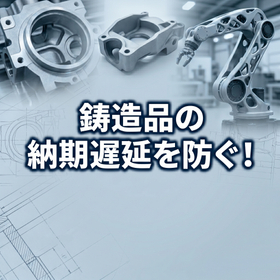
The Secrets of Ordering to Achieve Shortened Delivery Times and Stable Supply of Cast Products for the Manufacturing Industry

A consistent system from mold making to processing and assembly prevents delays in delivery. We reveal our methods for "predicting delivery times" through the use of 3D printers and overseas procurement networks.

In the field of equipment manufacturing, delays in the delivery of cast parts can lead to stoppages on the assembly line, resulting in significant losses. The instability in delivery responses is rooted in the complexities and fragmentation of the processes involved. The fundamental cause lies in the fact that multi-stage processes such as pattern making, prototyping, heat treatment, external processing, and inspection are dispersed among various companies, leading to an increase in management workload. The Hinode Group addresses these issues by providing a one-stop solution that covers everything from mold making to casting, processing, assembly, and logistics, thereby alleviating the management burden and lead time challenges for our customers. - Prototyping: By utilizing short lead-time prototyping processes such as 3D printing, we shorten the prototyping lead time. - Integrated production: We complete the entire process from casting to painting, precision processing, assembly, and logistics within the group, improving procurement efforts and lead times. - Global procurement network: With a diverse procurement network both domestically and internationally, we propose optimal solutions from various materials and manufacturing processes. If you want to minimize the risk of delivery delays and ensure stable material procurement, the Hinode Group, capable of providing a seamless solution, is the best choice. Hinode strongly supports your procurement operations from material proposals to shape optimization.

Added to bookmarks

Bookmarks list

Bookmark has been removed

Bookmarks list

You can't add any more bookmarks

By registering as a member, you can increase the number of bookmarks you can save and organize them with labels.

Free membership registration

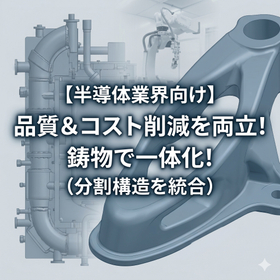
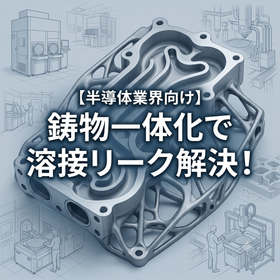
Integrated design for quality improvement and cost reduction in the semiconductor industry.

Combining complex split structures into one casting. A thorough explanation of the benefits of "integrated molding" that dramatically reduces assembly labor and its differences from other methods.

In high-precision semiconductor manufacturing processes, many complex structural components such as piping and brackets are used. Traditionally, these have been joined using a "split structure" involving multiple parts welded or bolted together, which presents challenges such as "variability in precision" and "manufacturing labor." The solution to this is Hinode's "integrated molding through casting." ■ Benefits of Integration - Reliability: Eliminates joints, minimizing the risk of leaks. - Cost: Significantly reduces welding assembly and individual part processing steps. - High Precision: Integrated molding resolves misalignment caused by cumulative tolerances between parts. ■ Comparison of Methods and Selection Points - Welding: Suitable for prototypes, but quality variability and labor are issues during mass production. - Integrated Casting: Offers overwhelming advantages in total cost and reliability during mass production. The Hinode Group provides consistent support from material proposals to shape optimization design, contributing to the enhancement of equipment value.

Added to bookmarks

Bookmarks list

Bookmark has been removed

Bookmarks list

You can't add any more bookmarks

By registering as a member, you can increase the number of bookmarks you can save and organize them with labels.

Free membership registration

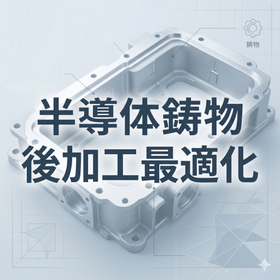
[For the Semiconductor Industry] Optimal Solutions for Post-Processing Range, Cost, and Precision of Castings

It is not always true that full machining is the correct answer. We will reveal manufacturing cost reduction techniques that utilize the near-net shape of castings.

Is the instruction on the drawing to 'process all around just in case' driving up the cost of the equipment base components? Processing all surfaces not only increases machining costs but also introduces the risk of precision instability due to machining distortion. ■ Selection Criteria for Determining Machining Scope Functional surfaces (mounting surfaces, sliding surfaces): These are directly linked to equipment performance, so we ensure high precision through precision machining. Non-functional surfaces: By leaving the casting surface as is, we can reduce unnecessary machining processes. Additionally, by allowing a certain degree of draft angle, we can maintain the quality of functional surfaces while reducing costs. At Hinode Group, we propose optimal shapes that keep costs down while ensuring the functionality of cast components according to our customers' needs. We leverage our integrated system that covers everything from material development to casting, machining, assembly, and logistics, allowing us to support you from the design phase through to mass production. Why not reconsider your methods for a 'winning design' that reduces costs without compromising precision?

Added to bookmarks

Bookmarks list

Bookmark has been removed

Bookmarks list

You can't add any more bookmarks

By registering as a member, you can increase the number of bookmarks you can save and organize them with labels.

Free membership registration

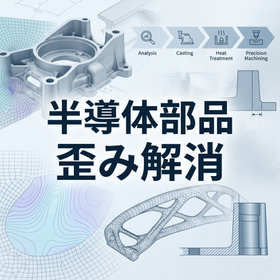
Key points for casting design and processing to reduce component distortion in the semiconductor industry.

Eliminate "misalignment" during assembly. We reveal the secrets to achieving high precision and dimensional stability through consistent production with heat treatment, while minimizing residual stress and thickness variations.

Are you struggling with precision issues due to "distortion" of components in the assembly process of semiconductor manufacturing equipment? The release of internal stress from total cutting of block materials and cooling distortion caused by uneven wall thickness are the main causes of poor yield. ■ Causes of Distortion and Countermeasures Material Distortion: Differences in cooling rates create internal distortion → Minimize the effects of residual stress through optimization based on analysis. Processing Distortion: Forces during processing leave internal stresses that cause distortion → Stabilize the structure by optimizing heat treatment conditions. Process Fragmentation: Countermeasure know-how is not shared → Unify processing standards within a consistent system to eliminate cumulative errors. The Hinode Group provides a comprehensive response from material development to casting, processing, assembly, and logistics during mass production, offering high-quality components with minimized distortion. If you are facing precision issues, why not consider the optimal manufacturing methods from the design stage?

Added to bookmarks

Bookmarks list

Bookmark has been removed

Bookmarks list

You can't add any more bookmarks

By registering as a member, you can increase the number of bookmarks you can save and organize them with labels.

Free membership registration

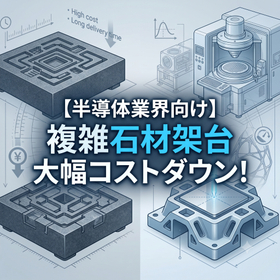
【For the semiconductor industry】Significant cost reduction for complex-shaped stone equipment frames.

For those struggling with granite processing costs and delivery times. We solve the challenges of equipment frames with excellent damping properties, freedom of shape, and high-precision transfer without processing!

■Reasons and Challenges for Using Granite in Equipment Frames (Bases) Granite is widely used for the frames (bases) of semiconductor manufacturing equipment due to its high dimensional stability and excellent damping properties. However, when it comes to complex shapes, the high processing costs of granite and the extended manufacturing lead times pose significant challenges. ■Solution: Mineral Casting and High-Precision Transfer Technology Material Characteristics: Polymer concrete, which has material properties similar to granite, such as approximately 10 times the damping capacity and low thermal conductivity compared to cast iron. Manufacturing Features: The casting method allows for the integral shaping of complex geometries, and the high-precision transfer technology enables the production of ultra-high-precision flat surfaces with flatness of 3 to 7 μm without machining. By applying mineral casting to complex-shaped equipment frames expected to be produced in medium to large lots, significant cost reductions and shortened manufacturing lead times can be achieved compared to processed granite products. The Hinode Group offers a one-stop solution from material development to processing and logistics, providing optimal solutions for our customers.

Added to bookmarks

Bookmarks list

Bookmark has been removed

Bookmarks list

You can't add any more bookmarks

By registering as a member, you can increase the number of bookmarks you can save and organize them with labels.

Free membership registration

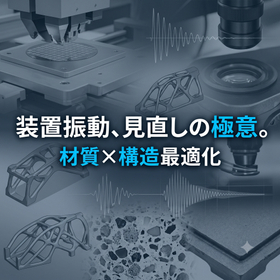
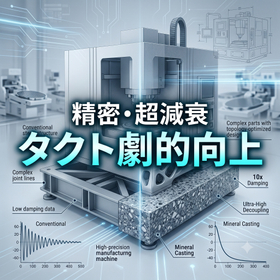
Causes of Vibration in Equipment for the Semiconductor Industry and Countermeasures | Techniques for Reviewing Materials and Structures

Residual vibrations reduce yield. With mineral casting boasting ten times the damping capacity of cast iron, the stabilization time is dramatically shortened, achieving high precision.

Are you experiencing extended takt times due to "micro-vibrations" that do not settle after high-speed movement during bonding and inspection processes? The instability in positioning accuracy is fundamentally caused not only by a lack of rigidity but also by the low "damping" characteristics of the material itself. ■ Three Factors Causing Residual Vibration - Material: While steel has high rigidity, it has a weak ability to absorb vibration energy, resulting in residual oscillation. - Structure: An imbalance of rigidity and mass in the structure can lead to increased oscillation. ■ Solution: Mineral Casting Using polymer concrete made from resin and aggregates, it possesses an overwhelming vibration damping capacity approximately 10 times that of cast iron (FC250). By adopting it for vibration-sensitive components, the overall damping of the equipment can be improved. The "settling time," during which vibrations stabilize to a certain amplitude, can be reduced by about 60%. ■ Criteria for Re-evaluation 1. High Damping: Use mineral casting for areas where immediate cessation of oscillation is desired. 2. High Rigidity: In cases with space constraints where rigidity must also be maintained, consider a hybrid structure with cast iron. The Hinode Group provides comprehensive support from material development to structural analysis. We propose optimal structures based on the rigidity and vibration analysis of the current structure.

Added to bookmarks

Bookmarks list

Bookmark has been removed

Bookmarks list

You can't add any more bookmarks

By registering as a member, you can increase the number of bookmarks you can save and organize them with labels.

Free membership registration

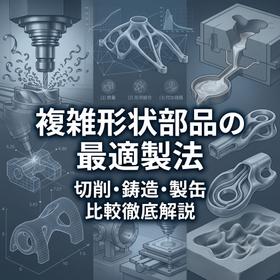
[For the Semiconductor Industry] Optimal Manufacturing Methods for Complex-Shaped Parts | Comparison of Machining and Casting

Freedom of shape or cost? A thorough explanation of the "new standards for method selection" based on quantity and precision, which addresses material loss in total cutting and quality issues in welding assembly.

Are you unsure about the manufacturing methods for components of semiconductor manufacturing equipment? We will introduce the optimal manufacturing processes tailored to your specifications. ■Characteristics and Decision Criteria by Method Total Cutting: Suitable for ultra-small lots. However, complex-shaped parts may incur higher costs. Can Manufacturing: Suitable for large parts in small to medium lots. It can flexibly accommodate frequent shape changes based on customer requests. Sand Casting: Suitable for small to large parts in medium to large lots. Integrating complex shapes can reduce total costs. ■Selection Checkpoints 1. Quantity: For a few pieces, cutting is preferable; for repeats or medium lots, casting is advantageous. 2. Shape Integration: Can multiple parts be integrated to reduce welding and processing costs? 3. Added Value: If vibration suppression is needed, choose high-damping materials; for thermal measures, select low thermal expansion materials. The Hinode Group offers consistent support from material development to machining and proposes the optimal manufacturing method.

Added to bookmarks

Bookmarks list

Bookmark has been removed

Bookmarks list

You can't add any more bookmarks

By registering as a member, you can increase the number of bookmarks you can save and organize them with labels.

Free membership registration

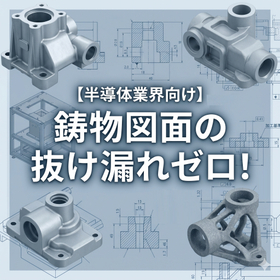
Instructions for Castings Drawings for the Semiconductor Industry | Prevention of Oversight in Ordering Instructions

Eliminate insufficient accuracy and rework to zero. From dimensional tolerances to inspection items, professionals explain the essential points of "casting drawings" that young designers and purchasing staff should grasp.

When ordering precision parts for semiconductor manufacturing equipment in cast materials, are you facing issues such as "insufficient finishing accuracy" or "warping after processing"? We will explain the drawing and ordering points to prevent these problems. ■ Important Instruction Items Often Overlooked Processing Reference Surface: Clearly specify whether it is a cast surface or a machined surface, and any constraints on draft angles. A "casting reference" is essential to prevent misalignment. Heat Treatment: Clearly state the heat treatment conditions to suppress processing distortion caused by residual stress. Material Specifications: If applying special materials other than JIS standard materials, specify the necessary physical properties. Performance Guarantee: If important material properties such as the coefficient of linear expansion are required, indicate whether a guarantee through analysis is necessary. ■ Practical Checklist 1. Is the allowable range for draft angles clearly defined? 2. Is the processing allowance appropriate (consideration of cost reduction through near-net shape)? 3. Are there standards for appearance quality and inspection items (such as non-destructive testing)? The Hinode Group provides comprehensive support from material development to precision processing, assisting in high-quality, low-cost procurement through optimal manufacturing method considerations from the drawing stage.

Added to bookmarks

Bookmarks list

Bookmark has been removed

Bookmarks list

You can't add any more bookmarks

By registering as a member, you can increase the number of bookmarks you can save and organize them with labels.

Free membership registration

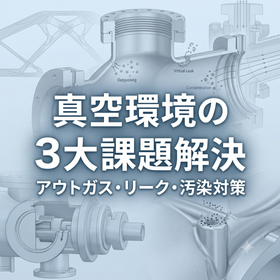
Three Challenges to Address with Vacuum Components in the Semiconductor Industry

Prevent outgassing and fine leaks. This explains how to solve the unique challenges of a vacuum environment through material selection and integrated molding technology, achieving cleanliness and quality stability of the equipment.

Are you struggling with delays in reaching pressure or outgassing in the vacuum chambers and pump components of film formation or etching processes? A unique design is required in a vacuum environment, different from that in the atmosphere. ■ Three Challenges to Address with Vacuum Components Outgassing: Gas released from within or on the surface of materials contaminates the process. Virtual Leak: Gas trapped in gaps from welding or screw joints gradually leaks out, reducing vacuum levels. Cleanability: Fine surface roughness and casting defects (voids) become reservoirs for contaminants. ■ Hinode's Casting Solutions Track Record: We have a proven track record of using aluminum castings such as AC7A in vacuum chambers. Material Optimization: We propose the optimal material based on specifications for surface treatment and other factors. Structural Optimization: By integrating multiple components, we eliminate welding and physically reduce the risk of gas accumulation. Additionally, we optimize thickness and shape through rigidity analysis to suggest lightweight and cost-reducing solutions. Manufacturing Process: Our low-pressure casting process minimizes fine casting defects caused by gas, ensuring vacuum attainment levels and speeds. One-Stop Manufacturing: We provide a one-stop solution from casting to precision machining and distribution. When procuring, first check the "density of the material" and "the presence of joints."

Added to bookmarks

Bookmarks list

Bookmark has been removed

Bookmarks list

You can't add any more bookmarks

By registering as a member, you can increase the number of bookmarks you can save and organize them with labels.

Free membership registration

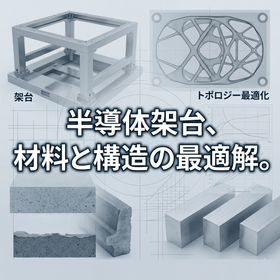
Optimal Material Selection for Equipment Stands in the Semiconductor Industry

Decided by rigidity, damping, and cost. A casting expert explains the optimal material selection for structures.

In semiconductor manufacturing equipment, where high precision is accelerating, how to address vibrations emitted from the equipment itself and those from the floor significantly affects yield. Why not effectively utilize material properties to tackle the challenge of persistent vibrations? ■ Recommended materials by application Base/Frame: "Mineral Casting" with nearly 100 times the damping capacity of steel Column/Stand: "Mineral Casting × Cast Iron Hybrid Structure" that balances space-saving with rigidity and damping High-speed moving parts: Lightweight high-rigidity aluminum alloy "ATHIUM/ALSTIF" with rigidity equivalent to cast iron Head: "High Damping Cast Iron" with 2.5 times the damping capacity of flake graphite cast iron (FC250) The Hinode Group utilizes new materials and topology optimization to propose high-performance, low-cost equipment components. We provide one-stop solutions for foundry solutions, from development to mass production, to maximize equipment performance.

Added to bookmarks

Bookmarks list

Bookmark has been removed

Bookmarks list

You can't add any more bookmarks

By registering as a member, you can increase the number of bookmarks you can save and organize them with labels.

Free membership registration

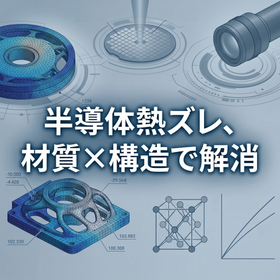
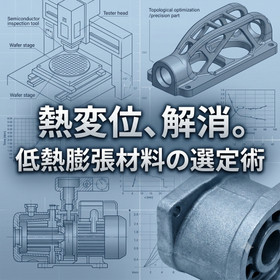
Secrets of Materials and Structures to Suppress Thermal Displacement for the Semiconductor Industry

Resolving precision discrepancies from the "material." Explaining the design approach to enhance dimensional stability.

Are you struggling with "thermal displacement" caused by operation during exposure and inspection processes? As equipment becomes more miniaturized, even slight thermal displacement becomes a critical issue that affects yield. ■ Hinode's Three Approaches to Mitigating Thermal Displacement Material: We use low thermal expansion cast iron "Hinode GD Invar," which limits displacement to about 1/5 that of general steel, minimizing the expansion of the components themselves. Analysis: We identify weak points in the structure through thermal analysis and minimize the impact of thermal deformation through structural optimization. The Hinode Group provides consistent support from the development of unique materials to structural analysis, solving precision challenges for next-generation equipment. In your design, which do you prioritize revising for thermal displacement countermeasures: "material" or "structure"?

Added to bookmarks

Bookmarks list

Bookmark has been removed

Bookmarks list

You can't add any more bookmarks

By registering as a member, you can increase the number of bookmarks you can save and organize them with labels.

Free membership registration

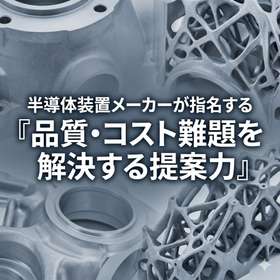
Conditions for a Preferred Processing Company in the Semiconductor Industry: Quality and Proposal Ability Spoken Through Track Record.

Overcoming the challenges of quality and cost. Why equipment manufacturers choose Hinode's "integrated solution." We reveal the selection criteria based on proven results.

Are you struggling with "thermal deformation of components" and "residual vibrations" that affect yield in semiconductor manufacturing equipment development? These issues, which cannot be resolved by precision machining alone, have fundamental causes in the material selection and structural design stages. ■ Three Conditions for Customer Selection Material Development Capability: Can you propose optimal materials that meet performance requirements, such as "low thermal expansion cast iron" that reduces thermal deformation to about 1/5 that of iron, or "mineral casting" with approximately 10 times the vibration damping properties of cast iron? Shape Optimization: Is it possible to propose designs that achieve over 50% weight reduction while maintaining rigidity through topology optimization? Integrated Manufacturing System: Can you ensure a clear quality responsibility by consistently managing everything from material development to casting, precision machining, and assembly within the group? ■ Case Study A semiconductor manufacturing equipment manufacturer adopted a hybrid structure of cast iron and mineral casting, which excels in balancing damping and rigidity. Through optimal design based on vibration analysis, they successfully reduced the settling time during positioning by approximately 60%. What is needed is not just "processing," but "proposals" that enhance the added value of the equipment. The Hinode Group solves procurement challenges for next-generation equipment with its unique material development technology, structural optimization, and one-stop production system.

Added to bookmarks

Bookmarks list

Bookmark has been removed

Bookmarks list

You can't add any more bookmarks

By registering as a member, you can increase the number of bookmarks you can save and organize them with labels.

Free membership registration

Does process fragmentation lead to quality defects in the semiconductor industry? The benefits of integrated production.

Isn't the quality responsibility ambiguous due to having various outsourcing partners? Eliminate procurement risks and stabilize quality with a consistent system from casting to processing and assembly.

With the advancement of semiconductor manufacturing equipment, the quality requirements for components have become stricter. However, due to the "disconnection of processes" where casting is done by Company A and processing by Company B, is the identification of causes for defects delayed, leading to a decrease in yield? ■ Risks of Process Disconnection - Responsibility: When defects occur, it takes time to determine where the cause lies—whether in materials, processing, or heat treatment. - Inconsistency in Precision: Due to differing management standards among companies, the final cumulative tolerance may exceed acceptable limits. - Increased Procurement Workload: The burden of coordinating with multiple companies, conducting acceptance inspections, and managing delivery schedules becomes enormous. ■ Strengths of Integrated Production The Hinode Group handles everything from material development to material casting, painting, precision processing, and assembly within the group. - Quality Assurance: All processes are managed under the same standards, and we also accommodate the delivery of rough-processed materials and performance guarantees. - Cost Reduction: We reduce transportation and packaging costs between processes, optimizing total costs. - Shortened Delivery Times: We propose reductions in manufacturing lead times and procurement efforts. Based on numerous adoption records in the semiconductor field, such as vacuum pump parts and high-precision bases, we will establish an optimal procurement system.

Added to bookmarks

Bookmarks list

Bookmark has been removed

Bookmarks list

You can't add any more bookmarks

By registering as a member, you can increase the number of bookmarks you can save and organize them with labels.

Free membership registration

Points for Reviewing Methods to Reduce Costs in Design for the Semiconductor Industry

Shall we reconsider 'total cutting'? By using casting for near-net shape, we can reduce material loss and lower total costs.

In the precision parts of semiconductor manufacturing equipment, are "total cutting" and "welding assembly" putting pressure on costs? The selection of manufacturing methods at the design stage greatly influences production costs. ■ Main Factors Behind Rising Costs - Material Waste: Total cutting from sheet or block materials can result in more than half of the material being discarded as scrap. - Complexity of Processes: The processing and welding of multiple parts lead to increased processing costs and longer manufacturing lead times. ■ Cost Improvement Points through Casting - Near-Net Shape: By shaping materials close to the final form, material waste can be reduced. - Integration of Multiple Parts: Utilizing the freedom of shaping in casting, integrating multiple parts into a single shape can significantly reduce machining and assembly costs. - Structural Optimization: Through topology optimization, it is possible to further reduce costs by minimizing weight (reducing material) while maintaining strength. The Hinode Group has numerous adoption records in precision parts for semiconductor manufacturing equipment and vacuum pumps. By utilizing sand mold 3D printers during prototyping, it is possible to minimize costs and lead times. If you are struggling with cost reduction, why not try casting?

Added to bookmarks

Bookmarks list

Bookmark has been removed

Bookmarks list

You can't add any more bookmarks

By registering as a member, you can increase the number of bookmarks you can save and organize them with labels.

Free membership registration

What is the selection of components to suppress vibration for the semiconductor industry? Reasons why castings are chosen.

Attenuation that affects positioning accuracy. With vibration absorption power about 10 times that of cast iron, mineral casting dramatically shortens the leveling time.

Are you struggling with "vibration not settling and cycle time extending" in semiconductor manufacturing equipment, where the demand for high throughput is expanding? In environments where miniaturization is progressing, the vibration absorption capacity of the components themselves affects yield. ■Essential Cause of Unsettled Vibration Although steel has high rigidity, its low "damping" means that once vibrations occur, they persist for a long time. ■Solution: Mineral Casting This is a type of polymer concrete made by solidifying resin and aggregates (crushed stone). It has overwhelming vibration damping properties, about 100 times that of steel (such as SS400) and about 10 times that of cast iron (such as FC250), instantly suppressing vibrations. ■Benefits of Implementation By adopting mineral casting for the base (frame) of the equipment, both equipment precision and throughput are improved. In spaces with strict spatial constraints, such as columns, there are successful cases where a hybrid structure of high-rigidity cast iron and high-damping mineral casting has reduced settling time by approximately 60% compared to conventional structures. To unlock the potential of the equipment, a review of material selection is essential. The Hinode Group offers optimal damping solutions.

Added to bookmarks

Bookmarks list

Bookmark has been removed

Bookmarks list

You can't add any more bookmarks

By registering as a member, you can increase the number of bookmarks you can save and organize them with labels.

Free membership registration

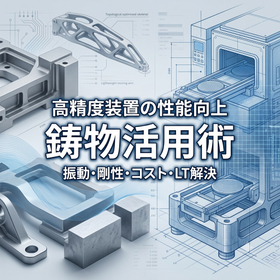
Applications and Benefits of "Castings" Supporting Equipment Performance in the Semiconductor Industry

Why are castings chosen for high-precision devices? A technical explanation of the selection points for appropriate materials in various applications, from the frame to vacuum components, that designers should be aware of.

Are you struggling with accuracy issues due to vibration and rigidity, or the costs and lead times of welded assembly structures (fabrication) in device development? We can solve that problem with castings! ■ Benefits of Casting by Application Area - Frame/Base: The material properties of cast iron and mineral casting (vibration damping and free-forming capability) can enhance rigidity and damping, improving device accuracy and productivity. Additionally, by using integrated molding, manufacturing lead times can be shortened compared to fabrication. - Moving Parts (Arms/Columns/Beams/Heads, etc.): By integrating multiple components, optimizing structures, and applying lightweight high-rigidity materials, we can achieve significant weight reduction while maintaining rigidity, enabling energy savings and increased speed for the device. - Chamber: The near-net shape of castings (material shape close to the final product shape) allows for lower costs compared to machining from block materials. The Hinode Group supports the improvement of your device performance and stable procurement from material and structural design to prototyping and mass production. Would you like to reconsider your device from the perspective of "materials"? [For more details, please download the catalog from the link below.]

Added to bookmarks

Bookmarks list

Bookmark has been removed

Bookmarks list

You can't add any more bookmarks

By registering as a member, you can increase the number of bookmarks you can save and organize them with labels.

Free membership registration

Solving 'leaks' in welded joints for the semiconductor industry through integrated casting.

Put an end to leaks and quality variations at welding points. Dramatically improve yield and reliability through the "integration" of castings.

Are you experiencing a decrease in yield due to "leaks" from welds in the cooling pipes and exhaust system components of semiconductor manufacturing equipment? Methods that connect multiple parts always carry the risk of poor bonding. ■Essential Causes of Leakage Issues - Number of joints: Multiple joints in thick plates, pipes, bars, etc., induce variations in quality. - Thermal distortion: Minute deformations caused by heat during bonding reduce the precision of sealing surfaces and threaded areas. - Increased inspection labor: Comprehensive inspection of all leakage risk areas becomes unavoidable, leading to prolonged lead times. ■Solution: Integrated Forming through Casting The Hinode Group proposes "integration" by unifying multiple parts into one through casting. - Quality improvement: By eliminating joints, the risk of leaks is physically resolved. - Cost reduction: Reducing welding assembly and multiple machining processes lowers total costs. - High precision: Thin-walled structures of 1.5mm and complex flow path shapes can be reproduced with high precision using the material itself. Prototyping with 3D printed sand molds can be done in as little as 5 days. If you are struggling with leakage issues, why not reconsider the method itself to "integrated casting"?

Added to bookmarks

Bookmarks list

Bookmark has been removed

Bookmarks list

You can't add any more bookmarks

By registering as a member, you can increase the number of bookmarks you can save and organize them with labels.

Free membership registration

Where are low thermal expansion materials used in the semiconductor industry? Techniques for selecting to prevent thermal deformation.

Overcoming the wall of miniaturization: "thermal displacement." Key areas where thermal displacement should be suppressed.

Are you struggling with "thermal displacement" caused by temperature changes during exposure and inspection processes? As equipment becomes more miniaturized, the thermal expansion of conventional materials (cast iron and steel) becomes a critical factor that worsens yield. ■ Low thermal expansion cast iron 'Hino GD Invar' - Low thermal expansion: The thermal deformation amount is about 1/ of that of steel (linear expansion coefficient 1.0–5.0 ppm/°C). It is ideal for precision components that require high dimensional stability. - Near-net shape: Reduces machining range and material loss, lowering costs. - Easy to machine: Unique material properties reduce machining costs and accommodate precision machining. ■ Important areas of application Dry vacuum pumps: Preventing contact between the rotor and casing due to heat. Semiconductor inspection equipment: Precision components such as tester heads, interface rings, and wafer stages. By casting complex precision shapes (near-net shape), we have minimized material loss compared to total cutting, achieving cost reductions of about 30%. Why not solve thermal issues starting from "material selection"? The Hino Group will propose the optimal structure for you. 【For more details, please download the catalog from the link below】

Added to bookmarks

Bookmarks list

Bookmark has been removed

Bookmarks list

You can't add any more bookmarks

By registering as a member, you can increase the number of bookmarks you can save and organize them with labels.

Free membership registration

Differences between FC and FCD for the semiconductor industry. Key points for selecting equipment components.

Vibration or strength? Differentiating between FC and FCD to solve designers' dilemmas. An explanation of optimal selection guidelines based on a comparison of material properties.

Are you experiencing a decrease in positioning accuracy due to the vibration of components not settling during high-speed operation in post-processing bonding and testing? As equipment becomes larger and more refined, the selection of materials for the base and columns is a crucial decision that affects equipment performance. ■ The decisive differences between FC250 (flake graphite) and FCD450 (spheroidal graphite) Vibration damping: FC250 has approximately three times the absorption capacity of FCD450, allowing vibrations to settle quickly. Stiffness and strength: FCD450 has a high Young's modulus of about 165 GPa, making it less prone to deformation compared to FC250 (about 90 GPa). Cost: FC250 excels in yield during manufacturing and has less distortion after processing compared to FCD450, making it easier to produce at a lower cost and with stable quality. Applications: FC is suitable for equipment bases, while FCD is appropriate for arms and other components where strength and stiffness are required. ■ Selection guidelines 1. If precision is a priority: Choose FC, which excels in vibration settling, to shorten stabilization time. 2. If addressing load and deformation: Pursue thin and lightweight components with high-strength FCD. The Hinode Group can provide optimal material proposals tailored to design challenges, such as "high-damping cast iron" and "mineral casting." 【For more details, download the catalog from the link below】

Added to bookmarks

Bookmarks list

Bookmark has been removed

Bookmarks list

You can't add any more bookmarks

By registering as a member, you can increase the number of bookmarks you can save and organize them with labels.

Free membership registration
Prev 1 Next
  • 金属・化学・窯業 食品・医薬品などの ほぐし・解砕 ふるい分けがこれ一台 解砕機構付き佐藤式振動ふるい機 つばさ デモ実施中!
    • Contact this company

      Inquiry Form
    • Before making an inquiry

      Download Profile

    Products

    • Search for Products

    Company

    • Search for Companies

    Special Features

    • Special Features

    Ranking

    • Overall Products Ranking
    • Overall Company Ranking

    support

    • site map
    IPROS
    • privacy policy Regarding external transmission of information
    • terms of service
    • About Us
    • Careers
    • Advertising
    COPYRIGHT © 2001-2026 IPROS CORPORATION ALL RIGHTS RESERVED.
    Please note that the English text on this page is automatically translated and may contain inaccuracies.