1216~1260 item / All 1805 items
Displayed results
Filter by category

Added to bookmarks
Bookmarks listBookmark has been removed
Bookmarks listYou can't add any more bookmarks
By registering as a member, you can increase the number of bookmarks you can save and organize them with labels.
Free membership registration
Contact this company
Inquiry FormBefore making an inquiry
Download Profile1216~1260 item / All 1805 items
Filter by category

In dental clinics, the accurate transmission of specialized techniques and knowledge is essential for ensuring patient safety and providing high-quality treatment. In particular, the tacit knowledge held by experienced veteran staff and the on-the-job training (OJT) that can easily become personalized are factors that complicate effective skill transmission to younger staff. Insufficient skill transmission can lead to variability in techniques and a decline in the quality of treatment. Our technical and skill transmission support service helps improve the reproducibility of techniques by formalizing the know-how of veterans and organizing it in a way that younger staff can replicate in practice. 【Usage Scenarios】 - Sharing advanced techniques and judgment criteria held by skilled practitioners - Early development of new and young staff into effective team members - Standardization and uniformity of care quality - Reduction of human errors 【Effects of Implementation】 - Improved reproducibility of techniques and stabilized quality of care - Shortened training period for new and young staff - Reduced burden on veterans and knowledge transfer - Overall improvement in the technical capabilities of the organization
Added to bookmarks
Bookmarks listBookmark has been removed
Bookmarks listYou can't add any more bookmarks
By registering as a member, you can increase the number of bookmarks you can save and organize them with labels.
Free membership registration
In the pharmacy industry, the accurate transmission of specialized techniques and knowledge is essential for ensuring patient safety and providing high-quality care. In particular, the tacit knowledge held by experienced veteran pharmacists and the on-the-job training (OJT) that can easily become personalized are factors that make effective technical transmission to younger staff difficult. Inadequate technical transmission can lead to variability in techniques and a decline in the quality of care. Our technical and skill transmission support service helps improve the reproducibility of techniques by formalizing the know-how of veterans and organizing it in a way that younger staff can replicate in practice. 【Usage Scenarios】 - Sharing advanced techniques and judgment criteria held by skilled practitioners - Early empowerment of new and younger staff - Standardization and uniformity of care quality - Reduction of human errors 【Effects of Implementation】 - Improved reproducibility of techniques and stabilized quality of care - Shortened training period for new and younger staff - Reduced burden on veterans and knowledge transmission - Overall improvement in organizational technical capabilities
Added to bookmarks
Bookmarks listBookmark has been removed
Bookmarks listYou can't add any more bookmarks
By registering as a member, you can increase the number of bookmarks you can save and organize them with labels.
Free membership registration
In the home healthcare industry, the accurate transmission of specialized techniques and knowledge is essential for ensuring patient safety and providing high-quality care. In particular, the tacit knowledge held by experienced veteran staff and the on-the-job training (OJT) that tends to be personalized can make effective skill transfer to younger staff challenging. Insufficient skill transmission can lead to variability in procedures and a decline in the quality of care. Our skill and technique transmission support service helps improve the reproducibility of procedures by formalizing the know-how of veterans and organizing it in a way that younger staff can replicate in practice. 【Usage Scenarios】 - Sharing advanced techniques and judgment criteria held by skilled practitioners - Early empowerment of new and younger staff - Standardization and uniformity of care quality - Reduction of human errors 【Benefits of Implementation】 - Improved reproducibility of techniques, leading to stable care quality - Shortened training period for new and younger staff - Reduced burden on veterans and knowledge transfer - Overall improvement in the organization's technical capabilities
Added to bookmarks
Bookmarks listBookmark has been removed
Bookmarks listYou can't add any more bookmarks
By registering as a member, you can increase the number of bookmarks you can save and organize them with labels.
Free membership registration
In care facilities, the accurate transmission of specialized assistance techniques and knowledge is essential for ensuring the safety of users and providing high-quality care. In particular, the tacit knowledge held by experienced veteran staff and the on-the-job training (OJT) that tends to become personalized can make it difficult to effectively pass on techniques to new and younger staff. Insufficient transmission of techniques may lead to variations in assistance skills and a decline in the quality of care. Our technical and skill transmission support service helps improve the reproducibility of assistance techniques by formalizing the know-how of veterans and organizing it in a way that younger staff can replicate in practice. 【Usage Scenarios】 - Sharing advanced assistance techniques and judgment criteria held by skilled practitioners - Early empowerment of new and younger staff - Standardization and uniformity of care quality - Reduction of human errors 【Effects of Implementation】 - Improved reproducibility of assistance techniques, leading to stable care quality - Shortened training period for new and younger staff - Reduced burden on veterans and knowledge transfer - Overall improvement in organizational technical capabilities
Added to bookmarks
Bookmarks listBookmark has been removed
Bookmarks listYou can't add any more bookmarks
By registering as a member, you can increase the number of bookmarks you can save and organize them with labels.
Free membership registration
In clinic consultations, it is important to accurately understand the patient's condition and to pass on specialized techniques and knowledge that lead to appropriate diagnoses. In particular, the tacit knowledge held by experienced doctors and nurses, as well as on-the-job training that tends to be personalized, can make effective skill transfer to younger staff challenging. Insufficient skill transfer may lead to variability in information gathering during consultations and a decline in the quality of diagnoses. Our technical and skill transfer support service helps improve the reproducibility of consultation techniques by formalizing the know-how of veterans and organizing it in a way that younger staff can replicate in practice. 【Usage Scenarios】 - Sharing advanced consultation skills and judgment criteria held by seasoned professionals - Early empowerment of new and junior staff - Standardization and uniformity of consultation quality - Reduction of human errors 【Benefits of Implementation】 - Improved reproducibility of consultation techniques and stabilized quality of diagnoses - Shortened training period for new and junior staff - Reduced burden on veterans and knowledge transfer - Overall improvement of consultation skills within the organization
Added to bookmarks
Bookmarks listBookmark has been removed
Bookmarks listYou can't add any more bookmarks
By registering as a member, you can increase the number of bookmarks you can save and organize them with labels.
Free membership registration
In hospitals, the accurate transmission of specialized surgical techniques and knowledge is essential for ensuring patient safety and providing high-quality medical care. In particular, the tacit knowledge held by experienced veteran doctors and on-the-job training (OJT), which can easily become personalized, pose challenges to effective skill transfer to younger physicians. Insufficient skill transmission can lead to variability in techniques and a decline in the quality of care. Our support service for the transmission of techniques and skills helps improve the reproducibility of surgical techniques by formalizing the know-how of veteran doctors and organizing it in a way that younger doctors can replicate in practice. 【Usage Scenarios】 - Sharing advanced surgical techniques and judgment criteria held by experts - Early empowerment of new and young doctors - Standardization and uniformity of care quality - Reduction of human errors 【Benefits of Implementation】 - Improved reproducibility of surgical techniques and stabilized quality of care - Shortened training period for new and young doctors - Reduced burden on veteran doctors and knowledge transfer - Overall improvement in the technical capabilities of the organization
Added to bookmarks
Bookmarks listBookmark has been removed
Bookmarks listYou can't add any more bookmarks
By registering as a member, you can increase the number of bookmarks you can save and organize them with labels.
Free membership registration
In an izakaya, the skills of skewering and the precision of preparation affect the taste and visual quality of the dishes. If the know-how of experienced staff is not shared and there is variability in cooking, it may impact customer satisfaction. Additionally, training new staff can take time, making efficient store operations difficult. Our technology and skill inheritance support service extracts the tips for skewering and the know-how of preparation from veteran staff and establishes them as procedures that anyone can replicate. This stabilizes the quality of skewering, supports the early effectiveness of new staff, and contributes to the efficiency of store operations. [Usage Scenarios] - Standardization of skewering quality - Streamlining cooking instruction for new staff - Reducing the risk of losing know-how due to the retirement or transfer of veteran staff - Sharing procedures when introducing seasonal or new menus [Effects of Implementation] - Improved customer satisfaction through the standardization of skewering quality - Reduction of food waste and improvement in cost management - Skill enhancement of staff and increased retention rates - Streamlined store operations and increased productivity
Added to bookmarks
Bookmarks listBookmark has been removed
Bookmarks listYou can't add any more bookmarks
By registering as a member, you can increase the number of bookmarks you can save and organize them with labels.
Free membership registration
In the udon and soba industry, it is important to maintain consistent quality in stores and ensure customer satisfaction through the standardization of recipes and the sharing of accurate cooking procedures. In particular, if the noodle-making know-how of experienced artisans is not shared, variations in cooking can occur, leading to a decline in the quality of taste and appearance, which may affect customer satisfaction. Additionally, training new staff can take time, making efficient store operations difficult. Our technology and skill inheritance support service extracts the tacit knowledge of veteran artisans and formalizes it into recipes, establishing noodle-making procedures that anyone can replicate. This stabilizes the quality of noodle-making, supports the early development of new staff, and contributes to the efficiency of store operations. [Usage Scenarios] - Unification of noodle-making recipes in multi-store expansions - Streamlining noodle-making training for new staff - Reducing the risk of losing know-how due to the retirement or transfer of veteran artisans - Sharing procedures when introducing seasonal or new menu items [Effects of Implementation] - Improved customer satisfaction through uniformity in noodle-making quality - Reduction of food waste and improvement in cost management - Skill enhancement of staff and increased retention rates - Increased efficiency in store operations and productivity
Added to bookmarks
Bookmarks listBookmark has been removed
Bookmarks listYou can't add any more bookmarks
By registering as a member, you can increase the number of bookmarks you can save and organize them with labels.
Free membership registration
In the pastry industry, it is important to maintain consistent decoration techniques and share accurate procedures to ensure customer satisfaction. In particular, if the know-how of experienced staff is not shared, it can lead to variations in the final product, which may lower the visual quality and affect customer satisfaction. Additionally, training new staff can take time, making efficient store operations difficult. Our technology and skill inheritance support service extracts the tacit knowledge of veteran staff and formalizes it into recipes, establishing decoration procedures that anyone can replicate. This stabilizes the quality of decorations, supports the early effectiveness of new staff, and contributes to the efficiency of store operations. 【Usage Scenarios】 - Unification of decoration techniques in multi-store expansion - Streamlining decoration training for new staff - Reducing the risk of losing know-how due to the retirement or transfer of veteran staff - Sharing procedures when introducing seasonal designs or new menu items 【Effects of Implementation】 - Improved customer satisfaction through uniform decoration quality - Increased productivity through the early effectiveness of new staff - Skill enhancement and improved retention rates for staff - Streamlined store operations
Added to bookmarks
Bookmarks listBookmark has been removed
Bookmarks listYou can't add any more bookmarks
By registering as a member, you can increase the number of bookmarks you can save and organize them with labels.
Free membership registration
In the bakery industry, standardizing fermentation management and sharing accurate procedures are crucial for providing stable quality bread and ensuring customer satisfaction. Relying on the intuition of experienced artisans for fermentation management can lead to variations in the final product due to environmental changes such as temperature and humidity, which can diminish the quality of taste and appearance, potentially affecting customer satisfaction. Additionally, training new staff in fermentation management can be time-consuming, making efficient store operations challenging. Our technology and skill inheritance support service extracts the tacit knowledge of veteran artisans and formalizes it into recipes, establishing reproducible fermentation management procedures that anyone can follow. This stabilizes fermentation quality, supports the rapid development of new staff, and contributes to the efficiency of store operations. [Usage Scenarios] - Unifying fermentation conditions across multiple stores - Streamlining training for new staff in fermentation management - Reducing the risk of losing know-how due to the retirement or transfer of veteran artisans - Sharing fermentation conditions tailored to seasons and weather [Benefits of Implementation] - Improved bread quality through uniform fermentation quality - Reduction in material waste and improved cost management - Skill enhancement of staff and increased retention rates - Increased efficiency in store operations and productivity
Added to bookmarks
Bookmarks listBookmark has been removed
Bookmarks listYou can't add any more bookmarks
By registering as a member, you can increase the number of bookmarks you can save and organize them with labels.
Free membership registration
In the café industry, it is important to maintain a consistent quality of latte art to satisfy customers. Particularly, when the skills of experienced baristas are not shared, variations in latte art can occur, leading to a decline in visual quality and potentially affecting customer satisfaction. Additionally, training new staff can take time, making efficient store operations difficult. Our technology and skill inheritance support service extracts the tacit knowledge of veteran baristas and formalizes it into recipes, establishing procedures for latte art that anyone can replicate. This stabilizes the quality of latte art, supports the early development of new staff, and contributes to the efficiency of store operations. 【Usage Scenarios】 - Unification of latte art techniques across stores - Streamlining the training of new staff in latte art - Reducing the risk of losing know-how due to the retirement or transfer of veteran staff - Sharing latte art procedures for new menu items and seasonal drinks 【Effects of Implementation】 - Improved customer satisfaction through the standardization of latte art quality - Enhanced staff skill development and retention rates - Increased efficiency and productivity in store operations
Added to bookmarks
Bookmarks listBookmark has been removed
Bookmarks listYou can't add any more bookmarks
By registering as a member, you can increase the number of bookmarks you can save and organize them with labels.
Free membership registration
In Chinese restaurants, it is important to share the heat control and cooking procedures for stir-fried dishes to ensure customer satisfaction. In particular, if the know-how of experienced chefs regarding stir-frying heat is not shared, it can lead to variations in cooking, which may degrade the quality of taste and appearance, ultimately affecting customer satisfaction. Additionally, training new staff can take time, making efficient store management difficult. Our technology and skill inheritance support service extracts the tacit knowledge of veteran chefs and formalizes it into recipes, establishing stir-frying heat control and cooking procedures that anyone can replicate. This helps stabilize the quality of cooking, supports the rapid development of new staff, and contributes to the efficiency of store operations. [Usage Scenarios] - Unifying the taste of stir-fried dishes in multi-store operations - Streamlining the training of new staff on stir-frying heat control - Reducing the risk of losing know-how due to the retirement or transfer of veteran chefs - Sharing procedures when introducing seasonal or new menus [Effects of Implementation] - Improved customer satisfaction through the standardization of cooking quality for stir-fried dishes - Reduction of food waste and improvement in cost management - Skill enhancement of staff and increased retention rates - Increased efficiency and productivity in store operations
Added to bookmarks
Bookmarks listBookmark has been removed
Bookmarks listYou can't add any more bookmarks
By registering as a member, you can increase the number of bookmarks you can save and organize them with labels.
Free membership registration
In Italian restaurants, standardizing the cooking time of pasta and the timing of service is crucial to ensure customer satisfaction. In particular, if the know-how of experienced staff is not shared and there is variation in cooking times, it can lead to a decline in the texture and quality of the pasta, potentially affecting customer satisfaction. Additionally, training new staff can take time, making efficient store operations difficult. Our technology and skill inheritance support service extracts the tacit knowledge of veteran staff regarding pasta cooking and formalizes it into a recipe, establishing cooking procedures that anyone can replicate. This stabilizes the quality of cooking, supports the rapid development of new staff into effective team members, and contributes to the efficiency of store operations. [Usage Scenarios] - Unification of the pasta cooking process in multi-store operations - Streamlining cooking instruction for new staff - Reducing the risk of losing know-how due to the retirement or transfer of veteran staff - Sharing procedures when introducing seasonal or new menu items [Effects of Implementation] - Improved customer satisfaction through uniform cooking quality of pasta - Reduction of food waste and improvement in cost management - Skill enhancement of staff and increased retention rates - Increased efficiency and productivity in store operations
Added to bookmarks
Bookmarks listBookmark has been removed
Bookmarks listYou can't add any more bookmarks
By registering as a member, you can increase the number of bookmarks you can save and organize them with labels.
Free membership registration
In a French restaurant, it is important to standardize sauces and share accurate cooking procedures to maintain consistent quality and ensure customer satisfaction. Particularly, if the know-how of experienced chefs is not shared and there is variability in cooking, it can lead to a decline in the quality of taste and appearance, which may affect customer satisfaction. Additionally, training new staff can take time, making efficient store operations difficult. Our technology and skill transfer support service extracts the tacit knowledge of veteran staff and formalizes it into recipes, establishing cooking procedures that anyone can replicate. This stabilizes the quality of cooking, supports the early development of new staff, and contributes to the efficiency of store operations. [Usage Scenarios] - Standardization of sauce recipes in multi-store operations - Streamlining sauce cooking instruction for new staff - Reducing the risk of losing know-how due to the retirement or transfer of veteran chefs - Sharing sauce procedures when introducing seasonal or new menus [Effects of Implementation] - Improved customer satisfaction through uniformity in sauce cooking quality - Reduction of food waste and improvement in cost management - Skill enhancement of staff and increased retention rates - Increased efficiency and productivity in store operations
Added to bookmarks
Bookmarks listBookmark has been removed
Bookmarks listYou can't add any more bookmarks
By registering as a member, you can increase the number of bookmarks you can save and organize them with labels.
Free membership registration
In the yakiniku industry, it is important to standardize knowledge about cuts of meat and share accurate serving procedures to maintain consistent quality in stores and ensure customer satisfaction. Particularly, if the know-how of experienced staff is not shared, variations in the explanation and serving of cuts can lead to a decline in taste and visual quality, potentially affecting customer satisfaction. Additionally, training new staff can take time, making efficient store management difficult. Our technology and skill inheritance support service extracts the tacit knowledge of veteran staff and formalizes it into recipes, establishing cooking procedures that anyone can replicate. This stabilizes the quality of cooking, supports the early effectiveness of new staff, and contributes to the efficiency of store operations. [Usage Scenarios] - Unification of knowledge about cuts in multi-store operations - Streamlining the instruction of new staff on cut explanations - Reducing the risk of losing know-how due to the retirement or transfer of veteran staff - Sharing procedures when introducing seasonal or new menus [Effects of Implementation] - Improved customer satisfaction through the standardization of cut knowledge - Reduction of food waste and improvement in cost management - Skill enhancement of staff and increased retention rates - Increased efficiency in store operations and productivity
Added to bookmarks
Bookmarks listBookmark has been removed
Bookmarks listYou can't add any more bookmarks
By registering as a member, you can increase the number of bookmarks you can save and organize them with labels.
Free membership registration
In sushi restaurants, it is important to maintain consistent quality and ensure customer satisfaction through the standardization of sushi-making techniques and the sharing of precise cooking procedures. Particularly, if the know-how of experienced artisans is not shared, variations in sushi preparation can occur, leading to a decline in taste and visual quality, which may affect customer satisfaction. Additionally, training new staff can take time, making efficient store operations difficult. Our technology and skill inheritance support service extracts the tacit knowledge of veteran artisans and formalizes it into recipes, establishing reproducible sushi-making procedures that anyone can follow. This stabilizes the quality of sushi, supports the rapid development of new staff, and contributes to the efficiency of store operations. [Usage Scenarios] - Unification of sushi-making techniques in multi-store expansion - Streamlining sushi instruction for new staff - Reducing the risk of losing know-how due to the retirement or transfer of veteran artisans - Sharing procedures when introducing seasonal or new menu items [Effects of Implementation] - Improved customer satisfaction through uniform sushi quality - Reduction of food waste and improvement in cost management - Skill enhancement of staff and increased retention rates - Increased efficiency and productivity in store operations
Added to bookmarks
Bookmarks listBookmark has been removed
Bookmarks listYou can't add any more bookmarks
By registering as a member, you can increase the number of bookmarks you can save and organize them with labels.
Free membership registration
In the automotive industry, there is a demand for the unification of inspection standards from the perspective of maintaining and improving product quality, as well as production efficiency. In particular, the tacit knowledge held by skilled technicians and the personalized on-the-job training (OJT) can lead to variations in inspection standards and may pose barriers to the transfer of skills to younger employees. This could result in decreased inspection accuracy and delays in identifying the causes of quality issues when they arise. Our technology and skill transfer support service addresses these challenges by formalizing the know-how of veterans, supporting the unification of inspection standards and ensuring reliable skill transfer. 【Usage Scenarios】 - Extraction of know-how from veteran inspectors - Clarification of inspection judgment criteria - Development of young inspectors - Improvement of inspection manuals - Internal unification of inspection standards 【Benefits of Implementation】 - Improvement and standardization of inspection accuracy - Rapid response to quality issues - Early empowerment of young talent - Smooth skill transfer and continuous quality maintenance
Added to bookmarks
Bookmarks listBookmark has been removed
Bookmarks listYou can't add any more bookmarks
By registering as a member, you can increase the number of bookmarks you can save and organize them with labels.
Free membership registration
In the food service industry, it is important to maintain consistent quality in stores and ensure customer satisfaction through the standardization of recipes and the sharing of accurate cooking procedures. Particularly, when the know-how of experienced staff is not shared, variations in cooking can occur, leading to a decline in the quality of taste and appearance, which may affect customer satisfaction. Additionally, training new staff can take time, making efficient store operations difficult. Our technology and skill inheritance support service extracts the tacit knowledge of veteran staff and formalizes it into recipes, establishing cooking procedures that anyone can replicate. This stabilizes the quality of cooking, supports the rapid development of new staff into effective team members, and contributes to the efficiency of store operations. 【Usage Scenarios】 - Unification of recipes in multi-store operations - Streamlining cooking instruction for new staff - Reducing the risk of losing know-how due to the retirement or transfer of veteran staff - Sharing procedures when introducing seasonal or new menus 【Benefits of Implementation】 - Improved customer satisfaction through uniform cooking quality - Reduction of food waste and improvement in cost management - Skill enhancement of staff and increased retention rates - Increased efficiency in store operations and productivity
Added to bookmarks
Bookmarks listBookmark has been removed
Bookmarks listYou can't add any more bookmarks
By registering as a member, you can increase the number of bookmarks you can save and organize them with labels.
Free membership registration
In the aerospace industry, the transmission of complex assembly procedures that require advanced expertise and precise work is crucial. The tacit knowledge held by veteran technicians, personalized on-the-job training (OJT), and manuals that are disconnected from the realities of the field can become barriers to the transfer of technology. These challenges may lead to a decline in product quality and production efficiency. Our technology and skill transfer support service helps address these issues by extracting know-how from experienced professionals and organizing it into explicit knowledge that younger employees can understand and replicate in practice. 【Usage Scenarios】 - Risk of loss of knowledge and skills due to the retirement or transfer of veteran technicians - Efficient skill transfer to new and younger operators - Standardization of complex assembly procedures and uniformity of quality - Reduction of human errors and improvement of productivity 【Benefits of Implementation】 - Smooth transfer of technology and skills to the next generation - Stabilization and enhancement of assembly work quality - Reduction of OJT duration and training costs - Improvement of overall organizational technical capabilities and strengthening of competitiveness
Added to bookmarks
Bookmarks listBookmark has been removed
Bookmarks listYou can't add any more bookmarks
By registering as a member, you can increase the number of bookmarks you can save and organize them with labels.
Free membership registration
In the chemical industry, precise experimental operations and safety management are directly linked to product quality and the efficiency of research and development. In particular, the tacit knowledge held by experienced researchers and the guidance provided through on-the-job training, which can easily become personalized, are factors that complicate the standardization of experimental procedures. Manuals that are disconnected from the actual conditions on the ground may also hinder the understanding and reproducibility for younger researchers. These challenges can lead to variations and mistakes in experiments, potentially resulting in delays in research and development and a decline in quality. Our technology and skill transfer support services contribute to solving these issues by extracting the know-how of veteran researchers and supporting the formalization of experimental procedures. 【Usage Scenarios】 - Risk of loss of knowledge and know-how due to the retirement or transfer of veteran researchers - Efficient transmission of experimental techniques to younger researchers - Decreased data reliability due to variations in experimental procedures - Standardization and thoroughness of safety education 【Effects of Implementation】 - Improved reproducibility through the standardization of experimental procedures - Early empowerment of younger researchers and reduction of training periods - Reduction of experimental mistakes and stabilization of quality - Increased efficiency and speed of research and development - Overall enhancement of organizational technical capabilities and promotion of knowledge sharing
Added to bookmarks
Bookmarks listBookmark has been removed
Bookmarks listYou can't add any more bookmarks
By registering as a member, you can increase the number of bookmarks you can save and organize them with labels.
Free membership registration
In the energy industry's equipment maintenance, the sharing of tacit knowledge and know-how possessed by veteran engineers with many years of experience is crucial for ensuring stable equipment operation and safety. However, these pieces of knowledge are not formalized, making it challenging to pass them on to younger employees. Personalized on-the-job training (OJT) and manuals that are disconnected from the realities of the field can also serve as barriers to knowledge sharing. Our technical and skill transfer support service promotes knowledge sharing in equipment maintenance by extracting the knowledge of veterans and organizing it in a way that younger employees can understand and replicate in practice. 【Usage Scenarios】 - Risk management for the loss of knowledge and know-how due to the retirement of veteran engineers - Efficient transfer of equipment maintenance techniques to younger and mid-level employees - Accelerating the investigation of causes and planning of countermeasures during equipment troubles - Standardizing maintenance procedures to ensure consistent work quality 【Benefits of Implementation】 - Raising and stabilizing the technical level in equipment maintenance - Early empowerment of younger employees and reduction of OJT duration - Improved response capabilities during equipment troubles and reduced downtime - Decreased human errors through the standardization of maintenance tasks
Added to bookmarks
Bookmarks listBookmark has been removed
Bookmarks listYou can't add any more bookmarks
By registering as a member, you can increase the number of bookmarks you can save and organize them with labels.
Free membership registration
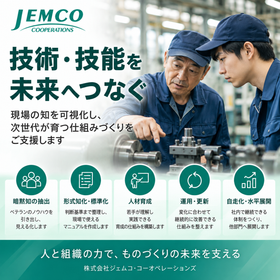
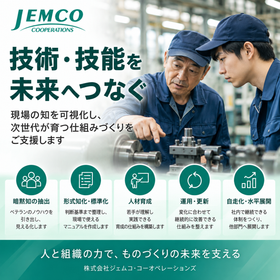
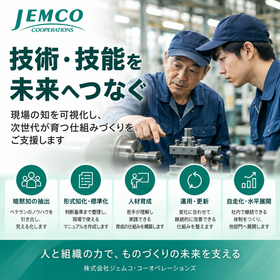
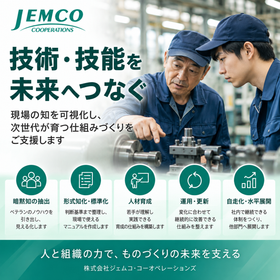
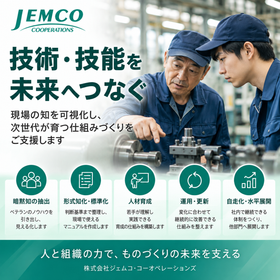
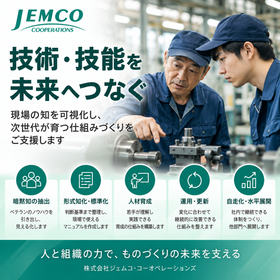
In the transportation and logistics industry, sharing the driving skills and judgment criteria of experienced drivers is crucial for safe and efficient operations. However, the tacit knowledge held by veterans and personalized on-the-job training (OJT) can make it difficult to pass on this knowledge to the next generation. At Gemco, we extract the judgment criteria and know-how through interviews with skilled drivers and formalize them. This organizes the information into a form that young drivers can understand and replicate in practice. Furthermore, we systematize everything from standardization and personnel development to operations and updates, ultimately supporting "self-driving" that allows for continuous and horizontal transmission of skills within the company. 【Usage Scenarios】 - Extraction and formalization of driving know-how from veteran drivers - Standardization of OJT for young drivers - Sharing of safe driving standards and eco-driving techniques - Clarification of operational judgment criteria 【Benefits of Implementation】 - Improved safety through the homogenization of driving skills - Early empowerment of new drivers - Transforming veteran experience into organizational strength - Improvement of operational efficiency
Added to bookmarks
Bookmarks listBookmark has been removed
Bookmarks listYou can't add any more bookmarks
By registering as a member, you can increase the number of bookmarks you can save and organize them with labels.
Free membership registration
In the fishing industry, the catch techniques and know-how of skilled practitioners backed by years of experience are key to business continuity. However, these tacit knowledge elements are difficult to formalize and tend to become personalized, posing challenges. If the expertise of veterans is not smoothly passed on to the next generation, it could lead to a decline in catch volume and variations in quality. Our technology and skill inheritance support service carefully extracts judgment criteria and know-how from experienced practitioners and organizes it into a form that younger individuals can understand and reproduce in practice. This ensures the reliable inheritance of fishing techniques and supports sustainable fishing operations. 【Usage Scenarios】 - Formalizing judgment criteria for fishing points and timing based on the experience of veteran fishermen - Developing specific work procedures and standard documents tailored to particular fishing methods or species - Systematizing effective teaching methods for on-the-job training (OJT) for young fishermen 【Benefits of Implementation】 - Maintaining and improving stable catch volumes through the standardization of fishing techniques - Early development of young fishermen and enhancement of technical skills - Skill enhancement across the organization through the sharing of previously personalized techniques - Alleviating concerns about future technology inheritance and strengthening business continuity
Added to bookmarks
Bookmarks listBookmark has been removed
Bookmarks listYou can't add any more bookmarks
By registering as a member, you can increase the number of bookmarks you can save and organize them with labels.
Free membership registration
In the food service industry, it is important to maintain consistent quality in stores and ensure customer satisfaction through the standardization of recipes and the sharing of accurate cooking procedures. In particular, if the know-how of experienced staff is not shared and there is variation in cooking, it can lead to a decline in the quality of taste and appearance, which may affect customer satisfaction. Additionally, training new staff can take time, making efficient store operations difficult. Our technology and skill inheritance support service extracts the tacit knowledge of veteran staff and formalizes it into recipes, establishing cooking procedures that anyone can replicate. This stabilizes cooking quality, supports the rapid development of new staff into effective team members, and contributes to the efficiency of store operations. 【Usage Scenarios】 - Unification of recipes in multi-store operations - Streamlining cooking instruction for new staff - Reducing the risk of losing know-how due to the retirement or transfer of veteran staff - Sharing procedures when introducing seasonal or new menus 【Benefits of Implementation】 - Improved customer satisfaction through uniform cooking quality - Reduction of food waste and improved cost management - Skill enhancement of staff and increased retention rates - Increased efficiency and productivity in store operations
Added to bookmarks
Bookmarks listBookmark has been removed
Bookmarks listYou can't add any more bookmarks
By registering as a member, you can increase the number of bookmarks you can save and organize them with labels.
Free membership registration
In the agricultural sector, the unique cultivation know-how and judgment criteria possessed by veteran farmers with many years of experience significantly impact the quality and yield of crops. However, this tacit knowledge is difficult to document, making it challenging to pass on to the next generation. Insufficient transmission of know-how can lead to variability in cultivation techniques and delays in responding to unexpected issues. Our service supports the recording and reliable transmission of cultivation know-how by extracting judgment criteria and know-how from veteran experience and organizing it in a way that younger farmers and successors can understand and replicate in practice. 【Usage Scenarios】 - Extraction of cultivation know-how from veteran farmers - Organization of judgment criteria and reasons - Formalization of cultivation techniques - Development of work procedures and standard documents - Systematization of training and on-the-job training for younger farmers and successors 【Effects of Implementation】 - Standardization and improvement of cultivation techniques - Early development of younger farmers and successors - Elimination of dependency on individuals and risk reduction - Realization of sustainable agricultural management
Added to bookmarks
Bookmarks listBookmark has been removed
Bookmarks listYou can't add any more bookmarks
By registering as a member, you can increase the number of bookmarks you can save and organize them with labels.
Free membership registration
In the food service industry, it is important to maintain consistent quality in stores and ensure customer satisfaction through the standardization of recipes and the sharing of accurate cooking procedures. In particular, if the know-how of experienced staff is not shared and there is variation in cooking, it can lead to a decline in the quality of taste and appearance, which may affect customer satisfaction. Additionally, training new staff can take time, making efficient store operations difficult. Our technology and skill inheritance support service extracts the tacit knowledge of veteran staff and formalizes it into recipes, establishing cooking procedures that anyone can replicate. This stabilizes the quality of cooking, supports the early development of new staff into productive team members, and contributes to the efficiency of store operations. [Usage Scenarios] - Unification of recipes in multi-store operations - Streamlining cooking instruction for new staff - Reducing the risk of losing know-how due to the retirement or transfer of veteran staff - Sharing procedures when introducing seasonal or new menus [Effects of Implementation] - Improved customer satisfaction through uniform cooking quality - Reduction of food waste and improvement in cost management - Skill enhancement of staff and increased retention rates - Increased efficiency and productivity in store operations
Added to bookmarks
Bookmarks listBookmark has been removed
Bookmarks listYou can't add any more bookmarks
By registering as a member, you can increase the number of bookmarks you can save and organize them with labels.
Free membership registration
In the food service industry, it is important to maintain consistent quality in stores and ensure customer satisfaction through the standardization of recipes and the sharing of accurate cooking procedures. In particular, if the know-how of experienced staff is not shared, variations in cooking can occur, leading to a decline in the quality of taste and appearance, which may affect customer satisfaction. Additionally, training new staff can take time, making efficient store operations difficult. Our technology and skill transfer support service extracts the tacit knowledge of veteran staff and formalizes it into recipes, establishing cooking procedures that anyone can replicate. This stabilizes the quality of cooking, supports the rapid integration of new staff, and contributes to the efficiency of store operations. 【Usage Scenarios】 - Unification of recipes in multi-store operations - Streamlining cooking instruction for new staff - Reducing the risk of losing know-how due to the retirement or transfer of veteran staff - Sharing procedures when introducing seasonal or new menus 【Benefits of Implementation】 - Improved customer satisfaction through uniform cooking quality - Reduction of food waste and improved cost management - Skill enhancement and increased retention rates of staff - Increased efficiency and productivity in store operations
Added to bookmarks
Bookmarks listBookmark has been removed
Bookmarks listYou can't add any more bookmarks
By registering as a member, you can increase the number of bookmarks you can save and organize them with labels.
Free membership registration
In the food service industry, it is important to maintain consistent quality in stores and ensure customer satisfaction through the standardization of recipes and the sharing of accurate cooking procedures. In particular, if the know-how of experienced staff is not shared and there is variability in cooking, it can lead to a decline in the quality of taste and appearance, which may affect customer satisfaction. Additionally, training new staff can take time, making efficient store operations difficult. Our technology and skill inheritance support service extracts the tacit knowledge of veteran staff and formalizes it into recipes, establishing cooking procedures that anyone can replicate. This stabilizes the quality of cooking, supports the early development of new staff into effective team members, and contributes to the efficiency of store operations. [Usage Scenarios] - Unification of recipes in multi-store operations - Streamlining cooking instruction for new staff - Reducing the risk of losing know-how due to the retirement or transfer of veteran staff - Sharing procedures when introducing seasonal or new menus [Benefits of Implementation] - Improved customer satisfaction through uniform cooking quality - Reduction of food waste and improved cost management - Skill enhancement of staff and increased retention rates - Increased efficiency and productivity in store operations
Added to bookmarks
Bookmarks listBookmark has been removed
Bookmarks listYou can't add any more bookmarks
By registering as a member, you can increase the number of bookmarks you can save and organize them with labels.
Free membership registration
In the food service industry, it is important to maintain consistent quality in stores and ensure customer satisfaction through the standardization of recipes and the sharing of accurate cooking procedures. Particularly, if the know-how of experienced staff is not shared, variations in cooking can occur, leading to a decline in the quality of taste and appearance, which can impact customer satisfaction. Additionally, training new staff can take time, making efficient store operations difficult. Our technology and skill inheritance support service extracts the tacit knowledge of veteran staff and formalizes it into recipes, establishing cooking procedures that anyone can replicate. This stabilizes the quality of cooking, supports the rapid development of new staff into effective team members, and contributes to the efficiency of store operations. 【Usage Scenarios】 - Unification of recipes in multi-store operations - Streamlining cooking instruction for new staff - Reducing the risk of losing know-how due to the retirement or transfer of veteran staff - Sharing procedures when introducing seasonal or new menus 【Benefits of Implementation】 - Improved customer satisfaction through uniform cooking quality - Reduction of food waste and improved cost management - Skill enhancement of staff and increased retention rates - Increased efficiency and productivity in store operations
Added to bookmarks
Bookmarks listBookmark has been removed
Bookmarks listYou can't add any more bookmarks
By registering as a member, you can increase the number of bookmarks you can save and organize them with labels.
Free membership registration
In the food service industry, it is essential to maintain consistent quality in stores and ensure customer satisfaction through the standardization of recipes and the sharing of accurate cooking procedures. In particular, if the know-how of experienced staff is not shared and there is variation in cooking, it can lead to a decline in the quality of taste and appearance, which may affect customer satisfaction. Additionally, training new staff can take time, making efficient store operations difficult. Our technology and skill inheritance support service extracts the tacit knowledge held by veteran staff and formalizes it into recipes, establishing cooking procedures that anyone can replicate. This stabilizes cooking quality, supports the rapid development of new staff into effective team members, and contributes to the efficiency of store operations. 【Usage Scenarios】 - Unification of recipes in multi-store operations - Streamlining cooking instruction for new staff - Reducing the risk of losing know-how due to the retirement or transfer of veteran staff - Sharing procedures when introducing seasonal or new menus 【Benefits of Implementation】 - Improved customer satisfaction through uniform cooking quality - Reduction of food waste and improvement in cost management - Skill enhancement of staff and increased retention rates - Increased efficiency and productivity in store operations
Added to bookmarks
Bookmarks listBookmark has been removed
Bookmarks listYou can't add any more bookmarks
By registering as a member, you can increase the number of bookmarks you can save and organize them with labels.
Free membership registration
In the food service industry, it is important to maintain consistent quality in stores and ensure customer satisfaction through the standardization of recipes and the sharing of accurate cooking procedures. In particular, if the know-how of experienced staff is not shared and there is variability in cooking, it can lead to a decline in the quality of taste and appearance, which may affect customer satisfaction. Additionally, training new staff can take time, making efficient store operations difficult. Our technology and skill inheritance support service extracts the tacit knowledge held by veteran staff and formalizes it into recipes, establishing cooking procedures that anyone can replicate. This stabilizes the quality of cooking, supports the early development of new staff, and contributes to the efficiency of store operations. 【Usage Scenarios】 - Unification of recipes in multi-store operations - Streamlining cooking instruction for new staff - Reducing the risk of losing know-how due to the retirement or transfer of veteran staff - Sharing procedures when introducing seasonal or new menus 【Benefits of Implementation】 - Improved customer satisfaction through uniform cooking quality - Reduction of food waste and improvement in cost management - Skill enhancement of staff and increased retention rates - Increased efficiency and productivity in store operations
Added to bookmarks
Bookmarks listBookmark has been removed
Bookmarks listYou can't add any more bookmarks
By registering as a member, you can increase the number of bookmarks you can save and organize them with labels.
Free membership registration
In the food service industry, it is important to maintain consistent quality in stores and ensure customer satisfaction through the standardization of recipes and the sharing of accurate cooking procedures. In particular, if the know-how of experienced staff is not shared and there is variability in cooking, the quality of taste and appearance may decline, potentially affecting customer satisfaction. Additionally, training new staff can take time, making efficient store operations difficult. Our technology and skill inheritance support service extracts the tacit knowledge held by veteran staff and formalizes it into recipes, establishing cooking procedures that anyone can replicate. This stabilizes cooking quality, supports the early development of new staff, and contributes to the efficiency of store operations. [Usage Scenarios] - Unification of recipes in multi-store operations - Streamlining cooking instruction for new staff - Reducing the risk of losing know-how due to the retirement or transfer of veteran staff - Sharing procedures when introducing seasonal or new menus [Effects of Implementation] - Improved customer satisfaction through uniform cooking quality - Reduction of food waste and improvement in cost management - Skill enhancement of staff and increased retention rates - Increased efficiency and productivity in store operations
Added to bookmarks
Bookmarks listBookmark has been removed
Bookmarks listYou can't add any more bookmarks
By registering as a member, you can increase the number of bookmarks you can save and organize them with labels.
Free membership registration
In the food service industry, it is important to maintain consistent quality in stores and ensure customer satisfaction through the standardization of recipes and the sharing of accurate cooking procedures. In particular, if the know-how of experienced staff is not shared and there is variability in cooking, it can lead to a decline in the quality of taste and appearance, which may affect customer satisfaction. Additionally, training new staff can take time, making efficient store operations difficult. Our technology and skill inheritance support service extracts the tacit knowledge of veteran staff and formalizes it into recipes, establishing cooking procedures that anyone can replicate. This stabilizes the quality of cooking, supports the rapid development of new staff into effective team members, and contributes to the efficiency of store operations. 【Usage Scenarios】 - Unification of recipes in multi-store operations - Streamlining cooking instruction for new staff - Reducing the risk of losing know-how due to the retirement or transfer of veteran staff - Sharing procedures when introducing seasonal or new menus 【Benefits of Implementation】 - Improved customer satisfaction through uniform cooking quality - Reduction of food waste and improvement in cost management - Skill enhancement of staff and increased retention rates - Increased efficiency and productivity in store operations
Added to bookmarks
Bookmarks listBookmark has been removed
Bookmarks listYou can't add any more bookmarks
By registering as a member, you can increase the number of bookmarks you can save and organize them with labels.
Free membership registration
In the IT and software industry, the inheritance of advanced technology and know-how is essential for maintaining development speed and quality. In particular, the tacit knowledge held by veteran engineers, on-the-job training (OJT) that can easily become personalized, and manuals that are disconnected from the actual situation can hinder effective technology transfer. If these issues are left unaddressed, they may lead to an imbalance in development resources and delays in adapting to new technologies. Our service supports the efficiency of technology transfer by formalizing the insights of veterans and organizing them in a way that young engineers can replicate in practice. [Usage Scenarios] - Reducing the risk of knowledge loss due to the retirement or transfer of veteran engineers - Accelerating the early effectiveness of young engineers and standardizing OJT - Clarifying criteria for judgment in code reviews and improving quality - Streamlining the entire development process and eliminating personalization [Effects of Implementation] - Building a knowledge base that anyone can understand and utilize through the formalization of technology and skills - Promoting skill enhancement for young engineers and shortening the training period - Improving the quality of code reviews and stabilizing the development cycle - Enhancing the overall technical capabilities of the organization and establishing a sustainable development system
Added to bookmarks
Bookmarks listBookmark has been removed
Bookmarks listYou can't add any more bookmarks
By registering as a member, you can increase the number of bookmarks you can save and organize them with labels.
Free membership registration
In the medical and caregiving industry, the accurate transmission of specialized skills and knowledge is essential for ensuring patient safety and providing high-quality care. In particular, the tacit knowledge held by experienced veteran staff and the on-the-job training (OJT) that tends to be personalized can make effective skill transmission to younger staff challenging. Inadequate skill transmission can lead to variability in techniques and a decline in the quality of care. Our technical and skill transmission support service helps improve the reproducibility of techniques by formalizing the know-how of veterans and organizing it in a way that younger staff can replicate in practice. 【Usage Scenarios】 - Sharing advanced techniques and judgment criteria held by skilled practitioners - Early empowerment of new and younger staff - Standardization and uniformity of care quality - Reduction of human errors 【Effects of Implementation】 - Improved reproducibility of techniques, leading to stable care quality - Shortened training period for new and younger staff - Reduced burden on veterans and knowledge transfer - Overall improvement in organizational technical capabilities
Added to bookmarks
Bookmarks listBookmark has been removed
Bookmarks listYou can't add any more bookmarks
By registering as a member, you can increase the number of bookmarks you can save and organize them with labels.
Free membership registration
In the construction industry, standardized safety education is required to ensure safety on-site and maintain work quality. In particular, the tacit knowledge possessed by experienced veteran workers and the varying approaches to on-the-job training (OJT) at different sites can contribute to inconsistencies in safety education. These challenges can increase the risk of accidents and lead to decreased work efficiency. Our service aims to formalize the know-how of veterans and establish a safety education system that is easy for younger workers to understand and can be replicated in practice. 【Usage Scenarios】 - Extraction of safety-related know-how from veteran workers - Standardization of OJT content for each site - Development of safety education manuals - Streamlining safety education for younger and new workers 【Benefits of Implementation】 - Reduction of accident risks through the homogenization of safety education - Improvement of workers' safety awareness - Early development of new and young workers into effective team members - Enhancement of work quality on-site
Added to bookmarks
Bookmarks listBookmark has been removed
Bookmarks listYou can't add any more bookmarks
By registering as a member, you can increase the number of bookmarks you can save and organize them with labels.
Free membership registration
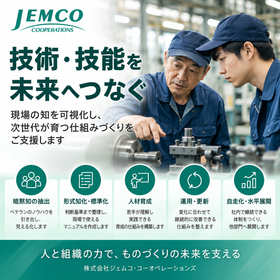
In the manufacturing industry, the inheritance of tacit knowledge held by skilled technicians with many years of experience is essential for maintaining quality and improving productivity. However, the lack of formalization of veteran know-how, along with personalized on-the-job training (OJT) and manuals that are disconnected from the realities of the workplace, can become barriers to the transfer of technology. These issues may lead to delays in the development of young engineers and a decline in technical capabilities. Our technology and skill transfer support service helps address these challenges by extracting judgment criteria and know-how from experienced workers and organizing them into a form that young engineers can understand and replicate in practice. 【Usage Scenarios】 - Crisis of technology transfer due to the retirement or resignation of skilled technicians - Time-consuming development of young and mid-level employees - Desire to eliminate the personalization of OJT - Manuals that do not match the realities of the workplace - Establishment of standardized work procedures 【Benefits of Implementation】 - Formalization of tacit knowledge held by veterans, leading to an overall improvement in organizational technical capabilities - Early development and empowerment of young and mid-level employees - Improvement in the quality and efficiency of OJT - Stabilization of quality and productivity improvement through work standardization - Establishment of a system that allows for continued technology transfer within the company
Added to bookmarks
Bookmarks listBookmark has been removed
Bookmarks listYou can't add any more bookmarks
By registering as a member, you can increase the number of bookmarks you can save and organize them with labels.
Free membership registration
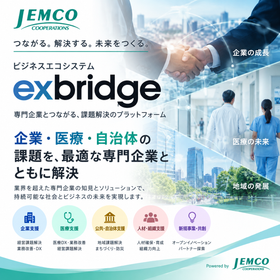
In the parking industry, particularly in management, a swift and appropriate response to unauthorized parking is essential for maintaining user satisfaction and ensuring business continuity. Analyzing the complex factors contributing to unauthorized parking and improving risk management processes using the latest technologies require specialized knowledge and appropriate partnerships. Inadequate responses can lead to increased litigation risks and a decrease in property value. The business ecosystem "exbridge" supports parking management companies in addressing the challenges of unauthorized parking by matching them with companies that have optimal specialized consultants and solutions, facilitating rapid and efficient problem-solving. 【Use Cases】 - Establishing a risk assessment data analysis platform for unauthorized parking incidents - Developing an unauthorized parking prediction model using AI - Integrating existing systems with external risk information services - Utilizing consulting services from experts for unauthorized parking responses - Collaborating on risk data with partner companies 【Benefits of Implementation】 - Improved user satisfaction through enhanced accuracy in unauthorized parking responses - Increased operational efficiency and cost reduction - Rapid response to new unauthorized parking incidents - Maintenance and enhancement of property value - Promotion of collaboration between parking management companies and partner firms
Added to bookmarks
Bookmarks listBookmark has been removed
Bookmarks listYou can't add any more bookmarks
By registering as a member, you can increase the number of bookmarks you can save and organize them with labels.
Free membership registration
In the management of rental properties and offices, a swift and appropriate response to troubles during contract renewals leads to tenant satisfaction and business continuity. Analyzing the increasingly complex causes of troubles and improving risk management processes using the latest technologies require specialized knowledge and appropriate partnerships. Inadequate trouble response can lead to increased litigation risks and a decrease in property value. The business ecosystem 'exbridge' supports real estate companies in addressing rental trouble challenges by matching them with optimal specialized consultants and solution-providing companies, facilitating rapid and efficient problem-solving. 【Usage Scenarios】 - Building a data analysis platform for risk assessment during contract renewals - Developing trouble prediction models using AI - Integrating existing systems with external risk information services - Utilizing consulting services for trouble response from experts - Collaborating with partner companies for risk data integration 【Benefits of Implementation】 - Improved tenant satisfaction through enhanced trouble response accuracy - Increased operational efficiency and cost reduction - Rapid response to new troubles - Maintenance and enhancement of property value - Promotion of collaboration between real estate companies and partner firms
Added to bookmarks
Bookmarks listBookmark has been removed
Bookmarks listYou can't add any more bookmarks
By registering as a member, you can increase the number of bookmarks you can save and organize them with labels.
Free membership registration
In the factory and warehouse industry, responding to a wide range of challenges is required due to changes in facility usage, including compliance with regulations, ensuring safety, and consideration for the surrounding environment. In particular, changes in usage necessitate complex legal requirements and technical considerations based on the building's structure, equipment, and intended use, making specialized knowledge essential. Inadequate responses can lead to delays in permits, additional construction, and even troubles after operations begin. The business ecosystem 'exbridge' supports matching with companies that have optimal specialized consultants and solutions for the challenges of changing factory and warehouse usage, facilitating rapid and efficient problem-solving. 【Usage Scenarios】 - Research and consulting on regulatory compliance related to usage changes - Evaluation of building safety and functionality - Assessment of impacts on the surrounding environment - Support for permit applications by experts - Smooth procedures through collaboration with related businesses 【Benefits of Implementation】 - Streamlining and shortening the duration of usage change procedures - Risk reduction through regulatory compliance - Safe and functional facility operations - Ensuring business continuity - Smooth collaboration among stakeholders
Added to bookmarks
Bookmarks listBookmark has been removed
Bookmarks listYou can't add any more bookmarks
By registering as a member, you can increase the number of bookmarks you can save and organize them with labels.
Free membership registration
In real estate companies managing older properties, a swift and appropriate response to rental troubles due to aging is crucial for maintaining tenant satisfaction and ensuring business continuity. Analyzing the increasingly complex causes of troubles and improving risk management processes using the latest technologies require specialized knowledge and suitable partnerships. Inadequate trouble response can lead to increased litigation risks and a decline in property value. The business ecosystem 'exbridge' supports real estate companies managing older properties by matching them with optimal specialized consultants and companies that offer solutions to the challenges of addressing rental troubles, facilitating quick and efficient problem-solving. 【Usage Scenarios】 - Building a risk assessment data analysis platform when rental troubles occur - Developing trouble prediction models using AI - Integrating existing systems with external risk information services - Utilizing consulting services for trouble response by experts - Collaborating on risk data with partner companies 【Benefits of Implementation】 - Improved tenant satisfaction through enhanced trouble response accuracy - Increased operational efficiency and cost reduction - Rapid response to new troubles - Maintenance and enhancement of property value - Promotion of collaboration between real estate companies and partner firms
Added to bookmarks
Bookmarks listBookmark has been removed
Bookmarks listYou can't add any more bookmarks
By registering as a member, you can increase the number of bookmarks you can save and organize them with labels.
Free membership registration
In designer properties, especially those with special specifications, responding to the diverse needs of tenants while addressing unexpected troubles is crucial for maintaining tenant satisfaction and ensuring business continuity. Analyzing the increasingly complex factors that lead to troubles and improving risk management processes using the latest technologies require specialized knowledge and appropriate partnerships. Inadequate trouble response can lead to increased litigation risks and a decline in property value. The business ecosystem 'exbridge' supports real estate companies in addressing the challenges of rental troubles in designer properties by matching them with companies that have optimal specialized consultants and solutions, facilitating quick and efficient problem-solving. 【Usage Scenarios】 - Building a risk assessment data analysis platform for rental troubles - Developing trouble prediction models using AI - Integrating existing systems with external risk information services - Utilizing consulting from experts for trouble response - Collaborating risk data with partner companies
Added to bookmarks
Bookmarks listBookmark has been removed
Bookmarks listYou can't add any more bookmarks
By registering as a member, you can increase the number of bookmarks you can save and organize them with labels.
Free membership registration
In renovated properties, prompt and appropriate responses to equipment malfunctions after occupancy lead to the maintenance of tenant satisfaction and the preservation of property value. In particular, analyzing the complex causes of troubles involving renovated areas and improving risk management processes using the latest technology require specialized knowledge and appropriate partnerships. Inadequate trouble response can lead to increased litigation risks and a decline in property value. The business ecosystem 'exbridge' supports real estate companies in addressing the challenges of equipment malfunctions in renovated properties by facilitating matching with companies that have optimal specialized consultants and solutions, thereby assisting in rapid and efficient problem-solving. 【Usage Scenarios】 - Establishing a risk assessment data analysis foundation for equipment malfunctions in renovated properties - Developing trouble prediction models using AI - Integrating existing systems with external risk information services - Utilizing consulting for trouble response by experts - Collaborating on risk data with partner companies
Added to bookmarks
Bookmarks listBookmark has been removed
Bookmarks listYou can't add any more bookmarks
By registering as a member, you can increase the number of bookmarks you can save and organize them with labels.
Free membership registration
In managing pet-friendly properties, adherence to pet ownership regulations is crucial to prevent conflicts among residents and mitigate impacts on the property. Establishing and disseminating these regulations, as well as responding to violations, requires specialized knowledge and appropriate partnerships. Inadequate responses can lead to deteriorating relationships among residents and a decrease in property value. The business ecosystem 'exbridge' supports real estate companies in addressing challenges related to pet ownership regulations in pet-friendly properties by matching them with optimal specialized consultants and solution providers, facilitating swift and efficient problem-solving. 【Use Cases】 - Building a risk assessment data analysis platform for incidents related to pet ownership - Developing a trouble prediction model using AI - Integrating existing systems with external risk information services - Utilizing consulting from experts for trouble response - Collaborating on risk data with partner companies 【Benefits of Implementation】 - Increased resident satisfaction through improved accuracy in trouble response - Streamlined operations and cost reduction - Rapid response to new troubles - Maintenance and enhancement of property value - Promotion of collaboration between real estate companies and partner firms
Added to bookmarks
Bookmarks listBookmark has been removed
Bookmarks listYou can't add any more bookmarks
By registering as a member, you can increase the number of bookmarks you can save and organize them with labels.
Free membership registration
In housing for foreigners, particularly in rental management, quick and appropriate trouble response that transcends language barriers leads to maintaining tenant satisfaction and business continuity. Analyzing the increasingly complex causes of troubles and improving risk management processes using the latest technologies require specialized knowledge and appropriate partnerships. Inadequate trouble response can lead to increased litigation risks and decreased property values. The business ecosystem "exbridge" supports real estate companies in addressing the challenges of rental trouble response for foreign tenants by matching them with optimal specialized consultants and solution-providing companies, facilitating quick and efficient problem-solving. 【Usage Scenarios】 - Building a risk assessment data analysis platform when rental troubles occur - Developing trouble prediction models using AI - Integrating existing systems with external risk information services - Utilizing consulting for trouble response by experts - Collaborating on risk data with partner companies 【Benefits of Implementation】 - Improved tenant satisfaction through enhanced trouble response accuracy - Increased operational efficiency and cost reduction - Quick response to new troubles - Maintenance and enhancement of property values - Promotion of collaboration between real estate companies and partner firms
Added to bookmarks
Bookmarks listBookmark has been removed
Bookmarks listYou can't add any more bookmarks
By registering as a member, you can increase the number of bookmarks you can save and organize them with labels.
Free membership registration