46~75 item / All 75 items
Displayed results
Filter by category

Added to bookmarks
Bookmarks listBookmark has been removed
Bookmarks listYou can't add any more bookmarks
By registering as a member, you can increase the number of bookmarks you can save and organize them with labels.
Free membership registrationContact this company
Inquiry Form46~75 item / All 75 items
Filter by category
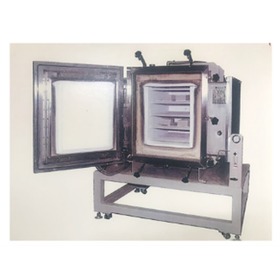
We can accommodate nitriding and high-temperature sintering tests before equipment installation. Even at a stage where temperature, atmosphere, and processing time are not yet determined, you can consult us about testing conditions tailored to your objectives. Through preliminary evaluations using actual samples, you can confirm reactivity and utilize the information for equipment specifications. The "carbon furnace" we handle is well-suited for basic nitriding reaction tests. Since the reaction initiation temperature is high with N2 alone, balancing particle growth and coarsening is challenging, and issues such as surface reoxidation during cooling leading to variations in color, resistance, and hardness can arise. We address these challenges. Additionally, we have production records for furnaces at mass production scales, not just small units. Please feel free to contact us when needed. [Reasons Why Our Carbon Furnace is Effective] ■ Creates an extremely low oxygen partial pressure - Vacuum pumping → Gradually lowering oxygen potential through N2 replacement - The carbon material in the furnace absorbs residual O2 through getter action, suppressing oxidation side reactions ■ Quickly reaches sufficient high-temperature ranges - Reaches and maintains stability at 1400-2400°C in a short time ■ Conditions can be established in a short cycle - Multiple samples can be evaluated simultaneously with a shelf configuration, making it easier to verify the effects of thickness and contact *For more details, please feel free to contact us.
Added to bookmarks
Bookmarks listBookmark has been removed
Bookmarks listYou can't add any more bookmarks
By registering as a member, you can increase the number of bookmarks you can save and organize them with labels.
Free membership registration
We can accommodate carbonization and high-temperature sintering tests before equipment installation. Even at a stage where temperature, atmosphere, and processing time are not yet determined, you can consult us regarding the consideration of test conditions based on your objectives. Through preliminary evaluations using actual samples, we can confirm reactivity and utilize this information for equipment specifications. Our company offers a small "carbon furnace" that can be gradually replaced from vacuum to inert gas. It can be used for experiments and processes involving solid-phase carbonization (powder mixing method, coating method, carburizing) and composite carbonization (such as using B4C) to enhance hardness and optimize carbon supply conditions (types, ratios, and contact states of carbon materials). Please feel free to contact us if you have any requests. [Reasons why our carbon furnace is chosen (partial)] ■ Rapidly reaches high-temperature ranges - Stable attainment and maintenance of 1600-2800℃ - Temperature guidelines effective for carbonization: SiC 1600–2000℃, TiC 1500–2100℃, ZrC 1800–2300℃ ■ Suppresses side reactions at extremely low oxygen partial pressures - Vacuum draw → Replacement with Ar/N2 - Reduces residual oxygen through carbon getter materials, suppressing CO generation *For more details, please feel free to contact us.
Added to bookmarks
Bookmarks listBookmark has been removed
Bookmarks listYou can't add any more bookmarks
By registering as a member, you can increase the number of bookmarks you can save and organize them with labels.
Free membership registration
We can accommodate ultra-low oxygen and ultra-high temperature sintering tests before equipment installation. Even at a stage where temperature, atmosphere, and processing time are not yet determined, you can consult us about the test conditions tailored to your objectives. Through preliminary evaluations using actual samples, we can confirm graphitization, recrystallization, grain growth, phase formation, and oxidation effects, which can be utilized in the consideration of equipment specifications. Our "carbon furnace" addresses challenges such as the time-consuming condition setting and the difficulty of achieving reproducibility in short cycles. By evacuating the air inside the sample in advance, we shorten the replacement time. Additionally, with the flexibility of tray arrangement and shelf configuration, we can arrange rectangular containers in parallel, allowing for the evaluation of thickness variation effects. We also have test equipment available. Please feel free to contact us when needed. [Reasons Why Our Carbon Furnace is Effective (Partial)] ■ Sintering under ultra-low oxygen partial pressure - Vacuum → staged replacement with Ar/N2 - Reduction of residual O2/oxidizing species through the getter effect of carbon materials ■ Ultra-high temperature processes - Long-term stable operation in the range of 2800°C for regular use, up to a maximum of 3000°C - Precise control of grain growth and rearrangement through gradual heating and holding in the range of 1200°C to 2600°C *For more details, please feel free to contact us.
Added to bookmarks
Bookmarks listBookmark has been removed
Bookmarks listYou can't add any more bookmarks
By registering as a member, you can increase the number of bookmarks you can save and organize them with labels.
Free membership registration
Our company handles "carbon furnaces" that operate at temperatures around 3000°C with extremely low oxygen levels. We solve issues such as the inability to reduce oxygen partial pressure, oxidation and decarburization occurring in high-temperature regions that prevent reaching target characteristics, and the limited freedom of tray design and low processing capacity/strict sample size constraints in tube furnaces. These can be used for applications involving graphite materials, graphite foils, graphite sheets, isotropic graphite, and molded bodies. [Reasons for Effectiveness in Graphitization] - Easy to create extremely low oxygen: The furnace material is carbon, which chemically captures residual oxygen, and vacuum replacement eliminates air inside the sample in advance. - Temperature range of around 3000°C: Stable heat distribution and retention in the -3000°C graphitization zone, with rapid attainment and high reproducibility. - Flexibility in tray/casing design: Rectangular casings and stacking allow for simultaneous processing of multiple samples, speeding up condition setting. - Atmospheric flexibility: It is possible to combine vacuum/Ar/N2/low concentration H2 to reduce defects and facilitate thermal desorption. *For more details, please feel free to contact us.
Added to bookmarks
Bookmarks listBookmark has been removed
Bookmarks listYou can't add any more bookmarks
By registering as a member, you can increase the number of bookmarks you can save and organize them with labels.
Free membership registration
The "Metal Furnace" we handle is an electric furnace designed for high-purity heat treatment in an ultra-high vacuum atmosphere. By constructing the hot zone inside the furnace with metal materials, we suppress outgassing and carbon contamination from graphite materials, insulation materials, and organic substances, creating an environment that facilitates the evaluation of the material's inherent surface reactions and phase changes. In the metal furnace, clean heat treatment is possible by using metal-based materials for the inner walls, heaters, and fixtures, thereby minimizing contamination from the furnace materials. It is particularly suitable for materials that are sensitive to contamination from furnace materials, those that require accurate evaluation of surface reactions and phase changes, and for annealing precious metals, transition metals, thin films, electrode materials, and optical components. **Features** ■ Compatible with ultra-high vacuum atmosphere - Capable of forming an ultra-high vacuum atmosphere that is difficult to achieve with other electric furnaces - Supports high-purity heat treatment while minimizing the effects of oxygen, moisture, and residual gases ■ Suppression of contamination from furnace materials - Easier to mitigate the effects of furnace material degradation, powdering, and outgassing over long-term use - Applicable to materials that are sensitive to contamination from insulation materials and graphite components Additionally, we can accommodate firing tests using actual samples to confirm conditions before equipment installation. *For more details, please feel free to contact us.*
Added to bookmarks
Bookmarks listBookmark has been removed
Bookmarks listYou can't add any more bookmarks
By registering as a member, you can increase the number of bookmarks you can save and organize them with labels.
Free membership registration
The "Metal Furnace" we handle is a high-purity atmosphere furnace suitable for sealing, brazing, and diffusion bonding of ceramics and metals. Trace amounts of O2/H2O/hydrocarbons affect wettability, interfacial reactions, and airtightness. The Metal Furnace enables heat treatment with reduced carbon and organic contamination due to its high vacuum atmosphere and Mo/W-based metal hot zone. It is also applicable for high-purity annealing and sealing treatments of thin films, electrodes, and optical components. 【Features】 ■ Reduces the impact of residual gases in a high vacuum atmosphere ■ Maintains a clean atmosphere with a metal hot zone ■ Temperature uniformity within ±1°C and long-term stable control ■ Compatible with metal jigs and load mechanisms ■ Supports miniaturization of samples and localized heating tests *For more detailed information, please download the materials or feel free to contact us.
Added to bookmarks
Bookmarks listBookmark has been removed
Bookmarks listYou can't add any more bookmarks
By registering as a member, you can increase the number of bookmarks you can save and organize them with labels.
Free membership registration
The "metal furnace" we handle is an electric furnace designed for high-purity heat treatment in an ultra-high vacuum atmosphere. By constructing the hot zone inside the furnace with metal materials, it suppresses outgassing and carbon contamination from graphite materials, insulation materials, and organic substances, creating a clean heat treatment environment that reduces the influence of oxygen, carbon, and moisture. The metal furnace accommodates atmosphere control from ultra-high vacuum to Ar/N₂/H₂, thanks to its metal heater and metal chamber structure, making it suitable for degassing, dehydration, decarbonization, and reduction treatment of high-purity powders and ceramic components. **Features** - Supports ultra-high vacuum atmosphere - Achieves vacuum levels of 10^-3 to 10^-5 Pa - Metal hot zone construction - Reduces contamination from furnace materials due to metal heater and chamber structure - High-precision temperature and atmosphere control - Accommodates atmosphere control tailored to specific needs, including vacuum, Ar, N₂, and H₂ - Scalable from small to large - After confirming conditions with a small unit, expansion to a larger furnace can be considered Additionally, we can conduct firing tests using actual samples as a condition check before equipment installation. *For more details, please feel free to contact us.*
Added to bookmarks
Bookmarks listBookmark has been removed
Bookmarks listYou can't add any more bookmarks
By registering as a member, you can increase the number of bookmarks you can save and organize them with labels.
Free membership registration
Our "metal furnace" is compact and has a sealed structure, making it safe for installation even at the laboratory or analytical level. It is suitable for applications such as reduction processing of catalyst carriers and conductive materials, high-purity heat treatment for sputtering target materials and sintered bodies, and fundamental research on oxidation, diffusion, and precipitation behavior at high temperatures. We also have test units available. Additionally, we can manufacture furnaces for mass production scales beyond the small models. 【Features】 - Uses metal materials (Mo/W/stainless steel, etc.) to suppress contamination from carbon sources. - Compatible with vacuum to reduction atmospheres (H₂/N₂/Ar), enabling heat treatment in a high-purity environment. - High-precision temperature control (up to 1800°C) allows for accurate reproduction of annealing conditions for thin films and fine particles. - Safe for installation at the laboratory or analytical level due to its compact and sealed structure. - Proven track record of scaling up to mass production machines (Thermonic ENG also has experience in manufacturing large metal furnaces). *For more details, please feel free to contact us.
Added to bookmarks
Bookmarks listBookmark has been removed
Bookmarks listYou can't add any more bookmarks
By registering as a member, you can increase the number of bookmarks you can save and organize them with labels.
Free membership registration
Our company is an electric furnace manufacturer that supports everything from material prototyping and evaluation to mass production considerations. We propose optimal furnace configurations tailored to special firing conditions that are difficult to accommodate with conventional electric furnaces, such as low oxygen, ultra-high temperature, high purity atmosphere, corrosive gases, multi-atmosphere switching, humidified atmosphere, and exhaust gas evaluation. We can select from small chlorine furnaces, carbon furnaces, metal furnaces, multi-atmosphere furnaces, and tubular furnaces according to the application, and we are capable of designing equipment that includes material reactions, atmosphere control, and safety measures. 【Examples of furnaces we handle】 ■ Small chlorine furnace: Selective chlorination and removal of metal impurities using Cl2/HCl ■ Carbon furnace: Graphitization, carbonization, and high-temperature firing at ultra-low oxygen and 3000°C levels ■ Metal furnace: High-purity heat treatment with reduced outgassing from furnace materials and insulation ■ Multi-atmosphere furnace: Examination of oxidation, reduction, nitriding, humidification, and thermal CVD conditions ■ Tubular furnace: Visualization of temperature, flow rate, pressure, and exhaust data during reactions *For more details, please download the materials or contact us.
Added to bookmarks
Bookmarks listBookmark has been removed
Bookmarks listYou can't add any more bookmarks
By registering as a member, you can increase the number of bookmarks you can save and organize them with labels.
Free membership registration
Thermonic ENG Co., Ltd. is seeking trading partners for special electric furnaces and heating equipment, targeting technical trading companies and equipment trading companies. Our company handles a variety of electric furnaces, from small to pilot scale, including metal furnaces, carbon furnaces, multi-atmosphere furnaces, tubular furnaces, and small chlorine furnaces, all designed to meet special conditions. For projects that are difficult to address with standard equipment, such as high temperature, high vacuum, inert, reduction, and chlorine atmospheres, we welcome inquiries from the specification consideration stage. 【We are looking for trading companies like the following】 ■ Technical trading companies ■ Equipment trading companies ■ Companies with networks with research institutions, material manufacturers, universities, etc. 【Please consult us on projects like these】 ■ Special specification projects that cannot be handled by standard equipment from other companies ■ Heat treatment projects involving special atmospheres such as vacuum, inert, reduction, and chlorine ■ Process development projects that include high-temperature processing, special materials, and multiple steps ■ Projects that you want to advance from condition organization for research and development, prototyping, and mass production considerations For more details, please refer to the downloadable materials or feel free to contact us.
Added to bookmarks
Bookmarks listBookmark has been removed
Bookmarks listYou can't add any more bookmarks
By registering as a member, you can increase the number of bookmarks you can save and organize them with labels.
Free membership registration
We offer "custom tubular furnaces" designed to meet the specifications tailored to your applications. In standard tubular furnaces, there may be cases where the tube size, heating zone length, heating rate, processing temperature, atmosphere gas, and instrumentation configuration do not match, making it impossible to reproduce the desired testing conditions. Our tubular furnaces are designed for stable operation at approximately 1200°C, with the heating zone, tube size, gas lines, measuring instruments, sampling ports, and other components customizable according to your needs. We can accommodate various gases such as inert gases like N2/Ar and H2. We will propose specifications based on your desired furnace dimensions, temperature conditions, and atmospheric conditions. 【Features】 ■ Design of tube size and heating zone length according to application ■ Consideration of furnace configuration based on heating rate, temperature distribution, and processing volume ■ Compatibility with various gas atmospheres such as N2/Ar/H2 ■ Selection of instrumentation such as thermocouples, MFCs, pressure gauges, and O2 meters ■ Custom solutions for sampling ports and exhaust lines *Please feel free to consult us even if the specifications do not match the standard products.
Added to bookmarks
Bookmarks listBookmark has been removed
Bookmarks listYou can't add any more bookmarks
By registering as a member, you can increase the number of bookmarks you can save and organize them with labels.
Free membership registration
"I would like to consider treatment using Cl2 and HCl, but I have concerns about safety." "I want to reduce the waste liquid and drying processes of wet treatment and remove metal impurities in a dry manner." In response to such on-site challenges, our company proposes a compact chlorine furnace compatible with Cl2/HCl. The compact chlorine furnace can be applied to dry processes that remove trace impurities in oxides and metals as volatile chlorides, halogen cleaning, surface treatment, and material evaluation in corrosive gas atmospheres. With our unique design, we consider the use of Cl2/HCl gas in the mid-temperature range, which is prone to leaks, and can develop a furnace structure that takes into account safe operation, including corrosion-resistant construction, negative pressure operation, gas detection, emergency shutdown, and connection to a scrubbing system. 【Common Concerns】 ■ Wet treatment has heavy waste liquid processing, drying processes, and energy costs. ■ Products are water-sensitive, so I want to avoid wet treatment. ■ I want to selectively remove metal impurities in a dry atmosphere. ■ I want to use corrosive gases, but I am concerned about leaks, removal, and safety measures. ■ I want to compare Cl2/HCl treatment conditions with small samples. *For more details, please download the materials or contact us.
Added to bookmarks
Bookmarks listBookmark has been removed
Bookmarks listYou can't add any more bookmarks
By registering as a member, you can increase the number of bookmarks you can save and organize them with labels.
Free membership registration
The "Small Metal Furnace" we handle is an electric furnace suitable for high-purity sintering and annealing of materials that are sensitive to carbon contamination. Its all-metal construction helps reduce carbon contamination from graphite materials and organic insulation, contributing to improved reproducibility of color, surface condition, and properties. It supports stable operation up to 1800°C and can be used for high-temperature sintering, diffusion bonding, aging treatment, and surface modification. Its compact design makes it easy to introduce even in environments with limited installation space, such as universities and laboratories. 【Features】 ■ Reduces carbon contamination with all-metal construction ■ Supports high-temperature processing up to 1800°C ■ Reproduces low-oxygen atmosphere through N2 purging and replacement ■ Contributes to improved reproducibility of color, surface condition, and physical properties ■ Compact design makes it easy to install in laboratory and prototype environments *For more details, please download the materials or contact us.
Added to bookmarks
Bookmarks listBookmark has been removed
Bookmarks listYou can't add any more bookmarks
By registering as a member, you can increase the number of bookmarks you can save and organize them with labels.
Free membership registration
The "small carbon furnace" we handle is a heating furnace capable of achieving both a low oxygen atmosphere and ultra-high temperature processing at around 3000°C. In high-temperature processing, residual oxygen and minor leaks within the furnace can lead to oxidation, re-oxidation, and material degradation. This equipment enables ultra-high temperature processing while minimizing the effects of oxygen through vacuum pumping for replacement, a high airtight seal design, and efficient heating with graphite heaters. It is suitable for applications where conventional electric furnaces are insufficient in temperature or atmosphere, such as the graphitization of carbon materials, sintering of ceramics like SiC and B4C, and heat treatment of high melting point materials. 【Features】 ■ Reduction of residual oxygen in the furnace through vacuum replacement ■ Suppression of minor leaks with a high airtight seal design ■ Rapid heating to ultra-high temperature ranges with graphite heaters ■ Stable attainment up to the 3000°C class ■ Structure that easily maintains a low oxygen atmosphere even during long-term operation *For more details, please download the materials or contact us.
Added to bookmarks
Bookmarks listBookmark has been removed
Bookmarks listYou can't add any more bookmarks
By registering as a member, you can increase the number of bookmarks you can save and organize them with labels.
Free membership registration
Our "Small Carbon Furnace" is an electric furnace designed for high-temperature processing at around 3000°C in a low-oxygen atmosphere. By using carbon materials inside the furnace and treating them in an inert gas atmosphere such as Ar or N2 after vacuum replacement, it creates a stable heating environment that suppresses oxidation and re-oxidation at high temperatures. This document introduces the main applications of the small carbon furnace, including the graphitization of carbon materials, carbonization and sintering of ceramics, high-temperature processing of high melting point materials, and small-scale testing for research and development. 【Main Specifications】 ■ Equipment dimensions: 1000W × 1000D × 2100H mm ■ Effective dimensions inside the furnace: 200W × 200D × 200H mm ■ Compatible atmospheres: Inert gases Ar, N2, and vacuum ■ Material inside the furnace: Graphite ■ Door structure: Hinged type ■ Vacuum pump: Rotary pump ■ Monitoring and recording: Temperature, flow rate, pressure, etc. *For more details, please download the document or contact us.
Added to bookmarks
Bookmarks listBookmark has been removed
Bookmarks listYou can't add any more bookmarks
By registering as a member, you can increase the number of bookmarks you can save and organize them with labels.
Free membership registration
Our "Small Carbon Furnace" is an electric furnace designed for high-temperature processing at around 3000°C in a low-oxygen atmosphere. By using graphite components inside the furnace and treating it in an inert gas atmosphere such as Ar or N2 after vacuum replacement, we create a stable heating environment that suppresses oxidation and re-oxidation at high temperatures. This document introduces the main applications of the small carbon furnace, including the synthesis and sintering of high-temperature materials, high crystallization of carbon materials, high-temperature processing and reduction reactions of metal materials, high-temperature gas reaction evaluations, and small-scale testing for research and development. 【Main Application Examples】 ■ Synthesis and sintering of high-temperature materials ■ Graphitization and high crystallization treatment of carbon materials ■ High-temperature processing and reduction reactions of metal materials ■ High-temperature gas reaction evaluations using N2, H2, Ar, etc. ■ Material process evaluations at research and development or prototype scales *For more details, please download the document or contact us.
Added to bookmarks
Bookmarks listBookmark has been removed
Bookmarks listYou can't add any more bookmarks
By registering as a member, you can increase the number of bookmarks you can save and organize them with labels.
Free membership registration
The small carbon furnace is characterized by its ability to achieve both an extremely low oxygen atmosphere and ultra-high temperature processing at around 3000°C. This document explains why it is possible to maintain a low oxygen environment and why high-temperature processing at around 3000°C is achievable, from the perspectives of furnace materials, vacuum replacement, inert gas purging, and thermal design. By constructing the interior of the furnace with graphite components, it becomes easier to suppress the influence of oxidative components such as residual O2, CO2, and H2O in high-temperature regions. Additionally, by combining vacuum pumping with inert gas replacement using Ar/N2, the air remaining inside the powder and the furnace is expelled, creating an atmosphere suitable for processing materials that are sensitive to oxidation. [Explanation Contents] ■ Why can an extremely low oxygen atmosphere be formed? ■ The role of vacuum replacement and inert gas purging ■ Reduction of oxygen influence through graphite furnace materials ■ Why is ultra-high temperature processing at around 3000°C possible? ■ Reasons suitable for graphitization, carbonization, and high-temperature sintering *For more details, please download the document or contact us.
Added to bookmarks
Bookmarks listBookmark has been removed
Bookmarks listYou can't add any more bookmarks
By registering as a member, you can increase the number of bookmarks you can save and organize them with labels.
Free membership registration
While the demand for dry and reduction-type heat treatment is increasing, there are challenges in research settings such as "insufficient temperature," "incompatible charge sizes," and "difficulty in maintaining low-oxygen atmospheres." In particular, for the graphitization of carbon materials, carbonization and nitridation of ceramics, and dry processing of battery materials and catalyst supports, conventional electric furnaces may lack the necessary temperature, atmosphere, and processing space. Our small carbon furnace aims to achieve short heating times, high-temperature uniformity, and low-oxygen atmospheres through the use of graphite heating elements, high insulation structures, vacuum replacement, and inert gas atmosphere control. **Main Challenges in Research Settings** - Limitations on maximum achievable temperature prevent the reproduction of high-temperature processing conditions. - The small amount of charge sample and effective heating area make scaling difficult. - Maintaining a low-oxygen atmosphere is challenging, leading to oxidation and re-oxidation. - There is a desire to investigate dry reduction, graphitization, carbonization, and nitridation conditions using a small furnace. *For more details, please download the materials or contact us.*
Added to bookmarks
Bookmarks listBookmark has been removed
Bookmarks listYou can't add any more bookmarks
By registering as a member, you can increase the number of bookmarks you can save and organize them with labels.
Free membership registration
"Although the temperature is achieved, the targeted reaction site cannot be created." In high-temperature processing of carbon materials, ceramics, and high-melting-point materials, simply raising the temperature is not sufficient. Slight differences in furnace oxygen, heating rate, thermal history, and furnace atmosphere can lead to oxidation/re-oxidation, characteristic fluctuations, and reaction inconsistencies. This document explains the capabilities of the "small carbon furnace," which balances an ultra-low oxygen atmosphere with high-temperature processing in the range of 2,000 to 3,000°C, from a practical perspective. [For challenges like these] ■ Heating can be done, but the sample state and characteristics are unstable. ■ Large furnaces take time to start up, making it difficult to establish conditions. ■ We want to suppress oxidation/re-oxidation during high-temperature processing. ■ We want to align oxygen management and thermal history to reproduce crystallinity, conductivity, and microstructure. The small carbon furnace facilitates short trial runs, condition changes, oxygen management, and thermal history management, making it suitable for condition exploration in research and development or prototype stages. *For more details, please download the document or contact us.
Added to bookmarks
Bookmarks listBookmark has been removed
Bookmarks listYou can't add any more bookmarks
By registering as a member, you can increase the number of bookmarks you can save and organize them with labels.
Free membership registration
When handling corrosive and toxic gases such as Cl2 and HCl at high temperatures, the primary concern is whether it can be operated safely. In a small chlorine furnace, it is essential to have a safety design that not only allows chlorine gas to flow but also includes measures for preventing external leaks, corrosion in gas contact areas, discharge of unreacted gases, emergency shutdowns, and integration with scrubbers. Our small chlorine furnace is based on vacuum and reduced pressure operation, maintaining the internal pressure lower than atmospheric pressure to reduce the risk of Cl2/HCl leaks. Additionally, we can consider a configuration that makes it easier to manage operational risks, including corrosion measures for gas contact areas, gas detection, emergency shutdowns, purging procedures, and integration with detoxification equipment. [What you can learn from this document] ■ Safety risks to consider when handling Cl2/HCl ■ Concepts for leak prevention through vacuum and reduced pressure operation ■ Corrosion prevention measures and material selection points for gas contact areas ■ Importance of operational design factors such as purging, flow rate, and residence time ■ Concepts for gas detection, emergency shutdowns, and scrubber integration *For more details, please download the document or contact us.
Added to bookmarks
Bookmarks listBookmark has been removed
Bookmarks listYou can't add any more bookmarks
By registering as a member, you can increase the number of bookmarks you can save and organize them with labels.
Free membership registration
In powder raw materials and functional materials, metal impurities such as Fe, Cu, and Ni can affect product characteristics and yield. Particularly in battery materials, ceramics, semiconductor materials, and high-purity powders, there is an increasing demand for managing metal impurities at levels ranging from ppm to ppb. Traditionally, methods such as wet processing for dissolution removal and magnetic separation for recovering magnetic particles have been common. However, wet processing poses challenges related to wastewater treatment, drying processes, and recontamination, while magnetic separation can struggle to remove non-magnetic metal compounds and fine adherents. To address these issues, we propose a "small chlorine furnace" that uses halogen gases such as Cl2 and HCl to convert metal impurities into volatile chlorides for separation. [For such challenges] ■ We want to reduce wastewater and drying processes in wet processing. ■ We want to reduce Fe/Cu/Ni impurities at ppm to ppb levels. ■ We want to remove metal impurities that cannot be captured by magnetic separation. ■ We want to process impurities within powders, porous bodies, and ceramics. ■ We want to confirm Cl2/HCl treatment conditions with small sample sizes. *For more details, please download the materials or contact us.
Added to bookmarks
Bookmarks listBookmark has been removed
Bookmarks listYou can't add any more bookmarks
By registering as a member, you can increase the number of bookmarks you can save and organize them with labels.
Free membership registration
The "small-scale chlorine furnace" is a test furnace designed for a dry process that uses halogen gases such as Cl2 and HCl to convert and separate metal impurities into volatile chlorides. Impurities in materials such as Fe, Ni, Cu, Al, Na, Cr, and P may become chlorides with different vapor pressures and boiling points than the base material through chlorination. By utilizing this property, conditions can be examined to selectively volatilize and separate only the impurities while leaving the base material intact by adjusting temperature, gas type, and treatment time. It is suitable for cases where one wants to minimize waste liquid treatment and drying processes like those in wet processing, as well as for reducing impurities in powders, ceramics, and high-purity materials that are sensitive to moisture. 【Features】 ■ Compatible with selective chlorination using Cl2 and HCl ■ Examination of separation of metal impurities as volatile chlorides ■ Dry purification utilizing vapor pressure differences and reaction temperature differences ■ Applicability to high-purity powders, ceramics, SiC, Si3N4, Al2O3, etc. ■ Comparison of temperature, gas concentration, and treatment time with small sample sizes *For more details, please download the materials or contact us.
Added to bookmarks
Bookmarks listBookmark has been removed
Bookmarks listYou can't add any more bookmarks
By registering as a member, you can increase the number of bookmarks you can save and organize them with labels.
Free membership registration
In MOCVD and CVD processes, susceptors, quartz boats, quartz tubes, and fixtures may have reaction products containing GaN, AlN, Si-based materials, and metal components adhering to them. These deposits can be difficult to remove with chemical cleaning or mechanical methods, potentially leading to dimensional changes in the base material, surface roughness, damage, and increased cleaning costs. Our small chlorine furnace can convert these deposits into volatile chlorides through selective chlorination using Cl2/HCl, allowing for dry cleaning conditions while minimizing the impact on the base material. This small test furnace is suitable for cases where you want to reuse susceptors and quartz fixtures, reduce chemical cleaning, or extend the lifespan of fixtures. 【Features】 ■ Supports dry chlorination cleaning with Cl2/HCl ■ Allows for the consideration of removing GaN, AlN, Si-based deposits, and metal components ■ Addresses deposition films and reaction products that are difficult to remove with chemical cleaning ■ Enables the examination of conditions that minimize dimensional changes and surface roughness of the base material ■ Allows for comparison of temperature, gas concentration, and processing time with small fixtures *For more details, please download the materials or contact us.
Added to bookmarks
Bookmarks listBookmark has been removed
Bookmarks listYou can't add any more bookmarks
By registering as a member, you can increase the number of bookmarks you can save and organize them with labels.
Free membership registration
In the high purification of ceramic powders, metal impurities such as Fe, Ni, Cr, and Na can affect product characteristics, sinterability, insulation properties, and yield. Our small chlorine furnace can explore conditions for the dry removal of metal impurities mixed in ceramic powders like SiO2, Al2O3, and Si3N4 as volatile chlorides through selective chlorination using Cl2/HCl. Unlike wet processing, it reduces the need for washing water, waste liquid treatment, and drying processes, making it suitable for processing moisture-sensitive powders and high-purity materials that want to avoid recontamination. By comparing temperature, gas type, gas concentration, and treatment time with small samples, it can be utilized for the prototyping and condition exploration of high-purity ceramic powders. 【Features】 ■ Supports selective chlorination using Cl2/HCl ■ Allows for the dry removal of metal impurities such as Fe, Ni, Cr, and Na ■ Applicable to ceramic powders like SiO2, Al2O3, and Si3N4 ■ Reduces waste liquid and drying processes associated with wet processing ■ Enables comparison of temperature, gas concentration, and treatment time with small samples *For more details, please download the materials or contact us.
Added to bookmarks
Bookmarks listBookmark has been removed
Bookmarks listYou can't add any more bookmarks
By registering as a member, you can increase the number of bookmarks you can save and organize them with labels.
Free membership registration
In the high purification of carbon powder, metal impurities such as Fe, Ni, Al, and Cu can affect conductivity, battery characteristics, catalytic activity, and the quality after graphitization treatment. Our small chlorine furnace can explore conditions for the dry removal of metal impurities remaining in CNTs, carbon black, synthetic graphite, conductive additives, etc., as volatile chlorides through selective chlorination using Cl2/HCl. Unlike wet processing, it reduces the need for washing water, waste liquid treatment, and drying processes, making it suitable for carbon materials that dislike moisture and for powder processing where re-agglomeration and re-contamination after drying should be avoided. Additionally, by considering negative pressure operation and oxygen partial pressure in the furnace configuration, it is possible to explore impurity removal conditions while suppressing the oxidation and wear of the carbon substrate. 【Features】 ■ Compatible with selective chlorination using Cl2/HCl ■ Capable of examining the removal of Fe/Ni/Al in CNTs, graphite, and carbon black ■ Reduces waste liquid and drying processes associated with wet processing ■ Suppresses the impact on the carbon substrate through negative pressure operation and oxygen partial pressure management ■ Allows comparison of temperature, gas concentration, and processing time with small sample sizes *For more details, please download the materials or contact us.
Added to bookmarks
Bookmarks listBookmark has been removed
Bookmarks listYou can't add any more bookmarks
By registering as a member, you can increase the number of bookmarks you can save and organize them with labels.
Free membership registration
The "small chlorine furnace" is a compact test furnace designed to handle halogen gas atmospheres such as Cl2 and HCl. It can be applied for dry removal of metal impurities, selective chlorination, material evaluation in corrosive gas atmospheres, reaction control, and jig cleaning. With uniform heating provided by shelf heaters, it facilitates the diffusion of Cl2 gas throughout the sample, making it suitable for small-scale condition studies of powders, porous materials, ceramics, and carbon materials. Additionally, by utilizing the boiling point of the generated chlorides, it allows for the consideration of processing conditions at lower temperatures. A safety design that takes into account Cl2, HCl, and vacuum operation enables the establishment of a testing environment for handling corrosive gases. 【Features】 ■ Compatible with halogen gases such as Cl2 and HCl ■ Applicable for dry removal of metal impurities and selective chlorination ■ Uniform heating of samples using shelf heaters ■ Structure that easily diffuses gas throughout powders and porous materials ■ Capable of integration with exhaust, detoxification, gas detection, and interlock systems *For more details, please download the materials or contact us.
Added to bookmarks
Bookmarks listBookmark has been removed
Bookmarks listYou can't add any more bookmarks
By registering as a member, you can increase the number of bookmarks you can save and organize them with labels.
Free membership registration
The "tubular furnace" is a compact furnace that places a ceramic reaction tube in a cylindrical heating section and performs heat treatment while flowing various atmospheric gases. Despite being small and low-cost, it can measure sample temperature, gas flow rate, and pressure, making it suitable for understanding reaction conditions and material evaluation. Our tubular furnace can be used for material reaction evaluation under atmospheric gas conditions, reaction mechanism analysis, and initial evaluation of new materials. 【Features】 ■ Capable of heating while flowing various gases ■ Supports measurement of sample temperature, flow rate, and pressure ■ Effective for confirming reaction initiation, change points, and temperature dependence ■ Small and low-cost, making it easy to apply for research and development purposes ■ Customizable measurement and gas line options according to conditions *For more details, please download the materials or contact us.
Added to bookmarks
Bookmarks listBookmark has been removed
Bookmarks listYou can't add any more bookmarks
By registering as a member, you can increase the number of bookmarks you can save and organize them with labels.
Free membership registration
The "Multi-Atmosphere Furnace" is a versatile atmosphere furnace that can be heated while switching between multiple atmosphere gases such as H2, NH3, and O2, in addition to vacuum and inert atmospheres. It is suitable for material development, surface treatment, powder sintering, and reaction evaluation, as it can reproduce complex reaction conditions such as oxidation, reduction, nitriding, and sintering in humid atmospheres with just one unit. Additionally, not only can it accommodate humid atmospheres through a Wetter humidification line, but it can also be configured as a thermal CVD furnace by combining it with a vaporizer to introduce liquid raw materials or organometallic solutions. It can be utilized for advanced process development beyond conventional atmosphere sintering, including thin film formation, surface modification, coating, and precursor reaction evaluation. 【Features】 ■ Supports vacuum, inert, oxidation, reduction, and nitriding atmospheres ■ Capable of switching between various gases such as H2, NH3, O2, N2, and Ar ■ Compatible with humid atmosphere sintering through Wetter connection ■ Expandable to thermal CVD processes via vaporizer connection ■ Maximum temperature of 1700°C and heating rate of 10°C/min ■ Collaboration with exhaust, detoxification, and safety equipment can also be considered *For more details, please download the materials or contact us.
Added to bookmarks
Bookmarks listBookmark has been removed
Bookmarks listYou can't add any more bookmarks
By registering as a member, you can increase the number of bookmarks you can save and organize them with labels.
Free membership registration
The "carbon furnace" is a heating furnace designed for ultra-high temperature processing at around 3000°C, constructed with heaters, insulation materials, and furnace walls made of graphite. By maintaining a low oxygen concentration through vacuum replacement and an inert gas atmosphere, it suppresses oxidation and re-oxidation at high temperatures, allowing for processes such as graphitization, carbonization, sintering, crystallization, and high-temperature modification. It is suitable for high-temperature processing of materials that require higher temperatures or specific atmospheres than typical electric furnaces can provide, including carbon materials, C/C composites, SiC, B4C, ceramics, and metal powders. 【Features】 ■ Capable of ultra-high temperature processing at around 3000°C ■ Forms a low-oxygen atmosphere with vacuum replacement and inert gas ■ Applicable for improving graphitization and crystallinity of carbon materials ■ Supports high-temperature sintering of ceramics such as SiC and B4C ■ Compact design makes it easy to introduce for research and development or condition testing *For more details, please download the materials or contact us.
Added to bookmarks
Bookmarks listBookmark has been removed
Bookmarks listYou can't add any more bookmarks
By registering as a member, you can increase the number of bookmarks you can save and organize them with labels.
Free membership registration
The "metal furnace" is a small furnace designed for high-purity heat treatment, constructed with materials such as tungsten and molybdenum. In typical electric furnaces, outgassing, dust generation, and volatile components from insulation materials, furnace materials, and heater components can affect the surface condition and impurity concentration of the processed items. This equipment minimizes contamination from insulation materials and furnace material by using an all-metal construction inside the furnace, allowing for clean high-temperature processing under vacuum or inert gas atmospheres. It is particularly suitable for the pre-treatment, annealing, and surface treatment of materials that are sensitive to trace contamination from furnace materials, such as semiconductor materials, high-purity powders, oxide and nitride materials, and thin films and electrode materials. 【Features】 ■ Tungsten and molybdenum-based metal hot zone ■ Reduces outgassing and dust generation from insulation materials ■ Compatible with vacuum or inert gas atmospheres such as N2/Ar ■ Applicable for pre-treatment of high-purity powders and semiconductor materials ■ Compact design makes it easy to introduce for research and development and condition testing *For more details, please download the materials or contact us.
Added to bookmarks
Bookmarks listBookmark has been removed
Bookmarks listYou can't add any more bookmarks
By registering as a member, you can increase the number of bookmarks you can save and organize them with labels.
Free membership registration