

Metal etching
Metal etching
Using photoetching for various precision processing allows for the creation of complex and intricate shapes without burrs or distortions.
- Company:伸和商工
- Price:Other
Last Updated: Aggregation Period:Sep 09, 2026~Oct 06, 2026
This ranking is based on the number of page views on our site.
Last Updated: Aggregation Period:Sep 09, 2026~Oct 06, 2026
This ranking is based on the number of page views on our site.
Last Updated: Aggregation Period:Sep 09, 2026~Oct 06, 2026
This ranking is based on the number of page views on our site.
1~30 item / All 50 items
Metal etching
Using photoetching for various precision processing allows for the creation of complex and intricate shapes without burrs or distortions.

Various chemicals are used as opening agents to dissolve the mold and open it.
Various chemicals are used as opening solutions to dissolve the mold and open it. Additionally, it is possible to remove passivation films and multilayer wiring. FIB processing is also available through partner companies.

Further anodizing helps generate a coating and also aids in preventing corrosion.
After anodizing the aluminum material, cover the areas of the surface that you want to preserve with a highly corrosion-resistant protective film (convex parts). When it is immersed in a chemical that dissolves aluminum, the unprotected areas (concave parts) will be dissolved and removed, resulting in a textured surface. Since the concave parts are in the raw state of the aluminum material, further anodizing will be performed to generate a coating and prevent corrosion.

A long-established etching manufacturer providing peace of mind and stability, from small quantities of various products to large lot mass-produced items.
This document introduces the metal etching services of Toyo Precision Industry. We can accommodate a wide range of production volumes, from prototype levels of a few pieces to mass production levels of tens of thousands, regardless of lot size. We have extensive experience in mass production projects with a tolerance of ±10μm or less. Starting with our original CCMT, we can provide support and proposals for jig design based on our rich experience. [Contents (partial)] ■ Process image diagram ■ Main processing materials ■ Standard processing plate thickness ■ About bridge marks ■ Standard design rules *For more details, please refer to the PDF document or feel free to contact us.

Corrode the surface of the glass with chemicals such as hydrofluoric acid!
"Glass etching" is a processing technique that involves corroding the surface of glass with chemicals such as hydrofluoric acid to create grooves and relief patterns. Quartz and borosilicate glass such as BK7 are used as substrate materials. Additionally, a metal thin film patterned by photolithography is used as a mask, allowing for the formation of high-precision patterns. [Features] - Uses quartz and borosilicate glass such as BK7 as substrate materials - Utilizes a metal thin film patterned by photolithography as a mask - Capable of forming high-precision patterns - Allows for dimensional control in the depth direction - The surface is relatively smooth finished *For more details, please refer to the catalog or feel free to contact us.

By selecting the type of crystal orientation, you can choose the type of groove processing!
"Silicon etching" is a processing technology that corrodes the silicon substrate itself to form three-dimensional structures. There are two types of silicon corrosion: one that progresses in a specific direction (anisotropic) and one that progresses in all directions (isotropic). When performing anisotropic etching, single-crystal silicon is used for the substrate, and an etching solution such as KOH aqueous solution is employed. Single-crystal silicon wafers are categorized by crystal direction, and by selecting this, it is possible to choose the type of groove processing. Additionally, isotropic etching can also be performed depending on the type of etching solution used. [Features] - Corrodes the silicon substrate itself to form three-dimensional structures - Allows selection of groove processing types by choosing the type of crystal direction - Isotropic etching is possible depending on the type of etching solution *For more details, please refer to the catalog or feel free to contact us.

Microfabrication is possible from small-scale prototypes. Photo-etching.
◎ Prototyping available from a single piece ◎ Consistent process from thin film formation ◎ Prototyping for dicing, bump formation, etc. also available ◎ Patterning of dielectric films and multilayer films possible with lift-off processing ◎ Substrate size can be customized ◎ Etching of Si wafers and glass substrates is also possible ◎ Short delivery times available (consultation required) ◎ Supports rigid and FPC substrates as well

Si anisotropic etching
Anisotropic etching of Si is a technique that utilizes the crystal axis orientation of Si to create half-holes and through-holes. For example, when a Si wafer (type #100) is anisotropically etched, sharp and high-precision patterning is possible at an angle of 54.7 degrees to the crystal axis direction. For more details, please feel free to "Contact Us."

Consistent support for secondary processing of metal photo-etching and etched products. Additional bending, spot welding, diffusion bonding, black treatment, etc., by an etching manufacturer.
In addition to metal photo etching and etching processing, we provide one-stop support for complex processing and surface treatment, offering products that incorporate the desired shapes and functionalities. Please consult us for total solutions up to secondary and tertiary processing. Complex secondary processing of etching includes diffusion bonding, pressing (bending processing), insert molding, spot welding, plating, black treatment, rolling processing, heat treatment, and adhesion, among others. Photo etching processing involves the photo-plate making process and the dissolving action of etching solution to process metal sheets into arbitrary shapes. It does not produce burrs or work hardening like pressing, and can achieve fine patterns at the micron level. Etching is suitable for the manufacturing of precision components. Advantages of etching processing: - High-precision processing without burrs, distortion, or work hardening - No need for expensive jigs like those used in pressing, resulting in low initial costs - Capable of manufacturing in a short lead time, making it ideal for prototypes - Can process multiple items simultaneously, making it suitable for mass production Product examples: shims, apertures, mesh filters (bending processing), oil strainers, metal masks for film formation, optical masks (black treatment processing), scales for encoders.

In addition to Japan, we have overseas bases in countries such as China, the Philippines, and Thailand.
Meltech Co., Ltd. has overseas bases in countries such as China, the Philippines, and Thailand, in addition to Japan. Our functions include core technology development (Japan), photo etching, electroforming (Japan/Thailand), injection molding (China/Philippines), encoder scales (Japan/China/Philippines/Thailand), sheet cutting processing (films, double-sided tape, etc.) (Japan/China/Philippines/Thailand), various assemblies (China/Philippines/Thailand), and warehousing (Hong Kong), among others. For more details, please contact us or refer to our catalog.

Achieving metal photo-etching processing on extremely difficult curved surfaces and 3D shapes. Etching on rod shapes and curved surfaces, as well as half-etching, is possible.
Achieving metal photo-etching processing on extremely difficult curved surfaces and 3D shapes. Etching and half-etching are possible on rod shapes and curved surfaces. Processing examples: - Full circumference etching on round rods - Full circumference etching on the inside of cylinders - Etching on material end faces ---------------------------------------- What is metal etching processing... It is a technology that processes metal sheets into arbitrary shapes through the photo-plate making process and the dissolving action of etching solutions. There are no burrs or work hardening like in press processing, and fine patterns at the micron level are possible. Etching is suitable for the manufacturing of precision parts. Advantages of etching processing: - High-precision processing without burrs, distortion, or work hardening - No need for expensive jigs like those used in press processing, resulting in low initial costs - Can be manufactured in a short lead time, making it ideal for prototypes - Capable of processing multiple items simultaneously, suitable for mass production Product examples: Shims / Apertures / Filters / Oil Strainers / Metal Masks / Optical Masks / Encoder Scales [Metal materials]: Stainless steel (SUS), Copper (Cu), Iron (Fe), Nickel (Ni), Nichrome (NCH), and others.

Please consult us about etching of difficult-to-cut materials, specifically special metal materials.
We accept etching of special metal materials (such as molybdenum, titanium, aluminum, Hastelloy, Elgiloy, Inconel, etc.). For more details, please contact us or refer to the catalog.

We process precision parts using photo-etching technology and high-definition hybrid etching with unique materials!
In photo-etching processing, metal thin plates are shaped into arbitrary forms through the photo-plate making process combined with the dissolving action of etching solution. There are no burrs or work hardening like in press processing, and micron-level fine patterns are possible. Etching is suitable for the manufacturing of precision parts. With our unique hybrid etching technology, nickel-clad materials are processed using a fusion of etching and electroforming techniques, achieving high-definition shapes. We also provide one-stop solutions for composite processing (bending, forming, etc.) and surface treatments (high-performance black treatment, etc.). Advantages of etching processing: - High-precision processing without burrs, distortion, edge curling, or work hardening - No need for expensive jigs like those used in press processing, significantly reducing initial costs - Capable of manufacturing and shipping in a short lead time, making it ideal for prototypes - Can process multiple items simultaneously, making it suitable for mass production Product examples: shims/apertures/mesh filters (bending processing), optical masks (black treatment processing), scales for encoders (encoder disks = slit disk shapes, linear scale shapes) [Metal materials]: stainless steel (SUS), copper (Cu), iron (Fe), nickel (Ni), nichrome (NCH), and others.

Drilling fine through-holes in various glass materials! We also introduce case studies of fine hole drilling.
We would like to introduce the "microhole drilling" glass etching technology conducted by ForSight Inc. In the semiconductor industry, where high integration is required, this technology is essential not only for products but also for the development of manufacturing processes, making it suitable for applications such as TGVs, support substrates, and spacers. Additionally, there are examples of its application in the development of materials that enable electrode wiring in three-dimensional (3D) structures, not just traditional two-dimensional (2D) electrode wiring. Regarding the minimum diameter and minimum pitch, the specifications will vary primarily based on the thickness of the board, so please consult us. 【Features】 ■ Micro through-holes drilled in various glass materials ■ Minimum diameter and minimum pitch specifications vary based on board thickness *For more details, please refer to the PDF document or feel free to contact us.

The technology of braille etching is a patented product of Toho! The integration of patterns and braille enhances design quality!
The technology of dot engraving is our patented product, which, unlike traditional embossing methods, allows for the creation of highly designed braille plates by integrating patterns and braille. For more details, please contact us or download the catalog.

It is characterized by high quality, short delivery times, and good cost performance.
Shinkou Photo Service Co., Ltd.'s metal etching is characterized by high quality, short delivery times, and excellent cost performance. We have received positive feedback from many customers. Metal etching offers numerous advantages, such as no distortion or burrs, and compatibility with almost all metals. Because it is processed through scientific corrosion, it avoids burrs, distortion, and work hardening, allowing for high-precision processing. We can achieve high-precision processing for most metal materials, including stainless steel, copper alloys (copper, phosphor bronze, beryllium copper, etc.), iron, nickel, and aluminum. Compared to precision press processing, there is no need for molds, resulting in lower initial costs. Additionally, changes to drawings are easy. For small lot items like prototypes, we can produce them in just four days. Please contact us for more details.

Round hole filters and honeycomb mesh, etc.! You can create freely shaped designs.
Introducing the "Mesh Filter by Etching" manufactured by Meltech Co., Ltd. We already have mesh colors available through welding, but this is a flat product made using a different method (etching process). Since it does not fray, there is no concern about metal debris or injuries, and because there is no weaving, there is no deformation of holes due to mesh openings, preventing the entry of foreign substances beyond specifications. 【Features】 ■ No fraying... Since it does not fray, there is no concern about hole deformation or the generation of metal debris and injuries. ■ No mesh openings... Because there is no weaving, there is no deformation of holes due to mesh openings, preventing the entry of foreign substances beyond specifications. ■ No clogging... The flat surface prevents the entrapment and clogging of powders, making cleaning easy. ■ Custom design... We can create custom shapes for outer frames, hole shapes, hole diameters, etc. ■ Reduction of initial costs... No expensive jigs are required. *For more details, please refer to the PDF document or feel free to contact us.


By etching, you can create high-definition unevenness on the stainless steel surface to express designs, patterns, and textures such as design drawings and photographs.
After using screen printing technology or photo plate technology to print and transfer pattern diagrams or images onto stainless steel plates, the areas not masked are dissolved with etching solution to create fine irregularities, expressing designs and textures on the stainless steel plates. When the etched stainless steel is colored with fine colors or Noies, the shadows of the fine irregularities are enhanced, making the etched patterns stand out even more. The etching methods include general printing etching and photo etching, which allows for high-definition expression. *If you provide digital data, we can also create custom designs for etching as per your request. *For more details, please refer to the catalog or feel free to contact us.

After anodizing aluminum, cover the parts of the surface that you want to remain as a three-dimensional image with a corrosion-resistant protective film, and then immerse it in a solution that dissolves aluminum. The unprotected unwanted parts will be removed (etching process, see figure), resulting in the desired three-dimensional image. Since the dissolved area reveals the raw aluminum, further anodizing can be applied to this part, and if necessary, it can also be dyed. In this way, three-dimensional images or text can be obtained, and by combining the differences in gloss and matte finishes due to the pre-treatment of the image and the base material, along with dyeing, decorative reliefs and nameplates with rich design can be achieved.

It is possible to achieve further miniaturization with two-fluid technology.
Hyper etching, which combines super etching and unique dual-fluid technology, achieves the same finish on both sides while accommodating cutting-edge fine pitch.

Ferric chloride etching solution has a fast etching speed and high viscosity, which results in excellent precision!
Our company performs "etching (inner layer)" using process equipment. In the plating room, unnecessary copper parts are chemically dissolved. After the etching is completed and the conductor pattern is finished, the unnecessary etching resist (partial protective mask) is removed, resulting in a copper pattern. 【Characteristics of Ferric Chloride Etching Solution】 ■ Fast etching speed ■ High viscosity ■ Excellent etching precision ■ Recyclable *For more details, please refer to the PDF document or feel free to contact us.

Chemically dissolve the unnecessary copper! After completing the conductor pattern, peel off to reveal the copper foil pattern.
Our company performs "etching (outer layer)" using process equipment. In the plating room, the unnecessary parts of the copper are chemically dissolved. After etching and completing the conductor pattern, the etching resist (partial protective mask) is no longer needed, so it is removed, resulting in the copper foil pattern. 【Process】 ■ Etching ■ Stripping *For more details, please refer to the PDF document or feel free to contact us.

Microfabrication for glass substrates, optical films, and various high-performance films!
We would like to introduce our "Photo Etching" services. Using precision photographic technology, we offer integrated processing of fine precision photography on glass substrates, quartz, silicon, films, and wafer deposition films. We also accept fine processing of optical system films, including high-resolution films, and various high-performance optical films. Additionally, we process original plates and photomasks using laser direct drawing. Please feel free to contact us when you need our services. 【Lineup】 ■ Metal film photo etching (Cr, Cr2O3, Al, Au, Cu, Ni, and others) - Reticles, charts, scales, encoder slits, electrodes ■ Thin film photo etching - Lift-off, SiO2 diffraction gratings, ITO ■ Glass substrate etching - Observation slide glass, flow paths, diffusion plates (transmittance control available) *For more details, please refer to the PDF document or feel free to contact us.
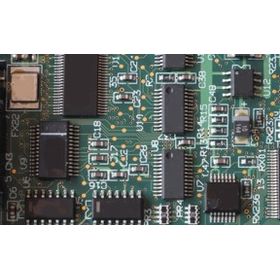
Various aspects of etching
This time, we would like you to know about various aspects of etching. - What is etching? - Advantages and disadvantages of etching - Etching techniques Please take a look, and if you have any questions, feel free to consult with us at Equal.

We can also process a variety of substrates with complex and intricate patterns.
We will create complex and intricate patterns using methods such as etching, lift-off, mask processing, and precision screen printing on the formed thin film. We can accommodate a variety of substrates including glass, metal, ceramics, silicon, and resins (PET film, acrylic, polyimide).

Achieving deep super etching up to 0.2 in depth!
- Achieved super etching with sharp edges deeper than other companies' processing (up to 0.2 in roughness). - Achieved high-resolution pattern super etching with standard etching (roughness of 0.05 to 0.15 mm).

Silicon etching
Introducing Photo Precision Co., Ltd., which contributes to prototyping and development in various fields, including microelectronics and optical products, with photofabrication as its core technology. "Silicon Etching" Overview A technology that etches the silicon substrate itself to form three-dimensional structures. ■□■ Features ■□■ ■ Utilizing the crystal orientation of silicon, it enables groove processing with flat groove walls (anisotropic etching). V-shaped and rectangular grooves can be formed. ■ Depending on the type of etching solution, rounded edges can be created on the groove walls, allowing for isotropic etching as well. ■□■ Types of Processing ■□■ ■ V-Groove Processing - Using silicon material with a <100> surface orientation, V-shaped grooves are formed. - The angle of the slope is always the same (54.7°). ■ Rectangular Groove Processing - Using silicon material with a <110> surface orientation, rectangular grooves are formed. - Due to the crystal structure, the direction of the grooves tilts at 54.7° relative to the side surface. ■ Isotropic - Etching progresses uniformly in all directions. For more details, please download the catalog or contact us.

Glass etching
Glass etching does not have the directionality of Si wafers, but the range of material and work dimensions is very broad, and it is used in various fields. For more details, please feel free to "contact us."
![[Must-See for Engineers!!] MEMS-related Photo Etching Technical Documentation Collection](https://image.mono.ipros.com/public/product/image/1fe/2000151167/IPROS4342770482048066255.JPG?w=280&h=280)
A collection of technical materials that consolidates useful information for research and development related to MEMS, where technological development is advancing, is available for free!
MEMS, centered around photofabrication and micromachine technology, is expected to thrive in various application fields. We are pleased to announce the comprehensive release of a "Technical Data Collection" that includes numerous processing and application technologies. This collection is filled with information on essential technologies such as "photoetching," which is a fundamental technology in MEMS and display device substrates; "dicing processing," a technique for accurately cutting out circuits formed on silicon wafers into chips; and "bump formation," which is indispensable for various mounting technologies such as CSP, BGA, and flip chips. For more details, please contact us or refer to the catalog.

The optimal nozzle design enables uniform processing! A finish without liquid stains, unevenness, or rust!
We would like to introduce the acid treatment and soft etching for surface treatment handled by Fujikiko Co., Ltd. With an optimal nozzle design, uniform processing is possible. Additionally, by optimizing washing and drying, the finish will be free of liquid stains, unevenness, and rust. 【Features】 ■ Uniform processing is possible due to optimal nozzle design ■ Washing and drying are optimized ■ The finish will be free of liquid stains, unevenness, and rust ■ The clean design of the drying equipment prevents dust adhesion *For more details, please refer to the PDF materials or feel free to contact us.
