We have compiled a list of manufacturers, distributors, product information, reference prices, and rankings for Spectrometer.
ipros is IPROS GMS IPROS One of the largest technical database sites in Japan that collects information on.

Spectrometer Product List and Ranking from 69 Manufacturers, Suppliers and Companies | IPROS GMS

Last Updated: Aggregation Period:Jul 15, 2026~Aug 11, 2026
This ranking is based on the number of page views on our site.

Spectrometer Manufacturer, Suppliers and Company Rankings

Last Updated: Aggregation Period:Jul 15, 2026~Aug 11, 2026
This ranking is based on the number of page views on our site.

  1. サーモフィッシャーサイエンティフィック株式会社/Thermo Fisher Scientific K.K. Tokyo//Testing, Analysis and Measurement
  2. 一般財団法人材料科学技術振興財団 MST Tokyo//Testing, Analysis and Measurement
  3. テックアナリシス Osaka//Testing, Analysis and Measurement
  4. 4 サンインスツルメント 本社 Tokyo//Trading company/Wholesale
  5. 5 オプトシリウス Tokyo//others

Spectrometer Product ranking

Last Updated: Aggregation Period:Jul 15, 2026~Aug 11, 2026
This ranking is based on the number of page views on our site.

  1. Fully Automated X-ray Photoelectron Spectroscopy Device 'K-Alpha' サーモフィッシャーサイエンティフィック株式会社/Thermo Fisher Scientific K.K.
  2. X-ray photoelectron spectroscopy device 'Nexsa' サーモフィッシャーサイエンティフィック株式会社/Thermo Fisher Scientific K.K.
  3. HORIBA Compact Raman テックアナリシス
  4. 4 Low price! Ultra-compact near-infrared spectrometer FLAME-NIR+ オプトシリウス
  5. 5 [UPS] Ultraviolet Photoelectron Spectroscopy 一般財団法人材料科学技術振興財団 MST

Spectrometer Product List

31~60 item / All 217 items

Displayed results

Ultra-high-speed spectral measurement device Spectrometer DTSP-150

Compact with low noise! Back-illuminated Peltier cooling FFT-CCD used.

A spectrometer is a device that separates light into a spectrum (light by wavelength) and measures the intensity of light at each wavelength. By shining light on thin films and spectrally analyzing the reflected light, the components of the thin films can be measured. Applications include thickness management of films on various discs, measurement of resist films and SiO on semiconductor wafers, management of coating thickness on optical lenses, thickness measurement of various films, inline measurement of alignment films and ITO films on glass substrates, and color measurement of LEDs. There are also established achievements in constructing multi-channel systems for inline use. For more details, please contact us.

  • Spectroscopic Analysis Equipment
  • Spectrometer

Added to bookmarks

Bookmarks list

Bookmark has been removed

Bookmarks list

You can't add any more bookmarks

By registering as a member, you can increase the number of bookmarks you can save and organize them with labels.

Free membership registration

Low-Angle X-ray Scattering (LAXS)

It is possible to obtain information on thin film composition in real-time! A diagnostic tool for process monitoring.

"Low Angle X-ray Spectroscopy (LAXS)" is a low-angle X-ray spectroscopy method. It provides a diagnostic tool for in-situ real-time process monitoring for PLD/PED systems. It allows for real-time information on thin film composition as a complementary tool to RHEED. 【Features】 ■ It is possible to obtain real-time information on thin film composition as a complementary tool to RHEED. *For more details, please refer to the PDF document or feel free to contact us.

  • X-ray fluorescence analyzer
  • Spectrometer

Added to bookmarks

Bookmarks list

Bookmark has been removed

Bookmarks list

You can't add any more bookmarks

By registering as a member, you can increase the number of bookmarks you can save and organize them with labels.

Free membership registration

Spectrum 3NIR/MIR/FIR FTIR

Supports triple range! The beam splitter is an XR-beam splitter, FTIR system with far-infrared grid.

The "Spectrum 3NIR/MIR/FIR FTIR" is a top-class performance FTIR system that supports triple ranges. The beam splitter (B/S) is an XR-beam splitter and far-infrared grid, allowing for the simultaneous installation of two types. The highest resolution is specified at 0.4 cm-1 (mid-infrared). In addition, we offer a lineup that includes the high-performance near-infrared analysis "Spectrum 3 NIR" and the fully functional "Spectrum 3 MIR/FIR FTIR" equipped with advanced far-infrared capabilities. 【Specifications】 ■ Light Source - Downward-Looking Light Source - Near-Infrared Tungsten Halogen Light Source ■ Beam Splitter (B/S) - XR-Beam Splitter - Far-Infrared Grid *For more details, please refer to the PDF materials or feel free to contact us.

  • others
  • Analytical Equipment and Devices
  • Spectroscopic Analysis Equipment
  • Spectrometer

Added to bookmarks

Bookmarks list

Bookmark has been removed

Bookmarks list

You can't add any more bookmarks

By registering as a member, you can increase the number of bookmarks you can save and organize them with labels.

Free membership registration

Space IR Spectrometer

IR spectrometer for CubeSats and other ultra-small satellites.

An IR spectrometer that can be used as remote sensing mission equipment for CubeSats and other ultra-small satellites. The wavelength range is from 1000nm to 1700nm with a spatial resolution of approximately 6nm. (The wavelength range can be extended up to 2400nm.) Additionally, it can also be used for UAV applications.

  • Color camera
  • others
  • Spectrometer

Added to bookmarks

Bookmarks list

Bookmark has been removed

Bookmarks list

You can't add any more bookmarks

By registering as a member, you can increase the number of bookmarks you can save and organize them with labels.

Free membership registration

Low Energy Inverse Photoemission Spectroscopy Device "LEIPS"

No damage to organic semiconductors & high resolution! LUMO level measurements can be made with precision that withstands research!

The low-energy inverse photoelectron spectroscopy device "LEIPS" is a low-energy inverse photoelectron spectroscopy apparatus that can measure LUMO levels with high precision without damaging organic semiconductors. By lowering the irradiation energy below the molecular covalent bond, it avoids damage to the sample. Additionally, it employs high-performance filters for light detection, achieving a resolution of less than 0.5 eV. Based on the conventional device "IPES," it addresses the challenges that have been encountered so far. 【Features】 ■ High sensitivity ■ High resolution of less than 0.5 eV ■ Contributes to the development and performance enhancement of organic semiconductors *For more details, please download the catalog or contact us.

  • Spectroscopic Analysis Equipment
  • Spectrometer

Added to bookmarks

Bookmarks list

Bookmark has been removed

Bookmarks list

You can't add any more bookmarks

By registering as a member, you can increase the number of bookmarks you can save and organize them with labels.

Free membership registration

WITec alpha300 series

A modular confocal Raman microscope system that achieves uncompromising speed, sensitivity, and resolution!

The "WITec alpha300 series" is a modular confocal Raman microscope system capable of supporting FM and high-resolution Raman measurements. We offer options such as the "alpha300 R," which allows for the selection of laser wavelengths from UV to NIR, and the "alpha300 access," which features high-quality, ultra-precise optical components. Each system can be configured to meet the individual requirements of our customers, providing flexibility for future research challenges. 【Product Lineup (Partial)】 ■ alpha300 A ■ alpha300 S ■ alpha300 apyron ■ alpha300 RA ■ alpha300 RS *For more details, please refer to the PDF materials or feel free to contact us.

  • Other microscopes
  • Spectrometer

Added to bookmarks

Bookmarks list

Bookmark has been removed

Bookmarks list

You can't add any more bookmarks

By registering as a member, you can increase the number of bookmarks you can save and organize them with labels.

Free membership registration

Cathode Luminescence Spectrometer SPARC

This is a high-sensitivity, multifunctional, high-resolution angle-resolved cathodoluminescence (CL) imaging spectrometer for research on microphotonic structures.

Capabilities of SPARC SPARC is a truly unique analytical method suitable for photonic research of nano and microstructures with deep sub-wavelength resolution. It is useful for the study of micro-nanophotonic structures and their related materials, including metallic (plasmonic, Ag, Au, etc.), dielectric (SiO2, Si3N4, TiO2, etc.), and semiconductor (Si, GaAs, CdTe, etc.) materials.

  • Spectroscopic Analysis Equipment
  • Other semiconductors
  • Analytical Equipment and Devices
  • Spectrometer

Added to bookmarks

Bookmarks list

Bookmark has been removed

Bookmarks list

You can't add any more bookmarks

By registering as a member, you can increase the number of bookmarks you can save and organize them with labels.

Free membership registration

Energy Dispersive X-ray Spectroscopy (EDS)

Detecting characteristic X-rays! An effective analytical method for obtaining elemental information in micro-regions and small foreign substances.

"Energy Dispersive X-ray Spectroscopy (EDS or EDX)" is a method that detects characteristic X-rays generated by electron beam irradiation using a detector attached to an electron microscope (SEM or TEM), allowing for the acquisition of elemental information about samples or foreign substances. When characteristic X-rays generated by irradiating a material with an electron beam enter the detector, a number of electron-hole pairs equivalent to the energy of the characteristic X-rays are produced. By measuring this number (current), it is possible to determine the energy of the characteristic X-rays, and since the energy varies by element, it is possible to investigate the elemental information of the material. [Analysis by EDS (partial)] ■ Qualitative analysis of intermetallic compounds (point analysis) - By examining which elemental characteristic X-ray energy corresponds to the characteristic X-rays in the measured spectrum, the types of elements can be investigated. ■ Semi-quantitative analysis of intermetallic compounds - By examining the intensity (count number) of each characteristic X-ray, the concentration of the contained elements can be calculated. *For more details, please refer to the PDF document or feel free to contact us.

  • Analytical Equipment and Devices
  • Contract Analysis
  • Spectrometer

Added to bookmarks

Bookmarks list

Bookmark has been removed

Bookmarks list

You can't add any more bookmarks

By registering as a member, you can increase the number of bookmarks you can save and organize them with labels.

Free membership registration

[XPS] X-ray Photoelectron Spectroscopy

Effective for evaluating the types, quantities, and chemical bonding states of elements on the sample surface (at a depth of about several nanometers).

XPS is a technique that measures the kinetic energy distribution of photoelectrons emitted by X-ray irradiation, providing insights into the types, quantities, and chemical bonding states of elements present on the sample surface (to a depth of about a few nanometers). Because it can provide information about chemical bonding states, it is also known as ESCA: Electron Spectroscopy for Chemical Analysis. - Qualitative and quantitative analysis of elements on solid surfaces (approximately 2 to 8 nm) is possible. - Chemical bonding state analysis is possible. - Non-destructive analysis is possible. - Measurement of depth distribution (using ion sputtering) is possible. - Measurement of insulators is possible. - Measurement under controlled atmospheres is possible.

  • 打ち合わせ.jpg
  • セミナー.jpg
  • Contract Analysis
  • Contract measurement
  • Contract Inspection
  • Spectrometer

Added to bookmarks

Bookmarks list

Bookmark has been removed

Bookmarks list

You can't add any more bookmarks

By registering as a member, you can increase the number of bookmarks you can save and organize them with labels.

Free membership registration

Raman spectroscopy

Obtain information about the molecular structure and crystal structure of the sample.

Raman spectroscopy is a technique that utilizes the phenomenon of light scattering (Raman effect), where the frequency of incident light changes as a result of interaction with molecules, to obtain information about the structure within molecules. - It is possible to obtain information about the molecular structure and crystal structure of the sample. - By using laser light, it can measure smaller areas compared to FT-IR (beam diameter approximately 1 μm).

  • 打ち合わせ.jpg
  • セミナー.jpg
  • Contract Analysis
  • Contract measurement
  • Contract Inspection
  • Spectrometer

Added to bookmarks

Bookmarks list

Bookmark has been removed

Bookmarks list

You can't add any more bookmarks

By registering as a member, you can increase the number of bookmarks you can save and organize them with labels.

Free membership registration

[UPS] Ultraviolet Photoelectron Spectroscopy

For qualitative and quantitative analysis of the composition of the sample surface and work function evaluation.

UPS is a method that measures the kinetic energy distribution of electrons emitted by ultraviolet light irradiation, providing insights into the valence states of the sample's surface (on the order of a few nanometers). On the other hand, it is also used to evaluate the work function of various metal materials by utilizing high energy resolution. Since it can be measured alongside XPS analysis, it is possible to investigate the qualitative and quantitative surface composition of the sample and the correlation between bonding states and work function values.

  • 打ち合わせ.jpg
  • セミナー.jpg
  • Contract Analysis
  • Contract measurement
  • Contract Inspection
  • Spectrometer

Added to bookmarks

Bookmarks list

Bookmark has been removed

Bookmarks list

You can't add any more bookmarks

By registering as a member, you can increase the number of bookmarks you can save and organize them with labels.

Free membership registration

[Analysis Case] Structural Evaluation of Carbon Films

Evaluation of structural specificity, crystallinity, and sp3 characteristics.

Substances composed of carbon include those with crystalline structures such as diamond, graphite, carbon nanotubes, and graphene, as well as those with amorphous structures like diamond-like carbon (DLC). Raman spectroscopy is effective for the structural identification, crystallinity, and sp3 character evaluation of these materials.

Added to bookmarks

Bookmarks list

Bookmark has been removed

Bookmarks list

You can't add any more bookmarks

By registering as a member, you can increase the number of bookmarks you can save and organize them with labels.

Free membership registration

[TEM-EDX] Energy Dispersive X-ray Spectroscopy (TEM)

EDX is a method that measures the energy and occurrence of characteristic X-rays generated when an electron beam is irradiated onto the analysis area, allowing for elemental analysis and compositional analysis.

EDX is a method that measures the energy and occurrence of characteristic X-rays generated when an electron beam is irradiated onto the analysis target area, allowing for elemental and compositional analysis. It is also referred to as Energy Dispersive X-ray Spectroscopy (EDS). In many cases, it is attached to a SEM or TEM, and this document introduces the EDX that accompanies the TEM. - Simultaneous analysis of the entire range of elements (from B to U) is possible (detection of Be is also possible depending on the attached device). - Measurements can be made with a fine electron beam probe of 0.1 nm in diameter or smaller. - By using drift correction functionality, sub-nanometer layered films can be identified as distribution images in surface analysis. - In surface analysis, it is possible to extract spectra from arbitrary locations and display line analysis.

  • 打ち合わせ.jpg
  • セミナー.jpg
  • Contract Analysis
  • Contract measurement
  • Contract Inspection
  • Spectrometer

Added to bookmarks

Bookmarks list

Bookmark has been removed

Bookmarks list

You can't add any more bookmarks

By registering as a member, you can increase the number of bookmarks you can save and organize them with labels.

Free membership registration

[Analysis Case] Quantification of Hydroxyl Groups by Chemical Modification XPS

Evaluation of Hydroxyl Groups in Polymer Films

In controlling properties such as adhesion and wettability of polymer films, it is very important to quantitatively evaluate the polar functional groups (alcohol groups) present on the surface. XPS is optimal for quantitative evaluation; however, it is difficult to separate and quantify the adjacent oxidation state (C-O-C) and hydroxyl state (C-OH). In MST, after selectively reacting only the alcohol groups using a chemical modification method on polyvinyl alcohol (PVA), it is possible to quantify them using XPS. We present a case where the alcohol groups in PVA were chemically modified and evaluated using trifluoroacetic anhydride (TFAA). Measurement method: XPS, chemical modification Product fields: Electronic components, daily necessities Analysis purpose: Composition evaluation, identification, chemical bonding state evaluation For more details, please download the materials or contact us.

  • Contract Analysis
  • Spectrometer

Added to bookmarks

Bookmarks list

Bookmark has been removed

Bookmarks list

You can't add any more bookmarks

By registering as a member, you can increase the number of bookmarks you can save and organize them with labels.

Free membership registration

Points to consider in foreign matter analysis of AES.

AES: Auger Electron Spectroscopy

In AES analysis, it is possible to evaluate the elemental composition of the surface of minute foreign substances, making it useful for foreign substance analysis in small areas. However, due to the effects of damage from electron beams and other sources, there is a possibility that the foreign substances may change or disappear. Particularly when halogen elements are involved, the impact can be significant, and caution is required. An example of a case where a foreign substance disappeared during SEM observation or AES measurement is shown, specifically regarding NaCl particles on a Si wafer, along with the results of the AES analysis.

Added to bookmarks

Bookmarks list

Bookmark has been removed

Bookmarks list

You can't add any more bookmarks

By registering as a member, you can increase the number of bookmarks you can save and organize them with labels.

Free membership registration

[Analysis Case] Evaluation of Composition and Bonding State of GaN Film by XPS

Evaluation will be conducted under measurement conditions tailored to the purpose.

This text introduces an example of evaluating the composition and bonding states of GaN films used in LEDs and power devices using XPS. Understanding how the composition and bonding states change due to film formation conditions and surface treatments is effective for process management. It is important to appropriately select the X-rays used during the evaluation according to the purpose. Measurement conditions for each focus will also be presented.

Added to bookmarks

Bookmarks list

Bookmark has been removed

Bookmarks list

You can't add any more bookmarks

By registering as a member, you can increase the number of bookmarks you can save and organize them with labels.

Free membership registration

[Analysis Case] Evaluation of Metal Valence of Fuel Cell PtRu Catalyst Under Atmosphere and Temperature Control

Evaluation of chemical states under conditions where gas atmosphere and temperature are controlled is possible.

Carbon-supported PtRu (PtRu/C) catalysts are used as anode (fuel electrode) catalysts in fuel cells. There is a demand for reducing the amount of Pt used in order to lower costs, and active research and development is underway. To evaluate the state of the catalyst under fuel cell operating conditions, in-situ XAFS, which allows for observation in the same environment while controlling the gas atmosphere and temperature of the sample, is effective. This document presents a case study where the valence states of Pt and Ru in PtRu/C catalysts were evaluated using in-situ XAFS in an environment controlled to the gas atmosphere and temperature actually used in fuel cells.

Added to bookmarks

Bookmarks list

Bookmark has been removed

Bookmarks list

You can't add any more bookmarks

By registering as a member, you can increase the number of bookmarks you can save and organize them with labels.

Free membership registration

[Analysis Case] Raman Mapping of Carbon Materials

It is possible to evaluate the distribution of the crystalline state of carbon within the sample surface.

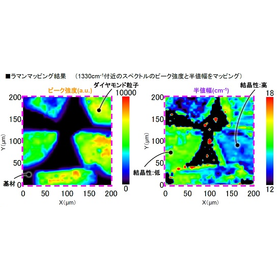
Carbon materials, widely used in industrial components and medical devices, have different properties depending on their structure and crystallinity, making it important to evaluate their state. This document presents evaluation examples using high-sensitivity and high-spatial-resolution Raman spectroscopy. The distribution of the crystalline state of graphite, a carbon material, was visualized through mapping. It allows for a visual capture of the quantity of defects, whether high or low.

Added to bookmarks

Bookmarks list

Bookmark has been removed

Bookmarks list

You can't add any more bookmarks

By registering as a member, you can increase the number of bookmarks you can save and organize them with labels.

Free membership registration

[Analysis Case] Evaluation of De-gassing of Resist Film by TDS

Evaluation of gas release components from organic films and temperature dependence assessment are possible with TDS.

TDS is a method that heats samples in high vacuum (1E-7 Pa) and investigates the gases released from the samples using a mass spectrometer. Since it is a vacuum system, it is not suitable for the large release of organic substances, but it can be evaluated by adjusting the sample amount. Below is an example of TDS analysis conducted on a resist film. Desorption gases originating from the resist film, such as organic substances, water, H2S, and SO2, were detected. It was also found that the desorption temperatures varied depending on the components.

Added to bookmarks

Bookmarks list

Bookmark has been removed

Bookmarks list

You can't add any more bookmarks

By registering as a member, you can increase the number of bookmarks you can save and organize them with labels.

Free membership registration

[Analysis Case] D Mapping of Organic Multilayers by Raman

It is possible to confirm the distribution of components in the depth direction through surface measurements.

In Raman analysis, the component distribution in the depth direction can be confirmed through measurements from the surface. It is effective for materials that easily transmit light, allowing for non-destructive evaluation without the need for cross-section processing or ion sputter etching. This document presents an example of evaluating each layer of an organic multilayer film using Raman 3D mapping. The results indicated that the organic multilayer film is composed of four layers. Additionally, by comparing with library data, the components of each layer were identified.

Added to bookmarks

Bookmarks list

Bookmark has been removed

Bookmarks list

You can't add any more bookmarks

By registering as a member, you can increase the number of bookmarks you can save and organize them with labels.

Free membership registration

[Analysis Case] Evaluation of Sn Surface State by XPS

It is possible to calculate the ratio by valence (divalent, tetravalent).

Tin (Sn), such as in solder, is used in many electronic components. In the XPS analysis of the Sn surface, by using the 4d orbitals in addition to the quantitative and state analysis typically performed with the 3d orbitals, it is possible to separate the oxidation states (divalent Sn2+ (SnO) and tetravalent Sn4+ (SnO2)) and calculate their ratios. Furthermore, by examining the valence band, it is possible to sensitively detect even a very small amount of the low oxidation state (divalent Sn2+ (SnO)). This document presents examples of evaluating Sn on the surface of solder using various orbitals.

  • c0603-2.jpg
  • c0603-3.jpg
  • Contract Analysis
  • Contract measurement
  • Spectrometer

Added to bookmarks

Bookmarks list

Bookmark has been removed

Bookmarks list

You can't add any more bookmarks

By registering as a member, you can increase the number of bookmarks you can save and organize them with labels.

Free membership registration

[Analysis Case] Evaluation of Composition Distribution of Ultrathin Films by ARXPS (C0550)

It is possible to evaluate the depth profile of ultra-thin films on the substrate!

We offer composition distribution evaluation of ultra-thin films using ARXPS (Angle-Resolved X-ray Photoelectron Spectroscopy) (C0550). Photoelectrons emitted by X-ray irradiation are detected at different take-off angles, and spectra with varying detection depths are used to evaluate the depth profile very close to the sample surface. This method improves depth resolution and has the advantage of no compositional changes due to selective sputtering or mixing, making it effective for evaluating the depth profiles of ultra-thin films (on the order of a few nanometers) on substrates. [Measurement Method / Processing Method] ■ [XPS] X-ray Photoelectron Spectroscopy *For more details, please download the PDF or feel free to contact us.

Added to bookmarks

Bookmarks list

Bookmark has been removed

Bookmarks list

You can't add any more bookmarks

By registering as a member, you can increase the number of bookmarks you can save and organize them with labels.

Free membership registration

[Analysis Case] Evaluation of Crystallinity of Carbon Materials Using Raman Mapping

It is possible to visualize the in-plane distribution of materials and crystallinity non-destructively!

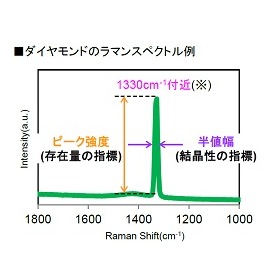
Our organization offers evaluation of the crystallinity of carbon materials using Raman mapping. Carbon materials possess different properties depending on their structure and crystallinity, and are used in various applications such as industrial components and medical devices. Linking the characteristics of materials to their crystallinity is effective as an indicator for material development. This document presents a case study where the in-plane distribution (peak intensity) of diamond particles, a carbon material applied to the surface of components, and the crystallinity (full width at half maximum) of each diamond particle were evaluated using Raman mapping. Diamonds exhibit a sharp peak observed sensitively at 1330 cm-1, making Raman evaluation effective. [Measurement Method / Processing Method] ■ [Raman] Raman Spectroscopy *For more details, please download the PDF or feel free to contact us.

Added to bookmarks

Bookmarks list

Bookmark has been removed

Bookmarks list

You can't add any more bookmarks

By registering as a member, you can increase the number of bookmarks you can save and organize them with labels.

Free membership registration

Analysis case: Assignment of the Raman spectrum of copper phthalocyanine.

By combining actual measurements and simulations, detailed peak attribution is possible!

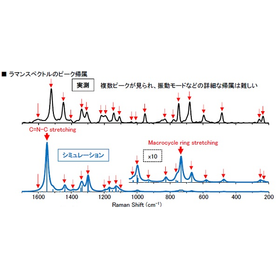
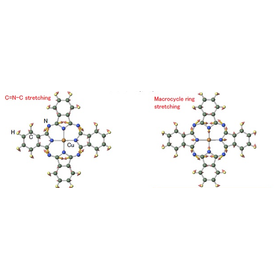
Our organization is conducting the assignment of the Raman spectrum of copper phthalocyanine through quantum chemical calculations. By comparing the measured results with the simulation results from quantum chemical calculations, we can perform spectral assignment, which allows for the analysis of vibrational modes. Here, we will introduce a case study of the analysis of "copper phthalocyanine," which is also expected to be utilized in organic thin-film transistors and other applications. 【Measurement and Processing Methods】 ■ [Raman] Raman Spectroscopy ■ Computational Science, AI, Data Analysis *For more details, please download the PDF or feel free to contact us.

Added to bookmarks

Bookmarks list

Bookmark has been removed

Bookmarks list

You can't add any more bookmarks

By registering as a member, you can increase the number of bookmarks you can save and organize them with labels.

Free membership registration

Handheld Ramen BRAVO

Ideal for raw material inspection, high-performance handheld Raman from Germany.

A large touchscreen equipped with outstanding performance, sophisticated design, and an intuitive graphical user interface. BRAVO is a high-performance handheld Raman device that streamlines the acceptance inspection and quality control of various raw materials.

  • Other inspection equipment and devices
  • Spectrometer

Added to bookmarks

Bookmarks list

Bookmark has been removed

Bookmarks list

You can't add any more bookmarks

By registering as a member, you can increase the number of bookmarks you can save and organize them with labels.

Free membership registration

Confocal Microscopy Laser Raman "SENTERRA II"

[Technical Data Presentation] Achieving high sensitivity performance and high frequency accuracy! A compact and robust distributed micro-Raman system.

The "SENTERRA II" is a high-performance system unique to Bruker, capable of handling everything from routine analyses such as quality control to cutting-edge research fields. In typical Raman microscopes, the spectrometer is mostly a separate system from the microscope, requiring a significant amount of time to maintain performance. This product is a compact and robust integrated system that combines the excitation laser, spectrometer, and microscope, achieving high performance and stability through its efficient optical design. Additionally, it supports operators smoothly and accurately to obtain results quickly. It guides users step by step through the procedures of data measurement, from visual observation of samples to confirming spectral quality and setting measurement areas. [Features] - Highly automated various functions and efficient operability - Compact & robust design - Efficiency and flexibility *For more details, please refer to the PDF document or feel free to contact us.

  • Analytical Equipment and Devices
  • Spectrometer

Added to bookmarks

Bookmarks list

Bookmark has been removed

Bookmarks list

You can't add any more bookmarks

By registering as a member, you can increase the number of bookmarks you can save and organize them with labels.

Free membership registration

Technical Data: Depth Analysis of Composites Using Confocal Microscopic Raman Spectroscopy System

Basic knowledge of micro-Raman spectroscopy is published! Free materials are being offered!

This document presents technical information on depth analysis of composite materials using the confocal micro-Raman spectroscopy system "SENTERRA II." It introduces the usefulness of depth analysis using the confocal micro-Raman spectroscopy system, starting with basic knowledge of micro-Raman spectroscopy and two application examples. 【Contents】 ■Introduction  ・Micro-Raman Spectroscopy  ・Differences in optical systems between general optical microscopes and confocal microscopes ■Confocal Optical System ■Micro-Raman Spectroscopy System SENTERRA II ■Application Examples  ・Qualitative analysis of foreign substances in gel within a syringe  ・Analysis of laminate films with multilayer structures ■Conclusion *For more details, please refer to the PDF document or feel free to contact us.

  • Analytical Equipment and Devices
  • Spectrometer

Added to bookmarks

Bookmarks list

Bookmark has been removed

Bookmarks list

You can't add any more bookmarks

By registering as a member, you can increase the number of bookmarks you can save and organize them with labels.

Free membership registration

Technical Data: High Spatial Resolution ATR Mapping Measurement (LUMOS II)

[JASIS2021 Exhibition] LUMOS II - Approaching the diffraction limit of light! High spatial resolution ATR mapping measurement.

The analysis of laminated materials composed of multiple layers with micrometer-scale thickness is one of the important analytical themes, and its influence is showing significant expansion. In this theme, micro-infrared spectroscopy and micro-Raman spectroscopy, which have a mutually complementary relationship, are the most effective analytical methods. The analysis of laminated materials is applied not only to this field but also to a wide range of areas such as biomedicine, pharmaceuticals, and materials science. This document provides a clear explanation of:  ▶ The importance of spatial resolution when applying microspectroscopy to the analysis of laminated materials  ▶ Reports on ATR mapping measurements using the latest micro FT-IR systems *For more details, please refer to the PDF document or feel free to contact us. ◆Exhibition at JASIS2021◆ For information about the exhibition, please check the basic information below.

  • Other environmental analysis equipment
  • Spectrometer

Added to bookmarks

Bookmarks list

Bookmark has been removed

Bookmarks list

You can't add any more bookmarks

By registering as a member, you can increase the number of bookmarks you can save and organize them with labels.

Free membership registration