

Composite X-ray Excitation Photoelectron Microscope Review PEEM
Compound X-ray Excitation Photoelectron Microscope Review PEEM
For more details, please contact us.
- Company:C503235 C503235
- Price:Other
Last Updated: Aggregation Period:Aug 05, 2026~Sep 01, 2026
This ranking is based on the number of page views on our site.
Last Updated: Aggregation Period:Aug 05, 2026~Sep 01, 2026
This ranking is based on the number of page views on our site.
Last Updated: Aggregation Period:Aug 05, 2026~Sep 01, 2026
This ranking is based on the number of page views on our site.
391~420 item / All 670 items
Compound X-ray Excitation Photoelectron Microscope Review PEEM
For more details, please contact us.

Standard-equipped with optimal measurement modes and options for polymer material research! Atomic force microscope for polymers based on ultra-high-performance environment-controlled AFM/SPM.
The Cypher ES Polymer Edition is based on the Cypher ES, which adds sophisticated environmental control to Asylum Research's ultra-high-performance AFM, and comes standard with measurement modes and options that are optimal for polymer materials research and polymer characterization (see "Basic Information" below). ● For other features and details, please refer to the catalog or contact us.

Space-saving and impressive performance. Ideal for live cell confocal imaging.
The "BC43" is a benchtop confocal microscope that can provide amazing images with just the push of a button. This plug-and-play confocal system is designed with cost, performance, and accessibility in mind, offering user-friendly high-quality 2D and 3D imaging capabilities that save valuable time for researchers. It also has many features and advantages, making it an ideal product for both those who are just starting their research and those who are already familiar with microscopy. 【Features】 ■ Benchtop multimodal imaging system ■ Easy confocal: sharp imaging without blur ■ Widefield imaging ■ Differential phase contrast and brightfield ■ Borealis uniform illumination *For more details, please refer to the PDF materials or feel free to contact us.

The fine structure of the sample can be observed at the nanoscale using a transmission electron microscope (TEM)!
Our company is capable of producing high-precision thin film samples for TEM observation and achieving clear sub-nanometer order structural observations through advanced TEM observation techniques.

High-quality microscope at a low price.
A microscope focused on ease of use.

A microscope with various combinations is possible! We also introduce a lens camera that can transmit wirelessly!
The "Major Scope" is an essential microscope for various industrial production, processing, and inspection processes. It is a highly valuable product as a peripheral device that optically supports positioning and setting of machine tools, measuring instruments, and various devices. Compact and easy to use, it can be utilized for a wide range of applications, from visual inspection to monitor observation, image measurement, and digital camera photography. 【Major Scope Features】 ■ The optical system provides a bright, wide field of view with a completely upright image microscope. ■ Designed with a long working distance and parfocality suitable for industrial use (objective lenses 2× to 10×). ■ By simply replacing the eyepiece micrometer, it can accommodate various applications such as measurement, inspection, centering, and positioning. ■ The objective lens has a gold frame mechanism that allows for easy fine magnification correction. Additionally, when attached to the Major Scope, the "Digital Catch" allows for measurement, inspection, and positioning while displaying the object and scale glass on a tablet device or similar screen. *For more details, please refer to the PDF document or feel free to contact us.

From product selection to combination proposals and even on-site verification, everything is free!
At Mirac Optical Co., Ltd., our product utilization proposal and verification agency service is handled individually by our design engineers, not sales representatives, to address various concerns and inquiries from our customers. We will provide the best proposals to solve your challenges by leveraging the know-how we have accumulated. 【Recommended for】 ○ Those who are unsure which Mirac product to choose from a wide range… ○ Those who want suggestions for the best combination of products that match their working conditions and target workpieces. ○ Those who would like to send in a physical workpiece for testing with an appropriate equipment configuration. *For more details, please contact us.
![[Case Study] Examples of Microscope Use](https://image.mono.ipros.com/public/product/image/666/2000179243/IPROS07259804965685962386.png?w=280&h=280)
We will introduce examples of use in pin shape inspections and burr inspections of rubber products.
Microscopes are essential for various industrial production, processing, and inspection processes, and we would like to introduce some examples of their use. They are highly valuable products that can also serve as optical support peripheral devices for positioning and setting of machine tools, measuring instruments, and various equipment. Compact and easy to use, they can be utilized for a wide range of applications, from visual inspection to monitor observation, image measurement, and digital camera photography. [Usage Examples] - Pushpin shape inspection - Burr inspection of rubber products - Gate removal residue inspection - Crack inspection equipment - Pin tip angle inspection *For more details, please download the PDF or contact us.

A microscope that is essential for various industrial production, processing, and inspection processes! Comprehensive catalog available for free!
The major scope is an essential microscope for various industrial production, processing, and inspection processes. It is also a highly valuable product as a peripheral device that optically supports positioning and setting of machine tools, measuring instruments, and various devices. Compact and easy to use, it can be utilized for a wide range of applications, from visual inspection to monitor observation, image measurement, and digital camera photography. We offer a wide variety of models and accessories in detail, responding to diverse needs at low prices. 【Features】 - The optical system provides a bright and wide actual field of view with a completely upright image microscope. - Designed with a long working distance and parfocality suitable for industrial use (objective lenses 2× to 10×). - By simply replacing the eyepiece micrometer, it can accommodate various measurements, inspections, centering, and positioning. - The objective lens has a gold frame mechanism that allows for easy fine magnification correction. *For more details, please download the PDF or contact us.
![[Video] DOVETAIL Stage](https://image.mono.ipros.com/public/product/image/d44/2001539409/IPROS496622294298453271.jpg?w=280&h=280)
Features of the Mirac Optical Company DOVETAIL Stage
I will explain the play, looseness, grinding, unevenness, and rattling of the dovetail stage. I will also explain the features of the dovetail stage made by Milacron Optical.
![[Video] Monocular Microscope "Major Scope" Setup for Applications](https://image.mono.ipros.com/public/product/image/2001547614/IPROS43231302011219904.jpg?w=280&h=280)
Here are some smart ways to use the monocular microscope "Majorscope"!
1. As a setting gauge for machine tools, it allows for tool compensation while simultaneously checking the cutting edge and alignment. 2. As a tool presetter for small automatic lathes, it enables the installation of cutting tools outside the machine using a tool holder (the part that secures the cutting tool) and a tool presetter (a device that allows for precise installation of the cutting tool while viewing through a microscope).
![[Video] Long-Focus Microscope](https://image.mono.ipros.com/public/product/image/2001561601/IPROS15190573461522661074.jpg?w=280&h=280)
You can observe from a distance! Long-focus microscope.
1. Ideal for applications that require a long working distance optical system. 2. Can be installed in a remote location when mounted on machinery or equipment. 3. Flexible arm allows for versatile setup. 4. The optical system can also be purchased separately. 5. The optical system is available in two types: visual observation type and C-mount type.

A super compact AFM with a depth and width that can take you anywhere, both measuring 15 cm.
The atomic force microscope "Handy AFM" can be used as a substitute for high-magnification optical microscopes. It features standard measurement modes, including static force mode, dynamic force mode, phase contrast, phase measurement, force modulation, spreading resistance, and external input capabilities. The scanning head is available in two types: high-resolution and wide-area, and they can be exchanged instantly. Probe replacement takes only a few seconds, and no adjustments are needed after replacement. Additionally, carbon nanotube probes can also be approached automatically. By using an electromagnetic scanner (patented) for scanning, there is no need to move the workpiece during the scan. Generally, it does not exhibit the non-linear creep or aging changes associated with piezo devices commonly used in AFMs. Optionally, it can be combined with a compact automatic stage. For more details, please download the catalog.

The only microscope capable of non-destructive three-dimensional measurement down to the nanometer scale.
The atomic force microscope "AFM with stage" is the only microscope capable of non-destructive three-dimensional measurements down to the nanometer scale in the atmosphere. It allows measurements without damaging the sample. By using an electromagnetic scanner, stable long-term measurements can be achieved without worrying about non-linear creep or aging effects. With a large stage, it is possible to perform non-destructive measurements simply by setting the sample without cutting the workpiece. Various measurement modes are available, providing functions equivalent to expensive AFM devices. Regardless of the material of the measurement work, measurements at the nano level can be performed immediately, from conductors to insulators, without any coating. For more details, please download the catalog.
![[Improvement without product] MEMS microscope (dual-side pattern misalignment inspection device)](https://image.mono.ipros.com/public/product/image/4c2/2000416540/IPROS12254321514997502054.jpg?w=280&h=280)
Monitor with a microscope camera to inspect for pattern misalignment and discrepancies!
At Arrows Engineering, we handle MEMS microscopes manufactured by IT Tech. The "TMIR-2000" can monitor MEMS wafers from both sides using microscope cameras, allowing for pattern misalignment and misregistration inspections. With newly developed software, the optical axes of the two cameras are aligned and synthesized in real-time, directly capturing any vertical overlap misalignment. Additionally, automatic line width measurement allows for sub-micron measurement of mark misalignment. 【Basic Configuration (Excerpt)】 ■ MEMS Microscope Main Unit ■ Triple Eyepiece Tube ■ 10x Eyepiece ■ XY Stage ■ Two Color Cameras ■ Inspection PC/19-inch Monitor/MEMS Inspection Software, etc. *For more details, please refer to the PDF document or feel free to contact us.

Introducing the flow from optical microscope observation with a wide range of applications to SEM observation and EDX elemental analysis!
We will introduce the flow from basic and widely applicable optical microscope observation to SEM observation and EDX elemental analysis. Observation using an optical microscope is one of the fundamental observation techniques, allowing for quick examination of general shapes and other features. Its advantage lies in the ability to obtain color information, making it effective for observing abnormalities associated with corrosion and other changes. In this document, we also provide detailed explanations of "observation using SEM" and "elemental analysis using EDX" with the help of photos and graphs. We encourage you to read it. [Contents] ■ Observation using an optical microscope ■ Observation using SEM ■ Elemental analysis using EDX *For more details, please refer to the PDF document or feel free to contact us.


![[Information] Differentiating Between Optical Microscopes and SEM](https://image.mono.ipros.com/public/product/image/e70/2000701513/IPROS38819552626942510479.png?w=280&h=280)
Comparing optical microscopes and SEM with the same sample! I will explain the advantages and disadvantages.
Optical microscopes and SEM (scanning electron microscopes) are commonly used for sample observation, but each has its own characteristics, so it is important to choose the appropriate device according to the purpose. In this document, we compare optical microscopes and SEM using the same sample and introduce the generally mentioned advantages and disadvantages. Please take a moment to read it. 【Contents】 ■ Features of Optical Microscopes ・ Advantages / Disadvantages ・ Recommended for this type of observation ■ Features of SEM (Scanning Electron Microscope) ・ Advantages / Disadvantages ・ Recommended for this type of observation *For more details, please refer to the PDF document or feel free to contact us.

![[Analysis Case Study] Observation of Adhesion State Through Metal Plates Using Ultrasonic Microscopy](https://image.mono.ipros.com/public/product/image/367300/IPROS2705829217984245675.png?w=280&h=280)
If it is something that ultrasonic waves can penetrate, you can check internal information that cannot be confirmed from the appearance!
Here is a case study of observing the adhesive state through a metal plate using an ultrasonic microscope. The ultrasonic microscope can confirm internal information that cannot be seen from the exterior, as long as the ultrasonic waves can penetrate. After reliability testing, we observed the condition of the adhesive remaining on the metal plate from the metal side in a sample where the chip had come off. Please refer to the PDF document for details on the observations and results. [Case Overview] - Observation of the adhesive layer between the metal and the chip - Observation of the adhesion state between the metal and the adhesive *For more details, please download the PDF or feel free to contact us.
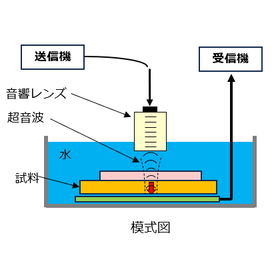
Delamination inside the circuit board, which is not visible during visual inspection, can also be visualized!
At Aites Co., Ltd., we conduct ultrasonic microscope observation (transmission method) of printed circuit boards. In printed circuit boards, issues such as delamination (separation) can occur due to factors like storage environment, thermal and humidity stress, and defects in the manufacturing process, leading to the separation of internal layers of the board. The transmission method involves transmitting ultrasonic waves through the observation sample and converting the received ultrasonic waves into electrical signals for imaging. If there are voids such as delamination, the ultrasonic waves do not transmit, resulting in a black appearance in the image. 【Features】 - Effective for detecting delamination (separation) that is not visible through visual inspection due to internal defects in the board. - Ultrasonic waves are transmitted through the observation sample for imaging. - Areas with voids such as delamination appear black in the image. *For more details, please download the PDF or feel free to contact us.
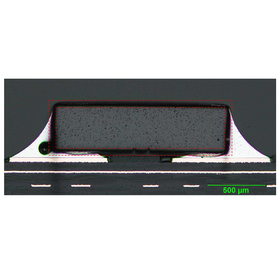
We will introduce suitable observation methods for cross-sectional observation of chip resistors and copper wiring sections!
To assist you in selecting an observation device, we will introduce the differences in visibility between a metal microscope, W-SEM, and FE-SEM. When observing the cross-section of a chip resistor, certain areas may be difficult to observe at low magnification with a metal microscope, but with SEM observation, the greater depth of field allows for high-flatness images even at low magnification. When observing the cross-section of copper wiring, the copper-resin interface and the condition inside cracks can be observed with W-SEM, but with FE-SEM, even the crystal grains and tiny voids at the connection interface can be clearly observed. [Comparison] ■ Cross-section observation of chip resistors: Comparison of images between metal microscope and W-SEM ■ Cross-section observation of copper wiring: Comparison of images between W-SEM and FE-SEM *For more details, please download the PDF or feel free to contact us.

High magnification observation (up to about 300,000 times) is possible.
SEM is a technique that allows for obtaining contrast based on the information from electrons emitted from a sample when an electron beam is directed at it, revealing the sample's surface roughness and compositional differences. - High magnification observation (up to about 500,000 times) is possible with simple operation. - Observation of secondary electron (SE) images, backscattered electron (BSE) images, and transmitted electron (TE) images is possible. - Observation can be conducted within an acceleration voltage range of 0.1 to 30 kV. - Samples up to 6 inches can be loaded into the device (depending on the equipment). - By combining options with SEM, various types of information can be obtained: - Elemental analysis using an EDX detector is possible. - Measurement of electron beam induced current (EBIC) allows for evaluation of the junction position and shape in semiconductors. - Crystal information can be obtained using electron backscatter diffraction (EBSD) method. - Three-dimensional structural information can be acquired through repeated FIB processing and SEM observation (Slice & View). - Cooling observation and atmosphere-controlled observation are available.


Three-dimensional measurement of nanoscale surface roughness.
AFM is a method that scans the surface of a sample with a fine probe and measures nanoscale surface topography in three dimensions. - It can measure a wide range of samples, from insulators to soft organic materials, including metals, semiconductors, and oxides. - By using tapping mode with low contact pressure, it is possible to minimize sample damage.


![[Analysis Case] Observation of the Buffer Layer Interface in CIGS Thin-Film Solar Cells](https://image.mono.ipros.com/public/product/image/559/387108041/IPROS1726901117569035406.jpg?w=280&h=280)
Crystal structure evaluation of the Zn(S, O, OH)/CIGS junction interface using ultra-high resolution STEM.
By directly observing the junction interface using a Cs collector-equipped STEM device, it is possible to evaluate the crystal structure at the atomic level. In this study, we conducted HAADF-STEM imaging of the buffer layer/CIGS interface using Zn(S, O, OH) in the buffer layer of CIGS thin-film solar cells and evaluated the structure. As a result, it was suggested that the crystal structure at the junction is unclear compared to samples using CdS as the buffer layer, indicating that it is not an epitaxial junction.
![[Analysis Case] Visualization of Strain at Heterojunction Interfaces in Compounds](https://image.mono.ipros.com/public/product/image/ff5/2000026070/IPROS8071022777044919217.jpg?w=280&h=280)
Lattice image analysis using the FFTM method
The Fast Fourier Transform Mapping method is a technique that performs a Fourier transform on high-resolution TEM images to analyze and visualize the minute lattice distortions of crystals from the spot positions of the FFT pattern. Through FFTM analysis, it is possible to (1) analyze lattice distortions in the x and y directions of the image, (2) analyze lattice distortions in the crystal plane direction, (3) analyze the distribution of crystal plane spacing and crystal plane orientation, (4) display the data distribution as a histogram, and (5) detect distortions of 0.5% with a spatial resolution of 5 nm. An example of its application to compound heterojunction multilayer film samples is presented.


![[Analysis Case] Preprocessing Technology for Specific Areas of Wafers and Chips](https://image.mono.ipros.com/public/product/image/5ec/2000026080/IPROS61310610573626825328.jpeg?w=280&h=280)
We will sample only the target area and produce samples without breaking the wafer.
We will extract small pieces from the wafer chip without breaking it and thin them down for high-resolution TEM observation and analysis. Furthermore, by cutting and preparing samples while leaving the areas to be analyzed, we will conduct TEM observation and analysis of the target areas from any desired direction and provide the data. Through advanced TEM sample preparation techniques, we will meet various observation, analysis, and evaluation needs.
![[Analysis Case] Investigation of Defective Bipolar Transistors (IGBT)](https://image.mono.ipros.com/public/product/image/d17/2000026094/IPROS1716188955532766691.jpg?w=280&h=280)
Identification of failure locations using an emission microscope with a high voltage power supply.
By overlaying the luminescent image and the IR image, it is possible to identify leak locations under microscopic observation. If there are large-scale appearance anomalies such as cracks or electrostatic breakdown, abnormalities can also be confirmed with an IR microscope. Additionally, if luminescence cannot be detected due to light shielding of the emitter electrode, the collector electrode is removed, and near-infrared light is detected from the collector side. An example is presented where a high-voltage power supply capable of applying up to 2000V is used to operate a power device with high voltage resistance and low leakage current, and the failure location is identified using an emission microscope.
