We have compiled a list of manufacturers, distributors, product information, reference prices, and rankings for microscope.
ipros is IPROS GMS IPROS One of the largest technical database sites in Japan that collects information on.

microscope Product List and Ranking from 178 Manufacturers, Suppliers and Companies

Last Updated: Aggregation Period:Oct 29, 2025~Nov 25, 2025
This ranking is based on the number of page views on our site.

microscope Manufacturer, Suppliers and Company Rankings

Last Updated: Aggregation Period:Oct 29, 2025~Nov 25, 2025
This ranking is based on the number of page views on our site.

  1. null/null
  2. スリーアールソリューション Fukuoka//Trading company/Wholesale
  3. 一般財団法人材料科学技術振興財団 MST Tokyo//Testing, Analysis and Measurement
  4. 4 アズサイエンス 松本本社 Nagano//Trading company/Wholesale
  5. 5 サーモフィッシャーサイエンティフィック株式会社/Thermo Fisher Scientific K.K. Tokyo//Testing, Analysis and Measurement

microscope Product ranking

Last Updated: Aggregation Period:Oct 29, 2025~Nov 25, 2025
This ranking is based on the number of page views on our site.

  1. Portable Microscope "Magic Loupe R" / 15x Magnification, Photo and Save Capability スリーアールソリューション
  2. All-in-one fluorescence microscope 'BZ-X1000 Series'
  3. White interference microscope equipped with laser microscope 'VK-X3000'
  4. 4 White interference microscope equipped with laser 'VK-X4000 series'
  5. 5 All-in-one fluorescence microscope 'BZ-X800'

microscope Product List

646~660 item / All 662 items

Displayed results

Olympus Stereo Microscope System

All products are sold individually as standard specification items. We provide short delivery times due to complete stock sales.

The Olympus stereo microscope system is arranged so that you can order a complete microscope system with a single product code, consisting of several common components for building the system, based on the company's SZ61 or SZX7 series microscopes. The camera system features a 5-megapixel USB 2.0 color camera and a basic stand with reflected illumination. The boom stand system uses a ball bearing boom stand (#54-121) to achieve high stability. The Olympus SZ6 series stereo microscope employs a Greenough optical system, providing high image quality and excellent flatness of the image field. The Olympus SZX7 series stereo microscope supports video connections and uses a Galileo optical system for high-resolution imaging. For the product lineup of standard specifications, their details, and sales prices, please refer to the relevant product page on the official website of Edmund Optics Japan Co., Ltd. (accessible from the product homepage linked above). *You can download the catalog from Edmund Optics Japan that includes this product from the link below.

  • Optical microscope

Added to bookmarks

Bookmarks list

Bookmark has been removed

Bookmarks list

You can't add any more bookmarks

By registering as a member, you can increase the number of bookmarks you can save and organize them with labels.

Free membership registration

The scratches on the substrate and IC chips appear three-dimensional! Halation stereo microscope.

Even small scratches and dirt are immediately visible! A microscope that allows for three-dimensional observation of surface irregularities such as circuit boards and membranes.

The Halation Stereo Microscope "Model HSM-300D" is a microscope that allows for three-dimensional observation of scratches and dirt on ITO films, such as those used in touch panels, and IC chips (patent pending). It enables viewing flat substrates and films in a "three-dimensional" manner, making foreign objects, scratches, and surface irregularities immediately apparent. This significantly improves inspection efficiency and accuracy. 【Features】 ■ Clear identification of abnormal positions due to the three-dimensional image ■ Ability to observe deeper areas ■ Long-lasting LED lighting with no need for replacement ■ Can be connected to a monitor for observation ■ Usable as a general stereo microscope as well

  • Optical microscope

Added to bookmarks

Bookmarks list

Bookmark has been removed

Bookmarks list

You can't add any more bookmarks

By registering as a member, you can increase the number of bookmarks you can save and organize them with labels.

Free membership registration

Contracted service for ion milling processing | JTL

We will produce cross-sectional samples without any taper using the ion milling method.

We will perform precise sample preparation necessary for high-magnification observation using the ion milling method for cross-sectional processing. In conventional mechanical polishing using polishing paper and abrasives, issues such as deformation due to stress during polishing, collapse of voids, and cracking could occur. Even for samples prone to such phenomena, by performing polishing with a very weak ion beam, we can produce cross-sectional samples suitable for high-magnification observation and analysis of micro-regions, as well as crystal orientation analysis (EBSD).

  • Other services
  • Processing Contract
  • Surface treatment contract service

Added to bookmarks

Bookmarks list

Bookmark has been removed

Bookmarks list

You can't add any more bookmarks

By registering as a member, you can increase the number of bookmarks you can save and organize them with labels.

Free membership registration

Optical microscope and microscope peripheral equipment

We handle optical microscopes and microscope peripheral equipment from various manufacturers.

At Kyoritsu Electric, we handle optical microscopes and microscope peripheral equipment from the following manufacturers. Please feel free to contact us. 【Manufacturers we handle (excerpt)】 Carl Zeiss AG Yokogawa Electric Corporation Micro Support Co., Ltd. Olympus Corporation Leica Microsystems GmbH Hirox Co., Ltd. Keyence Corporation Nikon Corporation

  • Optical microscope

Added to bookmarks

Bookmarks list

Bookmark has been removed

Bookmarks list

You can't add any more bookmarks

By registering as a member, you can increase the number of bookmarks you can save and organize them with labels.

Free membership registration

Observation of surface roughness of rubber and elastomer products using a laser microscope (LM).

It is possible to evaluate the surface shape of rubber and elastomer materials, as well as analyze abnormal parts!

We conduct "surface roughness observation using a laser microscope (LM)" as part of morphological observation. The objective lenses are x5, x10, x20, x50, and x100, with an observation field of 100 to 1000 micrometers. The output types are color images, monochrome images, and 3D images. We can perform measurement analysis of the surface roughness of molded products, sheets, and films, as well as measurements of surface shapes of appearance anomalies, contaminants, and scratches. 【Device Overview】 ■ Objective Lenses: x5, x10, x20, x50, x100 ■ Observation Field: 100 to 1000 micrometers *Varies by objective lens magnification ■ Output Types: Color images, monochrome images, 3D images *For more details, please refer to the related links or feel free to contact us.

  • 1.PNG
  • Contract Analysis

Added to bookmarks

Bookmarks list

Bookmark has been removed

Bookmarks list

You can't add any more bookmarks

By registering as a member, you can increase the number of bookmarks you can save and organize them with labels.

Free membership registration

[Column] What are the differences between digital microscopes and optical microscopes?

What are digital microscopes and optical microscopes? Let's choose the right one for each application.

Some people may find it difficult to understand the differences between optical microscopes and digital microscopes. In this column, we will clearly explain the features and differences of each, so please use it as a reference when considering the introduction of optical microscopes or digital microscopes. For more details, please see the related links. [Content Overview (Partial)] ■ Features of Digital Microscopes and Optical Microscopes ・What is a digital microscope? ・What is an optical microscope? ■ Differences between Digital Microscopes and Optical Microscopes ・Differences in ease of information sharing ・Differences in usability *You can view the detailed content of the column from the related links. For more information, please feel free to contact us.

  • Microscope

Added to bookmarks

Bookmarks list

Bookmark has been removed

Bookmarks list

You can't add any more bookmarks

By registering as a member, you can increase the number of bookmarks you can save and organize them with labels.

Free membership registration

[Column] The Difference Between Digital Microscopes and Electron Microscopes

What is the difference between a digital microscope and an electron microscope? It is important to choose the right equipment.

The electron microscope and digital microscope each have different areas of observation in which they excel. If you choose one without knowing their respective features and usability, you may not be able to conduct observations that align with your intentions. This column introduces the characteristics and differences between digital microscopes and electron microscopes. If you are unsure which one to implement, please use this as a reference. For more details, please see the related links. [Content Included] ■ Characteristics of digital microscopes and electron microscopes ■ Differences between digital microscopes and electron microscopes ■ Choose the one suited for each application *You can view the detailed content of the column (such as blogs) from the related links. For more information, please feel free to contact us.

  • Microscope

Added to bookmarks

Bookmarks list

Bookmark has been removed

Bookmarks list

You can't add any more bookmarks

By registering as a member, you can increase the number of bookmarks you can save and organize them with labels.

Free membership registration

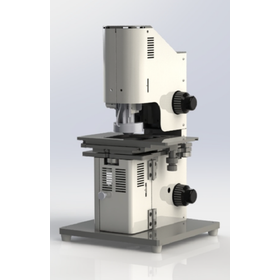
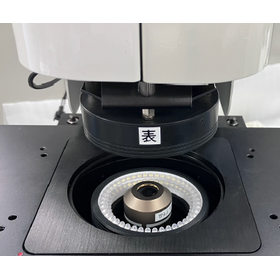
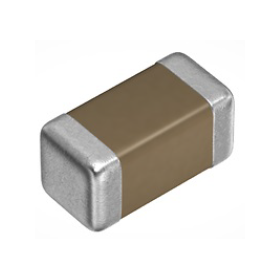
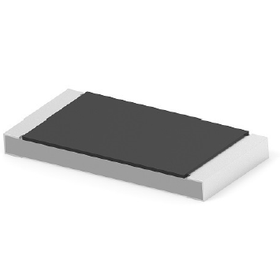
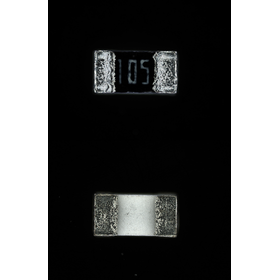
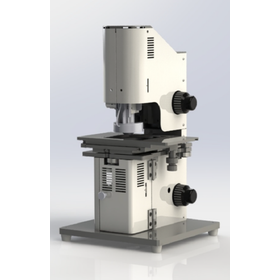
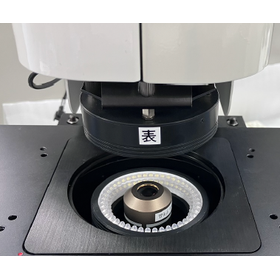
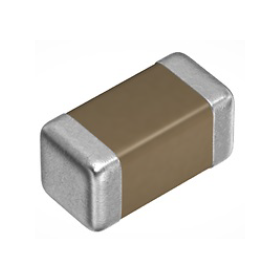
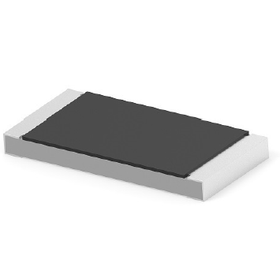
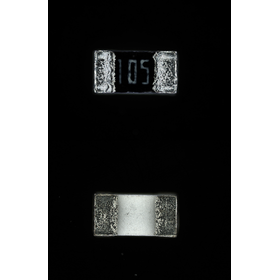
For inspecting surface defects on electronic components such as capacitors and resistors! Dual-sided microscope system.

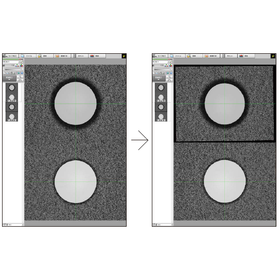
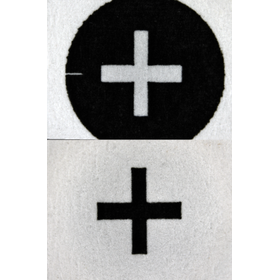
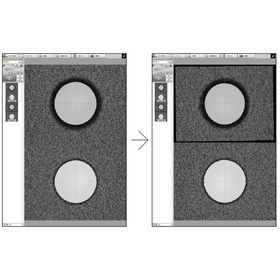
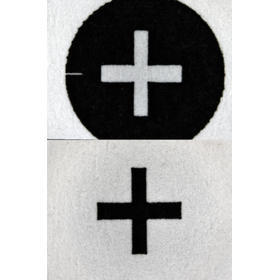
A low-magnification wide-field microscope that can simultaneously observe both sides of electronic components and printed circuit boards. Ideal for scratch inspection and measuring misalignment of alignment marks!

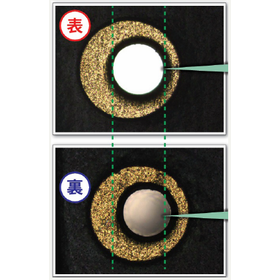
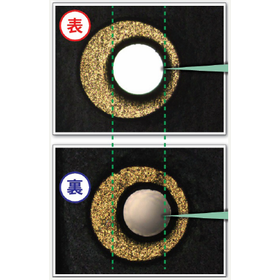
The "TOMOS-50R1" is a dual-sided microscope system equipped with wide-field ring lighting, capable of capturing images with a 1x field of view. It allows for the inspection of both sides of electronic components such as condensers and resistors, resin parts for communication devices, and entire pieces like lenses. 【Features】 ■ High-precision image processing correction for optical axis misalignment of the microscope, lens magnification errors, and camera θ misalignment ■ Dimension measurement is possible without the hassle of flipping the sample over ■ Simultaneous imaging of both sides of quartz oscillators, MEMS, holes in printed circuit boards, and electronic components ■ Measurement of misalignment in patterns and alignment marks on both sides with a repeatability accuracy of ±0.010mm (※) ※ Measurement accuracy may vary depending on subject conditions, measurement conditions, objective lens magnification, measurement environment, etc. Please confirm with sample tests. \ For more details, please check "Download Catalog" /

  • スクリーンショット 2025-07-16 115536.png
  • スクリーンショット 2025-07-16 115551.png
  • スクリーンショット 2025-07-16 115628.png
  • スクリーンショット 2025-07-16 115641.png
  • スクリーンショット 2025-07-16 115654.png
  • スクリーンショット 2025-07-16 115716.png
  • スクリーンショット 2025-07-16 115725.png
  • Other microscopes

Added to bookmarks

Bookmarks list

Bookmark has been removed

Bookmarks list

You can't add any more bookmarks

By registering as a member, you can increase the number of bookmarks you can save and organize them with labels.

Free membership registration

For inspecting the front and back position misalignment of printed circuit boards! Dual-sided microscope system with lighting.

Achieving high-efficiency inspection through simultaneous observation of both sides. A microscope system that reliably captures scratches and misalignments on fine components such as lenses, LED chips, and communication parts!

The "TOMOS-50R1" is a dual-sided microscope system equipped with wide-field ring lighting, capable of capturing images with a 1x field of view. It allows for the inspection of both sides of electronic components such as condensers and resistors, resin parts for communication devices, and entire pieces like lenses. 【Features】 ■ High-precision image processing correction for optical axis misalignment on both sides of the microscope, lens magnification errors, and camera θ misalignment. ■ Dimension measurement is possible without the hassle of flipping the sample over. ■ Simultaneous imaging of both sides of quartz oscillators, MEMS, holes in printed circuit boards, and electronic components. ■ Measurement of misalignment in patterns and alignment marks on both sides can be done with a repeatability accuracy of ±0.010mm (※). ※ Measurement accuracy may vary depending on subject conditions, measurement conditions, objective lens magnification, measurement environment, etc. Please confirm with sample tests. \ For more details, please check "Download Catalog" /

  • スクリーンショット 2025-07-16 115536.png
  • スクリーンショット 2025-07-16 115551.png
  • スクリーンショット 2025-07-16 115628.png
  • スクリーンショット 2025-07-16 115641.png
  • スクリーンショット 2025-07-16 115654.png
  • スクリーンショット 2025-07-16 115716.png
  • スクリーンショット 2025-07-16 115725.png
  • Other microscopes

Added to bookmarks

Bookmarks list

Bookmark has been removed

Bookmarks list

You can't add any more bookmarks

By registering as a member, you can increase the number of bookmarks you can save and organize them with labels.

Free membership registration

[Blog] Dramatic Advances in Microbial Analysis Technology - A Look Back at Microbial Research

Why microorganisms now? It's because new possibilities have been discovered in the use of microorganisms.

Microorganisms were first recognized in the late 17th century when the microscope was invented by a Dutch textile merchant. For a long time, the flow of research on microorganisms has generally involved acquiring microorganisms that can be cultured under specific conditions (mainly on agar media) and analyzing their characteristics using various analytical devices. Various analytical techniques have been developed, including morphological analysis using optical and electron microscopes, DNA sequence analysis based on improved methods derived from the Sanger method developed in 1977, and protein crystallography, which involves purifying proteins, forming crystals, and irradiating them with X-rays to deduce the protein structure from the resulting diffraction patterns. Research has been steadily and diligently advanced. *For more details about the blog, please refer to the related links. If you have any questions, feel free to contact us.*

  • others

Added to bookmarks

Bookmarks list

Bookmark has been removed

Bookmarks list

You can't add any more bookmarks

By registering as a member, you can increase the number of bookmarks you can save and organize them with labels.

Free membership registration

[Research Material] Global Market for Surgical/Operating Microscopes

Global Market for Surgical/Operating Microscopes: Neurosurgery, Spine Surgery, Plastic and Reconstructive Surgery, Ophthalmology, Gynecology and Urology, Oncology, Others, Hospitals, Clinics, Others

This research report (Global Surgical/Operating Microscopes Market) investigates and analyzes the current status and outlook for the global market of surgical/operating microscopes over the next five years. It includes information on the overview of the global surgical/operating microscopes market, trends of major companies (sales, selling prices, market share), market size by segment, market size by major regions, and distribution channel analysis. The segments by type in the surgical/operating microscopes market include neurosurgery and spine surgery, plastic and reconstructive surgery, ophthalmology, gynecology and urology, oncology, and others. The segments by application target hospitals, clinics, and others. The regional segments are divided into North America, the United States, Europe, Asia-Pacific, Japan, China, India, South Korea, Southeast Asia, South America, the Middle East, and Africa, calculating the market size for surgical/operating microscopes. It also includes the market share of major companies in the surgical/operating microscopes sector, product and business overviews, and sales performance.

  • Other services

Added to bookmarks

Bookmarks list

Bookmark has been removed

Bookmarks list

You can't add any more bookmarks

By registering as a member, you can increase the number of bookmarks you can save and organize them with labels.

Free membership registration