We have compiled a list of manufacturers, distributors, product information, reference prices, and rankings for 3D Printer.
ipros is IPROS GMS IPROS One of the largest technical database sites in Japan that collects information on.

3D Printer Product List and Ranking from 286 Manufacturers, Suppliers and Companies | IPROS GMS

Last Updated: Aggregation Period:Feb 04, 2026~Mar 03, 2026
This ranking is based on the number of page views on our site.

3D Printer Manufacturer, Suppliers and Company Rankings

Last Updated: Aggregation Period:Feb 04, 2026~Mar 03, 2026
This ranking is based on the number of page views on our site.

  1. システムクリエイト Osaka//Industrial Machinery
  2. グーテンベルク Tokyo//Industrial Machinery
  3. null/null
  4. 4 ホッティーポリマー Tokyo//Resin/Plastic
  5. 5 上村工業 Osaka//Chemical

3D Printer Product ranking

Last Updated: Aggregation Period:Feb 04, 2026~Mar 03, 2026
This ranking is based on the number of page views on our site.

  1. I measured the dimensions of the work created at each position! システムクリエイト
  2. Mitarepo [102] Verification of how far powder removal and polishing can be achieved through automatic processing. システムクリエイト
  3. Mitarepo: Challenging the limits of thin-walled reproduction with a powder sintering 3D printer! システムクリエイト
  4. 4 I tried structuring a lattice and creating it with a 3D printer! システムクリエイト
  5. 5 I tried creating something with recycled ABS pellets! システムクリエイト

3D Printer Product List

31~60 item / All 910 items

Displayed results

Partial Electroplating Method: "High-Speed Partial Plating Method"

No occurrence of thermal distortion! Repairs can be made on-site without disassembling the machine.

The high-speed partial plating method is a partial electrodeposition buildup method that applies electrochemistry. It is based on principles similar to those of plating, but does not use a plating bath, allowing for partial electrodeposition buildup and enabling on-site construction. It is mainly suitable for partial repairs and, compared to traditional repair methods such as welding, it does not cause thermal distortion and has adhesion strength comparable to that of bath plating. 【Features】 ○ Repairs can be performed on-site without disassembling the machinery ○ No thermal distortion occurs ○ The coating is hard and has excellent corrosion resistance For more details, please contact us or download the catalog.

  • Repair Agent
  • Processing Contract
  • 3D Printer

Added to bookmarks

Bookmarks list

Bookmark has been removed

Bookmarks list

You can't add any more bookmarks

By registering as a member, you can increase the number of bookmarks you can save and organize them with labels.

Free membership registration

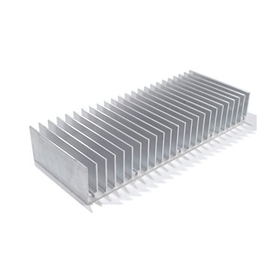
High-temperature heat sink copper with nickel plating + high-temperature scale zero coating

The issue with copper materials, which are widely used due to their thermal conductivity cost in various heat dissipation plates, heat sinks, and thermal compression terminal jigs, is performance degradation caused by the formation of oxide scale.

Various heat dissipation plates and heat sinks, as well as thermal compression terminal jigs, commonly use copper materials due to their thermal conductivity cost. The issue is the degradation of performance caused by the formation of oxidation scale, particularly in thermal problems that exceed 500°C, which cannot be addressed with aluminum. While copper is the next candidate due to its processability and price in terms of thermal conductivity, the oxidation scale that occurs at high temperatures poses problems for heat dissipation and contamination. We have now applied nickel plating to copper substrates and conducted our specialty treatment to prevent high-temperature oxidation scale with a transparent coating. This allows the thermal conductivity of copper to remain intact while making it usable at temperatures up to 900°C in air. We also offer coating treatment for the copper heat sinks you are currently using.

  • Assembly Jig
  • Non-ferrous metals
  • Food environmental hygiene/contamination prevention equipment
  • 3D Printer

Added to bookmarks

Bookmarks list

Bookmark has been removed

Bookmarks list

You can't add any more bookmarks

By registering as a member, you can increase the number of bookmarks you can save and organize them with labels.

Free membership registration

Fluoropolymer ETFE tube

Fluororesin ETFE tube

ETFE has a continuous use temperature of up to 150°C, but it has excellent mechanical strength. The standard size is in millimeters, and the length is 20 meters. ■□■Features■□■ ■Excellent heat and cold resistance ■Inert to most corrosive gases, chemicals, and solvents ■Outstanding chemical resistance with no aging changes ■Most substances do not adhere, and if they do, they can be easily removed ■Non-flammable ■No leaching of harmful substances ■□■Product Lineup■□■ ■FE0420 ■FE0640 ■FE0860 ■FE1080 ■FE1210 ■For more details, please download the catalog or contact us.

  • Pipe Fittings
  • Piping Materials
  • tube
  • 3D Printer

Added to bookmarks

Bookmarks list

Bookmark has been removed

Bookmarks list

You can't add any more bookmarks

By registering as a member, you can increase the number of bookmarks you can save and organize them with labels.

Free membership registration

No molds needed! We accept single-item processing of resin products!

We have introduced a 3D printer with carbon (carbon fiber)!

Until now, 3D printers could only create models for display, but by incorporating carbon, we have increased strength, allowing parts to be used. Products and jigs with strength greater than mass-produced items can be made without molds. We now have a three-machine system in conjunction with conventional machines. 【Features】 ■ No molds required, suitable for small lots ■ Strength greater than mass-produced items ■ Practical use possible, not just models *For more details, please refer to the PDF document or feel free to contact us.

  • Processing Contract
  • 3D Printer

Added to bookmarks

Bookmarks list

Bookmark has been removed

Bookmarks list

You can't add any more bookmarks

By registering as a member, you can increase the number of bookmarks you can save and organize them with labels.

Free membership registration

Partial hard chrome plating

We can provide partial hard chrome plating tailored to your needs!

- By manually masking areas that are not to be hard chrome plated, it is possible to plate not only the entire product but also specific external and internal parts, allowing us to customize the plating process according to customer requests. - For complex shapes with uneven surfaces, such as molds, we can devise and create electrodes to apply hard chrome plating. - Our company also offers machining and polishing services, enabling us to smoothly complete the products. *If you would like more details or have any requests, please feel free to contact us.

  • Processing Contract
  • Surface treatment contract service
  • 3D Printer

Added to bookmarks

Bookmarks list

Bookmark has been removed

Bookmarks list

You can't add any more bookmarks

By registering as a member, you can increase the number of bookmarks you can save and organize them with labels.

Free membership registration

3D printing output service using general-purpose ABS resin

This is a molding service using general-purpose ABS resin that has impact resistance and toughness. Leave the post-processing to us!

At System Create, we offer a 3D technology outsourcing service using 3D printers. We create models using versatile ABS resin that can be utilized for various applications. Additionally, we also provide post-processing services using machine tools and other equipment.

  • abs-02.jpg
  • abs_03.jpg
  • abs_04.jpg
  • abs_05.jpg
  • abs_06.jpg
  • 3D Printer
  • Other contract services
  • Prototype Services
  • 3D Printer

Added to bookmarks

Bookmarks list

Bookmark has been removed

Bookmarks list

You can't add any more bookmarks

By registering as a member, you can increase the number of bookmarks you can save and organize them with labels.

Free membership registration

[Observation of Product Interior] 3D Printing Output Service with Transparent Resin

A transparent resin that combines heat resistance and transparency, making verification easy.

At System Create, we offer 3D technology outsourcing services using 3D printers. It is water-resistant, has a heat resistance of about 100 degrees, and shows little color change after heating, making post-experiment verification clear.

  • tsr_02.jpg
  • 3D Printer
  • Prototype Services
  • Contract manufacturing
  • 3D Printer

Added to bookmarks

Bookmarks list

Bookmark has been removed

Bookmarks list

You can't add any more bookmarks

By registering as a member, you can increase the number of bookmarks you can save and organize them with labels.

Free membership registration

Formlabs "Material Catalog - Physical Properties & Liquid Compatibility"

This is a document summarizing the material properties of 3D printer materials from Formlabs that are compatible with a variety of resins.

This document summarizes the physical properties of a wide range of resins that can be used with Formlabs' stereolithography 3D printers, the 'Form2 / Form3'. The Form2/Form3 is attractive for its compatibility with various resins, including "Tough," which is ABS-like and highly tough, "High Temp," which is heat-resistant, and "Castable," suitable for lost-wax casting, as well as "Draft," which is specialized for fast printing. This document outlines the physical properties of each resin that can be used with the Form2 and Form3, as well as their chemical compatibility with various liquids. By confirming properties such as strength and toughness to select the appropriate resin, it becomes possible to create models suitable for specific applications. [Features of the Document] ■ Physical Properties Listed It includes physical property values such as tensile modulus and flexural strength before and after post-curing. This information can help in selecting resins with the necessary characteristics for the intended use of the model. ■ Chemical Compatibility Listed It includes changes in weight when immersed in liquids such as water and mineral oil. You can verify resins suitable for the model's usage environment. *Please view the PDF data from the download button below.

  • 3D Printer
  • Technical and Reference Books
  • 3D Printer

Added to bookmarks

Bookmarks list

Bookmark has been removed

Bookmarks list

You can't add any more bookmarks

By registering as a member, you can increase the number of bookmarks you can save and organize them with labels.

Free membership registration

Problem-Solving Materials: Utilizing 3D Data Part 4 | Human Costs of 3D Printing

What are the "troublesome" challenges of operating a 3D printer? A resource for identifying and solving issues in the production field.

This document is a series that proposes solutions to various challenges faced in production sites, from identifying issues to finding resolutions. In the "3D Data Utilization Edition," we will introduce various solutions to manufacturing challenges through the use of 3D data. This document focuses on the theme of "human costs of 3D printers," presenting the operational challenges of 3D printers and their solutions. [Document Overview] Low-cost entry-level 3D printers have emerged in the market and are widely adopted in design and development settings. However, as one repeatedly prototypes with a 3D printer, the post-processing tasks, such as removing support material, can become cumbersome. In this document, we will explain the challenges that become apparent during operation, such as those mentioned above, based on the characteristics of different 3D printing methods. *You can download the document using the button below.*

Added to bookmarks

Bookmarks list

Bookmark has been removed

Bookmarks list

You can't add any more bookmarks

By registering as a member, you can increase the number of bookmarks you can save and organize them with labels.

Free membership registration

Issue Resolution Document: Utilizing 3D Data Edition 4-1 | Reducing Post-Processing Time

How can we shorten the "post-processing time" challenge of 3D printers? A resource for identifying and solving challenges in the production field.

This document is a series that proposes solutions to various challenges faced in production sites, from identifying issues to finding resolutions. In the "3D Data Utilization Edition," we will introduce various solutions to manufacturing challenges through the use of 3D data. In Vol. 4-1, we will focus on the theme of "reducing post-processing time" and introduce a printing method that can reduce the human costs associated with 3D printing. [Document Overview] The largest human cost during 3D printer operation is the time involved in finishing work. A significant portion of this finishing work consists of "removing supports." Therefore, introducing a device that makes support removal easy is key to reducing human costs. By alleviating the workload for operators and shortening the time previously spent on post-processing, productivity can be improved, allowing for rapid prototyping and repeated evaluation and testing in a short period. This document will further explain how differences in printing methods can lead to reductions in human costs, including mechanisms for printing without support materials and an introduction to implementation concepts. *You can download the document using the button below.

  • 3D Printer
  • 3D Printer

Added to bookmarks

Bookmarks list

Bookmark has been removed

Bookmarks list

You can't add any more bookmarks

By registering as a member, you can increase the number of bookmarks you can save and organize them with labels.

Free membership registration

Problem-Solving Materials: Utilizing 3D Data Edition 1-2 | Deformation in Metal 3D Printing

The unavoidable issue of "deformation" in metal 3D printers... What are the countermeasures? A resource for identifying and solving problems in production sites.

This document is a series that proposes solutions to various challenges faced in production sites, from identifying issues to finding resolutions. In the "3D Data Utilization Edition," we will introduce various solutions to manufacturing challenges through the use of 3D data. This document focuses on the theme of "deformation in metal 3D printing," explaining the mechanisms behind deformation in printed objects and methods for alleviating it. [Document Overview] Metal 3D printers, capable of creating complex shapes that cannot be produced by other processing methods, are seeing active technological development not only in Western countries but also within Japan. However, an inevitable challenge that arises with metal 3D printed objects is "deformation," which cannot be avoided due to the nature of the process. To achieve accurate printing as per the design, it is essential to understand the causes of deformation and to implement appropriate measures throughout the entire printing process. This document serves as the first installment in introducing solutions to the "deformation" challenge, explaining the mechanisms behind deformation and effective methods for its resolution. *You can download the document using the button below.*

  • simulator
  • Stress Analysis
  • 3D Printer
  • 3D Printer

Added to bookmarks

Bookmarks list

Bookmark has been removed

Bookmarks list

You can't add any more bookmarks

By registering as a member, you can increase the number of bookmarks you can save and organize them with labels.

Free membership registration

Quickly resolve Form3 errors! 'Troubleshooting Guide'

This is a response manual that allows for quick action when errors occur with the popular 3D printer 'Form3'. It clearly explains the causes and solutions with accompanying photos.

This is the troubleshooting manual for the Formlabs LFS 3D printer 'Form3'. "Why won't the print start even though I'm ready?" "The error message displayed is in English and hard to understand." "I don't know the specific measures to take for the error." ...and other common questions that may arise during the operation of the Form3 can be addressed using this reference material. Under the supervision of certified technicians trained by Formlabs, we have compiled common issues, along with their causes and solutions, complete with photographs. Please also use this when contacting our technical support. [Features of the Document] ■ Actual error contents and causes presented in Japanese Examples of potential errors and their causes are clearly summarized in Japanese. ■ Easy-to-understand solutions with accompanying photos Specific solutions are explained with photos, making it easier to visualize the steps to take. For more details, please request a catalog or view the PDF data via the download button below.

  • 3D Printer
  • Technical and Reference Books
  • 3D Printer

Added to bookmarks

Bookmarks list

Bookmark has been removed

Bookmarks list

You can't add any more bookmarks

By registering as a member, you can increase the number of bookmarks you can save and organize them with labels.

Free membership registration

Problem-Solving Materials: Utilizing 3D Data Part 2 | Design with Production in Mind

How can we leverage design while keeping production costs down? A resource for identifying and solving challenges in the production field.

This document is a series that proposes solutions to various challenges faced in production sites, from identifying issues to finding resolutions. In the "3D Data Utilization Edition," we will introduce various solutions to challenges in manufacturing through the use of 3D data. This document focuses on the theme of "balancing production costs and design," presenting the challenges and solutions related to molding using molds. [Document Overview] Even as the use of 3D tools advances, there is a growing trend in fields such as design to incorporate designs expressed through various freeform shapes. These shapes are essential for enhancing the value and appeal of products, but they tend to incur higher costs and time during the manufacturing process. This document discusses the relationship between product shape and cost, taking into account the manufacturing process using molds. We will explain effective methods to leverage design while reducing production costs. *You can download the document using the button below.

  • Modeler
  • 3D CAD
  • Other CAD
  • 3D Printer

Added to bookmarks

Bookmarks list

Bookmark has been removed

Bookmarks list

You can't add any more bookmarks

By registering as a member, you can increase the number of bookmarks you can save and organize them with labels.

Free membership registration

Problem-Solving Materials: Utilizing 3D Data Edition 13 | Cycle Time of Design Prototyping

Significantly reduce 3D printing time! How to shorten the cycle time for design prototyping? A resource for discovering and solving challenges in the production field.

This document is a series that proposes solutions to various challenges faced in production sites, from identifying issues to finding solutions. In the "3D Data Utilization Edition," we will introduce various solutions to manufacturing challenges through the use of 3D data. [Document Overview] With 3D data, it is easy to create models using 3D printers. They are effectively utilized as prototyping tools that reduce time and costs. In response to the recent trend of shortening product development cycles in the market, we have increasingly received requests for "wanting to create more in a shorter time" during design prototyping. Therefore, this document introduces the "combination of 3D printers and materials specialized for design prototyping," which can significantly shorten the prototyping cycle. It explains the advantages along with comparisons of actual modeling and working times, taking into account the differences in "time and quality" based on the modeling methods. *You can download the document using the button below.

  • 3D Printer
  • Other consumables
  • plastic
  • 3D Printer

Added to bookmarks

Bookmarks list

Bookmark has been removed

Bookmarks list

You can't add any more bookmarks

By registering as a member, you can increase the number of bookmarks you can save and organize them with labels.

Free membership registration

Problem-Solving Materials | Advantages and Challenges of Metal 3D Printers and Their Operation

Operating a metal 3D printer with a small start! What are the benefits and challenges of its utilization? A resource for discovering and solving issues in the production site.

This document is a series that proposes solutions to various challenges faced in production sites, from identifying issues to finding resolutions. In the "3D Data Utilization" edition, we will introduce various solutions to challenges in manufacturing through the use of 3D data. This document will explain three specific benefits of using metal 3D printers, along with examples, and will also highlight the challenges that arise when advancing towards practical application. Furthermore, as a solution section, we will focus on "limitations of precision," "material restrictions," and "cost issues," providing detailed explanations of the points for resolving each challenge, and introducing methods for starting the operation of metal 3D printers on a small scale. [Document Overview] Metal 3D printers are expected to be utilized in the field of metal products due to advantages such as the production of high value-added products and cost reduction in small-scale manufacturing. This document will present the scenarios in which the benefits of metal 3D printers can be realized and the challenges for practical use from three perspectives: "more flexible design," "reduction of prototyping and manufacturing time," and "reduction of production costs." *You can download the document using the button below.

  • 3D Printer
  • 3D CAD
  • Machining Center
  • 3D Printer

Added to bookmarks

Bookmarks list

Bookmark has been removed

Bookmarks list

You can't add any more bookmarks

By registering as a member, you can increase the number of bookmarks you can save and organize them with labels.

Free membership registration

I tried 3D printing stainless steel with a metal 3D printer!

【Mitarepo】I tried 3D printing stainless steel with a metal 3D printer!

"Mitarepo" is a series based on the concept of "I tried doing this!" where we introduce what can be done using various products. We provide useful information each time from the wide range of product categories handled by System Create. The theme of Vol. 5 is "Trying to create stainless steel with a metal 3D printer." This time, we used a small metal 3D printer to create a block-shaped model in stainless steel. We are verifying the finish and accuracy of the created model using the type of printer we usually use for our contracted work. - Is support necessary? - What can actually be created? - What is the dimensional accuracy of the finished model? We explain these frequently asked questions from customers regarding "support and finish," along with comments from the person in charge and actual images. *You can download the materials from the button below.

  • 3D Printer
  • stainless
  • Other contract services
  • 3D Printer

Added to bookmarks

Bookmarks list

Bookmark has been removed

Bookmarks list

You can't add any more bookmarks

By registering as a member, you can increase the number of bookmarks you can save and organize them with labels.

Free membership registration

I tried creating a large model with reduced weight using Form3L.

Mitarepo [6] Tried creating large models with the newly launched 3D printer 'Form 3L' by reducing their weight!

"Mitarepo" is a series based on the concept of "Trying out things like this!" where we introduce what can be done using various products. We deliver useful information each time from the wide range of product categories handled by System Create. The theme of Vol. 6 is "What effects can be achieved by lightweighting large models with Form3L?" In the previous issue, we communicated that the "Form 3L" can create high-quality models without falling, even for large models. However, we received inquiries and requests from many customers asking if it could be done at a lower cost. Therefore, this time we tried creating lightweight large models. In the materials, we will edit the internal structure while keeping the appearance the same, actually create the lightweight data, and verify the material costs, printing time, and print quality by comparing it with the original model. - What effects does lightweighting have, and how significant are they? - Will the print quality decrease due to lightweighting? We explain the "real facts" that you might be curious about, along with comments from our technical staff and actual screens. *You can download the materials from the button below.

  • 3D Printer
  • plastic
  • Other CAD
  • 3D Printer

Added to bookmarks

Bookmarks list

Bookmark has been removed

Bookmarks list

You can't add any more bookmarks

By registering as a member, you can increase the number of bookmarks you can save and organize them with labels.

Free membership registration

I tried outputting composite materials with a carbon 3D printer!

I tried outputting composite materials with a carbon 3D printer!

"Mitarepo" is a series based on the concept of "I tried doing this!" where we introduce what can be done using various products. We deliver useful information each time from the wide range of product categories handled by System Create. The theme of Vol. 7 is "Trying to output composite materials with a carbon 3D printer." This time, we examined how materials are compounded using a carbon 3D printer that just arrived at our company. We used manufacturer-approved carbon fiber and resin filament to observe how the fiber is coated with resin. - What kind of mechanism is it in the first place? - How does the material come out? We explain the "interesting mechanisms of carbon 3D printers" along with comments from our technical staff and actual images. *You can download the materials from the button below.

  • 3D Printer
  • Composite Materials
  • fiber
  • 3D Printer

Added to bookmarks

Bookmarks list

Bookmark has been removed

Bookmarks list

You can't add any more bookmarks

By registering as a member, you can increase the number of bookmarks you can save and organize them with labels.

Free membership registration

I tried the new feature of Form3, the adaptive pitch!

In the 【Mitarepo】, we tested whether the new feature "Adaptive Layer Pitch" of Form3 can really "create models beautifully and quickly"!

"Mitarepo" is a series based on the concept of "I tried doing this!" that introduces what can be done using various products. We deliver useful information each time from the wide range of product genres handled by System Create. The theme of Vol. 8 is "Trying out the new feature of Form3: Adaptive Layer Height." The new feature of "Form 3," Adaptive Layer Height, automatically sets the optimal variable layer height based on the model's shape and angle, balancing quality and time. We examined whether it can really "create beautiful and fast prints." In the materials, we prepared a model with surfaces inclined at 10° intervals and actually printed three patterns: "Time-priority printing," "Quality-priority printing," and "Adaptive layer height printing," comparing and verifying each. - "How is the layer height set based on the angle?" - "If you seek beautiful prints, won't it take more time?" - "If the printing time is shorter, will the surface quality ultimately suffer?" We will explain these points of interest along with actual images and comments from our technical staff! *You can download the materials from the button below.

  • 3D Printer
  • Other polymer materials
  • plastic
  • 3D Printer

Added to bookmarks

Bookmarks list

Bookmark has been removed

Bookmarks list

You can't add any more bookmarks

By registering as a member, you can increase the number of bookmarks you can save and organize them with labels.

Free membership registration

I investigated the accuracy and internal structure of carbon prints!

[Mitarepo] What is the dimensional accuracy of carbon 3D printing? Can a grid-like infill be made with carbon material? I actually looked into it!

"Mitarepo" is a series that introduces what can be done using various products, based on the concept of "I tried doing this!" We deliver useful information each time from the wide range of product categories handled by System Create. The theme of Vol. 18 is "We investigated the dimensional accuracy and internal structure of carbon prints!" This time, we checked the dimensional accuracy of the model created with the carbon 3D printer "Composer" and conducted a CT scan. First, we measured the lengths of the edges, hole diameters, boss heights, and other shapes of the test model to confirm the deviations from the design values. Next, we compared the print data with the CT scan data to verify the actual arrangement of the carbon material inside the model, which was set up in a grid pattern. "How accurate are the dimensions of carbon prints?" "What does it mean to 'use carbon material for infill'? Is it really there?" We will explain the points of interest regarding carbon 3D printers along with comments from our technical staff and the models we actually created! *You can download the materials from the button below.

  • 3D Printer
  • Composite Materials
  • fiber
  • 3D Printer

Added to bookmarks

Bookmarks list

Bookmark has been removed

Bookmarks list

You can't add any more bookmarks

By registering as a member, you can increase the number of bookmarks you can save and organize them with labels.

Free membership registration

Problem-Solving Materials: Utilizing 3D Data 19 | Reducing Production Costs Associated with Divided Manufacturing

Cost issues resolved with large 3D printers! How to reduce the costs associated with creating large models? A resource for identifying and solving challenges in production sites.

This document is a series that proposes solutions to various challenges faced in production sites, from identifying issues to finding solutions. In the "3D Data Utilization Edition," we will introduce various solutions to manufacturing challenges through the use of 3D data. [Document Overview] Among 3D printers, FDM-type models have become widely popular due to their ease of use, but recently we have seen an increase in inquiries regarding models that can handle large-scale prints. Currently, many people are addressing large model fabrication using "split printing" with smaller machines. However, due to the labor and cost involved, there is a growing demand for integrated printing with models designed for large-scale production. In this document, we have compiled the challenges of split printing as a theme and will introduce recommended large printers equipped with numerous features necessary for large model fabrication, along with their advantages. *You can download the document using the button below.

  • 3D Printer
  • plastic
  • Other work tools
  • 3D Printer

Added to bookmarks

Bookmarks list

Bookmark has been removed

Bookmarks list

You can't add any more bookmarks

By registering as a member, you can increase the number of bookmarks you can save and organize them with labels.

Free membership registration

How accurately can powdered nylon molding reproduce dimensions?

How accurately can the powder sintering 3D printer 'Fuse1' reproduce dimensions? We measured it!

"Mitarepo" is a series based on the concept of "I tried doing this!" where we introduce what can be done using various products. From the wide range of product categories handled by System Create, we deliver useful information each time. The theme of Vol. 35 is "How accurately can a powder sintering 3D printer reproduce dimensions?" We measured various shapes of models created with a powder sintering 3D printer to verify the level of dimensional reproducibility it can achieve. In the materials, we created a plate with convex circles and holes using the powder material "Nylon 12" from the powder sintering 3D printer "Fuse 1," and a box shape surrounded by 1mm thick walls with bosses. Each shape and element was measured with a digital caliper. "Isn't powder sintering too powdery to achieve accurate dimensions?" "Isn't a design change necessary for printing?" We will explain these points of concern and the verification process with comments from our technical staff as we utilize 3D printers. *You can download the materials from the button above.

  • 3D Printer
  • Resin processing machine
  • plastic
  • 3D Printer

Added to bookmarks

Bookmarks list

Bookmark has been removed

Bookmarks list

You can't add any more bookmarks

By registering as a member, you can increase the number of bookmarks you can save and organize them with labels.

Free membership registration

I tried creating an assembly as a single print with a powdered 3D printer!

I tried creating a movable assembly in one piece with the powder 3D printer Fuse 1!

"Mitarepo" is a series that introduces what can be done using various products with the concept of "I tried doing this!" From the wide range of product genres handled by System Create, we deliver useful information each time. The theme of Vol. 40 is "We tried creating an assembly in one piece with a powder 3D printer!" So far, through Mitarepo Vol. 39 and Marusugo, we have shared the process of CT scanning a Rubik's Cube and converting it to STL. This time, using that STL data, we challenged ourselves to create a movable assembly model in one piece with the powder sintering layer method (SLS) 3D printer "Fuse 1"! We tested whether we could maintain the functionality of the assembly through one-piece printing, taking advantage of the SLS method's feature of not requiring supports. How powerful is a powder 3D printer? Does it really work when printed in one piece? We will explain the results of the prints, along with verification photos and comments from our technical staff. *You can download the materials from the button below.

  • 3D Printer
  • Resin processing machine
  • plastic
  • 3D Printer

Added to bookmarks

Bookmarks list

Bookmark has been removed

Bookmarks list

You can't add any more bookmarks

By registering as a member, you can increase the number of bookmarks you can save and organize them with labels.

Free membership registration

Mitarepo [42] Powdered 3D Printing × Assembly Integrated Forming Challenge Again!

[Mitarepo] Retry! I tried creating a movable assembly in one piece with a powder 3D printer!

"Mitarepo" is a series that introduces what can be done using various products with the concept of "I tried doing this!" We deliver useful information each time from the wide range of product genres handled by System Create. The theme of Vol. 42 is "Re-challenging Powder 3D Printing × Assembly Integrated Modeling!" This time, we re-challenged the movable assembly integrated modeling using the STL data adjusted in Vol. 41, with the support-free SLS printer "Fuse 1." We will check how the three adjustments made for powder 3D printing last time are reflected this time: - Setting clearance between the blocks that were previously stuck together - Modifying the shape to prevent powder from remaining in the movable parts - Adding text to the surface of each block We will explain whether the assembly model moved and provide photos of the verification along with comments from the technical staff regarding the unique finishing details of the "Fuse 1." *You can download the materials from the button below.

  • 3D Printer
  • plastic
  • Prototype Services
  • 3D Printer

Added to bookmarks

Bookmarks list

Bookmark has been removed

Bookmarks list

You can't add any more bookmarks

By registering as a member, you can increase the number of bookmarks you can save and organize them with labels.

Free membership registration

I tried out the latest update in Form 3!

【Mitarepo】Is the modeling time shortened with the Form 3 update!? We thoroughly compared the old and new versions!

"Mitarepo" is a series that introduces what can be done using various products with the concept of "I tried doing this!" We deliver useful information each time from the wide range of product genres handled by System Create. The theme of Vol. 43 is "We tested the latest software update on the Form 3!" In January of this year (2022), a major update for the "Form 3" was announced, featuring improvements such as "increased printing speed" and "reduced post-processing time." This time, we examined how much improvement there actually is due to the changes mentioned above. We will print and compare the print data of the "latest version" and the "old version" created from the same model. We will investigate how the "printing speed," "support shape," and "surface after support removal" have changed due to improvements in the laser system and changes in support shapes. We will provide explanations along with actual print data, details of printing times, and images of the surface after support removal. *You can download the materials from the button below.

  • 3D Printer
  • plastic
  • Prototype Services
  • 3D Printer

Added to bookmarks

Bookmarks list

Bookmark has been removed

Bookmarks list

You can't add any more bookmarks

By registering as a member, you can increase the number of bookmarks you can save and organize them with labels.

Free membership registration

I tried using the Form 3 model for vacuum forming!

"Did Form 3 just end with 'just looking at the shape'? We tried using the mold for vacuum forming!" | System Create

"Mitarepo" is a series that introduces what can be done using various products with the concept of "I tried doing this!" From the wide range of product categories handled by System Create, we deliver useful information each time. The theme of Vol. 46 is "Using the Form 3 model as a vacuum forming mold!" The resin printer "Form 3" is often used primarily for purposes such as shape verification and assembly, essentially for "seeing shapes." However, depending on the combination with other tools, it can actually be used in completely different ways! One such method is using the printed model as a "mold." Among these, vacuum forming pairs well with printed models and allows for great flexibility in shape. Therefore, this time, to verify this new usage, we actually vacuum formed the printed model and tested how much power it can exert as a mold. We will explain, along with actual print data and images of the printed model and the formed products, questions like, "How do you create a forming mold?" and "Can it be formed neatly?" *You can download the materials from the button below.

  • 3D Printer
  • Vacuum forming machine
  • plastic
  • 3D Printer

Added to bookmarks

Bookmarks list

Bookmark has been removed

Bookmarks list

You can't add any more bookmarks

By registering as a member, you can increase the number of bookmarks you can save and organize them with labels.

Free membership registration

[Marusugo] Just place it! Easy option for soft filament modeling.

3D printing using rubber-like materials is now possible! Let me explain the amazing features of the FDM 3D printer F430.

Marsugo is a document that picks up the functions and features of various products and introduces the "amazing" aspects of them. This time, we will introduce the FDM 3D printer "CreatBot F430," which makes it possible to shape difficult soft materials, along with the optional "dedicated stand for soft filament." Filaments that can be used with FDM 3D printers are being developed daily with various functionalities. One of them is "soft materials," characterized by their unique "softness" not found in other materials. What we are introducing this time is the FDM 3D printer "CreatBot F430" and the "dedicated stand for soft materials (optional)." Soft materials are considered difficult to shape due to their "flexibility" and "friction." Among them, materials with "elasticity" may not be able to be shaped at all, even with adjustments to the shaping conditions... However, when the F430 is combined with the dedicated stand for soft materials, it becomes possible to shape high-difficulty, elastic soft materials! This is a document that we highly recommend for those who want to try shaping with soft materials!★ *You can download the document using the button below.

  • 3D Printer
  • plastic
  • Other machine elements
  • 3D Printer

Added to bookmarks

Bookmarks list

Bookmark has been removed

Bookmarks list

You can't add any more bookmarks

By registering as a member, you can increase the number of bookmarks you can save and organize them with labels.

Free membership registration

Marsgo: Definitely dissolving super engineering plastics! Definitely delivering!

The print head of the 3D printer "CreatBot PEEK-300," which can also create super engineering plastics, is amazing.

"Super engineering plastics," which possess excellent properties such as high heat resistance and strength, are attracting attention in various industries as materials that can replace metals. They are also expected to be utilized in the 3D printing industry, and development of these materials is ongoing daily. However, many 3D printers available on the market have a maximum nozzle temperature of below 300°C, making it impossible to print with super engineering plastics, as they cannot reach the necessary melting temperatures. Given this situation, many people might be thinking: "I want a 3D printer that can print at higher temperatures." "I would like to try printing not only with general-purpose plastics but also with engineering plastics." The "CreatBot PEEK-300" is a 3D printer developed as a model capable of printing with super engineering plastics, including PEEK. In the materials, we focus on one of the features of the "PEEK-300," the structure of the print head, and explain why it is possible to print with super engineering plastics, so please take a moment to read it. *You can download the materials from the button below.*

  • 3D Printer
  • Engineering Plastics
  • Other polymer materials
  • 3D Printer

Added to bookmarks

Bookmarks list

Bookmark has been removed

Bookmarks list

You can't add any more bookmarks

By registering as a member, you can increase the number of bookmarks you can save and organize them with labels.

Free membership registration

Malsugo: Control the temperature environment with the thermal insulation effect of a vacuum flask structure!

The amazing features of the "CreatBot PEEK-300," a 3D printer that can use super engineering plastics and does not let heat escape!

Marsgo is a document that picks up the functions and features of various products and introduces the "amazing!" aspects. Super engineering plastics are known for their lightweight yet high heat resistance and mechanical strength. Due to these characteristics, they are gaining attention as versatile materials that can replace metals. To use super engineering plastics with high melting points, a printer that can handle high-temperature environments and maintain temperature is necessary. Have you ever thought, "I want to try using super engineering plastics...!" or "I want to suppress warping during molding...!"? In this context, we introduce the thermoplastic filament 3D printer "CreatBot PEEK-300." By using a high-output heater, it quickly heats up and can maintain a high-temperature environment without losing that heat. The document explains the mechanism of the insulation structure and the importance of maintaining temperature, so please take a moment to read it. *You can download the document using the button below.*

  • 3D Printer
  • Engineering Plastics
  • Other polymer materials
  • 3D Printer

Added to bookmarks

Bookmarks list

Bookmark has been removed

Bookmarks list

You can't add any more bookmarks

By registering as a member, you can increase the number of bookmarks you can save and organize them with labels.

Free membership registration