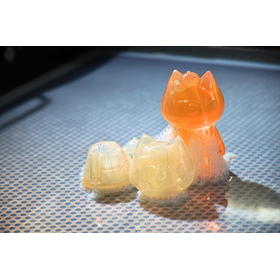
We have compiled a list of manufacturers, distributors, product information, reference prices, and rankings for 3D Printer.
ipros is IPROS GMS IPROS One of the largest technical database sites in Japan that collects information on.

3D Printer Product List and Ranking from 289 Manufacturers, Suppliers and Companies

Last Updated: Aggregation Period:Oct 29, 2025~Nov 25, 2025
This ranking is based on the number of page views on our site.

3D Printer Manufacturer, Suppliers and Company Rankings

Last Updated: Aggregation Period:Oct 29, 2025~Nov 25, 2025
This ranking is based on the number of page views on our site.

  1. システムクリエイト Osaka//Industrial Machinery
  2. null/null
  3. ホッティーポリマー Tokyo//Resin/Plastic
  4. 4 グーテンベルク Tokyo//Industrial Machinery
  5. 5 岡本化学工業株式会社 Saitama//Resin/Plastic

3D Printer Product ranking

Last Updated: Aggregation Period:Oct 29, 2025~Nov 25, 2025
This ranking is based on the number of page views on our site.

  1. 3D Printer for Manufacturing Sites 'GX-1000 Series'
  2. I measured the dimensions of the work created at each position! システムクリエイト
  3. PEEK-compatible industrial 3D printer 'G-ZERO MP1' グーテンベルク
  4. 4 Silicone Rubber 3D Printer "SILICOM" ホッティーポリマー
  5. 5 Large 3D printer "SoonSer Mars Pro" using light shaping technology. システムクリエイト

3D Printer Product List

46~60 item / All 893 items

Displayed results

Problem-Solving Materials: Utilizing 3D Data Edition 13 | Cycle Time of Design Prototyping

Significantly reduce 3D printing time! How to shorten the cycle time for design prototyping? A resource for discovering and solving challenges in the production field.

This document is a series that proposes solutions to various challenges faced in production sites, from identifying issues to finding solutions. In the "3D Data Utilization Edition," we will introduce various solutions to manufacturing challenges through the use of 3D data. [Document Overview] With 3D data, it is easy to create models using 3D printers. They are effectively utilized as prototyping tools that reduce time and costs. In response to the recent trend of shortening product development cycles in the market, we have increasingly received requests for "wanting to create more in a shorter time" during design prototyping. Therefore, this document introduces the "combination of 3D printers and materials specialized for design prototyping," which can significantly shorten the prototyping cycle. It explains the advantages along with comparisons of actual modeling and working times, taking into account the differences in "time and quality" based on the modeling methods. *You can download the document using the button below.

  • 3D Printer
  • Other consumables
  • plastic

Added to bookmarks

Bookmarks list

Bookmark has been removed

Bookmarks list

You can't add any more bookmarks

By registering as a member, you can increase the number of bookmarks you can save and organize them with labels.

Free membership registration

Problem-Solving Materials | Advantages and Challenges of Metal 3D Printers and Their Operation

Operating a metal 3D printer with a small start! What are the benefits and challenges of its utilization? A resource for discovering and solving issues in the production site.

This document is a series that proposes solutions to various challenges faced in production sites, from identifying issues to finding resolutions. In the "3D Data Utilization" edition, we will introduce various solutions to challenges in manufacturing through the use of 3D data. This document will explain three specific benefits of using metal 3D printers, along with examples, and will also highlight the challenges that arise when advancing towards practical application. Furthermore, as a solution section, we will focus on "limitations of precision," "material restrictions," and "cost issues," providing detailed explanations of the points for resolving each challenge, and introducing methods for starting the operation of metal 3D printers on a small scale. [Document Overview] Metal 3D printers are expected to be utilized in the field of metal products due to advantages such as the production of high value-added products and cost reduction in small-scale manufacturing. This document will present the scenarios in which the benefits of metal 3D printers can be realized and the challenges for practical use from three perspectives: "more flexible design," "reduction of prototyping and manufacturing time," and "reduction of production costs." *You can download the document using the button below.

  • 3D Printer
  • 3D CAD
  • Machining Center

Added to bookmarks

Bookmarks list

Bookmark has been removed

Bookmarks list

You can't add any more bookmarks

By registering as a member, you can increase the number of bookmarks you can save and organize them with labels.

Free membership registration

I actually tried creating a large model with Form3L!

[Mitarepo] I tried creating a large model with the light-based 3D printer 'Form3 L'!

"Mitarepo" is a series based on the concept of "I tried doing this!" that introduces what can be done using various products. We provide useful information each time from the wide range of product categories handled by System Create. The theme of Vol. 4 is "Can the Form3L create large models beautifully without dropping?" This time, we tested whether the desktop-sized, large-format SLA 3D printer "Form3L" can truly create large models beautifully. In the materials, we actually created a large model weighing 2.5 kg, taking advantage of the Form3L's wide build area, and verified aspects such as build time, responses to material shortages, drops due to self-weight, and build quality. - In the case of a suspended model, won't the weight of the large model cause it to drop? - Large models take time and may compromise quality, right? We explain the "real truth" about these concerns, along with comments from technical staff and actual screens. *You can download the materials from the button below.

  • Other CAD related software
  • Data conversion software
  • Document and Data Management

Added to bookmarks

Bookmarks list

Bookmark has been removed

Bookmarks list

You can't add any more bookmarks

By registering as a member, you can increase the number of bookmarks you can save and organize them with labels.

Free membership registration

I tried 3D printing stainless steel with a metal 3D printer!

【Mitarepo】I tried 3D printing stainless steel with a metal 3D printer!

"Mitarepo" is a series based on the concept of "I tried doing this!" where we introduce what can be done using various products. We provide useful information each time from the wide range of product categories handled by System Create. The theme of Vol. 5 is "Trying to create stainless steel with a metal 3D printer." This time, we used a small metal 3D printer to create a block-shaped model in stainless steel. We are verifying the finish and accuracy of the created model using the type of printer we usually use for our contracted work. - Is support necessary? - What can actually be created? - What is the dimensional accuracy of the finished model? We explain these frequently asked questions from customers regarding "support and finish," along with comments from the person in charge and actual images. *You can download the materials from the button below.

  • 3D Printer
  • stainless
  • Other contract services

Added to bookmarks

Bookmarks list

Bookmark has been removed

Bookmarks list

You can't add any more bookmarks

By registering as a member, you can increase the number of bookmarks you can save and organize them with labels.

Free membership registration

I tried creating a large model with reduced weight using Form3L.

Mitarepo [6] Tried creating large models with the newly launched 3D printer 'Form 3L' by reducing their weight!

"Mitarepo" is a series based on the concept of "Trying out things like this!" where we introduce what can be done using various products. We deliver useful information each time from the wide range of product categories handled by System Create. The theme of Vol. 6 is "What effects can be achieved by lightweighting large models with Form3L?" In the previous issue, we communicated that the "Form 3L" can create high-quality models without falling, even for large models. However, we received inquiries and requests from many customers asking if it could be done at a lower cost. Therefore, this time we tried creating lightweight large models. In the materials, we will edit the internal structure while keeping the appearance the same, actually create the lightweight data, and verify the material costs, printing time, and print quality by comparing it with the original model. - What effects does lightweighting have, and how significant are they? - Will the print quality decrease due to lightweighting? We explain the "real facts" that you might be curious about, along with comments from our technical staff and actual screens. *You can download the materials from the button below.

  • 3D Printer
  • plastic
  • Other CAD

Added to bookmarks

Bookmarks list

Bookmark has been removed

Bookmarks list

You can't add any more bookmarks

By registering as a member, you can increase the number of bookmarks you can save and organize them with labels.

Free membership registration

I tried outputting composite materials with a carbon 3D printer!

I tried outputting composite materials with a carbon 3D printer!

"Mitarepo" is a series based on the concept of "I tried doing this!" where we introduce what can be done using various products. We deliver useful information each time from the wide range of product categories handled by System Create. The theme of Vol. 7 is "Trying to output composite materials with a carbon 3D printer." This time, we examined how materials are compounded using a carbon 3D printer that just arrived at our company. We used manufacturer-approved carbon fiber and resin filament to observe how the fiber is coated with resin. - What kind of mechanism is it in the first place? - How does the material come out? We explain the "interesting mechanisms of carbon 3D printers" along with comments from our technical staff and actual images. *You can download the materials from the button below.

  • 3D Printer
  • Composite Materials
  • fiber

Added to bookmarks

Bookmarks list

Bookmark has been removed

Bookmarks list

You can't add any more bookmarks

By registering as a member, you can increase the number of bookmarks you can save and organize them with labels.

Free membership registration

I tried the new feature of Form3, the adaptive pitch!

In the 【Mitarepo】, we tested whether the new feature "Adaptive Layer Pitch" of Form3 can really "create models beautifully and quickly"!

"Mitarepo" is a series based on the concept of "I tried doing this!" that introduces what can be done using various products. We deliver useful information each time from the wide range of product genres handled by System Create. The theme of Vol. 8 is "Trying out the new feature of Form3: Adaptive Layer Height." The new feature of "Form 3," Adaptive Layer Height, automatically sets the optimal variable layer height based on the model's shape and angle, balancing quality and time. We examined whether it can really "create beautiful and fast prints." In the materials, we prepared a model with surfaces inclined at 10° intervals and actually printed three patterns: "Time-priority printing," "Quality-priority printing," and "Adaptive layer height printing," comparing and verifying each. - "How is the layer height set based on the angle?" - "If you seek beautiful prints, won't it take more time?" - "If the printing time is shorter, will the surface quality ultimately suffer?" We will explain these points of interest along with actual images and comments from our technical staff! *You can download the materials from the button below.

  • 3D Printer
  • Other polymer materials
  • plastic

Added to bookmarks

Bookmarks list

Bookmark has been removed

Bookmarks list

You can't add any more bookmarks

By registering as a member, you can increase the number of bookmarks you can save and organize them with labels.

Free membership registration

I investigated the accuracy and internal structure of carbon prints!

[Mitarepo] What is the dimensional accuracy of carbon 3D printing? Can a grid-like infill be made with carbon material? I actually looked into it!

"Mitarepo" is a series that introduces what can be done using various products, based on the concept of "I tried doing this!" We deliver useful information each time from the wide range of product categories handled by System Create. The theme of Vol. 18 is "We investigated the dimensional accuracy and internal structure of carbon prints!" This time, we checked the dimensional accuracy of the model created with the carbon 3D printer "Composer" and conducted a CT scan. First, we measured the lengths of the edges, hole diameters, boss heights, and other shapes of the test model to confirm the deviations from the design values. Next, we compared the print data with the CT scan data to verify the actual arrangement of the carbon material inside the model, which was set up in a grid pattern. "How accurate are the dimensions of carbon prints?" "What does it mean to 'use carbon material for infill'? Is it really there?" We will explain the points of interest regarding carbon 3D printers along with comments from our technical staff and the models we actually created! *You can download the materials from the button below.

  • 3D Printer
  • Composite Materials
  • fiber

Added to bookmarks

Bookmarks list

Bookmark has been removed

Bookmarks list

You can't add any more bookmarks

By registering as a member, you can increase the number of bookmarks you can save and organize them with labels.

Free membership registration

Problem-Solving Materials: Utilizing 3D Data 19 | Reducing Production Costs Associated with Divided Manufacturing

Cost issues resolved with large 3D printers! How to reduce the costs associated with creating large models? A resource for identifying and solving challenges in production sites.

This document is a series that proposes solutions to various challenges faced in production sites, from identifying issues to finding solutions. In the "3D Data Utilization Edition," we will introduce various solutions to manufacturing challenges through the use of 3D data. [Document Overview] Among 3D printers, FDM-type models have become widely popular due to their ease of use, but recently we have seen an increase in inquiries regarding models that can handle large-scale prints. Currently, many people are addressing large model fabrication using "split printing" with smaller machines. However, due to the labor and cost involved, there is a growing demand for integrated printing with models designed for large-scale production. In this document, we have compiled the challenges of split printing as a theme and will introduce recommended large printers equipped with numerous features necessary for large model fabrication, along with their advantages. *You can download the document using the button below.

  • 3D Printer
  • plastic
  • Other work tools

Added to bookmarks

Bookmarks list

Bookmark has been removed

Bookmarks list

You can't add any more bookmarks

By registering as a member, you can increase the number of bookmarks you can save and organize them with labels.

Free membership registration

I tried making 36 parts using the height of Form 3L!

【Mita Repo】Created 36 parts all at once with Form 3L! I tried stacking the model to the maximum height of the print area!

"Mitarepo" is a series that introduces what can be done using various products with the concept of "I tried doing this!" We deliver useful information each time from the wide range of product categories handled by System Create. The theme of Vol. 33 is "We tried making 36 parts utilizing the area height of the Form 3L!" The light-curing 3D printer "Form 3L" supports large-scale printing and has the largest build area among Formlabs 3D printers. This time, we focused on effectively utilizing its wide build area, particularly the "area height," by stacking multiple parts in the Z direction and challenging ourselves to print them all at once. Typically, when printing multiple items, they are arranged horizontally on the table, but with a little ingenuity, we stacked and arranged them in the height direction as well. We attempted to print a total of 36 parts of various sizes together! "How do you arrange the models in the Z direction?" "Can the models be printed properly even if they overlap vertically?" We will explain the actual flow of creating print data along with images of the completed models. *You can download the materials from the button below.

  • 3D Printer
  • 3D CAD
  • Other CAD related software

Added to bookmarks

Bookmarks list

Bookmark has been removed

Bookmarks list

You can't add any more bookmarks

By registering as a member, you can increase the number of bookmarks you can save and organize them with labels.

Free membership registration

How accurately can powdered nylon molding reproduce dimensions?

How accurately can the powder sintering 3D printer 'Fuse1' reproduce dimensions? We measured it!

"Mitarepo" is a series based on the concept of "I tried doing this!" where we introduce what can be done using various products. From the wide range of product categories handled by System Create, we deliver useful information each time. The theme of Vol. 35 is "How accurately can a powder sintering 3D printer reproduce dimensions?" We measured various shapes of models created with a powder sintering 3D printer to verify the level of dimensional reproducibility it can achieve. In the materials, we created a plate with convex circles and holes using the powder material "Nylon 12" from the powder sintering 3D printer "Fuse 1," and a box shape surrounded by 1mm thick walls with bosses. Each shape and element was measured with a digital caliper. "Isn't powder sintering too powdery to achieve accurate dimensions?" "Isn't a design change necessary for printing?" We will explain these points of concern and the verification process with comments from our technical staff as we utilize 3D printers. *You can download the materials from the button above.

  • 3D Printer
  • Resin processing machine
  • plastic

Added to bookmarks

Bookmarks list

Bookmark has been removed

Bookmarks list

You can't add any more bookmarks

By registering as a member, you can increase the number of bookmarks you can save and organize them with labels.

Free membership registration

I tried creating an assembly as a single print with a powdered 3D printer!

I tried creating a movable assembly in one piece with the powder 3D printer Fuse 1!

"Mitarepo" is a series that introduces what can be done using various products with the concept of "I tried doing this!" From the wide range of product genres handled by System Create, we deliver useful information each time. The theme of Vol. 40 is "We tried creating an assembly in one piece with a powder 3D printer!" So far, through Mitarepo Vol. 39 and Marusugo, we have shared the process of CT scanning a Rubik's Cube and converting it to STL. This time, using that STL data, we challenged ourselves to create a movable assembly model in one piece with the powder sintering layer method (SLS) 3D printer "Fuse 1"! We tested whether we could maintain the functionality of the assembly through one-piece printing, taking advantage of the SLS method's feature of not requiring supports. How powerful is a powder 3D printer? Does it really work when printed in one piece? We will explain the results of the prints, along with verification photos and comments from our technical staff. *You can download the materials from the button below.

  • 3D Printer
  • Resin processing machine
  • plastic

Added to bookmarks

Bookmarks list

Bookmark has been removed

Bookmarks list

You can't add any more bookmarks

By registering as a member, you can increase the number of bookmarks you can save and organize them with labels.

Free membership registration

Mitarepo [42] Powdered 3D Printing × Assembly Integrated Forming Challenge Again!

[Mitarepo] Retry! I tried creating a movable assembly in one piece with a powder 3D printer!

"Mitarepo" is a series that introduces what can be done using various products with the concept of "I tried doing this!" We deliver useful information each time from the wide range of product genres handled by System Create. The theme of Vol. 42 is "Re-challenging Powder 3D Printing × Assembly Integrated Modeling!" This time, we re-challenged the movable assembly integrated modeling using the STL data adjusted in Vol. 41, with the support-free SLS printer "Fuse 1." We will check how the three adjustments made for powder 3D printing last time are reflected this time: - Setting clearance between the blocks that were previously stuck together - Modifying the shape to prevent powder from remaining in the movable parts - Adding text to the surface of each block We will explain whether the assembly model moved and provide photos of the verification along with comments from the technical staff regarding the unique finishing details of the "Fuse 1." *You can download the materials from the button below.

  • 3D Printer
  • plastic
  • Prototype Services

Added to bookmarks

Bookmarks list

Bookmark has been removed

Bookmarks list

You can't add any more bookmarks

By registering as a member, you can increase the number of bookmarks you can save and organize them with labels.

Free membership registration

I tried out the latest update in Form 3!

【Mitarepo】Is the modeling time shortened with the Form 3 update!? We thoroughly compared the old and new versions!

"Mitarepo" is a series that introduces what can be done using various products with the concept of "I tried doing this!" We deliver useful information each time from the wide range of product genres handled by System Create. The theme of Vol. 43 is "We tested the latest software update on the Form 3!" In January of this year (2022), a major update for the "Form 3" was announced, featuring improvements such as "increased printing speed" and "reduced post-processing time." This time, we examined how much improvement there actually is due to the changes mentioned above. We will print and compare the print data of the "latest version" and the "old version" created from the same model. We will investigate how the "printing speed," "support shape," and "surface after support removal" have changed due to improvements in the laser system and changes in support shapes. We will provide explanations along with actual print data, details of printing times, and images of the surface after support removal. *You can download the materials from the button below.

  • 3D Printer
  • plastic
  • Prototype Services

Added to bookmarks

Bookmarks list

Bookmark has been removed

Bookmarks list

You can't add any more bookmarks

By registering as a member, you can increase the number of bookmarks you can save and organize them with labels.

Free membership registration

[Marusugo] Just place it! Easy option for soft filament modeling.

3D printing using rubber-like materials is now possible! Let me explain the amazing features of the FDM 3D printer F430.

Marsugo is a document that picks up the functions and features of various products and introduces the "amazing" aspects of them. This time, we will introduce the FDM 3D printer "CreatBot F430," which makes it possible to shape difficult soft materials, along with the optional "dedicated stand for soft filament." Filaments that can be used with FDM 3D printers are being developed daily with various functionalities. One of them is "soft materials," characterized by their unique "softness" not found in other materials. What we are introducing this time is the FDM 3D printer "CreatBot F430" and the "dedicated stand for soft materials (optional)." Soft materials are considered difficult to shape due to their "flexibility" and "friction." Among them, materials with "elasticity" may not be able to be shaped at all, even with adjustments to the shaping conditions... However, when the F430 is combined with the dedicated stand for soft materials, it becomes possible to shape high-difficulty, elastic soft materials! This is a document that we highly recommend for those who want to try shaping with soft materials!★ *You can download the document using the button below.

  • 3D Printer
  • plastic
  • Other machine elements

Added to bookmarks

Bookmarks list

Bookmark has been removed

Bookmarks list

You can't add any more bookmarks

By registering as a member, you can increase the number of bookmarks you can save and organize them with labels.

Free membership registration