iPROS Manufacturing
  • Search for products by classification category

    • Electronic Components and Modules
      Electronic Components and Modules
      61705items
    • Machinery Parts
      Machinery Parts
      75946items
    • Manufacturing and processing machinery
      Manufacturing and processing machinery
      102065items
    • Scientific and Physics Equipment
      Scientific and Physics Equipment
      36342items
    • Materials
      Materials
      37783items
    • Measurement and Analysis
      Measurement and Analysis
      55199items
    • Image Processing
      Image Processing
      15376items
    • Control and Electrical Equipment
      Control and Electrical Equipment
      54611items
    • Tools, consumables, and supplies
      Tools, consumables, and supplies
      65614items
    • Design and production support
      Design and production support
      12672items
    • IT/Network
      IT/Network
      45660items
    • Office
      Office
      14193items
    • Business support services
      Business support services
      25403items
    • Seminars and Skill Development
      Seminars and Skill Development
      6566items
    • Pharmaceutical and food related
      Pharmaceutical and food related
      34203items
    • others
      75345items
  • Search for companies by industry

    • Manufacturing and processing contract
      7339
    • others
      4985
    • Industrial Machinery
      4445
    • Machine elements and parts
      3331
    • Other manufacturing
      2884
    • Trading company/Wholesale
      2652
    • IT/Telecommunications
      2573
    • Industrial Electrical Equipment
      2320
    • Building materials, supplies and fixtures
      1816
    • software
      1666
    • Electronic Components and Semiconductors
      1587
    • Resin/Plastic
      1500
    • Service Industry
      1478
    • Testing, Analysis and Measurement
      1130
    • Ferrous/Non-ferrous metals
      986
    • environment
      699
    • Chemical
      640
    • Automobiles and Transportation Equipment
      582
    • Printing Industry
      513
    • Information and Communications
      465
    • Consumer Electronics
      412
    • Energy
      333
    • Rubber products
      317
    • Food Machinery
      308
    • Optical Instruments
      279
    • robot
      274
    • fiber
      254
    • Paper and pulp
      230
    • Pharmaceuticals and Biotechnology
      173
    • Electricity, Gas and Water Industry
      167
    • Warehousing and transport related industries
      149
    • Glass and clay products
      139
    • Food and Beverage
      130
    • CAD/CAM
      124
    • retail
      108
    • Medical Devices
      107
    • Educational and Research Institutions
      107
    • Ceramics
      98
    • wood
      87
    • Transportation
      84
    • Petroleum and coal products
      63
    • Medical and Welfare
      62
    • Shipbuilding and heavy machinery
      51
    • Aviation & Aerospace
      48
    • Fisheries, Agriculture and Forestry
      41
    • equipment
      40
    • Materials
      33
    • Public interest/special/independent administrative agency
      31
    • Research and development equipment and devices
      29
    • Government
      24
    • self-employed
      24
    • Mining
      17
    • cosmetics
      15
    • Finance, securities and insurance
      14
    • Restaurants and accommodations
      10
    • Individual
      10
    • Police, Fire Department, Self-Defense Forces
      7
    • Laboratory Equipment and Consumables
      5
    • Raw materials for reagents and chemicals
      4
    • Contracted research
      3
  • Special Features
  • Ranking

    • Overall Products Ranking
    • Overall Company Ranking
Search for Products
  • Search for products by classification category

  • Electronic Components and Modules
  • Machinery Parts
  • Manufacturing and processing machinery
  • Scientific and Physics Equipment
  • Materials
  • Measurement and Analysis
  • Image Processing
  • Control and Electrical Equipment
  • Tools, consumables, and supplies
  • Design and production support
  • IT/Network
  • Office
  • Business support services
  • Seminars and Skill Development
  • Pharmaceutical and food related
  • others
Search for Companies
  • Search for companies by industry

  • Manufacturing and processing contract
  • others
  • Industrial Machinery
  • Machine elements and parts
  • Other manufacturing
  • Trading company/Wholesale
  • IT/Telecommunications
  • Industrial Electrical Equipment
  • Building materials, supplies and fixtures
  • software
  • Electronic Components and Semiconductors
  • Resin/Plastic
  • Service Industry
  • Testing, Analysis and Measurement
  • Ferrous/Non-ferrous metals
  • environment
  • Chemical
  • Automobiles and Transportation Equipment
  • Printing Industry
  • Information and Communications
  • Consumer Electronics
  • Energy
  • Rubber products
  • Food Machinery
  • Optical Instruments
  • robot
  • fiber
  • Paper and pulp
  • Pharmaceuticals and Biotechnology
  • Electricity, Gas and Water Industry
  • Warehousing and transport related industries
  • Glass and clay products
  • Food and Beverage
  • CAD/CAM
  • retail
  • Medical Devices
  • Educational and Research Institutions
  • Ceramics
  • wood
  • Transportation
  • Petroleum and coal products
  • Medical and Welfare
  • Shipbuilding and heavy machinery
  • Aviation & Aerospace
  • Fisheries, Agriculture and Forestry
  • equipment
  • Materials
  • Public interest/special/independent administrative agency
  • Research and development equipment and devices
  • Government
  • self-employed
  • Mining
  • cosmetics
  • Finance, securities and insurance
  • Restaurants and accommodations
  • Individual
  • Police, Fire Department, Self-Defense Forces
  • Laboratory Equipment and Consumables
  • Raw materials for reagents and chemicals
  • Contracted research
Special Features
Ranking
  • Overall Products Ranking
  • Overall Company Ranking
  • privacy policy
  • terms of service
  • About Us
  • Careers
  • Advertising
  1. Home
  2. Testing, Analysis and Measurement
  3. カネカテクノリサーチ 本社、東京営業所、名古屋営業所、大阪分析センター、高砂分析センター
  4. Product/Service List
Testing, Analysis and Measurement
  • Added to bookmarks

    Bookmarks list

    Bookmark has been removed

    Bookmarks list

    You can't add any more bookmarks

    By registering as a member, you can increase the number of bookmarks you can save and organize them with labels.

    Free membership registration

カネカテクノリサーチ 本社、東京営業所、名古屋営業所、大阪分析センター、高砂分析センター

EstablishmentAugust 1988 (Showa 63)
capital2000Ten thousand
addressOsaka/Kita-ku, Osaka-shi/2-3-18 Nakanoshima, Nakanoshima Festival Tower 35F
phone06-6226-4310
  • Official site
last updated:Feb 11, 2026
カネカテクノリサーチlogo
  • Contact this company

    Inquiry Form
  • Company information
  • Products/Services(55)
  • catalog(57)
  • news(3)

カネカテクノリサーチ Product Lineup

  • category

1~45 item / All 55 items

Displayed results

class="retina-image"

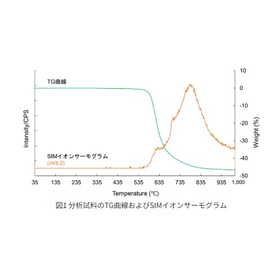
[Analysis Case] Quantification of H2 Generated During the Thermal Decomposition of Polyimide

It will be possible to monitor and quantify the gases generated from resin materials, such as H2 and CO2.

The TG-MS (Thermogravimetric-Mass Spectrometry) method is a technique that introduces gases generated during TG-DTA (Thermogravimetric Differential Thermal Analysis) measurements online to a mass spectrometer (MS) for analysis. This allows for the acquisition of information regarding the thermal decomposition behavior of the sample, the types of gases generated, and the temperature range of gas generation. Furthermore, by creating a calibration curve using standard substances, quantification of the generated gases is also possible. However, H2 is generally difficult to measure with GC-MS, making its evaluation challenging in TG-MS as well. This document presents a case where the optimization of measurement conditions enabled the understanding and quantification of H2 generation behavior, specifically highlighting the quantification of H2 generated during the thermal decomposition process of polyimide using TG-MS.

  • Contract Analysis
  • Contract measurement
  • Contract Inspection

Added to bookmarks

Bookmarks list

Bookmark has been removed

Bookmarks list

You can't add any more bookmarks

By registering as a member, you can increase the number of bookmarks you can save and organize them with labels.

Free membership registration

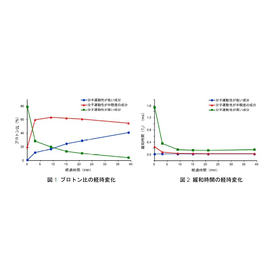
Analysis Case: Curing Behavior Analysis of Two-Component Mixed Epoxy Resin

By using TD-NMR, the curing process of the resin can be continuously evaluated.

Pulse NMR (TD-NMR) can continuously evaluate the molecular motion state inside the resin by measuring the spin-spin relaxation time (T2), which depends on the mobility of the molecules. This document introduces a case study evaluating the curing process of a two-component epoxy resin.

  • Contract Analysis
  • Contract measurement
  • Contract Inspection

Added to bookmarks

Bookmarks list

Bookmark has been removed

Bookmarks list

You can't add any more bookmarks

By registering as a member, you can increase the number of bookmarks you can save and organize them with labels.

Free membership registration

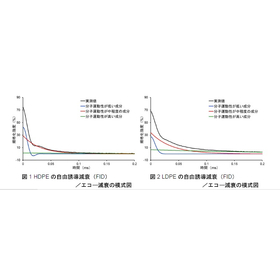
[Analysis Case] Comparison of Crystallinity of Polyethylene (TD-NMR)

TD-NMR requires little to no pretreatment and can quantitatively evaluate the crystallinity and higher-order structural differences of polymer materials.

Pulse NMR (TD-NMR) applies high-frequency pulses to atomic nuclei (mainly 1H) in an external magnetic field and analyzes the resulting magnetization relaxation behavior to evaluate molecular mobility and higher-order structures. In polymer materials, by analyzing the spin-spin relaxation time (T2), it is possible to distinguish between crystalline and amorphous regions based on differences in molecular chain mobility, and it is widely used for comparative evaluation of crystallinity. This document introduces a case study comparing the crystallinity of polyethylene (PE).

  • Contract Analysis
  • Contract measurement
  • Contract Inspection

Added to bookmarks

Bookmarks list

Bookmark has been removed

Bookmarks list

You can't add any more bookmarks

By registering as a member, you can increase the number of bookmarks you can save and organize them with labels.

Free membership registration

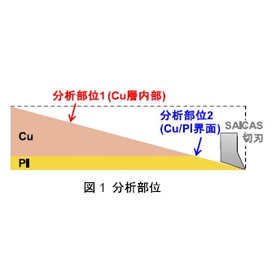
[Analysis Case] Chemical Bonding State Analysis of Cu in the FPC Laminated Interface Region

By using SAICAS, it becomes possible to analyze heterogeneous material interfaces even in XPS analysis, where the probe diameter is large and cross-sectional measurements are typically difficult.

Flexible printed circuits (FPC) used in electronic devices such as smartphones have a structure composed of layers of resin and metal. To maintain sufficient performance, the adhesion between each layer is crucial; however, at the interface between polyimide (PI) resin and copper (Cu), it is known that copper oxide is generated over time, leading to delamination. In this case study, we targeted the FPC from a deteriorated commercial product, created cross-sections using a slant cutting device (SAICAS), and analyzed the chemical bonding state at the interface using X-ray photoelectron spectroscopy (XPS).

  • Contract Analysis
  • Contract measurement
  • Contract Inspection

Added to bookmarks

Bookmarks list

Bookmark has been removed

Bookmarks list

You can't add any more bookmarks

By registering as a member, you can increase the number of bookmarks you can save and organize them with labels.

Free membership registration

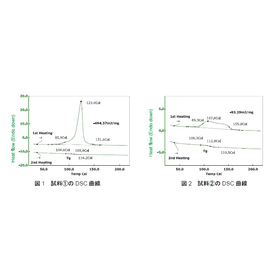
[Analysis Case] Measurement of Curing Degree of Thermosetting Resin (DSC)

In DSC measurements, the curing start temperature and the glass transition temperature (Tg) of the cured resin can also be evaluated through a heating-cooling-heating cycle.

Thermosetting resins and adhesives are used in a wide range of fields such as automobiles, electronic components, and building materials, and the degree of curing is an important characteristic that affects adhesive strength and reliability. This document presents a case study that quantitatively evaluates the curing degree of epoxy resin using differential scanning calorimetry (DSC measurement).

  • Contract Analysis
  • Contract measurement
  • Contract Inspection

Added to bookmarks

Bookmarks list

Bookmark has been removed

Bookmarks list

You can't add any more bookmarks

By registering as a member, you can increase the number of bookmarks you can save and organize them with labels.

Free membership registration

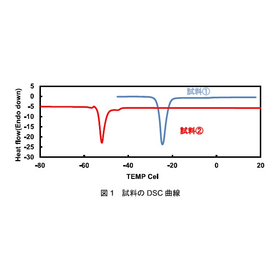
[Analysis Case] Evaluation of Melting Temperature and Latent Heat of Thermal Storage Materials (DSC)

In DSC measurement, in addition to evaluating the performance of phase change materials, it is also possible to assess the physical properties of inorganic and organic substances, such as melting and crystallization.

Phase change materials are used for temperature-controlled delivery of fresh food as an alternative to ice and dry ice, and due to their reusability and ability to maintain desired temperature ranges, their applications are expanding beyond the food sector to include the transportation of pharmaceuticals and frozen goods. Phase change materials control temperature by utilizing the latent heat of fusion associated with the phase change from solid to liquid, making the melting temperature and latent heat capacity important evaluation criteria. This document presents examples of two types of phase change materials, evaluated for melting temperature and latent heat capacity through differential scanning calorimetry (DSC measurements).

  • Contract Analysis
  • Contract measurement
  • Contract Inspection

Added to bookmarks

Bookmarks list

Bookmark has been removed

Bookmarks list

You can't add any more bookmarks

By registering as a member, you can increase the number of bookmarks you can save and organize them with labels.

Free membership registration

Announcement of Exhibition Participation and Exhibitor Presentations "eX-Tech2026"

We will be exhibiting at the eX-Tech 2026 microelectronics show within the JPCA Show 2026.

From June 10 (Wednesday) to June 12 (Friday), 2026, we will be exhibiting at the Microelectronics Show eX-Tech 2026, part of the Total Solutions Exhibition for Electronic Devices "JPCA Show 2026," held at Tokyo Big Sight, East Exhibition Hall.

  • Contract measurement

Added to bookmarks

Bookmarks list

Bookmark has been removed

Bookmarks list

You can't add any more bookmarks

By registering as a member, you can increase the number of bookmarks you can save and organize them with labels.

Free membership registration

[Analysis Case] Anion Analysis by Capillary Electrophoresis

By using capillary electrophoresis (CE), it is possible to perform short-time, high-resolution anion analysis.

Capillary electrophoresis (CE) is an analytical method that performs electrophoresis within a capillary column to separate and analyze various components in an aqueous solution. It is characterized by high separation precision and the ability to conduct analyses in a short time. Here, we present a case study of measuring inorganic anions and organic acids using the CE method. **[Analytical Equipment]** SCIEX P/ACE™ MDQ plus **[Analysis Results]** A 16-component mixed standard solution was measured using the CE method. With CE, it was possible to separate and detect 16 components in about 10 minutes, including capillary cleaning and equilibration. In conventional ion chromatography (IC), shortening analysis time and improving analytical precision required switching columns and considering analytical conditions based on the measured components. However, the CE method allows for the separation and detection of multiple components in a short time, making it suitable for high-throughput analysis.

  • Contract measurement

Added to bookmarks

Bookmarks list

Bookmark has been removed

Bookmarks list

You can't add any more bookmarks

By registering as a member, you can increase the number of bookmarks you can save and organize them with labels.

Free membership registration

[Analysis Case] Simple Quantitative Analysis of Sugars

This is an example of a simple quantitative analysis of seven types of sugars converted to glucose equivalents using an evaporative light scattering detector (ELSD).

Sugars come in many types, and quantitative analysis to determine the sugar content in samples using standard substances for each type can become complicated, involving various tasks from pretreatment to measurement and analysis. Here, we introduce a case where an evaporative light scattering detector (ELSD) was used to simply quantify seven types of sugars by converting them to glucose equivalents. 【Analysis Samples】 Standard substances: 7 types of sugars (galactose, glucose, sucrose, trehalose, fructose, maltose, lactose) Samples: Commercial vegetable juices A and B, lactic acid bacteria drinks 【Analysis Method】 A mixture of the seven types of sugar standard substances was prepared, and HPLC-ELSD measurement was conducted. Using the conversion quantitative method based on glucose equivalents allows for a straightforward quantification of sugars in the samples. This method is effective when wanting to confirm the approximate concentration of sugars contained in various samples related to bio-manufacturing, such as food and beverages, cell and microbial culture media, and culture solutions.

  • Contract measurement

Added to bookmarks

Bookmarks list

Bookmark has been removed

Bookmarks list

You can't add any more bookmarks

By registering as a member, you can increase the number of bookmarks you can save and organize them with labels.

Free membership registration

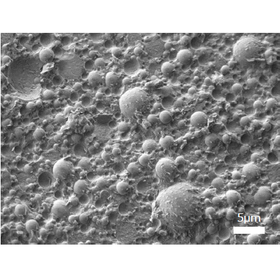
[Analysis Case] Cryo-SEM Observation and Elemental Analysis of Cosmetics

We will introduce an example of observing the morphology of fine particles contained in a makeup primer using the cryo-SEM method.

Basic cosmetics such as lotions and serums, as well as beauty cosmetics like lipsticks and foundations, are multi-component mixtures of water, oils, emulsifiers, pigments, and more. Since the fine structure and dispersion state of these components affect the appearance and finish during application, it is important to verify the state of each component. The cryo-SEM method is a technique that allows for the observation of fine structures and dispersion states while maintaining a paste-like structure. After freezing and fracturing the primer, we conducted morphological observations of the fine particles contained in the primer using the cryo-SEM method. Additionally, we performed elemental mapping analysis using the SEM-EDX method to confirm the distribution of each element. [Analysis Sample] Primer [Analysis Method] The primer was rapidly frozen as is, and an observation surface was prepared through freeze-fracturing, followed by cryo-SEM observation and elemental analysis using the SEM-EDX method. (Freeze-fracturing: Leica Microsystems ACE600FF, Cryo-SEM: Zeiss EVO15LS) (EDX: Bruker AXS QUANTAX XFlash6|30) By combining the cryo-SEM method and the SEM-EDX method, it is possible to confirm the distribution of elements even in fluid samples.

  • Contract measurement

Added to bookmarks

Bookmarks list

Bookmark has been removed

Bookmarks list

You can't add any more bookmarks

By registering as a member, you can increase the number of bookmarks you can save and organize them with labels.

Free membership registration

[Analysis Case] Analysis of Surface Functional Groups of Polymer Materials 3 (Chemical Modification - XPS)

This paper presents a case where specific functional groups were chemically modified, and the presence and ratio of C=C were evaluated from the introduced marker elements.

X-ray photoelectron spectroscopy (XPS) is used to understand the chemical bonding states of elements on the surface of polymer materials, but it is difficult to distinguish between C=C, C-C, and C-H chemical bonds. Therefore, we introduce a case where C=C was chemically modified with osmium tetroxide (OsO4), and the presence and quantity ratio of C=C were evaluated from the introduced marker element (Os). 【Analysis Samples】 (1) Polybutadiene thin film (2) Two types of styrene-butadiene rubber with different monomer mixing ratios 【Analysis Method】 The surfaces of each sample were subjected to chemical modification treatment using OsO4 before XPS measurement. XPS: Monochromatic Al Kα radiation (manufactured by ULVAC-PHI, PHI5000 VersaProbe II) By combining the chemical modification treatment using OsO4 with XPS analysis, it is possible to evaluate the presence and quantity ratio of C=C not only on the resin surface but also in surface modification layers, coating layers, and adhesive layers, making it effective for material performance evaluation. Additionally, evaluating the amount of C=C is also effective as an indicator of the degree of resin degradation, allowing for the assessment of material degradation by comparing the C=C amount with that of new materials.

  • Contract measurement

Added to bookmarks

Bookmarks list

Bookmark has been removed

Bookmarks list

You can't add any more bookmarks

By registering as a member, you can increase the number of bookmarks you can save and organize them with labels.

Free membership registration

[Analysis Case] Analysis of Surface Functional Groups of Polymer Materials 2 (Chemical Modification - XPS)

This article presents a case where specific functional groups were chemically modified, and the ratio of surface functional groups (amino groups, silanol groups) was evaluated from the introduced marker elements.

Quantifying functional groups on the surface of direct materials is challenging; however, we present a case where specific functional groups were chemically modified using reagents containing heteroatoms suitable for XPS analysis, and the ratio of surface functional groups (amino groups, silanol groups) was evaluated based on the introduced heteroatoms. [Analysis Samples] 4,4'-Diaminodiphenyl ether (DADPE), OH-terminated Si wafer [Analysis Method] XPS; monochromatic Al Kα radiation (manufactured by Ulvac-PHI, PHI5000 VersaProbe II) [Analysis Results] 1. Evaluation of amino groups: We introduce a case where amino groups in 4,4'-diaminodiphenyl ether (DADPE) were modified with trifluoroacetic anhydride (TFAA). 2. Evaluation of silanol groups: We present a case where silanol groups on the surface of an OH-terminated Si wafer were modified with 1H,1H,2H,2H-perfluorooctyldimethylchlorosilane (FOCS). It is possible to determine the ratio of surface functional groups through XPS analysis of chemically modified samples. Additionally, by analyzing surfaces of samples with different material properties and comparing the ratios of surface functional groups, it is also possible to evaluate the impact of surface functional groups on material properties.

  • Contract measurement

Added to bookmarks

Bookmarks list

Bookmark has been removed

Bookmarks list

You can't add any more bookmarks

By registering as a member, you can increase the number of bookmarks you can save and organize them with labels.

Free membership registration

[Analysis Case] Analysis of Surface Functional Groups of Polymer Materials 1 (Chemical Modification - XPS)

This article presents a case where specific functional groups were chemically modified, and a relative comparison of surface functional groups (hydroxyl groups, carboxyl groups) between samples was conducted using introduced marker elements.

X-ray photoelectron spectroscopy (XPS) is used to understand the chemical states of elements on the surface of polymer materials, but it is difficult to directly quantify functional groups on the material surface. Therefore, we introduce a case where specific functional groups were chemically modified with reagents containing heteroatoms suitable for XPS analysis, and the surface functional groups (hydroxyl groups, carboxyl groups) were evaluated from the introduced marker elements. [Analysis Samples] Polyvinyl alcohol (PVA), polyacrylic acid (PAA) [Analysis Method] XPS; monochromatic Al Kα radiation (ULVAC-PHI model PHI5000 VersaProbe II) [Analysis Results] 1. Evaluation of hydroxyl groups: We introduce an example of the modification of hydroxyl groups in polyvinyl alcohol (PVA) (saponification degree: approximately 80%) using trifluoroacetic anhydride (TFAA). 2. Evaluation of carboxyl groups: We introduce an example of the modification of carboxyl groups in polyacrylic acid (PAA) using trifluoroethanol (TFE). By applying the chemical modification-XPS method to optical polymer films and orientation films for liquid crystal displays, it becomes possible to understand the correlation with physical properties through relative comparisons of surface functional groups between samples.

  • Contract measurement

Added to bookmarks

Bookmarks list

Bookmark has been removed

Bookmarks list

You can't add any more bookmarks

By registering as a member, you can increase the number of bookmarks you can save and organize them with labels.

Free membership registration

[Analysis Case] Heat Resistance Lifetime Prediction of Recycled Plastics (TG-MS)

This paper presents a case study on predicting the thermal lifespan of polystyrene based on kinetic analysis of pyrolysis behavior using the TG-MS method.

With the increasing awareness of environmental impact, the use of recycled plastics is advancing; however, the decrease in heat resistance due to thermal history and grinding during the plastic recycling process has become a challenge. Nevertheless, evaluating heat resistance, such as in JIS S 2029, takes a significant amount of time, leading to a demand for simpler screening methods. This document introduces a case of predicting the heat resistance lifespan of polystyrene based on kinetic analysis of thermal decomposition behavior using the TG-MS method. [Analysis Samples] Polystyrene (PS) (virgin and recycled) [Analysis Equipment] TG-DTA: Rigaku Thermo plus EVO2, GC-MS: Agilent 8890GC/5977B Inert P Kinetic analysis allows for the rapid prediction of the heat resistance lifespan of plastics, enabling a straightforward comparison of the heat resistance lifespan between virgin and recycled products. Additionally, the TG-MS method can accommodate composite materials by using characteristic MS ions of the materials, allowing for the prediction of the lifespan of individual materials in the composite concerning thermal decomposition.

  • Contract measurement

Added to bookmarks

Bookmarks list

Bookmark has been removed

Bookmarks list

You can't add any more bookmarks

By registering as a member, you can increase the number of bookmarks you can save and organize them with labels.

Free membership registration

Analysis Case: Analysis of Sugars

Here are examples of qualitative and quantitative analysis of sugar.

The UV absorption of sugars is very small, so methods using differential refractive index (RI) detectors and evaporative light scattering detectors (ELSD) are commonly employed for measurement. Additionally, there are methods that involve labeling sugars for measurement with UV detectors or fluorescence detectors. Here, we present examples of qualitative and quantitative analysis of sugar standard samples and sugars contained in coffee using RI detectors and ELSD. (1) Example of sugar analysis using RI detectors This is an example of analyzing standard samples of monosaccharides and disaccharides (such as glucose and sucrose) and oligosaccharide standard samples. (2) Example of sugar analysis using ELSD An example where oligosaccharide standard solution was mixed with glucose, glucosamine, and sucrose using ELSD, followed by gradient analysis (mobile phase: acetonitrile/distilled water = 80/20 → 50/50 (v/v)). In a single analysis, glucose, glucosamine, sucrose, and oligosaccharides with a degree of polymerization up to 10 were detected. (3) Example of sugar analysis in commercial beverages This is an example of quantifying sugars in commercially available coffee. It was found that black coffee primarily contains mannose and manno-biose as sugars, while low-sugar coffee mainly contains sucrose.

  • Contract measurement

Added to bookmarks

Bookmarks list

Bookmark has been removed

Bookmarks list

You can't add any more bookmarks

By registering as a member, you can increase the number of bookmarks you can save and organize them with labels.

Free membership registration

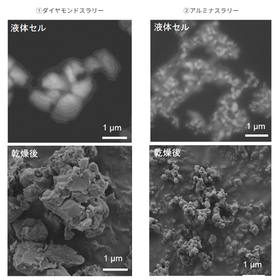
[Analysis Case] Observation of the Dispersion State of Abrasives in Polishing Slurry

We will introduce an example of visualizing abrasive particles in a grinding slurry.

Materials with fine particles dispersed in liquids, such as dispersions and slurries, are utilized in many fields including batteries, paints, and cosmetics. In these materials, the dispersion of particles significantly affects the performance and quality of the products, making the evaluation of the dispersion state very important. However, in conventional scanning electron microscope (SEM) observations, the process is conducted in a vacuum, which can lead to particle aggregation and structural changes due to drying, making it difficult to accurately assess the original dispersion state in the liquid. This document presents a case study of visualizing abrasive particles in polishing slurries using SEM observations with a liquid cell, which allows for the observation of liquids even in a vacuum. **Analysis Samples** - Diamond slurry - Alumina slurry **Analysis Method** We conducted SEM observations of polishing particles in slurries both with and without the use of a liquid cell. By using a liquid cell, we were able to visualize the dispersion state of fine particles in the liquid without the need for dilution or drying treatment, even for highly viscous slurry materials. SEM observations using a liquid cell enable the observation of the presence of fine particles in dispersions and slurries in their liquid state.

  • Contract measurement

Added to bookmarks

Bookmarks list

Bookmark has been removed

Bookmarks list

You can't add any more bookmarks

By registering as a member, you can increase the number of bookmarks you can save and organize them with labels.

Free membership registration

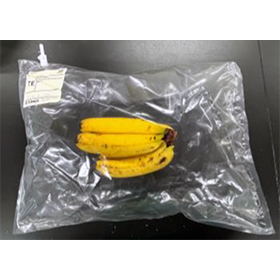
[Analysis Case] Off-flavor Analysis from Food (SIFT-MS)

We will introduce a case where 2,4,6-trichloroanisole (TCA) was quantified using SIFT-MS.

【Sample Analysis】 Banana 1 bunch (5 pieces) 【Analysis Results】 A bunch of bananas and high-purity nitrogen gas were placed in a 10L Tedlar bag and left at room temperature for about 24 hours. After that, the TCA concentration inside the bag was measured for about 10 minutes using SIFT-MS. As a result, the average concentration of TCA inside the bag was 10 ppbv, allowing for quantification of trace amounts of TCA without complex pre-treatment such as concentration.

  • Contract measurement

Added to bookmarks

Bookmarks list

Bookmark has been removed

Bookmarks list

You can't add any more bookmarks

By registering as a member, you can increase the number of bookmarks you can save and organize them with labels.

Free membership registration

[Analysis Case] Simple Qualitative and Quantitative Analysis of Aroma Components in Beverages

We introduce a simple analytical method that combines automatic qualitative analysis using a fragrance component database with SIFT-MS, which can monitor volatile components.

【Analysis Sample】 Lemon Sour (Alcohol Content 3%) 【Analysis Results】 The aroma components in Lemon Sour were analyzed using the Dynamic Headspace (DHS) - GC/MS method (Figure 1), and automatic qualitative analysis was performed using Aroma office 2D. As a result, approximately 120 types of aroma components were found in the Lemon Sour. On the other hand, the sensory evaluation conducted when opening the Lemon Sour resulted in a 'sweet and sour floral scent.' Therefore, four compounds that evoke the quality of this scent were selected from the qualitative results of Aroma office 2D, and the orthonasal aroma (the scent perceived by the nose) of the Lemon Sour was quantified using SIFT-MS. The results are shown in Table 1. Furthermore, the SIFT-MS analysis was able to capture the way these components are released immediately after opening the Lemon Sour.

  • Contract measurement

Added to bookmarks

Bookmarks list

Bookmark has been removed

Bookmarks list

You can't add any more bookmarks

By registering as a member, you can increase the number of bookmarks you can save and organize them with labels.

Free membership registration

[Analysis Case] Aroma Evaluation of Whiskey through Multivariate Analysis (Principal Component Analysis)

We will introduce a case study that evaluated the aromatic components of whiskey using multivariate analysis (principal component analysis).

【Sample Analysis】Nine types of whiskey with different brands (A to I) 【Analysis Method】The diluted samples were subjected to dynamic headspace (DHS) - GC/MS analysis. After deconvoluting the peaks obtained from the chromatogram (GC/MS-TIC), the aroma components were identified using an automated comprehensive search of the aroma component database (Aroma Search). For the identified aroma components, multivariate analysis (principal component analysis) was conducted on those with variations within the specified range over three repeated measurements. 【Analysis Results】The results of the multivariate analysis (principal component analysis) are shown in a score plot indicating the differences between samples and a loading plot indicating the components responsible for these differences. The score plot revealed that the method effectively distinguishes between types of whiskey. The loading plot confirmed the presence of phenolic compounds characteristic of Islay whiskey, which has a complex and deep aroma derived from peat.

  • Contract measurement

Added to bookmarks

Bookmarks list

Bookmark has been removed

Bookmarks list

You can't add any more bookmarks

By registering as a member, you can increase the number of bookmarks you can save and organize them with labels.

Free membership registration

Notice of Exhibition Participation "JASIS2025"

We will be exhibiting at "JASIS2025"!

We will be exhibiting at "JASIS 2025," which will be held for three days from September 3 to 5, 2025, at Makuhari Messe in Chiba.

  • Contract measurement

Added to bookmarks

Bookmarks list

Bookmark has been removed

Bookmarks list

You can't add any more bookmarks

By registering as a member, you can increase the number of bookmarks you can save and organize them with labels.

Free membership registration

Announcement of Exhibition Participation: "Total Solution Exhibition for Electronic Devices 2025"

We will be exhibiting at the "Total Solution Exhibition for Electronic Devices 2025"!

We will be exhibiting at the "Total Solution Exhibition for Electronic Devices 2025," which will be held at Tokyo Big Sight from June 5 to June 7, 2025. You can also consult directly with our sales representatives at our booth. We would be grateful if you could visit our booth when you are nearby.

  • Contract measurement

Added to bookmarks

Bookmarks list

Bookmark has been removed

Bookmarks list

You can't add any more bookmarks

By registering as a member, you can increase the number of bookmarks you can save and organize them with labels.

Free membership registration

[Analysis Case] Real-time Aroma Analysis of Coffee (SIFT-MS)

This paper presents a case study evaluating the orthonasal and retronasal aromas of coffee using SIFT-MS.

[Analysis Sample] Commercial drip coffee [Analysis Device] SIFT-MS: Manufactured by Syft [Analysis Results] Using SIFT-MS, we measured the orthonasal aroma and retronasal aroma of coffee. The results of quantifying two representative aroma components of coffee, Phenol and Pyridine, are shown in Figures 1 and 2. In the orthonasal aroma analysis, we were able to capture the emergence of Phenol and Pyridine immediately after brewing. The average concentrations of each component over approximately 100 seconds from the start of brewing were 62 ppb for Phenol and 152 ppb for Pyridine. In the retronasal aroma analysis, both components showed the highest values immediately after swallowing, with average concentrations in the exhaled breath right after swallowing being 1.7 ppb for Phenol and 7.7 ppb for Pyridine. Additionally, although the concentrations of each component decreased over approximately 150 seconds after swallowing, we were able to capture the lingering aroma. [Summary] Real-time analysis using SIFT-MS allows us to capture the components related to the aroma release from beverages such as coffee and the aftertaste following consumption. Furthermore, quantification of aroma components in the ppb range is possible.

  • Contract measurement

Added to bookmarks

Bookmarks list

Bookmark has been removed

Bookmarks list

You can't add any more bookmarks

By registering as a member, you can increase the number of bookmarks you can save and organize them with labels.

Free membership registration

[Analysis Case] Quantification of water generated when heating water-absorbent polymers.

This article presents a case where water adhered to the surface of nylon 6, known as a water-absorbing polymer, and water generated during thermal decomposition were quantified separately.

The TG-MS (Thermogravimetric-Mass Spectrometry) method involves introducing gases generated during the TG-DTA (Thermogravimetric Differential Thermal Analysis) measurement of a sample online to a mass spectrometer (MS) for analysis. This technique allows for the acquisition of information regarding the thermal decomposition behavior of the sample, the types of gases generated, and the temperature ranges at which these gases are produced. Additionally, by creating a calibration curve using standard substances, it is possible to quantify the generated gases. [Analysis Sample] Nylon 6 (PA6) [Analysis Equipment] TG-DTA: Rigaku Thermo plus EVO2 GC-MS: Agilent 8890GC/5977B Inert Plus [Analysis Results] The TG-MS method allows for the quantification of water generated from the sample, separated by temperature. [Summary] Using the TG-MS method, it is possible to understand the amount of moisture adhering to the sample length and the amount of moisture generated during thermal decomposition.

  • Contract measurement

Added to bookmarks

Bookmarks list

Bookmark has been removed

Bookmarks list

You can't add any more bookmarks

By registering as a member, you can increase the number of bookmarks you can save and organize them with labels.

Free membership registration

[Analysis Case] Analysis of Surface Functional Groups of Polymer Materials (Chemical Modification - XPS)

This paper presents a case where a specific functional group was chemically modified using a reagent containing heteroatoms, and the ratio of surface functional groups derived from the introduced heteroatoms was evaluated.

【Analysis Sample】4,4'-Diaminodiphenyl Ether (DADPE), OH-terminated Si wafer 【Analysis Method】XPS; monochromatic AlKα radiation (ULVAC-PHI model PHI5000 VersaProbe II) 【Analysis Results】 1. Evaluation of Amino Groups Focusing on the heteroatom F, the analysis revealed that the proportion of amino groups relative to the carbon from the sample was 19 at%. 2. Evaluation of Silanol Groups Focusing on the heteroatom F, the analysis revealed that the proportion of silanol groups relative to the silicon from the sample was 3 at%. 【Summary】 XPS analysis of chemically modified samples allows for the determination of the proportion of surface functional groups. Additionally, by analyzing the surfaces of samples with different material properties and comparing the proportions of surface functional groups, it is also possible to evaluate the impact of surface functional groups on material properties.

  • Contract measurement

Added to bookmarks

Bookmarks list

Bookmark has been removed

Bookmarks list

You can't add any more bookmarks

By registering as a member, you can increase the number of bookmarks you can save and organize them with labels.

Free membership registration

[Analysis Case] Analysis of the Thermal Decomposition Behavior of Polyimide (TG-MS)

I will introduce a case that analyzed the thermal decomposition behavior of polyimide.

The TG-MS (Thermogravimetric-Mass Spectrometry) method introduces gases generated during the TG-DTA (Thermogravimetric Differential Thermal Analysis) measurement of a sample online to an MS (Mass Spectrometer) for analysis. This technique allows for the acquisition of information regarding the thermal decomposition behavior of the sample, the types of gases generated, and the temperature ranges at which these gases are produced. Additionally, by using the sample observation function, changes in the shape and color of the sample during heating can be observed in real time. **[Analyzed Sample]** Polyimide (PI) film **[Analytical Equipment]** TG-DTA: Rigaku Thermo plus EVO2 GC-MS: Agilent 8890GC/5977B Inert Plus **[Analysis Results]** A weight loss of the PI film was observed around 540°C, accompanied by the detection of CO, CO2, and decomposition components such as Phenol and Benzonitrile. Furthermore, the sample observation images showed that the PI film gradually changed from orange to brown and then to black, and shrinkage was also observed starting around 522°C. **[Summary]** The TG-MS method allows for understanding the types of gases generated and the weight loss behavior of the sample during heating.

  • Contract measurement

Added to bookmarks

Bookmarks list

Bookmark has been removed

Bookmarks list

You can't add any more bookmarks

By registering as a member, you can increase the number of bookmarks you can save and organize them with labels.

Free membership registration

Evaluation of Polymer Orientation Using Raman Imaging

Raman spectroscopy is an effective analytical method for evaluating local orientation and crystallinity.

We present a case study evaluating the orientation of polypropylene injection-molded products using Raman imaging, which can capture differences in orientation in two dimensions. 【Analysis Sample】Polypropylene chip 【Analysis Method】Raman Imaging Excitation Laser Wavelength: 532nm 【Analysis Results】The Raman image revealed that the orientation differed from the tip to the center and from the center to the base of the sample. 【Conclusion】Raman imaging makes it possible to evaluate the orientation of the sample.

  • Contract measurement

Added to bookmarks

Bookmarks list

Bookmark has been removed

Bookmarks list

You can't add any more bookmarks

By registering as a member, you can increase the number of bookmarks you can save and organize them with labels.

Free membership registration

[Analysis Case] Chemical State Analysis of Metal Elements on the Sample Surface Due to Heating

This is an example of evaluating the changes in the chemical state of metal elements due to heating two types of metal foils within an XPS device.

**Analysis Samples** (1) Cu Foil: The Cu foil, which was discolored by heating in the atmosphere, was used for analysis. (2) Ag Foil: The Ag foil, which was discolored due to atmospheric corrosion, was used for analysis. **Analysis Method** XPS Analysis XPS; monochromatic AlKα radiation (ULVAC-PHI model PHI5000 VersaProbe II) Each sample was measured at room temperature and then heated to 500°C in the device (under vacuum) and measured again after heating. **Summary** By conducting XPS analysis, it is possible to evaluate the changes in chemical state associated with the temperature rise of the samples under vacuum. Additionally, the X-ray photoelectron spectroscopy (XPS) equipment owned by Kaneka Techno Research can perform XPS measurements both before and after heating, as well as during heating. Therefore, if the reaction rate is slow, it is also possible to evaluate how the chemical state changes over time.

  • Contract measurement

Added to bookmarks

Bookmarks list

Bookmark has been removed

Bookmarks list

You can't add any more bookmarks

By registering as a member, you can increase the number of bookmarks you can save and organize them with labels.

Free membership registration

[Analysis Case] Quantitative Analysis of CO2 Emitted During Cement Heating

One method to understand CO2 emissions is the TG-MS (Thermogravimetric Mass Spectrometry) method, which allows for quantitative analysis of CO2.

This report introduces a case where CO2 generated from commercially available cement was quantified when heated under a simulated air atmosphere (He/O2=4/1 (v/v)). **[Analysis Sample]** Commercial powder cement **[Analysis Equipment]** TG-DTA: Rigaku Thermo plus EVO2 GC-MS: Agilent 8890GC/5977B Inert Plus **[Analysis Method and Results]** CO2 generated from the sample was quantified using the TG-MS method while heating the sample from around 30°C to 1,000°C (20°C/min) under a simulated air atmosphere. After creating a calibration curve (Figure 1) using standard substances, a SIM ion thermogram was drawn using the characteristic ion of CO2 generated from the sample (m/z 44), and the amount of CO2 generated in the temperature range of 513 to 825°C was determined. The results are shown in Table 1. As a result, it was found that the sample measured generated 30 wt% of CO2. **[Summary]** The TG-MS method allows for the quantification of CO2 generated from the sample over any temperature range. Additionally, since the measurement atmosphere can be chosen from inert gas (He) and simulated air, analysis that simulates the usage environment is possible.

  • Contract measurement

Added to bookmarks

Bookmarks list

Bookmark has been removed

Bookmarks list

You can't add any more bookmarks

By registering as a member, you can increase the number of bookmarks you can save and organize them with labels.

Free membership registration

[Analysis Case] Deodorant Efficacy Test (SIFT-MS)

It is possible to quantify the target compound in the ppt order without creating a calibration curve using the compound library within the device.

In this instance, we will introduce a case where the new efficacy testing method established by the Fragrance Deodorant Association was implemented using SIFT-MS to verify the deodorizing effect of commercially available deodorizing beads. 【Analysis Sample】 Deodorizing beads 【Analysis Device】 SIFT-MS: Voice 200 ultra by Syft Technologies 【Analysis Method】 In this case, deodorizing beads and the specific foul odor substance Trimethylamine (TMA) were added to a 10L Tedlar bag filled with clean air. The TMA concentration in the sampled air was measured using SIFT-MS at regular intervals, and the time required to remove 90% of the foul odor substance (t0.1) was calculated. 【Analysis Results】 The results of measuring the TMA concentration in the Tedlar bag at each time point up to 6 hours after the start of the test are shown. The logarithm of the TMA concentration (C) / initial TMA concentration (C0) was plotted against time, and the time required to remove 90% of TMA (t0.1) was calculated based on the obtained slope (-0.3956). As a result, the time required for the deodorizing beads to remove 90% of TMA (t0.1) was found to be 5.82 hours.

  • Contract measurement

Added to bookmarks

Bookmarks list

Bookmark has been removed

Bookmarks list

You can't add any more bookmarks

By registering as a member, you can increase the number of bookmarks you can save and organize them with labels.

Free membership registration

[Analysis Case] Structural Analysis of Multilayer Films (Raman Spectroscopy)

We will introduce a case study of structural analysis of multilayer films using Raman imaging.

Films used in electronic devices and food packaging have a multilayer structure with multiple layers stacked to provide functions such as gas barrier properties and flexibility. Raman spectroscopy is effective for understanding the composition of each layer of the film. Here, we present a case study of structural analysis of multilayer films using Raman imaging. [Analysis Sample] Commercial pressure cooking bag [Analysis Method] Raman Imaging Excitation Laser Wavelength: 532 nm

  • Contract measurement

Added to bookmarks

Bookmarks list

Bookmark has been removed

Bookmarks list

You can't add any more bookmarks

By registering as a member, you can increase the number of bookmarks you can save and organize them with labels.

Free membership registration

[Analysis Case] Atmospheric Non-Exposure XPS Analysis of Lithium-Ion Battery Anodes

This study analyzes cases where the chemical state of the anode surface changed when exposed to the atmosphere compared to when it was not exposed, using an anode extracted from a lithium-ion battery.

【Analysis Sample】 Graphite anode of a commercially available lithium-ion battery used in electronic devices (discharged state) 【Analysis Equipment】 Glove box (purge type, manufactured by Miwa Seisakusho) XPS; monochromatic Al Kα radiation (ULVAC-PHI, PHI5000 VersaProbe II) 【Analysis Procedure】 Inside the glove box (Ar atmosphere), a cylindrical 18650 lithium-ion battery was disassembled to collect the anode. The collected anode was transported from the glove box to the XPS equipment (vacuum) via a transfer vessel, which was designated as the non-atmosphere exposed anode. In contrast, the anode that was temporarily taken out of the glove box (into the atmosphere) before being transported to the XPS equipment was designated as the atmosphere exposed anode, and XPS analysis was conducted on both.

  • Contract measurement

Added to bookmarks

Bookmarks list

Bookmark has been removed

Bookmarks list

You can't add any more bookmarks

By registering as a member, you can increase the number of bookmarks you can save and organize them with labels.

Free membership registration

Announcement of Exhibition Participation: "2025 Automotive Technology Exhibition"

We will be exhibiting at the "2025 Yokohama International Automobile Technology Exhibition!!"

We will be exhibiting at the "Automotive Technology Exhibition 2025 YOKOHAMA," which will be held at Pacifico Yokohama from May 21 to 23, 2025. You can also consult directly with our sales representatives at our booth. We would be delighted if you could stop by our booth when you are in the area. Additionally, the Automotive Technology Exhibition ONLINE STAGE 1 is also being held simultaneously. (We are exhibiting at Kaneka Corporation's ONLINE booth.) We hope that customers who find it difficult to attend in person will take a look as well. Exhibition site → https://aee.expo-info.jsae.or.jp/ja/

  • Contract measurement
  • Contract Inspection
  • Contract Analysis

Added to bookmarks

Bookmarks list

Bookmark has been removed

Bookmarks list

You can't add any more bookmarks

By registering as a member, you can increase the number of bookmarks you can save and organize them with labels.

Free membership registration

[Analysis Case] Analysis of Nitrosamines (LC-MS/MS Analysis)

This is an example of conducting LC-MS/MS analysis (liquid chromatography-tandem mass spectrometry) of nine types of nitrosamines standard samples.

In recent years, N-nitrosodimethylamine, a carcinogenic substance, has been detected in sartan-based pharmaceuticals. According to the Ministry of Health, Labour and Welfare's notification "Regarding Self-Inspection of the Risk of Nitrosamine Contamination in Pharmaceuticals (dated October 8, 2021)," nitrosamines in pharmaceuticals must be below the limit values, which requires the measurement of trace amounts of the relevant components. This document introduces a case of LC-MS/MS analysis (liquid chromatography-tandem mass spectrometry) of standard samples of nine types of nitrosamines mentioned in the notification. ■ Analysis Samples - Standard samples of nine types of nitrosamines ■ Analysis Conditions - Equipment: AB SCIEX SCIEX QTRAP 5500 SYSTEM - Ionization Method: ESI positive ion mode - Measurement Mode: MRM ■ Analysis Results For each nitrosamine, peaks at a concentration of 1 ng/mL, necessary for evaluating the limit values, can be detected.

  • Contract measurement

Added to bookmarks

Bookmarks list

Bookmark has been removed

Bookmarks list

You can't add any more bookmarks

By registering as a member, you can increase the number of bookmarks you can save and organize them with labels.

Free membership registration

Notice of Participation in the "Food Forum Tsukuba Business Exchange Exhibition 2023"

We will introduce our services at the corporate exchange exhibition!

We will be exhibiting at the Food Forum Tsukuba corporate exchange exhibition to be held on November 8, 2023 (Wednesday) at the Tsukuba International Conference Center. This exhibition is an opportunity for companies involved in the food industry to showcase their products and technologies. In addition to displaying equipment and products, we will also conduct demonstrations and distribute samples. At our booth, we will introduce the following services: - Electron microscopy observation of food - Analysis of amino acids and dipeptides We would be grateful if you could visit us when you are in the area. We look forward to seeing you all.

  • Contract Inspection
  • Contract measurement
  • Contract Analysis

Added to bookmarks

Bookmarks list

Bookmark has been removed

Bookmarks list

You can't add any more bookmarks

By registering as a member, you can increase the number of bookmarks you can save and organize them with labels.

Free membership registration

Announcement of Exhibition Participation - BioJapan 2023 @ Pacifico Yokohama

We will be exhibiting at our booth at the exhibition "BioJapan 2023" held at Pacifico Yokohama!!

We will be exhibiting at "BioJapan 2023," which will be held at Pacifico Yokohama. "BioJapan" is an exhibition focused on biotechnology, and the applications of biotechnology are expected to span a wide range of fields, including drug discovery, regenerative medicine, diagnostics and medical devices, research equipment and reagents, as well as, in recent years, environmental and energy sectors, and functional foods. The following exhibits are planned: ◉ Analysis of amino acids and dipeptides ◉ Characterization of culture media ◉ Evaluation of leachables and extractables from resin products Venue: Pacifico Yokohama Exhibition Location: Kinki Bioindustry Promotion Conference Booth D-25-2 On the day of the event, we will also be available for consultations regarding various analyses and tests at our booth, and we sincerely look forward to your visit!

  • Contract Analysis
  • Contract measurement
  • Contract Inspection

Added to bookmarks

Bookmarks list

Bookmark has been removed

Bookmarks list

You can't add any more bookmarks

By registering as a member, you can increase the number of bookmarks you can save and organize them with labels.

Free membership registration

Announcement of Exhibition Participation "JASIS 2023"

We will be exhibiting at JASIS2023!!

We will be exhibiting at our booth at "JASIS2023," which will be held at Makuhari Messe from September 6 to 8, 2023. 【Exhibition Details】 ◆ Analysis of lithium-ion battery anode under non-atmospheric exposure ◆ Analysis of gases generated from heating and combustion ◆ Analysis of amino acid dipeptides Exhibition Location: Mini/Solution Exhibition Corner (S-9)

  • Contract measurement
  • Contract Analysis
  • Contract Inspection

Added to bookmarks

Bookmarks list

Bookmark has been removed

Bookmarks list

You can't add any more bookmarks

By registering as a member, you can increase the number of bookmarks you can save and organize them with labels.

Free membership registration

Odor analysis combining deconvolution and aroma search.

We will analyze and identify the aromatic components contained in food and beverages using GC-MS and deconvolution aroma search!

【Analysis Sample】 Commercial Brandy (Cognac) 【Analysis Equipment】 GC-MS (Agilent) with Multi-Functional Auto-Sampler (Gerstel) 【Analysis Method】 The diluted sample was subjected to Dynamic Headspace (DHS)-GC/MS analysis, and after deconvolution, analysis was performed using Aroma Search. 【Results】 The analysis revealed that the sample contained 89 aromatic components.

  • Contract measurement
  • Contract Analysis

Added to bookmarks

Bookmarks list

Bookmark has been removed

Bookmarks list

You can't add any more bookmarks

By registering as a member, you can increase the number of bookmarks you can save and organize them with labels.

Free membership registration

[Analysis Case] Evaluation of Edible Oil Degradation

~Changes in the composition and odor of triglycerides due to the heating of cooking oil~

Edible oil is essential for cooking, such as frying and sautéing. By repeatedly using it for heated cooking, the oil undergoes hydrolysis and oxidation, and its smell also changes. The speed of these changes varies depending on the type of oil; saturated fatty acids are said to be less prone to oxidation, while unsaturated fatty acids are more susceptible. Therefore, we present a case study observing the changes in smell (sensory evaluation) and composition of coconut oil, which is high in saturated fatty acids, and soybean oil, which contains unsaturated fatty acids (omega-6 fatty acids), in both unheated and heated forms. ■ Analysis Samples - Coconut oil (unheated and heated) - Soybean oil (unheated and heated) ■ Analysis Methods 1. LC-TOFMS Analysis The samples were dissolved in tetrahydrofuran, followed by LC-TOFMS analysis. 2. DHS (Dynamic Headspace)-GC/MS Analysis The samples were placed in 20mL vials, and DHS-GC/MS analysis was conducted. 3. Sensory Evaluation Sensory evaluation of the samples was conducted by multiple odor judges to confirm the quality of the smell. ■ Analysis Results For detailed results, please refer to the PDF document.

  • Contract measurement
  • Contract Analysis

Added to bookmarks

Bookmarks list

Bookmark has been removed

Bookmarks list

You can't add any more bookmarks

By registering as a member, you can increase the number of bookmarks you can save and organize them with labels.

Free membership registration

[Analysis Case] Qualitative Analysis of Medium Components (LC-TOFMS)

It is possible to identify components that significantly contribute to the characteristics of the culture medium and the results of the cultivation through qualitative analysis using non-target analysis, inter-sample comparison, and principal component analysis.

In many studies using cultured cells, the qualitative and quantitative analysis of components contained in culture media and culture supernatants has gained attention and is increasingly being utilized in recent years. Understanding the components present in the media provides valuable information for improving the efficiency of cell culture. Here, we present a non-target analysis of media components using liquid chromatography-time-of-flight mass spectrometry (LC-TOFMS) through library searches, using commercially available media as examples, along with comparisons between samples and principal component analysis of the results. [Analysis Samples] Commercially available media A, B, and C [Analysis Equipment] LC-TOFMS *For detailed results, please refer to the PDF document. Qualitative analysis through non-target analysis of media components, along with comparisons between samples and principal component analysis of the results, allows for the identification of components that significantly contribute to the characteristics of the media and the outcomes of the culture. This information is expected to be useful for enhancing the results of cell culture.

  • Contract measurement
  • Contract Analysis

Added to bookmarks

Bookmarks list

Bookmark has been removed

Bookmarks list

You can't add any more bookmarks

By registering as a member, you can increase the number of bookmarks you can save and organize them with labels.

Free membership registration

[Analysis Case] Characterization of Glycosylated Proteins (LC-TOFMS)

It is possible to efficiently advance the development and quality assurance of biopharmaceuticals!

The LC-TOFMS (Liquid Chromatography Time-of-Flight Mass Spectrometry) method is useful for the characterization analysis of proteins (such as molecular weight analysis, peptide mapping, and glycan analysis). We will introduce a case study of the analysis and examination of the glycan (glycoform and glycan attachment sites) of IgG antibodies using the LC-TOFMS method. ■Analysis Sample: IgG Antibody ■Analysis Method: LC-TOFMS ■Analysis Results - Glycoform Analysis By analyzing the molecular weight, it is possible to estimate the glycoforms of glycoproteins. LC-TOFMS measurement of the IgG antibody revealed the presence of five different glycoforms. - Glycan Attachment Site Analysis The IgG antibody was fragmented through enzymatic treatment and measured by LC-TOFMS. The analysis of the measurement results using dedicated software showed that a N-linked glycan (G0F, G1F, G2F) was attached to the asparagine of the peptide fragment with the amino acid sequence EEQFNSTFR. *For detailed results, please refer to the PDF document.

  • Contract Analysis
  • Contract measurement

Added to bookmarks

Bookmarks list

Bookmark has been removed

Bookmarks list

You can't add any more bookmarks

By registering as a member, you can increase the number of bookmarks you can save and organize them with labels.

Free membership registration

[Analysis Case] Evaluation Services for Organic and Inorganic Silicon Materials

We utilize sample preparation techniques and measurement/analysis technologies tailored to material characteristics to provide evaluation services for organic and inorganic silicon materials, helping to solve our customers' challenges!

Silicon materials consist of organic silicon materials such as siloxane and silicone, and inorganic silicon materials such as silica and silicon. Due to their chemical structures, they possess various properties and are utilized in a wide range of fields as industrial materials, from raw materials to finished products. On the other hand, their diversity necessitates a broad range of evaluations. At our company, we propose various analyses based on our experience at each stage from research and development to quality control. Organic silicon materials: gas analysis, composition analysis, structural analysis, metal analysis, surface analysis, morphological observation Inorganic silicon materials: morphological observation, structural analysis, surface analysis

  • Contract measurement
  • Contract Analysis
  • Contract Inspection

Added to bookmarks

Bookmarks list

Bookmark has been removed

Bookmarks list

You can't add any more bookmarks

By registering as a member, you can increase the number of bookmarks you can save and organize them with labels.

Free membership registration

[Analysis Case] Combustion Gas and Heating Generation Gas Analysis

We will propose the appropriate analysis method according to your objectives!!

◎Heating Emission Gas Analysis Qualitative and quantitative analysis of gases generated by heating will be conducted. Materials and products may emit gases during their manufacturing processes due to heating, and these gases can potentially have adverse effects on other raw materials or products. It is possible to analyze the gases generated under conditions equivalent to the heating conditions in the manufacturing process of the sample. - Heating Method Carrier gas (nitrogen, argon, air, etc.) is flowed through a combustion tube at a specified flow rate while heating to the set temperature. *Depending on the customer's objectives, analysis can be performed under various conditions, including different types of carrier gases (nitrogen, argon), flow rates, temperatures, etc. - Collection and Analysis Method Combustion gases will be collected and analyzed using a collection method suitable for the target gases. ◎Combustion Gas Analysis Qualitative and quantitative analysis of gas components generated during combustion under the conditions specified in "Analysis Method for Plastic Combustion Gases" JIS K 7217 will be conducted. (Compliant with JIS K 7217 Method A) By analyzing combustion gases, the safety and environmental impact of materials can be evaluated.

  • Contract measurement

Added to bookmarks

Bookmarks list

Bookmark has been removed

Bookmarks list

You can't add any more bookmarks

By registering as a member, you can increase the number of bookmarks you can save and organize them with labels.

Free membership registration

【Analysis Case】Evaluation of Extractables and Leachables from Resin Products

We will conduct pre-treatment and analysis using various elution methods according to your requests, providing useful information for risk assessment.

◇Qualitative and Quantitative Analysis of Extractables and Leachables (E&L)◇ (Harmful metals, volatile substances, non-volatile substances) As a risk management measure for food containers, packaging materials, and single-use applications in regenerative medicine, the evaluation of extractables and leachables has become necessary. At Kaneka Techno Research, we leverage the expertise gained from analyzing resin products to perform pre-treatment and analytical measurements using various extraction methods tailored to our customers' needs, providing useful information for risk assessment.

  • Contract measurement

Added to bookmarks

Bookmarks list

Bookmark has been removed

Bookmarks list

You can't add any more bookmarks

By registering as a member, you can increase the number of bookmarks you can save and organize them with labels.

Free membership registration

[Analysis Case] Characterization of Culture Medium

For the identification of main components, we conduct semi-quantitative analysis of multiple components, and for the management of specific components, we perform quantitative analysis, tailoring the analysis to the intended use.

The culture medium contains various compounds, including amino acids, organic acids, vitamins, nucleic acid-related compounds, and metabolites secreted from cells. At Kaneka Techno Research, we can semi-quantitatively and quantitatively analyze many organic and inorganic components contained in the culture medium using various analytical methods. By performing multivariate analysis on the obtained data, we can identify the component factors that influence production rates and provide useful information for problem-solving. ■ Analytical Methods Identification of main components: Semi-quantitative analysis of multiple components Management of target components: Quantitative analysis, etc. 〈Equipment Used〉 LC-MS/MS, CE-TOF/MS, GC/MS, IC, ICP-AES, ICP-MS, etc. This technology can also be applied to research and development in the medical field, such as regenerative cells, and the food industry.

  • Contract measurement

Added to bookmarks

Bookmarks list

Bookmark has been removed

Bookmarks list

You can't add any more bookmarks

By registering as a member, you can increase the number of bookmarks you can save and organize them with labels.

Free membership registration

[Analysis Case] Foreign Matter Analysis in Medical PVC Tubes

Analysis case of foreign substances present in medical PVC tubes!

Here is a case study of the analysis of foreign substances found in medical-grade PVC tubes. ■ Information received from the customer regarding the occurrence of foreign substances - Situation of foreign substance occurrence ⇒ Discovered during inspection in the manufacturing process - Material, size, and color of the foreign substance ⇒ Resin, several hundred micrometers, darkish - Expected content of the foreign substance ⇒ Resin burning, or foreign substance contamination during manufacturing - Other information ⇒ None in particular ■ Results From the IR spectrum results of the normal and abnormal parts, it was determined that the peak of the plasticizer found in the normal part was not detected in the foreign substance part. The foreign substance part is believed to be due to poor mixing of the raw material resin.

  • Contract measurement
  • Contract Inspection

Added to bookmarks

Bookmarks list

Bookmark has been removed

Bookmarks list

You can't add any more bookmarks

By registering as a member, you can increase the number of bookmarks you can save and organize them with labels.

Free membership registration
Prev 12 Next
  • 排気熱風なく気温-4.1℃の冷風を 工事不要で暑さ対策 店舗・工場の安全対策に! 気化式スポットクーラー Pure Drive
  • 竹中直人と対談しませんか? 出演企業募集中!
    • Contact this company

      Inquiry Form

    Products

    • Search for Products

    Company

    • Search for Companies

    Special Features

    • Special Features

    Ranking

    • Overall Products Ranking
    • Overall Company Ranking

    support

    • site map
    IPROS
    • privacy policy Regarding external transmission of information
    • terms of service
    • About Us
    • Careers
    • Advertising
    IPROS Services
    • >IPROS GMS | Search site for the manufacturing industry
    • >IPROS | Search site for the B2B industry
    COPYRIGHT © 2001-2026 IPROS CORPORATION ALL RIGHTS RESERVED.
    Please note that the English text on this page is automatically translated and may contain inaccuracies.