1~45 item / All 63 items
Displayed results
Filter by category

Added to bookmarks
Bookmarks listBookmark has been removed
Bookmarks listYou can't add any more bookmarks
By registering as a member, you can increase the number of bookmarks you can save and organize them with labels.
Free membership registrationContact this company
Inquiry Form1~45 item / All 63 items
Filter by category
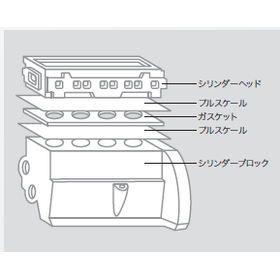
We would like to introduce a case study using our "Presscale" in the automotive industry. In automotive engines, gaskets are designed for each model, but there was no means to confirm whether air and other elements in the cylinder of prototypes or newly manufactured products were properly sealed. By placing this product between the cylinder block and the cylinder head and tightening the head bolts under normal conditions, we can confirm whether the necessary parts are securely sealed. 【Case Overview】 ■ Purpose: To continuously verify the sealing performance of gaskets and enhance design efficiency and quality. ■ Implementation Effects: - Significantly improved design efficiency compared to the trial-and-error approach in practical applications. - Eliminated uncertainty by verifying results with Presscale as needed. - Contributed to the progress of design development, enabling stable delivery. *For more details, please download the PDF or feel free to contact us.
Added to bookmarks
Bookmarks listBookmark has been removed
Bookmarks listYou can't add any more bookmarks
By registering as a member, you can increase the number of bookmarks you can save and organize them with labels.
Free membership registration
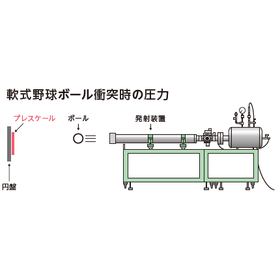
We would like to introduce a case where our "Presscale" was implemented at the Arai Laboratory of the Department of Mechanical Engineering, Faculty of Science and Engineering, Hosei University. In a comparison of the characteristics of old and new balls, an experiment was conducted using a piezoelectric sensor to measure impact pressure at a point, resulting in variations in the peak pressure values. Stable measurements could not be achieved even after approximately 60 experiments. With the introduction of this product, we were able to measure impact pressure over an area, allowing us to obtain extremely stable measurement data using the same experimental setup. This also significantly reduced the number of experiments required. [Case Summary] ■ Before Implementation - Stable measurements could not be achieved with a piezoelectric sensor measuring impact pressure at a point. ■ After Implementation - Impact pressure can be measured over an area, enabling extremely stable measurements. - The number of experiments was significantly reduced. *For more details, please download the PDF or feel free to contact us.
Added to bookmarks
Bookmarks listBookmark has been removed
Bookmarks listYou can't add any more bookmarks
By registering as a member, you can increase the number of bookmarks you can save and organize them with labels.
Free membership registration
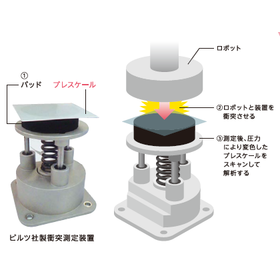
We will introduce a case study of safety evaluation for industrial collaborative robots using "Presscale" at various manufacturing customers. The introduction of collaborative robots requires that a risk assessment determines there is no danger of injury in the event of a collision between humans and collaborative robots. By combining it with a collision measurement device from Pilz in Germany, we achieved the ability to measure "force" and "pressure" simultaneously and with high precision, enabling proper risk assessment. [Case Overview] ■ Measurement Target: Collaborative Robots ■ Before Implementation - Proper evaluation of risk assessment is necessary ■ After Implementation - Achieved proper risk assessment by measuring "force" and "pressure" simultaneously and with high precision *For more details, please download the PDF or feel free to contact us.
Added to bookmarks
Bookmarks listBookmark has been removed
Bookmarks listYou can't add any more bookmarks
By registering as a member, you can increase the number of bookmarks you can save and organize them with labels.
Free membership registration
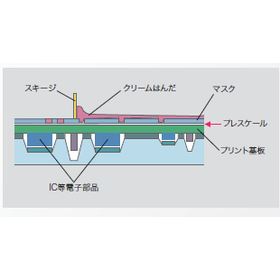
This is a case study of pressure distribution measurement using "Presscale" in the printed circuit board and electronic component assembly industry. When screen printing cream solder onto a printed circuit board, if the pressure distribution of the squeegee is not uniform, variations in the amount of cream solder applied can occur, leading to issues such as poor conductivity during component assembly. This product allows us to understand the pressure being generated, providing valuable guidance for adjusting squeegee pressure and designing support bases. [Case Overview] ■ Purpose - Setting up cream solder printing and designing cream solder printing machines ■ Benefits of Implementation - Reduction of time loss due to trial-and-error adjustments - Reduction of losses from defective components and circuit boards in the final process - Prevention of quality defects from oversight *For more details, please download the PDF or feel free to contact us.
Added to bookmarks
Bookmarks listBookmark has been removed
Bookmarks listYou can't add any more bookmarks
By registering as a member, you can increase the number of bookmarks you can save and organize them with labels.
Free membership registration
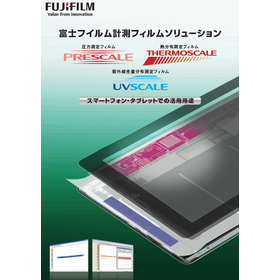
This document is a collection of applications introducing Fujifilm's measurement film solutions. It features a wealth of applications for "Press Scale," "UV Scale," and "Thermo Scale" in LCD, touch panel manufacturing, and smartphone assembly processes. Measurement result examples for each product are also clearly presented with images. Additionally, it includes case studies on the use of these solutions in component manufacturing, such as camera modules, lens units, and semiconductor wafers. [Contents (partial)] ■ Color filter exposure ■ Polarizer lamination ■ Driver IC ACF bonding ■ Backlight lamination ■ Orientation film coating ■ Touch panel/LCD lamination *For more details, please download the PDF or feel free to contact us.
Added to bookmarks
Bookmarks listBookmark has been removed
Bookmarks listYou can't add any more bookmarks
By registering as a member, you can increase the number of bookmarks you can save and organize them with labels.
Free membership registration
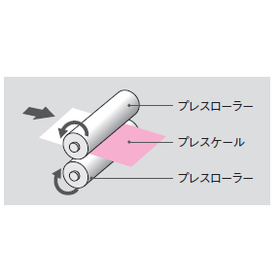
We will introduce a case study of pressing electrode plates for lithium-ion batteries using "Presscale." If there are roll scratches, dents, or distortions, it can lead to partial thickness variations, which can cause defects such as uneven reactions. Additionally, if the roll parallelism is uneven, thickness differences can occur from side to side, resulting in all products being deemed NG due to misalignment. Therefore, this product is placed between the press rollers, and pressure is applied under normal conditions to check the color development state. It allows for the confirmation of abnormal occurrences in the rolls that cannot be managed visually, as well as adjustments to the roll parallelism. 【Case Overview】 ■ Purpose: Confirmation of roll scratches and parallelism during electrode plate pressing ■ Example of Target Products: Smartphones, EVs ■ Implementation Effects - Ability to confirm abnormal occurrences in the rolls - Possible adjustments to roll parallelism *For more details, please download the PDF or feel free to contact us.
Added to bookmarks
Bookmarks listBookmark has been removed
Bookmarks listYou can't add any more bookmarks
By registering as a member, you can increase the number of bookmarks you can save and organize them with labels.
Free membership registration
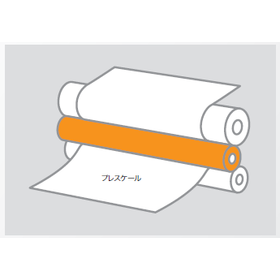
This is a case study of wear confirmation for size press rubber rolls using "Press Scale" in the paper manufacturing (papermaking process) industry. When switching from narrow-width products to wide-width products, if there is even slight wear on the edges of the narrow-width rubber rolls, streaky unevenness occurs when papermaking wide-width products. By using this product, you can check for fine wear and scratches on the size press rolls before papermaking. [Case Overview] ■ Purpose: Wear confirmation of size press rubber rolls ■ Benefits of Implementation - Reduction of repair time by approximately half a day - Reduction of paper loss by several hundred meters - Avoidance of quality abnormalities in case scratches are missed *For more details, please download the PDF or feel free to contact us.
Added to bookmarks
Bookmarks listBookmark has been removed
Bookmarks listYou can't add any more bookmarks
By registering as a member, you can increase the number of bookmarks you can save and organize them with labels.
Free membership registration
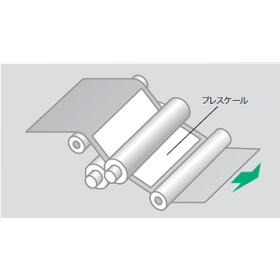
This is a case study of finish evaluation using "Press Scale" for customers in industries such as display and printed circuit boards. If there is poor adhesion between the iron core and rubber of the nip roll for lamination, or if there are scratches on the rubber, lamination defects will occur. Additionally, if there are variations in rubber thickness or eccentricity, uneven nip pressure distribution will lead to transport defects. By using this product, it is easy to evaluate poor adhesion between the iron core and rubber, as well as fine scratches. 【Case Overview】 ■ Purpose: Setting up lamination films, investigating causes of defects when they occur ■ Benefits of Implementation - Approximately half a day's time saved on roll switching and other processes - Prevention of material loss during defect occurrences - Prevention of quality abnormalities in advance, leading to improved yield *For more details, please download the PDF or feel free to contact us.
Added to bookmarks
Bookmarks listBookmark has been removed
Bookmarks listYou can't add any more bookmarks
By registering as a member, you can increase the number of bookmarks you can save and organize them with labels.
Free membership registration
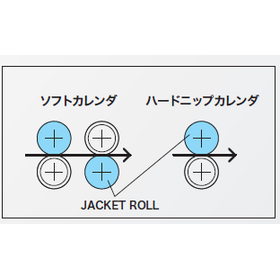
This is a case study on pressure balance adjustment of calendar rolls using "Presscale" in the paper industry. If the pressure balance on the left and right sides of the calendar roll is not adequate, it can lead to waviness and quality abnormalities. If the crown amount and roll hardness are not appropriate for the pressure, the lifespan of the rubber roll will be shortened. By using this product, it is possible to check whether the cylindrical shape of the calendar roll and the horizontal alignment of the shaft are as designed, and whether the pressure adjustment is appropriate, all while applying actual pressure. [Case Overview] ■ Purpose - Maintenance during roll design and roll replacement ■ Benefits of Implementation - Reduces time and material loss in case of abnormalities during roll replacement - Minimizes the risk of overlooking quality abnormalities *For more details, please download the PDF or feel free to contact us.
Added to bookmarks
Bookmarks listBookmark has been removed
Bookmarks listYou can't add any more bookmarks
By registering as a member, you can increase the number of bookmarks you can save and organize them with labels.
Free membership registration
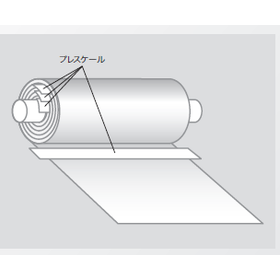
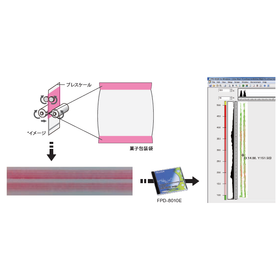
This is a case study of measuring the winding pressure distribution of roll products using "Presscale" for customers in the chemical and paper industries. Generally, the maximum pressure occurs at the core of the roll, where issues such as blocking and uneven steps are likely to arise, resulting in a loss length of several tens to hundreds of meters from the start of winding. There was no method to confirm the appropriate pressure under tension conditions, making it difficult to accurately understand and verify the state. With this product, it is possible to adjust the tension according to the actual changes in winding pressure. [Case Overview] ■ Purpose: Measure the winding pressure distribution of roll products ■ Benefits of Implementation - Reduced time for tension adjustments during variety changes and quality anomalies - Reduced material loss from core loss length *For more details, please download the PDF or feel free to contact us.
Added to bookmarks
Bookmarks listBookmark has been removed
Bookmarks listYou can't add any more bookmarks
By registering as a member, you can increase the number of bookmarks you can save and organize them with labels.
Free membership registration
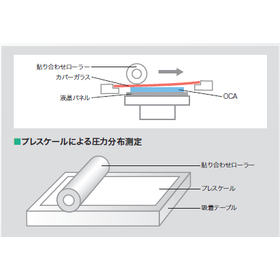
We will introduce a case study of the use of "Presscale" in touch panel and LCD panel manufacturers. With the diversification of products using touch panels, the need to bond hard cover glass to the panels has increased. However, if the pressure is uneven, issues such as air bubbles can occur. By using this product, it is easy to confirm whether the suction table and rollers are installed in a balanced manner. 【Case Overview】 ■ Purpose: Confirming uniform pressure during cover glass bonding ■ Example of target products: Smartphones, tablet devices ■ Implementation effects - Prevents quality abnormalities in advance, improving yield - Allows for quick confirmation of uniformity during design and maintenance *For more details, please download the PDF or feel free to contact us.
Added to bookmarks
Bookmarks listBookmark has been removed
Bookmarks listYou can't add any more bookmarks
By registering as a member, you can increase the number of bookmarks you can save and organize them with labels.
Free membership registration
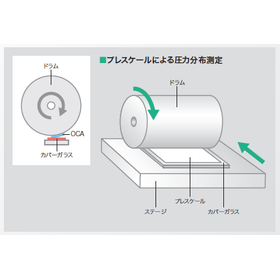
This is a case study on the use of "Press Scale" in film application equipment for touch panel and LCD panel manufacturers. When attaching functional films to cover glass, if the pressure balance is poor, bubbles or wrinkles and other defects may occur. By placing the Press Scale between the cover glass and the drum and applying pressure under normal conditions, it is easy to check for foreign substances or scratches on the drum by determining the color development state. [Case Overview] ■ Purpose: Confirming uniform pressure in film application equipment ■ Example of target products: Smartphones, tablet devices ■ Implementation effects: - Prevents quality abnormalities in advance and improves yield - Allows for quick confirmation of uniformity during design and maintenance *For more details, please download the PDF or feel free to contact us.
Added to bookmarks
Bookmarks listBookmark has been removed
Bookmarks listYou can't add any more bookmarks
By registering as a member, you can increase the number of bookmarks you can save and organize them with labels.
Free membership registration
We would like to introduce a case where our pressure measurement film "Presscale" was implemented at Intersnack. The biggest challenge in this case was the method of measuring the sealing bar pressure. With the introduction of this product, we were able to visualize the sealing pressure, making it easier and quicker to respond to troubles. Additionally, the number of inspections has decreased, and setup time has been shortened, resulting in reduced machine downtime. The processing pressure has been lowered, leading to improved processing efficiency. 【Implementation Effects】 ■ Improved integrity (sealing performance) of seals ■ Extended machine lifespan due to reduced processing pressure and improved processing efficiency ■ Decreased seal defects, contributing to improved product quality ■ Standardization of all processes across all European group companies ■ Unified specifications for all suppliers *For more details, please download the PDF or feel free to contact us.
Added to bookmarks
Bookmarks listBookmark has been removed
Bookmarks listYou can't add any more bookmarks
By registering as a member, you can increase the number of bookmarks you can save and organize them with labels.
Free membership registration
We will introduce a case where the use of "Presscale" maintained high drawing quality through pressure uniformity during the thermal fixing process in the electrophotographic thermal fixing section. The thermal fixing is performed by passing paper between a heating roll and a pressure roll, but if the pressure is not uniform between the heating and pressure rolls, partial fixing failures or paper wrinkling can occur. By using Presscale, it is possible to check just by nipping the rollers, and reactions can also be confirmed during the heating and fixing process, which can reduce the time and effort for defect analysis and adjustments. [Case Overview] ■ Measurement Target: Electrophotographic Thermal Fixing Section ■ Application: Maintaining high drawing quality through pressure uniformity during thermal fixing ■ Results: Quality improvement, productivity enhancement ■ Challenges: Occasional occurrence of periodic defects and wrinkling *For more details, please download the PDF or feel free to contact us.
Added to bookmarks
Bookmarks listBookmark has been removed
Bookmarks listYou can't add any more bookmarks
By registering as a member, you can increase the number of bookmarks you can save and organize them with labels.
Free membership registration
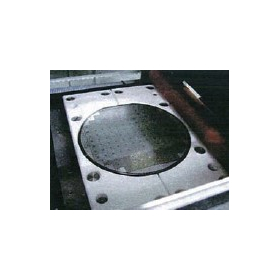
This is an example of using "Presscale" to confirm the uniformity of the backgrind tape bonding pressure in semiconductor manufacturing. If the pressure distribution of the bonding roller is uneven, wrinkles will form in the backgrind tape. Additionally, if the height of the wafer and the outer peripheral support is not appropriate, it can lead to wafer breakage or poor adhesion of the backgrind tape. By using Presscale, it is possible to check the roller bonding pressure applied to the wafer under actual usage conditions. Regularly confirming the uniformity of the pressure reduces adjustment time and minimizes material loss. 【Case Summary】 ■ Measurement Target: Backgrind Tape Bonding Roller ■ Application: Confirmation of the uniformity of backgrind tape bonding pressure ■ Results: Reduced adjustment time, improved quality, reduced waste ■ Challenge: There was no method other than trial and error for adjustments *For more details, please download the PDF or feel free to contact us.
Added to bookmarks
Bookmarks listBookmark has been removed
Bookmarks listYou can't add any more bookmarks
By registering as a member, you can increase the number of bookmarks you can save and organize them with labels.
Free membership registration
We will introduce a case where "Presscale" was used to check the adhesive pressure of dry film resist laminates for printed circuit boards and lead frames. If the substrate, dry film resist, and lamination roll are not set in a well-balanced manner and the pressure is not uniformly adjusted, bubbles and wrinkles can occur. The uniformity of pressure is important for stabilizing the process, but there was no means to verify it. By using Presscale, it is possible to confirm that the pressure on the lamination roll is uniformly applied at the specified pressure. Additionally, during abnormal situations or maintenance, it allows for on-site responses without having to call in the equipment manufacturer's technician, thus reducing costs and time. 【Case Overview】 ■ Measurement Target: Dry Film Resist (DFR) Lamination ■ Purpose: To check the adhesive pressure of Dry Film Resist (DFR) Lamination ■ Results: Improved quality, time savings, cost reduction ■ Challenges: If the pressure is not set correctly, bubbles may form in uneven areas, leading to adhesion failures. *For more details, please download the PDF or feel free to contact us.
Added to bookmarks
Bookmarks listBookmark has been removed
Bookmarks listYou can't add any more bookmarks
By registering as a member, you can increase the number of bookmarks you can save and organize them with labels.
Free membership registration
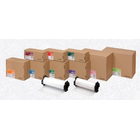
We would like to introduce our pressure measurement film, "Presscale." It can be utilized in a wide range of applications for the safety and security of the food and pharmaceutical industries. It is effective in conditions setting, maintenance applications, and throughout the research and development, production, and logistics processes. [Applications] ■ Quality Assurance ■ Research and Development ■ Logistics ■ Production ■ Other examples of use in medical device research and development *For more details, please download the PDF or feel free to contact us.
Added to bookmarks
Bookmarks listBookmark has been removed
Bookmarks listYou can't add any more bookmarks
By registering as a member, you can increase the number of bookmarks you can save and organize them with labels.
Free membership registration
This is a case study introducing the use of "Presscale" to check the contact area of disc brake pads. In automotive disc brakes, braking is achieved through the friction between the disc and the brake pads. If the contact between the disc and the brake pads is not appropriate, issues such as poor braking performance, uneven pad wear, brake noise, and vibrations can occur. Data on phenomena such as braking performance, uneven pad wear, brake noise, and vibrations during braking are accumulated alongside the color change state of the Presscale. This allows for brake design to be conducted efficiently and appropriately in a short period. Additionally, the stability of quality can be confirmed with Presscale even after long-duration driving tests. [Case Overview] - Measurement Target: Brake Pads (Disc Brake) - Purpose: To check the contact area of disc brake pads - Results: Time reduction, material loss reduction - Challenge: The contact between the disc and brake pads is crucial for performance, safety, and component lifespan, but there has been no means to verify it until now. *For more details, please download the PDF or feel free to contact us.
Added to bookmarks
Bookmarks listBookmark has been removed
Bookmarks listYou can't add any more bookmarks
By registering as a member, you can increase the number of bookmarks you can save and organize them with labels.
Free membership registration
This is an example of using "Presscale" to confirm the pressure uniformity of assembly jigs for mobile phones and similar devices. The assembly of waterproof mobile phones differs from that of non-waterproof models, as variations during assembly significantly impact waterproof performance. There is a higher likelihood of increased assembly labor and defects in waterproof functionality, making the confirmation of pressure uniformity a challenge. By using Presscale, the flatness of the attachment points and the pressure balance of the jigs can be checked before assembly work, ensuring that the waterproof performance of the product is maintained after assembly. 【Case Overview】 ■ Objective: Confirmation of waterproof performance of mobile phones and stabilization of the process ■ Measurement Target: Assembly of mobile phones and similar devices ■ Application: Confirmation of pressure uniformity of assembly jigs ■ Results: Improved yield, enhanced quality, defect analysis ■ Challenge: Confirming the pressure uniformity of assembly jigs during component assembly is a challenge *For more details, please download the PDF or feel free to contact us.
Added to bookmarks
Bookmarks listBookmark has been removed
Bookmarks listYou can't add any more bookmarks
By registering as a member, you can increase the number of bookmarks you can save and organize them with labels.
Free membership registration
This is an example of using "Presscale" to confirm the uniformity of the cell stacking load distribution in a fuel cell stack. If the tightening load is too small, contact resistance increases, leading to a decrease in power generation efficiency and potential fuel gas leaks. Additionally, there were no measurement methods for the load distribution applied to individual cells. By using Presscale, we can prevent performance degradation caused by uneven components. It helps avoid deviations from the initial settings during installation and maintenance. 【Case Overview】 ■ Purpose: Confirmation of cell stacking load distribution uniformity ■ Measurement Target: Fuel cell stack ■ Application: Verification of cell stacking load distribution ■ Results: Reduction in defect rates, improvement in quality, enhanced maintainability ■ Challenges: - If the tightening load is too high, it can easily lead to deterioration of the sealing parts. - There were no measurement methods for the load distribution applied to individual cells. *For more details, please download the PDF or feel free to contact us.
Added to bookmarks
Bookmarks listBookmark has been removed
Bookmarks listYou can't add any more bookmarks
By registering as a member, you can increase the number of bookmarks you can save and organize them with labels.
Free membership registration
We will introduce a case where "Presscale" was used to check the pressure uniformity during thermal bonding in the thermal bonding section of a wafer bonding device. The pressure applied to the object has a significant impact on the bonding quality. If the pressure is not uniform, issues such as poor sealing, uneven bonding strength, and inconsistent pattern width may occur. By using Presscale, the condition of the bonding surface can be quickly and easily confirmed, reducing the time and effort required for root cause analysis and adjustments. 【Case Overview】 ■ Objective: Ensure high bonding quality through pressure uniformity during thermal bonding ■ Measurement Target: Thermal bonding section of the wafer bonding device ■ Application: Check pressure uniformity during thermal bonding ■ Results: Defect analysis, reduction of defective products, cost reduction ■ Challenges: Poor sealing, uneven bonding strength, inconsistent pattern width *For more details, please download the PDF or feel free to contact us.
Added to bookmarks
Bookmarks listBookmark has been removed
Bookmarks listYou can't add any more bookmarks
By registering as a member, you can increase the number of bookmarks you can save and organize them with labels.
Free membership registration
We will introduce a case where "Presscale" was used to check the mold contact unevenness and uniform pressure of a lamination device for laminated ceramic devices. High precision is required for lamination devices due to issues such as adhesive failures that change electrical characteristics and misalignment of electrode patterns that prevent electrical connections. When the sheets are thin, non-contact surfaces are more likely to occur during lamination, necessitating a more rigorous check of the mold contact. Using Presscale allows for the confirmation and adjustment of the mold contact for the lamination mold, improving yield and reducing variation between individual units. Additionally, it shortens the analysis time when defects occur. 【Case Overview】 ■ Purpose: Confirmation of mold contact for the lamination device, confirmation of uniform pressure in the lamination device ■ Measurement Target: Lamination device for laminated ceramic devices ■ Application: Confirmation of mold contact unevenness and uniform pressure in the lamination device ■ Results: Improved yield of molded products, defect analysis, quality enhancement ■ Challenge: The most critical issue is to adjust the misalignment and tilt of the lamination device's mold before sheet lamination to achieve uniform pressure balance. *For more details, please download the PDF or feel free to contact us.
Added to bookmarks
Bookmarks listBookmark has been removed
Bookmarks listYou can't add any more bookmarks
By registering as a member, you can increase the number of bookmarks you can save and organize them with labels.
Free membership registration
This is an introduction to a case where "Presscale" was used to set up a vacuum laminator in the manufacturing of solar cell modules. If the pressing pressure is not uniform, issues such as cell breakage and wrinkles in the protective film can occur. While vacuum pressure has traditionally been measurable, there was no method to measure the actual pressure applied to the cells. By using Presscale, regular process inspections can be conducted, allowing for production under consistently appropriate conditions, thereby reducing the occurrence of abnormalities and improving operational efficiency. [Case Overview] - Objective: Setting up the vacuum laminator - Measurement Target: Vacuum lamination - Application: Checking the uniformity of the pressing pressure in vacuum lamination - Results: Increased productivity, reduced material loss - Challenge: There was no method to measure the actual pressure applied to the cells. *For more details, please download the PDF or feel free to contact us.
Added to bookmarks
Bookmarks listBookmark has been removed
Bookmarks listYou can't add any more bookmarks
By registering as a member, you can increase the number of bookmarks you can save and organize them with labels.
Free membership registration
We will introduce a case study that confirmed the pressure uniformity of a vacuum heat press device, which is mainly used for applications such as lamination, bonding, transfer, and molding, using "Presscale." The device requires maintaining a more uniform surface pressure for a longer duration to improve the quality of the processed materials. By placing it between the upper and lower heating plates of the vacuum heat press device and applying pressure under normal conditions, adjustments to the device are made based on the color development state. This reduces the occurrence of bonding defects during vacuum pressing, leading to improved yield and quality. [Case Overview] ■ Purpose: Confirmation of pressure uniformity in the vacuum heat press device ■ Measurement Target: Vacuum heat press device ■ Example of Target Products: Electronic components, OLEDs, touch panels ■ Benefits of Implementation: Reduced bonding defects during vacuum pressing, improved yield and quality *For more details, please download the PDF or feel free to contact us.
Added to bookmarks
Bookmarks listBookmark has been removed
Bookmarks listYou can't add any more bookmarks
By registering as a member, you can increase the number of bookmarks you can save and organize them with labels.
Free membership registration
We would like to introduce our pressure measurement film, "Presscale." It plays an important role not only in the development and manufacturing processes of existing automobiles but also in electric vehicles, hybrid vehicles, and fuel cell vehicles. This product contributes to the creation of higher quality and safer products. [Examples of usage in automobiles] - Airbags - Wipers - Wire harnesses - Plastic parts (bumpers, dashboards, etc.) - Headlamps - Transmissions *For more details, please download the PDF or feel free to contact us.
Added to bookmarks
Bookmarks listBookmark has been removed
Bookmarks listYou can't add any more bookmarks
By registering as a member, you can increase the number of bookmarks you can save and organize them with labels.
Free membership registration
We would like to introduce a case study of the implementation of "Presscale" at Company A, a film manufacturer engaged in the production of high-performance films coated with functional materials. If the equipment is not set to the proper conditions at the start of production, uneven thickness will occur due to prolonged coating. This leads to increased blade replacements and defect rates, resulting in decreased productivity. By visualizing even slight deviations in blade pressing pressure, we can adjust to optimal conditions at the start of production. As a result, the defect rate of the products has been reduced, and the time until blade replacement has been extended by approximately three times. 【Case Overview】 ■ Measurement Target: Blade of the gravure coater ■ Applicable Process: Coating on film ■ Challenges - Variations in blade pressing pressure at different locations cause uneven coating thickness, resulting in defective products. - Prolonged coating leads to uneven thickness, increased blade replacements, and defect rates, which decreases productivity. *For more details, please download the PDF or feel free to contact us.
Added to bookmarks
Bookmarks listBookmark has been removed
Bookmarks listYou can't add any more bookmarks
By registering as a member, you can increase the number of bookmarks you can save and organize them with labels.
Free membership registration
We will introduce a case study of using "Presscale" for the setup of a conductive film bonding device for solar cells. The bonded conductive film cannot be removed, so if a bonding failure occurs, the product will be deemed NG (not good). Therefore, we used Presscale to check the bonding quality during the setup of the bonding device for the conductive film. By confirming and recording this daily during setup, it becomes possible to identify the cause of any issues that arise. [Case Overview] ■ Purpose: Setup of the conductive film bonding device for solar cells ■ Measurement Target: Conductive film bonding device for solar cells ■ Example of Target Product: Solar cells ■ Challenge: The bonded conductive film cannot be removed, so if a bonding failure occurs, the product will be deemed NG. *For more details, please download the PDF or feel free to contact us.
Added to bookmarks
Bookmarks listBookmark has been removed
Bookmarks listYou can't add any more bookmarks
By registering as a member, you can increase the number of bookmarks you can save and organize them with labels.
Free membership registration
This is an example of using "Presscale" to verify the heat bar balance during the lamination of aluminum film for lithium polymer batteries. If the heat bar balance is poor during heat sealing, it can lead to adhesive failures in the aluminum film, resulting in defective products such as electrolyte leaks, which could lead to serious accidents. By optimizing the pressure balance with Presscale, quality can be improved. 【Case Overview】 ■ Purpose: Setting up the aluminum laminated film heat sealing (heat seal) device ■ Measurement Target: Heat seal for lithium-ion batteries ■ Application: Verification of heat bar balance during the lamination of aluminum film for lithium polymer batteries ■ Results: Quality improvement, standardization of setting specifications ■ Challenge: Poor heat bar balance during heat sealing could lead to serious accidents *For more details, please download the PDF or feel free to contact us.
Added to bookmarks
Bookmarks listBookmark has been removed
Bookmarks listYou can't add any more bookmarks
By registering as a member, you can increase the number of bookmarks you can save and organize them with labels.
Free membership registration
This is an example of using "Presscale" to verify the uniformity of contact between a polishing device and a liquid crystal panel manufacturer. When a polarizing film is applied to a panel with adhered cullet, it can cause bubble formation, leading to a decrease in yield rate. It is important to ensure uniformity, as high pressure cannot be applied to the panel surface during polishing. By using Presscale, it is possible to check the pressure distribution under actual usage conditions. By confirming the uniformity of pressure in advance, improvements in quality and reductions in design adjustment time can be achieved. 【Case Overview】 ■ Purpose: Verification of contact uniformity between the polishing device stage and the polishing sheet ■ Measurement Target: Panel polishing and cleaning equipment ■ Example Products: Smartphones, tablet devices ■ Results: Quality improvement, defect reduction, adjustment time reduction *For more details, please download the PDF or feel free to contact us.
Added to bookmarks
Bookmarks listBookmark has been removed
Bookmarks listYou can't add any more bookmarks
By registering as a member, you can increase the number of bookmarks you can save and organize them with labels.
Free membership registration
We will introduce a case where "Presscale" was used to check the contact on the PL surface and to confirm the distortion of the mold and molding machine. The height accuracy of each component on the PL surface may deviate from the target, leading to strong contact or causing parts that should make contact to not do so, resulting in burrs. Additionally, the thickness accuracy of the molded products may deteriorate, leading to uneven wear on the mold and a shorter mold lifespan. By conducting contact checks with Presscale and adjusting the PL surface, it is possible to identify the causes of defects in molded products and prevent them from occurring, as well as extend the lifespan of the mold. It is also possible to check the deflection of the platen and the contact state with the mold. [Case Overview] ■ Purpose: Adjustment of mold and injection molding machine ■ Measurement Target: Injection molding machine, mold ■ Application: PL surface contact check, distortion check of mold and molding machine ■ Results: Improved mold lifespan, increased yield of molded products, defect analysis ■ Challenges: - The height accuracy of each component on the PL surface deviates from the target, leading to the occurrence of burrs. - The thickness accuracy of molded products deteriorates, and the lifespan of the mold shortens. *For more details, please download the PDF or feel free to contact us.
Added to bookmarks
Bookmarks listBookmark has been removed
Bookmarks listYou can't add any more bookmarks
By registering as a member, you can increase the number of bookmarks you can save and organize them with labels.
Free membership registration
This is an example of using "Presscale" to adjust the chip suction fixture for die bonding in semiconductor manufacturing. If the suction nozzle does not make uniform contact with the semiconductor chip, it can lead to retrieval failures and damage to the chip. In recent years, as wafers have become thinner and more prone to cracking, more stringent management has become necessary. When switching the suction nozzle, we first check with Presscale and adjust the parallelism before starting the die bonding process. This helps prevent process anomalies and quality issues caused by transport during suction. 【Case Overview】 ■ Objective: Reduce retrieval and transport errors of chips in die bonding ■ Measurement Target: Suction fixture during die bonding ■ Application: Adjustment of chip suction fixture (die collet) for die bonding ■ Results: Improved quality and yield *For more details, please download the PDF or feel free to contact us.
Added to bookmarks
Bookmarks listBookmark has been removed
Bookmarks listYou can't add any more bookmarks
By registering as a member, you can increase the number of bookmarks you can save and organize them with labels.
Free membership registration
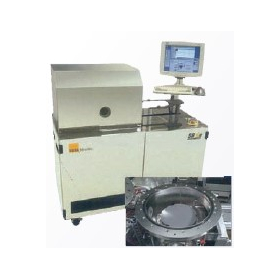
We will introduce a case study using "Presscale" to verify the uniformity of the contact of CMP polishing heads in semiconductor manufacturing. Traditionally, the uniformity of contact between silicon wafers and polishing pads was managed retrospectively based on polishing results. This led to issues such as frequent production of defective products, as the causes of polishing defects remained unclear while production continued. By using Presscale, it is possible to verify the pressure distribution on silicon wafers under actual usage conditions. Gaining useful insights into polishing uniformity and adjusting polishing speed can lead to time savings and quality improvements. 【Case Overview】 ■ Objective: Verification of the uniformity of contact of CMP polishing heads ■ Measurement Target: CMP polishing heads ■ Application: Verification of the uniformity of contact of CMP polishing heads ■ Results: Reduction in polishing time, improvement in polishing quality, enhancement of equipment shipment acceptance quality ■ Challenges: Issues such as insufficient accuracy and frequent occurrence of defective products *For more details, please download the PDF or feel free to contact us.
Added to bookmarks
Bookmarks listBookmark has been removed
Bookmarks listYou can't add any more bookmarks
By registering as a member, you can increase the number of bookmarks you can save and organize them with labels.
Free membership registration
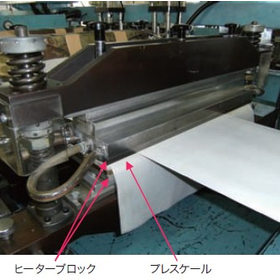
We will introduce a case study utilizing "Presscale" to understand and adjust the optimal conditions for heat sealing in food, pharmaceuticals, and other packaging. In particular, pseudo-adhesion cannot be detected visually, and 100% inspection is impossible. Since there is no meter for pressure, the only method available was trial and error through practical experience. By optimizing the pressure value and pressure balance with Presscale, we adjusted the optimal values for temperature and time as parameters. Adhesive strength evaluation (JIS Z0238) can be positioned as the final confirmation. 【Case Overview】 ■ Purpose: Setting during variety changeover, equipment maintenance ■ Measurement Target: Heat seal ■ Results: Time reduction, defect reduction ■ Challenges: - Pseudo-adhesion cannot be detected visually, and 100% inspection is impossible - There is no meter for pressure, so the only method available is trial and error through practical experience *For more details, please download the PDF or feel free to contact us.
Added to bookmarks
Bookmarks listBookmark has been removed
Bookmarks listYou can't add any more bookmarks
By registering as a member, you can increase the number of bookmarks you can save and organize them with labels.
Free membership registration
In the agricultural sector, it is essential to accurately understand the degree of pressure applied during the quality assessment of harvested products. In particular, damage caused by pressure during the transportation and storage of harvested goods can lead to a decline in quality and potential waste. The press scale station visualizes the pressure distribution of harvested products using a press scale and quantifies that data, thereby supporting efficient quality management. 【Usage Scenarios】 - Pressure measurement during the transportation of harvested products - Evaluation of damage due to pressure during storage - Quality assessment of harvested products 【Benefits of Implementation】 - Reduction of damage risk to harvested products - Increased efficiency in quality management - Implementation of data-driven improvement measures
Added to bookmarks
Bookmarks listBookmark has been removed
Bookmarks listYou can't add any more bookmarks
By registering as a member, you can increase the number of bookmarks you can save and organize them with labels.
Free membership registration
In the energy industry, the safety of equipment and efficient operation are essential. In particular, accurately understanding the contact pressure of machinery is important for early detection of abnormalities and reducing the risk of failures. The Presscale Station contributes to solving these challenges by quantifying and analyzing contact pressure. 【Usage Scenarios】 - Bolt tightening management in power generation equipment - Measurement of pressure distribution in piping - Measurement of contact pressure at various joints 【Benefits of Implementation】 - Improved safety of equipment - Reduced maintenance costs - Establishment of an efficient operational system
Added to bookmarks
Bookmarks listBookmark has been removed
Bookmarks listYou can't add any more bookmarks
By registering as a member, you can increase the number of bookmarks you can save and organize them with labels.
Free membership registration
In the semiconductor industry, accurate evaluation of pressure distribution at the joints is essential to ensure product reliability. Particularly in the wafer and chip bonding processes, the uniformity of pressure affects the performance and lifespan of the products. Improper pressure distribution can lead to bonding defects and early product failures. The Presscale Station addresses these challenges by visualizing the pressure distribution at the joints. 【Usage Scenarios】 - Pressure evaluation in wafer bonding processes - Confirmation of pressure distribution in chip mounting processes - Investigation of the causes of bonding defects 【Benefits of Implementation】 - Improvement in bonding quality - Reduction in defect rates - Enhancement of product reliability
Added to bookmarks
Bookmarks listBookmark has been removed
Bookmarks listYou can't add any more bookmarks
By registering as a member, you can increase the number of bookmarks you can save and organize them with labels.
Free membership registration
In the robotics industry, accurately understanding the gripping force of robotic hands is essential to ensure product quality and safety. This is particularly crucial when handling precision parts or performing delicate tasks, as setting the appropriate gripping force is indispensable. Inadequate gripping force can lead to component damage or task failure. The Press Scale Station visualizes the gripping pressure of robotic hands, enabling optimal control. 【Usage Scenarios】 - Measuring the gripping force of robotic hands - Assembly processes for electronic components - Picking operations for food products 【Benefits of Implementation】 - Improved product quality through gripping force optimization - Reduction of defective products - Enhanced work efficiency
Added to bookmarks
Bookmarks listBookmark has been removed
Bookmarks listYou can't add any more bookmarks
By registering as a member, you can increase the number of bookmarks you can save and organize them with labels.
Free membership registration
In the civil engineering industry, accurately understanding the pressure distribution of the ground during ground investigations is crucial for ensuring the safety of structures. Uneven pressure distribution in the ground can lead to settlement or differential settlement of structures, potentially resulting in serious accidents. The press scale station visualizes the pressure distribution of the ground using a press scale and quantifies that information, contributing to the improvement of accuracy in ground investigations. 【Application Scenarios】 - Investigation of ground consolidation settlement - Evaluation of bearing capacity for pile foundations - Measurement of earth pressure distribution behind retaining walls 【Benefits of Implementation】 - Visualization of ground pressure distribution allows for detailed analysis - Quantification of investigation results enables decisions based on objective data - Increased efficiency and accuracy in ground investigations
Added to bookmarks
Bookmarks listBookmark has been removed
Bookmarks listYou can't add any more bookmarks
By registering as a member, you can increase the number of bookmarks you can save and organize them with labels.
Free membership registration
In the logistics industry, it is important to accurately understand the pressure distribution of cargo during transportation to prevent damage or accidents. Particularly when handling heavy items or precision equipment, uneven pressure or excessive pressure can lead to damage or malfunction of the cargo. The press scale station visualizes the pressure distribution of the cargo using a press scale and provides data for considering appropriate loading methods. 【Usage Scenarios】 - Analysis of loading conditions in trucks or containers - Selection of packaging materials - Transportation testing of products 【Benefits of Implementation】 - Reduction of the risk of cargo damage during transportation - Establishment of optimal loading methods - Reduction of transportation costs
Added to bookmarks
Bookmarks listBookmark has been removed
Bookmarks listYou can't add any more bookmarks
By registering as a member, you can increase the number of bookmarks you can save and organize them with labels.
Free membership registration
In the food industry, the airtightness and durability of packaging significantly affect product quality. Accurately understanding the pressure distribution on packaging materials is crucial for preventing product damage and quality deterioration, ensuring safety. The press scale station enables the visualization of pressure applied to packaging materials, contributing to the optimization of packaging design. 【Usage Scenarios】 - Evaluation of seal pressure in food packaging - Assessment of damage risk due to pressure during transportation - Evaluation of the durability of packaging materials 【Benefits of Implementation】 - Improved packaging quality - Enhanced product safety - Cost reduction
Added to bookmarks
Bookmarks listBookmark has been removed
Bookmarks listYou can't add any more bookmarks
By registering as a member, you can increase the number of bookmarks you can save and organize them with labels.
Free membership registration
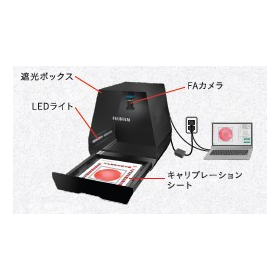
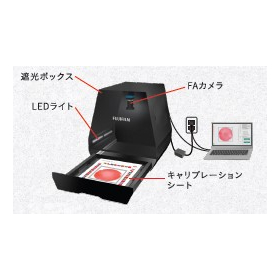
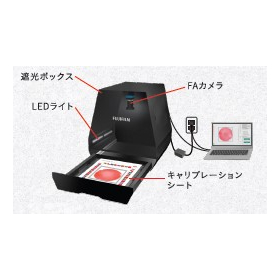
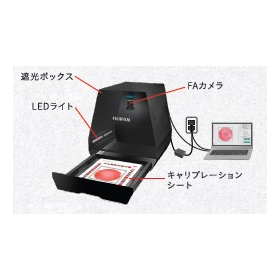
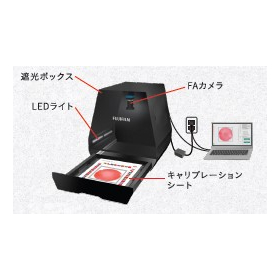
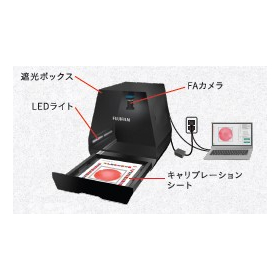
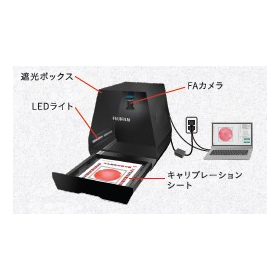
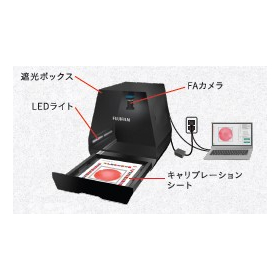
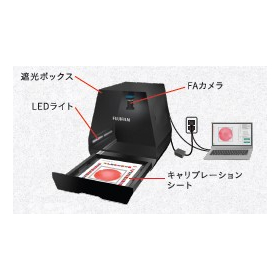
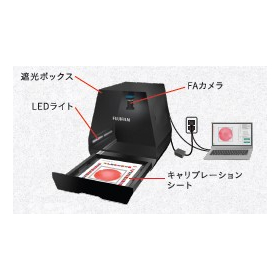
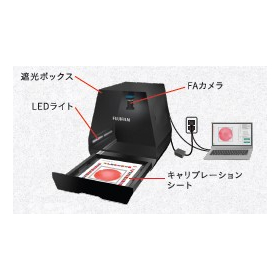
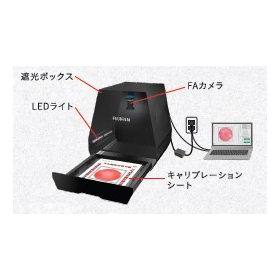
In the sports industry, accurate measurement and analysis of impacts are required to ensure the safety of athletes and improve performance. Particularly in the evaluation of shock absorption performance of helmets and protectors, it is important to visualize pressure distribution and obtain detailed data. Inadequate shock absorption design can increase the risk of injury. Our pressure image analysis device, "Presscale Station," is equipped with a high-resolution FA camera and LED, allowing for efficient quantification and analysis of pressure information by reading the Presscale. 【Application Scenarios】 - Impact testing of helmets and protectors - Measurement of pressure distribution in sports equipment - Impact analysis on athletes' bodies 【Benefits of Implementation】 - Increased efficiency in product development through visualization of impacts - Product performance evaluation based on objective data - Enhanced safety for athletes
Added to bookmarks
Bookmarks listBookmark has been removed
Bookmarks listYou can't add any more bookmarks
By registering as a member, you can increase the number of bookmarks you can save and organize them with labels.
Free membership registration
In the medical device industry, accurate measurement of pressure distribution is required for product performance evaluation and ensuring safety. In particular, measuring the pressure distribution on a patient's body and the contact pressure between medical devices and biological tissues is essential for preventing pressure ulcers and designing medical devices. Inappropriate pressure distribution can compromise patient health. The Presscale Station addresses these challenges by reading the Presscale with a high-resolution FA camera and an LED-equipped reading device, efficiently quantifying and analyzing pressure information. 【Usage Scenarios】 - Pressure distribution measurement of medical devices - Pressure ulcer risk assessment - Fit evaluation of prosthetics and orthotics - Pressure measurement of surgical instruments 【Benefits of Implementation】 - Acquisition of high-precision pressure distribution data - Improved safety of medical devices - Enhanced efficiency in research and development - Improved patient quality of life (QOL)
Added to bookmarks
Bookmarks listBookmark has been removed
Bookmarks listYou can't add any more bookmarks
By registering as a member, you can increase the number of bookmarks you can save and organize them with labels.
Free membership registration
In the electronic equipment industry, accurately understanding the contact pressure and pressure distribution during implementation evaluation is crucial for ensuring product reliability. Particularly in areas such as substrate mounting and connector connections, where subtle pressure fluctuations can affect product performance, proper pressure management is essential. Inadequate pressure can lead to poor contact or damage, potentially resulting in early product failure. The Press Scale Station, equipped with a high-resolution FA camera and LED, supports problem-solving in implementation evaluation by quantifying and analyzing pressure information using the press scale. 【Usage Scenarios】 - Pressure distribution measurement in substrate mounting - Pressure evaluation of connector connections - Contact pressure measurement of electronic components 【Benefits of Implementation】 - Optimization of the implementation process - Improvement of product reliability - Reduction of defective products
Added to bookmarks
Bookmarks listBookmark has been removed
Bookmarks listYou can't add any more bookmarks
By registering as a member, you can increase the number of bookmarks you can save and organize them with labels.
Free membership registration
In the aerospace industry, accurately understanding the stress distribution on airframes and components is essential for ensuring both safety and performance. In particular, precise pressure measurements are required for identifying stress concentration points during the design phase and for quality control during the manufacturing process. The Presscale Station addresses these challenges through high-precision pressure measurement. 【Application Scenarios】 * Measuring stress distribution on aircraft wings and fuselages * Measuring pressure distribution within rocket engine combustion chambers * Evaluating stress in structural components of satellites 【Benefits of Implementation】 * Improved safety during the design phase * Enhanced quality control in the manufacturing process * Reduced product development time
Added to bookmarks
Bookmarks listBookmark has been removed
Bookmarks listYou can't add any more bookmarks
By registering as a member, you can increase the number of bookmarks you can save and organize them with labels.
Free membership registration
In the automotive industry, accurate evaluation of the contact conditions between parts is essential to ensure safety and quality. Particularly in areas where contact pressure significantly affects performance, such as impact absorption during collisions and the sealing of doors, it is important to visualize and analyze pressure distribution in detail. Inadequate contact conditions can lead to abnormal noises and early deterioration of parts. The Presscale Station, when combined with Presscale, enables the visualization and quantification of contact pressure, contributing to the improvement of automotive parts quality. 【Application Scenarios】 - Measurement of pressure distribution in seats - Measurement of sealing pressure in doors - Measurement of contact pressure in bumpers 【Benefits of Implementation】 - Early detection of issues through visualization of contact pressure - Objective evaluation through quantification of pressure distribution - Increased efficiency in quality management and cost reduction
Added to bookmarks
Bookmarks listBookmark has been removed
Bookmarks listYou can't add any more bookmarks
By registering as a member, you can increase the number of bookmarks you can save and organize them with labels.
Free membership registration