
List of Mixing and Stirring Equipment products
- classification:Mixing and Stirring Equipment
46~90 item / All 535 items


It won't break even after 1 million repetitions! A mat switch with reliable operation, high durability, and low price. Suitable for options in machine tools as well. Please consult us about delivery t...
- Sensors


We can accommodate high resistance over 10,000 ohms, with diameters ranging from approximately 30 mm to 8 inches, and we also offer thinning and chip processing arrangements!
- Other semiconductors
- Processing Contract
- Wafer


Compatible with a wide range of materials! Ultra-fine powder grinding machine!
- Crusher/Mill
- Cyclone dust collector
- Fine grinding machine
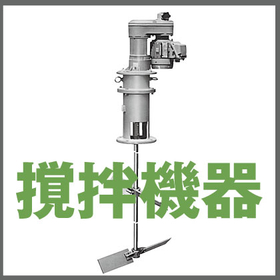

For various stirring and mixing! You can find equipment suitable for the site with a custom-made feel! Takumina's "Stirring Machine."


- Mixer/agitator
- Mixer/Stirrer
- Mixer

We have released the latest information on our "stirrers," suitable for various stirring and mixing applications! You can find equipment that fits your needs with a custom-made feel.
The leading company in precision pumps, Takumina's "Stirrer" We have further enhanced our offerings by adding various related equipment, including liquid stirring, solid-liquid stirring, kneading devices, and stationary mixers. Depending on the manufacturing processes before and after, as well as the working conditions at the stirring site, you can choose from three types: vertical, portable, and horizontal. These can be used in a wide range of applications, including the chemical industry, food industry, pharmaceutical industry, and petroleum industry. 【Features】 ■ Vertical Stirrer This type is fixed at the top of the tank, with the shaft inserted vertically. It is characterized by minimal vibration and a long lifespan. ■ Portable Stirrer Compact and lightweight, it excels in portability, making it extremely easy to attach and detach from the tank's upper edge or support frame. ■ Horizontal Stirrer This type is directly attached to the side wall of the tank and is used in large capacity tanks or tanks with significant liquid depth, as well as in situations with height restrictions. For more details, please refer to the catalog.


A record of real solutions for the three processes of slurry observed through practical verification with cosmetics, ink, and electronic component manufacturers.
- Other mixing and mixing equipment
Solve foaming and mixing unevenness! Complete set for understanding Bernoulli flow stirrers.
- Mixer/Stirrer
- Others Defoaming Equipment
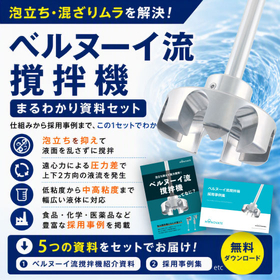
Foaming and mixing unevenness solved! Complete set for understanding the Bernoulli flow mixer.
- Mixer/Stirrer
- Others Defoaming Equipment

Efficient cultivation with a stackable design, stable shaking, and flexible incubation features.
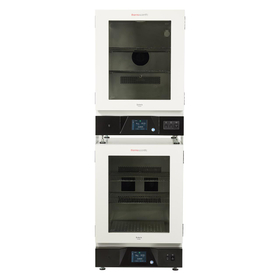
- shaker
- Shaker
- Low Temperature Incubator


When manufactured using the turbo-dry method, the functional components of vegetables are not degraded and are concentrated into a powder. Transform unused food (agricultural and marine products) into...
- Crusher/Mill
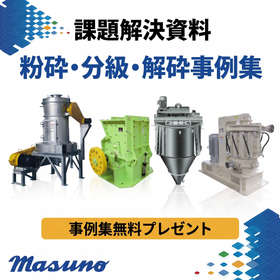

Collection of case studies on grinding and classification useful for particle control of cosmetic ingredients (free distribution)
- Crusher
- Classifier
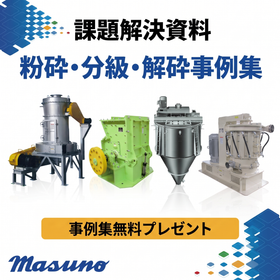
Case Studies on Grinding and Classification Contributing to Improved Dispersion of Coatings
- Crusher
- Classifier
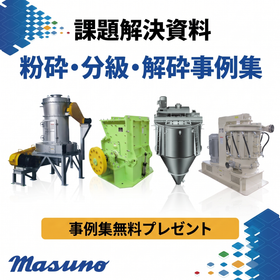
Free distribution of a collection of case studies on solving challenges in battery material development.
- Crusher
- Classifier
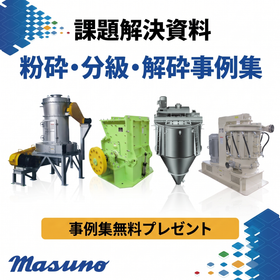
A collection of case studies that contribute to the improvement of fertilizer raw material quality and recycling.
- Crusher
- Classifier
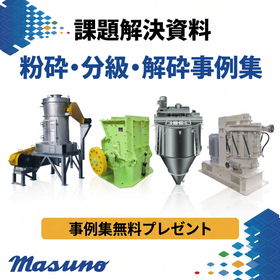
Free distribution of a collection of case studies on solving challenges in plastic recycling.
- Crusher
- Classifier
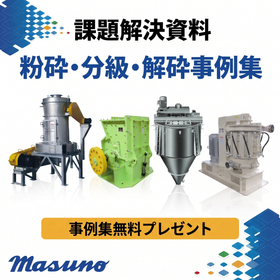
Case Studies of Grinding and Classification Technologies Contributing to the Improvement of Pharmaceutical Solubility
- Crusher
- Classifier
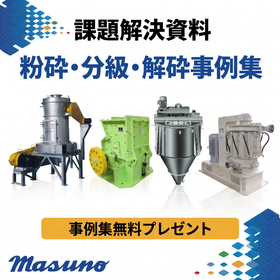
Collection of case studies on crushing, classification, and disintegration useful for improving food texture.
- Crusher
- Classifier
![[For the Chemical Industry] Case St...](https://image.mono.ipros.com/public/product/image/52219/IPROS1888576768686590042.png?w=280&h=280)
Case Studies on Crushing and Classification Contributing to the Uniformity of Chemical Raw Materials
- Crusher
- Classifier
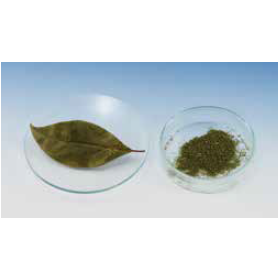

By using dry ice for cooling grinding, a single leaf can be crushed in 20 seconds!
- Crusher/Mill
![[LAB MILL2 Grinding Example] Black ...](https://image.mono.ipros.com/public/product/image/226060/IPROS14758703948979958911.png?w=280&h=280)
Crushing 2g of black sesame in 20 seconds using cooling grinding with dry ice!
- Crusher/Mill
![[LAB MILL2 Grinding Example] Tablet...](https://image.mono.ipros.com/public/product/image/226060/IPROS15989307103387348625.png?w=280&h=280)
Crush 50 film-coated tablets in 60 seconds!
- Crusher/Mill
![[LAB MILL2 Grinding Example] Tablet...](https://image.mono.ipros.com/public/product/image/226060/IPROS2451666530022595530.png?w=280&h=280)
Crush 100 tablets in 60 seconds! Use a disposable container for contamination-free results.
- Crusher/Mill
![[LAB MILL2 Grinding Example] Tablet...](https://image.mono.ipros.com/public/product/image/226060/IPROS1467383858741542607.png?w=280&h=280)
Using a small mill cup (processing capacity 50mL) to crush 5g of tablets in 60 seconds!
- Crusher/Mill
![[LAB MILL2 Grinding Example] Adzuki...](https://image.mono.ipros.com/public/product/image/226060/IPROS7845556568149503583.png?w=280&h=280)
Using a small milk cup (processing capacity 50mL), crush 10g of adzuki beans in 60 seconds!
- Crusher/Mill
![[LAB MILL2 Grinding Example] Black ...](https://image.mono.ipros.com/public/product/image/226060/IPROS9366276349463366399.png?w=280&h=280)
Using a small mill cup (processing capacity 50mL), grind 5g of black pepper in 60 seconds!
- Crusher/Mill
![[LAB MILL2 Grinding Example] Small ...](https://image.mono.ipros.com/public/product/image/226060/IPROS153458897344618234.png?w=280&h=280)
Using a small milk cup (processing capacity 50mL), crush 5g of small fish in 60 seconds!
- Crusher/Mill
![[LAB MILL2 Grinding Example] Cabbag...](https://image.mono.ipros.com/public/product/image/226060/IPROS1168309255412782396.png?w=280&h=280)
Crushing 4g of cabbage in 30 seconds using dry ice for cooling!
- Crusher/Mill
![[LAB MILL2 Grinding Example] Salmon...](https://image.mono.ipros.com/public/product/image/226060/IPROS11822961883075523091.png?w=280&h=280)
Crushed 7g of salmon into powder in 30 seconds using dry ice cooling!
- Crusher/Mill
![[LAB MILL2 Grinding Example] Sausag...](https://image.mono.ipros.com/public/product/image/226060/IPROS14901457517484460967.png?w=280&h=280)
Crushed 6g of sausage in 30 seconds using dry ice cooling!
- Crusher/Mill
![[LAB MILL2 Grinding Example] Chicke...](https://image.mono.ipros.com/public/product/image/226060/IPROS4375947570019939317.png?w=280&h=280)
Using dry ice for cooling grinding, 8g of two pieces of chicken breast were ground in 30 seconds!
- Crusher/Mill
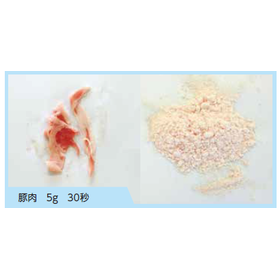
Crushing 5g of pork in 30 seconds using dry ice cooling!
- Crusher/Mill
![[LAB MILL2 Grinding Example] Chocol...](https://image.mono.ipros.com/public/product/image/226060/IPROS14712499702599994567.png?w=280&h=280)
Crushed 3g of chocolate bar in 20 seconds using cooling grinding with dry ice!
- Crusher/Mill
![[LAB MILL2 Grinding Example] Chocol...](https://image.mono.ipros.com/public/product/image/226060/IPROS16861082096258605469.png?w=280&h=280)
Crushing two chocolate candies in 20 seconds using dry ice cooling!
- Crusher/Mill
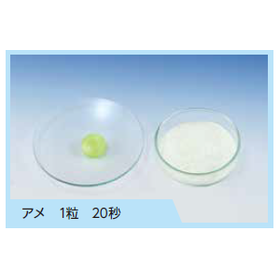
Crushing a piece of candy in 20 seconds using dry ice for cooling!
- Crusher/Mill
![[LAB MILL2 Grinding Example] Lettuc...](https://image.mono.ipros.com/public/product/image/226060/IPROS3997390145084047460.png?w=280&h=280)
Crushing 4g of lettuce in 30 seconds using dry ice cooling!
- Crusher/Mill


For a wide range of applications in emulsification, dispersion, suspension, and dissolution! An emulsifying and dispersing machine that enables high-speed continuous processing.
- Emulsifier/Disperser
- Dispersion/emulsification equipment/homogenizer
- Mixer/agitator
![[Data] Case Studies on Crushing, Cl...](https://image.mono.ipros.com/public/product/image/52219/IPROS7404856649183842959.png?w=280&h=280)
A wide range of product lineup and issues that can be solved! We will introduce numerous case studies of crushing, classification, and disintegration equipment.
- Crusher
- Classifier


This multifunction mixing machine is superior in the continuous mixing, agitation, and moistening of powder.
- Other powder equipment
- Other mixing and mixing equipment
- Other mixing equipment