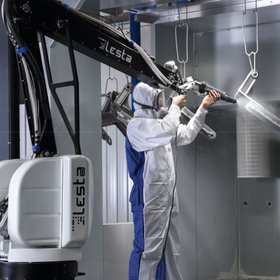
We have compiled a list of manufacturers, distributors, product information, reference prices, and rankings for robot.
ipros is IPROS GMS IPROS One of the largest technical database sites in Japan that collects information on.

robot Product List and Ranking from 902 Manufacturers, Suppliers and Companies

Last Updated: Aggregation Period:Dec 31, 2025~Jan 27, 2026
This ranking is based on the number of page views on our site.

robot Manufacturer, Suppliers and Company Rankings

Last Updated: Aggregation Period:Dec 31, 2025~Jan 27, 2026
This ranking is based on the number of page views on our site.

  1. 因幡電機産業 産機カンパニー Osaka//Trading company/Wholesale
  2. シリックス Mie//robot
  3. ABB ロボティクス&ディスクリート・オートメーション事業本部 - 産業用ロボット関連製品 Tokyo//robot
  4. 4 ABBジャパン Tokyo//Industrial Electrical Equipment
  5. 5 KYONI CO.,LTD. tokyo,kanawgawa,chib,gunma,yamagata,nagoya,shanghai Tokyo//Machine elements and parts

robot Product ranking

Last Updated: Aggregation Period:Dec 31, 2025~Jan 27, 2026
This ranking is based on the number of page views on our site.

  1. A "Solution Book" that consolidates issues related to factory automation. 因幡電機産業 産機カンパニー
  2. Collaborative robot × balancer composite system (up to 60kg payload) シリックス
  3. High Security Remote Access Industrial Router Secomea 因幡電機産業 産機カンパニー
  4. 4 ABB Robotics Japan | Comprehensive Robot Lineup ABB ロボティクス&ディスクリート・オートメーション事業本部 - 産業用ロボット関連製品
  5. 5 Yamayan Electric Production Technology Engineering Services 因幡電機産業 産機カンパニー

robot Product List

1066~1080 item / All 3755 items

Displayed results

Collaborative Robot Examples | Automation of Injection Molding, Packaging, and Palletizing

Increase injection molding production volume by up to four times and reduce waste to nearly zero. A universal robot that is easy to program!

DYNAMIC GROUP has been struggling to secure personnel for its injection molding production and wanted to utilize its existing workforce more efficiently. Currently, three collaborative robot arms from Universal Robots are taking over several repetitive tasks. As a result, product consistency has improved, and production volume has increased by nearly 400%. [Challenges Addressed by Automation] - Increased production volume by up to 400% and reduced waste to almost zero. - Workers have been freed from repetitive and labor-intensive tasks, eliminating staff shortages. *For more details, please refer to the PDF document or feel free to contact us.

  • Other industrial robots
  • robot

Added to bookmarks

Bookmarks list

Bookmark has been removed

Bookmarks list

You can't add any more bookmarks

By registering as a member, you can increase the number of bookmarks you can save and organize them with labels.

Free membership registration

Collaborative robot case: Automation of hazardous tasks. No safety measures required.

Robot technology has improved safety and increased job satisfaction.

The Canadian shelf system manufacturer, Etalex, was seeking a flexible robotic arm solution that would take up little space on the production floor and could be utilized for multiple tasks. To that end, the company introduced the UR10. By automating high-risk repetitive tasks, they were able to enhance safety without relying on cumbersome fence installations or space-intensive safety measures. 【Overcoming Automation Challenges】 - Significantly reduced the time humans are involved in load tasks, improving the safety of the work environment. - Return on investment period: 12 months. *For more details, please refer to the PDF document or feel free to contact us.*

  • Other industrial robots
  • robot

Added to bookmarks

Bookmarks list

Bookmark has been removed

Bookmarks list

You can't add any more bookmarks

By registering as a member, you can increase the number of bookmarks you can save and organize them with labels.

Free membership registration

Collaborative Robot Case: Automation of Part Adhesion Work at Kitchen Sinks

Improving productivity by utilizing collaborative robots while enhancing employee job satisfaction.

Franke produces over 10,000 kitchen sinks annually. After pressing the aluminum sink units, they adhere the mounting blocks to the sides. They believed that if they could automate the repetitive tasks, they could save on adhesive and reduce human errors when attaching the mounting blocks. The challenge was to find a solution that could apply the adhesive and attach the mounting blocks to the sides. Thus, the company chose the UR5 robot. The UR5 solution supports an annual production volume of 10,000 units with performance far exceeding expectations. 【Overcoming Automation Challenges】 - Freeing employees from high-stress repetitive tasks to improve operational efficiency on the production line - Reducing material waste *For more details, please refer to the PDF document or feel free to contact us.

  • Other industrial robots
  • robot

Added to bookmarks

Bookmarks list

Bookmark has been removed

Bookmarks list

You can't add any more bookmarks

By registering as a member, you can increase the number of bookmarks you can save and organize them with labels.

Free membership registration

Five Questions to Verify When Introducing Collaborative Robots

Good news for those who think that the company size is too small for the introduction of robots: [We are offering a free guidebook].

You may be wondering if robots can truly be a solution to the challenges faced by small to medium-sized manufacturers dealing with low-volume, high-variety production. However, if you believe that just because you are not a large manufacturer, you have no choice but to rely on manual production methods, your doubts may not be entirely justified. This workbook presents five questions to examine such doubts. It outlines five key points that small to medium-sized manufacturers should consider when introducing robots. [Contents] ■ Are your doubts justified? ■ Five questions for verification ■ It is never too small for you to introduce collaborative robots! *For more details, please refer to the PDF document or feel free to contact us.

  • Other industrial robots
  • robot

Added to bookmarks

Bookmarks list

Bookmark has been removed

Bookmarks list

You can't add any more bookmarks

By registering as a member, you can increase the number of bookmarks you can save and organize them with labels.

Free membership registration

Case Studies of Collaborative Robots for the Food Industry: Automation of Pick & Place and Injection

Collaborative robots contribute to securing staff for small businesses in countries with low birth rates!

At Babo Arms, we wanted to automate our production process while maintaining a close relationship with our customers. Therefore, we introduced our 'UR5' robot into a series of processes, including washing cups, brewing drinks, and handing them over to customers. After the introduction, staff members who were freed from the task of making drinks were able to engage with customers, discover their purchasing intentions and requests, and improve service quality, thereby realizing the company's vision. 【Overcoming Automation Challenges】 ■ Resolving labor shortages ■ Maintaining drink quality ■ Introducing robots that can work safely alongside humans while preserving customer interaction *For more details, please refer to the PDF document or feel free to contact us.

  • Other industrial robots
  • robot

Added to bookmarks

Bookmarks list

Bookmark has been removed

Bookmarks list

You can't add any more bookmarks

By registering as a member, you can increase the number of bookmarks you can save and organize them with labels.

Free membership registration

Collaborative Robot Case: Nissan Motor Co., Ltd.

Providing solutions to the aging workforce! Reducing labor costs for auxiliary workers at global automotive manufacturers.

We would like to introduce a case study on the collaborative robot "UR10" handled by Universal Robots. At Nissan Motor's Yokohama plant, there was a need for a more streamlined production process, as well as a challenge to prevent the loss of essential skills due to the aging workforce. To reduce labor costs associated with auxiliary workers caused by inefficient production processes, the "UR10" from Universal Robots was introduced. With the implementation of two lines using this product, the Yokohama plant was able to eliminate excess takt time, allowing operators to gain experience on other lines during their free time. 【Overcoming Automation Challenges】 ■ Reducing staff workload ■ Improving efficiency ■ Enhancing performance to help reduce unnecessary special costs *For more details, please refer to the PDF document or feel free to contact us.

  • Other industrial robots
  • robot

Added to bookmarks

Bookmarks list

Bookmark has been removed

Bookmarks list

You can't add any more bookmarks

By registering as a member, you can increase the number of bookmarks you can save and organize them with labels.

Free membership registration

Introducing 7 companies with collaborative robot examples in the automotive industry.

Introducing the effects of collaborative robot implementation, such as improved productivity, high-quality product supply, and time reduction, in an easy-to-understand manner. [Case studies on collaborative robot implementation available!]

This document contains "case studies of collaborative robot implementation" from seven companies in the automotive industry. It clearly explains the challenges before the introduction of collaborative robots, the decisive factors for adoption, the tasks that were resolved, and the effects after implementation. This is a resource that we hope will be read by those considering the introduction of collaborative robots, as well as those struggling with efficiency and labor reduction on the shop floor. It also includes QR links to case study videos, making it recommended for those who want to see videos of specific cases. 【Examples of Implementation Benefits】 ■ Achieved automation of the cutting line and improved productivity without changing the production process ■ Successfully automated the experience and intuition of skilled workers, ensuring a stable supply of high-quality products ■ Reduced setup time by 50% *For more details, please refer to the PDF download. Feel free to contact us with any inquiries.

Added to bookmarks

Bookmarks list

Bookmark has been removed

Bookmarks list

You can't add any more bookmarks

By registering as a member, you can increase the number of bookmarks you can save and organize them with labels.

Free membership registration

Materials with Case Studies: 'Collaborative Robots Active in the Chemical and Pharmaceutical Industries'

Explaining the benefits of introducing collaborative robots, such as improving the efficiency of sample processing and automating repetitive tasks!

This document introduces the "utilization of collaborative robots" in the manufacturing sites of hospitals and chemical products/pharmaceuticals. It explains the benefits of introducing collaborative robots in fields where the demands for quality, precision, and accuracy are extremely strict, along with case studies. This is a document that we would like those considering the introduction of collaborative robots or those struggling with efficiency and labor reduction in the workplace to read. 【Examples of Introduction Benefits】 ■ Reduction of waiting time for inspection subjects through the efficiency of sample processing ■ Establishment of a highly efficient and high-quality small lot production line ■ Automation of repetitive tasks that impose a significant physical burden *This document can be viewed via "PDF Download." Please feel free to contact us with any inquiries.

  • Other industrial robots
  • robot

Added to bookmarks

Bookmarks list

Bookmark has been removed

Bookmarks list

You can't add any more bookmarks

By registering as a member, you can increase the number of bookmarks you can save and organize them with labels.

Free membership registration

Do collaborative robots really need to be implemented? Five items to check before consideration.

[Guidebook Giveaway] Is automation really necessary? What is the difference between industrial robots and collaborative robots? We will answer your company's questions with five tailored questions.

In recent times, as cost reduction and IoT implementation are being emphasized, the attention towards collaborative robots that work alongside humans has been increasing year by year. However, there are still relatively few companies that have actually introduced collaborative robots, aren't there? Additionally, many people may have concerns such as, "I know the name of collaborative robots, but...," "What is the difference from industrial robots?" or "Is automation really necessary?" Therefore, before considering the introduction of collaborative robots, we would like to offer you a free document that clearly explains how collaborative robots can contribute to your company. We encourage you to take this opportunity to read this guidebook! [Contents] ■ Is automation really necessary? ■ Which is more suitable, industrial robots or collaborative robots? ■ Cost comparison for automation ■ Benefits of collaborative robots, etc. *For more details, please refer to the PDF document or feel free to contact us.

  • Other industrial robots
  • robot

Added to bookmarks

Bookmarks list

Bookmark has been removed

Bookmarks list

You can't add any more bookmarks

By registering as a member, you can increase the number of bookmarks you can save and organize them with labels.

Free membership registration

Case Studies of Collaborative Robot Implementation in Japanese Companies

[Handbook Presentation] For those struggling with securing talent and automating equipment, we can solve it with the introduction of collaborative robots. Would you like to refer to some nearby examples?

The attention on collaborative robots that work alongside humans has been increasing year by year. However, do you have concerns such as "Which processes can they be introduced into?" "What are the key points when introducing them?" or "What if the introduction fails?" At Universal Robots, we have prepared many case studies to address these concerns. Among them, this document summarizes actual case studies from within Japan. The industries covered include automotive, electronics, pharmaceuticals, and chemicals. The content introduces three points: "Challenges before introduction," "Solutions," and "Results after introduction," along with real voices from our customers, and we have also provided links to videos. If you are struggling with securing operators or automating equipment, why not refer to this guidebook that compiles nearby examples of how collaborative robots have solved these challenges? *For more details, please download the document.

  • Other industrial robots
  • robot

Added to bookmarks

Bookmarks list

Bookmark has been removed

Bookmarks list

You can't add any more bookmarks

By registering as a member, you can increase the number of bookmarks you can save and organize them with labels.

Free membership registration

Collaborative Robot Case: Pick and Place

We have introduced robots into the seedling cultivation process, achieving significant labor savings.

Osaka Forestry Co., Ltd. has been producing and supplying seedlings in Tokachi, Hokkaido for 70 years. The company has successfully automated part of the seedling cultivation process, which was traditionally reliant on manual labor. Amidst the challenges of an aging workforce making it difficult to secure labor, significant labor savings have been achieved. ■ Challenges: Due to a high dependency on skilled workers and an aging workforce, there are concerns about future labor shortages, and it is necessary for humans to work alongside robots. ■ After Implementation: UR robots were introduced in the initial process of seedling production, where containers are placed on a conveyor, allowing one person to perform a task that previously required two. *For details on the implemented processes, challenges faced, and more information, please check the link.

  • Other industrial robots
  • robot

Added to bookmarks

Bookmarks list

Bookmark has been removed

Bookmarks list

You can't add any more bookmarks

By registering as a member, you can increase the number of bookmarks you can save and organize them with labels.

Free membership registration

Collaborative Robot Case: Motorcycle Parts Manufacturer SHAD - Screw Tightening

Utilize universal robots to optimize the production process and improve work efficiency.

At the Spanish motorcycle parts manufacturer SHAD, the automation of the assembly process is being considered to allow workers to operate in a more rational environment. As production processes change, they sought a system that could respond flexibly and introduced collaborative robots. As a result, the working environment for the screw tightening process has improved, and two workers have been freed from many repetitive tasks. ■Challenges: They want to automate to respond to increased demand, but there is no space to build an automation system. They want to improve the repetitive tasks of the workers. ■After implementation: The UR5 robot was introduced in the screw tightening process, allowing it to be positioned right next to the workers, enabling collaboration in a shared space. By replacing repetitive tasks with the robot, work efficiency has also improved. *For details on the decisive factors for introducing collaborative robots and operational status, please see the linked source.

  • Other industrial robots
  • robot

Added to bookmarks

Bookmarks list

Bookmark has been removed

Bookmarks list

You can't add any more bookmarks

By registering as a member, you can increase the number of bookmarks you can save and organize them with labels.

Free membership registration

Collaborative Robot Case Study: Aido Industry Co., Ltd. Air Blow Process Automation

Japanese companies double their productivity after introducing collaborative robots!

Aido Industry, which manufactures automotive parts OEM using aluminum die casting and machining in Obu City, Aichi Prefecture, faced the challenge of low profit margins despite increasing sales due to a chronic labor shortage. While devising countermeasures, they encountered UR robots at a trade show, realized they could develop the system in-house, and began the implementation process. Now, 40 UR robots are in operation. ■ Challenge: There is a labor shortage, and labor costs such as the salaries of temporary employees are high, resulting in no increase in profits despite rising sales. Traditional industrial robots incur system costs, making it difficult to take the plunge into implementation. ■ After implementation: Over three years, 40 UR robots were introduced, doubling productivity. Furthermore, by incorporating human intelligence into the robots, it became possible to further increase productivity. * For details on the decisive factors for robot implementation and horizontal expansion to other processes, please see the linked page.

  • Other industrial robots
  • robot

Added to bookmarks

Bookmarks list

Bookmark has been removed

Bookmarks list

You can't add any more bookmarks

By registering as a member, you can increase the number of bookmarks you can save and organize them with labels.

Free membership registration

Collaborative Robot Case: L'ORÉAL INDIA Automation of Transport Processes

The reason why L'Oréal's cosmetics improved the overall equipment efficiency of its Indian factory by 5%.

L'Oréal, one of the world's largest cosmetics brands, was facing a problem at its Pune factory in India. The manual handling of the final stage of the manufacturing process was posing serious ergonomic risks to the workers on site. In response, the company introduced UR robots to automate the palletizing process. This led to increased efficiency and achieved a 0% ergonomic risk. The Overall Equipment Effectiveness (OEE) improved by 5%. ■ Challenge: In the final process of stacking boxes onto pallets, one worker was required to lift a total of 8,500 kg during an 8-hour shift, with an ergonomic risk assessment at level 4 (level 5 being the maximum). ■ After implementation: It became possible to load two pallets simultaneously without stopping the production line, reducing the working time per shift by 30 minutes. The time required for pallet replacement was also shortened, resulting in a 5% improvement in OEE at the Pune factory. For more details on the decisive factors for robot implementation and horizontal deployment to other processes, please see the link. *The PDF download content is a comprehensive catalog.

  • Other industrial robots
  • robot

Added to bookmarks

Bookmarks list

Bookmark has been removed

Bookmarks list

You can't add any more bookmarks

By registering as a member, you can increase the number of bookmarks you can save and organize them with labels.

Free membership registration

Collaborative Robot Case: YUEYIN Technology Cutting Process

Utilizing collaborative robots to extend equipment lifespan! We have made it possible to apply 90% of the equipment to the production of other new products.

YUEYIN Technology, which has a track record in OEM for electronic components, traditionally used custom automatic production machinery. However, with the increasing diversity of end-user products, the lifespan of the machinery has also shortened. While searching for solutions other than increasing labor, collaborative robots were introduced. Even after the product life cycle ends, 90% of the equipment can now be applied to the production of other new products, alleviating concerns that costs might not be covered at the time of equipment introduction. ■Challenge: The lifespan of machinery has shortened due to changes in consumer purchasing behavior. ■After implementation: 90% of the equipment can now be applied to the production of other new products. The potential risks associated with employee work have been significantly reduced. The payback period for the investment in UR robots is an average of 8 to 9 months. For details on the decisive factors for robot introduction and horizontal expansion to other processes, please see the linked content. *The PDF download content is a comprehensive catalog.

  • Other industrial robots
  • robot

Added to bookmarks

Bookmarks list

Bookmark has been removed

Bookmarks list

You can't add any more bookmarks

By registering as a member, you can increase the number of bookmarks you can save and organize them with labels.

Free membership registration