【システム非公開】レンジで焼ケール 深型 TKSM-34
電子レンジで簡単に魚や肉が焼けます。
当社で運営する会員限定の卸売(仕入れ)サイト「Kenko卸.com」では、 「レンジで焼ケール 深型 TKSM-34」を取り扱っております。 蒸し料理に便利な専用プレート付。
- Company:新日本機能食品
- Price:Other
Last Updated: Aggregation Period:Oct 07, 2026~Nov 03, 2026
This ranking is based on the number of page views on our site.
Last Updated: Aggregation Period:Oct 07, 2026~Nov 03, 2026
This ranking is based on the number of page views on our site.
Last Updated: Aggregation Period:Oct 07, 2026~Nov 03, 2026
This ranking is based on the number of page views on our site.
901~930 item / All 1018 items
電子レンジで簡単に魚や肉が焼けます。
当社で運営する会員限定の卸売(仕入れ)サイト「Kenko卸.com」では、 「レンジで焼ケール 深型 TKSM-34」を取り扱っております。 蒸し料理に便利な専用プレート付。
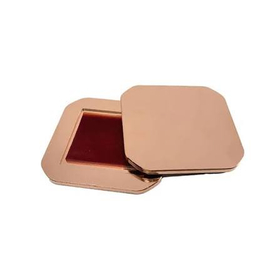
Microchannel cooling plate market size forecast: expected to reach 196 million USD by 2026, expanding at a compound annual growth rate of 14.9%.
What is a microchannel cooling plate? A microchannel cooling plate is a liquid cooling component that efficiently removes heat by forming fine flow channels inside and circulating coolant near the heat source. It is manufactured through precision machining, chemical etching, brazing, diffusion bonding, and metal additive manufacturing, and is characterized by an increased heat transfer area and a shortened heat conduction distance compared to conventional liquid cooling plates. It has become an important cooling technology for high-heat-generating devices such as AI servers, CPUs, GPUs, high-performance computing (HPC), and power semiconductors, achieving reduced thermal resistance and uniform temperature distribution. Global market size of microchannel cooling plates According to the latest research report published by Global Reports titled "Global Market Size, Share, Company Rankings, Sales, and Demand Trend Forecast for Microchannel Cooling Plates (2026-2032)," the global market is estimated to be valued at approximately 171 million USD in 2025 and is expected to reach around 196 million USD in 2026. The compound annual growth rate (CAGR) from 2026 to 2032 is projected to be 14.9%, with an expansion to approximately 452 million USD by 2032.

Custom designs tailored for harsh wear environments extend equipment lifespan. They contribute to reducing replacement frequency, maintenance costs, and equipment downtime risks.
D-Plate is a high-wear-resistant solution that employs chromium carbide overlay technology. It contributes to equipment wear countermeasures, extending the lifespan of parts, and reducing maintenance costs for maintenance and equipment management personnel in industries such as manufacturing, biomass power generation, and thermal power generation, where wear is severe. Custom designs are available for optimal specifications tailored to the usage environment, such as wear, impact, high temperature, and corrosion, from hundreds of different formulation recipes. In addition to the plate product "D-Plate," it also supports wear-resistant components like liners, chutes, and hoppers, with a surface smooth type "D-Plate S" that balances wear resistance and adhesion prevention (low friction). With excellent wear resistance, it significantly reduces the frequency of parts replacement and maintenance work, thereby lowering the risk of unexpected equipment downtime. It also contributes to reducing equipment downtime, maintenance costs, and TCO (total cost of ownership). We can accommodate complex shapes and custom manufacturing, providing optimal wear-resistant solutions tailored to your equipment environment. 【Features】 ■ Reduction of initial costs compared to conventional products ■ Suitable design according to the environment (adaptability to various shapes) ■ Overwhelming wear resistance ■ Reduction of TCO (total cost of ownership)

Our Tokyo branch offers thawing tests! You can experience high-quality thawing without unevenness in a short time using internal heating with radio waves!
【Benefits of High-Frequency Thawing】 - Uniform thawing without unevenness throughout - Quick thawing in about 5 to 30 minutes - Reduction in drip loss - Clean working environment as no water is used for thawing 【Testing Available】 - Supervised Experiments: We will conduct tests at our factory or Tokyo branch with the customer's presence. You can confirm the short-time and high-quality heating with the high-frequency heating device. - Sample Submission Experiments: We will conduct tests using the raw materials or samples sent by the customer. Results will be compiled and reported later. ◎ We are currently offering a comprehensive catalog of the Tempatron series! *For details, please contact us or download the PDF.

The plate and lifter pin are made of super heat-resistant alloy.
The high-temperature wafer heating hot plate "PH860" allows for vertical transport of wafers and other items through a lifter pin drive. The plate and lifter pins are made of ultra-heat-resistant alloy. The safety cover (optional) is available in various configurations, including with an upper opening door and without a door. 【Features】 ○ Maximum temperature: 800°C ○ Hot plate size: □175mm ○ Precise temperature control and flow control are possible with the MSA digital temperature controller. For more details, please contact us or download the catalog.

Reliable silica-based/polymer-based fillers can be used in high-throughput applications with Bond Elut 96-well plates.
The reliable silica-based/polymer-based packing material used in the standard Bond Elut cartridges can be utilized in the Bond Elut 96-well plates for high-throughput applications. Current cartridge-based SPE results can be quickly re-evaluated in a 96-well format. Bond Elut 96 is manufactured under strict quality control standards to ensure no elution, reproducibility of extraction and purification, and reliability. Additionally, everything is manufactured and stocked in-house at Agilent, allowing for prompt shipping. *For more details, please refer to the PDF materials or feel free to contact us.

"Free samples" are currently available! Please check the application method from the [PDF download] button, or apply directly through the related links.
The market size for automotive pressure plates is expected to see significant growth in the coming years. By 2028, it is projected to grow to $71.51 billion at a compound annual growth rate (CAGR) of 5.5%. The anticipated growth during the forecast period is attributed to a focus on lightweight materials, an increase in the adoption of dual-clutch transmissions, considerations for emission standards and environmental issues, demand in emerging automotive markets, and ongoing improvements in manufacturing processes. Key trends expected during the forecast period include the development of lightweight and high-performance materials, the integration of advanced friction materials, a focus on modular and maintainable pressure plate designs, the adoption of self-adjusting pressure plate technology, and the application of finite element analysis (FEA) for design optimization.

The luxurious products, which are crafted with various ingenious ideas, are possible precisely because we can carry out all processes in-house.
The beautiful colors of the card cases are achieved through a technique called "organic dye anodizing," which involves soaking dye into the small holes on the surface and sealing them with a sealing treatment. This process undergoes multiple electrochemical treatments. While there are gradient products available, each piece is crafted individually, much like traditional crafts. Because we handle all processes in-house, from design to painting and inspection, we can deliver short lead times, low costs, clear accountability, and quality that we are committed to providing to our customers. 【Integrated Production Process】 ■ Design → Press Sheet Metal → Machining → Surface Pre-treatment → Surface Treatment → Name → Painting → Inspection *For more details, please feel free to contact us.

November 2011 Issue MS Newsletter Crankcase Foot
【Product PR】 The "MS Method (Mechanical Stitch)" is a groundbreaking repair technique (Mechanical Stitch Method) that addresses metal cracks using mechanical methods. Since it does not apply any heat, there is no "thermal distortion." It prevents residual stress from occurring in other areas and also prevents secondary damage such as new cracks. Metal cracks are one of the concerns in equipment maintenance operations. In conventional welding repair methods, the base material around the crack changes due to heat, leading to residual stress and distortion, which always carries the risk of "crack recurrence" and "secondary damage." 【Features of the MS Method】 ■ No hardening or residual stress from heat ■ Elimination of secondary damage ■ Maintenance of stable quality → Integrated system repairs using jigs, etc. → Accumulation of know-how, experience, and track record ■ Completion of construction in a short period → No significant reduction in equipment operating rates ■ Advantages in safety and environmental aspects → No use of fire, thus no impact on the operating rates of other equipment or the environment For more details, please contact us.

April 2014 Issue MS Newsletter Aluminum Applicator
【Product PR】 The "MS Method (Mechanical Stitch)" is a revolutionary repair technique (Mechanical Stitching Method) that addresses metal cracks using mechanical methods. Since no heat is applied at all, "thermal distortion" does not occur. There is no residual stress in other areas, preventing secondary damage such as new cracks. Metal cracks are one of the concerns in equipment maintenance operations. In typical welding repair methods, the base material around the crack changes due to heat, leading to residual stress and distortion, which always carries the risk of "crack recurrence" and "secondary damage." 【Features of the MS Method】 ■ No hardening or residual stress due to heat ■ Elimination of secondary damage ■ Maintenance of stable quality → Integrated system repairs using jigs, etc. → Accumulation of know-how, experience, and achievements ■ Completion of construction in a short period → No significant decrease in the operating rate of equipment ■ Advantages in safety and environmental aspects → No use of fire, thus no impact on the operating rate of other equipment or the environment For more details, please contact us.

October 2014 Issue MS Newsletter Cast Iron Casing Foot
【Product PR】 The "MS Method (Mechanical Stitch)" is a revolutionary repair technique (Mechanical Stitching Method) that uses mechanical methods to address cracks in metal. Since it does not apply any heat, there is no "thermal distortion." It prevents residual stress from occurring in other areas and also prevents secondary damage such as new cracks. Cracks in metal are one of the concerns in equipment maintenance operations. Repairs using conventional welding methods change the base material around the crack due to heat, leading to residual stress and distortion, which always carries the risk of "crack recurrence" and "secondary damage." 【Features of the MS Method】 ■ No hardening or residual stress from heat ■ Elimination of secondary damage ■ Maintenance of stable quality → Integrated system repairs using jigs, etc. → Accumulation of know-how, experience, and track record ■ Completion of construction in a short period → No significant decrease in equipment operating rates ■ Advantages in safety and environmental aspects → No use of fire, thus no impact on the operating rates of other equipment or the environment For more details, please contact us.

February 2015 Issue MS Newsletter Forged Press Frame
【Product PR】 The "MS Method (Mechanical Stitch)" is a revolutionary repair technique (Mechanical Stitching Method) that uses mechanical methods to address cracks in metal. Since no heat is applied at all, there is no "thermal distortion." Residual stress in other areas does not occur, preventing secondary damage such as new cracks. Cracks in metal are one of the concerns in equipment maintenance operations. In typical welding repair methods, the base material around the crack changes due to heat, leading to residual stress and distortion, which always carries the risk of "crack recurrence" and "secondary damage." 【Features of the MS Method】 ■ No hardening or residual stress from heat ■ Elimination of secondary damage ■ Maintenance of stable quality → Integrated system repairs using jigs, etc. → Accumulation of know-how, experience, and achievements ■ Completion of construction in a short period → No significant decrease in equipment operating rates ■ Advantages in safety and environmental aspects → No use of fire, thus no impact on the operating rates of other equipment or the environment For more details, please contact us.

May 2016 Issue MS Newsletter Forging Press Frame
【Product PR】 The "MS Method (Mechanical Stitch)" is a revolutionary repair technique (Mechanical Stitching Method) that addresses metal cracks using mechanical methods. Since it does not apply any heat, there is no "thermal distortion." It prevents residual stress in other areas and avoids secondary damage such as new cracks. Metal cracks are one of the concerns in equipment maintenance operations. Repairs using conventional welding methods change the base material around the crack due to heat, leading to residual stress and distortion, which always carries the risk of "crack recurrence" and "secondary damage." 【Features of the MS Method】 ■ No hardening or residual stress from heat ■ Elimination of secondary damage ■ Maintenance of stable quality → Integrated system repairs using jigs, etc. → Accumulation of know-how, experience, and track record ■ Completion of construction in a short period → No significant decrease in equipment operating rates ■ Advantages in safety and environmental aspects → No use of fire, thus no impact on the operating rates of other equipment or the environment For more details, please contact us.

Introducing the screw hole repair insert! Unlike conventional products, it can be applied all the way to the corner edges.
The "MS Method (Mechanical Stitch)" is a groundbreaking repair technique (Mechanical Stitching Method) that addresses metal cracks using mechanical methods. Unlike welding repairs that involve thermal curing, this method does not apply any heat, thus preventing "thermal distortion." It does not generate residual stress in other areas, preventing secondary damage such as new cracks. 【Features】 ■ No hardening or residual stress due to heat ■ Elimination of secondary damage ■ Maintenance of stable quality → Integrated system repairs using jigs, etc. → Accumulation of know-how, experience, and track record ■ Completion of construction in a short period → Does not significantly reduce the operating rate of equipment ■ Advantages in safety and environmental aspects → Since no fire is used, there is no impact on the operating rate of other equipment or the environment For more details, please contact us.

We will restore the crushed screw using oversized processing. We will handle this through on-site work.
The "MS Method (Mechanical Stitch)" is a groundbreaking repair technique (Mechanical Stitching Method) that addresses metal cracks using mechanical methods. Since it does not apply any heat, there is no "thermal distortion." It prevents residual stress from occurring in other areas and also prevents secondary damage such as new cracks. Metal cracks are one of the concerns in equipment maintenance operations. In general welding repair methods, the base material around the crack changes due to heat, leading to residual stress and distortion, which always carries the risk of "crack recurrence" or "secondary damage." 【Features】 ■ No hardening or residual stress from heat ■ Elimination of secondary damage ■ Maintenance of stable quality → Integrated system repairs using jigs, etc. → Accumulation of know-how, experience, and achievements ■ Completion of construction in a short period → Does not significantly reduce the operating rate of equipment ■ Advantages in safety and environmental aspects → Since no fire is used, there is no impact on the operating rate of other equipment or the environment For more details, please contact us.

October 2018 Newsletter High-Pressure Turbine Car Room Frame
【Product PR】 The "MS Method (Mechanical Stitch)" is a revolutionary repair technique (Mechanical Stitching Method) that addresses metal cracks using a mechanical approach. Since no heat is applied at all, there is no "thermal distortion." Residual stress in other areas does not occur, preventing secondary damage such as new cracks. Metal cracks are one of the concerns in equipment maintenance operations. In typical welding repair methods, the base material around the crack changes due to heat, leading to residual stress and distortion, which always carries the risk of "crack recurrence" and "secondary damage." 【Features of the MS Method】 ■ No hardening or residual stress from heat ■ Elimination of secondary damage ■ Maintenance of stable quality → Integrated system repairs using jigs, etc. → Accumulation of know-how, experience, and achievements ■ Completion of construction in a short period → No significant decrease in equipment operating rates ■ Advantages in safety and environmental aspects → No use of fire, thus no impact on the operating rates of other equipment or the environment Please contact us for more details.

MS Newsletter February 2022 Issue Blower Leg Crack Repair
【Product PR】 The "MS Method (Mechanical Stitch)" is a revolutionary repair technique (Mechanical Stitching Method) that uses mechanical methods to address cracks in metal. Since no heat is applied at all, there is no "thermal distortion." Residual stress in other areas does not occur, preventing secondary damage such as new cracks. Metal cracks are one of the concerns in equipment maintenance operations. Repairs using conventional welding methods change the base material around the crack due to heat, leading to residual stress and distortion, which always carries the risk of "crack recurrence" and "secondary damage." 【Features of the MS Method】 ■ No hardening or residual stress due to heat ■ Elimination of secondary damage ■ Maintenance of stable quality → Integrated system repairs with jigs and other tools → Accumulation of know-how, experience, and track record ■ Completion of construction in a short period → No significant decrease in equipment operating rates ■ Advantages in safety and environmental aspects → No use of fire, so there is no impact on the operating rates of other equipment or the environment For more details, please contact us.

[Currently Free] Overwhelmingly short delivery times and low costs! We provide a total service from quotation responses through our unique trading company network to bulk delivery of processed products!
We are currently offering a free collection of case studies on the utilization of Hayashi Corporation's new system 'HI-SPEC', which goes beyond the framework of trading companies and externalizes the costs from estimates to orders and production that customers have traditionally spent a lot of time and effort on, proposing overall time reduction and efficiency in business flows. 【Benefits of Implementation】 ■ Externalization of effort and time (cost) ■ Reduction of the entire processing process ■ Efficiency of business flows By simply entrusting us with 3D CAD data, we handle the labor-intensive 2D drawing development at Hayashi. We enable quick estimate responses and provide comprehensive support from the production of processed products to bulk delivery. ◆ HI-SPEC System: Hayashi's Original Business - A New Form of Custom Parts Processing - 1. Always fast and accurate 2. Comprehensive service from estimate to delivery 3. With high technical capabilities 4. Pursuing further convenience

Sample distribution! Sheets and plates with impact resistance, abrasion resistance, and self-lubricating properties.
Saxin New Light "Sheet Plate" has become an essential material in the food and transportation industries as sliding components and wall materials for handling powders and granules, due to its excellent properties resulting from its large molecular weight. Additionally, it is gaining attention and being utilized as a TPM (Total Productivity Maintenance) material, which is currently in the spotlight across various industrial sectors. 【Features】 ■ Impact resistance ■ Wear resistance ■ Self-lubricating ■ Chemical resistance ■ Low-temperature properties ■ Hygiene ■ Non-stick ■ Energy absorption ■ Non-hygroscopic ■ Stress crack resistance ■ Weather resistance ■ Electrical properties, etc. 【For more details, please download the catalog or feel free to contact us】 ↓ ↓ ↓ ↓ ↓ ↓

We handle hot plates from various manufacturers.
At Kyoritsu Electric, we handle hot plates from the following manufacturers. Please feel free to contact us. 【Manufacturers We Handle (Excerpt)】 Advantech Toyo Co., Ltd. Ika Japan Co., Ltd. Shibata Scientific Co., Ltd. Thermo Fisher Scientific Co., Ltd. Japan High-Tech Co., Ltd.

It is a polycarbonate resin sheet with excellent impact resistance, transparency, and cold resistance.
【Product Features】 As a reliable plastic that combines impact resistance, transparency, heat resistance, cold resistance, mechanical strength, electrical properties, and many other excellent characteristics, it contributes to various industrial fields. 【Product Lineup】 - General grade (transparent, semi-transparent, smoke, matte, molded sheet) - Weather-resistant grade (PCSP) - Surface-hardened grade (PCMR) - Low smoke, flame-retardant grade (PCNT) - Non-glare grade (PCEG) - Multi-layer grade, Varie (PCMA) - Machining grade

A safe and secure resin, plastic mirror that won't break!
Mirror film (aluminum vapor-deposited PET film) is bonded to a resin board using adhesive lamination. The biggest feature is that, since it is adhesive, various core materials can be selected as long as the conditions are met. MP-HC (Hard Coated Mirror Type) The surface is coated to withstand general maintenance such as wiping with a cloth, achieving a surface hardness of pencil hardness H (measured value). It is ideal for cases where long-term use is expected, such as for everyday goods.

It is an adjustable angle plate with a rotating table. Please use it for angle machining.
Table: It is 360°. Since it has T-slots, it can accommodate various workpieces for clamping. When machining at an angle, it can be set up more quickly and reliably than adjusting with angle plates. It can be used in conjunction with a vise. When setting up for angle machining, such as for jigs and molds, it can be set up immediately. When machining at an angle, it can be set up more quickly and reliably than adjusting with angle plates. The base rotates 360 degrees.

Materials such as SK material and SK3! Introducing the materials used for backing plates.
We would like to introduce the materials used for the "packing plate," which is a component of press molds. Typically, SKD11 is used. For molds produced in small quantities, SK material or SKS3 is used. The use of wire-cut electrical discharge machining for mold making has become mainstream, and this trend has become common. 【Materials Used (Partial)】 ■SK Material ■SK3 ■SKD11 *For more details, please refer to the PDF document or feel free to contact us.

Level plates available in a variety of sizes and thicknesses! Prevents shifting and assists in construction.
The "Level Plate Type B" is ideal for leveling adjustments during the installation of concrete products such as drainage ditches and L-shaped retaining walls. The "slip prevention" feature in the center of the plate fits perfectly, minimizing play and ensuring that the surfaces of the product and the plate align accurately. We offer a wide range of products, from heavy-duty to lightweight, with seven thickness variations available for each plate size. 【Features】 ■ Ideal for leveling adjustments during the installation of concrete products ■ No shifting when stacked, maintaining consistent plate thickness ■ A rich lineup of plate sizes ■ Seven thickness variations available for each size *For more details, please refer to the catalog. Feel free to contact us with any inquiries.

A damper that absorbs the impact of playground equipment and enhances safety.
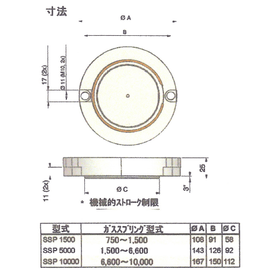
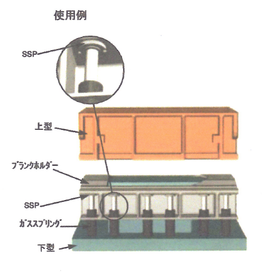
At amusement parks, the safety of attractions is the top priority. In particular, measures to minimize the risk of accidents are essential in areas where moving parts of equipment and impacts are likely to occur. Sudden shocks or excessive loads can lead to equipment damage or injuries to users. The Soft Hit Striker Plate (SSP) was developed to absorb these impacts and enhance the safety of the equipment. 【Usage Scenarios】 - Brake sections of roller coasters - Moving parts of Ferris wheels - Shock absorption for merry-go-rounds - Other moving parts of equipment that experience impacts 【Benefits of Implementation】 - Improved durability of equipment - Reduced risk of accidents - Ensured safety for users - Decreased maintenance costs


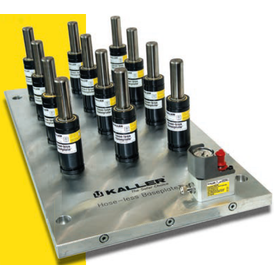
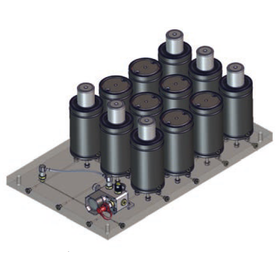
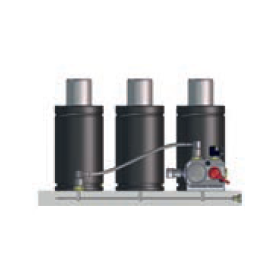
Contributes to the flexibility of the production line. Hose-free base plate that facilitates maintenance.
In the press die industry, there is a demand for rapid changes to production lines and responses to diverse needs. In particular, the incorporation and maintenance of gas springs in molds can lead to complex piping work, which results in decreased production efficiency and increased lead times. Checking for hose interference and replacing damaged hoses can cause production line downtime, hindering the establishment of a flexible production system. Our hose-less base plate addresses these challenges, enabling flexibility in production lines and improving the efficiency of maintenance work. 【Usage Scenarios】 - Rapid incorporation of gas springs into molds - Easy response during layout changes of production lines - Reduction of downtime through efficient maintenance work 【Benefits of Implementation】 - Reduction of labor hours due to the elimination of piping work - Shortening of assembly time by reducing hose interference checks - Reduction of maintenance labor hours by eliminating the need for replacement work during hose damage
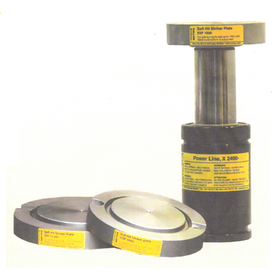
Absorbs the shock load of parts inspection and contributes to the longevity of equipment.
In the automotive manufacturing industry's parts inspection process, it is essential to suppress shock loads to ensure stable equipment operation and maintain product quality. Excessive shocks, particularly around the movable parts of inspection devices and sensors, can lead to increased maintenance frequency, early deterioration of components, and potentially decreased inspection accuracy. In response to these challenges, our Soft Hit Striker Plate (SSP) absorbs unnecessary shock loads through its special damping function, supporting equipment protection and the realization of a stable inspection environment. 【Usage Scenarios】 - Parts inspection in presses and conveyor lines - Movable parts of automated inspection devices - Processes prone to vibrations and shocks 【Benefits of Implementation】 - Reduced maintenance burden on equipment - Extended lifespan of components - Stabilization of inspection accuracy
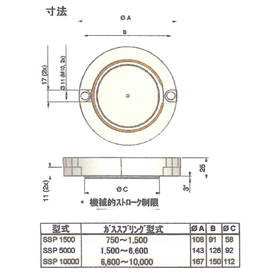
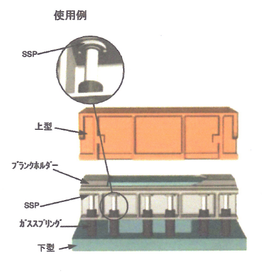
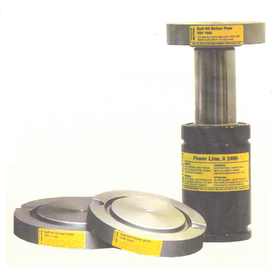
A damper function that absorbs the impact of drop tests and extends product life.
The contact area of the gas spring and piston rod inside the press mold requires suppression of impact loads due to the large initial load characteristic of the gas spring. In normal castings, there is a risk of deformation and cracking. In response to these challenges, our Soft Hit Striker Plate (SSP) absorbs unnecessary impact loads through its special damping function, supporting the protection of equipment and the realization of stable press production. 【Usage Scenarios】 - Contact area of the piston rod inside the mold - Contact area of the cushion pin in the press - Areas prone to vibration and impact 【Benefits of Implementation】 - Reduced maintenance burden on equipment - Extended lifespan of components - Stabilization of inspection accuracy