316~360 item / All 558 items
Displayed results
Filter by category

Added to bookmarks
Bookmarks listBookmark has been removed
Bookmarks listYou can't add any more bookmarks
By registering as a member, you can increase the number of bookmarks you can save and organize them with labels.
Free membership registration
Contact this company
Contact Us OnlineBefore making an inquiry
Download PDF316~360 item / All 558 items
Filter by category
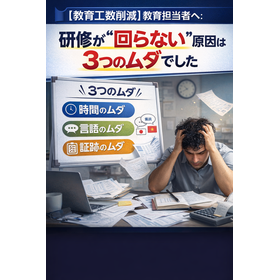
In the construction industry, accidents and quality degradation due to errors in work procedures are significant challenges. In particular, new workers are prone to making mistakes due to a lack of understanding of procedures and insufficient experience, making accurate understanding of procedures essential for safe work execution and quality assurance. Video education contributes to the early development of new employees by allowing them to visually understand work procedures. Our video education supports the improvement of safety and quality on construction sites. 【Usage Scenarios】 - Standardization of work procedures - Training for new employees - Safety education - Quality management 【Effects of Implementation】 - Reduction of work mistakes - Improvement of safety awareness - Shortening of training time - Stabilization of quality
Added to bookmarks
Bookmarks listBookmark has been removed
Bookmarks listYou can't add any more bookmarks
By registering as a member, you can increase the number of bookmarks you can save and organize them with labels.
Free membership registration
In the manufacturing site, the poor attendance and work mistakes of new employees are causing the following problems: ● Decreased productivity: Absenteeism and tardiness lower the operational rate of the line. ● Variability in quality: Work mistakes affect the quality of the products. ● Increased burden on trainers: Time is consumed in following up on mistakes and re-educating employees. These issues negatively impact the overall efficiency and morale of the workplace. Challenges such as poor attendance and work mistakes among new employees can be effectively improved through the introduction of video education. By using visual information transmission, understanding improves, and the quality and efficiency of training increase. This is expected to enhance productivity and quality on the shop floor. *For more details, please feel free to contact us.
Added to bookmarks
Bookmarks listBookmark has been removed
Bookmarks listYou can't add any more bookmarks
By registering as a member, you can increase the number of bookmarks you can save and organize them with labels.
Free membership registration
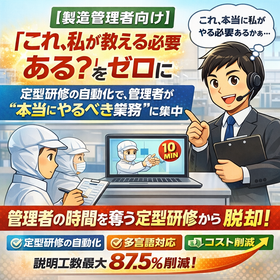
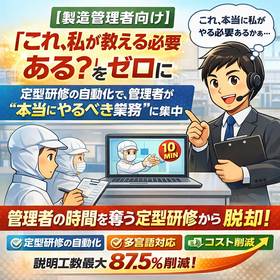
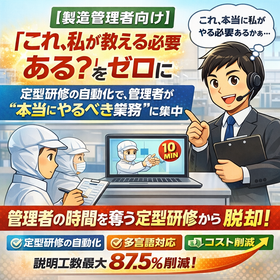
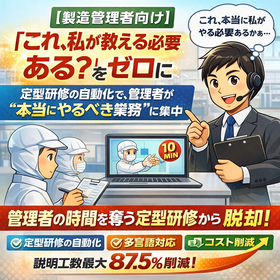
In the manufacturing industry, the situation continues where it is difficult to allocate sufficient time for employee training due to the daily demands of production tasks. In particular, training for new employees and those who have been transferred often gets postponed, resulting in cases of operational mistakes and variations in quality. Additionally, the personalization of training and inefficient On-the-Job Training (OJT) have increased the burden on trainers. In manufacturing environments where securing training time is challenging, effective video training that can be completed in a short time is a valuable means to balance the quality and efficiency of education. Many benefits can be expected, such as improved employee skills, reduced operational mistakes, and a lighter burden on trainers. The use of video training will become an essential element in future human resource development. *For more details, please feel free to contact us.*
Added to bookmarks
Bookmarks listBookmark has been removed
Bookmarks listYou can't add any more bookmarks
By registering as a member, you can increase the number of bookmarks you can save and organize them with labels.
Free membership registration
In the manufacturing industry, while the importance of training new employees and skill succession is increasing, the burden on trainers is also growing. Particularly, the following challenges have become apparent: ● Time constraints: Due to the need to conduct training alongside daily operations, sufficient time cannot be secured. ● Personalization of training content: Variability in teaching methods among trainers leads to inconsistent quality of education. ● Decreased motivation: Repetitive instruction and the lack of visible results diminish the trainers' enthusiasm. These issues may lead to a decline in the quality of training and early turnover of new employees. To alleviate the burden on trainers and improve the quality of education, the introduction of video training is effective. By providing standardized training content and efficient operation, we can establish a sustainable human resource development system. *For more details, please feel free to contact us.
Added to bookmarks
Bookmarks listBookmark has been removed
Bookmarks listYou can't add any more bookmarks
By registering as a member, you can increase the number of bookmarks you can save and organize them with labels.
Free membership registration
In recent years, many manufacturing companies have been actively hiring foreign workers to compensate for labor shortages. However, challenges have arisen in smoothly conducting on-site training and guidance due to language and cultural differences. The main reasons why educating foreign workers is difficult include the following points: - They do not sufficiently understand Japanese and cannot read manuals. - The way explanations are given varies by instructor, making standardized training difficult. - On-the-job training (OJT) alone takes time for them to learn. - There is an increase in operational mistakes, which affects quality and safety. To address these issues, multilingual video training has been implemented in many companies. *For more details, please feel free to contact us.*
Added to bookmarks
Bookmarks listBookmark has been removed
Bookmarks listYou can't add any more bookmarks
By registering as a member, you can increase the number of bookmarks you can save and organize them with labels.
Free membership registration
In manufacturing sites, the "craftsmanship" developed by skilled workers over many years of experience is often difficult to verbalize or document, making it challenging to pass on to younger employees. There are many cases where such tacit knowledge becomes personalized, increasing the risk of losing it with the retirement of skilled workers. To effectively transmit craftsmanship that is hard to articulate, utilizing videos and live-action demonstrations to visualize techniques is beneficial. By providing visual information, the understanding of younger workers improves, leading to enhanced training efficiency and product quality. In future talent development, using videos for skill transmission will become an essential method. *For more details, please feel free to contact us.*
Added to bookmarks
Bookmarks listBookmark has been removed
Bookmarks listYou can't add any more bookmarks
By registering as a member, you can increase the number of bookmarks you can save and organize them with labels.
Free membership registration
In the manufacturing industry, the inheritance of know-how and skills from veteran workers with many years of experience has become an important issue. However, if skill transfer does not proceed smoothly, it can lead to decreased productivity and variations in quality, which are factors that reduce a company's competitiveness. The main reasons why skill transfer is difficult include the following points: - The "intuitive techniques" of veteran workers are not verbalized. - Different instructors have varying teaching methods, making it difficult to provide consistent training for newcomers. - Education is primarily focused on on-the-job training (OJT), resulting in low learning efficiency. - Acquiring skills takes time, and there is significant individual variation in proficiency. To address these issues, many companies are implementing skill transfer programs that utilize video training. *For more details, please feel free to contact us.*
Added to bookmarks
Bookmarks listBookmark has been removed
Bookmarks listYou can't add any more bookmarks
By registering as a member, you can increase the number of bookmarks you can save and organize them with labels.
Free membership registration
In the manufacturing industry, on-the-job training (OJT) is widely conducted for the education of newcomers and the transmission of skills. However, OJT has the following challenges: ● Burden on educators: Skilled workers taking time to educate can disrupt their primary duties. ● Inefficiency in education: There is variability in the proficiency of newcomers, necessitating repeated teaching of the same content. ● Increased costs: Decreased productivity during the training period and the labor costs of educators contribute to overall expenses. These challenges can potentially impact a company's productivity and profitability. To address the issues of OJT, the introduction of video training is an effective measure. It can achieve efficiency in education and cost reduction, contributing to the improvement of corporate productivity. In future human resource development, why not consider implementing training methods that utilize videos? *For more details, please feel free to contact us.*
Added to bookmarks
Bookmarks listBookmark has been removed
Bookmarks listYou can't add any more bookmarks
By registering as a member, you can increase the number of bookmarks you can save and organize them with labels.
Free membership registration
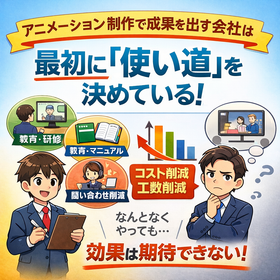
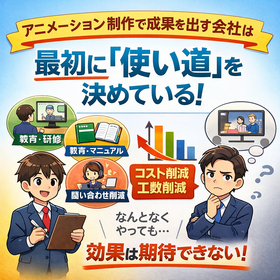
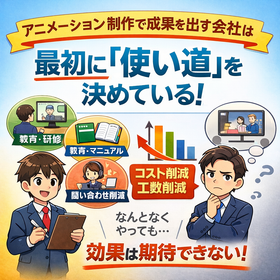
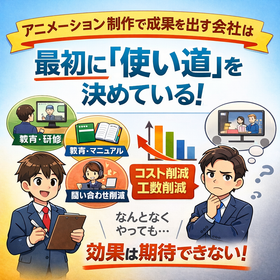
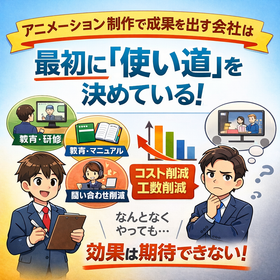
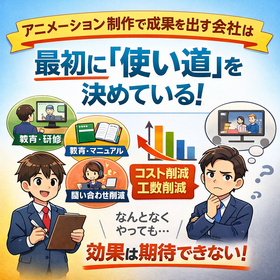
Are you feeling anxious about wanting to introduce digital teaching materials and online training but not knowing where to start, or worrying that they might not be utilized on-site after implementation? Many companies are trying to digitalize their education, but they are facing challenges such as: ● High barriers to implementation: There are many obstacles to overcome before implementation, including initial costs, system selection, and internal understanding. ● Lack of utilization on-site: Even after implementation, on-site staff may struggle to use the tools effectively, leading to no results. ● Difficulty in measuring effectiveness: It is challenging to demonstrate the impact of digitalization in numerical terms, making the return on investment unclear. To overcome these challenges, it is important to refer to actual success stories and take concrete steps. Digitalizing education is not just about introducing tools; it requires a transformation in the organization’s mindset and continuous improvement. By having clear objectives and proceeding with a phased implementation, you can enhance the quality of education and improve the overall performance of the organization. *For more details, please feel free to contact us.
Added to bookmarks
Bookmarks listBookmark has been removed
Bookmarks listYou can't add any more bookmarks
By registering as a member, you can increase the number of bookmarks you can save and organize them with labels.
Free membership registration
In the apparel sewing industry, accurate technical training for new and foreign staff is essential to balance quality and efficiency. In particular, uniform education for staff with diverse languages is crucial for improving productivity and reducing defects. Inadequate training can lead to sewing mistakes and work delays. With LinkBrain10, standardized training is condensed into 10-minute animated videos. With dubbing and subtitles available in 17 languages, foreign staff can immediately understand in their native language. 【Usage Scenarios】 - Training for new employees in sewing factories - Technical training for foreign staff - Education related to quality control 【Benefits of Implementation】 - Reduces training costs without the need for interpreters or instructors - Improves quality through uniform education - Multilingual support enables foreign staff to become immediate assets
Added to bookmarks
Bookmarks listBookmark has been removed
Bookmarks listYou can't add any more bookmarks
By registering as a member, you can increase the number of bookmarks you can save and organize them with labels.
Free membership registration
In the field of agriculture, proficiency in machine operation and safety are crucial. Especially with the increasing number of foreign staff, it is essential to convey accurate operating methods beyond language barriers. Misoperation of machinery can lead to decreased work efficiency and accidents. LinkBrain10 explains machine operation clearly through a 10-minute multilingual animated video. It supports 17 languages, allowing foreign staff to understand in their native language. 【Usage Scenarios】 - Operation of tractors, combines, and other agricultural machinery - Training for foreign staff - New employee orientation 【Benefits of Implementation】 - Improved proficiency in machine operation - Enhanced work efficiency - Increased safety - Reduced training costs
Added to bookmarks
Bookmarks listBookmark has been removed
Bookmarks listYou can't add any more bookmarks
By registering as a member, you can increase the number of bookmarks you can save and organize them with labels.
Free membership registration
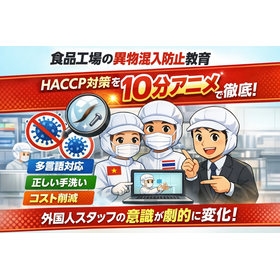
In the food industry, thorough hygiene management is required to avoid the risks of foreign object contamination and food poisoning. Especially with the increasing number of foreign staff, accurate information transmission that transcends language barriers is crucial. Inadequate education can lead to a decline in the quality of hygiene management and may undermine the trust in the company. The 10-minute animated training of 'LinkBrain10' is multilingual, allowing foreign staff to understand it in their native language. Through visually appealing animations, it effectively conveys the importance of hygiene management and promotes a change in awareness on-site. 【Usage Scenarios】 - New employee training in food factories - Hygiene education for foreign staff - Education during HACCP implementation 【Effects of Implementation】 - Reduction of foreign object contamination and food poisoning risks - Improvement in hygiene management levels - Reduction in education costs
Added to bookmarks
Bookmarks listBookmark has been removed
Bookmarks listYou can't add any more bookmarks
By registering as a member, you can increase the number of bookmarks you can save and organize them with labels.
Free membership registration
In the medical device industry, the quality and safety of products are the top priorities. In environments that require precise work, accurate training for new and foreign staff is essential. However, the increased burden on trainers and the personalization of training content can lead to variations in quality and a decrease in safety. The 10-minute animated training of 'LinkBrain10' condenses standard training for medical device manufacturing into video format. It supports multiple languages, allowing foreign staff to understand in their native language. This achieves standardization and efficiency in training, contributing to improvements in quality and safety. 【Usage Scenarios】 - Training for new employees in medical device manufacturing factories - Explanation of work procedures to foreign staff - Quality control and safety education 【Effects of Implementation】 - Reduction of the burden on trainers - Improvement in quality through standardization of training - Enhanced understanding through multilingual support - Visual information transmission through video
Added to bookmarks
Bookmarks listBookmark has been removed
Bookmarks listYou can't add any more bookmarks
By registering as a member, you can increase the number of bookmarks you can save and organize them with labels.
Free membership registration
In the energy industry, safe and efficient operation of equipment is essential. Particularly when there are staff members who speak various languages, differences in understanding and proficiency of operational procedures can lead to risks of accidents and equipment damage due to incorrect operations. LinkBrain10 provides a clear explanation of equipment operation procedures through a 10-minute multilingual animated video. With multilingual support, foreign staff can accurately understand in their native language, promoting safe equipment operation. 【Usage Scenarios】 - Equipment operation in energy-related facilities such as power plants, substations, and plants - Training for new staff and foreign staff - Standardization and uniformity of operational procedures 【Benefits of Implementation】 - Multilingual support allows foreign staff to understand smoothly - A 10-minute video enables efficient training in a short time - Prevents accidents and equipment damage caused by operational errors - Reduces the burden on trainers and cuts costs
Added to bookmarks
Bookmarks listBookmark has been removed
Bookmarks listYou can't add any more bookmarks
By registering as a member, you can increase the number of bookmarks you can save and organize them with labels.
Free membership registration
In the chemical industry, mastering safe work procedures and accurate material knowledge is essential. Particularly for new employees and foreign staff, understanding specialized terminology and complex processes can be challenging, leading to time and cost issues in training. LinkBrain10 addresses these challenges with a 10-minute multilingual animated video. With dubbing and subtitles in 17 languages, foreign staff can deepen their understanding in their native language, improving the quality of education. 【Usage Scenarios】 - Training for new employees at chemical plants - Education on material knowledge - Education on safety management 【Effects of Implementation】 - Reduction in training time - Enhanced understanding through multilingual support - Achievement of uniform education quality
Added to bookmarks
Bookmarks listBookmark has been removed
Bookmarks listYou can't add any more bookmarks
By registering as a member, you can increase the number of bookmarks you can save and organize them with labels.
Free membership registration
In the logistics industry, packaging work requires accuracy and efficiency. Particularly in environments with a diverse mix of nationalities among staff, achieving a uniform understanding of work procedures and safety awareness poses challenges. Incorrect packaging can lead to product damage and transportation delays, potentially resulting in decreased customer satisfaction. LinkBrain10 supports the standardization of packaging work through a 10-minute multilingual animated video, enabling anyone to perform tasks accurately. 【Usage Scenarios】 - Packaging work in warehouses - Packaging after picking - Packaging for import and export goods 【Benefits of Implementation】 - Improvement in work quality - Reduction in training costs - Immediate effectiveness of foreign staff through multilingual support
Added to bookmarks
Bookmarks listBookmark has been removed
Bookmarks listYou can't add any more bookmarks
By registering as a member, you can increase the number of bookmarks you can save and organize them with labels.
Free membership registration
In the robotics industry, there is a demand for more efficient skill acquisition. Particularly, as a diverse range of robots emerge and operating methods become more complex, it is essential to create an environment where new operators can smoothly learn how to operate them. Improper operation can lead to accidents or decreased productivity. LinkBrain10 explains operating procedures clearly through 10-minute animated videos and supports multiple languages, allowing foreign staff to understand in their native language. 【Usage Scenarios】 - New operators who want to learn how to operate robots - Companies that require multilingual training - Companies looking to reduce training costs 【Benefits of Implementation】 - Shortened skill acquisition time - Global talent development through multilingual support - Reduced training costs
Added to bookmarks
Bookmarks listBookmark has been removed
Bookmarks listYou can't add any more bookmarks
By registering as a member, you can increase the number of bookmarks you can save and organize them with labels.
Free membership registration
In the aerospace industry, the thorough implementation of safe work procedures is essential. It not only ensures the safety of workers but also contributes to maintaining product quality. However, simply explaining complex procedures verbally or having workers read manuals can lead to differences in understanding, resulting in the risk of accidents or quality issues due to misinterpretation. LinkBrain10 clearly explains safety procedures through a 10-minute multilingual animated video. It supports 17 languages, allowing foreign staff to understand accurately in their native language. 【Usage Scenarios】 - Safety training in manufacturing sites - Education on inspection procedures - Emergency response training 【Benefits of Implementation】 - Increased safety awareness - Reduction of work errors - Shortened training time - Promotion of globalization through multilingual support
Added to bookmarks
Bookmarks listBookmark has been removed
Bookmarks listYou can't add any more bookmarks
By registering as a member, you can increase the number of bookmarks you can save and organize them with labels.
Free membership registration
In the steel industry, the complexity of the manufacturing process can make it difficult for new and foreign staff to understand the procedures, often taking a considerable amount of time. Particularly, a precise understanding of each step is essential for safe operations. However, explaining everything from scratch each time and arranging for interpreters can place a significant burden on trainers and tends to inflate costs. With LinkBrain10, standardized training is condensed into 10-minute animated videos. With dubbing and subtitles available in 17 languages, foreign staff can immediately understand in their native language. 【Usage Scenarios】 - Understanding the overall steel manufacturing process - Learning the work procedures for each step - Ensuring adherence to safety rules 【Benefits of Implementation】 - Reduces educational costs by eliminating the need for interpreters and instructors - Ensures quality and safety through uniform training - Improves understanding through the ability to learn repeatedly with videos
Added to bookmarks
Bookmarks listBookmark has been removed
Bookmarks listYou can't add any more bookmarks
By registering as a member, you can increase the number of bookmarks you can save and organize them with labels.
Free membership registration
In the electronic components industry, strict adherence to accurate work procedures and uniform training for multinational staff are crucial for quality control. Particularly, small mistakes in the manufacturing process can significantly impact the overall quality of the product. When training for foreign staff becomes personalized, it can lead to inconsistencies in the quality of education, which poses a major challenge in quality management. LinkBrain10 explains work procedures and safety rules clearly through a 10-minute animated video, and it supports multiple languages, allowing foreign staff to understand in their native language. 【Usage Scenarios】 - Quality control department of electronic component manufacturing factories - Training for new staff - Training for foreign staff - Ensuring adherence to quality management rules 【Effects of Implementation】 - Reduction of work mistakes - Stabilization of quality - Reduction of training costs - Standardization of training through multilingual support
Added to bookmarks
Bookmarks listBookmark has been removed
Bookmarks listYou can't add any more bookmarks
By registering as a member, you can increase the number of bookmarks you can save and organize them with labels.
Free membership registration
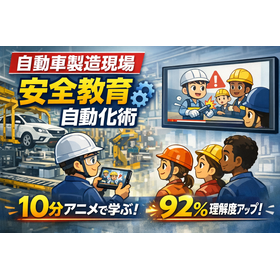
We provide "educational efficiency videos" for the automotive manufacturing industry. By implementing training videos, the educational burden is reduced as they can be viewed repeatedly, achieving uniform quality of instruction. Furthermore, understanding can be assessed through multilingual tests, leading to a reduction in near-miss incidents and an increase in safety awareness. 【Benefits of Video Education】 ■ Standardization of instruction is possible ■ Reduction of educational burden ■ Reduction of near-miss incidents and improvement of safety awareness ■ Support for multiple languages *For more details, please download the PDF or feel free to contact us.
Added to bookmarks
Bookmarks listBookmark has been removed
Bookmarks listYou can't add any more bookmarks
By registering as a member, you can increase the number of bookmarks you can save and organize them with labels.
Free membership registration
In the manufacturing industry, manuals are developed for training new employees and standardizing work procedures. However, the following issues have been pointed out: ● Manuals that are not read: Paper or text-based manuals tend to be avoided because they contain a lot of written information and take time to read. ● Difficult-to-understand content: Written text alone can make it hard to convey work procedures and important points, leading to misunderstandings. ● The hassle of updates: When the content of a manual changes, updating paper-based manuals can be cumbersome, and the latest information may not reach the workplace. These problems can reduce the effectiveness of training and potentially lead to work mistakes and accidents. As a solution to the issue of unread paper manuals, video manuals can be an effective alternative. By providing visual information, understanding improves, and the quality and efficiency of training increase. This can lead to a reduction in work mistakes and an increase in productivity. *For more details, please feel free to contact us.
Added to bookmarks
Bookmarks listBookmark has been removed
Bookmarks listYou can't add any more bookmarks
By registering as a member, you can increase the number of bookmarks you can save and organize them with labels.
Free membership registration
In the manufacturing industry, frequent training for new employees and safety workshops are conducted, but the need to repeatedly explain the same content becomes a significant burden for trainers and the field. The following challenges are particularly noted: ● Time wastage: Repeatedly explaining the same content reduces the time available for other tasks. ● Lack of consistency: Variations in the explanations provided by different trainers lead to inconsistent quality of education. ● Decreased motivation: The repetitive nature of the explanations lowers the enthusiasm of the trainers. These issues negatively impact the efficiency and effectiveness of training. When repeated training becomes a burden on the field, the introduction of video training can be effective. By providing consistent content and creating a learning environment that is not limited by time or place, it is possible to significantly improve the efficiency and effectiveness of education. How about considering the introduction of video training in the review of future training systems? *For more details, please feel free to contact us.*
Added to bookmarks
Bookmarks listBookmark has been removed
Bookmarks listYou can't add any more bookmarks
By registering as a member, you can increase the number of bookmarks you can save and organize them with labels.
Free membership registration
In many manufacturing sites, there are concerns such as "new employees struggle to learn their jobs" and "they keep making the same mistakes no matter how many times we teach them." The cause of these issues may not only lie in the abilities and aptitudes of the new employees but also in the training methods themselves. Common challenges in new employee training: ■ Over-reliance on OJT, leading to inconsistencies in the training content ■ Work manuals are difficult to understand due to being text-heavy ■ Experienced employees are too busy to provide thorough guidance ■ Key points and precautions of the tasks are not clearly communicated According to the Ministry of Health, Labour and Welfare's "Survey on New Employee Training" (2023), it has become clear that about 65% of companies in the manufacturing industry feel that "the speed of new employees' skill acquisition is slow." To address this issue, effective training methods utilizing video training are gaining attention. *For more details, please feel free to contact us.*
Added to bookmarks
Bookmarks listBookmark has been removed
Bookmarks listYou can't add any more bookmarks
By registering as a member, you can increase the number of bookmarks you can save and organize them with labels.
Free membership registration
In manufacturing sites, accidents and near misses (events that cause a sudden scare or realization) occur in daily operations. Although many companies are strengthening safety measures, accidents continue to happen due to factors such as "the hollowing out of safety rules," "low awareness on-site," and "complacency due to familiarity." In the manufacturing industry, over 12,000 labor accidents occur annually, many of which are caused by "lack of attention" or "confirmation errors." To change this situation, it is essential not only to implement safety measures for equipment but also to reform the awareness of on-site workers. So, how can we promote this awareness reform? *For more details, please feel free to contact us.*
Added to bookmarks
Bookmarks listBookmark has been removed
Bookmarks listYou can't add any more bookmarks
By registering as a member, you can increase the number of bookmarks you can save and organize them with labels.
Free membership registration
In the manufacturing industry, stabilizing quality is one of the most important challenges. If quality remains unstable, the risk of increased product defects, complaints, and recalls rises, which can damage the company's reputation. The main causes of unstable quality include the following points: - Work procedures are not standardized, leading to variations among workers. - There is a significant difference in skill levels between new and less experienced workers. - Understanding of quality standards is insufficient, and appropriate checks are not being conducted. - Procedures for responding to defects are not thoroughly implemented. To address these issues, many companies are introducing quality management training utilizing video training to achieve quality stabilization. *For more details, please feel free to contact us.*
Added to bookmarks
Bookmarks listBookmark has been removed
Bookmarks listYou can't add any more bookmarks
By registering as a member, you can increase the number of bookmarks you can save and organize them with labels.
Free membership registration
Have you ever faced the concern that 'despite conducting training for new employees, accidents are not decreasing'? In the manufacturing industry, it is often observed that even after implementing training for new employees, accidents continue to occur. ■ While awareness is high immediately after training, many new employees forget the rules within 1 to 2 months (over 50% in an internal survey were unclear about the training content) ■ Training focused mainly on classroom instruction leads to a significant gap with actual work ■ Over-reliance on on-the-job training results in inconsistencies in educational content Many companies face such challenges. *For more details, please feel free to contact us.
Added to bookmarks
Bookmarks listBookmark has been removed
Bookmarks listYou can't add any more bookmarks
By registering as a member, you can increase the number of bookmarks you can save and organize them with labels.
Free membership registration
Are you postponing safety measures under the excuse of being busy? In the manufacturing industry, there are not a few cases where safety training is deprioritized in favor of work efficiency. ■ With daily tasks overwhelming, safety training has become a mere formality (e.g., low participation rates, training conducted less than once a year, training that is just for show) ■ People think they "understand," but in reality, the rules are not being followed ■ New employees learn by imitating veterans without fully understanding the risks In such situations, the risk of near misses and accidents increases, potentially leading to regrets like "I was doing it carelessly and then an accident happened." *For more details, please feel free to contact us.*
Added to bookmarks
Bookmarks listBookmark has been removed
Bookmarks listYou can't add any more bookmarks
By registering as a member, you can increase the number of bookmarks you can save and organize them with labels.
Free membership registration
In the manufacturing industry, pointing and confirming is a fundamental safety measure. However, this habit often becomes a mere formality in daily operations, leading to many cases where confirmation is done superficially. As a result, workers' attention levels decline, increasing the risk of accidents and near misses. This is particularly true for new or less experienced workers, who have few opportunities to fully understand the importance of pointing and confirming, often perceiving instructions from supervisors as just a "rule." Therefore, there is a need for education that strongly emphasizes the significance of pointing and confirming. *For more details, please feel free to contact us.*
Added to bookmarks
Bookmarks listBookmark has been removed
Bookmarks listYou can't add any more bookmarks
By registering as a member, you can increase the number of bookmarks you can save and organize them with labels.
Free membership registration
In the manufacturing industry, the high turnover rate of new employees and young workers has become a significant issue. In particular, the early resignation of inexperienced employees is seen as problematic because it leads to increased hiring and training costs, as well as decreased production efficiency. The main factors contributing to the high turnover rate include the following: - Insufficient training, making it difficult to adapt to the job - Tasks being challenging, resulting in a heavy burden until mastery is achieved - Dissatisfaction with the work environment and guidance methods - Lack of clarity regarding the significance of the job and career paths To address these issues, an increasing number of companies are implementing training programs that utilize video training. *For more details, please feel free to contact us.*
Added to bookmarks
Bookmarks listBookmark has been removed
Bookmarks listYou can't add any more bookmarks
By registering as a member, you can increase the number of bookmarks you can save and organize them with labels.
Free membership registration
In the manufacturing industry, the transfer of skilled craftsmanship to the next generation is a very important issue. However, many workplaces are facing the following problems: - Veteran employees are busy and cannot dedicate time to training newcomers. - A culture of "learn by watching" remains, leading to a lack of systematic education. - The retention rate of newcomers is low, and they leave before skills can be passed on. - There is a lot of tacit knowledge, making it difficult to create manuals. According to the Ministry of Health, Labour and Welfare's "Survey on Skill Transfer" (2023), it has become clear that over 70% of companies in the manufacturing industry feel that "delays in skill transfer" are a challenge. To address these issues, many companies are working on skill transfer using video training. *For more details, please feel free to contact us.*
Added to bookmarks
Bookmarks listBookmark has been removed
Bookmarks listYou can't add any more bookmarks
By registering as a member, you can increase the number of bookmarks you can save and organize them with labels.
Free membership registration
In the manufacturing industry, On-the-Job Training (OJT) is commonly used as a method for training newcomers. However, relying too heavily on OJT leads to inconsistencies in the quality of education and creates challenges in standardizing skills. Challenges of OJT: - Teaching methods vary by instructor, resulting in differences in the proficiency levels of newcomers (e.g., different explanations of work procedures, varying focuses in instruction). - The burden on veteran employees increases, leading to decreased efficiency in on-site work. - The personalization of education makes systematic learning difficult. - The points that newcomers should learn differ by instructor, resulting in a lack of consistency. According to the Ministry of Health, Labour and Welfare's "Workplace Education Actual Condition Survey" (2023), over 70% of companies in the manufacturing industry feel that they are "too dependent on OJT." To address these challenges, standardized educational methods utilizing video training are gaining attention. *For more details, please feel free to contact us.*
Added to bookmarks
Bookmarks listBookmark has been removed
Bookmarks listYou can't add any more bookmarks
By registering as a member, you can increase the number of bookmarks you can save and organize them with labels.
Free membership registration
"If only we had reviewed the training earlier..." To avoid such regrets, many companies in the manufacturing industry only strengthen their measures after an accident occurs. ■ Despite over 50 near-miss incidents being reported annually, no improvement measures were implemented. ■ Training had become a mere formality and was not connected to actual on-site conditions. ■ There was a lack of sharing accident cases, leading to a decrease in risk awareness. In such a state, there is a possibility that it will eventually lead to a major accident. *For more details, please feel free to contact us.*
Added to bookmarks
Bookmarks listBookmark has been removed
Bookmarks listYou can't add any more bookmarks
By registering as a member, you can increase the number of bookmarks you can save and organize them with labels.
Free membership registration
In the manufacturing industry, there is a frequent issue where, despite employees performing the same tasks, the procedures differ from one employee to another. Such non-standardized work procedures lead to the following risks: Main challenges due to variations in work procedures: ■ Instability in quality ■ Decreased work efficiency ■ Personalization of training ■ Increase in mistakes and defective products According to the Ministry of Health, Labour and Welfare's "Survey on Work Standardization in the Manufacturing Industry" (2023), over 60% of manufacturing companies responded that "variations in work procedures are a challenge for quality control," highlighting the growing need for standardization. To address this issue, the standardization of work procedures using video education is gaining attention as an effective measure. *For more details, please feel free to contact us.
Added to bookmarks
Bookmarks listBookmark has been removed
Bookmarks listYou can't add any more bookmarks
By registering as a member, you can increase the number of bookmarks you can save and organize them with labels.
Free membership registration
In the manufacturing industry, delays in work speed are a significant challenge that leads to decreased productivity, delayed delivery times, and increased costs. Particularly, the increase in new workers and the introduction of new processes can easily cause variations in work speed. The main reasons for the lack of improvement in work speed include the following points: - Insufficient standardization of work, leading to different methods among workers - New or inexperienced workers not understanding the workflow - Time-consuming verification tasks and corrections of mistakes - Unfamiliarity with equipment usage and troubleshooting, resulting in delays To address these issues, many companies have implemented work speed improvement programs utilizing video training. *For more details, please feel free to contact us.*
Added to bookmarks
Bookmarks listBookmark has been removed
Bookmarks listYou can't add any more bookmarks
By registering as a member, you can increase the number of bookmarks you can save and organize them with labels.
Free membership registration
In the manufacturing industry, the training method of "learning by watching the work" has been adopted for many years. However, this approach has been pointed out to slow down the learning speed of newcomers and cause variations in the quality of education. Challenges of traditional training methods: ■ Individual differences in learning speed ■ Different teaching methods among instructors ■ High risks associated with learning through practice ■ Low efficiency of education To address these challenges, systematic training methods utilizing video training are gaining attention. *For more details, please feel free to contact us.*
Added to bookmarks
Bookmarks listBookmark has been removed
Bookmarks listYou can't add any more bookmarks
By registering as a member, you can increase the number of bookmarks you can save and organize them with labels.
Free membership registration
In the manufacturing industry, safety training and technical training are essential, but simply repeating the same content diminishes its effectiveness and lowers the motivation of the participants. ■ Training becomes monotonous, and participants struggle to concentrate (according to a survey, 65% of companies feel that "the training content is repetitive, leading to reduced effectiveness") ■ Different instructors convey information in varying ways, resulting in inconsistent levels of understanding ■ Participants' comprehension levels are not visualized, making it difficult to identify areas for improvement To address these challenges, many companies are implementing "video training" to maximize training effectiveness. *For more details, please feel free to contact us.*
Added to bookmarks
Bookmarks listBookmark has been removed
Bookmarks listYou can't add any more bookmarks
By registering as a member, you can increase the number of bookmarks you can save and organize them with labels.
Free membership registration
In the manufacturing industry, preventing workplace accidents has become an essential issue. For newcomers and foreign workers, understanding and internalizing the proper operation of machinery and safety rules to prevent accidents is particularly important. However, in reality, similar accidents continue to occur repeatedly. The main causes of this include the following challenges: ■ Education is centered around manuals, making it difficult to imagine actual risks. ■ Opportunities to hear experiences from those who have encountered accidents are decreasing. ■ Efficiency in operations is prioritized, often putting safety rules on the back burner. To address these issues, there has been growing attention in recent years to safety education utilizing 2D animation and live-action footage. *For more details, please feel free to contact us.*
Added to bookmarks
Bookmarks listBookmark has been removed
Bookmarks listYou can't add any more bookmarks
By registering as a member, you can increase the number of bookmarks you can save and organize them with labels.
Free membership registration
Every time we conduct training for new employees, we say, "First, read the manual," but in the end, questions never cease, and they do not understand the content. Isn't this a common experience in the field? ● Not read: Manuals that consist only of text are difficult to understand, especially for new or foreign staff. ● Not understood: There are many technical terms and complex procedures that may not connect to actual tasks. ● Updates are delayed: Paper-based manuals have cumbersome update processes, making it hard to reflect the latest procedures and points of caution. These issues can lead to operational mistakes and accidents, reducing the effectiveness of training. Introducing video manuals is an effective solution to the challenge of unread training manuals. By leveraging the unique advantages of videos, such as visual understanding, multilingual support, and ease of updates, we can enhance the quality of education. By incorporating safety training into daily routines, it is possible to reduce the risk of operational mistakes and accidents, thereby improving safety on-site. *For more details, please feel free to contact us.
Added to bookmarks
Bookmarks listBookmark has been removed
Bookmarks listYou can't add any more bookmarks
By registering as a member, you can increase the number of bookmarks you can save and organize them with labels.
Free membership registration
In the manufacturing industry, training is essential, but if the duration becomes too long, it can lead to a decline in productivity. ■ Long training hours can encroach on regular work time. ■ OJT (on-the-job training) places a heavy burden on the trainers. ■ It takes too long for newcomers to learn their tasks. To address these issues, many companies are advancing the introduction of "video training." In fact, a survey found that about 60% of manufacturing companies incorporate videos into part of their training, and 85% of those that have implemented it reported that it was effective in "reducing training time and improving understanding." *For more details, please feel free to contact us.
Added to bookmarks
Bookmarks listBookmark has been removed
Bookmarks listYou can't add any more bookmarks
By registering as a member, you can increase the number of bookmarks you can save and organize them with labels.
Free membership registration
"Are paper manuals actually being utilized?" In the manufacturing industry, paper manuals are often used, but they have several issues: - They are thick and it is difficult to find the necessary information quickly (the average manufacturing manual exceeds 100 pages, and it often takes more than 5 minutes to find the desired information). - They are difficult to update, leading to the use of outdated information. - They are inconvenient to carry and hard to check on-site. To address these challenges, many companies are implementing "digital manuals utilizing videos" to improve the efficiency of training. *For more details, please feel free to contact us.*
Added to bookmarks
Bookmarks listBookmark has been removed
Bookmarks listYou can't add any more bookmarks
By registering as a member, you can increase the number of bookmarks you can save and organize them with labels.
Free membership registration
In the manufacturing industry, the burden of training new employees is significant, and repeatedly teaching the same content can put pressure on operations. ■ Veteran employees are often overwhelmed with repeated training, making it difficult for them to focus on their primary duties. (According to surveys, the time spent on training averages 15 hours per person per month, which is a major factor in decreased productivity.) ■ In verbal and hands-on training, explanations can vary depending on the instructor, leading to differences in understanding. ■ New employees may not fully grasp the material in a single explanation and need to confirm multiple times. To address these challenges, many companies are implementing "video training" to improve the efficiency of education. *For more details, please feel free to contact us.*
Added to bookmarks
Bookmarks listBookmark has been removed
Bookmarks listYou can't add any more bookmarks
By registering as a member, you can increase the number of bookmarks you can save and organize them with labels.
Free membership registration
In the manufacturing industry, it can be a significant challenge that even the same task has different procedures depending on the person performing it. Variability in work can lead to unstable quality and decreased productivity, and sometimes it can even result in serious accidents. The Importance of Standardizing Work - Stabilization of Quality (Uniformity in precision and finish for each task) - Improvement of Production Efficiency (Reduction of unnecessary steps, establishment of optimal workflows) - Prevention of Dependence on Individual Trainers (Enables consistent instruction regardless of who teaches) - Reduction of Accident Risks (Prevention of procedural and operational errors) To address this issue, standardized training utilizing video resources is gaining attention. *For more details, please feel free to contact us.*
Added to bookmarks
Bookmarks listBookmark has been removed
Bookmarks listYou can't add any more bookmarks
By registering as a member, you can increase the number of bookmarks you can save and organize them with labels.
Free membership registration
In the automotive industry, pinching accidents during the manufacturing process are a serious issue that threatens employee safety. Particularly in equipment with many moving parts, such as press machines and welding robots, safety measures are essential. Enhancing employees' safety awareness and their ability to detect hazards is key to accident prevention. Our safety education videos aim to visually enhance understanding by combining animation and live-action, thereby increasing employees' safety awareness. 【Usage Scenarios】 - Work around press machines - Operation of welding robots - Assembly work of parts 【Effects of Implementation】 - Reducing the risk of pinching accidents - Promoting compliance with safety rules - Improving employees' safety awareness
Added to bookmarks
Bookmarks listBookmark has been removed
Bookmarks listYou can't add any more bookmarks
By registering as a member, you can increase the number of bookmarks you can save and organize them with labels.
Free membership registration
In the metal processing industry, cutting injuries are a serious issue. To protect employee safety, it is important to foster an awareness of predicting and reporting dangers. However, there is currently a challenge in changing mindsets with traditional safety training alone. Our safety training videos enhance employees' hazard recognition skills and encourage near-miss reporting by combining animation and live-action. This helps reduce the risk of cutting injuries and creates a safer workplace environment. 【Usage Scenarios】 - Training new employees in metal processing factories - Reviewing dangerous work processes - Promoting near-miss reporting 【Effects of Implementation】 - Reduction in cutting injuries - Improvement in safety awareness - Promotion of autonomous safety behavior among employees
Added to bookmarks
Bookmarks listBookmark has been removed
Bookmarks listYou can't add any more bookmarks
By registering as a member, you can increase the number of bookmarks you can save and organize them with labels.
Free membership registration