631~675 item / All 788 items
Displayed results
Filter by category

Added to bookmarks
Bookmarks listBookmark has been removed
Bookmarks listYou can't add any more bookmarks
By registering as a member, you can increase the number of bookmarks you can save and organize them with labels.
Free membership registration
Contact this company
Contact Us Online631~675 item / All 788 items
Filter by category

For the two-component mixed epoxy resin, we investigated the curing temperature and the glass transition temperature (Tg), which is an indicator of heat resistance, using Differential Scanning Calorimetry (DSC). When measuring the resin before curing with DSC, it was confirmed that a rapid exothermic reaction began around 103°C (Figure 1). This was due to the polymerization (curing) of the resin occurring as a result of the temperature increase. Furthermore, after air cooling the cured resin to room temperature, a second DSC measurement was conducted, which confirmed a shift of the baseline towards the endothermic side due to the glass transition of the resin, with Tg being approximately 116°C (Figure 2).
Added to bookmarks
Bookmarks listBookmark has been removed
Bookmarks listYou can't add any more bookmarks
By registering as a member, you can increase the number of bookmarks you can save and organize them with labels.
Free membership registration
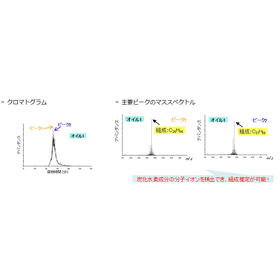
Pyrolysis GC/MS is a gas chromatography-mass spectrometer equipped with a pyrolysis device in the sample introduction section. For polymer materials that previously required complex pretreatment, samples can now be introduced into the GC for analysis without pretreatment by heating and decomposing them with the pyrolysis device. Additionally, by varying the temperature conditions of the pyrolysis device and the sampling conditions (double-shot method), it is possible to obtain two different types of information, such as additives and polymer materials, separately from the same sample, making the analysis of unknown polymer materials easier.
Added to bookmarks
Bookmarks listBookmark has been removed
Bookmarks listYou can't add any more bookmarks
By registering as a member, you can increase the number of bookmarks you can save and organize them with labels.
Free membership registration
When analyzing and identifying unknown samples such as foreign substances, it is effective to analyze the data comprehensively from multiple measurement methods. We will introduce a case where FT-IR analysis, which is a vibrational spectroscopy method, was combined with XRF analysis, an elemental analysis method in the atmosphere, to identify two types of white powders.
Added to bookmarks
Bookmarks listBookmark has been removed
Bookmarks listYou can't add any more bookmarks
By registering as a member, you can increase the number of bookmarks you can save and organize them with labels.
Free membership registration
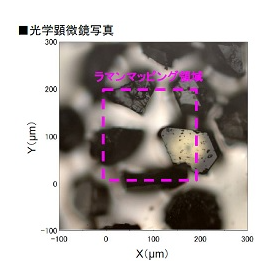
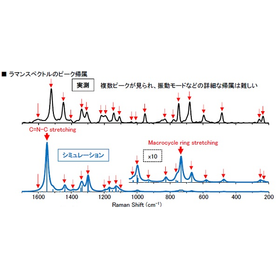
HF (hydrofluoric acid) is widely used in processes such as wet etching of SiO2 and plays a very important role in semiconductor manufacturing. However, it is also a very dangerous chemical that can penetrate the skin and damage bones, so care must be taken when handling it. The bone erosion caused by HF occurs because Ca, which exists in the bone as apatite, reacts with HF to produce CaF2. This document presents a case study evaluating the changes in this reaction using Raman analysis.
Added to bookmarks
Bookmarks listBookmark has been removed
Bookmarks listYou can't add any more bookmarks
By registering as a member, you can increase the number of bookmarks you can save and organize them with labels.
Free membership registration
By combining TG-DTA (thermogravimetric-differential thermal) analysis with GC/MS analysis, it is possible to select optimal temperature conditions to identify unknown polymer materials and the volatile organic compounds they contain. By investigating the pyrolysis temperature of the plastic parts of commercial products and continuously performing GC/MS measurements under two conditions—gentle heating below the pyrolysis temperature (thermal desorption method) and subsequent rapid heating at high temperatures (pyrolysis method) using the double-shot method—it was determined that this plastic is AS resin and contains the antioxidant additive IRGANOX 1076.
Added to bookmarks
Bookmarks listBookmark has been removed
Bookmarks listYou can't add any more bookmarks
By registering as a member, you can increase the number of bookmarks you can save and organize them with labels.
Free membership registration
Polymeric materials such as polypropylene (PP) react with oxygen and moisture in the atmosphere when heated, causing changes in their molecular structure. Therefore, when foreign substances or contaminants may be present in polymeric materials, it is necessary to use standard materials processed in the same environment as the measurement sample for comparison data. To investigate how the PP standard material changes due to heat treatment (200°C for 30 minutes), FT-IR and TOF-SIMS measurements were conducted.
Added to bookmarks
Bookmarks listBookmark has been removed
Bookmarks listYou can't add any more bookmarks
By registering as a member, you can increase the number of bookmarks you can save and organize them with labels.
Free membership registration
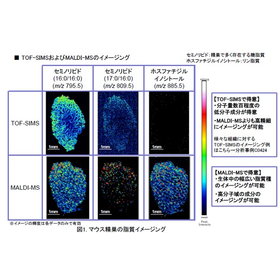
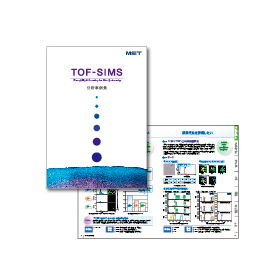
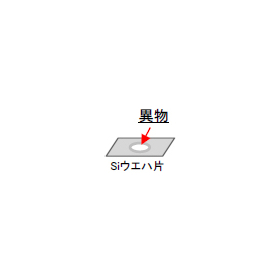
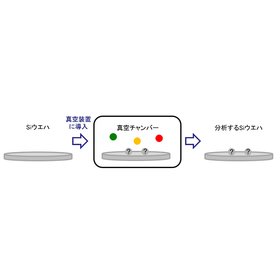
TOF-SIMS detects secondary ions originating from molecules and visualizes their distribution. By estimating the components derived from the ion species detected from abnormal areas, it is possible to investigate which process the anomaly occurred in. When abnormal areas (such as discoloration or adhesion) are found on wafers or products, conducting TOF-SIMS measurements can help distinguish whether the issue is due to watermarks from cleaning and drying, alterations in the base material, or contaminants from a different process, making it effective for identifying the causes of defects.
Added to bookmarks
Bookmarks listBookmark has been removed
Bookmarks listYou can't add any more bookmarks
By registering as a member, you can increase the number of bookmarks you can save and organize them with labels.
Free membership registration
When delamination occurs, it is important to identify the components that have worsened the adhesion at the interface. By using a peeling process to physically delaminate at the interface of interest and measuring the components present on that surface with TOF-SIMS, it is possible to investigate the cause of delamination. TOF-SIMS detects secondary ions that are ionized while maintaining the structure of organic materials, allowing us to obtain information about the origin of the components present at the delamination surface, making it effective for investigating the causes of delamination and the process. Measurement methods: TOF-SIMS, peeling, disassembly Product fields: LSI, memory, manufacturing equipment, components Analysis purposes: Evaluation of chemical bonding states, failure analysis, defect analysis For more details, please download the materials or contact us.
Added to bookmarks
Bookmarks listBookmark has been removed
Bookmarks listYou can't add any more bookmarks
By registering as a member, you can increase the number of bookmarks you can save and organize them with labels.
Free membership registration
Samples such as lithium-ion secondary battery materials that deteriorate when exposed to the atmosphere and organic materials that change due to heat during processing and observation have made it difficult to observe their original structures using TEM and SEM. By observing them with a high-resolution SEM equipped with FIB under controlled atmospheres without exposure to the air, we can understand the original states of particles and electrolytes. Additionally, it is compatible with cooling, which helps to suppress deterioration caused by heat.
Added to bookmarks
Bookmarks listBookmark has been removed
Bookmarks listYou can't add any more bookmarks
By registering as a member, you can increase the number of bookmarks you can save and organize them with labels.
Free membership registration
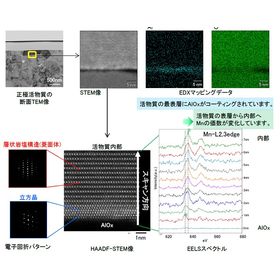
Samples such as lithium-ion secondary battery materials that deteriorate when exposed to the atmosphere, and organic materials that change due to heat during processing and observation, are difficult to observe structurally using TEM under normal environmental conditions. Our organization has established a system that controls the atmosphere to minimize exposure to air, and further cools the samples for processing, observation, and analysis, allowing us to prepare TEM thin film samples while preserving the original structure of the samples for observation and analysis.
Added to bookmarks
Bookmarks listBookmark has been removed
Bookmarks listYou can't add any more bookmarks
By registering as a member, you can increase the number of bookmarks you can save and organize them with labels.
Free membership registration
This is an introduction to a case where the carrier diffusion layer distribution of the surface textured part and the back surface field (BSF) part of BSF-type crystalline silicon solar cells was evaluated using SCM. In the textured part, the pn junction is formed along the surface irregularities, while in the BSF part, it can be confirmed that the carrier distribution is interrupted and uneven.
Added to bookmarks
Bookmarks listBookmark has been removed
Bookmarks listYou can't add any more bookmarks
By registering as a member, you can increase the number of bookmarks you can save and organize them with labels.
Free membership registration
We propose a method for evaluating the control of impurity levels required in each process from substrate growth to cell formation of crystalline silicon solar cells, using high-sensitivity analysis for element concentration measurement. Metal elements can be measured at concentrations below ppb, and atmospheric component elements containing hydrogen can be measured at concentrations below ppm. Measurement methods: SIMS, ICP-MS, etching, disassembly Product field: Solar cells Analysis purpose: Trace concentration evaluation, product investigation For more details, please download the materials or contact us.
Added to bookmarks
Bookmarks listBookmark has been removed
Bookmarks listYou can't add any more bookmarks
By registering as a member, you can increase the number of bookmarks you can save and organize them with labels.
Free membership registration
This is an example of quantitatively evaluating the dopant concentration distribution directly beneath the electrode in back contact type crystalline silicon solar cells. Additionally, by evaluating the carrier distribution, it is possible to determine the polarity of p/n and visualize the depletion layer in the cross-sectional direction.
Added to bookmarks
Bookmarks listBookmark has been removed
Bookmarks listYou can't add any more bookmarks
By registering as a member, you can increase the number of bookmarks you can save and organize them with labels.
Free membership registration
When light with energy greater than the bandgap of a solar cell is irradiated, carriers are generated, and some of them undergo radiative recombination. The light emitted during this process is called photoluminescence (PL). However, in areas where defects are present, carriers are trapped, resulting in reduced PL intensity. Therefore, by conducting PL mapping measurements, it is possible to non-destructively and easily identify defect locations. Below is an example of identifying defect locations through PL mapping measurements in multicrystalline silicon solar cell modules.
Added to bookmarks
Bookmarks listBookmark has been removed
Bookmarks listYou can't add any more bookmarks
By registering as a member, you can increase the number of bookmarks you can save and organize them with labels.
Free membership registration
When evaluating the particle size and structure of fine particles dispersed in a liquid, conventional methods involved drying the liquid to extract the fine particles as a powder, which were then measured using an electron microscope. However, this method was not suitable for investigating how fine particles are actually dispersed in the liquid used. Therefore, we will introduce a case where cryo-processing and SEM observation were performed to directly evaluate how fine particles are dispersed within a liquid sample.
Added to bookmarks
Bookmarks listBookmark has been removed
Bookmarks listYou can't add any more bookmarks
By registering as a member, you can increase the number of bookmarks you can save and organize them with labels.
Free membership registration
In dental caries treatment, adhesives are used to integrate the filling material used to fill the "cavity" with the tooth structure. The adhesive must have a strong bonding strength with the tooth and the ability to withstand acids and heat that may occur in the oral cavity over a long period after treatment. Observing the adhesive interface is an effective means for evaluation and consideration. By using a manufacturing method that employs FIB processing technology, we were able to achieve effective results that could not be obtained with conventional ultra-thin sections made with diamond knives, and we would like to introduce this.
Added to bookmarks
Bookmarks listBookmark has been removed
Bookmarks listYou can't add any more bookmarks
By registering as a member, you can increase the number of bookmarks you can save and organize them with labels.
Free membership registration
Organic EL has advantages such as high brightness, high-resolution color, and thinness due to its self-emission principle, and it is expected to be one of the next-generation devices. Accurate analysis and evaluation of materials are crucial for improving characteristics, extending lifespan, and enhancing reliability; however, caution is required in handling them due to the use of highly reactive materials. A comparison between samples exposed to the atmosphere and those handled under a high-purity argon atmosphere confirms that oxidation (such as molecular ions +O, +OH, etc.) observed in atmospheric exposure is suppressed when handled in a high-purity argon environment.
Added to bookmarks
Bookmarks listBookmark has been removed
Bookmarks listYou can't add any more bookmarks
By registering as a member, you can increase the number of bookmarks you can save and organize them with labels.
Free membership registration
We will introduce a case study of foreign substance evaluation using micro FT-IR analysis combined with sampling. Foreign substances on electrodes with almost no substrate influence were identified as flux, but no information from the foreign substances on the printed circuit board could be obtained (Figure 1). By performing sampling on inorganic crystals, information about the foreign substances was obtained, and they were identified as flux (Figure 2).
Added to bookmarks
Bookmarks listBookmark has been removed
Bookmarks listYou can't add any more bookmarks
By registering as a member, you can increase the number of bookmarks you can save and organize them with labels.
Free membership registration
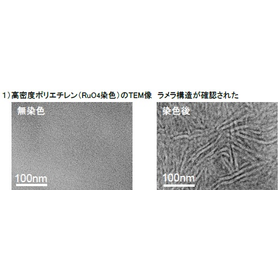
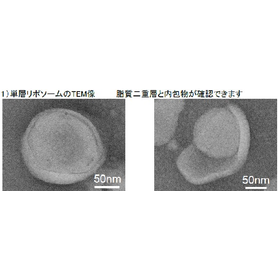
Ultramicrotome processing is a method that uses a diamond knife to cut bulk samples and produce ultra-thin sections for transmission electron microscopy with a thickness of less than 100 nm. Unlike processing using ion beams, it allows for the production of a wide range of sections in the atmosphere. Biological materials and soft polymer materials, which are difficult to cut at room temperature, can also be made into ultra-thin sections by cryofixation.
Added to bookmarks
Bookmarks listBookmark has been removed
Bookmarks listYou can't add any more bookmarks
By registering as a member, you can increase the number of bookmarks you can save and organize them with labels.
Free membership registration
The Ar ion milling method is a processing technique used to create thin film samples for transmission electron microscopy with a thickness of less than 50 nm by performing mechanical polishing followed by finishing with a low-energy Ar ion beam.
Added to bookmarks
Bookmarks listBookmark has been removed
Bookmarks listYou can't add any more bookmarks
By registering as a member, you can increase the number of bookmarks you can save and organize them with labels.
Free membership registration
The TOC analyzer is a device that can evaluate the total carbon content in a sample (TC: Total Carbon), total organic carbon content (TOC: Total Organic Carbon), and inorganic carbon content (IC: Inorganic Carbon). - The organic component content can be evaluated as total organic carbon (TOC). - It can measure both liquid and solid samples. - It can measure total carbon content (TC: Total Carbon) and inorganic carbon content (IC: Inorganic Carbon).
Added to bookmarks
Bookmarks listBookmark has been removed
Bookmarks listYou can't add any more bookmarks
By registering as a member, you can increase the number of bookmarks you can save and organize them with labels.
Free membership registration
RBS is a method that irradiates solid samples with ion beams (H+, He++) and measures the energy and intensity of ions scattered backward through Rutherford scattering. By measuring the kinetic energy of the scattered He ions and examining the mass number of the colliding atoms, it is possible to evaluate the components and layer structure of the analyzed sample. Additionally, by directing He ions at a solid sample and measuring the H ions scattered forward, it is also possible to assess the hydrogen concentration in the sample. This measurement technique is known as Hydrogen Forward-Scattering Spectroscopy (HFS). It is also referred to as Elastic Recoil Detection Analysis (ERDA). - Analysis of elements from B to U is possible (H is also possible through HFS) - Quantitative analysis can be performed without using standard samples - Depth profile of composition distribution can be obtained - Density can be calculated from film thickness information obtained by other methods - Sensitivity and accuracy tend to increase with heavier elements - Non-destructive analysis
Added to bookmarks
Bookmarks listBookmark has been removed
Bookmarks listYou can't add any more bookmarks
By registering as a member, you can increase the number of bookmarks you can save and organize them with labels.
Free membership registration
X-ray fluorescence analysis (XRF) is a method that detects fluorescent X-rays generated by irradiated X-rays and performs elemental and compositional analysis by spectrally analyzing the energy and using a spectroscopic crystal. - The entire energy measurement range (from Na to U) can be measured simultaneously in a short time. - Suitable for the analysis of unknown samples. - Non-destructive analysis. - No pre-treatment is required except for special samples, allowing for easy analysis in the atmosphere. - Elemental analysis of large samples that cannot be moved is possible with a handheld device.
Added to bookmarks
Bookmarks listBookmark has been removed
Bookmarks listYou can't add any more bookmarks
By registering as a member, you can increase the number of bookmarks you can save and organize them with labels.
Free membership registration
DSC can evaluate the physical properties of a sample based on the heat changes that occur during heating. - It can confirm melting point, crystallization temperature, glass transition temperature, Curie point, specific heat, and more. - It can be applied to measure crystallinity, purity, reaction rate, and crystallization rate. - Measurements can be taken below the freezing point, allowing for the evaluation of free water and bound water.
Added to bookmarks
Bookmarks listBookmark has been removed
Bookmarks listYou can't add any more bookmarks
By registering as a member, you can increase the number of bookmarks you can save and organize them with labels.
Free membership registration
- The IR-OBIRCH function is also included, allowing for further narrowing down of the fault location after identifying the heat generation area through IR-OBIRCH measurement. - By detecting infrared, it is possible to non-destructively identify fault locations without the need for opening the package through etching or removing electrodes. - By using lock-in signals, it is possible to identify heat generation areas with high S/N, enabling cross-sectional analysis such as Slice & View.
Added to bookmarks
Bookmarks listBookmark has been removed
Bookmarks listYou can't add any more bookmarks
By registering as a member, you can increase the number of bookmarks you can save and organize them with labels.
Free membership registration
OBIRCH is a method that utilizes the change in resistance caused by the heat generated at defect locations when light is applied, allowing for the identification of abnormal areas. - It can identify the locations of voids and deposits within wiring and vias. - It can identify abnormal contact resistance. - It can identify short circuits in wiring. - It visualizes the DC current path. - It is capable of detecting micro-leaks in gate oxide films.
Added to bookmarks
Bookmarks listBookmark has been removed
Bookmarks listYou can't add any more bookmarks
By registering as a member, you can increase the number of bookmarks you can save and organize them with labels.
Free membership registration
SRA is a method that involves diagonally polishing the measurement sample, making contact with two probes on the polished surface, and measuring the spreading resistance. It is also referred to as SRP (Spreading Resistance Profiling). - It is possible to determine the conductivity type (p-type/n-type). - It allows for the evaluation of carrier concentration distribution in the depth direction. - It can analyze a wide range of carrier concentrations from approximately 1E12 to 2E20 /cm3. - It is capable of measuring patterned samples larger than approximately 20μm × 100μm. - By combining SRA with SIMS for evaluation, it is possible to assess the activation rate.
Added to bookmarks
Bookmarks listBookmark has been removed
Bookmarks listYou can't add any more bookmarks
By registering as a member, you can increase the number of bookmarks you can save and organize them with labels.
Free membership registration
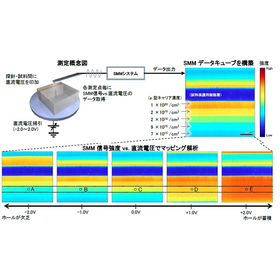
SMM scans the measurement sample using a conductive probe to observe its surface topography. Simultaneously, microwaves are irradiated from the probe to the sample, and by measuring the reflected response, it is possible to obtain signals correlated with carrier concentration, particularly in the case of semiconductors. The intensity of the SMM signal is linearly correlated with carrier concentration, which is a characteristic feature that provides high quantitativeness. - For Si devices, sensitivity is present for carrier concentrations around 10^15 to 10^20 cm^-3. - Since signals correlated linearly with carrier concentration can be obtained, quantitative evaluation (semi-quantitative) is possible under certain assumptions. - AFM images can also be acquired. - Various semiconductors such as Si, SiC, GaN, InP, and GaAs can be measured. This document introduces application examples, principles, and data examples. For more details, please download the document or contact us.
Added to bookmarks
Bookmarks listBookmark has been removed
Bookmarks listYou can't add any more bookmarks
By registering as a member, you can increase the number of bookmarks you can save and organize them with labels.
Free membership registration
ED is a method for investigating crystal structures from diffraction patterns obtained by irradiating a sample with an electron beam. - Crystallographic information about the material can be obtained. In the case of a transmission electron microscope, a single crystal shows regularly arranged diffraction spots, a polycrystal shows concentric circular rings, and an amorphous material shows broad circular electron diffraction patterns. - It is possible to examine the crystal structure of small regions observed with a transmission electron microscope. - By combining the crystal structure with elemental analysis results from the EDX method, it is also possible to identify materials that possess crystallinity.
Added to bookmarks
Bookmarks listBookmark has been removed
Bookmarks listYou can't add any more bookmarks
By registering as a member, you can increase the number of bookmarks you can save and organize them with labels.
Free membership registration
EDX is a method that measures the energy and occurrence of characteristic X-rays generated when an electron beam is irradiated onto the analysis target area, allowing for elemental and compositional analysis. It is also referred to as Energy Dispersive X-ray Spectroscopy (EDS). In many cases, it is attached to a SEM or TEM, and this document introduces the EDX that accompanies the TEM. - Simultaneous analysis of the entire range of elements (from B to U) is possible (detection of Be is also possible depending on the attached device). - Measurements can be made with a fine electron beam probe of 0.1 nm in diameter or smaller. - By using drift correction functionality, sub-nanometer layered films can be identified as distribution images in surface analysis. - In surface analysis, it is possible to extract spectra from arbitrary locations and display line analysis.
Added to bookmarks
Bookmarks listBookmark has been removed
Bookmarks listYou can't add any more bookmarks
By registering as a member, you can increase the number of bookmarks you can save and organize them with labels.
Free membership registration
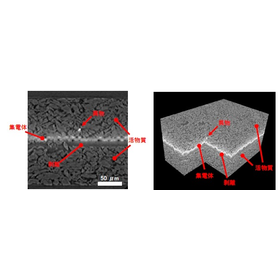
Using a high-resolution SEM device equipped with FIB, we can obtain three-dimensional structural information by repeatedly performing cross-sectioning (Slice) with FIB and observing (View) with SEM, and then reconstructing the acquired images. Similarly, Slice & View is also possible for SIM (Scanning Ion Microscope) images. - It is possible to observe secondary electron (SE), backscattered electron (BSE) images, and scanning ion microscope (SIM) images.
Added to bookmarks
Bookmarks listBookmark has been removed
Bookmarks listYou can't add any more bookmarks
By registering as a member, you can increase the number of bookmarks you can save and organize them with labels.
Free membership registration
- It is possible to evaluate the local structure (interatomic distances, coordination numbers) and chemical state (valence, coordination structure) around the target elements in the sample. - Measurements can be conducted regardless of the environment (high temperature, high pressure, atmosphere). - Measurements can be performed on various sample forms (solid, liquid, gas, thin films, amorphous materials, etc.). - A wide applicable concentration range (from major component elements to trace elements). - Non-destructive measurement. - Depending on the measurement method, it is possible to conduct measurements that are sensitive to the surface as well as bulk measurements.
Added to bookmarks
Bookmarks listBookmark has been removed
Bookmarks listYou can't add any more bookmarks
By registering as a member, you can increase the number of bookmarks you can save and organize them with labels.
Free membership registration
GDMS is a method for analyzing the composition of solid samples, allowing simultaneous analysis from major components to trace elements, and performing semi-quantitative analysis of impurities present in the sample. The concentration conversion uses the relative sensitivity factor (RSF) associated with the device. The analytical values are derived from the ion intensities of the major component elements and the target elements, calculated using the RSF, resulting in semi-quantitative values. - Bulk analysis is possible from trace elements (ppb level) to major component levels. - Depth profile analysis on the order of micrometers and thin film analysis are possible. - By using conductive materials and auxiliary electrodes, analysis of semiconductor materials and insulating materials is also possible. - High mass resolution allows for the removal of interfering ions. - Measurement is possible for almost all elements below Li, excluding hydrogen and noble gases. - Isotope ratio measurement is possible.
Added to bookmarks
Bookmarks listBookmark has been removed
Bookmarks listYou can't add any more bookmarks
By registering as a member, you can increase the number of bookmarks you can save and organize them with labels.
Free membership registration
Ion chromatography is a method for detecting ionic components in liquid samples. - Qualitative and quantitative analysis of ionic components is possible. - Analysis can be performed with a small amount of sample (a few mL).
Added to bookmarks
Bookmarks listBookmark has been removed
Bookmarks listYou can't add any more bookmarks
By registering as a member, you can increase the number of bookmarks you can save and organize them with labels.
Free membership registration
MST offers various materials and research contract analysis, contract evaluation, and contract assessment services. Our knowledgeable sales representatives will propose the optimal analysis plan! With assured quality and reliable support, we leave no questions unanswered for our customers. We broadly accommodate contract analysis and contract evaluation in the electronics field, including semiconductors, metals, and batteries, as well as in the life sciences field, including pharmaceuticals, cosmetics, and food. - We accept inquiries regarding analysis methods. - Please feel free to contact us for a cost estimate for analysis. - Inquiries and applications regarding analysis are accepted via phone or contact form. 【Examples of Contract Analysis Data】 ○ TEM Analysis: Observation at the atomic level ○ SIMS Analysis: Evaluation of impurity concentration ○ XRD Analysis: Identification of crystals using X-rays For more details, please download the catalog or contact us.
Added to bookmarks
Bookmarks listBookmark has been removed
Bookmarks listYou can't add any more bookmarks
By registering as a member, you can increase the number of bookmarks you can save and organize them with labels.
Free membership registration
The transparent oxide semiconductor IGZO thin film is being researched and developed as a TFT material for displays. IGZO is a material whose properties change significantly based on the composition of the film, the presence of oxygen vacancies, and crystallinity, making it important to consider the correlation with film quality. We will introduce a case where the crystallinity, film thickness, and film density of three types of IGZO thin films with different heating temperatures were measured and compared using XRD and XRR. It was confirmed non-destructively that crystallization progresses at high temperatures, resulting in higher film density.
Added to bookmarks
Bookmarks listBookmark has been removed
Bookmarks listYou can't add any more bookmarks
By registering as a member, you can increase the number of bookmarks you can save and organize them with labels.
Free membership registration
In recent years, organic EL displays have shown a tendency for their arrangement to become finer in order to enhance image quality. MST has launched a new service that allows for precise evaluation of the film structure of the organic EL layer, which is essential for the development of organic EL.
Added to bookmarks
Bookmarks listBookmark has been removed
Bookmarks listYou can't add any more bookmarks
By registering as a member, you can increase the number of bookmarks you can save and organize them with labels.
Free membership registration
Organic EL displays are materials that hold the potential for high resolution and low power consumption, and market expansion is expected. In recent years, there has been a trend towards miniaturizing pixel arrangements to achieve higher image quality. When measuring small pixels, conventional oblique cutting TOF-SIMS measurements made it difficult to evaluate in the depth direction. However, by introducing GCIB (Ar cluster), it has become possible to evaluate organic EL materials in the depth direction with good reproducibility, even for small pixels, and to assess material degradation and diffusion as well. *GCIB: Gas Cluster Ion Beam
Added to bookmarks
Bookmarks listBookmark has been removed
Bookmarks listYou can't add any more bookmarks
By registering as a member, you can increase the number of bookmarks you can save and organize them with labels.
Free membership registration
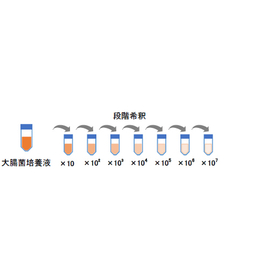
When evaluating the particle size and structure of fine particles used in a liquid dispersion, it is common practice to dry the liquid to extract the fine particles as a powder and measure them using an electron microscope. However, this measurement method is not suitable for investigating how the particles are dispersed, as changes in the dispersion state and deformation of the particles can occur due to drying. In MST, to directly assess how fine particles are dispersed within a liquid sample, cryo-processing followed by SEM analysis (cryo-SEM analysis) is performed for evaluation.
Added to bookmarks
Bookmarks listBookmark has been removed
Bookmarks listYou can't add any more bookmarks
By registering as a member, you can increase the number of bookmarks you can save and organize them with labels.
Free membership registration
When ions are incident on the sample surface, various particles such as electrons, neutral particles, and ions are emitted from the sample surface. SIMS is a technique that detects these ions and measures the detection quantity at each mass to perform qualitative and quantitative analysis of the components contained in the sample. - High sensitivity (ppb to ppm) - Analysis of all elements from H to U is possible - Wide detection concentration range (from major component elements to trace impurities) - Quantitative analysis using standard samples is possible - Depth direction analysis is possible - Evaluation with depth direction resolution of a few to several tens of nm is possible - Measurement of micro-regions up to a few micrometers in size is possible - Isotope analysis is possible - Destructive analysis
Added to bookmarks
Bookmarks listBookmark has been removed
Bookmarks listYou can't add any more bookmarks
By registering as a member, you can increase the number of bookmarks you can save and organize them with labels.
Free membership registration
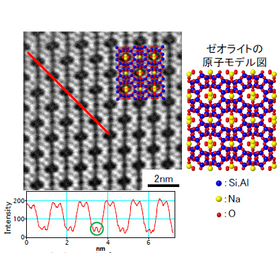
TEM (Transmission Electron Microscopy) is a method that involves irradiating a thin sample with an electron beam, imaging the electrons that have passed through or scattered from the sample, and observing it at high magnification. ■ Advantages - Enlarged images can be obtained with sub-nanometer spatial resolution, allowing for the observation and analysis of the sample's fine structure and lattice defects. - It is possible to evaluate the crystallinity of the sample and identify materials. - By fabricating samples using FIB (Focused Ion Beam), it is possible to observe specific locations within a device with pinpoint accuracy. - By combining optional features, it is also possible to analyze the composition and state of localized areas. ■ Disadvantages - It is necessary to thin the sample (in some cases, thinning may be difficult for certain samples). - It does not observe individual atoms but rather displays average information in the thickness direction of the sample (typically about 0.1 μm thick). - Sample processing and observation may lead to alteration or deformation of the sample.
Added to bookmarks
Bookmarks listBookmark has been removed
Bookmarks listYou can't add any more bookmarks
By registering as a member, you can increase the number of bookmarks you can save and organize them with labels.
Free membership registration
XPS is a technique that measures the kinetic energy distribution of photoelectrons emitted by X-ray irradiation, providing insights into the types, quantities, and chemical bonding states of elements present on the sample surface (to a depth of about a few nanometers). Because it can provide information about chemical bonding states, it is also known as ESCA: Electron Spectroscopy for Chemical Analysis. - Qualitative and quantitative analysis of elements on solid surfaces (approximately 2 to 8 nm) is possible. - Chemical bonding state analysis is possible. - Non-destructive analysis is possible. - Measurement of depth distribution (using ion sputtering) is possible. - Measurement of insulators is possible. - Measurement under controlled atmospheres is possible.
Added to bookmarks
Bookmarks listBookmark has been removed
Bookmarks listYou can't add any more bookmarks
By registering as a member, you can increase the number of bookmarks you can save and organize them with labels.
Free membership registration
SEM is a technique that allows for obtaining contrast based on the information from electrons emitted from a sample when an electron beam is directed at it, revealing the sample's surface roughness and compositional differences. - High magnification observation (up to about 500,000 times) is possible with simple operation. - Observation of secondary electron (SE) images, backscattered electron (BSE) images, and transmitted electron (TE) images is possible. - Observation can be conducted within an acceleration voltage range of 0.1 to 30 kV. - Samples up to 6 inches can be loaded into the device (depending on the equipment). - By combining options with SEM, various types of information can be obtained: - Elemental analysis using an EDX detector is possible. - Measurement of electron beam induced current (EBIC) allows for evaluation of the junction position and shape in semiconductors. - Crystal information can be obtained using electron backscatter diffraction (EBSD) method. - Three-dimensional structural information can be acquired through repeated FIB processing and SEM observation (Slice & View). - Cooling observation and atmosphere-controlled observation are available.
Added to bookmarks
Bookmarks listBookmark has been removed
Bookmarks listYou can't add any more bookmarks
By registering as a member, you can increase the number of bookmarks you can save and organize them with labels.
Free membership registration
- Qualitative and quantitative analysis of solid material surfaces (depth of several nm) is possible. - Qualitative and quantitative analysis of micro-regions (approximately tens of nm to sub-micron) is possible. - Depth profile analysis, line analysis, and area analysis of major component elements can be measured. - For several elements such as Si and Al, evaluation in both oxide and metallic states is possible. - Identification of specific areas of interest using SEM images is possible.
Added to bookmarks
Bookmarks listBookmark has been removed
Bookmarks listYou can't add any more bookmarks
By registering as a member, you can increase the number of bookmarks you can save and organize them with labels.
Free membership registration
- Identification of crystalline substances is possible - Evaluation of crystal size (from a few nm to 100 nm) is possible - Evaluation of crystallinity is possible - Evaluation of orientation is possible - Evaluation of strain and stress is possible - Non-destructive analysis is possible Features of the equipment - Heating analysis is possible from room temperature to 1100°C - Micro-area measurement with a beam diameter of up to 100 μm is possible - Atmosphere control is possible with N2, He, Ar, and vacuum
Added to bookmarks
Bookmarks listBookmark has been removed
Bookmarks listYou can't add any more bookmarks
By registering as a member, you can increase the number of bookmarks you can save and organize them with labels.
Free membership registration