586~630 item / All 783 items
Displayed results
Filter by category

Added to bookmarks
Bookmarks listBookmark has been removed
Bookmarks listYou can't add any more bookmarks
By registering as a member, you can increase the number of bookmarks you can save and organize them with labels.
Free membership registration
Contact this company
Inquiry Form586~630 item / All 783 items
Filter by category

Due to the increased demand for disinfectant alcohol to prevent infections caused by viruses, it is important that the products do not contain methanol during handling. It is known that the components other than the main agent, ethanol, differ depending on the type of product. This document introduces cases where components other than ethanol were analyzed using chromatography. The analysis of four types of disinfectant alcohol products revealed that the components contained in the products varied.
Added to bookmarks
Bookmarks listBookmark has been removed
Bookmarks listYou can't add any more bookmarks
By registering as a member, you can increase the number of bookmarks you can save and organize them with labels.
Free membership registration
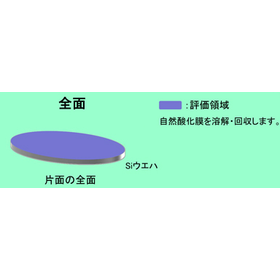
This is an example of wide-area quantitative mapping using XPS. We evaluated organic residue on silicon wafers using the following procedure. To graph the amount (atomic concentration) rather than peak intensity, it is less affected by sample roughness and allows for data acquisition over a wide area. It is suitable for investigating organic and inorganic contamination, discoloration, surface treatments, etc., as it enables an overview assessment of the compositional distribution on the sample surface.
Added to bookmarks
Bookmarks listBookmark has been removed
Bookmarks listYou can't add any more bookmarks
By registering as a member, you can increase the number of bookmarks you can save and organize them with labels.
Free membership registration
The inner walls of metal pipes, such as SUS, used in various fields can discolor and corrode due to reactions with incoming gases and liquids, leading to a decline in equipment functionality. Understanding the locations prone to discoloration and corrosion, as well as their causes, is an important issue in equipment maintenance. At MST, we provide a comprehensive evaluation from sample cutting to analysis. This document presents a case study of XPS analysis conducted on the inner walls of SUS pipes used in vacuum equipment, highlighting both normal and discolored areas.
Added to bookmarks
Bookmarks listBookmark has been removed
Bookmarks listYou can't add any more bookmarks
By registering as a member, you can increase the number of bookmarks you can save and organize them with labels.
Free membership registration
Tin (Sn), such as in solder, is used in many electronic components. In the XPS analysis of the Sn surface, by using the 4d orbitals in addition to the quantitative and state analysis typically performed with the 3d orbitals, it is possible to separate the oxidation states (divalent Sn2+ (SnO) and tetravalent Sn4+ (SnO2)) and calculate their ratios. Furthermore, by examining the valence band, it is possible to sensitively detect even a very small amount of the low oxidation state (divalent Sn2+ (SnO)). This document presents examples of evaluating Sn on the surface of solder using various orbitals.
Added to bookmarks
Bookmarks listBookmark has been removed
Bookmarks listYou can't add any more bookmarks
By registering as a member, you can increase the number of bookmarks you can save and organize them with labels.
Free membership registration
The separator in lithium-ion secondary batteries not only serves the role of isolating the positive and negative electrodes to prevent internal short circuits, but in automotive batteries, it is also required to have heat resistance to prevent a decrease in strength or melting even in high-temperature environments. This report introduces a case study on separators used in overseas automotive batteries, where heat resistance and thermal decomposition behavior were investigated using TG-DTA, and structural and compositional evaluations were conducted using SEM-EDX, FT-IR, XPS, TOF-SIMS, and XRD. It was found that the separator used in the battery consists of a porous polyethylene and a layered structure of polygonal AlO(OH) aimed at heat resistance.
Added to bookmarks
Bookmarks listBookmark has been removed
Bookmarks listYou can't add any more bookmarks
By registering as a member, you can increase the number of bookmarks you can save and organize them with labels.
Free membership registration
The charge and discharge characteristics of lithium-ion secondary batteries are influenced by electronic conductivity. I will introduce a case where the decreased conductivity of active materials, due to degradation or blockage of conduction paths, was visualized as a resistance value distribution using SSRM. By comparing the results obtained from SSRM with the elemental distribution of Li and other elements measured by TOF-SIMS, it is possible to confirm the correlation between resistance values and elemental distribution. Additionally, it is feasible to classify conductive additives and binders based on resistance values, perform statistical processing, and quantify the mixing degree for each material.
Added to bookmarks
Bookmarks listBookmark has been removed
Bookmarks listYou can't add any more bookmarks
By registering as a member, you can increase the number of bookmarks you can save and organize them with labels.
Free membership registration
This article introduces a case study evaluating the surface morphology, cross-sectional structure, components, composition, crystal structure, and resistance value distribution of Li(NiCoMn)O2 (NCM), which is used as a positive electrode in lithium-ion secondary batteries. Based on a comprehensive evaluation of structure, composition, and electrical properties, MST proposes assessments suitable for solving development challenges aimed at improving characteristics and enhancing reliability.
Added to bookmarks
Bookmarks listBookmark has been removed
Bookmarks listYou can't add any more bookmarks
By registering as a member, you can increase the number of bookmarks you can save and organize them with labels.
Free membership registration
Multilayer ceramic capacitors (MLCCs) are capacitors designed to increase capacitance by layering ceramic dielectric and electrodes. The electrical properties of MLCCs are significantly affected by impurities, making the evaluation of impurities in the ceramic layers and the diffusion of electrode components important. With the miniaturization of MLCCs, the ceramic layers have become thinner, making it difficult to evaluate impurities. This document introduces the results of evaluating impurities in the ceramic layers by innovating the pretreatment process.
Added to bookmarks
Bookmarks listBookmark has been removed
Bookmarks listYou can't add any more bookmarks
By registering as a member, you can increase the number of bookmarks you can save and organize them with labels.
Free membership registration
When heated, resin can emit organic substances, which may cause contamination depending on the usage environment. The GC/MS method using a gas concentration device is effective for the high-sensitivity analysis of organic outgassing. Here, we will introduce a case study of outgassing evaluation for resin used in 3D printers. Different types of resin are used for 3D printer materials depending on the intended use of the printed objects, varying in strength, color, heat resistance, and other properties. By conducting analysis using a gas concentration device, it is possible to compare trace amounts of outgassing components and quantities for resins with different properties.
Added to bookmarks
Bookmarks listBookmark has been removed
Bookmarks listYou can't add any more bookmarks
By registering as a member, you can increase the number of bookmarks you can save and organize them with labels.
Free membership registration
Bacteria have various growth environments depending on their species, and there are many bacteria that are difficult to isolate and culture. Therefore, by extracting and analyzing DNA, which is the blueprint of life that all bacteria possess, it becomes possible to investigate the existing bacteria without isolation or culture. Here, we will introduce examples of analysis methods for sequencing bacterial DNA to infer the existing bacteria through microbiome analysis, as well as investigating bacterial numbers using real-time PCR methods.
Added to bookmarks
Bookmarks listBookmark has been removed
Bookmarks listYou can't add any more bookmarks
By registering as a member, you can increase the number of bookmarks you can save and organize them with labels.
Free membership registration
Carbon nanotubes (CNTs) are lightweight and possess excellent mechanical properties (high strength and high elasticity), making them suitable for various applications and environments. In particular, the deformation behavior of CNTs is related to flexibility and energy absorption characteristics, which are important in sensor and nano-device design. This document presents a case study that simulates the bending and recovery deformation of single-walled CNTs using molecular dynamics calculations. The simulation allows for the observation of structural changes at the atomic level due to environmental changes (pressure and temperature), enabling the analysis of deformation behavior based on the changes in strain energy associated with these structural changes.
Added to bookmarks
Bookmarks listBookmark has been removed
Bookmarks listYou can't add any more bookmarks
By registering as a member, you can increase the number of bookmarks you can save and organize them with labels.
Free membership registration
Hyaluronic acid is a high molecular compound widely used in cosmetics and supplements. The characteristics, such as permeability to tissues, vary depending on the molecular weight, and there is a growing demand for low molecular weight hyaluronic acid in addition to high molecular weight hyaluronic acid. In electrophoresis, which is used for the analysis of polysaccharides, DNA, proteins, etc., the molecular weight distribution of hyaluronic acid can be visualized and evaluated by using a hyaluronic acid molecular weight marker with a known molecular weight. Here, we present analytical examples where high molecular weight hyaluronic acid is depolymerized by various methods and its molecular weight distribution is evaluated.
Added to bookmarks
Bookmarks listBookmark has been removed
Bookmarks listYou can't add any more bookmarks
By registering as a member, you can increase the number of bookmarks you can save and organize them with labels.
Free membership registration
The SiON film used as the gate oxide film for Si transistors is formed by introducing nitrogen into the Si oxide film to suppress leakage current. To ensure a good interface characteristic with the substrate while maintaining the dielectric constant, it is necessary to strictly control the distribution of nitrogen in the SiON film. We will present a case study evaluating the distribution of silicon oxide and nitride in a 1nm thick SiON film using TOF-SIMS. TOF-SIMS has high depth resolution on the surface and can obtain molecular information with good sensitivity, allowing for a clear understanding of the compositional distribution in the ultra-thin SiON film.
Added to bookmarks
Bookmarks listBookmark has been removed
Bookmarks listYou can't add any more bookmarks
By registering as a member, you can increase the number of bookmarks you can save and organize them with labels.
Free membership registration
The main components of wood biomass consist of cellulose, hemicellulose, and lignin, and their composition ratios vary depending on the plant species from which they originate. The composition ratios of these three components can be evaluated by applying specific chemical treatments such as the Klason method or the Wise method to the samples and measuring their weights. At MST, the proportion of the main components in wood biomass is calculated according to the following analysis flow.
Added to bookmarks
Bookmarks listBookmark has been removed
Bookmarks listYou can't add any more bookmarks
By registering as a member, you can increase the number of bookmarks you can save and organize them with labels.
Free membership registration
Perovskite solar cells are expected to be the next generation of solar cells due to their lightweight and flexible characteristics. They contain organic structures, halogens, and metals, and the variations in their composition and crystallinity lead to changes in their properties, which is considered one of the challenges in the research and development of perovskite solar cells. In this study, we evaluated the differences in photoluminescence (PL) spectra and luminescence lifetimes between the normal and abnormal areas of perovskite solar cells subjected to high-temperature and high-humidity testing using PL measurement and fluorescence lifetime measurement devices.
Added to bookmarks
Bookmarks listBookmark has been removed
Bookmarks listYou can't add any more bookmarks
By registering as a member, you can increase the number of bookmarks you can save and organize them with labels.
Free membership registration
MALDI-MS (Matrix-Assisted Laser Desorption Ionization Mass Spectrometry) is a method that allows for the detection and imaging of organic components in their molecular ion form. In particular, MALDI imaging is effective for evaluating the distribution of biological components and substances administered to living organisms in pharmacokinetic studies and pharmaceutical research and development. MST can provide a consistent process from sample preparation to measurement. This document presents an example of analysis where lipids were imaged using MALDI-MS, starting from the preparation of mouse brain slices.
Added to bookmarks
Bookmarks listBookmark has been removed
Bookmarks listYou can't add any more bookmarks
By registering as a member, you can increase the number of bookmarks you can save and organize them with labels.
Free membership registration
There are various colored products made from paper used as wrapping paper, which contain diverse components. Since these coloring components can affect adhesion to contact materials and cause contamination, it is important to understand the components of the paper surface. This document presents a case study investigating the components of paper surfaces with different colors using TOF-SIMS.
Added to bookmarks
Bookmarks listBookmark has been removed
Bookmarks listYou can't add any more bookmarks
By registering as a member, you can increase the number of bookmarks you can save and organize them with labels.
Free membership registration
TOF-SIMS has features such as simultaneous evaluation of organic and inorganic materials, capability for micro-area analysis, and high sensitivity for analyzing the very surface, making it effective for residue investigation in cleaning processes. An example is presented where pure water was dried on a silicon wafer. Optical microscopy only reveals slight point-like foreign substances and cloudiness. However, the results measured by TOF-SIMS showed that in the contaminated areas, organic components such as hydrocarbons, PDMS, and amides, which tend to adsorb naturally, were aggregated.
Added to bookmarks
Bookmarks listBookmark has been removed
Bookmarks listYou can't add any more bookmarks
By registering as a member, you can increase the number of bookmarks you can save and organize them with labels.
Free membership registration
Porous ceramics are lightweight and have low thermal conductivity due to their numerous pores, making them useful as insulation materials and filters. The structure of the pores directly affects the fluids passing through the porous ceramics, so capturing three-dimensional images and understanding numerical values such as porosity and specific surface area is important. This document presents a case study comparing the differences in porosity, specific surface area, and pore size distribution by conducting 3D structural observations using X-ray CT on two types of samples and analyzing the images.
Added to bookmarks
Bookmarks listBookmark has been removed
Bookmarks listYou can't add any more bookmarks
By registering as a member, you can increase the number of bookmarks you can save and organize them with labels.
Free membership registration- AI Model Development Based on collected data that includes the target object and publicly available open data, we will develop an AI model suitable for the conditions. By utilizing this AI model, it is expected that daily operations can be replaced by AI, promoting automation and efficiency in business processes and stabilizing accuracy. - Image/Data Analysis We analyze and evaluate images and other data. The evaluation content will be discussed with the client, and proposals will be made in line with the challenges. If the target is a product or material, analysis data can be obtained using MST.
Added to bookmarks
Bookmarks listBookmark has been removed
Bookmarks listYou can't add any more bookmarks
By registering as a member, you can increase the number of bookmarks you can save and organize them with labels.
Free membership registration
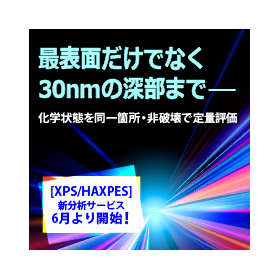
We have launched a new service using XPS/HAXPES starting in June! For increasingly complex materials and fine structure samples, we can evaluate the composition and chemical bonding states from the surface to the interior of the material (up to ~30nm) at the same location and in a non-destructive manner. - Depending on the elements of interest and the analysis area and depth, we can select the appropriate X-ray source (Al Kα/Mg Kα/Ga Kα/Cr Kα) to achieve evaluation under suitable measurement conditions. - Non-exposure measurements to the atmosphere, Ar monomer/GCIB sputter etching, and heating pretreatment can be combined. - It is possible to evaluate the electronic states of semiconductor samples using UPS/LEIPS (ionization potential/electron affinity/band gap).
Added to bookmarks
Bookmarks listBookmark has been removed
Bookmarks listYou can't add any more bookmarks
By registering as a member, you can increase the number of bookmarks you can save and organize them with labels.
Free membership registration
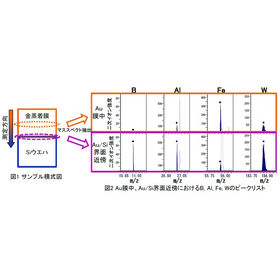
Impurities from components of the film formation device, target materials, and plating solutions can contaminate the device and have adverse effects, making the qualitative assessment of impurities on surfaces, within films, and at interfaces important. TOF-SIMS can sensitively evaluate unknown elements present on surfaces, within films, and at interfaces in a single measurement due to the following three characteristics: 1. For metallic elements, ions from m/z 1 to 800 can be detected simultaneously in one measurement. 2. Detection sensitivity of a few ppm can be achieved (varies depending on materials and ions). 3. The use of a sputter gun allows for the evaluation of depth distribution.
Added to bookmarks
Bookmarks listBookmark has been removed
Bookmarks listYou can't add any more bookmarks
By registering as a member, you can increase the number of bookmarks you can save and organize them with labels.
Free membership registration
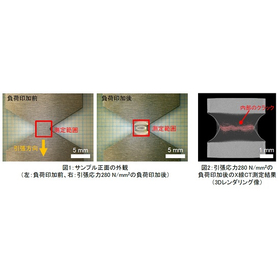
In situ X-ray CT measurements allow for internal structure analysis under conditions where a load (tension or compression) is applied to the sample. In this document, in situ X-ray CT measurements were conducted using an aluminum plate as the sample, both in its normal state and in an extended state. We calculated the tensile stress applied to the sample and monitored the internal structural changes under each stress condition. By combining in situ X-ray CT measurements with image analysis technology, it is possible to evaluate under actual usage conditions, which was previously difficult, and assess the impact of stress on the product.
Added to bookmarks
Bookmarks listBookmark has been removed
Bookmarks listYou can't add any more bookmarks
By registering as a member, you can increase the number of bookmarks you can save and organize them with labels.
Free membership registration
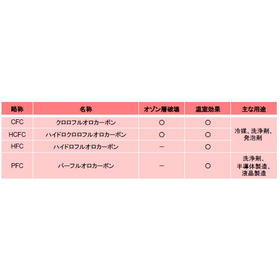
Freon gases are utilized in various applications such as refrigerants, foaming agents, semiconductors, and cleaning agents for precision parts due to their chemically stable nature and minimal impact on human health. On the other hand, they are substances that contribute to ozone layer depletion and global warming, which is why they are regulated by law. In this case, Freon gases were analyzed using GC/MS, and the separation analysis of CF4, which has low polarity and is difficult to separate among PFCs, was conducted. By using GC/MS, it is possible to qualitatively analyze specific Freons such as CFCs, HCFCs, and alternative Freons like HFCs and PFCs.
Added to bookmarks
Bookmarks listBookmark has been removed
Bookmarks listYou can't add any more bookmarks
By registering as a member, you can increase the number of bookmarks you can save and organize them with labels.
Free membership registration
Control of particles in the semiconductor wafer manufacturing process is extremely important for ensuring wafer quality. In this case study, we estimated what the particles were on a Si wafer through SEM observation, EDX analysis, and simple quantification. The SEM equipment, which has high spatial resolution in the submicron range and can scan areas of several centimeters, allows for rapid inference of what the particles on the wafer are based on shape and composition information, enabling quick identification of the generation process. Analysis linked to coordinate data from defect inspection equipment is also possible.
Added to bookmarks
Bookmarks listBookmark has been removed
Bookmarks listYou can't add any more bookmarks
By registering as a member, you can increase the number of bookmarks you can save and organize them with labels.
Free membership registration
Our organization has established a system that suppresses atmospheric exposure through atmosphere control, and further cools the samples for processing, observation, and analysis. We can produce TEM thin samples while maintaining the original structure of the specimen, allowing for observation and analysis. Even with unstable materials, we can perform thinning processing while cooling, and by maintaining a vacuum during the transfer between processing and observation devices, we enable cross-sectional TEM/SEM observation that minimizes atmospheric exposure and thermal alteration. 【Measurement and Processing Methods】 ■ [(S)TEM] Scanning Transmission Electron Microscopy ■ Processing under atmosphere control ■ Cryo-processing *For more details, please download the PDF or feel free to contact us.
Added to bookmarks
Bookmarks listBookmark has been removed
Bookmarks listYou can't add any more bookmarks
By registering as a member, you can increase the number of bookmarks you can save and organize them with labels.
Free membership registration
We offer metal contamination analysis of Si wafers (B0233). The purpose of metal contamination analysis of Si wafer surfaces using ICP-MS includes not only the contamination assessment of the Si wafer itself but also the evaluation of contamination within semiconductor devices and the assessment of the working environment due to Si wafer exposure. Therefore, the analysis of Si wafer surfaces is conducted for various purposes. ICP-MS analysis allows for the highly sensitive measurement of metal contamination on Si wafer surfaces, and it is also possible to specify the evaluation area according to the purpose. [Measurement Method] ■ [ICP-MS] Inductively Coupled Plasma Mass Spectrometry *For more details, please download the PDF or feel free to contact us.
Added to bookmarks
Bookmarks listBookmark has been removed
Bookmarks listYou can't add any more bookmarks
By registering as a member, you can increase the number of bookmarks you can save and organize them with labels.
Free membership registration
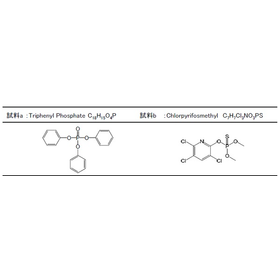
We offer NMR (Nuclear Magnetic Resonance Analysis) services. Since NMR directly observes nuclear spins, the area of the peaks of the measured nuclides obtained from the measurement is proportional to the number and concentration of the nuclides contained in the solution or solid being measured. Based on this principle, NMR allows for quantitative analysis without the need for a calibration curve. For example, using the integral value of the peak of the 31P nucleus, it is possible to determine the concentration of one component of a two-component mixture from the known concentration of the other component according to a relationship. [Measurement Method / Processing Method] ■ [NMR] Nuclear Magnetic Resonance Analysis *For more details, please download the PDF or feel free to contact us.
Added to bookmarks
Bookmarks listBookmark has been removed
Bookmarks listYou can't add any more bookmarks
By registering as a member, you can increase the number of bookmarks you can save and organize them with labels.
Free membership registration
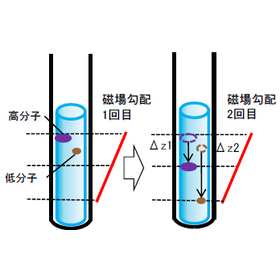
We will introduce a technique that emphasizes the signals of polymers or small molecules using a measurement method that utilizes the differences in relaxation times or diffusion coefficients of each component in a mixed sample. When electromagnetic waves are irradiated onto atomic nuclei in a static magnetic field, they absorb energy corresponding to the energy difference ΔE and enter an excited state (nuclear magnetic resonance). When the irradiation of electromagnetic waves is stopped, the process of returning to the original state is called relaxation, and the relaxation time is the time required for this process. The relaxation time is closely related to the mobility of the molecules. [Measurement Method / Processing Method] ■ [NMR] Nuclear Magnetic Resonance Analysis *For more details, please download the PDF or feel free to contact us.
Added to bookmarks
Bookmarks listBookmark has been removed
Bookmarks listYou can't add any more bookmarks
By registering as a member, you can increase the number of bookmarks you can save and organize them with labels.
Free membership registration
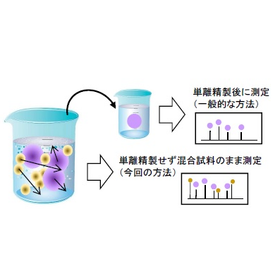
We would like to introduce our spectral separation technology using the DOSY method. In NMR, when performing structural analysis of each component in a mixed sample, each component is typically isolated and purified before measurement. The DOSY method allows for the separation of spectra for each component by utilizing the differences in diffusion rates, enabling structural analysis of each component in a mixed sample without the need for isolation and purification. 【Features】 - Effective for measuring samples where physical separation by molecular weight is difficult - Effective for measuring samples that undergo structural changes during pretreatment (e.g., samples in the biochemical field such as proteins) - Facilitates structural analysis of each component by separating mixed spectra of multiple components - Provides insights into the mobility of molecules of each component in the mixture *For more details, please download the PDF or feel free to contact us.
Added to bookmarks
Bookmarks listBookmark has been removed
Bookmarks listYou can't add any more bookmarks
By registering as a member, you can increase the number of bookmarks you can save and organize them with labels.
Free membership registration
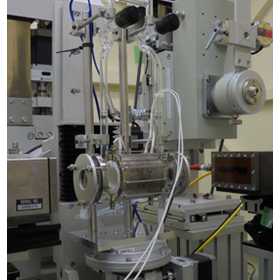
We offer the evaluation of the chemical state of RuO2 catalysts using in-situ XAFS (C0456). Under controlled conditions with gas atmospheres and temperatures tailored to the sample environment, it is possible to assess the chemical bonding state and local atomic structure of the sample. Therefore, it is suitable for cases where state evaluation is required in special environments, such as catalysts. In a case where RuO2 powder was heated from room temperature to 400°C under a reducing atmosphere using in-situ XAFS, it was confirmed from the shape of the spectrum that RuO2 is reduced to Ru between 100°C and 200°C. [Measurement Method / Processing Method] ■ [XAFS] X-ray Absorption Fine Structure *For more details, please download the PDF or feel free to contact us.
Added to bookmarks
Bookmarks listBookmark has been removed
Bookmarks listYou can't add any more bookmarks
By registering as a member, you can increase the number of bookmarks you can save and organize them with labels.
Free membership registration
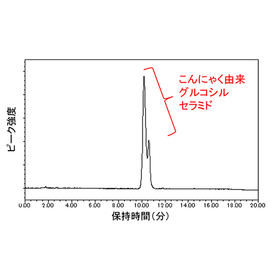
We offer quantitative analysis of glucosylceramide in konjac (C0491). Glucosylceramide is a type of glycosphingolipid found in food. It is included not only in cosmetics that are applied directly to the skin but also in health foods and general foods, such as supplements containing glucosylceramide, as well as various processed products and beverages. By using HPLC, it is possible to analyze the amount of glucosylceramide contained in raw crops and processed foods with high precision. [Measurement Method/Processing Method] ■ [HPLC] High-Performance Liquid Chromatography *For more details, please download the PDF or feel free to contact us.
Added to bookmarks
Bookmarks listBookmark has been removed
Bookmarks listYou can't add any more bookmarks
By registering as a member, you can increase the number of bookmarks you can save and organize them with labels.
Free membership registration
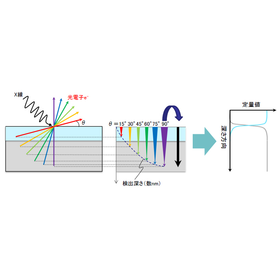
We offer composition distribution evaluation of ultra-thin films using ARXPS (Angle-Resolved X-ray Photoelectron Spectroscopy) (C0550). Photoelectrons emitted by X-ray irradiation are detected at different take-off angles, and spectra with varying detection depths are used to evaluate the depth profile very close to the sample surface. This method improves depth resolution and has the advantage of no compositional changes due to selective sputtering or mixing, making it effective for evaluating the depth profiles of ultra-thin films (on the order of a few nanometers) on substrates. [Measurement Method / Processing Method] ■ [XPS] X-ray Photoelectron Spectroscopy *For more details, please download the PDF or feel free to contact us.
Added to bookmarks
Bookmarks listBookmark has been removed
Bookmarks listYou can't add any more bookmarks
By registering as a member, you can increase the number of bookmarks you can save and organize them with labels.
Free membership registration
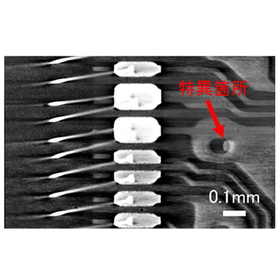
Our company offers technologies suitable for structural evaluation of electronic devices, and we propose analytical methods tailored to the observation field and objectives. In a case where we investigated specific areas of a device using X-ray CT and FIB-SEM, we first used X-ray CT to observe the internal structure of the entire sample and identify specific areas. Next, we used FIB-SEM to confirm the detailed structure of the specific structures identified on the vias. 【Measurement and Processing Methods】 ■[SEM] Scanning Electron Microscopy ■[SEM-EDX] Energy Dispersive X-ray Spectroscopy (SEM) ■X-ray CT Method ■[FIB] Focused Ion Beam Processing *For more details, please download the PDF or feel free to contact us.
Added to bookmarks
Bookmarks listBookmark has been removed
Bookmarks listYou can't add any more bookmarks
By registering as a member, you can increase the number of bookmarks you can save and organize them with labels.
Free membership registration
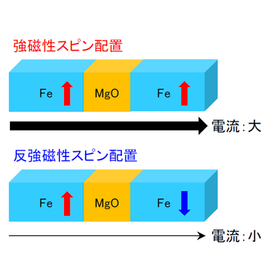
Our company is conducting theoretical calculations (C0583) on the Fe/MgO/Fe junction system that demonstrates the tunnel magnetoresistance effect of MRAM. Tunnel magnetoresistance (TMR) is a phenomenon where the electrical resistance changes depending on the orientation of magnetization in ferromagnetic layers separated by a thin insulating layer, and applications in magnetic resistance memory (MRAM) are being advanced. Through simulations, it is also possible to evaluate the effects of behaviors under bias application, strain at the interface, and oxygen vacancies on the physical properties of TMR. 【Measurement Methods and Processing Methods】 ■ Computational Science, AI, Data Analysis *For more details, please download the PDF or feel free to contact us.
Added to bookmarks
Bookmarks listBookmark has been removed
Bookmarks listYou can't add any more bookmarks
By registering as a member, you can increase the number of bookmarks you can save and organize them with labels.
Free membership registration
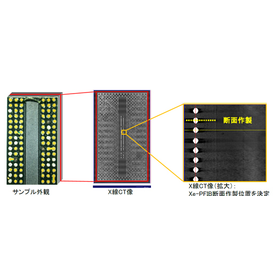
We offer wide-area cross-sectional SEM observation (C0610) using Xe-PFIB. The metal bonding that electrically connects the electrodes of integrated circuits, electrodes, printed circuit boards, and semiconductor packages has a diameter of several tens of μm to several hundred μm. With Xe-PFIB (Xe-Plasma Focused Ion Beam), we can target processing positions on the order of several tens of nm and create cross-sections of several hundred μm square, allowing for a detailed understanding of the entire view at the center of the bonding. 【Measurement and Processing Methods】 ■ [SEM] Scanning Electron Microscopy ■ X-ray CT Method ■ [FIB] Focused Ion Beam Processing *For more details, please download the PDF or feel free to contact us.
Added to bookmarks
Bookmarks listBookmark has been removed
Bookmarks listYou can't add any more bookmarks
By registering as a member, you can increase the number of bookmarks you can save and organize them with labels.
Free membership registration
We offer identification analysis of pigments using the direct MS method (C0611). Due to the insolubility of pigments in solvents, chromatographic separation is not possible, and the analytical methods are limited. However, evaluation can be performed using the direct MS method, which directly introduces the sample into the mass spectrometer. There are several techniques within the direct MS method, and it is necessary to choose the appropriate one based on the properties of the sample. In a case where pigments in toner were measured, molecular ions were detected, allowing for structural estimation. [Measurement and Processing Methods] ■ Others *For more details, please download the PDF or feel free to contact us.
Added to bookmarks
Bookmarks listBookmark has been removed
Bookmarks listYou can't add any more bookmarks
By registering as a member, you can increase the number of bookmarks you can save and organize them with labels.
Free membership registration
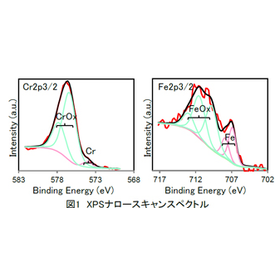
We offer the evaluation of stainless steel passive films in accordance with SEMI standards (C0612). Stainless steel exhibits excellent corrosion resistance due to the formation of a very thin, dense, and stable chromium oxide film (passive film) on its surface. The composition and film thickness of this passive film can be effectively evaluated using surface-sensitive techniques such as XPS and AES. [Measurement and Processing Methods] ■ [AES] Auger Electron Spectroscopy ■ [XPS] X-ray Photoelectron Spectroscopy ■ Others *For more details, please download the PDF or feel free to contact us.
Added to bookmarks
Bookmarks listBookmark has been removed
Bookmarks listYou can't add any more bookmarks
By registering as a member, you can increase the number of bookmarks you can save and organize them with labels.
Free membership registration
We offer particle size analysis of Au nanoparticles using small-angle X-ray scattering (SAXS) method. Metal nanoparticles are known to exhibit unique properties not found in bulk metals. Due to their high catalytic activity and optical properties such as surface plasmon resonance, they are used in applications like fuel cell electrode catalysts and biosensors. To control these properties, it is necessary to understand their structure and composition. By using TEM and SAXS complementarily, it is possible to conduct reliable particle size analysis. [Measurement and Processing Methods] ■ [(S)TEM] Scanning Transmission Electron Microscopy ■ [SAXS] Small-Angle X-ray Scattering *For more details, please download the PDF or feel free to contact us.
Added to bookmarks
Bookmarks listBookmark has been removed
Bookmarks listYou can't add any more bookmarks
By registering as a member, you can increase the number of bookmarks you can save and organize them with labels.
Free membership registration
Our company conducts local area evaluation of positive electrode active materials for secondary batteries (C0614). It is known that in lithium-ion secondary batteries, the crystal structure of the active material surface and the valence of metal elements change due to ion extraction and insertion during charge and discharge, as well as degradation. In a case where TEM was used for local area evaluation to assess composition, crystal structure, and chemical state, it was found through EDX that AlOx is coated on the outermost layer. Additionally, electron diffraction and EELS revealed that the crystal structure and valence differ between the surface and the interior of the active material. [Measurement and Processing Methods] ■ [(S)TEM] Scanning Transmission Electron Microscopy ■ [TEM-EDX] Energy Dispersive X-ray Spectroscopy (TEM) ■ [TEM-EELS] Electron Energy Loss Spectroscopy *For more details, please download the PDF or feel free to contact us.
Added to bookmarks
Bookmarks listBookmark has been removed
Bookmarks listYou can't add any more bookmarks
By registering as a member, you can increase the number of bookmarks you can save and organize them with labels.
Free membership registration
When evaluating the internal structure of materials, it is necessary to expose the internal structure while maintaining it through cross-sectional processing techniques such as cutting and polishing. This document introduces a case where the microtome method, which has a relatively small impact from processing damage, was used to create cross-sections of hair, followed by AFM observation of the internal structure and evaluation of elastic modulus. The microtome method is a cutting processing technique widely used in the field of soft materials, such as rubber materials and biological samples, and this approach has made it possible to evaluate the mechanical properties of the internal structure of these materials. [Measurement and Processing Methods] [AFM] Atomic Force Microscopy [AFM-MA・AFM-DMA] Mechanical Property Evaluation (Elastic Modulus Measurement, Dynamic Viscoelasticity Measurement) Ultra Microtome Processing *For more details, please download the PDF or feel free to contact us.
Added to bookmarks
Bookmarks listBookmark has been removed
Bookmarks listYou can't add any more bookmarks
By registering as a member, you can increase the number of bookmarks you can save and organize them with labels.
Free membership registration
Our organization offers three-dimensional structural analysis of 3D printed objects. Understanding the differences between the design drawings and the manufactured products is an important process in quality control. By conducting X-ray CT measurements, it becomes possible to compare the three-dimensional structural "discrepancies" between the printed objects and the design drawings, allowing for an evaluation of the quality. In this case study, we are evaluating molded products made from resin-based materials, but similar evaluations can also be conducted for molded products made from metal-based materials that allow X-rays to pass through. [Measurement Method / Processing Method] ■ X-ray CT Method *For more details, please download the PDF or feel free to contact us.
Added to bookmarks
Bookmarks listBookmark has been removed
Bookmarks listYou can't add any more bookmarks
By registering as a member, you can increase the number of bookmarks you can save and organize them with labels.
Free membership registration
Our organization offers structural evaluation of lithium-ion secondary battery anode materials. The structural state of the anode materials, such as the dispersion of active substances and porosity, affects performance. In this case, we observed the internal structure of the anode material using X-ray CT, which allows for non-destructive and high-resolution measurement of the three-dimensional structure. By analyzing the results obtained from X-ray CT, it is also possible to detect foreign substances within the electrode material and evaluate the porosity of the active substance layer. [Measurement Method / Processing Method] ■ X-ray CT Method *For more details, please download the PDF or feel free to contact us.
Added to bookmarks
Bookmarks listBookmark has been removed
Bookmarks listYou can't add any more bookmarks
By registering as a member, you can increase the number of bookmarks you can save and organize them with labels.
Free membership registration
Our organization offers evaluation of the direct current voltage dependence of carriers in semiconductors. SMM measurement is a technique that can map the concentration of carriers in semiconductors. Additionally, it is possible to apply a direct current voltage to the sample during SMM measurement to induce carriers while measuring. Mapping measurements are conducted while acquiring SMM signals under different applied voltage conditions at each measurement point, constructing a data cube. After collecting all data, analyzing the SMM signals according to the applied voltage conditions allows us to visualize the behavior of carriers in response to the applied voltage. [Measurement Method / Processing Method] ■ [SMM] Scanning Microwave Microscope Method *For more details, please download the PDF or feel free to contact us.
Added to bookmarks
Bookmarks listBookmark has been removed
Bookmarks listYou can't add any more bookmarks
By registering as a member, you can increase the number of bookmarks you can save and organize them with labels.
Free membership registration
Our organization offers dynamic viscoelastic evaluation of PDMS using AFM. Dynamic Mechanical Analysis (DMA) is an effective method for investigating viscoelastic behavior, which is an important factor in the research and development of polymer materials. Additionally, by combining it with the AFM mechanism, it becomes possible to measure in-plane distribution and evaluate localized areas. This document presents a case study using AFM-DMA to map the viscoelastic modulus of PDMS (polydimethylsiloxane) and conduct frequency-dependent spectroscopy evaluation. [Measurement Method / Processing Method] ■ [AFM] Atomic Force Microscopy *For more details, please download the PDF or feel free to contact us.
Added to bookmarks
Bookmarks listBookmark has been removed
Bookmarks listYou can't add any more bookmarks
By registering as a member, you can increase the number of bookmarks you can save and organize them with labels.
Free membership registration