We have compiled a list of manufacturers, distributors, product information, reference prices, and rankings for Support.
ipros is IPROS GMS IPROS One of the largest technical database sites in Japan that collects information on.

Support Product List and Ranking from 301 Manufacturers, Suppliers and Companies | IPROS GMS

Last Updated: Aggregation Period:Jan 14, 2026~Feb 10, 2026
This ranking is based on the number of page views on our site.

Support Manufacturer, Suppliers and Company Rankings

Last Updated: Aggregation Period:Jan 14, 2026~Feb 10, 2026
This ranking is based on the number of page views on our site.

  1. PEC-KUMATA 生産技術コンサルタント Aichi//Service Industry
  2. null/null
  3. タック株式会社(イビデングループ) 営業統括部 産業・公共営業グループ Gifu//IT/Telecommunications
  4. 4 テンダーラビングケアサービス 海外認証PRO グローバルアクセス部(東京本社) Tokyo//others
  5. 5 東日本イワタニガス 開発本部 Chiba//Energy

Support Product ranking

Last Updated: Aggregation Period:Jan 14, 2026~Feb 10, 2026
This ranking is based on the number of page views on our site.

  1. Technical Support Service Tech Studio+ - Material Evaluation Support
  2. Regarding the postponement of the mandatory implementation of India BIS (Scheme X) certification. テンダーラビングケアサービス 海外認証PRO グローバルアクセス部(東京本社)
  3. CO2 for strawberry facility cultivation! Total support from house construction to harvest. 東日本イワタニガス 開発本部
  4. 4 Digital Preservation Meister タック株式会社(イビデングループ) 営業統括部 産業・公共営業グループ
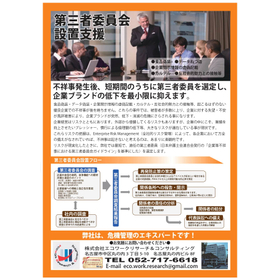
  5. 4 Support for establishing a third-party committee conducted by former prosecutors, former judges, and former police officials. エコワークリサーチ&コンサルティング 名古屋本社 東京(支店) 大阪(支店)

Support Product List

331~360 item / All 556 items

Displayed results

Skill management promotion support

We will support the promotion of your company's skill management!

Regarding skill management, I will comment primarily on skill management for workers in the manufacturing industry. Skill management generally refers to the process of visualizing the skills that workers possess and making them available as shared information within the company. Once skill management is established, it can be utilized in various ways, such as considering personnel allocation in each department, assigning tasks (referring to the distribution of work to individuals, where managers assign tasks or duties to their subordinates), and for the purpose of performance evaluations. On the other hand, when promoting skill improvement through skill management, it becomes possible to enhance visual management levels, correct skill variations, and promote multi-skilled workers. Furthermore, in manufacturing processes that are primarily centered around human labor, it can significantly influence the quality of manufactured products and the productivity of the production line. Here, I will specifically mention the key points for implementing skill management aimed at promoting various benefits from improving the proficiency of manufacturing process workers. Support and guidance regarding the approach to skill management, including its structure, item setting, evaluation criteria, and educational methods, will be the focus of production technology consulting.

  • Management consultant/Small business consultant
  • Support

Added to bookmarks

Bookmarks list

Bookmark has been removed

Bookmarks list

You can't add any more bookmarks

By registering as a member, you can increase the number of bookmarks you can save and organize them with labels.

Free membership registration

Support for the establishment of the seven tools of QC.

We will support the establishment of your company's seven QC tools!

In the manufacturing industry, there are seven tools of QC (Quality Control) used for education and guidance. These tools are primarily utilized on the production floor to confirm quality and identify opportunities for quality improvement, and they are employed by analyzing numerical data such as statistical information. The seven tools are: 1. Pareto chart, 2. Histogram, 3. Control chart, 4. Scatter diagram, 5. Cause-and-effect diagram, 6. Check sheet, 7. Graph. We support the basic usage, application, and establishment of these tools.

  • Management consultant/Small business consultant
  • Support

Added to bookmarks

Bookmarks list

Bookmark has been removed

Bookmarks list

You can't add any more bookmarks

By registering as a member, you can increase the number of bookmarks you can save and organize them with labels.

Free membership registration

Support for the creation of engineering design plans.

We support the improvement of the level of process design planning in production technology!

It is important to systematize the approach to production technology-related work and to clarify the tasks that should be implemented. The process design plan document serves as a format for establishing an overall plan at the start of process design for new products, rationalization, etc. Whether it is a new business, a new product, or a response to rationalization, anything planned as a point of change in the flow (above a certain level) requires goal setting to execute that plan. The goals for process design work include clarifying the investment amount, allowable flow quantity (such as MT), processing costs (man-hours), layout (required area, logistics), and target quality (target defect rate), as well as determining when these will be executed. The purpose of establishing the "Process Design Plan Guidelines" is to formalize these goal-setting contents as operational rules. Support related to such goal setting will be the subject of consulting.

  • Management consultant/Small business consultant
  • Support

Added to bookmarks

Bookmarks list

Bookmark has been removed

Bookmarks list

You can't add any more bookmarks

By registering as a member, you can increase the number of bookmarks you can save and organize them with labels.

Free membership registration

Support for factory layout management

We support the improvement of factory layout management levels in production technology!

There are various types of layouts, but here we will focus specifically on the overall factory layout (excluding individual line layouts, office layouts, etc.). One aspect being considered is the optimization of logistics, ensuring a smooth flow from the delivery of materials and components to the shipment of products and parts. Another aspect is the proper arrangement of each component, intermediate product, finished product, and stagnant inventory to maintain appropriate stock levels. Additionally, the area efficiency of each section is confirmed and optimized. Other considerations include environmental concerns and the securing of necessary space. It is important to establish a comprehensive layout management system that allows top management to continuously monitor and manage these aspects, and the examination of these factors and the establishment of maintenance management methods will be the focus of consulting.

  • Management consultant/Small business consultant
  • Support

Added to bookmarks

Bookmarks list

Bookmark has been removed

Bookmarks list

You can't add any more bookmarks

By registering as a member, you can increase the number of bookmarks you can save and organize them with labels.

Free membership registration

Support for SWOT analysis of a company's technological aspects and finding direction.

We will assist in conducting a SWOT analysis of your company's technology and finding a direction.

It is important to analyze the current state of a company's technological capabilities and support the company's leadership in deriving future directions on their own. One of the frameworks for this is SWOT analysis, which is often referred to as a classic framework, and when used correctly, it can be quite effective. As a production technology consultant, I possess not only extensive knowledge in various areas of production technology but also experience in market development matching, and I have been assisting companies in discovering their future directions using this SWOT analysis.

  • Management consultant/Small business consultant
  • Support

Added to bookmarks

Bookmarks list

Bookmark has been removed

Bookmarks list

You can't add any more bookmarks

By registering as a member, you can increase the number of bookmarks you can save and organize them with labels.

Free membership registration

Support for the creation of engineering system diagrams.

We will provide support for creating the process flow diagram of your company's processing operations.

Generally, a process includes various processing steps (assembly, press-fitting, riveting, welding, etc.), treatment steps (heat treatment, cleaning, etc.), and inspection steps (checks, various inspections). A representation of all processes, including material processing, incoming goods, acceptance inspection, in-house processing, product inspection, packaging, and shipping, is called a comprehensive process flow diagram. With a process flow diagram, it becomes possible to advance the examination of PFMEA and QC process charts. Support and guidance on how to create and approach this process flow diagram will be the subject of consulting.

  • Management consultant/Small business consultant
  • Support

Added to bookmarks

Bookmarks list

Bookmark has been removed

Bookmarks list

You can't add any more bookmarks

By registering as a member, you can increase the number of bookmarks you can save and organize them with labels.

Free membership registration

Support for building QA networks

We will assist in laying a network for quality assurance through the construction of a QA network.

The QA network is characterized by its analysis being displayed in a matrix format, as the name suggests. A single defect does not necessarily occur in just one process. When it spans multiple processes, there is a possibility of oversight in FMEA, and precisely as a safety net, extracting the relevant processes without omission becomes a major objective of the QA network. We will provide a series of support related to the construction of this QA network.

  • Management consultant/Small business consultant
  • Support

Added to bookmarks

Bookmarks list

Bookmark has been removed

Bookmarks list

You can't add any more bookmarks

By registering as a member, you can increase the number of bookmarks you can save and organize them with labels.

Free membership registration

Support for advancing pitch events for market development.

We will support you in how to proceed with pitch events for market expansion.

As part of our support for market development, we provide assistance for pitch events organized by companies. The key points for implementation, particularly the basic structure of the presentation, are as follows: 1. Cover Page: Title (Technology or Product), Table of Contents 2. Company Overview: Company Name, Industry, Size, Products, Equipment, Technology → Background and company introduction to clarify the positioning of the target product or technology. 3. Explanation of Technology/Product: - Features of the product, problems it can solve, comparison with existing technologies/products - Highlight areas where the product, technology, quality, cost, and delivery time are particularly advantageous (including diagrams, tables, photos, etc.) - Evidence 4. Applications and Uses: - Industries or applications you wish to target - Specific applications - Imagery 5. Summary: - Summary of technology and product explanation - Benefits, applications, uses - Key selling points 6. Contact Information (for reference): - URL (Website) - Inquiry form - Phone number, contact person, etc. Among these components of the presentation, the sections on 3. Explanation of Technology/Product and 4. Applications and Uses are the climax of the presentation and require the most consideration time. We support the advancement of pitch events as described above.

  • Management consultant/Small business consultant
  • Support

Added to bookmarks

Bookmarks list

Bookmark has been removed

Bookmarks list

You can't add any more bookmarks

By registering as a member, you can increase the number of bookmarks you can save and organize them with labels.

Free membership registration

Support for the content of production technology work.

We will support you from the basics regarding the content of work in production technology.

To help you better understand what kind of work is involved in production technology, I will briefly organize the tasks related to production technology. 1. Product development and product design support 2. Development of production technology 3. Process design (line, process) 4. Capital investment 5. (Various) schedule management 6. Procurement support 7. Quality assurance and quality improvement 8. Ensuring productivity and improving productivity 9. On-site improvements 10. Others Safety, environment, pollution prevention, energy conservation, maintenance management, response during production reductions (shutdown activities), etc. As mentioned above, the work of production technology is involved in almost all issues related to manufacturing in the manufacturing industry, and support and guidance regarding the approach and direction of these tasks are the subjects of production technology consulting.

  • Management consultant/Small business consultant
  • Support

Added to bookmarks

Bookmarks list

Bookmark has been removed

Bookmarks list

You can't add any more bookmarks

By registering as a member, you can increase the number of bookmarks you can save and organize them with labels.

Free membership registration

Support for reviewing product drawings in production technology.

We will support you in the approach to reviewing product drawings in production technology.

The points to consider for the production technology department when reviewing product drawings include the following items: 1. Timing of review 2. Content of review - Preparation materials for drawing review meetings - Pursuit of manufacturability - Understanding of product functions and required specifications - Consideration of optimal solutions when there are many options for construction methods - Quality considerations - Cost considerations - Delivery time considerations 3. Promotion of standardization In actual work, there are many steps to reach the standardization mentioned in point 3, so providing support and guidance on how to proceed is the focus of production technology consulting.

  • Management consultant/Small business consultant
  • Support

Added to bookmarks

Bookmarks list

Bookmark has been removed

Bookmarks list

You can't add any more bookmarks

By registering as a member, you can increase the number of bookmarks you can save and organize them with labels.

Free membership registration

Support for setting management points in QC engineering charts.

We will assist you in setting up management points for the QC engineering table.

As management points, they can be broadly divided into condition setting (INPUT) items and appearance confirmation (OUTPUT) items. In other words, it is necessary to determine the conditions under which processing will occur in the target process and how to confirm and evaluate the results of that processing. For example, in the case of resistance (projection) welding as the target process, the condition management items include current values (peak value, effective value), energization time, electrode pressure, etc., while the appearance management items include welding condition (spatter, melting state), nugget diameter, welding strength (primarily based on base material fracture), etc. For these, it is essential to set management intervals (sampling intervals such as total count, start and end), managers (recorders, verifiers), tools for management confirmation (visual inspection, tactile inspection, measuring instruments, equipment display values, etc.), and management methods (checks, control charts), among others. In addition to these, it is also necessary to describe content related to equipment maintenance and safety/environmental checks for each target equipment and process. Based on the above, we will support the setting of management points in the QC process chart.

  • Management consultant/Small business consultant
  • Support

Added to bookmarks

Bookmarks list

Bookmark has been removed

Bookmarks list

You can't add any more bookmarks

By registering as a member, you can increase the number of bookmarks you can save and organize them with labels.

Free membership registration

Support for the introduction of masterpieces

We will support the introduction of the original masterpiece.

The purpose of confirmation by the master piece is to ensure that the equipment subject to processing and inspection operates normally and that dimensions and performance can be accurately assessed. Typically, sampling confirmations are conducted at the start and end of shifts. Below, I will comment on the management methods for items that serve as standards for position and dimensions, as well as for performance and characteristics. 1. Items that serve as standards for position and dimensions: In many cases, items that serve as standards for position and dimensions are required for confirming foolproof operation in the processing stage (F.P) and for verifying dimensional accuracy in the inspection stage. These items are often relatively rigid, but due to expected aging changes from long-term use, regular measurement of dimensions and positions (numerical confirmation) is necessary. 2. Items that serve as standards for performance and characteristics: In various processes, items that serve as standards for the performance and characteristics of semi-finished and finished products may be required for performance inspections and final shipping inspections. Here too, due to expected aging changes from long-term use, regular measurement of performance and characteristics (numerical confirmation) is necessary. As mentioned above, we will support the introduction of master pieces.

  • Management consultant/Small business consultant
  • Support

Added to bookmarks

Bookmarks list

Bookmark has been removed

Bookmarks list

You can't add any more bookmarks

By registering as a member, you can increase the number of bookmarks you can save and organize them with labels.

Free membership registration

Support for the format of examination survey reports

We will support you regarding the format of the examination survey report.

To solidify our company's technology, it is essential to have backing from the research results, which will also serve as a tool for passing down knowledge to future engineers. Just as excellent chefs have detailed recipes for what is commonly referred to as factory know-how, thorough and meticulous investigation and documentation can lead to the formalization of tacit knowledge. This is also true for production engineers; especially considering the goal of ensuring mass production quality, there are limitless opportunities for improvement, and the subjects of testing and investigation are infinite. As for the subjects of testing and investigation in production technology operations, examples include investigations related to processing and inspection conditions, specification determination, various defect factor investigations and defect rate reduction studies, processing time reduction studies, measures to improve operational efficiency, and environmental improvement studies, among many other topics related to QC + α. In light of the above, I will provide support regarding the format of the testing and investigation report.

  • Management consultant/Small business consultant
  • Support

Added to bookmarks

Bookmarks list

Bookmark has been removed

Bookmarks list

You can't add any more bookmarks

By registering as a member, you can increase the number of bookmarks you can save and organize them with labels.

Free membership registration

Support for the content to be prepared for engineering audits.

We will assist you with the content that needs to be prepared for various engineering audits.

Items and methods of confirmation generally required for engineering audits 【Confirmation at the venue】 1. Overview confirmation of the target company or target department 2. Overview of target products, target processes, and target technologies 3. Confirmation of technical content - Required quality of key management item content drawings - Results of PFMEA implementation - Reflection points from past trouble points and previous models - Main items of process capability investigation results - Preparation status of documentation, QC process charts 【On-site confirmation】 - Status of incoming goods management, incoming inspections, parts management, storage conditions - Work instructions and training status (planned vs. actual) - Demonstration of the flow of parts input, assembly, inspection work, and shipping - FP management and methods for isolating defective products - Confirmation of the status of equipment, jigs, measuring instruments, environment, etc., regarding 5M1E - Work instructions, work content, and management content - Documents that show the movements of workers, such as standard work combination charts - Worker proficiency status, proficiency charts by worker - Control charts, P charts, and preparation status of various control charts - FP management charts and preparation status of FP management content and management charts - Management content of limit samples and preparation status of management charts - Daily inspection sheets for equipment and preparation status of equipment maintenance management Depending on the purpose of the engineering audit, the above items will be arranged and addressed individually.

  • Management consultant/Small business consultant
  • Support

Added to bookmarks

Bookmarks list

Bookmark has been removed

Bookmarks list

You can't add any more bookmarks

By registering as a member, you can increase the number of bookmarks you can save and organize them with labels.

Free membership registration

Support for routine equipment inspections.

We will support your company's approach to routine equipment inspections.

Here, I will describe the contents that the operators of the department handling the equipment should check on a daily basis, separate from the regular inspections and statutory inspections conducted by the specialized maintenance department, in the form of "Daily Inspection Guidelines." 【Daily Inspection Guidelines】 (Purpose of Daily Inspections) - By conducting the specified inspections at the start and end of shifts, the equipment usage department can confirm that the equipment is operating normally and take measures (before and after) to prevent any disruption to operations. If any abnormalities are found, immediate confirmation and repairs by the specialized department should be carried out to help maintain the equipment in normal condition. (Content of Daily Inspections) - Tailored to the characteristics of the target equipment, the content should allow for instant confirmation of normal and abnormal conditions, incorporating insights from the specialized and related departments. (Inspection items, inspection frequency, inspection tools, responsible persons, etc.) (Format of Daily Inspection Sheets) - The responsibility for the regulations of the equipment daily inspection work guidelines and overall management responsibility (confirmation of the inspection status of the target equipment) lies with the equipment maintenance department. (For some parts-related equipment, it is the quality assurance department.) - The responsibility for the confirmation tasks using the daily equipment inspection sheets lies with the equipment ownership department (such as the production department), etc. Based on the above, we will support your company's approach to daily equipment inspections.

  • Management consultant/Small business consultant
  • Support

Added to bookmarks

Bookmarks list

Bookmark has been removed

Bookmarks list

You can't add any more bookmarks

By registering as a member, you can increase the number of bookmarks you can save and organize them with labels.

Free membership registration

Support for the operation method of limit samples.

We will support you in the operation of your company's limit samples.

Below are three representative purposes for setting standards: 1. For evaluating the quality of products or semi-finished goods where quantitative testing is difficult and reliance on qualitative judgment is necessary. 2. For evaluating the quality of products or semi-finished goods that can be quantitatively assessed but are subject to reasons such as being labor-intensive or requiring advanced technology (and thus costly), which have been subjected to visual inspection of all units. 3. For situations where it is difficult to establish criteria for good or bad judgment, such as scratches, dents, or chips, but there is a need to impose some restrictions on occurrences that are actually happening, to be extracted from liquid products and set as samples. Based on the above, we will support your company's method of operating limit samples.

  • Management consultant/Small business consultant
  • Support

Added to bookmarks

Bookmarks list

Bookmark has been removed

Bookmarks list

You can't add any more bookmarks

By registering as a member, you can increase the number of bookmarks you can save and organize them with labels.

Free membership registration

Support for the structure of production technology organizations.

We will provide support for the organization of production technology.

The elements that a production technology organization should possess include the following: The necessity varies depending on the company's size and the manufacturing technologies involved, but it is essential to achieve optimal organization through appropriate combinations and adjustments of load balance that include these elements. - Process research elements: Basic research in production technology, production technology roadmap - Process design elements: Product drawing review, process flow and management planning, equipment specification review, equipment procurement - Quality review elements: New product quality review, fluid product quality review, investigation and research - Cost review elements: Cost estimation, cost table review - Delivery review elements: Production preparation schedule management - Equipment review elements: Equipment design, equipment manufacturing, maintainability review, safety review - Factory review elements: Factory logistics review, area review - Supplier review elements: Supplier support Based on the above, we will provide support for the structure of the production technology organization.

  • Management consultant/Small business consultant
  • Support

Added to bookmarks

Bookmarks list

Bookmark has been removed

Bookmarks list

You can't add any more bookmarks

By registering as a member, you can increase the number of bookmarks you can save and organize them with labels.

Free membership registration

Support for the way of managing charts.

We will provide support for the management chart's structure.

There are two types of control charts: 1. Measurement values and 2. Count values. 1. Control charts for measurement values Control charts for measurement values use continuously changing data. Typical examples include the "X-R control chart" and the "X-s control chart." In the X-R control chart, the average value X within a group is graphed in the X chart, and the range R within each group is graphed in the R chart. These are arranged vertically to allow simultaneous viewing of the data's average and distribution range, resulting in the X-R control chart. The X-s control chart creates an X-R control chart that graphs the average value within a group and an s chart that graphs the standard deviation of the data for each group. These are also arranged vertically to allow simultaneous viewing of the average value and standard deviation. The X-R control chart, which uses the maximum and minimum values of the data, can lead to a large number of data points, making it difficult to see the variation within the range. The X-s control chart uses the standard deviation s instead of the range R to make the variation clearer. 2. Control charts for count values Control charts for count values use discrete data. The main types include "P control chart," "Pn control chart," "C control chart," and "U control chart." Based on the above, we will provide support regarding the appropriate use of control charts.

  • Management consultant/Small business consultant
  • Support

Added to bookmarks

Bookmarks list

Bookmark has been removed

Bookmarks list

You can't add any more bookmarks

By registering as a member, you can increase the number of bookmarks you can save and organize them with labels.

Free membership registration

Support for the nature of the cause-and-effect diagram.

We will provide support for the characteristics and factors diagram!

When creating a cause-and-effect diagram, the following steps are taken: (1) Determine the issue (characteristic) and create the backbone. (In production technology, identify the details of defects, etc.) (2) Create the major bones. (It is easier to understand if you categorize the major bones according to the 5M1E.) (3) Create the middle bones (list the contents that could be factors of the major bones). (4) Create the minor bones (list the contents that could be factors of the middle bones). The characteristic of the cause-and-effect diagram is to organize the factors into major bones, middle bones, and minor bones, and visualize them to make it easier to grasp the overall picture. The cause-and-effect diagram is used for cause investigation, issue organization, information sharing, and more. The 5M1E of the major bone section refers to: 1. Machine (Technology) 2. Method (Process) 3. Material (Includes information on raw materials and consumables.) 4. Manpower (Physical labor) / Mind power (Brain function) 5. Measurement (Inspection) 6. Environment If this cause-and-effect diagram can be applied to various issues in production technology operations, it will contribute to improving operational efficiency.

  • Management consultant/Small business consultant
  • Support

Added to bookmarks

Bookmarks list

Bookmark has been removed

Bookmarks list

You can't add any more bookmarks

By registering as a member, you can increase the number of bookmarks you can save and organize them with labels.

Free membership registration

Support for the format of equipment specifications.

We will provide support for the specifications of the equipment document.

【Basic Items of Equipment Specification Document】 1. Equipment Quotation Request Document (Overview); - Target Equipment Name; A concise name that represents the equipment, including process name, machining name, purpose, etc. - Purpose of Use; Clearly state the target products/parts, target processes, machining content, purpose of equipment use, etc. - Request Details; Include the using department, equipment installation deadline, quantity requested, estimated cost, etc. - Operating Conditions; Fully automatic, semi-automatic, manual, number of operators, number of units held, - Equipment; Size, weight, method of delivery - Quotation Conditions; Descriptions aimed at estimating costs for ordering - Others; Design scope, relevant laws, etc. 2. Machining Capability Instruction Document; - Cycle time, production capacity (monthly), operating rate, setup time, compatible models, material supply, handling of defective products, etc., related to the equipment's machining capability. 3. Machining Conditions Document; - For each process, detail the machining procedures, machining standards, machining methods, machining conditions (pressure, time, temperature, etc.), specific machining parts, necessary dimensions, etc. (including illustrations). 4. Process Capability Instruction Document; - Instruction on evaluation items for the quality of the processed products (evaluation content, sampling number, measurement methods, evaluation standards (Cp, Cpk, defect rate), etc.). 5. Others; Related Information; - Attach notes regarding safety, workability, etc., product/part drawings, layout drawings, etc.

  • Management consultant/Small business consultant
  • Support

Added to bookmarks

Bookmarks list

Bookmark has been removed

Bookmarks list

You can't add any more bookmarks

By registering as a member, you can increase the number of bookmarks you can save and organize them with labels.

Free membership registration

Support for AI visual inspection process

We will provide support for the approach to AI visual inspection processes!

The disadvantages and advantages of AI visual inspection are as follows: 【Disadvantages of AI Visual Inspection】 1. Cannot make qualitative judgments 2. Cannot detect conditions outside of what it has been trained on 【Advantages of AI Visual Inspection】 1. Can detect foreign objects that may be overlooked by the human eye 2. Does not complicate the setting of inspection rules Although AI has its weaknesses, its greatest advantage is the ability to "correctly judge quantified criteria at a consistent speed." To effectively utilize this advantage and automate visual inspections, it is essential to meticulously quantify the qualitative judgments that have traditionally been made visually and to carefully adjust the judgment criteria during the training phase for the AI. This allows for automation while ensuring the quality demanded by the company. In summary, the disadvantages and advantages of AI visual inspection indicate that fine quantification of judgment criteria and meticulous threshold adjustments are indispensable. By implementing these, it is possible to significantly improve inspection challenges through the construction of custom-made AI.

  • Management consultant/Small business consultant
  • Support

Added to bookmarks

Bookmarks list

Bookmark has been removed

Bookmarks list

You can't add any more bookmarks

By registering as a member, you can increase the number of bookmarks you can save and organize them with labels.

Free membership registration

Support for creating equipment safety specifications.

We will assist you in creating safety specifications for the equipment.

In companies where a Quality Management System (QMS) is established, there are safety specifications for equipment, and I believe there are no particular issues. However, considering a situation where such systems are not in place, I will provide references on what should be considered for safety. There are fundamental principles for ensuring the safety of machinery to effectively prevent mechanical hazards. These are the three principles: 1. Principle of inherent safety: Eliminate hazardous areas (hazard sources) of the machinery or reduce them to a level that does not cause harm to people. For example, rounding off corners or reducing operational energy. 2. Preventing human access or contact with hazardous sources of machinery. For example, installing guards such as fences or enclosures. 3. Principle of stopping: Generally, if the machinery is stopped, it poses no danger. Therefore, if a person needs to enter the operational range of the machinery, it should be stopped using interlocks or permission should be granted only after stopping. In creating safety specifications for equipment, it is necessary to adhere to the above three fundamental principles and to consider the specific content of the equipment in question, developing and documenting the specifications in a more concrete manner.

  • Management consultant/Small business consultant
  • Support

Added to bookmarks

Bookmarks list

Bookmark has been removed

Bookmarks list

You can't add any more bookmarks

By registering as a member, you can increase the number of bookmarks you can save and organize them with labels.

Free membership registration

Support for creating equipment maintenance specifications.

We will assist you in creating equipment maintenance specifications!

Equipment maintenance involves the regular inspection and repair of various factory equipment that is operational in the factory. It is ideal for the equipment specifications to include the following three types of maintenance: 1. Preventive Maintenance: This requires establishing a maintenance plan to ensure that factory equipment and machinery do not break down, involving inspections, repairs, and parts replacements. The goal is to prevent equipment failures in advance through regular inspections and ensure stable operation. → One aspect is to clearly define the items that should undergo daily inspections. Additionally, it is important to list the parts that should be replaced regularly. 2. Corrective Maintenance: This refers to maintenance performed in response to issues such as functional decline, malfunctions, or breakdowns that occur in factory equipment. → This includes the development of manuals for troubleshooting, ease of conducting emergency maintenance work, and securing maintenance and workspaces. 3. Predictive Maintenance: In contrast to preventive maintenance, which involves regular inspections, predictive maintenance monitors the condition of factory equipment and machinery. It is conducted when signs of functional decline, breakdowns, or malfunctions are detected. → This involves clarifying methods for sensing precursors to equipment failures based on past failure histories and accumulated data from the specification creation company and equipment manufacturers, enabling predictive maintenance for the targeted equipment.

  • Management consultant/Small business consultant
  • Support

Added to bookmarks

Bookmarks list

Bookmark has been removed

Bookmarks list

You can't add any more bookmarks

By registering as a member, you can increase the number of bookmarks you can save and organize them with labels.

Free membership registration

Support for the mass production line preparation project.

We will assist in promoting the mass production line preparation project.

【Mass Production Line Production Preparation Project】 ●Purpose As an investment in mass production lines, there are various aspects such as responding to newly developed products, next-generation products, similar new products, increased production, and rationalization. However, depending on the importance of quality and the size of the investment, project activities are necessary for its business viability. This is positioned as the task of promoting production preparation for that project. ●Project Promotion Unit Fundamentally implemented on a product basis. ●Duration, Frequency, Location - Duration: For newly developed products, approximately 3-5 years before mass production and about 1 year after; the duration may vary depending on the importance of quality and the size of the investment. - Frequency: Generally once a month (may also be every 2-3 months depending on the situation). - Location: The main location will be aligned with the production preparation phase. ●Approach - Members, Promotion Leader: Production Technology (Minutes: Production Technology) MUST participate: Production Technology, Design, Quality Assurance, Production Management, Production WANT to participate: Maintenance, Inspection (Parts Inspection, Product Inspection), Planning, etc. - Meeting Method: Primarily in-person meetings - Meeting Themes: Progress confirmation of issues related to mass production preparation by each department, etc. The above-mentioned support and guidance regarding the structure and approach of the "Mass Production Line Production Preparation Project" will be the subject of consulting.

  • Management consultant/Small business consultant
  • Support

Added to bookmarks

Bookmarks list

Bookmark has been removed

Bookmarks list

You can't add any more bookmarks

By registering as a member, you can increase the number of bookmarks you can save and organize them with labels.

Free membership registration

Support for area creation projects

We will assist in promoting the area creation project.

【Factory Space Creation Project】 ●Purpose In the manufacturing industry, factory space is an important asset. In addition to space, the efficiency of logistics is also crucial. The "Factory Space Creation Project" aims to smoothly respond to the constantly changing production numbers, line configurations, and the need for future space allocation in an optimal manner. Production technology is positioned as a central element of this project, taking on the role of the driving leader. ●Project Promotion Unit Company-wide (as it involves optimization of logistics and management of space, it is a company-wide initiative) ●Duration and Frequency - Duration: Ongoing - Frequency: Generally once a month (set according to the size of fluctuations as a company) ●Approach - Members, Driving Leader: Production Technology (Minutes: Production Technology) MUST participate: Production Technology, Planning, Production, Production Management, relevant departments (specifically those involved in relocations, etc.) WANT to participate: Maintenance, Quality Assurance, Inspection (parts inspection, product inspection), and others - Meeting Method: Real meetings at each location (or online as necessary) - Meeting Themes: Progress confirmation of issues related to relocations and other departments, etc. Support and guidance regarding the structure and approach of this "Space Creation Project" will be the subject of consulting.

  • Management consultant/Small business consultant
  • Support

Added to bookmarks

Bookmarks list

Bookmark has been removed

Bookmarks list

You can't add any more bookmarks

By registering as a member, you can increase the number of bookmarks you can save and organize them with labels.

Free membership registration

Support for procurement projects

We will assist in promoting the procurement project.

【Procurement Project】 ●Purpose As a production technology initiative, this is somewhat of a special undertaking, but it is generally understood that 20-40% of product costs come from purchased goods from suppliers. The "Procurement Project" was initiated to address the need to tackle these costs. The production technology team, as experts in manufacturing, will primarily focus on developing suppliers through factory inspections, especially for companies that have no prior purchasing experience. ●Project Promotion Unit The basic unit is by factory, but it may be implemented by product group or line group as needed. ●Duration, Frequency, Location - Duration: Typically around 3-5 years; the duration may vary depending on the situation. - Frequency: Generally once a month. - Location: At the relevant factory (also applicable at candidate supplier companies). ●Approach - Members, Promotion Leader: Production Technology (Minutes: Production Technology) MUST participate: Production Technology, Procurement (Purchasing), Production Management, Planning, Quality Assurance WANT to participate: Design, Inspection (Parts Inspection, Product Inspection), Production, etc. - Meeting Method: Real meetings at the relevant factory or at the investigation sites of new candidate suppliers (for on-site verification). - Meeting Themes: Progress confirmation of each department involved in procurement project activities, progress confirmation of homework to report various settlement issues (such as account opening), etc.

  • Management consultant/Small business consultant
  • Support

Added to bookmarks

Bookmarks list

Bookmark has been removed

Bookmarks list

You can't add any more bookmarks

By registering as a member, you can increase the number of bookmarks you can save and organize them with labels.

Free membership registration

Support for the line transfer project.

I will assist with the promotion of the line transfer project.

【Line Transfer Project】 ●Purpose There is always a reorganization aimed at expanding the company's scale, and as part of this, there is the transfer of manufacturing lines. The activities promoting this transfer are carried out with the aim of leveling up both Q (Quality) and C (Cost) as an opportunity presented by the transfer itself. ●Project Promotion Unit The basic unit is by line, but it may be implemented by product groups or line groups as necessary. ●Duration and Frequency - Duration: Approximately two years before the line transfer to about one year after the line transfer. This assumes there is no new investment; if there is new investment, the duration will be extended accordingly. - Frequency: Basic is once a month. ●Approach - Members, Promotion Leader: Production Technology (Minutes: Production Technology) MUST participate: Production Technology, Production, Quality Assurance, Production Management, Maintenance, Inspection (Parts Inspection, Product Inspection) WANT to participate: Design, Planning, Others - Meeting Method: Real meetings at each location - Meeting Themes: Progress confirmation of each department related to the transfer (using the transfer checklist), progress confirmation of homework to solve issues for leveling up Q (Quality) and C (Cost) as an opportunity presented by the transfer, etc. Support and guidance regarding the nature and approach of the "Line Transfer Project" are the subjects of consulting.

  • Management consultant/Small business consultant
  • Support

Added to bookmarks

Bookmarks list

Bookmark has been removed

Bookmarks list

You can't add any more bookmarks

By registering as a member, you can increase the number of bookmarks you can save and organize them with labels.

Free membership registration

Support for the store closure activity project

We will assist in promoting the store closing activities project.

【Store Closure Activity Project】 ●Purpose Products have a lifespan, and of course, the production lines that handle them will eventually become low-load lines and ultimately face the fate of being discarded. On the other hand, for factories, these low-load lines become a burden due to the need to free up space for new lines. In response to this, there is the "Store Closure Activity Project." Production technology can play a central role in this project, positioning it as the driving leader of the initiative. ●Project Promotion Unit The basic unit is the factory, but it may be implemented at the product group or line group level as needed. ●Duration, Frequency, Location - Duration: Typically around 2 years; the duration may vary depending on the flow years of the target line and the response years for bulk production, etc. - Frequency: Basic is once a month. - Location: The relevant factory. ●Approach - Members, Promotion Leader: Production Technology (Minutes: Production Technology) MUST participate: Production Technology, Production Management, Production, Quality Assurance WANT to participate: Maintenance, Inspection (Parts Inspection, Product Inspection), Planning, etc. - Meeting Method: Real meetings at the factory. - Meeting Themes: Progress confirmation of each department related to store closure activities, bulk production, equipment disposal, and various decision-making issues to be submitted as homework for progress confirmation, etc.

  • Management consultant/Small business consultant
  • Support

Added to bookmarks

Bookmarks list

Bookmark has been removed

Bookmarks list

You can't add any more bookmarks

By registering as a member, you can increase the number of bookmarks you can save and organize them with labels.

Free membership registration

[Column] Reasons Why We Can't Hire Excellent Engineers Mid-Career

I will explain in a column the reasons why mid-career hiring is difficult and the solutions to address it!

According to a survey conducted by Mizuho Information & Research Institute, Inc. in 2019, there was a reported shortage of 220,000 engineers as of 2018. Furthermore, if productivity does not increase and demand continues to grow, it is predicted that there will be a shortage of over 780,000 personnel. The number of companies considering the shortage of engineers as a management issue is increasing, and it is not uncommon for them to struggle to hire talented engineers mid-career. This article will explain the reasons why it is difficult to hire talented engineers mid-career and the solutions to this issue. [Content Overview (Partial)] ■ Cases where engineers cannot be hired due to job postings - Lack of awareness regarding the low mobility of engineers - Difficulty in hiring based on future growth potential - Inability to post job openings focused on "desired talent" *For more detailed content of the column, please refer to the "Related Links" or "PDF Download." For further inquiries, feel free to contact us.

  • Recruitment business
  • Temporary staffing business
  • Other services
  • Support

Added to bookmarks

Bookmarks list

Bookmark has been removed

Bookmarks list

You can't add any more bookmarks

By registering as a member, you can increase the number of bookmarks you can save and organize them with labels.

Free membership registration

Construction of automatic assembly and production lines for heavy items and a variety of products | Support from upstream planning

Field surveys and process breakdown determine 70% of automation success! A line builder who sees it through to the end without giving up.

We solve the challenges of "time shortages" and "highly complex automation" faced by production engineers in the automotive, construction machinery, and machine tool industries through integration from the upstream process. Our automation line construction begins with on-site surveys to grasp the "truth of the field" that cannot be seen from drawings alone. We break down the specific warping and welding distortion of large and heavy workpieces, the reaction forces during fastening, and even the "tacit knowledge" that operators unconsciously perform, down to the second. We visualize the conditions for successful automation and develop a "Automation Line Concept Diagram (URS)" that eliminates the possibility of going back. We connect robots, image processing, control, material handling, and automated warehouses in a single line, managing everything centrally as project management (PM). From design, manufacturing, and construction to on-site supervision at overseas factories and fine-tuning after startup, we maintain a commitment to "see it through" without abandoning the project midway, ensuring stable operation of production equipment on-site. Through full turnkey (lump-sum contracting) support, we provide an environment where production engineers can focus on their core value-creating tasks.

  • Machinery and equipment installation/dismantling/relocation
  • Mechanical Design
  • Other FA equipment
  • Support

Added to bookmarks

Bookmarks list

Bookmark has been removed

Bookmarks list

You can't add any more bookmarks

By registering as a member, you can increase the number of bookmarks you can save and organize them with labels.

Free membership registration