2341~2385 item / All 2949 items
Displayed results
Filter by category

Added to bookmarks
Bookmarks listBookmark has been removed
Bookmarks listYou can't add any more bookmarks
By registering as a member, you can increase the number of bookmarks you can save and organize them with labels.
Free membership registration
Contact this company
Inquiry FormBefore making an inquiry
Download Profile2341~2385 item / All 2949 items
Filter by category

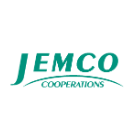
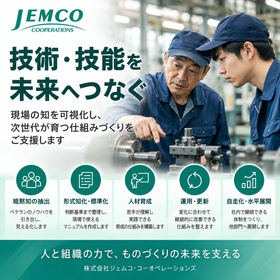
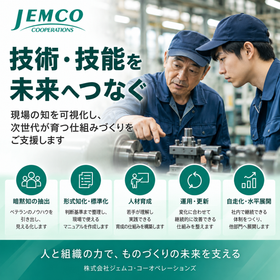
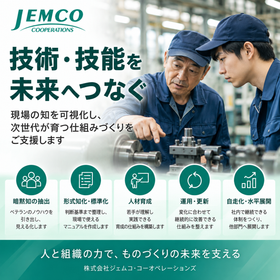
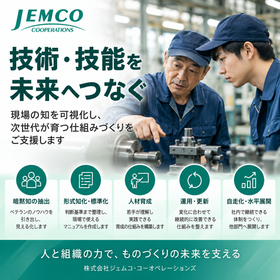
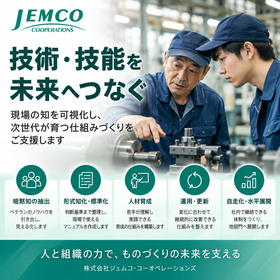
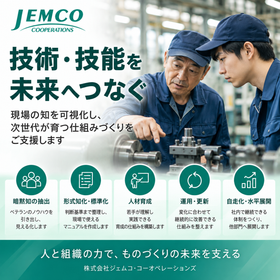
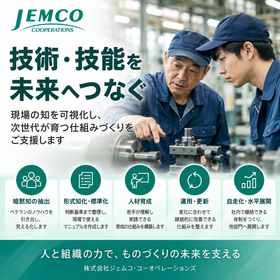
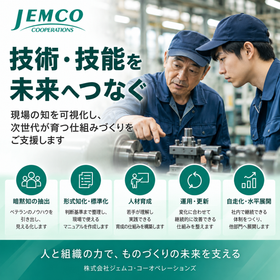
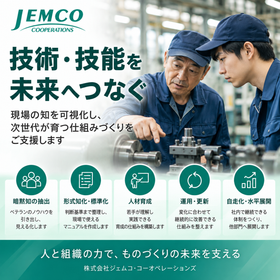
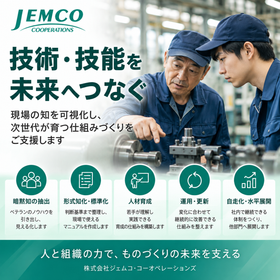
In the pharmaceutical industry, the inheritance of tacit knowledge held by skilled technicians with many years of experience is crucial for maintaining the quality of pharmaceuticals and ensuring stable supply. However, the know-how of veterans is not formalized, and on-the-job training (OJT) that is personalized, along with manuals that are disconnected from the realities of the field, can become barriers to the transmission of technology. These issues can lead to delays in the development of young technicians and a decline in the quality control system. Our technology and skill inheritance support service helps address these challenges by extracting judgment criteria and know-how from experienced professionals and organizing them into a form that young technicians can understand and replicate in practice. 【Usage Scenarios】 - Crisis in technology inheritance due to the retirement of skilled technicians - Time-consuming development of young and mid-level employees - Desire to eliminate the personalization of OJT - Manuals that do not match the realities of the field - Establishment of standardized work procedures 【Benefits of Implementation】 - Formalization of the tacit knowledge held by veterans, leading to an overall improvement in organizational technical capabilities - Early development and empowerment of young and mid-level employees - Improvement in the quality and efficiency of OJT - Stabilization of quality and enhancement of productivity through work standardization - Establishment of a system that allows for the continuous transmission of technology within the company
Added to bookmarks
Bookmarks listBookmark has been removed
Bookmarks listYou can't add any more bookmarks
By registering as a member, you can increase the number of bookmarks you can save and organize them with labels.
Free membership registration
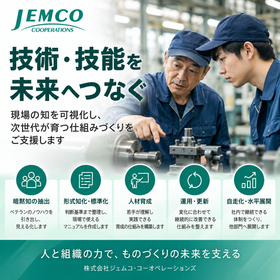
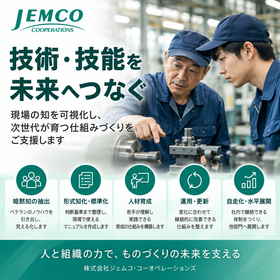
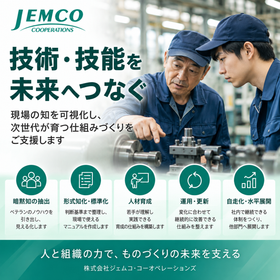
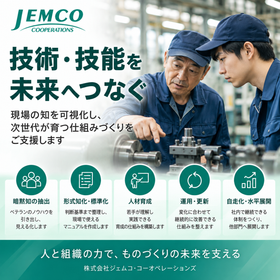
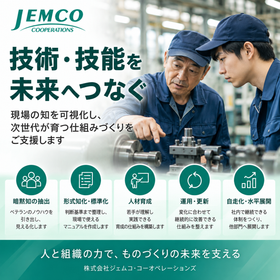
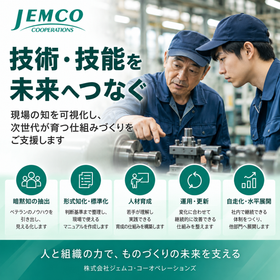
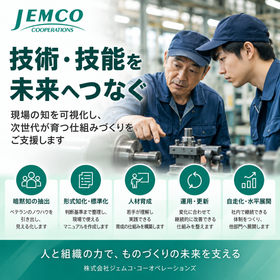
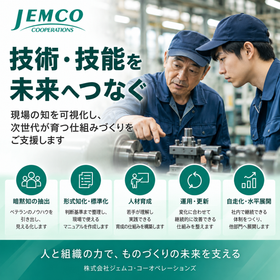
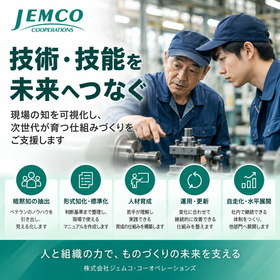
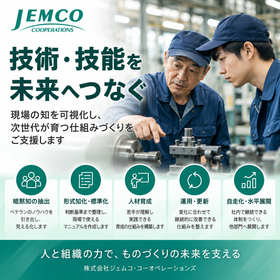
In the publishing industry, particularly in proofreading, the inheritance of tacit knowledge held by experienced professionals is essential for maintaining quality and improving productivity. However, the know-how of veterans is not formalized, and manuals that are disconnected from the realities of on-the-job training (OJT) can become barriers to the transmission of skills. These issues may lead to delays in the development of young engineers and a decline in technical capabilities. Our technical and skill inheritance support service helps address these challenges by extracting judgment criteria and know-how from seasoned professionals and organizing them into a form that young engineers can understand and reproduce in practice. 【Usage Scenarios】 - The crisis of technical inheritance due to the retirement of experienced proofreaders - Prolonged development time for young and mid-career proofreaders - Desire to eliminate the personalization of OJT - Proofreading manuals that do not match the realities of the field - Establishment of standardized proofreading procedures 【Benefits of Implementation】 - Formalization of the tacit knowledge held by veterans, leading to an overall improvement in organizational proofreading skills - Early development and empowerment of young and mid-career proofreaders - Improvement in the quality and efficiency of OJT - Stabilization of quality and productivity improvement through work standardization - Establishment of a system that allows for the continuous transmission of skills within the company
Added to bookmarks
Bookmarks listBookmark has been removed
Bookmarks listYou can't add any more bookmarks
By registering as a member, you can increase the number of bookmarks you can save and organize them with labels.
Free membership registration
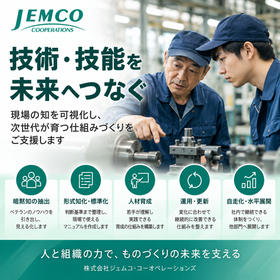
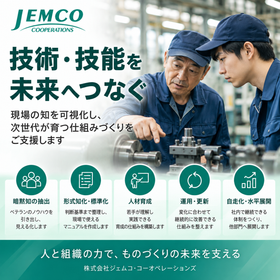
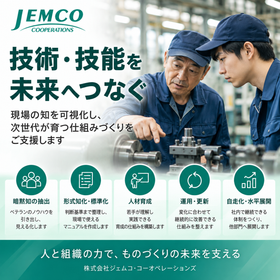
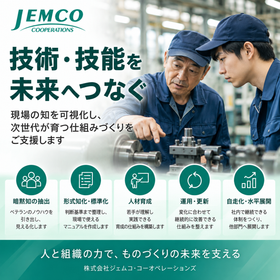
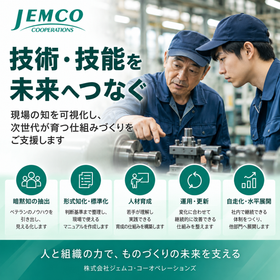
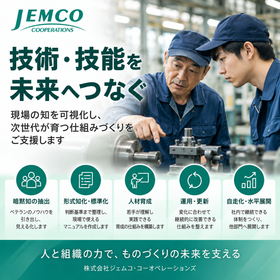
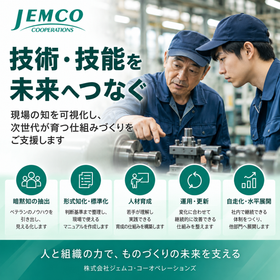
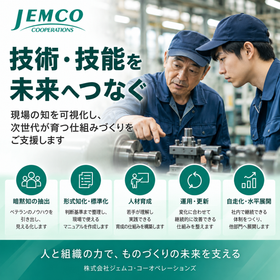
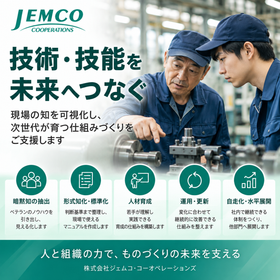
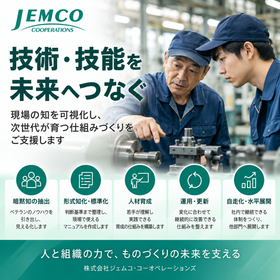
In the printing and plate-making industry, the inheritance of tacit knowledge held by skilled technicians with many years of experience is essential for maintaining quality and improving productivity. However, the know-how of veterans is not formalized, and the personalized on-the-job training (OJT) and manuals that are disconnected from the realities of the workplace can become barriers to the transmission of technology. These issues can lead to delays in the development of young technicians and a decline in technical skills. Our technology and skill inheritance support service helps address these challenges by extracting judgment criteria and know-how from experienced professionals and organizing them into a form that young technicians can understand and reproduce in practice. 【Usage Scenarios】 - Crisis in technology inheritance due to the retirement or resignation of skilled technicians - Time-consuming development of young and mid-level employees - Desire to eliminate the personalization of OJT - Manuals that do not match the realities of the workplace - Need to establish standardized work procedures 【Benefits of Implementation】 - Formalization of the tacit knowledge held by veterans, leading to an overall improvement in organizational technical skills - Early development and empowerment of young and mid-level employees - Improvement in the quality and efficiency of OJT - Stabilization of quality and enhancement of productivity through work standardization - Establishment of a system that allows for continuous technology inheritance within the company
Added to bookmarks
Bookmarks listBookmark has been removed
Bookmarks listYou can't add any more bookmarks
By registering as a member, you can increase the number of bookmarks you can save and organize them with labels.
Free membership registration
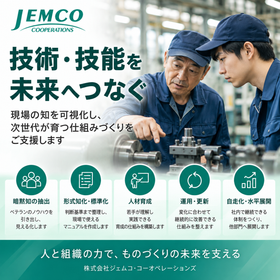
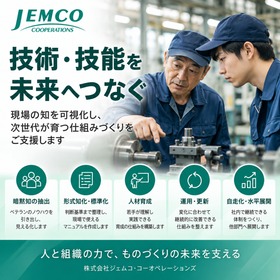
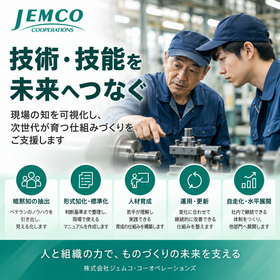
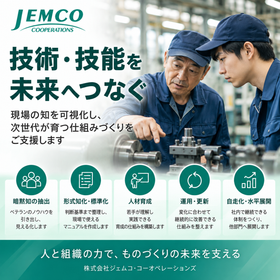
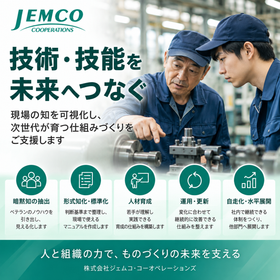
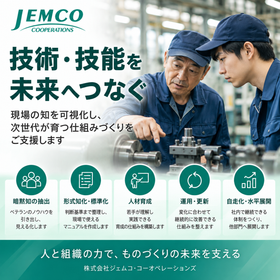
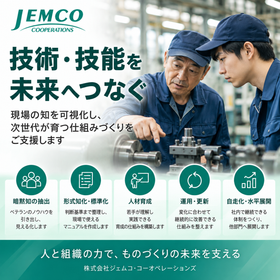
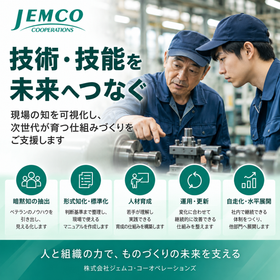
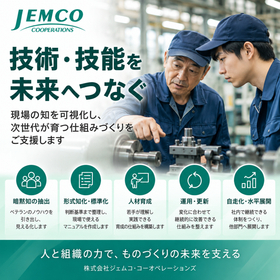
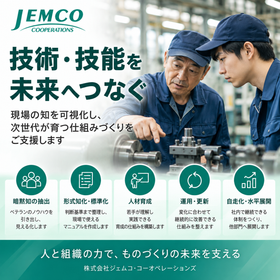
In the glass manufacturing industry, the inheritance of tacit knowledge held by skilled technicians with many years of experience is essential for maintaining quality and improving productivity. Particularly in the glass forming process, know-how that is difficult to articulate, such as the characteristics of materials, temperature management, and subtle adjustments in force during shaping, significantly affects quality. The lack of formalization of veteran know-how, along with on-the-job training (OJT) that is overly personalized and manuals that are disconnected from actual conditions on the ground, can become barriers to the transmission of technology. These issues may lead to delays in the development of young engineers and a decline in technical capabilities. Our technology and skill inheritance support service helps address these challenges by extracting judgment criteria and know-how from experienced individuals and organizing it into a form that young engineers can understand and reproduce in practice. 【Usage Scenarios】 - Crisis in technology inheritance due to the retirement of skilled technicians - Lengthy training periods for young and mid-level employees - Desire to eliminate the personalization of OJT - Manuals that do not match actual conditions on-site - Need to establish standardized work procedures 【Benefits of Implementation】 - Formalizing the tacit knowledge of veterans to enhance the overall technical capabilities of the organization - Early development and empowerment of young and mid-level employees - Improvement in the quality and efficiency of OJT - Stabilization of quality and increased productivity through work standardization - Establishment of a system that allows for ongoing technology inheritance within the company
Added to bookmarks
Bookmarks listBookmark has been removed
Bookmarks listYou can't add any more bookmarks
By registering as a member, you can increase the number of bookmarks you can save and organize them with labels.
Free membership registration
In the wood processing industry, the inheritance of tacit knowledge held by skilled technicians with many years of experience is essential for maintaining quality and improving productivity. However, the know-how of veterans is not formalized, and on-the-job training (OJT) that is personalized, along with manuals that are disconnected from the realities of the workplace, can become barriers to the transmission of technology. These issues may lead to delays in the development of young technicians and a decline in technical capabilities. Our support service for the transmission of technology and skills helps address these challenges by extracting judgment criteria and know-how from experienced individuals and organizing them into a form that young technicians can understand and reproduce in practice. 【Usage Scenarios】 - Crisis in technology inheritance due to the retirement of skilled technicians - Prolonged development time for young and mid-level employees - Desire to eliminate the personalization of OJT - Manuals that do not match the realities of the workplace - Need to establish standardized work procedures 【Benefits of Implementation】 - Formalizing the tacit knowledge of veterans to enhance the overall technical capabilities of the organization - Early development and empowerment of young and mid-level employees - Improvement in the quality and efficiency of OJT - Stabilization of quality and increased productivity through work standardization - Establishment of a system that allows for the continuous transmission of technology within the company
Added to bookmarks
Bookmarks listBookmark has been removed
Bookmarks listYou can't add any more bookmarks
By registering as a member, you can increase the number of bookmarks you can save and organize them with labels.
Free membership registration
In the textile industry, particularly in the field of weaving, the inheritance of tacit knowledge held by skilled technicians with years of experience is essential for maintaining quality and improving productivity. However, the know-how of veterans is not formalized, and the personalized on-the-job training (OJT) and manuals that are disconnected from the realities of the workplace can become barriers to the transmission of technology. These issues can lead to delays in the development of young engineers and a decline in technical capabilities. Our support service for the transmission of technology and skills helps address these challenges by extracting criteria and know-how from experienced professionals and organizing them into a form that young engineers can understand and reproduce in practice. 【Usage Scenarios】 - Crisis in technology transfer due to the retirement or resignation of skilled technicians - Time-consuming development of young and mid-level employees - Desire to eliminate the personalization of OJT - Manuals that do not match the realities of the workplace - Establishment of standardized work procedures 【Effects of Implementation】 - Formalization of the tacit knowledge held by veterans, leading to an overall improvement in organizational technical capabilities - Early development and empowerment of young and mid-level employees - Improvement in the quality and efficiency of OJT - Stabilization of quality and productivity improvement through work standardization - Establishment of a system that allows for continued technology transfer within the company
Added to bookmarks
Bookmarks listBookmark has been removed
Bookmarks listYou can't add any more bookmarks
By registering as a member, you can increase the number of bookmarks you can save and organize them with labels.
Free membership registration
In the steel industry, the inheritance of tacit knowledge held by skilled technicians with many years of experience is essential for maintaining quality and improving productivity. Particularly in the melting process, subtle adjustments to the fire and the timing of material input based on experience significantly impact product quality. However, the know-how of veterans is not formalized, and the reliance on personalized on-the-job training (OJT) and manuals that do not reflect the realities of the workplace can create barriers to technology transfer. These issues may lead to delays in the development of young engineers and a decline in technical capabilities. Our technology and skill transfer support service helps address these challenges by extracting judgment criteria and know-how from experienced workers and organizing them into a form that young engineers can understand and replicate in practice. 【Usage Scenarios】 - Crisis in technology transfer due to the retirement of skilled technicians - Time-consuming development of young and mid-level employees - Desire to eliminate the personalization of OJT - Manuals that do not match the realities of the workplace - Establishment of standardized work procedures 【Benefits of Implementation】 - Formalization of the tacit knowledge held by veterans, leading to improved technical capabilities across the organization - Early development and empowerment of young and mid-level employees - Improvement in the quality and efficiency of OJT - Stabilization of quality and productivity improvement through work standardization - Establishment of a system that allows for continued technology transfer within the company
Added to bookmarks
Bookmarks listBookmark has been removed
Bookmarks listYou can't add any more bookmarks
By registering as a member, you can increase the number of bookmarks you can save and organize them with labels.
Free membership registration
In the machinery industry, particularly in the polishing process, the inheritance of tacit knowledge held by skilled technicians with many years of experience is essential for maintaining quality and improving productivity. However, the know-how of veterans is not formalized, and on-the-job training (OJT) that is personalized, along with manuals that are disconnected from the realities of the workplace, can become barriers to the transmission of technology. These issues can lead to delays in the development of young engineers and a decline in technical capabilities. Our technology and skill inheritance support service helps address these challenges by extracting judgment criteria and know-how from experienced workers and organizing them into a form that young engineers can understand and reproduce in practice. 【Usage Scenarios】 - Crisis in the inheritance of polishing technology due to the retirement of skilled technicians - Time-consuming development of polishing skills for young and mid-level employees - Desire to eliminate the personalization of OJT - Polishing operation manuals that do not match the realities of the workplace - Establishment of standardized polishing operation procedures 【Effects of Implementation】 - Formalization of the tacit knowledge held by veterans, leading to an overall improvement in polishing technical capabilities within the organization - Early development and empowerment of young and mid-level employees - Improvement in the quality and efficiency of OJT - Stabilization of polishing quality and increased productivity through standardization of work - Establishment of a system that allows for continuous technology inheritance within the company
Added to bookmarks
Bookmarks listBookmark has been removed
Bookmarks listYou can't add any more bookmarks
By registering as a member, you can increase the number of bookmarks you can save and organize them with labels.
Free membership registration
In the food industry, strict hygiene management is required to ensure product safety and maintain quality. The tacit knowledge related to hygiene management possessed by skilled technicians with years of experience is essential for maintaining quality and improving productivity. However, the lack of formalized know-how and the reliance on personalized on-the-job training (OJT) and manuals that are disconnected from actual conditions on the ground can become barriers to the transmission of technology. These issues may lead to delays in the development of young engineers and a decline in hygiene management levels. Our technology and skill transfer support service helps address these challenges by extracting judgment criteria and know-how related to hygiene management from experienced professionals and organizing it in a way that young engineers can understand and reproduce in practice. 【Usage Scenarios】 - Crisis in the inheritance of hygiene management skills due to the retirement of experienced technicians - Time-consuming hygiene management training for young and mid-level employees - Desire to eliminate the personalization of OJT and thoroughly implement standardized hygiene management - Manuals that do not match the actual hygiene management conditions on-site - Aim to establish standardized hygiene management procedures
Added to bookmarks
Bookmarks listBookmark has been removed
Bookmarks listYou can't add any more bookmarks
By registering as a member, you can increase the number of bookmarks you can save and organize them with labels.
Free membership registration
In the pharmaceutical industry, the inheritance of advanced knowledge and skills from experienced technicians is essential for maintaining product quality and stable supply. Particularly in quality assurance, subtle senses and experience-based judgments significantly impact product quality, making it important to formalize this tacit knowledge into a form that younger and mid-level employees can understand and reproduce in practice. Personalized on-the-job training (OJT) and manuals that are disconnected from the realities of the field can lead to delays in development and a decline in technical skills, potentially creating challenges in maintaining the quality assurance system. Our technical and skill inheritance support service helps address these issues by extracting judgment criteria and know-how related to quality assurance from experienced professionals and organizing it into a format that younger employees can understand and apply in practice. [Usage Scenarios] - Crisis in inheriting quality assurance know-how due to the retirement of experienced technicians - Time-consuming development of quality assurance skills for younger and mid-level employees - Desire to eliminate personalized OJT and cultivate uniform quality assurance skills - Manuals not aligning with the actual quality assurance practices in the field - Need to establish standardized quality assurance work procedures
Added to bookmarks
Bookmarks listBookmark has been removed
Bookmarks listYou can't add any more bookmarks
By registering as a member, you can increase the number of bookmarks you can save and organize them with labels.
Free membership registration
In the field of aerospace precision assembly, the inheritance of tacit knowledge from skilled technicians with many years of experience is essential for maintaining quality and improving productivity. However, the lack of formalization of veteran know-how, along with personalized on-the-job training (OJT) and manuals that are disconnected from the realities of the workplace, can become barriers to the transmission of technology. These issues may lead to delays in the development of young engineers and a decline in technical capabilities. Our technology and skill inheritance support service helps address these challenges by extracting judgment criteria and know-how from experienced professionals and organizing them into a form that young engineers can understand and reproduce in practice. 【Usage Scenarios】 - Crisis in technology inheritance due to the retirement of skilled technicians - Time-consuming development of young and mid-level employees - Desire to eliminate the personalization of OJT - Manuals that do not match the realities of the workplace - Need to establish standardized work procedures 【Benefits of Implementation】 - Formalization of the tacit knowledge held by veterans, leading to an overall improvement in organizational technical capabilities - Early development and empowerment of young and mid-level employees - Improvement in the quality and efficiency of OJT - Stabilization of quality and increased productivity through work standardization - Establishment of a system that allows for continuous technology inheritance within the company
Added to bookmarks
Bookmarks listBookmark has been removed
Bookmarks listYou can't add any more bookmarks
By registering as a member, you can increase the number of bookmarks you can save and organize them with labels.
Free membership registration
In the field of semiconductor microfabrication, the know-how of skilled technicians, backed by advanced expertise and years of experience, significantly influences product quality and productivity. However, the lack of formalization of this tacit knowledge, along with manuals that are disconnected from the realities of the workplace and reliant on individual on-the-job training (OJT), can create significant barriers to the transfer of technology. This poses risks such as delays in the development of young engineers and a decline in microfabrication technical capabilities. Our technology and skill transfer support service helps address these challenges by extracting criteria and know-how from experienced technicians and organizing them into a form that young engineers can understand and replicate in practice. 【Usage Scenarios】 - Crisis in technology transfer due to the retirement or departure of experienced technicians - Prolonged development time for young and mid-level employees - Desire to eliminate the personalization of OJT - Manuals that do not align with the realities of the workplace - Establishment of standardized work procedures 【Benefits of Implementation】 - Formalization of the tacit knowledge held by veterans, leading to an overall improvement in organizational technical capabilities - Early development and empowerment of young and mid-level employees - Improvement in the quality and efficiency of OJT - Stabilization of quality and enhancement of productivity through work standardization - Establishment of a system that allows for continued technology transfer within the company
Added to bookmarks
Bookmarks listBookmark has been removed
Bookmarks listYou can't add any more bookmarks
By registering as a member, you can increase the number of bookmarks you can save and organize them with labels.
Free membership registration
In the automotive industry, maintaining and improving high-quality welding techniques is directly linked to the safety and reliability of products. The tacit knowledge possessed by skilled welders with many years of experience is a crucial factor that influences product quality; however, if this knowledge is not formalized, it can become difficult to pass on the technology. Personalized on-the-job training (OJT) and manuals that are disconnected from the realities of the workplace can lead to delays in the development of young welders and a decline in technical skills. Our technology and skill transfer support service helps address these challenges by extracting the judgment criteria and know-how of experienced welders and organizing it into a form that young workers can understand and reproduce in practice. 【Usage Scenarios】 - Crisis in technology transfer due to the retirement of experienced welders - Long training times for young and mid-level welders - Desire to eliminate the personalization of OJT - Welding manuals that do not match the realities of the workplace - Establishment of standardized welding work procedures 【Benefits of Implementation】 - Formalizing the tacit knowledge of veterans to improve welding skills across the organization - Early development and empowerment of young and mid-level welders - Improvement in the quality and efficiency of OJT - Stabilization of welding quality and increased productivity through work standardization - Building a system that allows for continued technology transfer within the company
Added to bookmarks
Bookmarks listBookmark has been removed
Bookmarks listYou can't add any more bookmarks
By registering as a member, you can increase the number of bookmarks you can save and organize them with labels.
Free membership registration
In medical vocational schools, the accurate transmission of specialized techniques and knowledge is required for future healthcare and caregiving professionals. In particular, the tacit knowledge possessed by experienced instructors and the on-the-job training (OJT) that tends to become personalized can complicate effective skill transmission to students. Insufficient skill transmission may lead to variations in techniques and a decrease in learning effectiveness. Our technical and skill transmission support service helps improve the reproducibility of techniques by formalizing the know-how of veteran instructors and organizing it in a way that students can replicate in practice. 【Usage Scenarios】 - Sharing advanced techniques and judgment criteria held by skilled practitioners - Early empowerment of students - Standardization and uniformity of care quality - Reduction of human errors 【Effects of Implementation】 - Improved reproducibility of techniques and stabilized learning effectiveness - Shortened training period for students - Reduced burden on veteran instructors and knowledge transfer - Overall improvement in organizational technical capabilities
Added to bookmarks
Bookmarks listBookmark has been removed
Bookmarks listYou can't add any more bookmarks
By registering as a member, you can increase the number of bookmarks you can save and organize them with labels.
Free membership registration
In the pharmaceutical industry, the accurate transmission of specialized techniques and knowledge is essential for product quality control and stable supply. In particular, the tacit knowledge held by experienced veteran staff and the on-the-job training (OJT) that tends to become personalized make effective technical transmission to younger staff challenging. Insufficient technical transmission can lead to variations in techniques and a decline in quality control. Our technical and skill transmission support service helps improve the reproducibility of techniques by formalizing the know-how of veterans and organizing it in a way that younger staff can replicate in practice. 【Usage Scenarios】 - Sharing advanced techniques and judgment criteria held by skilled workers - Early empowerment of new and young staff - Standardization and uniformity in quality control - Reduction of human errors 【Effects of Implementation】 - Improved reproducibility of techniques and stable quality control - Shortened training period for new and young staff - Reduced burden on veterans and knowledge transfer - Overall improvement in the organization's technical capabilities
Added to bookmarks
Bookmarks listBookmark has been removed
Bookmarks listYou can't add any more bookmarks
By registering as a member, you can increase the number of bookmarks you can save and organize them with labels.
Free membership registration
In the maintenance department of medical device manufacturers, the accurate transmission of specialized skills and knowledge is essential for stable product operation and high-quality service delivery. In particular, the tacit knowledge held by experienced veteran technicians and the on-the-job training (OJT) that can easily become personalized pose challenges to effective technical transmission to younger staff. Insufficient technical transmission can lead to variability in maintenance work and a decline in service quality. Our technical and skill transmission support service helps improve the reproducibility of maintenance techniques by formalizing the know-how of veterans and organizing it in a way that younger staff can replicate in practice. 【Usage Scenarios】 - Sharing advanced maintenance techniques and judgment criteria held by skilled workers - Early empowerment of new and young staff - Standardization and uniformity of maintenance work - Reduction of human errors 【Effects of Implementation】 - Improved reproducibility of maintenance techniques and stabilized service quality - Shortened training period for new and young staff - Reduced burden on veterans and knowledge transfer - Overall improvement in organizational technical capabilities
Added to bookmarks
Bookmarks listBookmark has been removed
Bookmarks listYou can't add any more bookmarks
By registering as a member, you can increase the number of bookmarks you can save and organize them with labels.
Free membership registration
In the field of home medical care, there is a demand for high-quality care tailored to each individual patient. In particular, the specialized skills and judgment criteria possessed by experienced staff are crucial elements that influence the quality of care. However, the tacit knowledge and on-the-job training (OJT) that can easily become personalized may complicate effective transmission to new and younger staff. Insufficient transmission of skills can lead to variability in care techniques and potentially impact the quality of service provided to patients. Our support service for the transmission of skills and techniques aims to formalize the know-how of veteran staff and organize it in a way that younger staff can replicate in practice, thereby enhancing the reproducibility of care techniques. 【Usage Scenarios】 - Sharing advanced techniques and judgment criteria of skilled practitioners - Early empowerment of new and younger staff - Standardization and uniformity of care quality - Reduction of human errors 【Effects of Implementation】 - Improved reproducibility of techniques, leading to stable quality of care - Shortened training period for new and younger staff - Reduced burden on veterans and knowledge transfer - Overall improvement in organizational technical capabilities
Added to bookmarks
Bookmarks listBookmark has been removed
Bookmarks listYou can't add any more bookmarks
By registering as a member, you can increase the number of bookmarks you can save and organize them with labels.
Free membership registration
In the welfare equipment industry, the accurate transmission of specialized knowledge and handling methods is essential for providing appropriate support and safe usage for users. In particular, the tacit knowledge held by experienced staff and the on-the-job training (OJT) that tends to become personalized make effective technical transmission to younger staff challenging. Insufficient technical transmission can lead to variability in responses and a decline in service quality. Our technical and skill transmission support service helps improve the reproducibility of techniques by formalizing the know-how of veterans and organizing it in a way that younger staff can replicate in practice. 【Usage Scenarios】 - Sharing advanced techniques and judgment criteria held by skilled workers - Early empowerment of new and younger staff - Standardization and uniformity of care quality - Reduction of human errors 【Effects of Implementation】 - Improved reproducibility of techniques, stabilizing care quality - Shortened training period for new and younger staff - Reduced burden on veterans and knowledge transmission - Overall improvement of organizational technical capabilities
Added to bookmarks
Bookmarks listBookmark has been removed
Bookmarks listYou can't add any more bookmarks
By registering as a member, you can increase the number of bookmarks you can save and organize them with labels.
Free membership registration
In rehabilitation facilities, the accurate transmission of specialized training techniques and knowledge is essential for ensuring patient safety and providing high-quality care. In particular, the tacit knowledge held by experienced veteran staff and on-the-job training (OJT), which can easily become personalized, can make effective skill transmission to younger staff challenging. Insufficient skill transmission may lead to variability in techniques and a decline in the quality of care. Our technical and skill transmission support service helps improve the reproducibility of training techniques by formalizing the know-how of veterans and organizing it in a way that younger staff can replicate in practice. 【Usage Scenarios】 - Sharing advanced training techniques and judgment criteria held by skilled practitioners - Early empowerment of new and younger staff - Standardization and uniformity of training quality - Reduction of human errors 【Effects of Implementation】 - Improved reproducibility of training techniques, stabilizing the quality of care - Shortened training period for new and younger staff - Reduced burden on veterans and knowledge transfer - Overall improvement in the technical capabilities of the organization
Added to bookmarks
Bookmarks listBookmark has been removed
Bookmarks listYou can't add any more bookmarks
By registering as a member, you can increase the number of bookmarks you can save and organize them with labels.
Free membership registration
In dental clinics, the accurate transmission of specialized techniques and knowledge is essential for ensuring patient safety and providing high-quality treatment. In particular, the tacit knowledge held by experienced veteran staff and the on-the-job training (OJT) that can easily become personalized are factors that complicate effective skill transmission to younger staff. Insufficient skill transmission can lead to variability in techniques and a decline in the quality of treatment. Our technical and skill transmission support service helps improve the reproducibility of techniques by formalizing the know-how of veterans and organizing it in a way that younger staff can replicate in practice. 【Usage Scenarios】 - Sharing advanced techniques and judgment criteria held by skilled practitioners - Early development of new and young staff into effective team members - Standardization and uniformity of care quality - Reduction of human errors 【Effects of Implementation】 - Improved reproducibility of techniques and stabilized quality of care - Shortened training period for new and young staff - Reduced burden on veterans and knowledge transfer - Overall improvement in the technical capabilities of the organization
Added to bookmarks
Bookmarks listBookmark has been removed
Bookmarks listYou can't add any more bookmarks
By registering as a member, you can increase the number of bookmarks you can save and organize them with labels.
Free membership registration
In the pharmacy industry, the accurate transmission of specialized techniques and knowledge is essential for ensuring patient safety and providing high-quality care. In particular, the tacit knowledge held by experienced veteran pharmacists and the on-the-job training (OJT) that can easily become personalized are factors that make effective technical transmission to younger staff difficult. Inadequate technical transmission can lead to variability in techniques and a decline in the quality of care. Our technical and skill transmission support service helps improve the reproducibility of techniques by formalizing the know-how of veterans and organizing it in a way that younger staff can replicate in practice. 【Usage Scenarios】 - Sharing advanced techniques and judgment criteria held by skilled practitioners - Early empowerment of new and younger staff - Standardization and uniformity of care quality - Reduction of human errors 【Effects of Implementation】 - Improved reproducibility of techniques and stabilized quality of care - Shortened training period for new and younger staff - Reduced burden on veterans and knowledge transmission - Overall improvement in organizational technical capabilities
Added to bookmarks
Bookmarks listBookmark has been removed
Bookmarks listYou can't add any more bookmarks
By registering as a member, you can increase the number of bookmarks you can save and organize them with labels.
Free membership registration
In the home healthcare industry, the accurate transmission of specialized techniques and knowledge is essential for ensuring patient safety and providing high-quality care. In particular, the tacit knowledge held by experienced veteran staff and the on-the-job training (OJT) that tends to be personalized can make effective skill transfer to younger staff challenging. Insufficient skill transmission can lead to variability in procedures and a decline in the quality of care. Our skill and technique transmission support service helps improve the reproducibility of procedures by formalizing the know-how of veterans and organizing it in a way that younger staff can replicate in practice. 【Usage Scenarios】 - Sharing advanced techniques and judgment criteria held by skilled practitioners - Early empowerment of new and younger staff - Standardization and uniformity of care quality - Reduction of human errors 【Benefits of Implementation】 - Improved reproducibility of techniques, leading to stable care quality - Shortened training period for new and younger staff - Reduced burden on veterans and knowledge transfer - Overall improvement in the organization's technical capabilities
Added to bookmarks
Bookmarks listBookmark has been removed
Bookmarks listYou can't add any more bookmarks
By registering as a member, you can increase the number of bookmarks you can save and organize them with labels.
Free membership registration
In care facilities, the accurate transmission of specialized assistance techniques and knowledge is essential for ensuring the safety of users and providing high-quality care. In particular, the tacit knowledge held by experienced veteran staff and the on-the-job training (OJT) that tends to become personalized can make it difficult to effectively pass on techniques to new and younger staff. Insufficient transmission of techniques may lead to variations in assistance skills and a decline in the quality of care. Our technical and skill transmission support service helps improve the reproducibility of assistance techniques by formalizing the know-how of veterans and organizing it in a way that younger staff can replicate in practice. 【Usage Scenarios】 - Sharing advanced assistance techniques and judgment criteria held by skilled practitioners - Early empowerment of new and younger staff - Standardization and uniformity of care quality - Reduction of human errors 【Effects of Implementation】 - Improved reproducibility of assistance techniques, leading to stable care quality - Shortened training period for new and younger staff - Reduced burden on veterans and knowledge transfer - Overall improvement in organizational technical capabilities
Added to bookmarks
Bookmarks listBookmark has been removed
Bookmarks listYou can't add any more bookmarks
By registering as a member, you can increase the number of bookmarks you can save and organize them with labels.
Free membership registration
In clinic consultations, it is important to accurately understand the patient's condition and to pass on specialized techniques and knowledge that lead to appropriate diagnoses. In particular, the tacit knowledge held by experienced doctors and nurses, as well as on-the-job training that tends to be personalized, can make effective skill transfer to younger staff challenging. Insufficient skill transfer may lead to variability in information gathering during consultations and a decline in the quality of diagnoses. Our technical and skill transfer support service helps improve the reproducibility of consultation techniques by formalizing the know-how of veterans and organizing it in a way that younger staff can replicate in practice. 【Usage Scenarios】 - Sharing advanced consultation skills and judgment criteria held by seasoned professionals - Early empowerment of new and junior staff - Standardization and uniformity of consultation quality - Reduction of human errors 【Benefits of Implementation】 - Improved reproducibility of consultation techniques and stabilized quality of diagnoses - Shortened training period for new and junior staff - Reduced burden on veterans and knowledge transfer - Overall improvement of consultation skills within the organization
Added to bookmarks
Bookmarks listBookmark has been removed
Bookmarks listYou can't add any more bookmarks
By registering as a member, you can increase the number of bookmarks you can save and organize them with labels.
Free membership registration
In hospitals, the accurate transmission of specialized surgical techniques and knowledge is essential for ensuring patient safety and providing high-quality medical care. In particular, the tacit knowledge held by experienced veteran doctors and on-the-job training (OJT), which can easily become personalized, pose challenges to effective skill transfer to younger physicians. Insufficient skill transmission can lead to variability in techniques and a decline in the quality of care. Our support service for the transmission of techniques and skills helps improve the reproducibility of surgical techniques by formalizing the know-how of veteran doctors and organizing it in a way that younger doctors can replicate in practice. 【Usage Scenarios】 - Sharing advanced surgical techniques and judgment criteria held by experts - Early empowerment of new and young doctors - Standardization and uniformity of care quality - Reduction of human errors 【Benefits of Implementation】 - Improved reproducibility of surgical techniques and stabilized quality of care - Shortened training period for new and young doctors - Reduced burden on veteran doctors and knowledge transfer - Overall improvement in the technical capabilities of the organization
Added to bookmarks
Bookmarks listBookmark has been removed
Bookmarks listYou can't add any more bookmarks
By registering as a member, you can increase the number of bookmarks you can save and organize them with labels.
Free membership registration
In an izakaya, the skills of skewering and the precision of preparation affect the taste and visual quality of the dishes. If the know-how of experienced staff is not shared and there is variability in cooking, it may impact customer satisfaction. Additionally, training new staff can take time, making efficient store operations difficult. Our technology and skill inheritance support service extracts the tips for skewering and the know-how of preparation from veteran staff and establishes them as procedures that anyone can replicate. This stabilizes the quality of skewering, supports the early effectiveness of new staff, and contributes to the efficiency of store operations. [Usage Scenarios] - Standardization of skewering quality - Streamlining cooking instruction for new staff - Reducing the risk of losing know-how due to the retirement or transfer of veteran staff - Sharing procedures when introducing seasonal or new menus [Effects of Implementation] - Improved customer satisfaction through the standardization of skewering quality - Reduction of food waste and improvement in cost management - Skill enhancement of staff and increased retention rates - Streamlined store operations and increased productivity
Added to bookmarks
Bookmarks listBookmark has been removed
Bookmarks listYou can't add any more bookmarks
By registering as a member, you can increase the number of bookmarks you can save and organize them with labels.
Free membership registration
In the udon and soba industry, it is important to maintain consistent quality in stores and ensure customer satisfaction through the standardization of recipes and the sharing of accurate cooking procedures. In particular, if the noodle-making know-how of experienced artisans is not shared, variations in cooking can occur, leading to a decline in the quality of taste and appearance, which may affect customer satisfaction. Additionally, training new staff can take time, making efficient store operations difficult. Our technology and skill inheritance support service extracts the tacit knowledge of veteran artisans and formalizes it into recipes, establishing noodle-making procedures that anyone can replicate. This stabilizes the quality of noodle-making, supports the early development of new staff, and contributes to the efficiency of store operations. [Usage Scenarios] - Unification of noodle-making recipes in multi-store expansions - Streamlining noodle-making training for new staff - Reducing the risk of losing know-how due to the retirement or transfer of veteran artisans - Sharing procedures when introducing seasonal or new menu items [Effects of Implementation] - Improved customer satisfaction through uniformity in noodle-making quality - Reduction of food waste and improvement in cost management - Skill enhancement of staff and increased retention rates - Increased efficiency in store operations and productivity
Added to bookmarks
Bookmarks listBookmark has been removed
Bookmarks listYou can't add any more bookmarks
By registering as a member, you can increase the number of bookmarks you can save and organize them with labels.
Free membership registration
In the pastry industry, it is important to maintain consistent decoration techniques and share accurate procedures to ensure customer satisfaction. In particular, if the know-how of experienced staff is not shared, it can lead to variations in the final product, which may lower the visual quality and affect customer satisfaction. Additionally, training new staff can take time, making efficient store operations difficult. Our technology and skill inheritance support service extracts the tacit knowledge of veteran staff and formalizes it into recipes, establishing decoration procedures that anyone can replicate. This stabilizes the quality of decorations, supports the early effectiveness of new staff, and contributes to the efficiency of store operations. 【Usage Scenarios】 - Unification of decoration techniques in multi-store expansion - Streamlining decoration training for new staff - Reducing the risk of losing know-how due to the retirement or transfer of veteran staff - Sharing procedures when introducing seasonal designs or new menu items 【Effects of Implementation】 - Improved customer satisfaction through uniform decoration quality - Increased productivity through the early effectiveness of new staff - Skill enhancement and improved retention rates for staff - Streamlined store operations
Added to bookmarks
Bookmarks listBookmark has been removed
Bookmarks listYou can't add any more bookmarks
By registering as a member, you can increase the number of bookmarks you can save and organize them with labels.
Free membership registration
In the bakery industry, standardizing fermentation management and sharing accurate procedures are crucial for providing stable quality bread and ensuring customer satisfaction. Relying on the intuition of experienced artisans for fermentation management can lead to variations in the final product due to environmental changes such as temperature and humidity, which can diminish the quality of taste and appearance, potentially affecting customer satisfaction. Additionally, training new staff in fermentation management can be time-consuming, making efficient store operations challenging. Our technology and skill inheritance support service extracts the tacit knowledge of veteran artisans and formalizes it into recipes, establishing reproducible fermentation management procedures that anyone can follow. This stabilizes fermentation quality, supports the rapid development of new staff, and contributes to the efficiency of store operations. [Usage Scenarios] - Unifying fermentation conditions across multiple stores - Streamlining training for new staff in fermentation management - Reducing the risk of losing know-how due to the retirement or transfer of veteran artisans - Sharing fermentation conditions tailored to seasons and weather [Benefits of Implementation] - Improved bread quality through uniform fermentation quality - Reduction in material waste and improved cost management - Skill enhancement of staff and increased retention rates - Increased efficiency in store operations and productivity
Added to bookmarks
Bookmarks listBookmark has been removed
Bookmarks listYou can't add any more bookmarks
By registering as a member, you can increase the number of bookmarks you can save and organize them with labels.
Free membership registration
In the café industry, it is important to maintain a consistent quality of latte art to satisfy customers. Particularly, when the skills of experienced baristas are not shared, variations in latte art can occur, leading to a decline in visual quality and potentially affecting customer satisfaction. Additionally, training new staff can take time, making efficient store operations difficult. Our technology and skill inheritance support service extracts the tacit knowledge of veteran baristas and formalizes it into recipes, establishing procedures for latte art that anyone can replicate. This stabilizes the quality of latte art, supports the early development of new staff, and contributes to the efficiency of store operations. 【Usage Scenarios】 - Unification of latte art techniques across stores - Streamlining the training of new staff in latte art - Reducing the risk of losing know-how due to the retirement or transfer of veteran staff - Sharing latte art procedures for new menu items and seasonal drinks 【Effects of Implementation】 - Improved customer satisfaction through the standardization of latte art quality - Enhanced staff skill development and retention rates - Increased efficiency and productivity in store operations
Added to bookmarks
Bookmarks listBookmark has been removed
Bookmarks listYou can't add any more bookmarks
By registering as a member, you can increase the number of bookmarks you can save and organize them with labels.
Free membership registration
In Chinese restaurants, it is important to share the heat control and cooking procedures for stir-fried dishes to ensure customer satisfaction. In particular, if the know-how of experienced chefs regarding stir-frying heat is not shared, it can lead to variations in cooking, which may degrade the quality of taste and appearance, ultimately affecting customer satisfaction. Additionally, training new staff can take time, making efficient store management difficult. Our technology and skill inheritance support service extracts the tacit knowledge of veteran chefs and formalizes it into recipes, establishing stir-frying heat control and cooking procedures that anyone can replicate. This helps stabilize the quality of cooking, supports the rapid development of new staff, and contributes to the efficiency of store operations. [Usage Scenarios] - Unifying the taste of stir-fried dishes in multi-store operations - Streamlining the training of new staff on stir-frying heat control - Reducing the risk of losing know-how due to the retirement or transfer of veteran chefs - Sharing procedures when introducing seasonal or new menus [Effects of Implementation] - Improved customer satisfaction through the standardization of cooking quality for stir-fried dishes - Reduction of food waste and improvement in cost management - Skill enhancement of staff and increased retention rates - Increased efficiency and productivity in store operations
Added to bookmarks
Bookmarks listBookmark has been removed
Bookmarks listYou can't add any more bookmarks
By registering as a member, you can increase the number of bookmarks you can save and organize them with labels.
Free membership registration
In Italian restaurants, standardizing the cooking time of pasta and the timing of service is crucial to ensure customer satisfaction. In particular, if the know-how of experienced staff is not shared and there is variation in cooking times, it can lead to a decline in the texture and quality of the pasta, potentially affecting customer satisfaction. Additionally, training new staff can take time, making efficient store operations difficult. Our technology and skill inheritance support service extracts the tacit knowledge of veteran staff regarding pasta cooking and formalizes it into a recipe, establishing cooking procedures that anyone can replicate. This stabilizes the quality of cooking, supports the rapid development of new staff into effective team members, and contributes to the efficiency of store operations. [Usage Scenarios] - Unification of the pasta cooking process in multi-store operations - Streamlining cooking instruction for new staff - Reducing the risk of losing know-how due to the retirement or transfer of veteran staff - Sharing procedures when introducing seasonal or new menu items [Effects of Implementation] - Improved customer satisfaction through uniform cooking quality of pasta - Reduction of food waste and improvement in cost management - Skill enhancement of staff and increased retention rates - Increased efficiency and productivity in store operations
Added to bookmarks
Bookmarks listBookmark has been removed
Bookmarks listYou can't add any more bookmarks
By registering as a member, you can increase the number of bookmarks you can save and organize them with labels.
Free membership registration
In a French restaurant, it is important to standardize sauces and share accurate cooking procedures to maintain consistent quality and ensure customer satisfaction. Particularly, if the know-how of experienced chefs is not shared and there is variability in cooking, it can lead to a decline in the quality of taste and appearance, which may affect customer satisfaction. Additionally, training new staff can take time, making efficient store operations difficult. Our technology and skill transfer support service extracts the tacit knowledge of veteran staff and formalizes it into recipes, establishing cooking procedures that anyone can replicate. This stabilizes the quality of cooking, supports the early development of new staff, and contributes to the efficiency of store operations. [Usage Scenarios] - Standardization of sauce recipes in multi-store operations - Streamlining sauce cooking instruction for new staff - Reducing the risk of losing know-how due to the retirement or transfer of veteran chefs - Sharing sauce procedures when introducing seasonal or new menus [Effects of Implementation] - Improved customer satisfaction through uniformity in sauce cooking quality - Reduction of food waste and improvement in cost management - Skill enhancement of staff and increased retention rates - Increased efficiency and productivity in store operations
Added to bookmarks
Bookmarks listBookmark has been removed
Bookmarks listYou can't add any more bookmarks
By registering as a member, you can increase the number of bookmarks you can save and organize them with labels.
Free membership registration
In the yakiniku industry, it is important to standardize knowledge about cuts of meat and share accurate serving procedures to maintain consistent quality in stores and ensure customer satisfaction. Particularly, if the know-how of experienced staff is not shared, variations in the explanation and serving of cuts can lead to a decline in taste and visual quality, potentially affecting customer satisfaction. Additionally, training new staff can take time, making efficient store management difficult. Our technology and skill inheritance support service extracts the tacit knowledge of veteran staff and formalizes it into recipes, establishing cooking procedures that anyone can replicate. This stabilizes the quality of cooking, supports the early effectiveness of new staff, and contributes to the efficiency of store operations. [Usage Scenarios] - Unification of knowledge about cuts in multi-store operations - Streamlining the instruction of new staff on cut explanations - Reducing the risk of losing know-how due to the retirement or transfer of veteran staff - Sharing procedures when introducing seasonal or new menus [Effects of Implementation] - Improved customer satisfaction through the standardization of cut knowledge - Reduction of food waste and improvement in cost management - Skill enhancement of staff and increased retention rates - Increased efficiency in store operations and productivity
Added to bookmarks
Bookmarks listBookmark has been removed
Bookmarks listYou can't add any more bookmarks
By registering as a member, you can increase the number of bookmarks you can save and organize them with labels.
Free membership registration
In sushi restaurants, it is important to maintain consistent quality and ensure customer satisfaction through the standardization of sushi-making techniques and the sharing of precise cooking procedures. Particularly, if the know-how of experienced artisans is not shared, variations in sushi preparation can occur, leading to a decline in taste and visual quality, which may affect customer satisfaction. Additionally, training new staff can take time, making efficient store operations difficult. Our technology and skill inheritance support service extracts the tacit knowledge of veteran artisans and formalizes it into recipes, establishing reproducible sushi-making procedures that anyone can follow. This stabilizes the quality of sushi, supports the rapid development of new staff, and contributes to the efficiency of store operations. [Usage Scenarios] - Unification of sushi-making techniques in multi-store expansion - Streamlining sushi instruction for new staff - Reducing the risk of losing know-how due to the retirement or transfer of veteran artisans - Sharing procedures when introducing seasonal or new menu items [Effects of Implementation] - Improved customer satisfaction through uniform sushi quality - Reduction of food waste and improvement in cost management - Skill enhancement of staff and increased retention rates - Increased efficiency and productivity in store operations
Added to bookmarks
Bookmarks listBookmark has been removed
Bookmarks listYou can't add any more bookmarks
By registering as a member, you can increase the number of bookmarks you can save and organize them with labels.
Free membership registration
In the automotive industry, there is a demand for the unification of inspection standards from the perspective of maintaining and improving product quality, as well as production efficiency. In particular, the tacit knowledge held by skilled technicians and the personalized on-the-job training (OJT) can lead to variations in inspection standards and may pose barriers to the transfer of skills to younger employees. This could result in decreased inspection accuracy and delays in identifying the causes of quality issues when they arise. Our technology and skill transfer support service addresses these challenges by formalizing the know-how of veterans, supporting the unification of inspection standards and ensuring reliable skill transfer. 【Usage Scenarios】 - Extraction of know-how from veteran inspectors - Clarification of inspection judgment criteria - Development of young inspectors - Improvement of inspection manuals - Internal unification of inspection standards 【Benefits of Implementation】 - Improvement and standardization of inspection accuracy - Rapid response to quality issues - Early empowerment of young talent - Smooth skill transfer and continuous quality maintenance
Added to bookmarks
Bookmarks listBookmark has been removed
Bookmarks listYou can't add any more bookmarks
By registering as a member, you can increase the number of bookmarks you can save and organize them with labels.
Free membership registration
In the food service industry, it is important to maintain consistent quality in stores and ensure customer satisfaction through the standardization of recipes and the sharing of accurate cooking procedures. Particularly, when the know-how of experienced staff is not shared, variations in cooking can occur, leading to a decline in the quality of taste and appearance, which may affect customer satisfaction. Additionally, training new staff can take time, making efficient store operations difficult. Our technology and skill inheritance support service extracts the tacit knowledge of veteran staff and formalizes it into recipes, establishing cooking procedures that anyone can replicate. This stabilizes the quality of cooking, supports the rapid development of new staff into effective team members, and contributes to the efficiency of store operations. 【Usage Scenarios】 - Unification of recipes in multi-store operations - Streamlining cooking instruction for new staff - Reducing the risk of losing know-how due to the retirement or transfer of veteran staff - Sharing procedures when introducing seasonal or new menus 【Benefits of Implementation】 - Improved customer satisfaction through uniform cooking quality - Reduction of food waste and improvement in cost management - Skill enhancement of staff and increased retention rates - Increased efficiency in store operations and productivity
Added to bookmarks
Bookmarks listBookmark has been removed
Bookmarks listYou can't add any more bookmarks
By registering as a member, you can increase the number of bookmarks you can save and organize them with labels.
Free membership registration
In the aerospace industry, the transmission of complex assembly procedures that require advanced expertise and precise work is crucial. The tacit knowledge held by veteran technicians, personalized on-the-job training (OJT), and manuals that are disconnected from the realities of the field can become barriers to the transfer of technology. These challenges may lead to a decline in product quality and production efficiency. Our technology and skill transfer support service helps address these issues by extracting know-how from experienced professionals and organizing it into explicit knowledge that younger employees can understand and replicate in practice. 【Usage Scenarios】 - Risk of loss of knowledge and skills due to the retirement or transfer of veteran technicians - Efficient skill transfer to new and younger operators - Standardization of complex assembly procedures and uniformity of quality - Reduction of human errors and improvement of productivity 【Benefits of Implementation】 - Smooth transfer of technology and skills to the next generation - Stabilization and enhancement of assembly work quality - Reduction of OJT duration and training costs - Improvement of overall organizational technical capabilities and strengthening of competitiveness
Added to bookmarks
Bookmarks listBookmark has been removed
Bookmarks listYou can't add any more bookmarks
By registering as a member, you can increase the number of bookmarks you can save and organize them with labels.
Free membership registration
In the chemical industry, precise experimental operations and safety management are directly linked to product quality and the efficiency of research and development. In particular, the tacit knowledge held by experienced researchers and the guidance provided through on-the-job training, which can easily become personalized, are factors that complicate the standardization of experimental procedures. Manuals that are disconnected from the actual conditions on the ground may also hinder the understanding and reproducibility for younger researchers. These challenges can lead to variations and mistakes in experiments, potentially resulting in delays in research and development and a decline in quality. Our technology and skill transfer support services contribute to solving these issues by extracting the know-how of veteran researchers and supporting the formalization of experimental procedures. 【Usage Scenarios】 - Risk of loss of knowledge and know-how due to the retirement or transfer of veteran researchers - Efficient transmission of experimental techniques to younger researchers - Decreased data reliability due to variations in experimental procedures - Standardization and thoroughness of safety education 【Effects of Implementation】 - Improved reproducibility through the standardization of experimental procedures - Early empowerment of younger researchers and reduction of training periods - Reduction of experimental mistakes and stabilization of quality - Increased efficiency and speed of research and development - Overall enhancement of organizational technical capabilities and promotion of knowledge sharing
Added to bookmarks
Bookmarks listBookmark has been removed
Bookmarks listYou can't add any more bookmarks
By registering as a member, you can increase the number of bookmarks you can save and organize them with labels.
Free membership registration
In the energy industry's equipment maintenance, the sharing of tacit knowledge and know-how possessed by veteran engineers with many years of experience is crucial for ensuring stable equipment operation and safety. However, these pieces of knowledge are not formalized, making it challenging to pass them on to younger employees. Personalized on-the-job training (OJT) and manuals that are disconnected from the realities of the field can also serve as barriers to knowledge sharing. Our technical and skill transfer support service promotes knowledge sharing in equipment maintenance by extracting the knowledge of veterans and organizing it in a way that younger employees can understand and replicate in practice. 【Usage Scenarios】 - Risk management for the loss of knowledge and know-how due to the retirement of veteran engineers - Efficient transfer of equipment maintenance techniques to younger and mid-level employees - Accelerating the investigation of causes and planning of countermeasures during equipment troubles - Standardizing maintenance procedures to ensure consistent work quality 【Benefits of Implementation】 - Raising and stabilizing the technical level in equipment maintenance - Early empowerment of younger employees and reduction of OJT duration - Improved response capabilities during equipment troubles and reduced downtime - Decreased human errors through the standardization of maintenance tasks
Added to bookmarks
Bookmarks listBookmark has been removed
Bookmarks listYou can't add any more bookmarks
By registering as a member, you can increase the number of bookmarks you can save and organize them with labels.
Free membership registration
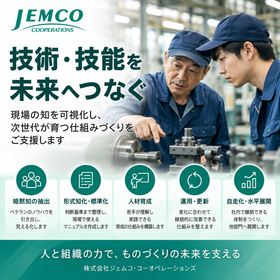
In the transportation and logistics industry, sharing the driving skills and judgment criteria of experienced drivers is crucial for safe and efficient operations. However, the tacit knowledge held by veterans and personalized on-the-job training (OJT) can make it difficult to pass on this knowledge to the next generation. At Gemco, we extract the judgment criteria and know-how through interviews with skilled drivers and formalize them. This organizes the information into a form that young drivers can understand and replicate in practice. Furthermore, we systematize everything from standardization and personnel development to operations and updates, ultimately supporting "self-driving" that allows for continuous and horizontal transmission of skills within the company. 【Usage Scenarios】 - Extraction and formalization of driving know-how from veteran drivers - Standardization of OJT for young drivers - Sharing of safe driving standards and eco-driving techniques - Clarification of operational judgment criteria 【Benefits of Implementation】 - Improved safety through the homogenization of driving skills - Early empowerment of new drivers - Transforming veteran experience into organizational strength - Improvement of operational efficiency
Added to bookmarks
Bookmarks listBookmark has been removed
Bookmarks listYou can't add any more bookmarks
By registering as a member, you can increase the number of bookmarks you can save and organize them with labels.
Free membership registration
In the fishing industry, the catch techniques and know-how of skilled practitioners backed by years of experience are key to business continuity. However, these tacit knowledge elements are difficult to formalize and tend to become personalized, posing challenges. If the expertise of veterans is not smoothly passed on to the next generation, it could lead to a decline in catch volume and variations in quality. Our technology and skill inheritance support service carefully extracts judgment criteria and know-how from experienced practitioners and organizes it into a form that younger individuals can understand and reproduce in practice. This ensures the reliable inheritance of fishing techniques and supports sustainable fishing operations. 【Usage Scenarios】 - Formalizing judgment criteria for fishing points and timing based on the experience of veteran fishermen - Developing specific work procedures and standard documents tailored to particular fishing methods or species - Systematizing effective teaching methods for on-the-job training (OJT) for young fishermen 【Benefits of Implementation】 - Maintaining and improving stable catch volumes through the standardization of fishing techniques - Early development of young fishermen and enhancement of technical skills - Skill enhancement across the organization through the sharing of previously personalized techniques - Alleviating concerns about future technology inheritance and strengthening business continuity
Added to bookmarks
Bookmarks listBookmark has been removed
Bookmarks listYou can't add any more bookmarks
By registering as a member, you can increase the number of bookmarks you can save and organize them with labels.
Free membership registration
In the food service industry, it is important to maintain consistent quality in stores and ensure customer satisfaction through the standardization of recipes and the sharing of accurate cooking procedures. In particular, if the know-how of experienced staff is not shared and there is variation in cooking, it can lead to a decline in the quality of taste and appearance, which may affect customer satisfaction. Additionally, training new staff can take time, making efficient store operations difficult. Our technology and skill inheritance support service extracts the tacit knowledge of veteran staff and formalizes it into recipes, establishing cooking procedures that anyone can replicate. This stabilizes cooking quality, supports the rapid development of new staff into effective team members, and contributes to the efficiency of store operations. 【Usage Scenarios】 - Unification of recipes in multi-store operations - Streamlining cooking instruction for new staff - Reducing the risk of losing know-how due to the retirement or transfer of veteran staff - Sharing procedures when introducing seasonal or new menus 【Benefits of Implementation】 - Improved customer satisfaction through uniform cooking quality - Reduction of food waste and improved cost management - Skill enhancement of staff and increased retention rates - Increased efficiency and productivity in store operations
Added to bookmarks
Bookmarks listBookmark has been removed
Bookmarks listYou can't add any more bookmarks
By registering as a member, you can increase the number of bookmarks you can save and organize them with labels.
Free membership registration
In the agricultural sector, the unique cultivation know-how and judgment criteria possessed by veteran farmers with many years of experience significantly impact the quality and yield of crops. However, this tacit knowledge is difficult to document, making it challenging to pass on to the next generation. Insufficient transmission of know-how can lead to variability in cultivation techniques and delays in responding to unexpected issues. Our service supports the recording and reliable transmission of cultivation know-how by extracting judgment criteria and know-how from veteran experience and organizing it in a way that younger farmers and successors can understand and replicate in practice. 【Usage Scenarios】 - Extraction of cultivation know-how from veteran farmers - Organization of judgment criteria and reasons - Formalization of cultivation techniques - Development of work procedures and standard documents - Systematization of training and on-the-job training for younger farmers and successors 【Effects of Implementation】 - Standardization and improvement of cultivation techniques - Early development of younger farmers and successors - Elimination of dependency on individuals and risk reduction - Realization of sustainable agricultural management
Added to bookmarks
Bookmarks listBookmark has been removed
Bookmarks listYou can't add any more bookmarks
By registering as a member, you can increase the number of bookmarks you can save and organize them with labels.
Free membership registration
In the food service industry, it is important to maintain consistent quality in stores and ensure customer satisfaction through the standardization of recipes and the sharing of accurate cooking procedures. In particular, if the know-how of experienced staff is not shared and there is variation in cooking, it can lead to a decline in the quality of taste and appearance, which may affect customer satisfaction. Additionally, training new staff can take time, making efficient store operations difficult. Our technology and skill inheritance support service extracts the tacit knowledge of veteran staff and formalizes it into recipes, establishing cooking procedures that anyone can replicate. This stabilizes the quality of cooking, supports the early development of new staff into productive team members, and contributes to the efficiency of store operations. [Usage Scenarios] - Unification of recipes in multi-store operations - Streamlining cooking instruction for new staff - Reducing the risk of losing know-how due to the retirement or transfer of veteran staff - Sharing procedures when introducing seasonal or new menus [Effects of Implementation] - Improved customer satisfaction through uniform cooking quality - Reduction of food waste and improvement in cost management - Skill enhancement of staff and increased retention rates - Increased efficiency and productivity in store operations
Added to bookmarks
Bookmarks listBookmark has been removed
Bookmarks listYou can't add any more bookmarks
By registering as a member, you can increase the number of bookmarks you can save and organize them with labels.
Free membership registration