

Double-sided flexible printed circuit board (double-sided FPC)
Double-sided type that allows for complex wiring.
This is an FPC with conductor patterns on both sides, allowing for complex wiring.
- Company:スコットデザインシステム
- Price:Other
Last Updated: Aggregation Period:Sep 16, 2026~Oct 13, 2026
This ranking is based on the number of page views on our site.
1~30 item / All 48 items
Double-sided type that allows for complex wiring.
This is an FPC with conductor patterns on both sides, allowing for complex wiring.

Rigid substrates and flexible printed circuit boards are integrated.
It is an FPC that combines a rigid substrate and a flexible printed circuit board.

Support for component mounting is also available.
This is an FPC with electronic components mounted.

Achieving a length of 100m! Introducing a flexible circuit board that can handle long-distance wiring.
The "Long-Length FPC" is a flexible printed circuit board (FPC) that can accommodate lengths of up to 100 meters without seams or folds. In addition to being thin, light, soft, and able to take on various shapes, it achieves wiring lengths comparable to traditional cables. It can be used in large FA equipment and large lighting devices, and is also adopted for wiring in space development equipment such as satellites. 【Features】 ■ Can be used as an alternative to cables ■ Weighs about 1/100th compared to cables, making it lightweight ■ Thickness is approximately 0.1mm at most, allowing for installation in minimal spaces ■ Reduces the likelihood of miswiring compared to cables, improving work efficiency during assembly *For more details, please refer to the PDF document or feel free to contact us.

The most standard specifications at a low cost.
This is the most basic structure of an FPC with a conductor pattern formed only on one side.

Noise countermeasure structure
This is an FPC with a shield structure that is effective for noise countermeasures.

A transparent flexible substrate with wiring that cannot be seen with the naked eye.
It is a flexible substrate with invisible wiring that has a total light transmittance of 92.0% and allows for component mounting.

Flying lead structure
It is an FPC that can make electrical contact from both sides.

Invisible circuit wiring smartly replaces expensive transparent conductive films for applications such as illuminated capacitive touch sensors.
Ultra-fine Circuit This is a flexible printed circuit board formed using gravure offset printing technology. 【Features】 ■ Lower resistance compared to ITO film. ■ Superior bendability compared to ITO film. ■ Can be used as a transparent electrode due to mesh formation. ■ Enables high-density wiring. ■ Frame circuits and transparent electrodes (mesh electrodes) can be formed in the same process. 【Applications】 Electrodes for illuminated electrostatic touch keys. *For more details, please refer to the PDF document or feel free to contact us.

Transparent flexible printed circuit boards contribute to improved design with excellent transparency! The fine patterns make the wiring inconspicuous.
〇Uses polyimide with excellent heat resistance and flame retardancy. ⇒【Compatible with reflow mounting】 ★ For display devices such as digital signage, as well as medical devices and transparent film antennas! ★ We also accommodate small quantities and a variety of prototypes. For more detailed information, please contact us. #Transparent #Transparent FPC #Transparent Flex
![High Current Flexible Circuit Board [*FPC Technology Catalog Available]](https://image.mono.ipros.com/public/product/image/c7d/2000477292/IPROS51770483967615096271.png?w=280&h=280)
Slim shape compatible with high current. Can be curved, suitable for integration into narrow spaces. An alternative to busbars and harnesses.
Our "High Current Flexible Wiring Board" is a product designed for high current wiring, intended as a substitute for busbars and harnesses. By forming a copper foil layer with a conductor thickness of 75 to 90 μm, it is possible to carry higher currents than standard flexible printed wiring boards. The substrate uses polyimide film, and soft resist ink is used as the insulating material, allowing for flexibility, which makes it suitable for installation in tight spaces. 【Features】 ■ Capable of carrying high currents ■ Can be installed and bent in narrow spaces ■ Compatible with through-hole components and surface-mounted components ■ Can integrate connections between substrates, contributing to a reduction in assembly labor *For more details, please refer to the PDF document. Feel free to contact us with any inquiries.

High through-hole connectivity
This is an FPC that uses polyimide in all layers with a configuration of three or more layers. It can be manufactured up to 10 layers.

Achieving a 40% reduction in thickness! Introducing a flexible, low-rebound, and excellent multilayer flexible substrate.
The "Ultra-thin Flexible Multi-layer FPC" is a multi-layer flexible substrate that achieves a thinner profile while maintaining the same wiring density as standard multi-layer FPCs. It enables bending wiring in narrow spaces, which was previously difficult, contributing to the ongoing lightweight and compact development of digital electronic devices. It can be applied to wearable devices used in various fields, including mobile devices, medical and nursing care, robotics, sports, and healthcare. 【Features】 ■ Achieves a 40% reduction in thickness ■ Uses polyimide as the substrate, ensuring sufficient reliability while being thin ■ Excellent embedability due to its thin, flexible, and low-rebound characteristics *For more details, please refer to the PDF document or feel free to contact us.

It is a flexible substrate effective for high-density wiring. FPC
Unlike conventional through holes, to avoid penetrating the hole, a via is placed directly under the pad. Fine hole processing using lasers is possible, making it effective for ultra-high-density wiring, etc. With the miniaturization and thinning of mobile devices, as well as the enhancement of communication devices, there is an increasing demand for high-density mounting of narrow pitch, multi-pin packages. Consequently, flexible substrates are also advancing in terms of high-layer count and high density. FPC

The Big Elec flexible circuit board compatible with high current has three features.
Big Elec is a flexible circuit board designed for high current wiring, achieving a flat shape and thin profile as an alternative to busbars and wire harnesses. It boasts three remarkable features. 【Feature 1】 Low Inductance Thanks to its unique structure, it achieves lower inductance compared to conventional wires with the same conductor cross-section. When switching high currents at high frequencies, high inductance can cause significant voltage spikes, potentially damaging high-current electronic components. Big Elec's low inductance reduces voltage spikes, contributing to the reliability of high-current electronic components. 【Feature 2】 Flat Shape and Flexibility Its unique structure allows for a thin conductor, flat shape, and flexibility. It is flatter than traditional wire harnesses and can handle higher currents than conventional flexible circuit boards. 【Feature 3】 High Design Freedom It ensures the same design freedom and usability as printed circuit boards. Pattern wiring and external shapes can be customized to meet specific requirements. It also supports the mounting of electronic components and connectors using paste solder.


Suitable for incorporation into curved and narrow spaces. It can form high current circuits with a thin shape and low inductance.
Big Elec is a flexible printed circuit board designed for high current wiring, achieving a flat shape and thin profile as an alternative to busbars and wire harnesses. It boasts three remarkable features. 【Feature 1】 Low Inductance Thanks to its unique structure, it achieves lower inductance compared to conventional wires with the same conductor cross-sectional area. When switching high currents at high frequencies, high inductance can cause significant voltage spikes, potentially damaging high current-compatible electronic components. The low inductance of Big Elec reduces voltage spikes, contributing to the reliability of high current-compatible electronic components. 【Feature 2】 Flat Shape and Flexibility Its unique structure allows for a thin conductor, flat shape, and flexibility. It is flatter than traditional wire harnesses and can handle higher currents than conventional flexible printed circuit boards. 【Feature 3】 High Design Freedom It ensures design freedom and usability similar to printed circuit boards. Pattern wiring and external shapes can be customized according to requirements. It also supports the mounting of electronic components and connectors using paste solder.


![[Use Case] Supporting IoT integration through wiring wearable devices into clothing.](https://image.mono.ipros.com/public/product/image/529/2001484359/IPROS55475564990763536542.png?w=280&h=280)
The conductor resistance value is low, and the change in conductor resistance during expansion and contraction is small! Suitable for applications that were difficult to apply in the past!
We would like to introduce a case where our EMS (design and manufacturing contract services) supported the IoT integration of clothing through the wiring of wearable devices. The customer's challenge was to improve the performance and quality of their own wearable devices. By using copper foil for the circuit conductors, we achieve low conductor resistance and minimal changes in resistance during stretching. This feature allows for wide application in areas that were previously difficult to implement. [Challenges] ■ Desire to improve the performance and quality of their own wearable devices ■ Traditional flexible substrates have issues with lack of elasticity ■ Unable to realize the desired wearable device *For more details, please refer to the PDF document or feel free to contact us.
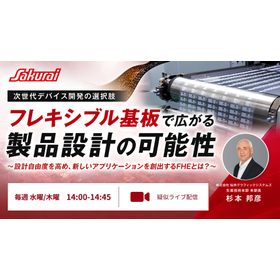
We realize electronics with thin, lightweight, and flexible substrates. The design philosophy of flexible hybrid electronics in response to changes in social structure.
"FHE" is an electronics design philosophy that accompanies changes in social structure. By using printing technology to create thin, lightweight, and flexible sensors and wiring that do not fit into traditional enclosures, and combining them with silicon semiconductors, we achieve low-cost and flexible device development. It is a system architecture that appropriately combines the areas where printing excels, such as "sensing (wiring, electrodes, antennas, sensors, etc.)," with the areas where silicon excels, such as "thinking (CPU, memory, AI computation, communication control, etc.)," to connect the real world to the digital society. [Features] - Thin, lightweight, flexible - Large area, disposable, ultra-low cost *For more details, please download the PDF or feel free to contact us.
![Flexible printed circuit board "High Flex FPC" [Over 10 million bending cycles]](https://image.mono.ipros.com/public/product/image/d9f/2000259252/IPROS3622696248031507306.png?w=280&h=280)
A flexible circuit board that achieved over 10 million bending characteristics at 70℃! It is flexible and excels in bending performance even in high-temperature environments, ensuring high reliability!
The "High Flex FPC" is a flexible printed circuit board (FPC) with bending characteristics that exceed 10 million cycles at 70°C. By using a high Tg (glass transition temperature) coverlay, it suppresses the degradation of bending characteristics at high temperatures. It is flexible and excels in bending performance even in high-temperature environments, offering high reliability. 【Features】 ■ Significantly improved bending characteristics by using rolled copper foil ■ Capable of high-speed transmission of over Gbps with low loss ■ Easy to match characteristic impedance ・Characteristic impedance value can be matched at differential 100±15Ω *For more details, please request materials or view the PDF data from the download.

Introducing a flexible printed circuit board (FPC) that balances transparency and solderability!
"Transparent FPC" is a flexible printed circuit board (FPC) that excels in transparency and heat resistance, using transparent polyimide film as its substrate. We have worked on developing an FPC that achieves both high heat resistance and transparency by adopting a highly heat-resistant transparent polyimide film, thereby solving the issues of warping and dimensional changes caused by heat during reflow. As a result, it can be applied to various fields such as wearable devices and medical equipment, which prioritize design. [Features] - Uses highly heat-resistant transparent polyimide film - Can utilize the existing design rules of conventional FPCs - Proposes new wiring styles in fields such as medical, lighting, and industrial equipment *For more details, please refer to the PDF document or feel free to contact us.

Button-plated FPC that enables high-speed transmission, ultra-thinness, and flexibility in a new dimension.
Button-plated flexible printed circuit boards (FPC) can utilize the original thickness and characteristics of copper foil by applying through-hole plating only to the through-holes and through-hole lands. This allows for uniform maintenance of conductor thickness, enabling the formation of high-precision wiring, which is expected to provide high-accuracy impedance control, making it ideal for high-speed transmission applications. Compared to conventional panel plating methods, button-plated FPCs excel in flexibility and bendability, achieving ultra-thin designs. This enables the lightweight and compact design of products. The new method also allows for button plating on narrow pitch patterns. Product Features: 1. By applying copper plating only to the through-holes, the original characteristics of the copper foil are maximized. 2. High-precision impedance control is possible, demonstrating performance suitable for high-speed transmission. 3. Compared to panel plating methods, it excels in flexibility and bendability while achieving ultra-thin designs. 4. It provides stable quality with technology that has cleared reliability evaluations based on JISC5016. 5. Through-hole plating is possible even for narrow pitch patterns, which were previously difficult to achieve.


The copper foil itself is the base without polyimide.
The copper foil itself is the base material of the FPC.

Achieving high-frequency and high-speed transmission by matching the characteristic impedance.
This is an FPC that matches characteristic impedance and achieves high-frequency, high-speed transmission.

Next-generation flexible substrate with high heat resistance, low loss, and chemical resistance, all made of LCP!
All LCP is a high-performance flexible printed circuit board (FPC) made entirely of liquid crystal polymer (LCP) without the use of adhesives. Compared to conventional polyimide FPCs, it features high heat resistance, low moisture absorption, low loss characteristics, chemical resistance, and low outgassing properties, providing stable performance even in harsh environments. It is particularly suitable for applications that require reduced transmission loss of high-frequency signals and improved durability in environments where oils and chemicals are used.


By applying a reinforcement plate, component mounting is also possible! It is often used as a substitute for FFC.
We would like to introduce the "Single-Sided/Dual-Sided Flexible Printed Circuit Boards" handled by Matsuwa Sangyo Co., Ltd. The single-sided (1 layer) type is a common specification for flexible printed circuit boards and is often used as a substitute for FFC. There are types with and without an adhesive layer between the base material and copper foil, and we can accommodate both at our company. The dual-sided (2 layers) type allows for more flexible wiring by incorporating through-holes (TH) into the flexible printed circuit board. Please feel free to consult us about multilayer flexible printed circuit boards with three layers or more. 【Shortest Delivery Record Examples】 ■ 1 layer ⇒ Shortest 2 days (AM data ⇒ shipped the next day) ■ 2 layers ⇒ Shortest 2 days (8 AM data ⇒ shipped the next day) *For more details, please refer to the related links or feel free to contact us.
![[Design and Production Example] Coil_FPC for Motor Field Windings](https://image.mono.ipros.com/public/product/image/396/2000618456/IPROS87961089620937907596.png?w=280&h=280)
A circuit is formed considering the thickness of the flexible printed circuit (adjusting the L/S pitch). For the motor's field winding (for generating a high electromagnetic field) flexible printed circuit. *Source: Gunma University
We would like to introduce a case study of the design and production of field winding using flexible substrates that we conducted. To wind around the main pole piece, a circuit was formed considering the thickness of the flexible substrate so that the coil wiring overlaps at the same position (L/S pitch was corrected and adjusted). Due to the long structure, we implemented correction processing considering the shrinkage characteristics of the flexible material and the etching factor of the conductor, utilizing ultra-thin copper foil material. 【Case Overview】 ■L/S=100μ/100μ ■Specifications: Double-sided structure ■Base PI thickness: 25μ (no adhesive material) ■Cu thickness: 2μ (excluding Cu plating thickness) *For more details, please refer to the PDF document or feel free to contact us.

Space-saving is possible! Suitable for high-resolution imaging diagnostic devices that require miniaturization.
The "4-layer blind via filled blind via flexible printed circuit board" is a multilayer FPC that enables high-density wiring while achieving miniaturization, lightweight, and thinness. It applies filled plating to blind vias, allowing for the creation of pads for component mounting on the vias. It possesses bending performance that rigid boards do not have. It is suitable for high-resolution imaging diagnostic devices, including endoscopes and catheters, where miniaturization is required. 【Features】 ■ Blind vias can be filled with plating on a 4-layer flexible board ■ Space-saving is possible as components can be mounted on top of the vias ■ It can be made lighter compared to rigid boards *For more details, please refer to the PDF document or feel free to contact us.


Turnkey connector implemented! A thin polymer resin film is used as insulation.
"Flexible substrates / Rigid-flexible substrates" are alternatives to conventional wiring connections using wires or ribbon cables. Flexible printed circuits can reduce space and weight while improving reliability. They are made by etching copper-clad materials and using a thin polymer resin film as insulation between the conductor circuit patterns. In electronic device enclosures, turnkey subassemblies may be utilized, incorporating aerospace-grade connectors at the ends for space-saving and lightweight assembly. 【Features】 ■ Single-sided and double-sided flexible substrates ■ Multi-layer and rigid-flexible substrates ■ Electrical and optical flexible substrates ■ Specialized for IPC 6012/6013 Class 3, Types 1 to 4 *For more details, please refer to the PDF materials or feel free to contact us.

Combining PTFE base and low dielectric coverlay to produce various low-loss FPCs!
The "Ultra-Fine Circuit High-Frequency Flexible Substrate" is a flexible substrate designed for high-frequency applications in the GHz range, compatible with bare chip mounting. By using LCP (Liquid Crystal Polymer) with low dielectric properties as the core material and forming circuits using the SAP (Semi-Additive Process), it is possible to create transmission lines with a differential impedance of 100Ω at wiring pitches below 50μm. To accommodate wire bonding with bare chips, the mounting pads are treated with ENEPIG (Electroless Ni Pd Au plating) for surface treatment. One of the features of SAP is its high precision in circuit formation, with an accuracy of ±5μm, making it suitable for impedance control. *For more details, please download the PDF or contact us.*


![[Data Presentation] FPC Terminology Glossary, PDF search available. For use as an introductory mini-dictionary!](https://image.mono.ipros.com/public/product/image/791/2000888908/IPROS16631666073025694825.png?w=280&h=280)
We have compiled terms used in meetings related to FPC manufacturing. Please use it as an introductory mini-dictionary and an offline search tool.
Thank you for taking the time to view this. With over 40 years of experience in flexible printed circuit board manufacturing, we offer a one-stop service from prototyping to mass production. There are things that can only be done by TAIYO. *The following content is from the complete version of "Everything You Need to Know About FPC in One Book! *Includes a Glossary." Highly recommended! [Content of the Document] 1. Solve your FPC problems all at once! 2. What is FPC? 3. One-stop service 4. Achieving short delivery times 5. Support from prototyping to mass production 6. Introduction to various FPCs (ultra-fine wires, multilayer, high frequency, etc.) 7. FPC glossary 8. Greetings and company overview (36 pages in total) We hope this will be helpful in your consideration of flexible printed circuit boards. Taiyo Industry will sincerely respond to your inquiries regarding FPC.

