271~315 item / All 356 items
Displayed results
Filter by category

Added to bookmarks
Bookmarks listBookmark has been removed
Bookmarks listYou can't add any more bookmarks
By registering as a member, you can increase the number of bookmarks you can save and organize them with labels.
Free membership registration
Contact this company
Inquiry FormBefore making an inquiry
Download Profile271~315 item / All 356 items
Filter by category

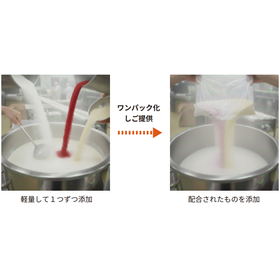
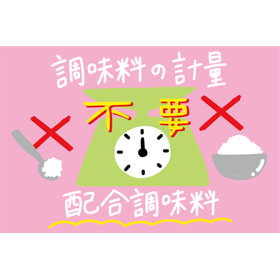
Do you have any concerns about weighing various ingredients in grams at the mass production site of a food manufacturer? - There are many elderly employees, and mistakes in weighing leading to "rework" are noticeable. - Employee motivation is declining due to errors. We pre-mix multiple ingredients (such as salt, sugar, spices, and extracts). We deliver them in a state where you only need to "add one bag at a time" on-site. By providing the necessary ingredients in a single pack, we fundamentally solve the challenges faced in the workplace. ◇ Significant reduction in weighing tasks Simply add the "special seasoning (mixed seasoning)" that comes in a single pack. ◇ Reduced waste and management costs The management target becomes one item, consolidating inventory space. ◇ Consistent taste for everyone Since the taste is determined just by adding it, stable production is possible even for foreign or new staff. We are currently offering free case studies aimed at reducing waste disposal due to human error.
Added to bookmarks
Bookmarks listBookmark has been removed
Bookmarks listYou can't add any more bookmarks
By registering as a member, you can increase the number of bookmarks you can save and organize them with labels.
Free membership registration
■Do you have any of these concerns? For those managing pools, sodium hypochlorite (liquid bleach) is a familiar substance. We have received many requests from school pool managers saying, "The chemical containers are heavy; is there anything we can do about it?" ■Why is it so heavy? Sodium hypochlorite is a liquid that is heavier than water, with a typical poly tank weighing between 20 to 25 kg. Since it is a liquid, it is not possible to reduce the weight of the chemical itself. ■There are ways to lighten the load! There are two methods. 1. Use smaller capacity poly tanks Some suppliers offer types that weigh 10 kg or 15 kg. 2. Use solid chemicals Using a solid component like sodium isocyanurate can reduce weight while maintaining the same disinfecting effect as the liquid (equipment may be required for use). ■Please consult with us first! We can also provide proposals that combine chemistry and machinery. We offer free on-site inspections and estimates. If you want to reduce your workload, please feel free to contact us.
Added to bookmarks
Bookmarks listBookmark has been removed
Bookmarks listYou can't add any more bookmarks
By registering as a member, you can increase the number of bookmarks you can save and organize them with labels.
Free membership registration
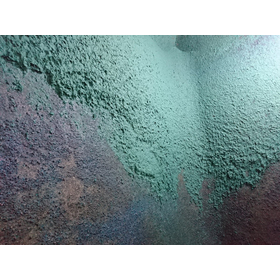
■Do you have any of these concerns? A maintenance manager from a paper company we have been working with for some time had a troubled expression. They consulted us about the high defect rate of their products and asked if there was anything that could be done. ■Why are there residues from the raw materials? In paper companies, raw materials (pulp) are added to large tanks to produce paper. When switching raw materials, the previously added materials can adhere to the tank and remain as residues, which can cause defects. How can we prevent this residue? ■We have a solution! By applying a special coating inside the tank, we can significantly reduce the adhesion of raw materials. Additionally, impurities such as films and lint mixed with the raw materials can be removed in advance by installing a special filter. ■What are the benefits of implementation? We have received feedback such as, "The defect rate has decreased, leading to significant cost savings," and "We have also reduced the effort required to manage defects." Besides tank coatings, we can offer tailored proposals to meet our customers' needs.
Added to bookmarks
Bookmarks listBookmark has been removed
Bookmarks listYou can't add any more bookmarks
By registering as a member, you can increase the number of bookmarks you can save and organize them with labels.
Free membership registration
■Do you have any of these concerns? "Even though there are deodorants available, it still smells," "What can I do to enhance the effectiveness?" "Which deodorant is the most effective?" — A representative from a purification center's sewage treatment facility also faced the issue of strong odors and diminishing effectiveness of the deodorants used. ■Why can't you feel the effectiveness? An "effective deodorant" is one that works well in that specific environment. Even the same deodorant can have varying effectiveness due to different conditions and environments at each facility. The deodorant you are currently using may not be suitable for your site, which could be the reason you are not experiencing its effectiveness. However, many people may be unsure about how to verify this. ■Leave the verification to us! We will prepare multiple deodorants at the actual site and conduct deodorization effectiveness tests to select and recommend the most effective deodorant. You can also objectively understand the effectiveness of the deodorant you are currently using through numerical data. ■First, please consult with us! We can provide proposals based on the scale of your facility and the feedback from your employees. If you are uncertain about your decision, we also offer free consultations. If desired, our specialized staff will conduct a site survey and provide answers regarding necessity and costs.
Added to bookmarks
Bookmarks listBookmark has been removed
Bookmarks listYou can't add any more bookmarks
By registering as a member, you can increase the number of bookmarks you can save and organize them with labels.
Free membership registration
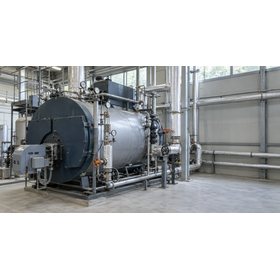
■Do you have any of these concerns? "Increasing fuel consumption to produce the same amount of steam," "Taking too long to start up," "The same scale deposits every time during regular cleaning" — When scale (hard deposits) accumulates on the heat transfer surfaces of a boiler, these issues can become chronic. ■Why does scale accumulate? It occurs when water containing hardness components evaporates and concentrates inside the boiler, causing components that can no longer dissolve to precipitate on the inner walls of the pipes. Traditional measures of "removing it once it has formed" do not provide a fundamental solution and tend to lead to the same issues recurring. ■We have a solution! We propose switching to energy-saving boiler chemicals that combine scale-dispersing and scale-removing components. This switch can be made without stopping operations, achieving recovery of heat transfer efficiency and reducing maintenance labor. ■Please consult with us first! The optimal chemicals vary depending on water quality and operating conditions, so we will provide tailored recommendations starting with a water quality test before implementation. For more details, please refer to the materials.
Added to bookmarks
Bookmarks listBookmark has been removed
Bookmarks listYou can't add any more bookmarks
By registering as a member, you can increase the number of bookmarks you can save and organize them with labels.
Free membership registration
Cooling water contains sufficient nutrients at an optimal temperature for the proliferation of microorganisms. As a result, bacteria, germs, and algae thrive in many cooling water systems, moving and adhering throughout the system along with the water. The accumulation of microorganisms or substances secreted by them is referred to as slime. ■What problems can occur? 1. Decreased cooling capacity If slime accumulates on the fill media of cooling towers, piping, or tubes of chillers, the efficiency of the cooling tower will decrease. A reduction in the efficiency of the cooling water leads to a decline in the overall performance of the heat source system. 2. Corrosion of pipes Not only does the water quality of the cooling water passing through pipes with slime adhere deteriorate, but the pipes themselves also suffer damage. This increases the risk of corrosion leading to water leaks, as well as the hassle and costs associated with repairs or replacements. 3. Clogging of pipes Slime is adhesive, and as it accumulates in large quantities, it can hinder the flow of cooling water, leading to the risk of clogs that render the system unusable.
Added to bookmarks
Bookmarks listBookmark has been removed
Bookmarks listYou can't add any more bookmarks
By registering as a member, you can increase the number of bookmarks you can save and organize them with labels.
Free membership registration
Even though they are called pressure vessels, they can be divided into several types depending on their contents and pressure. Understanding the classification reveals the differences in the necessary management. ■ Two main categories based on contents Pressure vessels are broadly divided into two categories based on the nature of their contents. One category contains liquids that generate steam due to temperature rise or reactions. The other category contains gases other than steam, such as regular compressed air. The former corresponds to first-class pressure vessels and small pressure vessels, while the latter corresponds to second-class pressure vessels. ■ Differences between first-class, small, and second-class Both first-class pressure vessels and small pressure vessels are containers that hold liquids (steam) at temperatures exceeding the boiling point at atmospheric pressure. The difference between the two lies in their scale; those with a larger product of maximum allowable pressure and volume are classified as first-class, while smaller ones are classified as small. On the other hand, second-class pressure vessels refer to containers that hold gases with a gauge pressure of 0.2 megapascals or more, regardless of the presence of liquid. Since the inspections and management required differ by type, understanding which category your company's equipment falls into is the first step. For confirmation of your company's pressure vessel classification and guidance on inspection and performance testing, this document provides an explanation. Please download the document!

Added to bookmarks
Bookmarks listBookmark has been removed
Bookmarks listYou can't add any more bookmarks
By registering as a member, you can increase the number of bookmarks you can save and organize them with labels.
Free membership registration
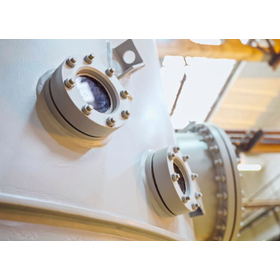
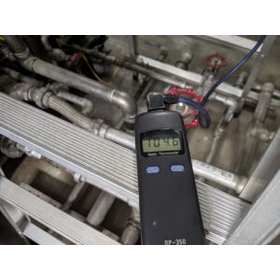
Among the familiar equipment around us, there are those that work quietly while harboring great power within. Pressure vessels are one such example. ■ What is a pressure vessel? A pressure vessel is a container designed to store gases or liquids at a constant pressure different from atmospheric pressure. In simpler terms, it refers to a container that can maintain a state of pressure higher or lower than atmospheric pressure. They are widely used in various applications, including boilers and manufacturing processes in factories. ■ The dangers behind high convenience The most important thing to be cautious about when handling pressure vessels is their potential danger. Boilers and pressure vessels contain high-temperature, high-pressure contents or flammable materials, which pose risks of explosion or rupture. If a rupture occurs due to aging or other factors, parts of the container or debris can scatter over hundreds of meters. This could lead to a major disaster that affects not only those working nearby but also local residents. Therefore, regular inspections and statutory checks are essential to maintain a healthy state. The procedures for inspecting and testing the performance of pressure vessels are explained in this document. Please download the document!
Added to bookmarks
Bookmarks listBookmark has been removed
Bookmarks listYou can't add any more bookmarks
By registering as a member, you can increase the number of bookmarks you can save and organize them with labels.
Free membership registration
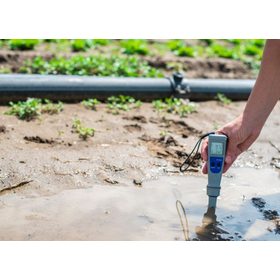
There are actually many places in factories where pH is measured. Depending on the purpose and location, the shape of the equipment and the measurement method vary. ■ Uses range from "quality control" to "environmental monitoring" The applications of pH measurement are very broad, covering everything from process management in product manufacturing at factories to pollution monitoring of factory wastewater and river water. Both management to maintain consistent product quality and management to ensure that discharged water meets standards are capturing the state of water using the same measure: pH. ■ Choose the shape and measurement method according to usage The shapes of the equipment include portable handheld types, desktop types for use on tables, and fixed types for continuous monitoring installed in facilities. There are also multiple measurement methods, including indicator reagent types that show color changes, antimony electrode types, and glass electrode types that offer superior accuracy. Choosing between convenience and accuracy or continuous monitoring is essential. Selecting the right combination for your application is the first step toward proper water quality management. You can find an explanation of how to choose pH management and water quality measurement equipment suitable for your needs in this document. Please download the document!
Added to bookmarks
Bookmarks listBookmark has been removed
Bookmarks listYou can't add any more bookmarks
By registering as a member, you can increase the number of bookmarks you can save and organize them with labels.
Free membership registration
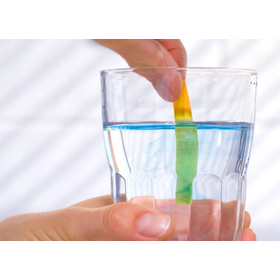
The pH, which is fundamental to water quality management. There are two methods for measuring it: using precise instruments and convenient test strips, which are chosen based on the purpose. ■ pH Meter (measures accurately with electricity) A pH meter is an electrical measuring device that uses an internal glass electrode. When two types of solutions are separated by a glass membrane, a potential difference arises according to the difference in pH between the two. By utilizing this mechanism, the potential generated between the reference solution inside the electrode and the water to be measured is read to accurately quantify the pH. However, to maintain accuracy and reliability, it is necessary to regularly perform "calibration" (adjusting to correct values) not only when starting to use it or when replacing the electrode but also during use. ■ pH Test Strips (easy determination by color) pH test strips are paper that determines the approximate pH of a liquid by color change. They start as green, and when immersed in a liquid, they change from red (acidic) to green (neutral) to blue (alkaline) depending on the pH. For example, if a strong acid like sulfuric acid is present, it will show red. While they are less accurate than instruments in terms of numerical precision, their strengths lie in the fact that they do not require power or calibration, allowing for quick assessments of acidity or alkalinity on the spot. The appropriate methods for pH management and water quality measurement according to your needs are explained in this document. Please download the document!
Added to bookmarks
Bookmarks listBookmark has been removed
Bookmarks listYou can't add any more bookmarks
By registering as a member, you can increase the number of bookmarks you can save and organize them with labels.
Free membership registration
Even though a water softener is installed, hard water continues to come out. This phenomenon has a clear mechanism and prevention method. ■ What is hardness leakage? A water softener uses a material called ion exchange resin to remove hardness components (calcium and magnesium) contained in tap water to produce soft water. However, there is a limit to the amount of hardness components that this resin can absorb. Once the removal continues to a certain extent, the resin becomes saturated and stops functioning, allowing hard water to pass through unchanged. This is called hardness leakage. ■ "Regeneration" is essential to avoid it The key to prevention is the process of "regeneration," which involves regularly cleaning the resin to restore its function. Salt (sodium chloride) is used for this. Rinsing the resin with a saltwater solution of about 10 percent separates the hardness components that were attached to the resin, returning it to its original clean state. If this regeneration is not performed regularly, the benefits of soft water will not be achieved even if a water softener is installed. Ignoring hardness leakage can also lead to scale (deposits similar to limescale) in boilers and piping. The methods for regenerating a water softener and managing water quality are explained in this document. Please download the document!
Added to bookmarks
Bookmarks listBookmark has been removed
Bookmarks listYou can't add any more bookmarks
By registering as a member, you can increase the number of bookmarks you can save and organize them with labels.
Free membership registration
The water coming out of the softener is unexpectedly hard. This "hardness leakage" can be addressed more quickly if the cause is identified. ■ What is hardness leakage? A water softener uses ion exchange resin to remove calcium and magnesium (hardness components) from water to create soft water. This resin is regenerated with brine and reused, but if there is some malfunction, hardness components can mix with the treated water, resulting in hardness leakage. If left unaddressed, it can cause scale (deposits similar to limescale) in boilers and piping. ■ Causes can be categorized into four main patterns The cause can be identified by the symptoms. ❶ If the hardness of the treated water is the same as that of the raw water, it may be due to forgetting to regenerate, forgetting to add salt, salt clumping in the salt tank, or clogging in the chemical injection line—indicating that "regeneration is not functioning." ❷ If it leaks from the beginning, it may be due to water bypassing the resin layer or insufficient salt leading to poor regeneration. ❸ If it suddenly leaks while the water intake is low, it may be due to poor regeneration, resin washout, or a sudden change in raw water hardness. ❹ If it leaks gradually, it may be due to resin degradation or the adhesion of iron and silica, indicating "reduction in resin performance." How to identify the cause and proceed with resin replacement and water quality management is explained in this document. Please download the document!
Added to bookmarks
Bookmarks listBookmark has been removed
Bookmarks listYou can't add any more bookmarks
By registering as a member, you can increase the number of bookmarks you can save and organize them with labels.
Free membership registration
⬛️ What is water concentration? Water concentration refers to the phenomenon where the concentration of impurities, such as mineral components dissolved in water, becomes higher as moisture evaporates. A familiar example is miso soup. When it is heated and reduced, it becomes thicker and saltier because only the moisture evaporates, leaving the components of the miso intact. Even if the water itself decreases, the dissolved components do not escape and become concentrated. ⬛️ If concentration is left unattended, pipes can clog and iron can rust. The same thing happens in boilers and cooling towers. As operation continues, moisture evaporates and the components in the water become concentrated. If it becomes too concentrated, the components can solidify and adhere to pipes and heat transfer surfaces, causing scale (similar to deposits) and corrosion, which directly leads to decreased thermal efficiency and equipment troubles. Measures such as "blowing down," which involves discharging a portion of the concentrated water and replenishing it with fresh water, and regular water quality management are essential. The approach to water quality management and scale prevention for boilers and cooling towers is explained in this document. Please download the document!
Added to bookmarks
Bookmarks listBookmark has been removed
Bookmarks listYou can't add any more bookmarks
By registering as a member, you can increase the number of bookmarks you can save and organize them with labels.
Free membership registration
When it comes to boiler failures, people tend to imagine a large explosion, but the gradual progression of "corrosion" is also a significant factor that affects the lifespan of the equipment. ⬛︎ Types of Corrosion Corrosion in low-pressure boilers can be broadly classified into general corrosion, where the metal surface uniformly diminishes, and localized corrosion, where only specific areas are intensely affected. Localized corrosion includes pitting, which progresses deeply in spots, and crevice corrosion, which occurs at overlapping parts of components. From the perspective of maintaining healthy operation, localized corrosion is particularly concerning. Even if the overall structure appears sound, localized areas can progress deeply, leading to holes or leaks. ⬛︎ Key Points for Countermeasures To mitigate corrosion, managing water quality is fundamental. Specifically, it involves maintaining an appropriate pH (between 11.0 and 11.8), keeping harmful corrosive components below standard levels, removing dissolved oxygen (oxygen dissolved in water) that promotes corrosion, and ensuring that water is always flowing to prevent stagnation. Continuous maintenance of these factors requires regular water quality testing and chemical adjustments. Measures against corrosion through water treatment and guidelines for inspecting boiler equipment are explained in this document. Please download the document!
Added to bookmarks
Bookmarks listBookmark has been removed
Bookmarks listYou can't add any more bookmarks
By registering as a member, you can increase the number of bookmarks you can save and organize them with labels.
Free membership registration
◼️ What is a steam trap? While steam is flashy, the real troublemaker in a factory's steam piping is the "water" that forms when steam cools. A steam trap is a device that automatically discharges condensate (drain) that accumulates in equipment and piping handling steam, such as boilers. It holds back the steam and allows only the condensate that has turned into water to escape. It can be understood as a "checkpoint that lets water through but not steam." ◼️ Purpose of installation When condensate accumulates in the piping, high-speed steam pushes the water out, causing water hammer (hydraulic shock) that impacts the piping and fittings. It is installed to prevent damage to equipment and leaks. ◼️ Points to be aware of There are multiple types of traps, such as bucket-type, each with different structures, so it is essential to understand the type when repairing or replacing them. Additionally, failures have two faces. If it breaks while closed, the condensate will not be discharged, leading to issues; if it breaks while open, steam will continue to leak, quietly wasting fuel. The latter is harder to notice, making regular inspections important. The structure of traps and how to conduct inspections and energy-saving diagnostics are explained in this document. Please download the material!
Added to bookmarks
Bookmarks listBookmark has been removed
Bookmarks listYou can't add any more bookmarks
By registering as a member, you can increase the number of bookmarks you can save and organize them with labels.
Free membership registration
The unique smell of the wastewater treatment plant. Are you just brushing it off with "Well, it's that kind of place, so it can't be helped"? In fact, that smell is a sign that can be life-threatening for workers. ■ The source of the smell like rotten eggs A typical foul odor generated in wastewater treatment is hydrogen sulfide (H2S, which smells like rotten eggs). The troublesome part is that its specific gravity is about 1.2 times that of air. This means it is heavier than air and accumulates in "low places" such as pits and tanks. While the smell may be faint above, there is a risk of suddenly plunging your head into a high-concentration layer when you bend down. ■ Moreover, the danger of "getting used to it" Hydrogen sulfide has a strong odor at low concentrations, but at high concentrations, it can numb the sense of smell, making it undetectable. This does not mean "it smells less than before = it has become safe"; rather, it indicates that you may have entered a dangerous zone. The inability to use the presence or absence of smell as a safety gauge is the most frightening aspect of this substance. Other foul-smelling substances, such as methyl mercaptan (which smells like rotten onions) and ammonia, also exist, each with different properties. We have summarized methods to ensure safety in wastewater treatment plant inspections not relying on smell but on systems in this document.
Added to bookmarks
Bookmarks listBookmark has been removed
Bookmarks listYou can't add any more bookmarks
By registering as a member, you can increase the number of bookmarks you can save and organize them with labels.
Free membership registration
In mass production settings, the task of weighing various types of raw materials in grams is burdensome. By weighing these raw materials and providing them in one package, the weighing process itself can be outsourced. ◼️ Benefits of One-Packing - Multiple raw materials (such as salt, sugar, spices, and extracts) are pre-mixed. We deliver them in a state where you only need to "add one bag at a time" on-site. - This prevents "flavor inconsistencies" and "rework" caused by weighing errors. ◼️ Reduction of Raw Material Waste and Streamlining Inventory Management - "Reduction of waste loss": There is no need to individually stock spices and additives that are used in small quantities, significantly reducing the risk of waste due to expiration. - "Simplification of material management": By consolidating 10 types of raw materials into one "special seasoning (blended seasoning)," we compress the costs of ordering, inspection, and storage space. For more details on our proposal, please refer to the downloadable materials.
Added to bookmarks
Bookmarks listBookmark has been removed
Bookmarks listYou can't add any more bookmarks
By registering as a member, you can increase the number of bookmarks you can save and organize them with labels.
Free membership registration
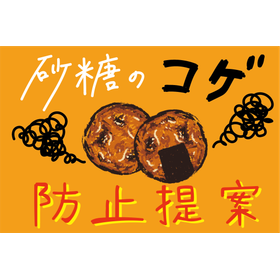
We received an inquiry from a customer at a confectionery manufacturer stating, "Using sugar as an ingredient makes the dough prone to burning during baking, which worsens the manufacturing yield." ◼️ Issues - We want to add sweetness without burning the dough. - We want to get as close as possible to the sweetness of sugar. Sugar is prone to undergoing the Maillard reaction during heating, which creates color and aroma, but in some products, it can also cause "burning." Therefore, a replacement with a sweetener that is less likely to burn was required. ◼️ Proposal We proposed a blend that utilizes the characteristics of natural and synthetic sweeteners to replicate a natural sweetness close to sugar by controlling the onset of sweetness (the speed at which it is perceived) and the aftertaste. For more details on our proposal, please refer to the downloadable materials.
Added to bookmarks
Bookmarks listBookmark has been removed
Bookmarks listYou can't add any more bookmarks
By registering as a member, you can increase the number of bookmarks you can save and organize them with labels.
Free membership registration
We received an inquiry from a customer who is a seafood processing manufacturer, stating that "the price of scallop raw materials has been rising year by year, leading to increased costs." ■ Challenges • We want to maintain the same flavor while reducing the amount of scallop raw materials used. • We aim to keep costs down without compromising the balance of flavor and umami in the product. ■ Proposal By using disodium succinate, a unique umami component of scallops, as a supplementary ingredient, we have successfully reduced the amount of raw scallops used while recreating the same level of umami and satisfaction! Please refer to the downloadable materials for more details on our proposal.
Added to bookmarks
Bookmarks listBookmark has been removed
Bookmarks listYou can't add any more bookmarks
By registering as a member, you can increase the number of bookmarks you can save and organize them with labels.
Free membership registration
Our customer at the food factory was troubled by stubborn slime in the drains. Regular detergents were not effective, resulting in significant time and effort spent on cleaning. They faced challenges such as: - Inability to remove odors and slime from the drains - Desire to reduce cleaning time It was necessary to fundamentally eliminate the protein, which is the cause of the problem, and to remove odors and slime, while achieving a clean state in a short time without much effort. We proposed selecting chemicals tailored to the site! For more details on our proposal, please refer to the downloadable materials.
Added to bookmarks
Bookmarks listBookmark has been removed
Bookmarks listYou can't add any more bookmarks
By registering as a member, you can increase the number of bookmarks you can save and organize them with labels.
Free membership registration
We received an inquiry from a confectionery manufacturer expressing a desire to create a new product aimed at high-end consumers that is not just flavored but authentic and can increase unit prices. Currently, there are challenges such as: - The texture tends to be monotonous - Commonly used seasonings feel unsatisfactory. It's a given that the taste should be good. However, if the product doesn't have an appearance that makes customers' eyes sparkle with excitement the moment they open the bag, there won't be any repeat purchases. Therefore, we proposed an original flavor that emphasizes visual appeal and texture! Please refer to the downloadable materials for more details on our proposal.
Added to bookmarks
Bookmarks listBookmark has been removed
Bookmarks listYou can't add any more bookmarks
By registering as a member, you can increase the number of bookmarks you can save and organize them with labels.
Free membership registration
Do you have any of the following concerns regarding the activated carbon used for deodorization at your waste disposal site? - I've recently started to notice odors. - I feel like the effectiveness has decreased. - I think it's about time to replace the activated carbon, but I don't know where to request it. - Construction is necessary, but it takes time to select a contractor. ◼️ Our Proposal We offer activated carbon replacement services for deodorization systems at waste disposal sites. We provide a comprehensive service, from proposing replacement methods tailored to the site conditions to safe and reliable construction. For more details on our proposal, please refer to the downloadable materials.
Added to bookmarks
Bookmarks listBookmark has been removed
Bookmarks listYou can't add any more bookmarks
By registering as a member, you can increase the number of bookmarks you can save and organize them with labels.
Free membership registration
In the paper manufacturing process for producing trays for fresh produce, if pulp remains during the raw material switch and mixes with a different raw material, it can lead to product defects. - The previous raw material remains in the tank even after switching. - If mixing occurs, losses arise and yield deteriorates. - Cleaning becomes more labor-intensive, reducing work efficiency. → The previous raw material that adhered to the equipment mixes during the raw material switch, causing defects. ◼️ Proposal Our company applies a special reinforced plastic treatment to the inner surface of the raw material tank to significantly reduce the retention of raw materials by enhancing its release properties. For more details on our proposal, please refer to the downloadable materials.
Added to bookmarks
Bookmarks listBookmark has been removed
Bookmarks listYou can't add any more bookmarks
By registering as a member, you can increase the number of bookmarks you can save and organize them with labels.
Free membership registration
The removal of hydrochloric acid (HCl) generated during waste incineration requires the addition of quicklime. However, there were operational challenges on-site, such as: - Manual adjustments while monitoring the HCl concentration in the exhaust gas - Increased chemical costs due to "excessive injection" as a precaution - Increased load on dust collection equipment due to excessive quicklime injection - Inability to visualize the effects relative to the amount injected → In such situations, both costs and equipment lifespan are unnecessarily consumed. ◼️ Proposal We proposed the introduction of a quicklime control system after analyzing the on-site conditions and operational data. For more details on the proposal, please refer to the downloadable materials.
Added to bookmarks
Bookmarks listBookmark has been removed
Bookmarks listYou can't add any more bookmarks
By registering as a member, you can increase the number of bookmarks you can save and organize them with labels.
Free membership registration
At the sewage treatment facility of the purification center, there was a demand for the introduction of products with higher deodorizing effectiveness, considering the working environment and the surrounding environment. However, there was no means to quantitatively evaluate the effectiveness of the deodorants that had been traditionally used, leading to the challenge of not knowing whether they were truly effective. ◼️ Implementation Details Multiple types of deodorants were selected according to the customer's site environment, and deodorizing effectiveness tests were conducted under actual usage conditions. Subsequently, those with high effectiveness were introduced. For more details on the proposal, please refer to the downloadable materials.
Added to bookmarks
Bookmarks listBookmark has been removed
Bookmarks listYou can't add any more bookmarks
By registering as a member, you can increase the number of bookmarks you can save and organize them with labels.
Free membership registration
The chemicals used in factories are heavy, making work difficult. - The conventional 20kg containers are heavy, especially for female staff, making them hard to carry. - Due to being liquid, when pouring into tanks, the liquid can slosh and pose a danger. - If spilled and it comes into contact with skin, it can lead to work-related accidents. - It cannot be used all at once, requiring careful storage as well. Due to these issues, we received inquiries asking, "Can we make something safer and easier to handle?" Our company can provide lightweight chemicals. For more details on our proposal, please refer to the downloadable materials.
Added to bookmarks
Bookmarks listBookmark has been removed
Bookmarks listYou can't add any more bookmarks
By registering as a member, you can increase the number of bookmarks you can save and organize them with labels.
Free membership registration
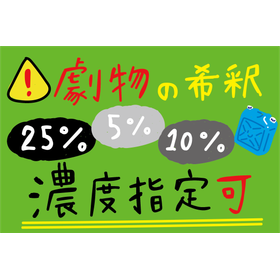
Due to company policy, we cannot handle "non-pharmaceutical toxic substances." Toxic substances are materials other than pharmaceuticals that have strong toxicity and require special care in handling. Chemical substances designated as toxic under the "Poisonous and Deleterious Substances Control Law" are classified as "non-pharmaceutical toxic substances." When using toxic substances, one must be a "business handler," and various precautions must be taken regarding handling methods and responses in case of leaks, which limits the number of employees who can handle them. Our company will deliver toxic substances diluted to a predetermined concentration. Please refer to the downloadable materials for more details on our proposal.
Added to bookmarks
Bookmarks listBookmark has been removed
Bookmarks listYou can't add any more bookmarks
By registering as a member, you can increase the number of bookmarks you can save and organize them with labels.
Free membership registration
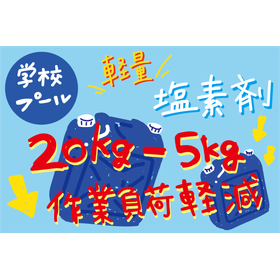
"Sodium hypochlorite," necessary for maintaining pool water quality. Its handling has increasingly become a burden on the field in recent years. - The conventional 20kg containers are heavy, making it particularly difficult for female staff to carry. - Due to being a liquid, the contents tend to slosh around during transport, posing a danger. - There is a risk of clothing being bleached or discolored if spilled. - It cannot be used up in one go, requiring careful storage. In light of these challenges, we have received inquiries asking, "Can we make it safer and easier to handle?" Please refer to the downloadable materials for more details on our proposal.
Added to bookmarks
Bookmarks listBookmark has been removed
Bookmarks listYou can't add any more bookmarks
By registering as a member, you can increase the number of bookmarks you can save and organize them with labels.
Free membership registration
In the manufacturing site of aluminum extrusion molding, temperature management of the billet (cylindrical aluminum material for extrusion) greatly affects product quality. In the previous operations... - Operators manually measured the temperature at only three points. - The actual temperature distribution and variations could not be fully understood. As a result, extrusion defects caused by temperature issues occurred. Especially in construction materials and automotive parts where high precision is required, even slight temperature deviations can lead to surface defects and dimensional inaccuracies. So, what can be done? Please refer to the downloadable materials for details of our proposal.
Added to bookmarks
Bookmarks listBookmark has been removed
Bookmarks listYou can't add any more bookmarks
By registering as a member, you can increase the number of bookmarks you can save and organize them with labels.
Free membership registration
One of the important processes in electrodeposition painting is the "cleaning and dilution process using pure water." The core pure water system had aged and was due for renewal. However, during the review of the renewal, the following issues arose: - The models proposed by other companies had excessive specifications and were over-specified for the usage amount. - There was an explanation that it was necessary to introduce large equipment to match the pure water regeneration capacity. - It was difficult to renew within the limited budget. On-site, there was a request for "as small and simple as possible, while having sufficient performance." Therefore, we proposed the optimal pure water system based on our investigation. Please refer to the downloadable materials for more details.
Added to bookmarks
Bookmarks listBookmark has been removed
Bookmarks listYou can't add any more bookmarks
By registering as a member, you can increase the number of bookmarks you can save and organize them with labels.
Free membership registration
The refractory material of the boiler that has been used for many years has deteriorated, and it is about time for an update. However, the estimated cost presented by the manufacturer when I tried to request an update was... "Honestly, it's tough on the budget." "It's not urgent, but leaving it as is is also scary." I was troubled by this dilemma between cost and safety. Therefore, our company checked the structure and use of the boiler and proposed a refractory material update plan that can be handled by manufacturers other than the original one. For more details, please refer to the downloadable materials.
Added to bookmarks
Bookmarks listBookmark has been removed
Bookmarks listYou can't add any more bookmarks
By registering as a member, you can increase the number of bookmarks you can save and organize them with labels.
Free membership registration
The effectiveness of the ion exchange resin is declining! The conductivity of the soft water is increasing! In the boiler equipment that supports the manufacturing line, a stable supply of high-quality pure water is crucial. There has been a challenge where the effectiveness of the ion exchange resin in use on-site is gradually decreasing, leading to an increase in the conductivity of the pure water. Furthermore, although the resin regeneration was set to occur automatically, there were concerns that starting regeneration during operation could impact production, leading to requests for control over the timing of regeneration. For more details, please refer to the downloadable materials.
Added to bookmarks
Bookmarks listBookmark has been removed
Bookmarks listYou can't add any more bookmarks
By registering as a member, you can increase the number of bookmarks you can save and organize them with labels.
Free membership registration
An unusual event occurred one day in the biological treatment tank that processes factory wastewater. "The sludge is not settling in the downstream sedimentation tank." "The treated water is cloudy." "I feel like the microorganisms are not functioning properly." Various measures were attempted on-site, such as increasing aeration and adding chemicals, but no definitive improvement was achieved, and the entire treatment tank remained in an unstable state... For more details, please refer to the downloadable materials.
Added to bookmarks
Bookmarks listBookmark has been removed
Bookmarks listYou can't add any more bookmarks
By registering as a member, you can increase the number of bookmarks you can save and organize them with labels.
Free membership registration
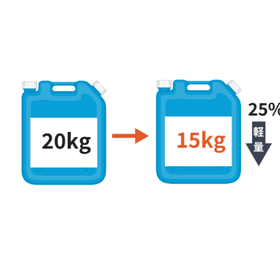
Do you have any concerns regarding the handling of sodium hypochlorite at pool or water treatment facilities? - The conventional 20kg containers are too heavy, making transportation and injection work a heavy burden for specific staff. - When pouring the liquid, there is a "gobble" splash (liquid splatter), raising concerns about skin contact, clothing discoloration, and labor accident risks. - It cannot be used up in one go, leading to anxiety over accidents during storage and handling management. The lightweight sodium hypochlorite (15kg) fundamentally resolves these issues at the work site. ◇ Excellent operability due to 25% weight reduction The weight is reduced to 15kg while maintaining the same specifications as the conventional 20kg container. This minimizes the burden of carrying and allows various workers to handle it smoothly. ◇ Stable design that reduces liquid splatter risk The weight reduction stabilizes the balance during pouring. It suppresses the "gobble" splashing phenomenon and prevents chemical contact accidents. ◇ Optimization of management burden and introduction costs By handling smaller quantities, storage risks are reduced. The introduction cost can also be offered at the same level as the conventional 20kg product. We are currently offering free case studies to improve work safety and eliminate burdens.
Added to bookmarks
Bookmarks listBookmark has been removed
Bookmarks listYou can't add any more bookmarks
By registering as a member, you can increase the number of bookmarks you can save and organize them with labels.
Free membership registration
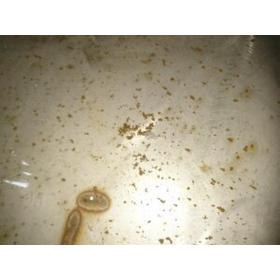
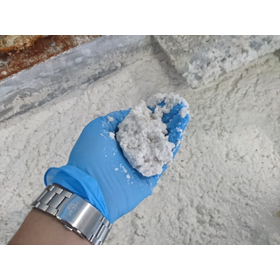
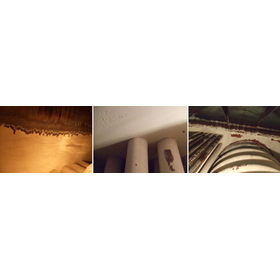
To the chemical manufacturers, we would like to introduce a case where we visualized the internal condition of a boiler and conducted internal cleaning of the water supply tank. We received inquiries expressing concerns that the efficiency of the boiler seems to be declining, fuel consumption is increasing, and steam generation is poor. As we investigated further, the possibility arose that iron content in the raw water was gradually accumulating inside the boiler. First, we used a fiberscope to visualize the internal condition of the boiler. As a result, reddish-brown deposits were observed on the heat transfer surfaces and inside the piping, confirming the accumulation of iron. Additionally, to address the raw water side of the boiler, we conducted internal cleaning of the water supply tank. It became clear that iron rust was settling at the bottom of the tank, indicating that the root cause was the carryover from the raw water. [On-site issues] ■ The efficiency of the boiler seems to be declining. ■ Fuel consumption is increasing, but steam generation is poor. ■ Iron content may be related. *For more details, please download the PDF or feel free to contact us.
Added to bookmarks
Bookmarks listBookmark has been removed
Bookmarks listYou can't add any more bookmarks
By registering as a member, you can increase the number of bookmarks you can save and organize them with labels.
Free membership registration
We would like to introduce a case study regarding the introduction of an automatic chemical injection pump to the site manager of a major automotive parts manufacturer's painting booth. In the water curtain type painting booth used in the painting process of automotive parts, excess paint mixes with the circulating water and generates sludge (precipitate). However, this sludge was causing a range of complex problems. To address these issues, we introduced a circulating water treatment agent for the painting booth and an automatic chemical injection pump. This combination reduced the moisture content of the sludge and minimized the risk of chemical excess or deficiency. 【On-site Challenges】 ■ Prone to adhesion and deposition on tanks, pipes, and pumps ■ Cleaning takes time, resulting in a heavy maintenance workload ■ Changes in water quality can easily lead to odors and chemical loss *For more details, please download the PDF or feel free to contact us.
Added to bookmarks
Bookmarks listBookmark has been removed
Bookmarks listYou can't add any more bookmarks
By registering as a member, you can increase the number of bookmarks you can save and organize them with labels.
Free membership registration
We proposed a total solution for our customers who have requested boiler maintenance, conducting both maintenance and smoke emission measurements simultaneously. Some customers expressed that they rely on other companies for smoke emission measurements, but find the scheduling process cumbersome and inconvenient. In response, we proposed a total solution that includes smoke emission measurements along with boiler maintenance. This reduces the number of steps needed for scheduling to just one, cutting down on coordination efforts and eliminating the hassle of selecting measurement contractors and arranging contracts. [On-site Issues] ■ Smoke emission measurements are outsourced to other companies, but scheduling is cumbersome and inconvenient. ■ It would be more efficient if measurements could be done simultaneously with maintenance. ■ Coordination of on-site schedules with different contractors. ■ Conducting measurement work again after maintenance. ■ Measurement results are not linked to maintenance details. *For more details, please download the PDF or feel free to contact us.
Added to bookmarks
Bookmarks listBookmark has been removed
Bookmarks listYou can't add any more bookmarks
By registering as a member, you can increase the number of bookmarks you can save and organize them with labels.
Free membership registration
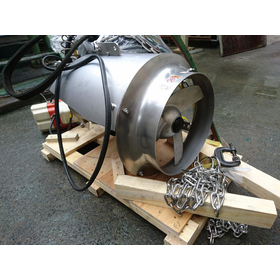
To the maintenance personnel of mold manufacturing companies in the Tokai region, we would like to introduce a case study regarding the review of the stirring method for the raw water tank. The raw materials used for forming paper mold products need to be uniformly stirred and circulated in the raw water tank. Traditionally, an air stirring method was employed; however, the air piping regularly became clogged, necessitating ongoing cleaning efforts. To resolve this issue, we propose switching from air stirring to an electric stirring mixer method. After the switch, we achieved complete elimination of air pipe clogging by stirring directly from inside the tank without using piping. [On-site Challenges] ■ Stopping production for cleaning each time there is a clog ■ Additional labor and time required for cleaning ■ Significant power consumption due to air usage *For more details, please download the PDF or feel free to contact us.
Added to bookmarks
Bookmarks listBookmark has been removed
Bookmarks listYou can't add any more bookmarks
By registering as a member, you can increase the number of bookmarks you can save and organize them with labels.
Free membership registration
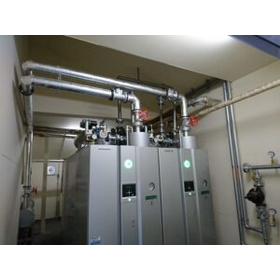
To the equipment managers at sites with heating processes such as food factories and beverage manufacturing, we have proposed updating boilers by converting fuel from heavy oil to gas. The heavy oil boiler, which has been in use for over a decade, has reached a point where performance degradation and increasing repair costs necessitate consideration for an update. In this context, we focused on the subsidy program for introducing energy-saving equipment through fuel conversion. After implementation, we significantly reduced initial costs by utilizing subsidies, stabilized fuel expenses, and made cost forecasting easier. 【Challenges on-site】 ■ Repairs are not keeping up ■ If we are going to update, we want to reduce utility costs as much as possible ■ There are budget limitations *For more details, please download the PDF or feel free to contact us.
Added to bookmarks
Bookmarks listBookmark has been removed
Bookmarks listYou can't add any more bookmarks
By registering as a member, you can increase the number of bookmarks you can save and organize them with labels.
Free membership registration
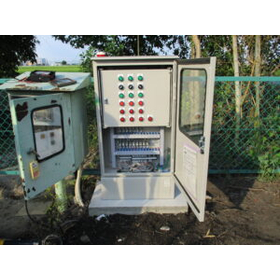
We would like to introduce a case study of the implementation of an automatic control system for industries such as aluminum processing, metal processing, surface treatment, and extrusion molding, where pH management of factory wastewater is required. We received inquiries expressing concerns that the pH of the wastewater sometimes shows abnormal values and that there might be a risk of it flowing out externally. Abnormal pH levels in wastewater can occur suddenly, and there are limitations to monitoring and responding manually. Our proposal was to implement a system that automatically controls an electric valve in conjunction with the pH meter readings. After implementation, we achieved zero outflow of abnormal water, and real-time responses to pH anomalies became possible. 【Challenges on-site】 ■ The pH of the wastewater sometimes shows abnormal values, raising concerns about potential external outflow. ■ If water exceeding the standard value were to flow out, it could lead to environmental standard violations or issues with neighboring areas. ■ Continuous monitoring by human resources is difficult, so we want to implement automatic safety measures. *For more details, please download the PDF or feel free to contact us.
Added to bookmarks
Bookmarks listBookmark has been removed
Bookmarks listYou can't add any more bookmarks
By registering as a member, you can increase the number of bookmarks you can save and organize them with labels.
Free membership registration
To the boiler equipment personnel of textile manufacturing companies in the Tokai region, We would like to introduce a case study on our proposal for improving used boilers and chemicals. We faced concerns regarding the boiler that had been in use for many years, particularly regarding poor fuel efficiency and the increasing running costs year by year. We started by thoroughly examining the current boiler chemicals and switching to more suitable ones. After that, we proposed a plan to utilize a good-condition used boiler from our company. 【Background and Challenges on Site】 ■ The response from the maintenance company is slow, and deficiencies are found even during regular inspections. ■ Fuel efficiency is poor, and running costs are increasing year by year. ■ Future expansion of the boiler system is being considered, but costs are a bottleneck. ■ The aging of the boiler has led to a decrease in heat transfer efficiency. ■ The chemicals being used do not match the current water quality, raising concerns about scaling and corrosion. ■ Although considering an update, the high cost of introducing a new boiler has put it on hold. *For more details, please download the PDF or feel free to contact us.*
Added to bookmarks
Bookmarks listBookmark has been removed
Bookmarks listYou can't add any more bookmarks
By registering as a member, you can increase the number of bookmarks you can save and organize them with labels.
Free membership registration
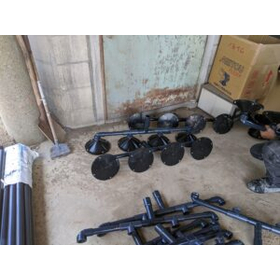
We would like to introduce a case of updating the diffusers in the aeration tank at factories with wastewater treatment facilities, such as fiber, dyeing, and silk factories. The water quality in the wastewater treatment tank changed at a certain point. There were concerns that the strong odor indicated that biological treatment was not effective. First, we temporarily halted the aeration equipment on-site and conducted an investigation of the air piping. It was discovered that the diffusers (aeration devices) that should have been installed at the bottom of the aeration tank were missing. We immediately reinstalled and inspected the diffusers, confirming normal aeration and recovery of the dissolved oxygen (DO) levels. [On-site concerns] - The water that used to be gray has turned dark. - The DO (dissolved oxygen concentration) is not increasing at all. - There is a strong odor, and it seems that biological treatment is not effective. *For more details, please download the PDF or feel free to contact us.*
Added to bookmarks
Bookmarks listBookmark has been removed
Bookmarks listYou can't add any more bookmarks
By registering as a member, you can increase the number of bookmarks you can save and organize them with labels.
Free membership registration
We would like to introduce a case where we proposed energy-saving boiler chemicals containing scale removal components to a certain chemical manufacturer in the Tokai region, specifically to the boiler personnel. In the boilers used in manufacturing sites, scale (solid deposits) accumulates inside the pipes over time, leading to issues such as the labor and costs associated with regular scale removal work. In response to these challenges, we proposed our chemical. By switching to our product, we achieved gradual detachment of the scale adhered to the boiler pipes and suppression of re-adhesion. [On-site Challenges] ■ Fuel loss due to decreased heat transfer efficiency ■ Extended heating time ■ Labor and costs associated with regular scale removal work *For more details, please download the PDF or feel free to contact us.
Added to bookmarks
Bookmarks listBookmark has been removed
Bookmarks listYou can't add any more bookmarks
By registering as a member, you can increase the number of bookmarks you can save and organize them with labels.
Free membership registration
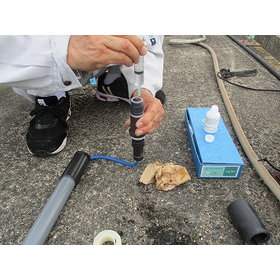
We would like to introduce a case of maintenance and cleaning/recalibration of the DO meter at the wastewater treatment facility of a fiber manufacturer and dyeing factory. One day, an anomaly occurred in the biological treatment tank that processes factory wastewater. Various responses were attempted on-site, such as increasing aeration and adding chemicals, but no decisive improvement was achieved, and the overall instability of the treatment tank continued. We suspected a decrease in DO (dissolved oxygen) concentration within the biological treatment tank. Although no significant abnormalities were observed in the DO meter's displayed values, upon performing maintenance and cleaning/recalibration of the sensor, it became clear that the actual dissolved oxygen concentration was significantly lower than the measured values displayed. Based on this cause, we reviewed the aeration conditions, resulting in a recovery of microbial activity, which ultimately led to improvements in sedimentation. [On-site Issues] - Sludge does not settle in the downstream sedimentation tank. - Treated water is cloudy. - It seems that microorganisms are not functioning properly. *For more details, please download the PDF or feel free to contact us.*
Added to bookmarks
Bookmarks listBookmark has been removed
Bookmarks listYou can't add any more bookmarks
By registering as a member, you can increase the number of bookmarks you can save and organize them with labels.
Free membership registration
We conduct "Energy-saving Diagnosis for Boilers." Through the energy-saving diagnosis of existing boiler equipment, we identify waste in utility costs. The first items to check during the diagnosis are the efficiency of the boiler itself, which generates steam, and the operational management to ensure that the boiler can operate at that efficiency. It is important to select the most efficient boiler possible when installing one. However, even if a high-efficiency boiler is chosen, if it is not operated in a way that allows it to perform at its best, the efficiency will decrease. By conducting a diagnosis and implementing efficient operations, we contribute to energy savings and CO2 reduction. If you have any concerns regarding boiler energy efficiency or heating efficiency, please feel free to consult us. We support the reduction of waste and stable operation through diagnosis and improvement proposals tailored to the local situation. [Diagnosis Examples] ■ High fuel costs for the boiler ■ Long heating times for the boiler *For more details, please download the PDF or feel free to contact us.
Added to bookmarks
Bookmarks listBookmark has been removed
Bookmarks listYou can't add any more bookmarks
By registering as a member, you can increase the number of bookmarks you can save and organize them with labels.
Free membership registration