1~45 item / All 49 items
Displayed results

Added to bookmarks
Bookmarks listBookmark has been removed
Bookmarks listYou can't add any more bookmarks
By registering as a member, you can increase the number of bookmarks you can save and organize them with labels.
Free membership registration
Contact this company
Inquiry FormBefore making an inquiry
Download Profile1~45 item / All 49 items
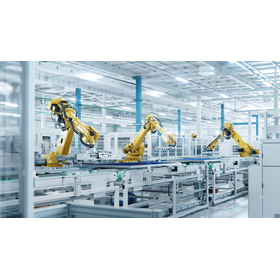
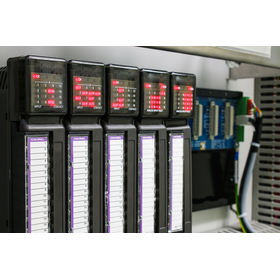
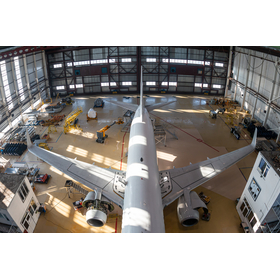
I want to add robots to old machine tools, but a complete overhaul of the equipment is difficult. Thermix designs the retrofitting automation of existing equipment not as the fabrication of additional devices, but as integration into existing processes. We consolidate on-site surveys, signal coordination, safety, switching work, and resuming mass production into a single plan, automating without stopping the operating assembly line for long periods. Even if drawings and PLC data are available, it does not necessarily reflect subsequent minor modifications. We verify the machine's dimensions, doors, jigs, spare I/O, safety circuits, and existing programs against the actual equipment. We categorize the equipment into what to keep, what to modify, and what to update. The decision is based not on the year of manufacture, but on machine accuracy, maintenance history, availability of parts, external signals, and future production volumes. "I want to add robots to old machines" → Adjust the signals for doors, clamps, and processing completion with the existing side. "I don't have enough spare I/O" → Narrow down the verification items based on the obtainable state and modification difficulty. "I can only stop on weekends" → Separate tasks that can be done before the on-site visit and plan the order and timing. "I'm worried if the modifications won't be ready in time" → Pre-agree on the conditions for reverting to the old program and the scope of temporary restoration. "The boundaries are unclear with multiple manufacturers" → Use a common document for the signal table and stop range to clarify the boundaries. Please consult us starting from the on-site survey and organizing any uncertain matters.
Added to bookmarks
Bookmarks listBookmark has been removed
Bookmarks listYou can't add any more bookmarks
By registering as a member, you can increase the number of bookmarks you can save and organize them with labels.
Free membership registration
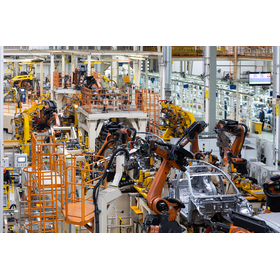
The inspection results remain, but we cannot trace the processing conditions; reintroducing reworked items causes the history to diverge. Thermix begins traceability not with the addition of recording devices, but with the design of identification units. We connect work IDs, transportation, processing, cleaning, measurement, inspection, and PLC control to create a manufacturing line that can track the quality history of individual items. The tracking units can be selected from individuals, pallets, jigs, or lots. We align the necessary units for quality assurance with the actual transportation units, breaking it down to the granularity needed for defect investigation, shipping decisions, and process improvements. The differences in the system do not emerge during normal operations. We design for exceptional operations first, such as reading failures and manual transportation. “Inspection results do not connect with processing conditions” → Combine across processes with a common work ID. “Reintroducing reworked items causes the history to diverge” → Distinguish and record initial, reworked, and re-inspected items. “If the code cannot be read, it cannot be processed” → Design for retries, fallback, and operator input with permissions included. “If the MES crashes, the line stops” → Implement temporary storage and resend after recovery, preventing duplicate registrations. “Data has been collected but cannot be used for investigation” → Standardize the definitions of time, variety codes, and process numbers across equipment. Please consult us starting from the organization of tracking units and exceptional operations. We also welcome participation from the conceptual stage.

Added to bookmarks
Bookmarks listBookmark has been removed
Bookmarks listYou can't add any more bookmarks
By registering as a member, you can increase the number of bookmarks you can save and organize them with labels.
Free membership registration
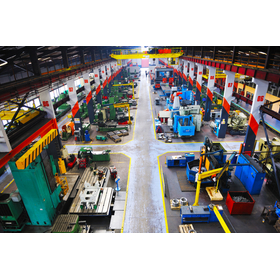
Despite having confirmed the equipment with the manufacturer, it stops once installed, and the acceptance criteria are unclear, making it impossible to decide on moving to mass production. Thermix designs FAT and SAT (Factory Acceptance Test and Site Acceptance Test) not as confirmations of equipment completion, but as criteria for transitioning to mass production, validating everything from actual work, abnormal recovery, inter-equipment coordination, operation, maintenance, to data recording as part of the production line. We do not only observe normal operation; we intentionally induce situations such as missed captures, undetected sensors, unacceptable receiving at the transport destination, inspection failures, material shortages, communication interruptions, and restarts after emergency stops, to confirm where human intervention is needed. If sufficient actual work cannot be prepared, we separate the items that can be confirmed during FAT from those carried over to SAT and leave them in the acceptance plan. “Passed FAT but stops on-site” → Implementing step-by-step from individual tests to inter-equipment integration. “Cannot determine acceptance criteria” → Judging based on capability, quality, abnormal recovery, operation maintenance, and data. “Too many issues to move to mass production” → Managing priorities based on the impact on the start of mass production. “Involvement of multiple equipment manufacturers” → Sharing and adjusting responsibility boundaries and test items at the upstream stage. “On-site modifications are not reflected in the drawings” → Confirming the scope of changes and reflecting them in the official data. Please consult us regarding the scope of FAT and SAT from the estimation and specification stages.
Added to bookmarks
Bookmarks listBookmark has been removed
Bookmarks listYou can't add any more bookmarks
By registering as a member, you can increase the number of bookmarks you can save and organize them with labels.
Free membership registration
I want to introduce robots, but I don't know the range of the safety fence, and the entire line stops every time maintenance is performed. Thermix addresses these challenges by organizing the interaction between people and equipment not only during normal operations but also during setup changes, cleaning, abnormal recovery, maintenance, and startup, designing manufacturing lines that balance safety and operation. We reduce hazards before enclosing them. We take measures during the conceptual design phase, such as arranging for cleaning and material replenishment to be done from outside the hazardous area and implementing mechanisms that can be maintained even during power outages or air pressure drops. Safety and productivity are not mutually exclusive. A manufacturing line that can recover without hesitation will also operate stably. We handle everything consistently from conceptual design to control design, construction, and startup. "Cannot determine the range of the safety fence" → Identify the proximity scenarios for each task and select the protection method. "Can we reduce the fence with a scanner?" → Verify stopping time, reach distance, blind spots, and handling of cart passage. "The entire line stops every time maintenance is performed" → Separate hazardous areas and design stopping ranges by section. "When the door closes, it automatically restarts" → Design safety checks, resets, and automatic recovery separately. "I want to add to an existing line" → Organize the connection range and responsibility boundaries with the existing emergency stop circuit. Please consult us starting from identifying which tasks require people to approach the equipment.
Added to bookmarks
Bookmarks listBookmark has been removed
Bookmarks listYou can't add any more bookmarks
By registering as a member, you can increase the number of bookmarks you can save and organize them with labels.
Free membership registration
Transporting and inverting heavy workpieces cannot be automated simply by choosing a high-capacity robot. Thermix designs gripping, transporting, inverting, positioning, safety, and abnormal recovery as a single flow, establishing an assembly line that handles heavy objects. It is constructed from the perspectives of equipment manufacturers, FA integrators, and line builders. The transportable mass is not determined solely by the weight of the workpiece. It is confirmed by considering the hand, chuck, bracket, sensors, wiring and piping, as well as the center of gravity and moments during acceleration and deceleration. Gripping does not rely solely on suction or clamping force; it combines mechanical supports and fall prevention mechanisms. Decisions are made during the conceptual phase to ensure that dangerous conditions do not arise during power outages or air pressure drops. "I want to eliminate manual handling of heavy objects" → Redesign the entire process from the gripping points and transport posture. "I want to reduce crane operations" → Assign roles for long distances to shuttles and vertical movements to lifting devices. "I want to reduce manpower for inverting large workpieces" → Stabilize the stopping position with dedicated positioners. "The positioning accuracy varies with the operator" → Design jigs by calculating backwards from the reference surface of the next process. "If it stops while lifted, it cannot be returned" → Pre-design the retreat location and manual operation procedures. Please consult us starting from observing the actual workpieces and current operations.
Added to bookmarks
Bookmarks listBookmark has been removed
Bookmarks listYou can't add any more bookmarks
By registering as a member, you can increase the number of bookmarks you can save and organize them with labels.
Free membership registration
Welding of truck and passenger car frames involves long parts and many components, where thermal distortion and cumulative tolerances directly affect dimensions. Thermix designs the jig clamping sequence, welding sequence, and robot posture as an integrated system, establishing a CO₂ welding assembly line for body frames that can be mass-produced. We handle everything from concept to design, manufacturing, installation, and startup in a consistent manner. We have established a design flow that applies newly introduced robot simulation software to the CO₂ welding line, verifying the range of motion, welding posture, torch entry angle, and interference during the design phase. A prototype line is not considered successful just because it operates. We verify quality, productivity, and workability, creating decision-making materials for handing over to the mass production assembly line. - "Frame distortion does not meet specifications" → Review the welding sequence based on the order of constraints and releases. - "There are many reworks in the teaching field" → Pre-check the range of motion and interference through simulation. - "I want to expand the prototype equipment to mass production" → Record measurement points and stopping factors for handover. - "I want to set up the same line in overseas factories" → Provide consistent support from pre-shipment inspections to local supervisors. - "I want to align with the standards of the current line" → Interpret the equipment standards for both mechanical and electrical aspects for design. Please consult us from the stage of organizing what you want to verify on the prototype line.
Added to bookmarks
Bookmarks listBookmark has been removed
Bookmarks listYou can't add any more bookmarks
By registering as a member, you can increase the number of bookmarks you can save and organize them with labels.
Free membership registration
Placing one robot does not automatically lead to unmanned operation at night. Thermix is designed as a production line that continuously handles supply, processing, transportation, cleaning, measurement, quality recording, and anomaly recovery without human intervention. The starting point is defining what processes we want to continue when humans are absent. From the target continuous operation time and production quantity, we backtrack to determine the capacity of the material stocker and finished product buffer. We incorporate variety composition, tool changes, measurement frequency, setup changes, and storage for work-in-progress during downtime. In a multi-machine setup where one robot is responsible for several machine tools, the overall takt balance of the production line is influenced by the robot's maximum speed. "When a robot is installed but operations stop at night" → Backtrack the supply and buffer capacity from the operation time. "When the finished product storage is full and stops" → Buffer design that absorbs takt differences and temporary stops between processes. "When inline measurement is unstable" → Prepare the pre-measurement stage with cleaning, air blowing, liquid draining, and posture alignment. "When small anomalies cause long downtimes" → Categorize retry, retreat and continue, and immediate stop for each type of anomaly. "When one person wants to monitor multiple machines" → Pre-design the priority of transportation requests and manual operation during stops. Please consult us to identify the judgments and recovery tasks performed by personnel on-site.
Added to bookmarks
Bookmarks listBookmark has been removed
Bookmarks listYou can't add any more bookmarks
By registering as a member, you can increase the number of bookmarks you can save and organize them with labels.
Free membership registration
Our company designs flexible machining systems (FMS) for machine tools as manufacturing lines that can safely return to operation in a short time, even if they stop, rather than as equipment that never stops. We anticipate stoppage factors such as chips, coolant, tool life, and workpiece conditions, incorporating maintainability and abnormal recovery from the conceptual stage. In an FMS where machining machines, robots, pallet transport, tools, jigs, cleaning, and inspection are interconnected, a small abnormality in one location can lead to a complete line stoppage. The key lies in visualizing the workpiece, tool, and equipment conditions, and in reducing recovery time through control design. Once mass production begins, the quality of the FMS is determined by how stably it can continue to operate. "Stopping during night operations" → Confirm tool life against the input plan in advance. "Not knowing which workpiece to remove" → Manage conditions from before machining to waiting for reprocessing. "Only showing a transport abnormality with no way to find the cause" → Display pallets, sensors, and conditions. "Being afraid to move the robot during recovery" → Safe sequence and interference prevention interlock design. "Wishing to reduce maintenance load after mass production" → Ensure inspection openings and cleaning spaces during the design of the manufacturing line. Please consult us from the stage of considering night operations or unmanned operations.
Added to bookmarks
Bookmarks listBookmark has been removed
Bookmarks listYou can't add any more bookmarks
By registering as a member, you can increase the number of bookmarks you can save and organize them with labels.
Free membership registration
This is a production line redesign service that organizes the conditions for transferring production functions to a new factory, including building constraints, production capacity, and the continued operation during phased relocation, while conceptualizing everything from factory layout, automation and versatility, production equipment investment, return on investment, to the implementation roadmap. The layout is the most significant variable, determining not just equipment placement but also logistics flow, transportation methods, buffers, and future expansion possibilities. Multiple proposals with different concepts are created, and their advantages and disadvantages are visualized. The challenging part is understanding the current situation. We verify production volume, equipment capacity, processes, work methods, transportation routes, losses, and equipment layout through on-site surveys and interviews. The foundation is the perspective of production technology that has handled everything from the concept of automated lines to construction. "I want to determine if just moving is sufficient" → Consideration from understanding the current situation to future concepts as a whole. "I want to objectively compare layout proposals" → Score multiple proposals using a common evaluation axis. "Where would automation be most effective?" → Judged from production volume, product mix, process capacity, and operating rates. "I have no materials to explain the investment to management" → Organize investment amounts and return on investment at the conceptual stage. "The definition of a good factory differs by department" → Establish a common yardstick among stakeholders. Please consult us on what should be analyzed.
Added to bookmarks
Bookmarks listBookmark has been removed
Bookmarks listYou can't add any more bookmarks
By registering as a member, you can increase the number of bookmarks you can save and organize them with labels.
Free membership registration
We do not know the cause of the chocolate stop, and we face the challenge of being unable to trace the relationship between inspection failures and previous processes. To address this, we design a production line that retains three types of operational data—stop, production, and quality—in a form that can be used for decision-making on-site. We combine the perspectives of equipment manufacturers, FA integrators, and line builders, providing consistent support from conceptual design to control design and HMI design. Operational data is not added externally later; instead, it is integrated with the design of PLC abnormal conditions and codes, as well as the design of HMI display and history screens, determining who will use which data. We specialize in designing operational data and the overall production line, covering everything from transportation, inspection, control, maintenance, to on-site operations. "Unable to identify the cause of chocolate stops" → Reduce investigation time for causes through the design of stop history granularity. "I want to trace the relationship between inspection failures and previous processes" → Record related to product type, lot, and process history. "I want to reduce the cause investigation time for maintenance personnel" → Display abnormal history and recovery procedures on the HMI. "I want to reduce defects immediately after setup changes" → Correlate product change conditions with inspection results. "I want to modify existing lines to collect data" → Review from control design and HMI design. For inquiries about how to proceed with operational data design or its application scope, please contact us for document requests or technical consultations.
Added to bookmarks
Bookmarks listBookmark has been removed
Bookmarks listYou can't add any more bookmarks
By registering as a member, you can increase the number of bookmarks you can save and organize them with labels.
Free membership registration
The automotive welding line is not just about delivering equipment; it is crucial to ensure stable operation until mass production. Thermix acts as a line builder that handles everything from planning, design, production, to construction, integrating production technology, automation, robotics, and control to establish production lines in automotive factories both domestically and internationally. We pre-verify the range of motion, welding posture, and interference through robot simulation, ensuring that the equipment is ready for use on-site. With an overall optimization that includes partner companies, we balance delivery times, quality, and costs. We specialize in CO₂ welding of automotive frames and can comprehensively support the creation of automotive production lines, from prototype lines to mass production deployment and modifications to existing lines. - Want to set up a welding line in an overseas factory → Comprehensive support from local supervision to construction - Want to expand a prototype line to mass production → Verify quality, productivity, and workability for deployment - Want to confirm interference and posture of robot welding in advance → Verification through simulation - Want to incorporate new equipment into an existing line → Modification design that understands existing standards - Want to meet tight deadlines → Reconstruct processes through role division and system enhancement We accept inquiries for consultations on the concept and technology of automotive welding lines, as well as requests for case study materials.
Added to bookmarks
Bookmarks listBookmark has been removed
Bookmarks listYou can't add any more bookmarks
By registering as a member, you can increase the number of bookmarks you can save and organize them with labels.
Free membership registration
When considering labor reduction solely in terms of "how many people can be reduced," it often leads to failure as the burden on the site does not decrease even after implementation. Termix breaks down on-site tasks into operational units before equipment selection, categorizing them into automation, semi-automation, work support, and manual tasks, thereby designing a system where labor reduction is achieved across the entire production line. We excel in handling large works in the automotive, aerospace, and construction machinery sectors, and we cater to a wide range of industries including industrial machinery, machine tools, home appliances, and building materials. We design transportation, supply, positioning, processing, inspection, discharge, and recording from three perspectives: equipment manufacturers, FA integrators, and line builders, including factors that require human intervention such as work supply, abnormal recovery, product changeover, and initial product confirmation. - Automation does not reduce the burden on-site → Break down tasks including supply and abnormal recovery, and redesign. - Want to solve labor shortages through labor reduction → Automate repetitive and heavy tasks while leaving decision-making tasks to humans. - Want to eliminate variation in inspections → Design for OK/NG discharge, re-inspection, recording, and signal coordination. - Want to modify the line while utilizing existing equipment → Address constraints of existing layout, flow, and maintenance space. - Confirmation omissions occur during product changeovers of various types → Design operations for condition checks and initial product confirmations during changeovers. We welcome consultations and requests for materials.
Added to bookmarks
Bookmarks listBookmark has been removed
Bookmarks listYou can't add any more bookmarks
By registering as a member, you can increase the number of bookmarks you can save and organize them with labels.
Free membership registration
We will address the challenge of "long recovery times after the introduction of automated lines" through "maintainability design," which enables early identification of abnormalities and rapid inspection and replacement, maximizing annual operating rates synchronized with takt time. In response to the unavoidable "choco stops" in mass production, we will implement integration that allows for "equipment that can quickly return to operation" rather than "equipment that does not stop," leading to improved yield and true labor reduction. - We want to minimize equipment downtime during troubles and maximize line operating rates. - We want to improve the narrow maintenance space or the difficulty in inspections that prolong the replacement of consumables. - We desire equipment that can immediately indicate "why it stopped" on the operation screen during abnormal occurrences. - We would like the design to compensate for the lack of resources for maintenance technicians in the automation of production lines. - We want to safely carry out modifications to existing equipment while avoiding maintenance pathways and interference issues. We will reduce the inspection burden on maintenance personnel and complete a production line with stable quality. Please feel free to contact us for technical consultations regarding the construction of lines that pursue not only equipment capability but also maintainability.
Added to bookmarks
Bookmarks listBookmark has been removed
Bookmarks listYou can't add any more bookmarks
By registering as a member, you can increase the number of bookmarks you can save and organize them with labels.
Free membership registration
We solve issues such as unmet takt time after switching varieties and incorrect settings during changeovers in multi-variety, small-lot production through "changeover optimization design," which synchronizes jigs, transport, and control, thereby supporting the completion of mass production. - We want to eliminate line stoppages that frequently occur after changeovers in multi-variety production. - We aim to achieve zero jig setup errors and program setting mistakes during variety changes. - We want to automate the confirmation items for variety changes that currently rely on manual checks, reducing the burden on the shop floor. - We wish to establish an automatic transport line that maintains stability regardless of changes in workpiece shape or weight. - We desire a highly recoverable line that allows operators to resume work without confusion after an abnormal stoppage. The causes of stoppages in automated lines tend to concentrate "immediately after switching varieties" rather than during normal operation. Our approach is not just to line up equipment but to implement recipe management that centrally controls jigs, transport posture, robot programs, and inspection recipes via PLC, thereby proactively eliminating manual confirmation burdens and errors. In addition to shortening the changeover time itself, we minimize the outflow of defects and minor stoppages immediately after resuming. We realize a manufacturing line that stabilizes quality instantly even in multi-variety scenarios, contributing to a reduction in production preparation time. If you are concerned about "increased varieties leading to more frequent line stoppages," please consult us from the conceptual stage.
Added to bookmarks
Bookmarks listBookmark has been removed
Bookmarks listYou can't add any more bookmarks
By registering as a member, you can increase the number of bookmarks you can save and organize them with labels.
Free membership registration
We have introduced inspection machines, but the issue of "the line stopping" is resolved through "flow design," which synchronizes transportation and control after judgment, achieving both full inspection and maximization of operational efficiency. The true challenge in automating the inspection process is not the imaging judgment itself, but rather the construction of the subsequent flow. Our company designs not only the pursuit of precision in cameras and sensors but also the stabilization of work posture, optimization of NG product discharge actions, and real-time signal coordination with preceding and succeeding processes, preventing bottlenecks before they occur. - We want to alleviate the labor shortage in the inspection process through automation and reduce quality variation. - We would like the entire inspection line to be integrated, including NG product discharge and re-inspection routes. - We want to prevent chocolate stops caused by over-detection and maximize and stabilize operational efficiency. - We want to digitize inspection results and provide feedback for quality improvement to the preceding process. - We want to conduct high-precision automatic inspections that are not affected by shifts in imaging positions or lighting variations. By digitizing inspection records, we ensure complete traceability. The automatic isolation flow for ambiguous "gray judgments" minimizes confirmation losses on-site, ensuring improved yield and stable quality. We propose an integration that emphasizes not only the pursuit of inspection accuracy but also the actual operation across the entire line. Please feel free to contact us for a technical consultation.
Added to bookmarks
Bookmarks listBookmark has been removed
Bookmarks listYou can't add any more bookmarks
By registering as a member, you can increase the number of bookmarks you can save and organize them with labels.
Free membership registration
We will solve issues such as the shortage of personnel for visual inspections, the outflow of defective products, and the stoppage of the line due to "misalignment of work posture" or "over-detection" after introducing inspection machines. Our company goes beyond merely introducing inspection equipment; we integrate the entire line design from stabilizing work posture to the flow of discharging defective products. We are a line builder that constructs inspection processes that truly "work" on-site. - We want to automate and reduce the manpower for visual inspections to alleviate the shortage of personnel. - We want to ensure that defective products do not flow out and reduce quality variation. - We want to minimize line stoppages (chocolate stops) caused by the introduction of inspection machines. - We want to digitize inspection results and ensure traceability. - We want to add inspection processes to existing production lines without interference. 【Benefits of Implementation】 Significantly reduce the burden on inspectors while achieving both labor reduction and quality stabilization. We provide support that goes beyond just delivering equipment; we ensure adjustments are made on-site until mass production stabilizes. Please feel free to consult us from the conceptual stage of reducing defects and automating inspections.
Added to bookmarks
Bookmarks listBookmark has been removed
Bookmarks listYou can't add any more bookmarks
By registering as a member, you can increase the number of bookmarks you can save and organize them with labels.
Free membership registration
In addressing the "automation of production lines" due to labor shortages, we solve on-site failures such as not achieving the takt time after startup or transport jams. Our company is not just about equipment installation; we are a line builder that thoroughly organizes the requirements from the upstream "conceptual design" stage and constructs a "truly operational line" that takes into account the constraints of the site. - We want to eliminate labor shortages and automate and reduce manpower in the manufacturing line. - We want to achieve zero takt time shortfalls and transport troubles (chocolate stops) after startup. - We want to utilize existing equipment to upgrade capacity and add processes. - We want a line that is easy to recover on-site even when abnormalities occur and is less likely to stop. - We want not only the introduction of robots but also the integration (system integration) of surrounding transport and control. [Benefits of Implementation] We minimize rework during the design phase and achieve the shortest possible time for mass production startup. We ensure that investments in labor reduction lead to improved productivity and provide a manufacturing line with stable quality. Please feel free to consult with us starting from the conceptual stage of "what issues you are facing."
Added to bookmarks
Bookmarks listBookmark has been removed
Bookmarks listYou can't add any more bookmarks
By registering as a member, you can increase the number of bookmarks you can save and organize them with labels.
Free membership registration
We solve challenges in launching automated lines, such as "the equipment works individually, but it takes time to adjust when connected in a line" and "the recovery procedures during abnormalities are unclear, leading to low operational rates." Our company is not just a machine manufacturer; we are a line builder that minimizes on-site adjustments through control design that clarifies the "responsibility boundaries" between equipment, ensuring stable operation. - We want to significantly reduce the adjustment time for launching production lines. - We want to organize the signal exchange and responsibility boundaries between equipment to reduce on-site troubles. - We want to standardize recovery procedures from minor stoppages to improve line operational rates. - We want to integrate and optimize the control of manufacturing lines involving multiple vendors. - We want to ensure the mass production of labor-saving lines to address labor shortages. 【Benefits of Implementation】 By incorporating recoverability from the design stage, we dramatically shorten the launch period and maximize the effectiveness of labor-saving investments. We prevent dependency on individuals and achieve a highly maintainable production line. Please feel free to consult us comprehensively about the connections in control and recovery concepts from the conceptual stage of automation.
Added to bookmarks
Bookmarks listBookmark has been removed
Bookmarks listYou can't add any more bookmarks
By registering as a member, you can increase the number of bookmarks you can save and organize them with labels.
Free membership registration
We will solve the issues of "interference between jigs and robots," "signal discrepancies," and "unexpected takt loss" that arise during the launch of automated lines. Our company guarantees the feasibility of the entire line in advance through advanced verification in a digital space called "Virtual Commissioning," rather than just the completion of individual equipment before actual production. - We want to prevent troubles of "not moving or stopping" after the introduction of the production line. - We want to shorten the installation and adjustment period on-site by verifying in a digital space (virtual commissioning). - We want to eliminate 100% of the interference from complex robot control and inter-process transportation before actual production. - We desire a line that is easy for on-site production engineers to handle and can easily recover from abnormal stops. - We want to ensure the modification of manufacturing lines utilizing existing equipment is completed without any setbacks. 【Benefits of Implementation】 This dramatically reduces the amount of adjustment needed on-site and significantly shortens the period from installation to mass production start. It is not just about equipment installation; we develop a "whole line optimization" that includes maintainability and operability from the conceptual stage. Please consult us from the conceptual stage for building manufacturing lines that minimize startup risks.
Added to bookmarks
Bookmarks listBookmark has been removed
Bookmarks listYou can't add any more bookmarks
By registering as a member, you can increase the number of bookmarks you can save and organize them with labels.
Free membership registration
We solve issues related to interference troubles and startup delays in the modification of existing production lines, such as "I want to enhance capabilities by utilizing current equipment" and "I only want to automate manual processes." Our company specializes in "modifying existing lines" by accurately capturing the differences between drawings and actual equipment using 3D scanners, and by highly integrating existing equipment with newly installed automation systems. - Automate while utilizing existing production lines - Desire to reduce labor - Want to improve production capacity while keeping investment costs for equipment updates low - Want to accurately modify existing lines with outdated drawings that do not match the actual equipment - Want to minimize factory downtime while adding or expanding new processes - Want to smoothly integrate control and communication between existing equipment and newly installed robots 【Benefits of Implementation】 Significantly reduce investment costs compared to complete updates. Achieve labor reduction and quality stabilization while retaining familiar equipment on the shop floor. Our designs consider maintenance, preventing minor stoppages after operations begin. For line modifications and equipment expansions in factories that cannot be stopped, please consult us from the planning stage.
Added to bookmarks
Bookmarks listBookmark has been removed
Bookmarks listYou can't add any more bookmarks
By registering as a member, you can increase the number of bookmarks you can save and organize them with labels.
Free membership registration
We will solve the issue of insufficient manpower causing inter-process transportation to become a bottleneck, which prevents the production line's operating rate from increasing. Our company will not simply introduce equipment; instead, we will optimally select between a reproducibility-focused AGV or a highly flexible AMR based on the constraints of the site (such as the frequency of layout changes and stability of takt time), and we will build a manufacturing line that prioritizes actual operation. - We want to automate and reduce manpower in inter-process transportation on the production line. - We would like to determine whether AGV or AMR is more suitable for our manufacturing site. - We want to create an assembly line that can handle a wide variety of low-volume production and is resilient to layout changes. - We want to standardize the handover positions and postures during transportation to enhance the overall accuracy of the line. - We want to entrust not only the equipment installation but also the establishment of traffic rules on-site and the overall operation. 【Benefits of Implementation】 By automating transportation, we will significantly reduce the labor involved in moving items and achieve stabilization of takt time. Through a design that is not just for standalone equipment but "works for the entire site," we will minimize the risk of modifications after startup and provide a reliable return on investment. If you are struggling with the automation and reduction of manpower in transportation, please feel free to consult us from the conceptual stage.
Added to bookmarks
Bookmarks listBookmark has been removed
Bookmarks listYou can't add any more bookmarks
By registering as a member, you can increase the number of bookmarks you can save and organize them with labels.
Free membership registration
We will solve challenges such as severe labor shortages, the shift to small-batch production of various types, and the effective utilization of limited factory space. Our company views "transportation" not just as a means of movement but as a core element that influences the overall design philosophy of the line. We propose a next-generation transportation system that emphasizes stability and "operability" on-site, rather than merely accelerating speed. - We want to eliminate labor shortages and automate and reduce personnel in our production lines. - We need a line that can flexibly accommodate both small-batch production of various types and mass production. - We want to effectively utilize limited factory space and arrange robots in a high-density manner. - We need a transportation system that is easy to recover from troubles and user-friendly on-site. - We want to review transportation design and stabilize the overall tact time of the line. 【Benefits of Implementation】 By stabilizing transportation, we minimize downtime such as workpiece drops. We will build a flexible manufacturing line that can accommodate both mass production and small-batch production of various types, providing a return on investment that ensures future scalability. Please feel free to consult us about optimizing the entire line starting from the transportation aspect, even in the planning stages.
Added to bookmarks
Bookmarks listBookmark has been removed
Bookmarks listYou can't add any more bookmarks
By registering as a member, you can increase the number of bookmarks you can save and organize them with labels.
Free membership registration
We solve the challenges of "when a specific process stops, the entire line stops" and "the cycle time is unstable, leading to low operating rates." We provide automation solutions that maximize the productivity of the entire line by optimally designing and placing the "buffer (temporary storage area)" between processes, not just focusing on the performance of individual equipment. - We want to optimize the retention (buffer) during inter-process transportation. - We want to prevent the impact of a single process stoppage from affecting the entire line. - We want to stabilize productivity by reducing variations in cycle time. - We want to calculate the capacity to maximize operating rates without increasing inventory. - We want to automate and reduce manpower in the production line to address labor shortages. 【Benefits of Implementation】 We minimize the impact of processes with high stoppage risks, such as inspections and manual work, while maintaining high operating rates even in labor-saving lines. We achieve a manufacturing line with stable quality and production speed while keeping excess inventory in check. Please feel free to consult us from the conceptual stage regarding optimal line configurations and buffer capacity calculations.
Added to bookmarks
Bookmarks listBookmark has been removed
Bookmarks listYou can't add any more bookmarks
By registering as a member, you can increase the number of bookmarks you can save and organize them with labels.
Free membership registration
- We want to automate and reduce manpower for "inter-process transportation" on the production line. - We want to safely and reliably transport large and heavy workpieces at high speed. - We want to eliminate variations in takt time and improve equipment utilization rates. - We want to thoroughly eliminate the risk of issues after implementation through 3D simulation. - We want to entrust everything from specification consideration to installation and mass production completion as a turnkey solution. Due to labor shortages and the increasing weight of workpieces, "transportation" between processes has become a bottleneck, preventing us from achieving our target takt time. We address this challenge not just by manufacturing equipment, but by providing integration that prevents backtracking on-site through "transportation design" utilizing 3D simulation, ensuring we see the project through to mass production. 【Benefits of Implementation】 By automating transportation, we reduce work-in-progress and stabilize quality. Our involvement does not end with equipment delivery; we absorb on-site work discrepancies and work alongside the site until mass production stabilizes, ensuring project completion. Please consult us comprehensively about line construction starting from transportation.
Added to bookmarks
Bookmarks listBookmark has been removed
Bookmarks listYou can't add any more bookmarks
By registering as a member, you can increase the number of bookmarks you can save and organize them with labels.
Free membership registration
- I want to automate and reduce manpower for the transportation of heavy and large workpieces. - I would like a professional to select the optimal drive system (motor, air, etc.). - I want to eliminate variations in takt time and maximize production efficiency. - I want to thoroughly eliminate the risk of defects after implementation through 3D simulation. - I want to entrust everything from specification consideration to installation adjustment and mass production completion as a turnkey solution. We will solve the challenges posed by labor shortages and the increasing size of workpieces, where mistakes in selecting the "drive system" for transportation lead to line stoppages and takt delays. Our company goes beyond mere equipment manufacturing; we integrate mechanics, electricity, and control across the board to build a "non-stop automation line" with the optimal drive system (servo, air, inverter) tailored to the load and precision requirements.
Added to bookmarks
Bookmarks listBookmark has been removed
Bookmarks listYou can't add any more bookmarks
By registering as a member, you can increase the number of bookmarks you can save and organize them with labels.
Free membership registration
We will solve the issue of unstable production caused by bottlenecks in "transportation" between processes due to labor shortages and variations in takt time. Our company goes beyond merely providing transport equipment; we select the optimal means from conveyors, gantries, AGVs/AMRs, and construct a fully turnkey "non-stop line" that is highly integrated with robots, image processing, and control systems. - We want to automate and reduce labor in "inter-process transportation" on the production line. - We want to build a line that safely and reliably transports heavy and large workpieces. - We want to reduce work-in-progress (WIP) between processes and optimize the flow of production. - We want to integrate the control of robots, image processing, and transport equipment as a whole. - We want support not only for equipment installation but also for stabilizing mass production on-site. 【Benefits of Implementation】 By automating and optimizing transportation, we reduce work-in-progress (WIP) and make the most of factory space. We ensure that the designed takt time is achieved reliably, minimizing the risk of delays in mass production startup. Please feel free to consult us about any technical issues from the conceptual stage of automation.
Added to bookmarks
Bookmarks listBookmark has been removed
Bookmarks listYou can't add any more bookmarks
By registering as a member, you can increase the number of bookmarks you can save and organize them with labels.
Free membership registration
- We want to automate and reduce the manpower required for inter-process transportation. - We want to establish a line that safely and quickly transports heavy and large workpieces. - We want to stabilize the takt time of the production line and improve the operating rate. - We want to reduce work-in-progress (WIP) and make the most efficient use of factory space. - We need a flexible transport system that can accommodate small lot production of various types. Due to labor shortages and a decrease in skilled workers, reliance on manual "inter-process transportation" has become a bottleneck in production lines, leading to unstable takt times. We aim to solve this issue. Our company goes beyond mere equipment manufacturing; we highly integrate robots, image processing, and conveyors to build a smooth automation line without bottlenecks as a "full turnkey" solution. 【Benefits of Implementation】 By automating transportation, we reduce work-in-progress (WIP) and eliminate variations in quality. With a support system that ensures we "don't abandon the process" from design to on-site installation and fine-tuning with actual workpieces, we promise a reliable return on investment. Please feel free to consult us about any technical challenges from the conceptual stage of automation.
Added to bookmarks
Bookmarks listBookmark has been removed
Bookmarks listYou can't add any more bookmarks
By registering as a member, you can increase the number of bookmarks you can save and organize them with labels.
Free membership registration
We will solve the challenges of "not having production engineers on-site, leading to difficulties in ramping up mass production" and "unstable equipment quality causing delays in plans" by introducing production lines at our locations in India and overseas. Our company provides support to eliminate the uncertainties unique to overseas operations and ensures that we "see it through" to mass production with quality control and integrated management based on Japanese standards. - We want to automate and reduce manpower in the production line at our factory in India. - We would like to leave robot teaching and startup adjustments to professionals on-site. - We want to achieve Japanese quality standards (QCD+S) at our local base in India. - The launch of new products is stagnating due to a shortage of production engineering resources. - We would like to have multiple vendors (equipment and construction) at our Indian base managed in an integrated manner (turnkey). We will supplement the shortage of production engineering resources and ensure that large-scale investments associated with "Make in India" lead to tangible results. Our priority is not just to reduce manpower but to stabilize quality, minimizing the risks of overseas startups. Please consult us from the planning stage for strengthening your base in the Indian market and automating your manufacturing lines.
Added to bookmarks
Bookmarks listBookmark has been removed
Bookmarks listYou can't add any more bookmarks
By registering as a member, you can increase the number of bookmarks you can save and organize them with labels.
Free membership registration
In the introduction of production lines at overseas factories, we address challenges such as "the absence of production engineers on-site leading to delays" and "plans being halted due to robot malfunctions or deteriorating communication environments." Our company is not just a manufacturer of equipment; we are a line builder that completes the "construction and adjustment" to breathe life into the line at overseas sites. 【Specific Functions and Features】 - Robot teaching and control adjustments through the dispatch of supervisors (SV). - Flexible response to modifications of jigs based on on-site judgment (such as changing pin diameters, adding guides, and adding workpiece supports). - Turnkey project management that integrates equipment manufacturers and local construction companies. - A rapid collaboration system with the Japanese team for the quickest production of defective parts and technical support. 【Benefits of Implementation】 By integrating simulation during the design phase with actual adjustments on-site, we ensure the reliable achievement of takt time and expedite mass production startup. Our support system, which "does not abandon halfway," guarantees that capital investment leads to improved productivity. If you are struggling with automation and process improvement at your overseas locations, please consult us from the conceptual stage.
Added to bookmarks
Bookmarks listBookmark has been removed
Bookmarks listYou can't add any more bookmarks
By registering as a member, you can increase the number of bookmarks you can save and organize them with labels.
Free membership registration
Customer needs that can be addressed: - Want to automate and reduce manpower in overseas factory production lines - Want to entrust robot teaching and startup at the local site - Want to streamline setup changes due to small lot production of various types - Want to resolve the shortage of production technology resources at overseas bases - Want to outsource everything from equipment introduction to mass production stabilization By introducing production lines in overseas factories, we solve the issues of "lack of production engineers on-site leading to delays in mass production startup" and "automation equipment not operating stably." Our company provides a technical support solution that goes beyond mere equipment manufacturing to ensure stabilization of mass production at local overseas sites.
Added to bookmarks
Bookmarks listBookmark has been removed
Bookmarks listYou can't add any more bookmarks
By registering as a member, you can increase the number of bookmarks you can save and organize them with labels.
Free membership registration
We will construct a "optimal hybrid line" that highly combines automated welding by robots and manual work on a turnkey basis at our customer’s factory overseas (in Pakistan) for the side body assembly process of automobiles.
Added to bookmarks
Bookmarks listBookmark has been removed
Bookmarks listYou can't add any more bookmarks
By registering as a member, you can increase the number of bookmarks you can save and organize them with labels.
Free membership registration
We provide engineering that establishes equipment without stopping operations for "model additions" or "production line modifications" to existing automotive general-purpose lines. Our value lies in further deepening the "integrated system" at the practical level on-site, achieving a line that "works reliably" within the constraints of existing equipment, not just flashy automation.
Added to bookmarks
Bookmarks listBookmark has been removed
Bookmarks listYou can't add any more bookmarks
By registering as a member, you can increase the number of bookmarks you can save and organize them with labels.
Free membership registration
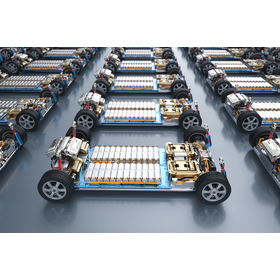
We provide comprehensive support from the design of large-scale equipment exceeding 20 meters and 90 units for the assembly and transportation line of EV batteries to on-site construction both domestically and internationally. We will effectively address complex challenges that arise in production sites, such as "ambiguity in specifications" and "extensive management of supplied materials," through proposals and project management from your production technology perspective. Our strength lies in resolving discrepancies between on-site efficiency and management logic, ensuring a reliable line startup without delays.
Added to bookmarks
Bookmarks listBookmark has been removed
Bookmarks listYou can't add any more bookmarks
By registering as a member, you can increase the number of bookmarks you can save and organize them with labels.
Free membership registration
We provide "full turnkey" automation solutions that consistently handle everything from specification planning to maintenance for all manufacturing sites facing severe labor shortages and high precision requirements. Thermix is a high-value line builder that combines mass production technology cultivated in the automotive industry with the ultra-high precision technology demanded by the aerospace industry. The most notable feature is our advanced control and integration capabilities, which allow for the positioning and transportation of ultra-large workpieces up to 30 meters in length with a high precision of ±0.13mm. By synchronizing multiple transport units arranged in a distributed configuration using servo motors and managing the phase difference between units within 0.01mm through our unique control technology, we achieve high-precision transport as a single entity while minimizing structural burdens. We think together with our customers about "what they truly want to achieve," offering flexible proposals that are not constrained by industry norms, and maintaining a commitment to "see it through" even with challenging issues, strongly supporting your productivity improvement.
Added to bookmarks
Bookmarks listBookmark has been removed
Bookmarks listYou can't add any more bookmarks
By registering as a member, you can increase the number of bookmarks you can save and organize them with labels.
Free membership registration
We provide "full turnkey" automation solutions that comprehensively handle everything from specification planning to maintenance for all manufacturing sites facing severe labor shortages, the need for small-lot production of various products, and rapid market changes. Termix is a high-value-added line builder that integrates advanced technology and data utilization. Within our company, we have established a data-driven production management system that won the "TECHS AWARD 2025 Grand Prize." We go beyond merely introducing equipment; by utilizing tools like Power BI, we quantitatively visualize sales forecasts and operating rates, maximizing the value-added labor productivity for our customers' important equipment.
Added to bookmarks
Bookmarks listBookmark has been removed
Bookmarks listYou can't add any more bookmarks
By registering as a member, you can increase the number of bookmarks you can save and organize them with labels.
Free membership registration
Termix is a line builder that specializes in constructing and modifying advanced production and manufacturing lines both domestically and internationally. In particular, it excels in turnkey solutions that comprehensively handle design, manufacturing, and construction for modification projects with many constraints, such as adding new vehicle models to existing assembly lines.
Added to bookmarks
Bookmarks listBookmark has been removed
Bookmarks listYou can't add any more bookmarks
By registering as a member, you can increase the number of bookmarks you can save and organize them with labels.
Free membership registration
Termix is a line builder that develops diverse production lines both domestically and internationally. This product is a turnkey solution that handles the assembly line and transport equipment for EV (electric vehicle) batteries from the conceptual stage to on-site operation. Even in large-scale manufacturing lines exceeding 20 meters in length and consisting of approximately 90 units, we take on the entire complex flow, including not only transportation but also weight measurement and liquid injection processes. Our strength lies not just in providing equipment, but in our overwhelming ability to respond on-site, completing local construction and final adjustments, including at overseas bases such as North America. In response to challenges such as "processes and areas of responsibility tend to become ambiguous" and "concerns about the accuracy of overseas launches," we achieve reliable stable operation while aligning with our customers' "common sense" through meticulous project management and information sharing using digital tools. We support optimal line construction as a partner that goes beyond automation and labor-saving, working together to manage the site effectively.
Added to bookmarks
Bookmarks listBookmark has been removed
Bookmarks listYou can't add any more bookmarks
By registering as a member, you can increase the number of bookmarks you can save and organize them with labels.
Free membership registration
"Automation of multi-variety, small-lot production" is determined not by equipment specifications but by the "approach to the concept." As vehicle models become more segmented and processes have shorter lifespans, are dedicated jigs and manual setups becoming barriers to automation? Thermix combines image processing, control, and robotics in an advanced manner, elevating the variety change from a physical "setup" to a "condition change (logical)." This allows for minimizing dedicated jigs and constructing production lines that can flexibly adapt to future model changes. Moreover, rather than focusing solely on robots, we provide a comprehensive design that encompasses the entire logistics system, including automated warehouses, AGVs (automated guided vehicles), and inter-process transport. We work alongside production technology professionals to clarify "how far automation is reasonable" and realize assembly lines based on the premise of change. Before giving up and saying, "automation is impossible in our processes," please consult us starting from the conceptual level.
Added to bookmarks
Bookmarks listBookmark has been removed
Bookmarks listYou can't add any more bookmarks
By registering as a member, you can increase the number of bookmarks you can save and organize them with labels.
Free membership registration
Termix is a line builder involved in diverse factory automation and production line construction both domestically and internationally. We offer optimal solutions through innovative thinking, not only in general "automation" but also in redesigning processes to be "user-friendly" according to local proficiency and environmental conditions.
Added to bookmarks
Bookmarks listBookmark has been removed
Bookmarks listYou can't add any more bookmarks
By registering as a member, you can increase the number of bookmarks you can save and organize them with labels.
Free membership registration
We solve the challenges of "time shortages" and "highly complex automation" faced by production engineers in the automotive, construction machinery, and machine tool industries through integration from the upstream process. Our automation line construction begins with on-site surveys to grasp the "truth of the field" that cannot be seen from drawings alone. We break down the specific warping and welding distortion of large and heavy workpieces, the reaction forces during fastening, and even the "tacit knowledge" that operators unconsciously perform, down to the second. We visualize the conditions for successful automation and develop a "Automation Line Concept Diagram (URS)" that eliminates the possibility of going back. We connect robots, image processing, control, material handling, and automated warehouses in a single line, managing everything centrally as project management (PM). From design, manufacturing, and construction to on-site supervision at overseas factories and fine-tuning after startup, we maintain a commitment to "see it through" without abandoning the project midway, ensuring stable operation of production equipment on-site. Through full turnkey (lump-sum contracting) support, we provide an environment where production engineers can focus on their core value-creating tasks.
Added to bookmarks
Bookmarks listBookmark has been removed
Bookmarks listYou can't add any more bookmarks
By registering as a member, you can increase the number of bookmarks you can save and organize them with labels.
Free membership registration
We respond to advanced needs such as 'I want to reconfigure existing equipment to accommodate a variety of products' and 'I want to set up an automated line with a short delivery time.' Our company is a turnkey line builder that undertakes the modification and setup of production lines and assembly lines, focusing on production equipment, including processes such as welding, assembly, and work handling.
Added to bookmarks
Bookmarks listBookmark has been removed
Bookmarks listYou can't add any more bookmarks
By registering as a member, you can increase the number of bookmarks you can save and organize them with labels.
Free membership registration
Are you struggling to accommodate multiple vehicle types while managing limited installation space? Termix offers a flexible general-purpose line that combines our unique transport system with multi-axis sliding jigs. **Strengths and Features of Termix** - Advanced conceptualization and realization capabilities: Design technology that incorporates multi-axis structures in confined spaces to establish complex mechanisms. - Excellent versatility and reproducibility: Capable of producing multiple vehicle types on a single line. Our systems have been successfully deployed in four lines, expanding from domestic core factories to overseas. - Responsiveness beyond responsibility boundaries: In the event of any issues, we respond quickly and comprehensively, regardless of the cause. We clearly present operational measures to minimize production risks. Our engineers will diligently carry out everything from prototyping to detailed design and installation on-site. Please consult us regarding factory automation (FA) challenges.
Added to bookmarks
Bookmarks listBookmark has been removed
Bookmarks listYou can't add any more bookmarks
By registering as a member, you can increase the number of bookmarks you can save and organize them with labels.
Free membership registration
In industries such as automotive, construction machinery, and machine tools, the "acceleration of automation" has become an urgent necessity. Meanwhile, production technology professionals on-site are extremely busy, from process design for new products to troubleshooting, making it difficult to allocate time to the essence of automation, which is "conceptualization." This has become the biggest bottleneck. TMX is a line builder that supports production technology professionals by accompanying them from the "upstream concept," which determines the success or failure of automation. We provide the option of "outsourcing upstream processes," which is common overseas, to create an environment where your production technology can focus on "decision-making." **Three Values Provided by TMX** ■ Thorough Upstream Concept: We conduct on-site surveys, process analysis, motion breakdown, and specification review (URS) on your behalf, achieving automation without setbacks. ■ Advanced Technology Integration: We manage robots, image processing, control, transportation, and automated warehouses under a single project management framework. ■ Hands-on "Execution" Capability: We persistently address challenging processes such as large and heavy items, small lot production of various types, and welding and fastening, including fine-tuning during startup. We prevent specification mismatches that often occur with "handing off to SIers" and support the construction of reliable and speedy automation lines.
Added to bookmarks
Bookmarks listBookmark has been removed
Bookmarks listYou can't add any more bookmarks
By registering as a member, you can increase the number of bookmarks you can save and organize them with labels.
Free membership registration
To achieve the "process integration, automation, and digital transformation" that you wish to promote as a machine tool manufacturer, the complex setup of "one-of-a-kind" around your main machines is essential. Termix provides a full turnkey automation line, including peripheral devices, from material input to processing, subsequent processes, and shipping, allowing machine tool manufacturers to focus on their product and core technology development. 【Value Provided】 - Integration of diverse peripheral devices and equipment - Packaging that includes wiring, piping, and layout design - Optimization of the entire line utilizing buffer functions (small-scale automated warehouses) - Technology integration across robotics, image processing, and control In the face of a shortage of production technology resources, we strongly support your high value-added strategy by "completing" the tedious and labor-intensive processes from the conceptual stage upstream to the on-site launch.
Added to bookmarks
Bookmarks listBookmark has been removed
Bookmarks listYou can't add any more bookmarks
By registering as a member, you can increase the number of bookmarks you can save and organize them with labels.
Free membership registration
Are you struggling with issues such as "insufficient manpower hindering progress on concepts" or "lack of verification locations for large equipment" due to the automation of production lines? 【Challenges We Can Solve】 • Resource Shortage: Supporting production technology operations from specification consideration and upstream concepts. • Difficulty: Advanced integration of welding and fastening for large and heavy items, as well as image processing. • Variety: Achieving flexible production. • Overseas Expansion: Complete support for 400V power supply and local SV and robot teaching. 【Three Strengths of TMX】 1. Advanced integration for heavy and diverse items: Specializing in the "heavy and large" sectors such as automotive, construction machinery, and shipbuilding. We integrate image processing and robot control to propose optimal specifications that align with the site from the upstream stage. 2. One of the largest domestic factories and practical verification environment: A total floor area of 10,000 square meters, with a 10-ton crane and a permanent 400V power supply. We can install a "complete" long line of over 20 meters, allowing for real machine trials domestically before shipment. This prevents local rework and stabilizes startup quality. 3. Full turnkey system that sees projects through to the end: Centralized management from design, manufacturing, and construction to overseas SV dispatch. With the power of project management (PM), we take full responsibility for completing challenging projects with ambiguous specifications without abandoning them midway, ensuring stable operation.
Added to bookmarks
Bookmarks listBookmark has been removed
Bookmarks listYou can't add any more bookmarks
By registering as a member, you can increase the number of bookmarks you can save and organize them with labels.
Free membership registration